Scored using Projectors Methodology v3.0
Projectors Methodology v3.0
Mathematical & Unbiased Scoring
Products in this category are scored under Frontum Projectors Methodology v3.0: the technical score from the specifications is the base, and independent expert and video reviews (up to ±0.5 points), owner opinions (up to ±0.3) and best-of lists (up to +0.3) move it up or down.
Explore Projectors Methodology v3.0

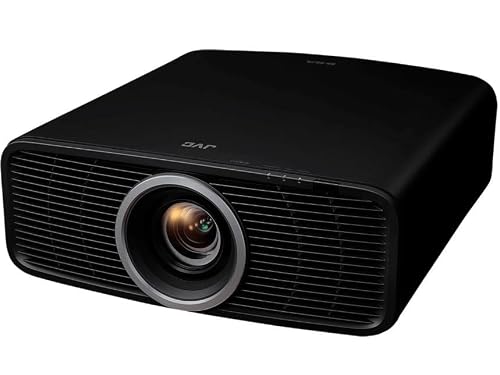
JVC DLA-NZ7 review: 86 specs compared

Avg. price:~£9,680Native panel resolution:4096x2160ANSI lumens:2200Throw ratio:1.43-2.92:1Lamp life:20000 hours

JVC DLA-NZ7 Review: Compare 86 technical specifications and 16 expert and video reviews to see how this product ranks in the Projectors category and whether it is worth buying.
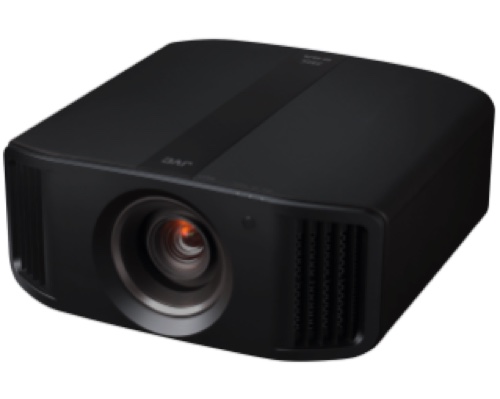
JVC DLA-NZ7
7.8/10

Overall score

Score
7.8/ 10
✕
What it is
Our main score for this model, 1–10. It combines specs, best-of lists, expert reviews and owners.
How we count it
Parts: Technical score 35%, List score 30%, Reviews score 25%, Sentiment score 10%
Marks: Each part gets a mark out of 10. For reviews, lists and owners, a typical model in this category gets about 8 and the best one gets 10.
No data yet: A part with no data shows "?". It counts as the mark of a weaker model in this category (4 in 5 models with data score higher). This way, models with reviews, lists and owners usually come out ahead.
Score distribution
▼
<55-66-77-88-99-10
Score components

35%

7.4

Technical score

30%

?

List scoreNot enough data yet, so we use 7.5, the mark of a weaker model in this category

25%

9.0

Reviews score

10%

?

Sentiment scoreNot enough data yet, so we use 6.8, the mark of a weaker model in this category

▲Better than 86% of projectors
5.7

Value for money

Value for money
5.7/ 10
✕
What it is
An indicator that combines the projector's overall rating with its cost.
When it matters
When you are looking for a projector with a good balance between quality and price.
Score distribution
▼
<55-66-77-88-99-10
Score components

70%

7.8

Overall score

30%

1.0

Price

▼Worse than 85%
7.4

Technical score

Technical score
7.4/ 10
✕
What it is
How good the specs are compared with the other models in this category, 1–10.
How we count it
Areas: We rate the specs in each area against the other models in this category.
Weighting: The areas that matter most to buyers count more. The shares are shown under Score components.
Share: The technical score is 35% of the overall score.
Score distribution
▼
<55-66-77-88-99-10
Score components

42%

8.4

Image Quality

22%

6.9

Projection & Lens

12%

8.6

HDMI & Gaming

10%

4.4

Audio & Features

8%

5.3

Connectivity

6%

7.6

Design & Power

▲Better than 83%
9.0

Reviews score

Reviews score
9.0/ 10
✕
What it is
Average grade from independent test sites, magazines and video reviewers, 1–10.
How we count it
Grades: Each review's own score is converted to 1–10; without one, we grade the review ourselves. Big test sites count more, short reviews half as much as full tests. A video review counts half.
Score: The average grade is 80% of the review mark; the number of reviews is the other 20% (1 review = 5, the typical number in this category = 8, the most-reviewed model = 10).
Enough data: With few reviews, the average grade is pulled toward the typical grade of this category. No reviews yet: 7.8 for now.
Share: Reviews count 25% of the overall score.
Score distribution
▼
<55-66-77-88-99-10

80%

9.1

Average grade

20%

8.8

Popularity

Grades by review (16)
13 reviews: 9 with a printed score, 4 estimated from the review. 3 video reviews, each counting half as much as a written test. Reviews count 25% of the overall score.
User ratings collected online are not part of this score.
★Better than 99%
?

List score

List score
7.5/ 10
✕
What it is
How often independent test sites, magazines and video reviewers put this model in their best-of lists for this category.
How we count it
Points: The model in the most lists of this category gets 10; the others get 8 to 10 in proportion. In no list yet: 7.5. Lists count 30% of the overall score.
Enough data: Every list counts, even a single one. With fewer than 5 best-of lists in the category, this part is left out.
Lists with this model (0)
Not in any best-of list yet, so this part counts as 7.5. Models in a list get 8 to 10.
Not in any best-of list yet
  • jvc-dla-nz7
jvc-dla-nz7
Where to buy
    N/A~ £9,680
Best rankings
Available: ranking among products currently available (including other versions of this product).All: ranking among all products in the database.

What reviewers say about the JVC DLA-NZ7

Based on 10 · 3

Outstanding HDR and deep blacks are widely praised, but the remote and calibration frustrate, and views on colour accuracy are split.
Praised
Mixed views
Criticised
Pick a topic to see who said what
Loading...
Loading category ranking...

Projectors model ranking

Ranked #703 of 985 models in Projectors (Overall score)

Technical Specifications of projector JVC DLA-NZ7

Technical score
Technical score
7.4/ 10
✕
What it is
How good the specs are compared with the other models in this category, 1–10.
How we count it
Areas: We rate the specs in each area against the other models in this category.
Weighting: The areas that matter most to buyers count more. The shares are shown under Score components.
Share: The technical score is 35% of the overall score.
Score distribution
▼
<55-66-77-88-99-10
Score components:

42%

8.4

Image Quality

22%

6.9

Projection & Lens

12%

8.6

HDMI & Gaming

10%

4.4

Audio & Features

8%

5.3

Connectivity

6%

7.6

Design & Power

7.4
Reviews score
9.0
List score
?
Value for money
Value for money
5.7/ 10
✕
What it is
An indicator that combines the projector's overall rating with its cost.
When it matters
When you are looking for a projector with a good balance between quality and price.
Score distribution
▼
<55-66-77-88-99-10
Score components:

70%

7.8

Overall score

30%

1.0

Price

5.7
ANSI lumens
2,200
This projector reaches 2,200 ANSI lumens, brighter than 46.2% of projectors and equal to 4.3% of projectors.
Contrast ratio
40,000:1
This projector has a contrast ratio of 40000:1, higher than 67.8% of projectors and equal to 1.4% of projectors.
Native contrast ratio.
Native panel resolution
4096x2160
This projector uses a native resolution of 4096x2160, higher than 95.9% of projectors and equal to 4.1% of projectors.
Output resolution
8192x4320
This projector supports output resolution up to 8192x4320, higher than 99.1% of projectors and equal to 0.9% of projectors.
Projection technology
LCoS
Show more
What reviewers say
Throw ratio
1.43-2.92:1
Min throw distance
?
Max projection size
200 inch
This projector supports projection sizes up to 200 inch, smaller than 51.4% of projectors and equal to 12.5% of projectors.
Zoom ratio
2
This projector offers a zoom ratio of 2, wider than 84.7% of projectors and equal to 6.3% of projectors.
Motorized zoom
yes
This projector has motorised zoom. 85.4% of projectors offer this.
Show more
What reviewers say
Input lag
36 ms
This projector has input lag of 36 ms, higher than 64.6% of projectors and equal to 0.8% of projectors.
In Low Latency Mode at 1080P/120Hz.
Auto low latency mode (ALLM)
yes
This projector switches to low-latency mode automatically for games. 84.1% of projectors offer this.
Variable refresh rate (VRR)
no
This projector does not support variable refresh rate. 1.8% of projectors offer this.
HDMI version
2.1
This projector supports HDMI 2.1, more modern than 82.2% of projectors and equal to 17.8% of projectors.
Max HDMI bandwidth
48 Gbps
This projector supports HDMI bandwidth up to 48 Gbps, higher than 90.7% of projectors and equal to 9.3% of projectors.
Show more
N. of HDMI ports
2
This projector has 2 HDMI port/s, more than 45.9% of projectors and equal to 47.3% of projectors.
Wi-Fi connectivity
no
This projector does not connect to Wi-Fi networks. 53.4% of projectors offer this.
Wi-Fi version
N/A
Bluetooth connectivity
no
This projector does not support Bluetooth. 50.7% of projectors offer this.
Bluetooth version
N/A
Show more
Smart TV features
no
This projector does not have built-in smart TV features. 43.9% of projectors offer this.
Operating system
none
Android OS
no
This projector does not run Android OS. 19.1% of projectors run Android OS.
Dedicated smartphone app
no
This projector does not come with a dedicated smartphone app. 36.8% of projectors come with a dedicated smartphone app.
Remote control
yes
This projector includes a remote control. 1.5% of projectors offer this.
Show more
What reviewers say
Light source type
laser
This projector uses laser light source technology, more advanced than 75.4% of projectors and equal to 24.6% of projectors.
Laser light source
yes
This projector has a laser light source. 73.3% of projectors offer this.
BLU-Escent Laser Diode.
Lamp life
20,000 hours
This projector offers lamp life of 20,000 hours, shorter than 35.2% of projectors and equal to 25.8% of projectors.
Laser light source life.
Lamp life (eco mode)
20,000 hours
This projector offers eco-mode lamp life of 20,000 hours, shorter than 39.4% of projectors and equal to 17.9% of projectors.
Eco mode rating.
Operating power consumption
420 W
This projector uses 420 W of power, more than 93.3% of projectors and equal to 0.7% of projectors.
Normal mode power draw.
Show more
What reviewers say

JVC DLA-NZ7 vs the average projector

246810TotalImage QualityProjection & LensHDMI & GamingConnectivityAudio & FeaturesDesign & Power
  • Higher output resolution
    This projector supports a higher output resolution than the average projector (8192x4320 vs 1920x1080). The average projector outputs at 1920x1080 resolution.
    8192x4320 vs 1920x1080
  • High native resolution
    This projector has a higher native panel resolution than the average projector (4096x2160 vs 1920x1080). The average projector has a native panel resolution of 1920x1080.
    4096x2160 vs 1920x1080
  • Supports lens memory
    This projector stores lens settings, while the average projector does not. 8.1% of projectors offer this.
    Stored within 10 Installation Modes.
  • 0.7 2x wider zoom range
    This projector has a higher zoom ratio than the average projector (2 vs 1.3). The average projector has 1.3 of zoom ratio.
    2 vs 1.3
  • Supports HDR10+
    This projector supports HDR10+, while the average projector does not. 15.2% of projectors support HDR10+.
  • Supports auto low-latency mode
    This projector switches to low-latency mode automatically, while the average projector does not. 16% of projectors offer this.
  • Supports pixel shifting
    This projector supports pixel shifting, while the average projector does not. 26.6% of projectors support pixel shifting.
    Via e-shift.
  • Higher contrast ratio
    This projector has a higher contrast ratio than the average projector (40000:1 vs 10000:1). The average projector has 10000:1 of contrast ratio.
    Native contrast ratio.
    40,000:1 vs 10,000:1
  • 21.6% higher review score
    Reviews score
    9.0/ 10
    ✕
    What it is
    Average grade from independent test sites, magazines and video reviewers, 1–10.
    How we count it
    Grades: Each review's own score is converted to 1–10; without one, we grade the review ourselves. Big test sites count more, short reviews half as much as full tests. A video review counts half.
    Score: The average grade is 80% of the review mark; the number of reviews is the other 20% (1 review = 5, the typical number in this category = 8, the most-reviewed model = 10).
    Enough data: With few reviews, the average grade is pulled toward the typical grade of this category. No reviews yet: 7.8 for now.
    Share: Reviews count 25% of the overall score.
    Score distribution
    ▼
    <55-66-77-88-99-10

    80%

    9.1

    Average grade

    20%

    8.8

    Popularity

    Grades by review (16)
    13 reviews: 9 with a printed score, 4 estimated from the review. 3 video reviews, each counting half as much as a written test. Reviews count 25% of the overall score.
    User ratings collected online are not part of this score.
    9.0 vs 7.4
  • Higher output resolution
    This projector supports a higher output resolution than the average projector (8192x4320 vs 1920x1080). The average projector outputs at 1920x1080 resolution.
    8192x4320 vs 1920x1080
  • High native resolution
    This projector has a higher native panel resolution than the average projector (4096x2160 vs 1920x1080). The average projector has a native panel resolution of 1920x1080.
    4096x2160 vs 1920x1080
  • Supports HDR10+
    This projector supports HDR10+, while the average projector does not. 15.2% of projectors support HDR10+.
  • Supports pixel shifting
    This projector supports pixel shifting, while the average projector does not. 26.6% of projectors support pixel shifting.
    Via e-shift.
  • Higher contrast ratio
    This projector has a higher contrast ratio than the average projector (40000:1 vs 10000:1). The average projector has 10000:1 of contrast ratio.
    Native contrast ratio.
    40,000:1 vs 10,000:1
  • 2 bit deeper color depth
    This projector has a higher color depth than the average projector (12 bit vs 10 bit). The average projector has 10 bit of color depth.
    12 bit vs 10 bit
  • 41.2% higher refresh rate
    This projector has a higher refresh rate than the average projector (120 Hz vs 85 Hz). The average projector has 85 Hz of refresh rate.
    120 Hz vs 85 Hz
  • Supports HLG
    This projector supports HLG, while the average projector does not. 41.2% of projectors support HLG.
  • Supports lens memory
    This projector stores lens settings, while the average projector does not. 8.1% of projectors offer this.
    Stored within 10 Installation Modes.
  • 0.7 2x wider zoom range
    This projector has a higher zoom ratio than the average projector (2 vs 1.3). The average projector has 1.3 of zoom ratio.
    2 vs 1.3
  • Motorised zoom
    This projector has motorised zoom, while the average projector does not. 14.7% of projectors support motorised zoom.
  • Advanced focus control
    This projector offers more advanced focus control than the average projector (motorized vs manual). Typical projector: manual.
    motorized vs manual
  • 4 % more horizontal lens shift
    This projector has more horizontal lens shift than the average projector (34 % vs 30 %). The average projector has 30 % horizontal lens shift.
    34 % vs 30 %
  • 16 % more vertical lens shift
    This projector has more vertical lens shift than the average projector (80 % vs 64 %). The average projector has 64 % vertical lens shift.
    80 % vs 64 %
  • Motorized focus
    This projector supports motorized focus, while the average projector does not. 45.6% of projectors support motorized focus.
  • Supports auto low-latency mode
    This projector switches to low-latency mode automatically, while the average projector does not. 16% of projectors offer this.
  • Supports motion smoothing
    This projector supports motion smoothing, while the average projector does not. 34.1% of projectors offer this.
    Via Clear Motion Drive.
  • Modern HDMI standard
    This projector offers Modern HDMI standard than the average projector (2.1 vs 2). The average projector supports HDMI 2.
    2.1 vs 2
  • 2.67x higher HDMI bandwidth
    This projector has a higher HDMI bandwidth than the average projector (48 Gbps vs 18 Gbps). The average projector has 18 Gbps of HDMI bandwidth.
    48 Gbps vs 18 Gbps
  • More modern HDCP support
    This projector supports a newer HDCP version than the average projector (2.3 vs 2.2).
    2.3 vs 2.2
  • High HDMI input format
    This projector supports a more capable max HDMI input format than the average projector (8K/60Hz vs 4K/120Hz). The average projector supports a max HDMI input format of 4K/120Hz.
    8K/60Hz vs 4K/120Hz
  • 1 more RJ45 ports
    This projector has more RJ45 ports than the average projector (1 vs 0). The average projector has 0 RJ45 ports.
    1 vs 0
  • VGA input included
    This projector supports VGA input, while the average projector does not. 44.1% of projectors support VGA input.
  • 7 dB quieter operation
    This projector has a lower audible noise than the average projector (24 dB vs 31 dB). The average projector has 31 dB of audible noise.
    Eco mode figure.
    24 dB vs 31 dB
  • Laser light source
    This projector has a laser light source, while the average projector does not. 26.7% of projectors have one.
    BLU-Escent Laser Diode.
  • 4 dB quieter eco mode
    This projector has a lower audible noise in eco mode than the average projector (24 dB vs 28 dB). The average projector has 28 dB of audible noise in eco mode.
    Eco mode figure.
    24 dB vs 28 dB
  • No Wi-Fi connectivity
    This projector does not connect to Wi-Fi networks, while the average projector does. 53.4% of projectors offer this.
  • No Bluetooth connectivity
    This projector does not support Bluetooth, while the average projector does. 50.6% of projectors offer this.
  • 20 degrees less vertical correction
    This projector offers less vertical keystone correction than the average projector (10 degrees vs 30 degrees). The average projector offers vertical keystone correction of 30 degrees.
    10 degrees vs 30 degrees
  • No built-in speaker
    This projector does not have a built-in speaker, while the average projector does. 87% of projectors have one.
  • No sleep timer
    This projector does not have a sleep timer, while the average projector does. 82.4% of projectors have one.
  • 7.55x heavier weight
    This projector is heavier than the average projector (22.5 kg vs 2.98 kg). The average projector weighs 2.98 kg.
    22.5 kg vs 2.98 kg
  • 50 inch smaller image size
    This projector has a lower projection size than the average projector (200 inch vs 250 inch). The average projector has 250 inch of projection size.
    200 inch vs 250 inch
  • 14.67x more expensive
    JVC DLA-NZ7 is more expensive than the average projector (£9,680 vs £660).
    £9,680 vs £660
  • 14.67x more expensive
    JVC DLA-NZ7 is more expensive than the average projector (£9,680 vs £660).
    £9,680 vs £660
  • 20.9% worse value for money
    JVC DLA-NZ7 has a lower value-for-money score than the average projector (5.75 vs 6.9).
    5.75 vs 6.95
  • 20 degrees less vertical correction
    This projector offers less vertical keystone correction than the average projector (10 degrees vs 30 degrees). The average projector offers vertical keystone correction of 30 degrees.
    10 degrees vs 30 degrees
  • 50 inch smaller image size
    This projector has a lower projection size than the average projector (200 inch vs 250 inch). The average projector has 250 inch of projection size.
    200 inch vs 250 inch
  • 9 ms higher input lag
    This projector has a higher input lag than the average projector (36 ms vs 27 ms). The average projector has 27 ms of input lag.
    In Low Latency Mode at 1080P/120Hz.
    36 ms vs 27 ms
  • No Wi-Fi connectivity
    This projector does not connect to Wi-Fi networks, while the average projector does. 53.4% of projectors offer this.
  • No Bluetooth connectivity
    This projector does not support Bluetooth, while the average projector does. 50.6% of projectors offer this.
  • No headphone jack
    This projector does not have a 3.5 mm audio jack, while the average projector does. 84.4% of projectors offer a 3.5 mm audio jack.
  • No built-in speaker
    This projector does not have a built-in speaker, while the average projector does. 87% of projectors have one.
  • No sleep timer
    This projector does not have a sleep timer, while the average projector does. 82.4% of projectors have one.
  • 7.55x heavier weight
    This projector is heavier than the average projector (22.5 kg vs 2.98 kg). The average projector weighs 2.98 kg.
    22.5 kg vs 2.98 kg
  • 190 W higher power use
    This projector uses more power than the average projector (420 W vs 230 W). The average projector uses 230 W of power.
    Normal mode power draw.
    420 W vs 230 W
  • 203 mm wider body
    This projector is wider than the average projector (500 mm vs 297 mm). The average projector has a width of 297 mm.
    500 mm vs 297 mm
  • 112 mm taller body
    This projector is taller than the average projector (234 mm vs 122 mm). The average projector has a height of 122 mm.
    Includes feet.
    234 mm vs 122 mm
  • 355 mm thicker body
    This projector is thicker than the average projector (505 mm vs 150 mm). The average projector has a thickness of 150 mm.
    505 mm vs 150 mm
  • 0.71 W higher standby power
    This projector uses more standby power than the average projector (1.2 W vs 0.5 W). The average projector uses 0.5 W of standby power.
    1.21 W vs 0.5 W

Video reviews

Hands-on testing, unboxing, and real-world video evaluations

9.5
ProjectorCentral
≈ estimated
17/12/2021
Hands-on review · measurements, calibration and HDR tests
Verdict
JVC DLA-NZ7 is good value among high-end laser projectors, with excellent black levels and HDR.
9.0
ScreenTime with AVForums
≈ estimated
10/11/2022
Podcast review · side-by-side test against a rival projector
Verdict
JVC DLA-NZ7's calibration is its weak spot, but Frame Adapt HDR and image quality make it a standout projector.
Hands-on video, no verdict
Not graded yet
Not graded yet

Expert reviews

In-depth analysis and verdict from leading tech publications
9.0
projectorcentral.com
✓ explicit
19/09/2021
Lab test · Laser 4K projector
Verdict
The JVC DLA-NZ7 is a quiet, high-contrast laser projector with deep blacks, but it needs calibration and is discontinued.
10
whathifi.com
✓ explicit
22/08/2022
Expert review · Cinema projector
Verdict
The JVC DLA-NZ7 is a natural, cinematic projector for viewers who want to watch films rather than tweak settings, though its remote is basic and sometimes unresponsive.
10
trustedreviews.com
✓ explicit
08/08/2022
Expert review · Home cinema projector
Verdict
The JVC DLA-NZ7 is a bright, accurate projector with class-leading HDR and deep blacks, suiting dedicated home cinemas, though it is large and not discreet.
9.5
projectorreviews.com
≈ estimated
01/06/2023
Lab test · Laser projector
Verdict
The JVC DLA-NZ7 is a bright projector with deep blacks and class-leading HDR, best for dark home cinemas, but its out-of-box colour needs calibration.
9.0
essentialinstall.com
≈ estimated
18/03/2024
Installer review · Cinema room
Verdict
The JVC DLA-NZ7 gives rich, smooth film images in a dark cinema room, but its brightness falls short of rivals in brighter living rooms.
10
avforums.com
✓ explicit
17/11/2022
Expert review · Laser projector
Verdict
The JVC DLA-NZ7 is an excellent entry point into JVC's laser range, with strong HDR and black levels, but calibration is limited without its own software.
8.8
gadgetreview.com
✓ explicit
07/02/2024
Lab test · Home cinema projector
Verdict
The JVC DLA-NZ7 is a home cinema projector with deep blacks and wide HDR support, though its remote lacks direct access to picture adjustments.
10
hifitest.de
✓ explicit
18/11/2021
Hands-on test · Laser 8K projector
Verdict
The JVC DLA-NZ7 is a bright, high-contrast laser projector with HDR10+ and screen-aware HDR tuning, though its 8K support has little use yet.
9.2
audiovision.de
✓ explicit
02/06/2022
Hands-on test · Home cinema projector
Verdict
The JVC DLA-NZ7 is a heavy 8K-capable projector whose automatic HDR tone mapping and deep contrast suit home cinema fans, but it has no streaming apps.
9.0
lowbeats.de
✓ explicit
12/03/2022
Hands-on test · Laser projector
Verdict
The JVC DLA-NZ7 is a 4K laser projector with a simpler form of 8K e-shift, suited to gamers and fans of natural pictures, but its e-shift hums audibly.
9.8
avpasion.com
✓ explicit
06/02/2023
Hands-on test · Cinema projector
Verdict
The JVC DLA-NZ7 is a very large, heavy projector with deep blacks and vivid HDR, suited to dedicated cinema rooms rather than small spaces.
8.0
avmagazine.it
≈ estimated
11/03/2022
Event test · 8K signals
Verdict
The JVC DLA-NZ7 accepts 8K and fast 4K signals with good color coverage, but lacks a filter for full DCI-P3.
9.0
mediasluis.nl
≈ estimated
22/11/2022
Firmware review · NZ7 upgrade
Verdict
The JVC DLA-NZ7 gains a more neutral Film Maker Mode and fewer on-screen menu popups from firmware 2.0, but a professional calibration still looks better.

Third-party reviews

What customers like about JVC DLA-NZ7

  • Industry-leading HDR performance featuring Frame Adapt dynamic tone mapping and HDR10+ support
  • Exceptional native contrast and 'inky' deep black levels that outperform most competitors
  • Future-proofed connectivity with dual 48Gbps HDMI 2.1 ports supporting 8K/60p and 4K/120p
  • Long-lasting BLU-Escent laser light source with a rated lifespan of up to 20,000 hours
  • Sharp and detailed image quality thanks to a high-quality 65mm all-glass lens and 8K/e-shift processing
  • Reliable motorized lens controls (zoom, focus, shift) with multiple installation memories
  • Quiet operation, particularly in low and medium laser power modes

What customers don't like about JVC DLA-NZ7

  • Significant financial investment that may be out of reach for many enthusiasts
  • Large and heavy chassis (22.5kg) requiring substantial mounting support
  • Lacks the wider color gamut filter found on more expensive models (NZ8/NZ9), meaning it cannot reach 100% DCI-P3
  • Standard remote control can feel unresponsive and lacks some direct access adjustments
  • Slow HDMI signal switching times when changing video sources
  • Out-of-the-box color accuracy often exhibits a slight green/cool push and typically requires professional calibration for peak performance
  • Slightly higher input lag compared to dedicated gaming displays, though acceptable for casual use

Verdict

The JVC DLA-NZ7 is a high-end native 4K home cinema projector featuring three 0.69-inch D-ILA chips and a BLU-Escent laser light source that delivers 2,200 lumens of brightness and a 20,000-hour lifespan. Key characteristics include 8K/e-shift technology for 8K-quality resolution, dual 48Gbps HDMI 2.1 inputs supporting 8K/60p and 4K/120p, and a premium 65mm all-glass lens with motorised controls. It excels with class-leading black levels, a 40,000:1 native contrast ratio, and advanced Frame Adapt HDR dynamic tone mapping that supports HDR10+. While it offers exceptional cinematic performance and future-proof gaming features, notable cons include its massive 22.5kg chassis, an occasionally unresponsive remote control, and the absence of a wide-colour-gamut filter found in higher-end models.

Compare JVC DLA-NZ7 with other products in the Projectors category

1Product to compare no. 1
VS
2Product to compare no. 2
VS
3Product to compare no. 3 (optional)

Graphic comparison of JVC DLA-NZ7 and other products in the Projectors category

No results found