Scored using Projectors Methodology v3.0
Projectors Methodology v3.0
Mathematical & Unbiased Scoring
Products in this category are scored under Frontum Projectors Methodology v3.0: the technical score from the specifications is the base, and independent expert and video reviews (up to ±0.5 points), owner opinions (up to ±0.3) and best-of lists (up to +0.3) move it up or down.
Explore Projectors Methodology v3.0

Formovie X5 Pro review: 86 specs compared

Avg. price:~£1,060Native panel resolution:1920x1080ANSI lumens:?Throw ratio:1.27:1Lamp life:20000 hours

Formovie X5 Pro Review: Compare 86 technical specifications to see how this product ranks in the Projectors category and whether it is worth buying.
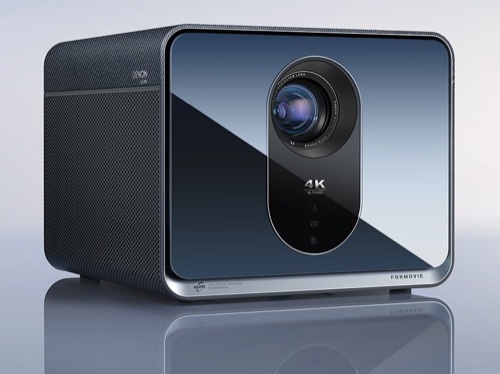
Formovie X5 Pro
7.7/10

Overall score

Score
7.7/ 10
✕
What it is
Our main score for this model, 1–10. It combines specs, best-of lists, expert reviews and owners.
How we count it
Parts: Technical score 35%, List score 30%, Reviews score 25%, Sentiment score 10%
Marks: Each part gets a mark out of 10. For reviews, lists and owners, a typical model in this category gets about 8 and the best one gets 10.
No data yet: A part with no data shows "?". It counts as the mark of a weaker model in this category (4 in 5 models with data score higher). This way, models with reviews, lists and owners usually come out ahead.
Score distribution
â–¼
<55-66-77-88-99-10
Score components

35%

7.8

Technical score

30%

?

List scoreNot enough data yet, so we use 7.5, the mark of a weaker model in this category

25%

?

Reviews scoreNot enough data yet, so we use 7.8, the mark of a weaker model in this category

10%

8.1

Sentiment score

â–²Better than 85% of projectors
6.9

Value for money

Value for money
6.9/ 10
✕
What it is
An indicator that combines the projector's overall rating with its cost.
When it matters
When you are looking for a projector with a good balance between quality and price.
Score distribution
â–¼
<55-66-77-88-99-10
Score components

70%

7.7

Overall score

30%

4.9

Price

â–¼Worse than 54%
7.8

Technical score

Technical score
7.8/ 10
✕
What it is
How good the specs are compared with the other models in this category, 1–10.
How we count it
Areas: We rate the specs in each area against the other models in this category.
Weighting: The areas that matter most to buyers count more. The shares are shown under Score components.
Share: The technical score is 35% of the overall score.
Score distribution
â–¼
<55-66-77-88-99-10
Score components

42%

8.0

Image Quality

22%

6.7

Projection & Lens

12%

7.9

HDMI & Gaming

10%

8.8

Audio & Features

8%

8.9

Connectivity

6%

6.9

Design & Power

★Better than 91%
?

Reviews score

Reviews score
✕
What it is
Average grade from independent test sites, magazines and video reviewers, 1–10.
How we count it
Grades: Each review's own score is converted to 1–10; without one, we grade the review ourselves. Big test sites count more, short reviews half as much as full tests. A video review counts half.
Score: The average grade is 80% of the review mark; the number of reviews is the other 20% (1 review = 5, the typical number in this category = 8, the most-reviewed model = 10).
Enough data: With few reviews, the average grade is pulled toward the typical grade of this category. No reviews yet: 7.8 for now.
Share: Reviews count 25% of the overall score.
Score distribution
â–¼
<55-66-77-88-99-10
Grades by review (0)
We have not found an independent test of this model yet. Until we do, its review part counts as 7.8.
User ratings collected online are not part of this score.
No expert tests yet
?

List score

List score
7.5/ 10
✕
What it is
How often independent test sites, magazines and video reviewers put this model in their best-of lists for this category.
How we count it
Points: The model in the most lists of this category gets 10; the others get 8 to 10 in proportion. In no list yet: 7.5. Lists count 30% of the overall score.
Enough data: Every list counts, even a single one. With fewer than 5 best-of lists in the category, this part is left out.
Lists with this model (0)
Not in any best-of list yet, so this part counts as 7.5. Models in a list get 8 to 10.
Not in any best-of list yet
  • formovie-x5-pro
formovie-x5-pro
Where to buy
    N/A~ £1,060
Best rankings
Available: ranking among products currently available (including other versions of this product).All: ranking among all products in the database.

What owners say about the Formovie X5 Pro

Based on 43 owners sharing their experience in online comments

47%positive0%mixed53%negative

Owners praise the picture and streaming, but remote failures, dimness, and screen defects make reliability a concern.

What owners dislike

  • Remote often stops responding until pressed three to five times, or lags one to two seconds. Batteries and re-pairing did not help some.6
  • Spots appear after three to seven months: white dots, a brown or yellow patch, or a burned polarizing glass.5
  • Picture looks dim, especially in the corners, and some say brightness faded after little use; a custom colour and brightness setting helped dark films.4
  • Owners say the maker did not answer requests for a replacement screen, and the official spare part comes with a long wait and a fee.3
  • Dolby audio over USB is not supported, and a connected Bluetooth speaker gets no HDMI sound, so only the projector plays.3

Points mentioned by at least 3 owners, most mentioned first.

Loading...
Loading category ranking...

Technical Specifications of projector Formovie X5 Pro

Technical score
Technical score
7.8/ 10
✕
What it is
How good the specs are compared with the other models in this category, 1–10.
How we count it
Areas: We rate the specs in each area against the other models in this category.
Weighting: The areas that matter most to buyers count more. The shares are shown under Score components.
Share: The technical score is 35% of the overall score.
Score distribution
â–¼
<55-66-77-88-99-10
Score components:

42%

8.0

Image Quality

22%

6.7

Projection & Lens

12%

7.9

HDMI & Gaming

10%

8.8

Audio & Features

8%

8.9

Connectivity

6%

6.9

Design & Power

7.8
Reviews score
7.8
List score
?
Value for money
Value for money
6.9/ 10
✕
What it is
An indicator that combines the projector's overall rating with its cost.
When it matters
When you are looking for a projector with a good balance between quality and price.
Score distribution
â–¼
<55-66-77-88-99-10
Score components:

70%

7.7

Overall score

30%

4.9

Price

6.9
ANSI lumens
?
Contrast ratio
1,200:1
This projector has a contrast ratio of 1200:1, lower than 84.7% of projectors and equal to 0.9% of projectors.
Native contrast ratio.
Native panel resolution
1920x1080
This projector uses a native resolution of 1920x1080, higher than 27% of projectors and equal to 59.2% of projectors.
Uses XPR pixel-shifting for 4K output.
Output resolution
3840x2160
This projector supports output resolution up to 3840x2160, higher than 71.2% of projectors and equal to 24.6% of projectors.
Projection technology
DLP
Show more
Throw ratio
1.27:1
Min throw distance
1.6 m
This projector needs a minimum throw distance of 1.6 m, longer than 88.4% of projectors and equal to 1% of projectors.
Max projection size
?
Zoom ratio
N/A
Motorized zoom
no
This projector does not have motorised zoom. 14.8% of projectors offer this.
Show more
Input lag
9 ms
This projector has input lag of 9 ms, lower than 84.2% of projectors.
Auto low latency mode (ALLM)
no
This projector does not switch to low-latency mode automatically. 16.1% of projectors offer this.
Variable refresh rate (VRR)
no
This projector does not support variable refresh rate. 1.8% of projectors offer this.
HDMI version
2.1
This projector supports HDMI 2.1, more modern than 82.2% of projectors and equal to 17.8% of projectors.
Max HDMI bandwidth
48 Gbps
This projector supports HDMI bandwidth up to 48 Gbps, higher than 90.7% of projectors and equal to 9.3% of projectors.
Different HDMI ports reach 48 and 18 Gbps.
Show more
N. of HDMI ports
2
This projector has 2 HDMI port/s, more than 45.9% of projectors and equal to 47.3% of projectors.
Wi-Fi connectivity
yes
This projector connects to Wi-Fi networks for streaming. 46.7% of projectors offer this.
Wi-Fi version
Wi-Fi 6 (802.11ax)
This projector uses Wi-Fi 6 (802.11ax), which is newer than 83.1% of projectors and the same as in 14.9% of projectors.
Bluetooth connectivity
yes
This projector supports Bluetooth for speakers and headphones. 49.4% of projectors offer this.
Bluetooth version
5
This projector supports Bluetooth 5, more modern than 62.4% of projectors and equal to 17.1% of projectors.
Show more
Smart TV features
yes
This projector has built-in smart TV features. 56.2% of projectors offer this.
Operating system
proprietary
Android OS
no
This projector does not run Android OS. 19.1% of projectors run Android OS.
Dedicated smartphone app
no
This projector does not come with a dedicated smartphone app. 36.8% of projectors come with a dedicated smartphone app.
Remote control
yes
This projector includes a remote control. 1.5% of projectors offer this.
Show more
Light source type
laser
This projector uses laser light source technology, more advanced than 75.4% of projectors and equal to 24.6% of projectors.
ALPD.
Laser light source
yes
This projector has a laser light source. 73.3% of projectors offer this.
ALPD 3 Laser.
Lamp life
20,000 hours
This projector offers lamp life of 20,000 hours, shorter than 35.2% of projectors and equal to 25.8% of projectors.
Lamp life (eco mode)
20,000 hours
This projector offers eco-mode lamp life of 20,000 hours, shorter than 39.4% of projectors and equal to 17.9% of projectors.
Eco mode rating.
Operating power consumption
?
Show more

Formovie X5 Pro vs the average projector

246810TotalImage QualityProjection & LensHDMI & GamingConnectivityAudio & FeaturesDesign & Power
  • Higher output resolution
    This projector supports a higher output resolution than the average projector (3840x2160 vs 1920x1080). The average projector outputs at 1920x1080 resolution.
    3840x2160 vs 1920x1080
  • Advanced focus control
    This projector offers more advanced focus control than the average projector (auto-focus vs manual). Typical projector: manual.
    Manual remote fine-tuning available.
    auto-focus vs manual
  • 2.82x higher refresh rate
    This projector has a higher refresh rate than the average projector (240 Hz vs 85 Hz). The average projector has 85 Hz of refresh rate.
    240 Hz vs 85 Hz
  • Supports HDR10+
    This projector supports HDR10+, while the average projector does not. 15.2% of projectors support HDR10+.
    HDR10+ decoding supported.
  • Supports pixel shifting
    This projector supports pixel shifting, while the average projector does not. 26.6% of projectors support pixel shifting.
    Via XPR technology.
  • Supports HDMI ARC
    This projector supports HDMI ARC, while the average projector does not. 35.2% of projectors support HDMI ARC.
    Via eARC on HDMI 2.
  • 3x stronger audio output
    This projector has a higher audio output power than the average projector (30 W vs 10 W). The average projector has 10 W of audio output power.
    2 x 12W speakers + 6W speaker.
    30 W vs 10 W
  • Supports smart TV apps
    This projector has built-in smart TV features, while the average projector does not. 43.9% of projectors offer smart TV features.
  • Higher output resolution
    This projector supports a higher output resolution than the average projector (3840x2160 vs 1920x1080). The average projector outputs at 1920x1080 resolution.
    3840x2160 vs 1920x1080
  • 2.82x higher refresh rate
    This projector has a higher refresh rate than the average projector (240 Hz vs 85 Hz). The average projector has 85 Hz of refresh rate.
    240 Hz vs 85 Hz
  • Supports HDR10+
    This projector supports HDR10+, while the average projector does not. 15.2% of projectors support HDR10+.
    HDR10+ decoding supported.
  • Supports pixel shifting
    This projector supports pixel shifting, while the average projector does not. 26.6% of projectors support pixel shifting.
    Via XPR technology.
  • Supports HLG
    This projector supports HLG, while the average projector does not. 41.2% of projectors support HLG.
  • 4 more recent release
    This projector was released more recently than the average projector (2025 vs 2021). The average projector was released in 2021.
    July 2025
    2025 vs 2021
  • Advanced focus control
    This projector offers more advanced focus control than the average projector (auto-focus vs manual). Typical projector: manual.
    Manual remote fine-tuning available.
    auto-focus vs manual
  • 10 degrees more vertical correction
    This projector offers more vertical keystone correction than the average projector (40 degrees vs 30 degrees). The average projector offers vertical keystone correction of 30 degrees.
    40 degrees vs 30 degrees
  • Motorized focus
    This projector supports motorized focus, while the average projector does not. 45.6% of projectors support motorized focus.
  • 18 ms lower input lag
    This projector has a lower input lag than the average projector (9 ms vs 27 ms). The average projector has 27 ms of input lag.
    9 ms vs 27 ms
  • Supports motion smoothing
    This projector supports motion smoothing, while the average projector does not. 34.1% of projectors offer this.
  • Modern HDMI standard
    This projector offers Modern HDMI standard than the average projector (2.1 vs 2). The average projector supports HDMI 2.
    2.1 vs 2
  • 2.67x higher HDMI bandwidth
    This projector has a higher HDMI bandwidth than the average projector (48 Gbps vs 18 Gbps). The average projector has 18 Gbps of HDMI bandwidth.
    Different HDMI ports reach 48 and 18 Gbps.
    48 Gbps vs 18 Gbps
  • Supports HDMI ARC
    This projector supports HDMI ARC, while the average projector does not. 35.2% of projectors support HDMI ARC.
    Via eARC on HDMI 2.
  • Has S/PDIF output
    This projector supports S/PDIF output, while the average projector does not. 16.6% of projectors support S/PDIF output.
  • Supports AirPlay
    This projector supports AirPlay, while the average projector does not. 40.3% of projectors offer this.
  • 1 more RJ45 ports
    This projector has more RJ45 ports than the average projector (1 vs 0). The average projector has 0 RJ45 ports.
    1 vs 0
  • Supports Miracast mirroring
    This projector supports Miracast, while the average projector does not. 46.4% of projectors offer this.
  • Supports smart TV apps
    This projector has built-in smart TV features, while the average projector does not. 43.9% of projectors offer smart TV features.
  • 3x stronger audio output
    This projector has a higher audio output power than the average projector (30 W vs 10 W). The average projector has 10 W of audio output power.
    2 x 12W speakers + 6W speaker.
    30 W vs 10 W
  • Supports Dolby Atmos
    This projector supports Dolby Atmos, while the average projector does not. 14.1% of projectors support Dolby Atmos.
  • Includes stereo speakers
    This projector has stereo speakers, while the average projector does not. 47.8% of projectors have stereo speakers.
    2x12W + 6W Denon speaker.
  • Supports voice commands
    This projector supports voice commands, while the average projector does not. 36.1% of projectors support voice commands.
    Far-field voice control.
  • Laser light source
    This projector has a laser light source, while the average projector does not. 26.7% of projectors have one.
    ALPD 3 Laser.
  • Lower contrast ratio
    This projector has a lower contrast ratio than the average projector (1200:1 vs 10000:1). The average projector has 10000:1 of contrast ratio.
    Native contrast ratio.
    1,200:1 vs 10,000:1
  • 0.59 m longer throw distance
    This projector has a higher throw distance than the average projector (1.6 m vs 1 m). The average projector has 1.0055 m of throw distance.
    1.6 m vs 1.0055 m
  • Limited HDMI format
    This projector supports a less capable max HDMI input format than the average projector (4K/60Hz vs 4K/120Hz). The average projector supports a max HDMI input format of 4K/120Hz.
    4K/60Hz vs 4K/120Hz
  • No 3D video
    This projector does not support 3D video, while the average projector does. 55.4% of projectors support 3D video.
  • 4 dB louder operation
    This projector has a higher audible noise than the average projector (35 dB vs 31 dB). The average projector has 31 dB of audible noise.
    35 dB vs 31 dB
  • 7.2 dB louder eco mode
    This projector has a higher audible noise in eco mode than the average projector (35.2 dB vs 28 dB). The average projector has 28 dB of audible noise in eco mode.
    35.2 dB vs 28 dB
  • No RS-232 control
    This projector does not support RS-232 control, while the average projector does. 50.6% of projectors support RS-232 control.
  • No 3D glasses support
    This projector does not display 3D with glasses, while the average projector does. 54.4% of projectors offer 3D with glasses.
  • 60.6% more expensive
    Formovie X5 Pro is more expensive than the average projector (£1,060 vs £660).
    £1,060 vs £660
  • Lower contrast ratio
    This projector has a lower contrast ratio than the average projector (1200:1 vs 10000:1). The average projector has 10000:1 of contrast ratio.
    Native contrast ratio.
    1,200:1 vs 10,000:1
  • No 3D video
    This projector does not support 3D video, while the average projector does. 55.4% of projectors support 3D video.
  • No 3D glasses support
    This projector does not display 3D with glasses, while the average projector does. 54.4% of projectors offer 3D with glasses.
  • 0.59 m longer throw distance
    This projector has a higher throw distance than the average projector (1.6 m vs 1 m). The average projector has 1.0055 m of throw distance.
    1.6 m vs 1.0055 m
  • Limited HDMI format
    This projector supports a less capable max HDMI input format than the average projector (4K/60Hz vs 4K/120Hz). The average projector supports a max HDMI input format of 4K/120Hz.
    4K/60Hz vs 4K/120Hz
  • No RS-232 control
    This projector does not support RS-232 control, while the average projector does. 50.6% of projectors support RS-232 control.
  • 4 dB louder operation
    This projector has a higher audible noise than the average projector (35 dB vs 31 dB). The average projector has 31 dB of audible noise.
    35 dB vs 31 dB
  • 7.2 dB louder eco mode
    This projector has a higher audible noise in eco mode than the average projector (35.2 dB vs 28 dB). The average projector has 28 dB of audible noise in eco mode.
    35.2 dB vs 28 dB
  • 33.6% heavier weight
    This projector is heavier than the average projector (4 kg vs 2.98 kg). The average projector weighs 2.98 kg.
    3.98 kg vs 2.98 kg

Third-party reviews

What customers like about Formovie X5 Pro

  • Exceptional brightness (measured up to 2613 ANSI lumens), making it watchable even in moderate ambient light
  • Outstanding built-in 3-way sound system tuned by Denon, often cited as best-in-class for portable projectors
  • Premium, compact, and stylish design featuring Kvadrat fabric
  • Highly accurate and fast auto-setup tools including autofocus, keystone correction, and obstacle avoidance
  • ALPD 3.0 laser technology provides a sharp 4K image with no visible laser speckle
  • Solid price-to-performance ratio for a long-throw 4K laser projector
  • Supports HDR10 and HLG with good out-of-the-box color accuracy in certain modes

What customers don't like about Formovie X5 Pro

  • Native FengOS is Chinese-centric and largely unusable for international streaming without an external stick
  • Requires using two separate remotes due to the bundled Amazon Fire TV Stick not fully controlling the projector
  • Average black levels (more 'charcoal grey' than deep black) compared to high-end UST models
  • Notable light bleed or 'halo' effects outside the main projection area in dark scenes
  • Generates significant heat, which can be uncomfortable if sitting too close to the device
  • Lacks advanced gaming features like VRR (Variable Refresh Rate) or ALLM (Auto Low Latency Mode)
  • No native 3D support or advanced CMS for professional-level color calibration

Verdict

The Formovie X5 Pro is a high-end 4K UHD portable projector featuring advanced ALPD laser technology that delivers a significant 2,500 CVIA lumens of brightness and a light source life of over 20,000 hours. This 0.47" DMD DLP model supports HDR10+ and covers 110% of the Rec.709 color gamut, projecting images from 60 to 1,000 inches with a 1.27:1 throw ratio. Key characteristics include a powerful 36W Denon-tuned audio system (dual 18W speakers) with Dolby Audio and DTS-HD support, alongside smart features like omnidirectional auto-keystone correction, laser autofocus, and obstacle avoidance. Main pros include its premium design with a Kvadrat fabric wrap, Wi-Fi 6 connectivity, and a dedicated low-latency gaming mode (9ms delay). However, notable cons include its Chinese-centric FengOS which lacks native support for many international streaming apps, and a tendency for significant heat build-up during extended operation.

Compare Formovie X5 Pro with other products in the Projectors category

1Product to compare no. 1
VS
2Product to compare no. 2
VS
3Product to compare no. 3 (optional)

Graphic comparison of Formovie X5 Pro and other products in the Projectors category

No results found