Scored using Microphones Methodology v1.0
Microphones Methodology v1.0
Mathematical & Unbiased Scoring
Products in this category are evaluated mathematically under Frontumo Microphones Methodology v1.0 using verified laboratory benchmarks, technical specifications, and authentic consumer ratings with 0% commercial bias.
Explore Microphones Methodology v1.0

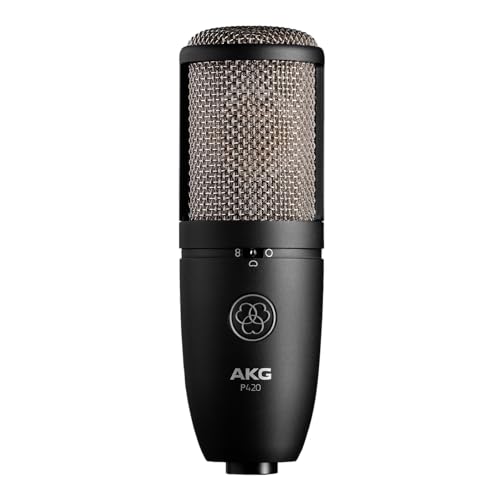
AKG P420 Review | 76 Data compared

Avg. price:~£180Connection type:XLRTransducer type:condenserMax SPL:155 dB SPLSupported sample rates:N/A kHzOutput connector type:XLR

AKG P420 Review: Compare 76 technical specifications and user reviews to see how this product ranks in the Microphones category and whether it is worth buying.

7.5

Overall score

Score
7.5/ 10
✕
What it is
An overall evaluation of the microphone's quality, based on technical analyses and user reviews.
When it matters
When you need a quick reference to identify the best microphones on the market.
Score distribution
â–¼
<55-66-77-88-99-10
Score components

75%

7.0

Technical score

25%

9.0

User score

â–²Better than 74% of microphones
7.0

Technical score

Technical score
7.0/ 10
✕
What it is
An assessment of technical performance for products in the Microphones category across these key areas: Audio Performance, Connectivity, Recording, Pickup Patterns, Controls & Features, Power, Design, Accessories, Compatibility.
When it matters
When you want to compare microphones based on technical performance and available features.
Score distribution
â–¼
<55-66-77-88-99-10
Score components

20%

9.1

Audio Performance

20%

6.3

Recording

16%

8.6

Pickup Patterns

16%

7.0

Controls & Features

10%

4.0

Power

7%

7.2

Compatibility

5%

5.2

Connectivity

3%

4.5

Design

3%

6.2

Accessories

â–²Better than 61% of microphones
9.0

User score

User score
9.0/ 10
✕
What it is
A rating that combines user reviews and the total number of reviews received by the microphone.
When it matters
When you want to know how a microphone performs in real use and how reliable it remains over time according to user feedback.
Score distribution
â–¼
<55-66-77-88-99-10
Score components

70%

9.4

User ratings

30%

8.1

Number of reviews

Based on 2,549 buyer reviews from online shops.
How we calculate this
User ratings – average star rating across all shop listings, weighted by how many reviews each has, on a 1–10 scale.
Number of reviews – how many buyer reviews the product has, on a logarithmic scale; the 8% most-reviewed models in the category get 10.
â–²Better than 83% of microphones
  • akg-p420
  • akg-p420
  • akg-p420
  • akg-p420
  • akg-p420
  • akg-p420
akg-p420
akg-p420
akg-p420
akg-p420
akg-p420
akg-p420

Best prices

*As an Amazon Associate, we earn from qualifying purchases.

Best rankings

Available: ranking among products currently available (including other versions of this product).All: ranking among all products in the database.
Loading...
Loading category ranking...

Technical Specifications of microphone AKG P420

Technical score
Technical score
7.0/ 10
✕
What it is
An assessment of technical performance for products in the Microphones category across these key areas: Audio Performance, Connectivity, Recording, Pickup Patterns, Controls & Features, Power, Design, Accessories, Compatibility.
When it matters
When you want to compare microphones based on technical performance and available features.
Score distribution
â–¼
<55-66-77-88-99-10
Score components:

20%

9.1

Audio Performance

20%

6.3

Recording

16%

8.6

Pickup Patterns

16%

7.0

Controls & Features

10%

4.0

Power

7%

7.2

Compatibility

5%

5.2

Connectivity

3%

4.5

Design

3%

6.2

Accessories

7.0
User score
User score
9.0/ 10
✕
What it is
A rating that combines user reviews and the total number of reviews received by the microphone.
When it matters
When you want to know how a microphone performs in real use and how reliable it remains over time according to user feedback.
Score distribution
â–¼
<55-66-77-88-99-10
Score components

70%

9.4

User ratings

30%

8.1

Number of reviews

Based on 2,549 buyer reviews from online shops.
How we calculate this
User ratings – average star rating across all shop listings, weighted by how many reviews each has, on a 1–10 scale.
Number of reviews – how many buyer reviews the product has, on a logarithmic scale; the 8% most-reviewed models in the category get 10.
9.0
Popularity
Popularity
8.1/ 10
✕
What it is
An indicator based on the number of reviews received by the microphone.
When it matters
When you prefer to buy a product chosen and reviewed by many other consumers.
Score distribution
â–¼
<55-66-77-88-99-10
Popularity:
AKG P420 has a popularity score of 8.1 points, which is higher than 73.9% of microphones.
8.1
Value for money
Value for money
8.1/ 10
✕
What it is
An indicator that combines the microphone's overall rating with its cost.
When it matters
When you are looking for a microphone with a good balance between quality and price.
Score distribution
â–¼
<55-66-77-88-99-10
Score components:

60%

7.5

Overall score

40%

9.6

Price

8.1
Microphone type
studio
Transducer type
condenser
Diaphragm size
25.4 mm
Capsule type
dual
Sensitivity
-31.1 dBV/Pa
Show more
Connection type
XLR
Output connector type
XLR
Headphone output
no
Headphone output
no
This microphone does not include a headphone output. 62.8% of microphones include this output.
3.5 mm audio jack
no
3.5 mm audio jack
no
This microphone does not include a 3.5 mm jack. 63.3% of microphones include this connector.
6.35 mm audio jack connector
no
6.35 mm audio jack connector
no
This microphone does not include a 6.35 mm jack. 2% of microphones include this connector.
Show more
Supported sample rates
N/A
Supported bit depths
N/A
Audio interface sample rate
N/A
Audio interface bit depth
N/A
Signal-to-noise ratio (DAC)
N/A
Show more
N. of polar patterns
3
N. of polar patterns
3
The number of selectable polar patterns offered by this microphone is 3, which is higher than that of 82.9% of microphones and equal to that of 4.5% of microphones.
Cardioid pattern
yes
Cardioid pattern
yes
This microphone supports a cardioid pickup pattern. 91% of microphones support this pattern.
Omnidirectional pattern
yes
Omnidirectional pattern
yes
This microphone supports an omnidirectional pickup pattern. 25.6% of microphones support this pattern.
Hypercardioid pattern
no
Hypercardioid pattern
no
This microphone does not support a hypercardioid pickup pattern. 1.5% of microphones support this pattern.
Bidirectional pattern
yes
Bidirectional pattern
yes
This microphone supports a bidirectional pickup pattern. 16.6% of microphones support this pattern.
Mute function
no
Mute function
no
This microphone does not include a mute function. 68.3% of microphones include this control.
Onboard gain control
no
Onboard gain control
no
This microphone does not include onboard gain control. 51.3% of microphones include this control.
Volume control levels
0
Volume control levels
0
This microphone offers volume output of 0 which is lower than that of 65.7% of microphones and equal to that of 34.3% of microphones.
Flat DSP mode
no
Flat DSP mode
no
This microphone does not support a flat DSP mode. 25.6% of microphones offer this processing option.
DSP presets
0
DSP presets
0
This microphone offers 0 DSP presets, which is fewer than 16.6% of microphones and equal to 83.4% of microphones.
Show more
Phantom power required
yes
Phantom power required
yes
This microphone requires phantom power. 9.1% of microphones also require phantom power.
Phantom power voltage
48 V
USB bus-powered
no
USB bus-powered
no
This microphone does not support USB bus power. 86.4% of microphones support USB-powered operation.
Battery life
N/A
Height
165 mm
Height
165 mm
This microphone is 165 mm tall, which is shorter than 65.1% of microphones and equal in height to 2.1% of microphones.
Width
54 mm
Width
54 mm
This microphone is 54 mm wide, which is narrower than 60% of microphones and equal in width to 2.6% of microphones.
Thickness
54 mm
Thickness
54 mm
This microphone is 54 mm thick, which is thinner than 57.4% of microphones and equal in thickness to 2.6% of microphones.
Weight
1,710 g
Weight
1,710 g
This microphone weighs 1,710 g, which is heavier than 100% of microphones.
Body material
metal
Show more
Included accessories
shock mount; mount adapter; carrying case
Shock mount included
yes
Shock mount included
yes
This microphone includes a shock mount. 49.3% of microphones include this accessory.
Pop filter included
no
Pop filter included
no
This microphone does not include a pop filter. 60.8% of microphones include this accessory.
Windscreen included
no
Windscreen included
no
This microphone does not include a windscreen. 31.8% of microphones include this accessory.
Cable length
N/A
Android compatibility
no
Android compatibility
no
This microphone is not compatible with Android. 66.3% of microphones are compatible with Android.
iOS compatibility
no
iOS compatibility
no
This microphone is not compatible with iOS. 61.8% of microphones are compatible with iOS.
Windows compatibility
yes
Windows compatibility
yes
This microphone is compatible with Windows. 100% of microphones are compatible with Windows.
Requires audio interface.
macOS compatibility
yes
macOS compatibility
yes
This microphone is compatible with macOS. 99.5% of microphones are compatible with macOS.
Requires audio interface.
Xbox compatibility
no
Xbox compatibility
no
This microphone is not compatible with Xbox. 1.5% of microphones are compatible with Xbox.
Show more

AKG P420 vs the average microphone

246810TotalAudio PerformanceConnectivityRecordingPickup PatternsControls & FeaturesPowerDesignAccessoriesCompatibility
  • 2 more polar patterns
    N. of polar patterns
    3
    This microphone has more polar patterns than the average microphone (3 vs 1). The average microphone offers 1 polar patterns.
    3 vs 1
  • 34 dB SPL higher limit
    Max SPL
    155 dB SPL
    This microphone has a higher max SPL than the average microphone (155 dB SPL vs 121 dB SPL). The average microphone handles a max SPL of 121 dB SPL.
    With 20 dB pad engaged.
    155 dB SPL vs 121 dB SPL
  • 44 dB wider dynamic range
    Dynamic range
    140 dB
    This microphone has a wider dynamic range than the average microphone (140 dB vs 96 dB). The average microphone has a dynamic range of 96 dB.
    140 dB vs 96 dB
  • Supports omnidirectional pickup
    Omnidirectional pattern
    yes
    This microphone supports omnidirectional pickup, the average microphone does not.
  • Supports bidirectional pickup
    Bidirectional pattern
    yes
    This microphone supports bidirectional pickup, the average microphone does not.
  • Includes high-pass filter
    High-pass filter
    yes
    This microphone includes a high-pass filter, the average microphone does not.
  • Includes pad switch
    Pad switch
    yes
    This microphone includes a pad switch, the average microphone does not.
  • Supports balanced output
    Balanced output
    yes
    This microphone supports balanced output, the average microphone does not.
  • 12.2% higher user score
    User score
    9.0/ 10
    ✕
    What it is
    A rating that combines user reviews and the total number of reviews received by the microphone.
    When it matters
    When you want to know how a microphone performs in real use and how reliable it remains over time according to user feedback.
    Score distribution
    â–¼
    â–¼
    <55-66-77-88-99-10
    AKG P420
    the average microphone
    AKG P420 has a higher user score than the average microphone (9.00 vs 8.027).
    9 vs 8.03
  • 34 dB SPL higher limit
    Max SPL
    155 dB SPL
    This microphone has a higher max SPL than the average microphone (155 dB SPL vs 121 dB SPL). The average microphone handles a max SPL of 121 dB SPL.
    With 20 dB pad engaged.
    155 dB SPL vs 121 dB SPL
  • 44 dB wider dynamic range
    Dynamic range
    140 dB
    This microphone has a wider dynamic range than the average microphone (140 dB vs 96 dB). The average microphone has a dynamic range of 96 dB.
    140 dB vs 96 dB
  • 1 dB-A lower equivalent input noise
    Equivalent input noise
    15 dB-A
    This microphone has a lower equivalent input noise than the average microphone (15 dB-A vs 16 dB-A). The average microphone has equivalent input noise of 16 dB-A.
    15 dB-A vs 16 dB-A
  • Supports balanced output
    Balanced output
    yes
    This microphone supports balanced output, the average microphone does not.
  • 2 more polar patterns
    N. of polar patterns
    3
    This microphone has more polar patterns than the average microphone (3 vs 1). The average microphone offers 1 polar patterns.
    3 vs 1
  • Supports omnidirectional pickup
    Omnidirectional pattern
    yes
    This microphone supports omnidirectional pickup, the average microphone does not.
  • Supports bidirectional pickup
    Bidirectional pattern
    yes
    This microphone supports bidirectional pickup, the average microphone does not.
  • Includes high-pass filter
    High-pass filter
    yes
    This microphone includes a high-pass filter, the average microphone does not.
  • Includes pad switch
    Pad switch
    yes
    This microphone includes a pad switch, the average microphone does not.
  • Includes shock mount
    Shock mount included
    yes
    This microphone includes a shock mount, the average microphone does not.
  • No gain control
    Onboard gain control
    no
    This microphone does not include onboard gain control, the average microphone does.
  • No mute function
    Mute function
    no
    This microphone does not include a mute function, the average microphone does.
  • No USB bus power
    USB bus-powered
    no
    This microphone does not support USB bus power, the average microphone does.
  • Requires phantom power
    Phantom power required
    yes
    This microphone requires phantom power, while the average microphone does not.
  • Not compatible with iOS
    iOS compatibility
    no
    This microphone is not compatible with iOS, the average microphone is.
  • Not compatible with Android
    Android compatibility
    no
    This microphone is not compatible with Android, the average microphone is.
  • 3.09x heavier
    Weight
    1,710 g
    This microphone is heavier than the average microphone (1710 g vs 553 g). The average microphone weighs 553 g.
    1,710 g vs 553 g
  • No headphone output
    Headphone output
    no
    This microphone does not include a headphone output, the average microphone does.
  • 2.57x more expensive
    AKG P420 is more expensive than the average microphone (£180 vs £70).
    £180 vs £70
  • No headphone output
    Headphone output
    no
    This microphone does not include a headphone output, the average microphone does.
  • No 3.5 mm jack
    3.5 mm audio jack
    no
    This microphone does not include a 3.5 mm jack, the average microphone does.
  • No gain control
    Onboard gain control
    no
    This microphone does not include onboard gain control, the average microphone does.
  • No mute function
    Mute function
    no
    This microphone does not include a mute function, the average microphone does.
  • No USB bus power
    USB bus-powered
    no
    This microphone does not support USB bus power, the average microphone does.
  • Requires phantom power
    Phantom power required
    yes
    This microphone requires phantom power, while the average microphone does not.
  • 3.09x heavier
    Weight
    1,710 g
    This microphone is heavier than the average microphone (1710 g vs 553 g). The average microphone weighs 553 g.
    1,710 g vs 553 g
  • 6 older release date
    Release date
    2014
    This microphone is older than the average microphone (2014 vs 2020). The average microphone was released in 2020.
    2014 vs 2020
  • No pop filter
    Pop filter included
    no
    This microphone does not include a pop filter, the average microphone does.
  • Not compatible with Android
    Android compatibility
    no
    This microphone is not compatible with Android, the average microphone is.
  • Not compatible with iOS
    iOS compatibility
    no
    This microphone is not compatible with iOS, the average microphone is.

Video reviews

Hands-on testing, unboxing, and real-world video evaluations

Expert reviews

In-depth analysis and verdict from leading tech publications

S
soundonsound.com
15/02/2009
Summary of the review
T
tapeop.com
01/07/2024
Summary of the review
S
soundguys.com
15/11/2024
Summary of the review
A
americansongwriter.com
23/05/2024
Summary of the review
B
beginnerguitarhq.com
17/02/2021
Summary of the review
G
gearspace.com
12/04/2016
Summary of the review
S
sweetwater.com
03/06/2010
Summary of the review
S
subhdeal.in
02/02/2022
Summary of the review
B
bonedo.de
13/03/2015
Summary of the review
P
paolobalestri.com
01/08/2017
Summary of the review
P
paolobalestri.com
02/06/2018
Summary of the review

Third-party reviews

Based on 2,549 buyer reviews from online shops.
Reviews last updated: July 2026 · How we calculate this

What we like about AKG P420

  • High versatility with three selectable polar patterns: cardioid, omnidirectional, and figure-eight
  • Excellent value for money, often described as a 'workhorse' for budget home and project studios
  • Sturdy and robust all-metal build quality that feels durable
  • Clean, neutral sound profile with a slight high-end presence that adds clarity to vocals and acoustic instruments
  • Includes high-quality accessories, such as a metal carrying case and a solid shock mount
  • High SPL handling (up to 155dB with -20dB pad), making it suitable for loud sources like drums and brass

What we don't like about AKG P420

  • Higher self-noise floor (approx. 15-16 dBA), which may be audible in professional voice-over or extremely quiet recordings
  • Can lean towards sibilance or airiness on certain vocal types due to its bright tonal character
  • Omnidirectional and figure-eight patterns may have slightly lower sensitivity than the cardioid setting
  • Shock mount connection system can be somewhat fiddly or difficult to attach compared to other brands
  • Lower frequencies can occasionally sound 'loose' or less defined on certain sources like electric guitar

Verdict

The AKG P420 is a high-performance, dual-capsule true condenser microphone featuring a 1-inch large diaphragm and three selectable polar patterns: cardioid, omnidirectional, and figure-eight. It offers a broad 20 Hz to 20 kHz frequency response, high sensitivity of 28 mV/Pa, and a maximum sound pressure level of 155 dB with its switchable -20 dB attenuation pad. Main pros include its exceptional versatility for recording diverse sources—from grand pianos to loud drums—and its robust, all-metal construction that includes a 300 Hz low-cut filter. Some noted cons are its considerable weight, which may require a heavy-duty stand, its high sensitivity that can capture unwanted background noise in untreated rooms, and a potential lack of unique 'silky' character found in high-end studio models.

Compare AKG P420 with other products in the Microphones category

1Product to compare no. 1
VS
2Product to compare no. 2
VS
3Product to compare no. 3 (optional)

Graphic comparison of AKG P420 and other products in the Microphones category

No results found