Scored using Headphones Methodology v1.0
Headphones Methodology v1.0
Mathematical & Unbiased Scoring
Products in this category are scored under Frontum Headphones Methodology v1.0: technical specifications plus authentic consumer ratings, with 0% commercial bias.
Explore Headphones Methodology v1.0

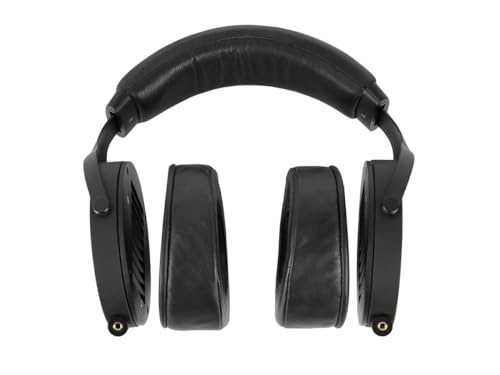
Monoprice Monolith M1070 Review | 93 Data compared

Avg. price:~£210Form factor:over-earConnectivity:wiredBattery life:N/A hoursActive noise cancellation (ANC):no

Monoprice Monolith M1070 Review: Compare 93 technical specifications and user reviews to see how this product ranks in the Headphones category and whether it is worth buying.
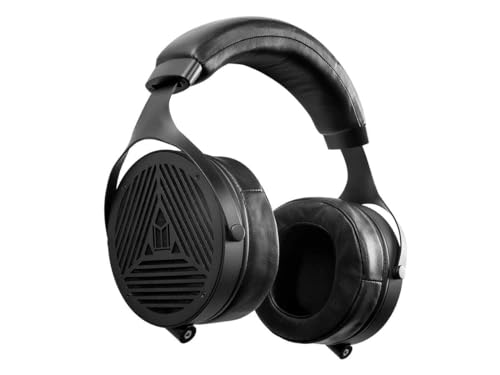
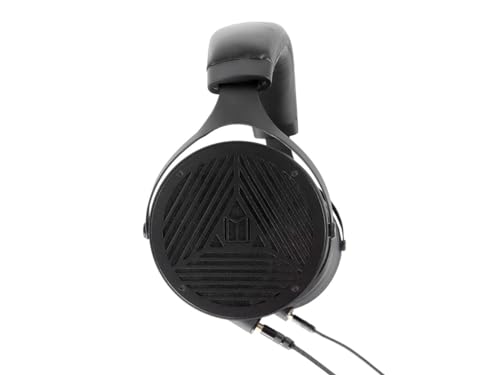
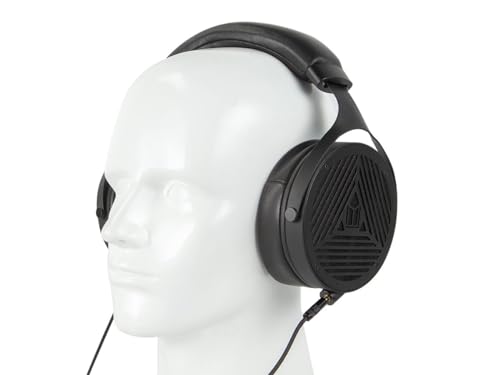
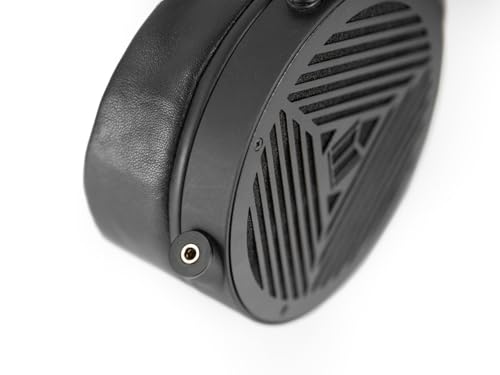
Monoprice Monolith M1070
5.5/10

Overall score

Score
5.5/ 10
✕
What it is
An overall evaluation of the headphones' quality, based on technical analyses and user reviews.
When it matters
When you need a quick reference to identify the best headphones on the market.
Score distribution
â–¼
<55-66-77-88-99-10
Score components

80%

4.8

Technical score

20%

8.0

User score

â–¼Worse than 89% of headphones
6.6

Value for money

Value for money
6.6/ 10
✕
What it is
An indicator that combines the headphones' overall rating with their cost.
When it matters
When you are looking for headphones that offer a strong balance of performance, features, and price.
Score distribution
â–¼
<55-66-77-88-99-10
Score components

70%

5.5

Overall score

30%

9.4

Price

â–¼Worse than 89%
4.8

Technical score

Technical score
4.8/ 10
✕
What it is
An assessment of technical performance for products in the Headphones category across these key areas: Sound, Calls & Controls, Connectivity, Features, Battery, Design.
When it matters
When you want to compare headphones based on technical performance and available features.
Score distribution
â–¼
<55-66-77-88-99-10
Score components

52%

5.3

Sound

20%

4.0

Features

10%

5.6

Design

8%

4.0

Connectivity

6%

4.0

Battery

4%

3.8

Calls & Controls

â–¼Worse than 96%
8.0

User score

User score
8.0/ 10
✕
What it is
A rating that combines user reviews and the total number of reviews received by the headphones.
When it matters
When you want to understand how headphones perform in real listening and how reliable they are in terms of comfort, audio quality, battery life, and long-term use.
Score distribution
â–¼
<55-66-77-88-99-10
Score components

70%

8.8

User ratings

30%

6.0

Number of reviews

Based on ratings from across the web.
â–¼Worse than 59%
  • monoprice-monolith-m1070
  • monoprice-monolith-m1070
  • monoprice-monolith-m1070
  • monoprice-monolith-m1070
  • monoprice-monolith-m1070
  • monoprice-monolith-m1070
monoprice-monolith-m1070
Where to buy
*As an Amazon Associate, we earn from qualifying purchases.
Best rankings
Available: ranking among products currently available (including other versions of this product).All: ranking among all products in the database.
Loading...
Loading category ranking...

Technical Specifications of pair of headphones Monoprice Monolith M1070

Technical score
Technical score
4.8/ 10
✕
What it is
An assessment of technical performance for products in the Headphones category across these key areas: Sound, Calls & Controls, Connectivity, Features, Battery, Design.
When it matters
When you want to compare headphones based on technical performance and available features.
Score distribution
â–¼
<55-66-77-88-99-10
Score components:

52%

5.3

Sound

20%

4.0

Features

10%

5.6

Design

8%

4.0

Connectivity

6%

4.0

Battery

4%

3.8

Calls & Controls

4.8
User score
User score
8.0/ 10
✕
What it is
A rating that combines user reviews and the total number of reviews received by the headphones.
When it matters
When you want to understand how headphones perform in real listening and how reliable they are in terms of comfort, audio quality, battery life, and long-term use.
Score distribution
â–¼
<55-66-77-88-99-10
Score components

70%

8.8

User ratings

30%

6.0

Number of reviews

Based on ratings from across the web.
8.0
Popularity
Popularity
6.0/ 10
✕
What it is
An indicator based on the number of reviews received by the headphones.
When it matters
When you prefer headphones that have already been chosen and reviewed by many other users.
Score distribution
â–¼
<55-66-77-88-99-10
Popularity:
Monoprice Monolith M1070 has a popularity score of 6 points, which is higher than that of 51% of products in this category.
6.0
Value for money
Value for money
6.6/ 10
✕
What it is
An indicator that combines the headphones' overall rating with their cost.
When it matters
When you are looking for headphones that offer a strong balance of performance, features, and price.
Score distribution
â–¼
<55-66-77-88-99-10
Score components:

70%

5.5

Overall score

30%

9.4

Price

6.6
Active noise cancellation (ANC)
no
This pair of headphones does not support active noise cancellation. 27.5% of headphones support active noise cancellation.
Driver type
planar
Driver size
106 mm
This pair of headphones uses a driver size of 106 mm, larger driver size than 99.3% of headphones and equal to 0.6% of headphones.
Number of drivers
1
This pair of headphones uses 1 drivers, fewer drivers than 4% of headphones and equal to 96% of headphones.
Lowest frequency
5 Hz
This pair of headphones reaches a lowest frequency of 5 Hz, lower lowest frequency than 86.3% of headphones and equal to 10.8% of headphones.
Show more
Noise-canceling microphone
no
This pair of headphones does not support a noise-canceling microphone. 39% of headphones support noise-canceling microphones.
Can be used as a headset
no
This pair of headphones is not headset-ready, while 15.1% is. 84.9% of headphones can be used as headsets.
Number of microphones
0
This pair of headphones has 0 microphones, fewer microphones than 73.2% of headphones and equal to 26.9% of headphones.
Boom microphone
no
This pair of headphones does not include a boom microphone. 13.5% of headphones have a boom microphone.
Microphone SNR
N/A
Show more
Connectivity
wired
This pair of headphones supports wired connectivity, less flexible connectivity than 49.2% of headphones and equal to 50.8% of headphones.
Bluetooth version
N/A
Maximum Bluetooth range
N/A
Audio latency
N/A
Multipoint support
no
This pair of headphones does not support multipoint. 30.6% of headphones support multipoint.
Show more
Ambient sound mode
no
This pair of headphones does not offer ambient sound mode. 24.9% of headphones support ambient sound mode.
EQ support
no
This pair of headphones does not support EQ customization. 23.2% of headphones support EQ.
Companion app
no
This pair of headphones does not work with a companion app. 21.6% of headphones support companion apps.
Adjustable ANC levels
N/A
Voice assistant support
no
This pair of headphones does not support voice assistants. 60.9% of headphones support voice assistants.
Show more
Battery life
N/A
Battery life with ANC
N/A
Charging time
N/A
Quick charge
no
This pair of headphones does not support quick charging. 33.1% of headphones support quick charge.
Battery capacity
N/A
Show more
Brand name
Monoprice
Form factor
over-ear
Weight
580 g
This pair of headphones weighs 580 g, heavier than 99.4% of headphones.
Acoustic design
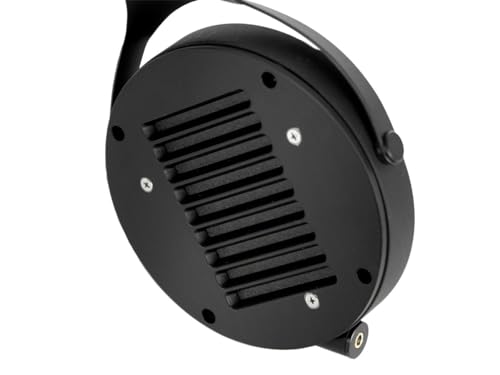
open-back
Clamp force
?
Show more

Monoprice Monolith M1070 vs the average pair of headphones

246810TotalDesignSoundBatteryConnectivityCalls & ControlsFeatures
  • 66 mm larger driver size
    This pair of headphones uses a larger driver size than the average pair of headphones (106 mm vs 40 mm). The average headphones use a driver size of 40 mm.
    106 mm vs 40 mm
  • 13 Hz lower bass extension
    This pair of headphones has a lower lowest frequency than the average pair of headphones (5 Hz vs 18 Hz). The average headphones reach a lowest frequency of 18 Hz.
    5 Hz vs 18 Hz
  • 30,000 Hz higher treble extension
    This pair of headphones has a higher highest frequency than the average pair of headphones (50,000 Hz vs 20,000 Hz). The average headphones reach a highest frequency of 20,000 Hz.
    50,000 Hz vs 20,000 Hz
  • 0.2 % lower distortion
    This pair of headphones has a lower total harmonic distortion than the average pair of headphones (0.1 % vs 0.3 %). The average headphones have total harmonic distortion of 0.3 %.
    0.1 % vs 0.3 %
  • 21 mm more spacious earcup width
    This pair of headphones offers more spacious earcup width than the average pair of headphones (65 mm vs 44 mm). The average headphones offer an inner earcup width of 44 mm.
    65 mm vs 44 mm
  • 10 mm more spacious earcup height
    This pair of headphones offers more spacious earcup height than the average pair of headphones (70 mm vs 60 mm). The average headphones offer an inner earcup height of 60 mm.
    70 mm vs 60 mm
  • 50x higher input power handling
    This pair of headphones has a higher max input power than the average pair of headphones (5,000 mW vs 100 mW). The average headphones handle max input power of 100 mW.
    5,000 mW vs 100 mW
  • Open-back design
    This pair of headphones uses an open-back design, while the average pair of headphones does not. 9.1% of headphones have an open-back design.
  • 21 mm more spacious earcup width
    This pair of headphones offers more spacious earcup width than the average pair of headphones (65 mm vs 44 mm). The average headphones offer an inner earcup width of 44 mm.
    65 mm vs 44 mm
  • 10 mm more spacious earcup height
    This pair of headphones offers more spacious earcup height than the average pair of headphones (70 mm vs 60 mm). The average headphones offer an inner earcup height of 60 mm.
    70 mm vs 60 mm
  • Open-back design
    This pair of headphones uses an open-back design, while the average pair of headphones does not. 9.1% of headphones have an open-back design.
  • 66 mm larger driver size
    This pair of headphones uses a larger driver size than the average pair of headphones (106 mm vs 40 mm). The average headphones use a driver size of 40 mm.
    106 mm vs 40 mm
  • 13 Hz lower bass extension
    This pair of headphones has a lower lowest frequency than the average pair of headphones (5 Hz vs 18 Hz). The average headphones reach a lowest frequency of 18 Hz.
    5 Hz vs 18 Hz
  • 30,000 Hz higher treble extension
    This pair of headphones has a higher highest frequency than the average pair of headphones (50,000 Hz vs 20,000 Hz). The average headphones reach a highest frequency of 20,000 Hz.
    50,000 Hz vs 20,000 Hz
  • 0.2 % lower distortion
    This pair of headphones has a lower total harmonic distortion than the average pair of headphones (0.1 % vs 0.3 %). The average headphones have total harmonic distortion of 0.3 %.
    0.1 % vs 0.3 %
  • 50x higher input power handling
    This pair of headphones has a higher max input power than the average pair of headphones (5,000 mW vs 100 mW). The average headphones handle max input power of 100 mW.
    5,000 mW vs 100 mW
  • 20 dB higher max SPL
    This pair of headphones has a higher max SPL than the average pair of headphones (130 dB vs 110 dB). The average headphones reach a max SPL of 110 dB.
    130 dB vs 110 dB
  • No passive noise reduction
    This pair of headphones does not offer passive noise reduction, while the average pair of headphones does. 82.6% of headphones have passive noise reduction.
  • 2.66x higher weight
    This pair of headphones is heavier than the average pair of headphones (580 g vs 218 g). The average pair of headphones weighs 218 g.
    580 g vs 218 g
  • No voice assistant support
    This pair of headphones does not support voice assistants, the average pair of headphones does. 60.8% of headphones support voice assistants.
  • 6 dB/mW lower sensitivity
    This pair of headphones has a lower sensitivity than the average pair of headphones (96 dB/mW vs 102 dB/mW). The average headphones have sensitivity of 102 dB/mW.
    96 dB/mW vs 102 dB/mW
  • Not headset-ready
    This pair of headphones is not headset-ready, while the average pair of headphones is. 84.8% of headphones can be used as headsets.
  • No battery indicator
    This pair of headphones does not show battery level clearly, while the average pair of headphones does. 56.3% of headphones have a battery level indicator.
  • 1 fewer microphones
    This pair of headphones has fewer microphones than the average pair of headphones (0 vs 1). The average headphones have 1 microphones.
    0 vs 1
  • 9.5% worse value for money
    Monoprice Monolith M1070 has worse value for money than the average pair of headphones (6.64 vs 7.3).
    6.64 vs 7.27
  • 9.5% worse value for money
    Monoprice Monolith M1070 has worse value for money than the average pair of headphones (6.64 vs 7.3).
    6.64 vs 7.27
  • 2.33x more expensive
    Monoprice Monolith M1070 is more expensive than the average pair of headphones (£210 vs £90).
    £210 vs £90
  • 2.66x higher weight
    This pair of headphones is heavier than the average pair of headphones (580 g vs 218 g). The average pair of headphones weighs 218 g.
    580 g vs 218 g
  • No passive noise reduction
    This pair of headphones does not offer passive noise reduction, while the average pair of headphones does. 82.6% of headphones have passive noise reduction.
  • 6 dB/mW lower sensitivity
    This pair of headphones has a lower sensitivity than the average pair of headphones (96 dB/mW vs 102 dB/mW). The average headphones have sensitivity of 102 dB/mW.
    96 dB/mW vs 102 dB/mW
  • 7 dB SPL lower sound pressure level
    This pair of headphones has a lower sound pressure level than the average pair of headphones (96 dB SPL vs 103 dB SPL). The average headphones reach a sound pressure level of 103 dB SPL.
    96 dB SPL vs 103 dB SPL
  • No battery indicator
    This pair of headphones does not show battery level clearly, while the average pair of headphones does. 56.3% of headphones have a battery level indicator.
  • Not headset-ready
    This pair of headphones is not headset-ready, while the average pair of headphones is. 84.8% of headphones can be used as headsets.
  • 1 fewer microphones
    This pair of headphones has fewer microphones than the average pair of headphones (0 vs 1). The average headphones have 1 microphones.
    0 vs 1
  • No voice assistant support
    This pair of headphones does not support voice assistants, the average pair of headphones does. 60.8% of headphones support voice assistants.

Video reviews

Hands-on testing, unboxing, and real-world video evaluations

8.0
Z Reviews
≈ estimated
31/01/2020
Hands-on comparison review · sound, build and cable tests
Verdict
Monoprice Monolith M1070 has impressive sound that justifies the price, but weak build, fixed cables and weight hold it back.
Hands-on video, no verdict

Expert reviews

In-depth analysis and verdict from leading tech publications

trustedreviews.com
10/08/2022
Week-long test · Open-back headphones
Verdict
The Monolith M1070 is a clear, precise open-back pair for first-time audiophiles, but it needs an amplifier and is big and heavy.

Third-party reviews

Based on ratings from across the web.
Reviews last updated: November 2026 · How we calculate this

What customers like about Monoprice Monolith M1070

  • Excellent value for high-quality planar magnetic performance at its price point.
  • Clear, detailed, and highly transparent overall sound signature.
  • Tight, fast, and well-extended bass response that doesn't bleed into the mids.
  • Generously sized earcups with very thick, comfortable memory foam padding.
  • Comes with both interchangeable lambskin leather and velour earpads to alter the sound signature.
  • Features a sturdy, high-quality metal headband structure and premium grille design.

What customers don't like about Monoprice Monolith M1070

  • Extremely heavy at roughly 580g (1.25 lbs), making them prone to causing neck fatigue.
  • The default clamping force can feel overly high and uncomfortable during long listening sessions.
  • The stock tuning leans dark or mid-centric and heavily relies on EQ to get the absolute best high-end clarity.
  • Issues with 3rd-party cable compatibility due to specific polarity wiring on the headphone inputs.
  • Massive overall physical footprint and a giant case make them virtually non-portable.
  • The soundstage is somewhat intimate and lacks the grand, expansive width expected from some open-backs.

Verdict

The Monoprice Monolith M1070 is an open-back audiophile headphone featuring a 106mm planar magnetic driver with a dual linear symmetry magnet array. It boasts a wide frequency response of 5Hz to 50kHz, an impedance of 60 ohms, and a sensitivity of 96dB, delivering a transparent and balanced sound profile with punchy bass and detailed highs. Main pros include its exceptional price-to-performance ratio, spacious soundstage, and the inclusion of both lambskin and velour memory foam earpads. However, its primary drawbacks are its substantial weight of 580g, which can cause neck fatigue during long sessions, and a bulky design that lacks portability.

Compare Monoprice Monolith M1070 with other products in the Headphones category

1Product to compare no. 1
VS
2Product to compare no. 2
VS
3Product to compare no. 3 (optional)

Graphic comparison of Monoprice Monolith M1070 and other products in the Headphones category

No results found