Scored using Headphones Methodology v3.0
Headphones Methodology v3.0
Mathematical & Unbiased Scoring
Products in this category are scored under Frontum Headphones Methodology v3.0: the technical score from the specifications is the base, and independent expert and video reviews (up to ±0.5 points), owner opinions (up to ±0.3) and best-of lists (up to +0.3) move it up or down.
Explore Headphones Methodology v3.0

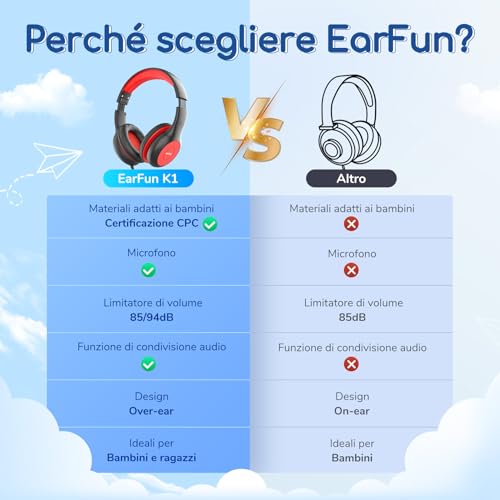
EarFun K1 review: 92 specs compared

Avg. price:~£20Form factor:over-earConnectivity:?Battery life:N/A hoursActive noise cancellation (ANC):no

EarFun K1 Review: Compare 92 technical specifications to see how this product ranks in the Headphones category and whether it is worth buying.
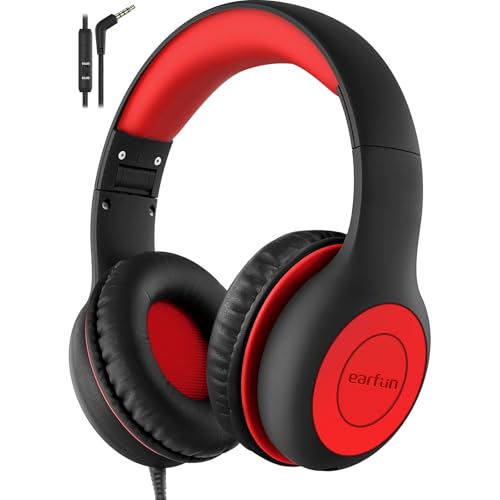
EarFun K1
6.8/10

Overall score

Score
6.8/ 10
✕
What it is
Our main score for this model, 1–10. It combines specs, best-of lists, expert reviews and owners.
How we count it
Parts: Technical score 40%, List score 30%, Reviews score 25%, Sentiment score 5%
Marks: Each part gets a mark out of 10. For reviews, lists and owners, a typical model in this category gets about 8 and the best one gets 10.
No data yet: A part with no data shows "?". It counts as the mark of a weaker model in this category (4 in 5 models with data score higher). This way, models with reviews, lists and owners usually come out ahead.
Score distribution
<55-66-77-88-99-10
Score components

40%

5.8

Technical score

30%

?

List scoreNot enough data yet, so we use 7.5, the mark of a weaker model in this category

25%

?

Reviews scoreNot enough data yet, so we use 7.7, the mark of a weaker model in this category

5%

?

Sentiment scoreNot enough data yet, so we use 5.8, the mark of a weaker model in this category

â–¼Worse than 68% of headphones
7.7

Value for money

Value for money
7.7/ 10
✕
What it is
An indicator that combines the headphones' overall rating with their cost.
When it matters
When you are looking for headphones that offer a strong balance of performance, features, and price.
Score distribution
<55-66-77-88-99-10
Score components

70%

6.8

Overall score

30%

10

Price

â–¼Worse than 68%
5.8

Technical score

Technical score
5.8/ 10
✕
What it is
How good the specs are compared with the other models in this category, 1–10.
How we count it
Areas: We rate the specs in each area against the other models in this category.
Weighting: The areas that matter most to buyers count more. The shares are shown under Score components.
Share: The technical score is 40% of the overall score.
Score distribution
<55-66-77-88-99-10
Score components

52%

5.9

Sound

20%

4.9

Features

10%

6.7

Design

8%

5.8

Connectivity

6%

4.0

Battery

4%

7.8

Calls & Controls

â–¼Worse than 58%
?

Reviews score

Reviews score
✕
What it is
Average grade from independent test sites, magazines and video reviewers, 1–10.
How we count it
Grades: Each review's own score is converted to 1–10; without one, we grade the review ourselves. Big test sites count more, short reviews half as much as full tests. A video review counts half.
Score: The average grade is 80% of the review mark; the number of reviews is the other 20% (1 review = 5, the typical number in this category = 8, the most-reviewed model = 10).
Enough data: With few reviews, the average grade is pulled toward the typical grade of this category. No reviews yet: 7.7 for now.
Share: Reviews count 25% of the overall score.
Score distribution
<55-66-77-88-99-10
Grades by review (0)
We have not found an independent test of this model yet. Until we do, its review part counts as 7.7.
User ratings collected online are not part of this score.
No expert tests yet
?

Sentiment score

Sentiment score
5.8/ 10
✕
What it is
How positive owners are about this model in their comments under video reviews and on forums. We read each comment, keep only people who say they own the model, and sort them into positive, mixed or negative.
How we count it
Score: We compare how satisfied this model’s owners are with the other models in this category: the typical model gets 8, the most satisfied tenth 10, the least satisfied 4. This is 80% of the owner mark; the number of owners is the other 20%.
Enough data: A model counts with 10+ owners from 4+ different discussions. With fewer, the owner part changes nothing.
Share: Owners count 5% of the overall score (left out in categories where fewer than 10 models have enough owner comments).
Score distribution
<55-66-77-88-99-10
Owners (0)
Not enough owner comments yet (10+ owners from 4+ discussions needed), so the owner part changes nothing.
Our own analysis of online owner opinions, not a rating from any website.
Not enough owner comments yet
?

List score

List score
7.5/ 10
✕
What it is
How often independent test sites, magazines and video reviewers put this model in their best-of lists for this category.
How we count it
Points: The model in the most lists of this category gets 10; the others get 8 to 10 in proportion. In no list yet: 7.5. Lists count 30% of the overall score.
Enough data: Every list counts, even a single one. With fewer than 10 best-of lists in the category, this part is left out.
Lists with this model (0)
Not in any best-of list yet, so this part counts as 7.5. Models in a list get 8 to 10.
Not in any best-of list yet
  • earfun-k1
  • earfun-k1
  • earfun-k1
  • earfun-k1
  • earfun-k1
  • earfun-k1
  • earfun-k1
  • earfun-k1
earfun-k1
earfun-k1
earfun-k1
earfun-k1
earfun-k1
earfun-k1
earfun-k1
earfun-k1
Where to buy
*As an Amazon Associate, we earn from qualifying purchases.
Best rankings
Available: ranking among products currently available (including other versions of this product).All: ranking among all products in the database.
Loading...
Loading category ranking...

Technical Specifications of pair of headphones EarFun K1

Technical score
Technical score
5.8/ 10
✕
What it is
How good the specs are compared with the other models in this category, 1–10.
How we count it
Areas: We rate the specs in each area against the other models in this category.
Weighting: The areas that matter most to buyers count more. The shares are shown under Score components.
Share: The technical score is 40% of the overall score.
Score distribution
<55-66-77-88-99-10
Score components:

52%

5.9

Sound

20%

4.9

Features

10%

6.7

Design

8%

5.8

Connectivity

6%

4.0

Battery

4%

7.8

Calls & Controls

5.8
Reviews score
7.7
Sentiment score
?
List score
?
Value for money
Value for money
7.7/ 10
✕
What it is
An indicator that combines the headphones' overall rating with their cost.
When it matters
When you are looking for headphones that offer a strong balance of performance, features, and price.
Score distribution
<55-66-77-88-99-10
Score components:

70%

6.8

Overall score

30%

10

Price

7.7
Active noise cancellation (ANC)
no
This pair of headphones does not support active noise cancellation. 28.1% of headphones support active noise cancellation.
Driver type
dynamic
Driver size
40 mm
This pair of headphones uses a driver size of 40 mm, larger driver size than 31.3% of headphones and equal to 51.2% of headphones.
Number of drivers
1
This pair of headphones uses 1 drivers, fewer drivers than 4.4% of headphones and equal to 95.6% of headphones.
Lowest frequency
20 Hz
This pair of headphones reaches a lowest frequency of 20 Hz, lower lowest frequency than 1.8% of headphones and equal to 49.8% of headphones.
Show more
Noise-canceling microphone
?
Can be used as a headset
yes
This pair of headphones is headset-ready, 85.3% is not. 14.7% of headphones can be used as headsets.
Number of microphones
1
This pair of headphones has 1 microphones, more microphones than 25.9% of headphones and equal to 50.3% of headphones.
Boom microphone
no
This pair of headphones does not include a boom microphone. 13% of headphones have a boom microphone.
Microphone SNR
N/A
Show more
Connectivity
?
Bluetooth version
N/A
Maximum Bluetooth range
N/A
Audio latency
N/A
Multipoint support
N/A
Show more
Ambient sound mode
no
This pair of headphones does not offer ambient sound mode. 25.6% of headphones support ambient sound mode.
EQ support
no
This pair of headphones does not support EQ customization. 24.8% of headphones support EQ.
Companion app
no
This pair of headphones does not work with a companion app. 21.3% of headphones support companion apps.
Adjustable ANC levels
N/A
Voice assistant support
?
Show more
Battery life
N/A
Battery life with ANC
N/A
Charging time
N/A
Quick charge
no
This pair of headphones does not support quick charging. 34.7% of headphones support quick charge.
Battery capacity
N/A
Show more
Form factor
over-ear
Weight
?
Acoustic design
closed-back
Clamp force
?
Earcup inner height
?
Show more

EarFun K1 vs the average pair of headphones

246810TotalDesignSoundBatteryConnectivityCalls & ControlsFeatures
  • In-line controls
    This pair of headphones includes in-line controls, the average pair of headphones does not. 35.5% of headphones support in-line controls.
  • Foldable design
    This pair of headphones has a foldable design, the average pair of headphones does not. 46.6% of headphones are foldable.
  • 4.5x cheaper
    EarFun K1 is cheaper than the average pair of headphones (£20 vs £90).
    £20 vs £90
  • 4.5x cheaper
    EarFun K1 is cheaper than the average pair of headphones (£20 vs £90).
    £20 vs £90
  • Foldable design
    This pair of headphones has a foldable design, the average pair of headphones does not. 46.6% of headphones are foldable.
  • In-line controls
    This pair of headphones includes in-line controls, the average pair of headphones does not. 35.5% of headphones support in-line controls.
  • Non-replaceable earpads
    This pair of headphones has non-replaceable earpads, while the average pair of headphones has replaceable ones. 75.6% of headphones have replaceable earpads.
  • 8 dB/mW lower sensitivity
    This pair of headphones has a lower sensitivity than the average pair of headphones (94 dB/mW vs 102 dB/mW). The average headphones have sensitivity of 102 dB/mW.
    94 dB/mW vs 102 dB/mW
  • Fixed cable
    This pair of headphones has a fixed cable, while the average pair of headphones has a detachable one. 59.5% of headphones have a detachable cable.
  • No battery indicator
    This pair of headphones does not show battery level clearly, while the average pair of headphones does. 57% of headphones have a battery level indicator.
  • No travel bag
    This pair of headphones does not include a travel bag, the average pair of headphones does. 62.4% of headphones include a travel bag.
  • 9 dB SPL lower sound pressure level
    This pair of headphones has a lower sound pressure level than the average pair of headphones (94 dB SPL vs 103 dB SPL). The average headphones reach a sound pressure level of 103 dB SPL.
    94 dB SPL vs 103 dB SPL
  • Non-replaceable earpads
    This pair of headphones has non-replaceable earpads, while the average pair of headphones has replaceable ones. 75.6% of headphones have replaceable earpads.
  • Fixed cable
    This pair of headphones has a fixed cable, while the average pair of headphones has a detachable one. 59.5% of headphones have a detachable cable.
  • No travel bag
    This pair of headphones does not include a travel bag, the average pair of headphones does. 62.4% of headphones include a travel bag.
  • 8 dB/mW lower sensitivity
    This pair of headphones has a lower sensitivity than the average pair of headphones (94 dB/mW vs 102 dB/mW). The average headphones have sensitivity of 102 dB/mW.
    94 dB/mW vs 102 dB/mW
  • 9 dB SPL lower sound pressure level
    This pair of headphones has a lower sound pressure level than the average pair of headphones (94 dB SPL vs 103 dB SPL). The average headphones reach a sound pressure level of 103 dB SPL.
    94 dB SPL vs 103 dB SPL
  • No battery indicator
    This pair of headphones does not show battery level clearly, while the average pair of headphones does. 57% of headphones have a battery level indicator.

Video reviews

Hands-on testing, unboxing, and real-world video evaluations

Overview video

Third-party reviews

What customers like about EarFun K1

  • The 40 mm driver gives the sound some body.
  • The range runs from 20 Hz to 20000 Hz.
  • It folds flat for easy packing.
  • In-line controls handle track skips and calls.
  • One microphone works for calls.
  • Passive noise reduction blocks some room noise.

What customers don't like about EarFun K1

  • At 94 dB/mW it needs a strong source to sound full.
  • The sound pressure level of 94 dB SPL is quiet for a loud room.
  • Earpads cannot be replaced when they wear out.
  • There is no app or EQ to change the sound.
  • No active noise cancellation, so a train still gets through.

Verdict

The 40 mm driver is the main reason to look at the EarFun K1, a budget headset for people who want plain sound without fuss. It covers 20 Hz to 20000 Hz, so the low and high ends of a track both come through. It folds flat, which helps when it goes into a bag. The in-line controls handle track skips and calls through the single microphone. Passive noise reduction is all you get, so it blocks some room noise but not a train. The trade-off is volume. At 94 dB/mW it needs a strong source to sound full. The earpads cannot be swapped when they wear out. There is no app and no way to change the sound. It suits someone who wants a simple headset for calls and commutes.

Compare EarFun K1 with other products in the Headphones category

1Product to compare no. 1
VS
2Product to compare no. 2
VS
3Product to compare no. 3 (optional)

Graphic comparison of EarFun K1 and other products in the Headphones category

No results found