Scored using Fitness trackers Methodology v3.0
Fitness trackers Methodology v3.0
Mathematical & Unbiased Scoring
Products in this category are scored under Frontum Fitness trackers Methodology v3.0: the technical score from the specifications is the base, and independent expert and video reviews (up to ±0.5 points), owner opinions (up to ±0.3) and best-of lists (up to +0.3) move it up or down.
Explore Fitness trackers Methodology v3.0

Google Fitbit Air review: 163 specs compared

Avg. price:~£90Battery life:7 daysScreen size:N/A inchHeart rate monitor:yesGPS:noWaterproof depth rating:50 m

Google Fitbit Air Review: Compare 168 technical specifications, 7 expert and video reviews and 31 best-of lists to see how this product ranks in the Fitness trackers category and whether it is worth buying.
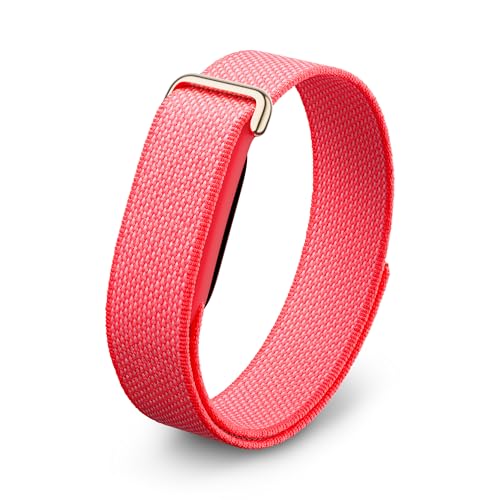
Google Fitbit Air
8.3/10

Overall score

Score
8.3/ 10
✕
What it is
Our main score for this model, 1–10. It combines specs, best-of lists, expert reviews and owners.
How we count it
Parts: Technical score 35%, List score 30%, Reviews score 25%, Sentiment score 10%
Marks: Each part gets a mark out of 10. For reviews, lists and owners, a typical model in this category gets about 8 and the best one gets 10.
No data yet: A part with no data shows "?". It counts as the mark of a weaker model in this category (4 in 5 models with data score higher). This way, models with reviews, lists and owners usually come out ahead.
Score distribution
▼
<55-66-77-88-99-10
Score components

35%

6.8

Technical score

30%

9.8

List score

25%

8.0

Reviews score

10%

9.5

Sentiment score

★Better than 93% of fitness trackers
8.8

Value for money

Value for money
8.8/ 10
✕
What it is
An indicator that combines the fitness tracker's overall rating with its cost.
When it matters
When you are looking for a fitness tracker with a good balance between quality and price.
Score distribution
▼
<55-66-77-88-99-10
Score components

70%

8.3

Overall score

30%

10

Price

★Better than 92%
6.8

Technical score

Technical score
6.8/ 10
✕
What it is
How good the specs are compared with the other models in this category, 1–10.
How we count it
Areas: We rate the specs in each area against the other models in this category.
Weighting: The areas that matter most to buyers count more. The shares are shown under Score components.
Share: The technical score is 35% of the overall score.
Score distribution
▼
<55-66-77-88-99-10
Score components

20%

8.7

Sports

20%

4.0

Battery

18%

9.0

Health

18%

4.0

Display

8%

6.1

Smart functions

8%

9.7

Wellness

4%

7.5

Connectivity

4%

9.6

Design

▼Worse than 57%
8.0

Reviews score

Reviews score
8.0/ 10
✕
What it is
Average grade from independent test sites, magazines and video reviewers, 1–10.
How we count it
Grades: Each review's own score is converted to 1–10; without one, we grade the review ourselves. Big test sites count more, short reviews half as much as full tests. A video review counts half.
Score: The average grade is 80% of the review mark; the number of reviews is the other 20% (1 review = 5, the typical number in this category = 8, the most-reviewed model = 10).
Enough data: With few reviews, the average grade is pulled toward the typical grade of this category. No reviews yet: 7.2 for now.
Share: Reviews count 25% of the overall score.
Score distribution
▼
<55-66-77-88-99-10

80%

8.3

Average grade

20%

6.9

Popularity

Grades by review (7)
7 video reviews, each counting half as much as a written test. Reviews count 25% of the overall score.
User ratings collected online are not part of this score.
▲Better than 73%
9.8

List score

List score
9.8/ 10
✕
What it is
How often independent test sites, magazines and video reviewers put this model in their best-of lists for this category.
How we count it
Points: The model in the most lists of this category gets 10; the others get 8 to 10 in proportion. In no list yet: 7.5. Lists count 30% of the overall score.
Enough data: Every list counts, even a single one. With fewer than 5 best-of lists in the category, this part is left out.
Lists with this model (31)
List score: in 31 of 54 lists (57%)
★Better than 98%
  • google-fitbit-air
  • google-fitbit-air
  • google-fitbit-air
  • google-fitbit-air
  • google-fitbit-air
  • google-fitbit-air
  • google-fitbit-air
  • google-fitbit-air
  • google-fitbit-air
  • google-fitbit-air
  • google-fitbit-air
  • google-fitbit-air
  • google-fitbit-air
google-fitbit-air
google-fitbit-air
google-fitbit-air
google-fitbit-air
google-fitbit-air
google-fitbit-air
google-fitbit-air
google-fitbit-air
google-fitbit-air
google-fitbit-air
google-fitbit-air
google-fitbit-air
google-fitbit-air
Best prices
*As an Amazon Associate, we earn from qualifying purchases.
Best rankings
Available: ranking among products currently available (including other versions of this product).All: ranking among all products in the database.

What reviewers say about the Google Fitbit Air

Based on 0 · 7

Reviewers like the subscription value, easy app and solid battery life, with only a few minor complaints.
Praised
Pick a topic to see who said what

What owners say about the Google Fitbit Air

Based on 248 owners sharing their experience in online comments

50%positive13%mixed37%negative

Owners value the light, comfortable design and affordability, while app bugs and inconsistent tracking remain common frustrations.

What owners dislike

  • Owners report a buggy app with workouts failing to save, slow data sync, and the tracker sometimes hanging and disconnecting from the phone.30
  • Owners report heart rate missing in weight training and swimming, and readings too high in runs, boxing and dance.22
  • Owners say automatic detection is slow, often needing 10 to 15 minutes, misses runs, strength sessions and gym workouts, and logs motorbike rides as workouts.14
  • Owners say steps are often off: extra ghost steps while driving, sitting or brushing teeth, and undercounts when walking without arm swing or on a treadmill.14
  • Owners say it misses bathroom trips, and some whole nights, and counts time awake in bed as sleep.14
  • Owners say the AI coach is too wordy, always praises, invents workouts never done, and misreads data such as sleep totals.14
  • Owners say phone GPS often fails to record a route, distance and altitude gain are off by 20 to 45%, and some runs show no map.8
  • Owners say AI features are geo-blocked in some countries, leaving trial users with a coach that cannot access their data. Some cancel the trial early.8
  • Owners say data cannot be written to Apple Health, history is kept only 90 days, and there is no dashboard, so some use sync apps.5
  • Owners say battery lasts 5 to 7 days, short of the claimed 7 to 10 days, and drains faster in workout mode.5

Points mentioned by at least 3 owners, most mentioned first.

Loading...
Loading category ranking...

Fitness trackers model ranking

Ranked #18 of 238 models in Fitness trackers (Overall score)

Technical Specifications of fitness tracker Google Fitbit Air

Technical score
Technical score
6.8/ 10
✕
What it is
How good the specs are compared with the other models in this category, 1–10.
How we count it
Areas: We rate the specs in each area against the other models in this category.
Weighting: The areas that matter most to buyers count more. The shares are shown under Score components.
Share: The technical score is 35% of the overall score.
Score distribution
▼
<55-66-77-88-99-10
Score components:

20%

8.7

Sports

20%

4.0

Battery

18%

9.0

Health

18%

4.0

Display

8%

6.1

Smart functions

8%

9.7

Wellness

4%

7.5

Connectivity

4%

9.6

Design

6.8
Reviews score
8.0
List score
9.8
Value for money
Value for money
8.8/ 10
✕
What it is
An indicator that combines the fitness tracker's overall rating with its cost.
When it matters
When you are looking for a fitness tracker with a good balance between quality and price.
Score distribution
▼
<55-66-77-88-99-10
Score components:

70%

8.3

Overall score

30%

10

Price

8.8
Heart rate monitor
yes
This fitness tracker supports heart rate monitoring. 36.2% of fitness trackers support heart rate monitoring.
Resting heart rate
yes
This fitness tracker supports Resting heart rate. 47.5% of fitness trackers support Resting heart rate.
Fast/slow heart rate alerts
no
This fitness tracker does not support high and low heart rate alerts. 36.5% of fitness trackers support high and low heart rate alerts.
Irregular heart rate alerts
yes
This fitness tracker supports irregular heart rate alerts. 86.8% of fitness trackers support irregular heart rate alerts.
Blood oxygen sensor
yes
This fitness tracker has a blood oxygen sensor. 68.2% of fitness trackers have a blood oxygen sensor.
Show more
GPS
no
This fitness tracker does not have GPS. 12.7% of fitness trackers have GPS.
Satellite systems supported
N/A
GNSS bands supported
N/A
Galileo support
N/A
Acquires GPS faster
N/A
Show more
Notifications
no
This fitness tracker does not support notifications. 72.7% of fitness trackers support notifications.
Vibrating alerts
yes
This fitness tracker supports vibration alerts. 14.3% of fitness trackers support vibration alerts.
Call control
no
This fitness tracker does not support call controls. 40.8% of fitness trackers support call controls.
Call answering
no
This fitness tracker does not support call answering. 0.9% of fitness trackers support call answering.
Calendar sync
no
This fitness tracker does not support calendar sync. 20.5% of fitness trackers support calendar sync.
Show more
Activity reports
yes
This fitness tracker supports activity reports. 5% of fitness trackers support activity reports.
Goal setting
yes
This fitness tracker supports goal setting. 2.5% of fitness trackers support goal setting.
Achievements
yes
This fitness tracker supports achievements. 23.8% of fitness trackers support achievements.
Inactivity alerts
yes
This fitness tracker supports inactivity alerts. 21.4% of fitness trackers support inactivity alerts.
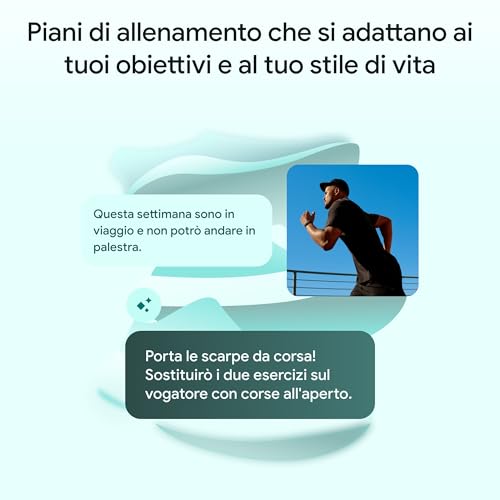
Coaching
yes
This fitness tracker supports coaching. 64% of fitness trackers support coaching.
Show more
Bluetooth version
5
This fitness tracker supports Bluetooth 5 which is newer than in 68% of fitness trackers and equal to that in 17.8% of fitness trackers.
Maximum Bluetooth range
9 m
This fitness tracker offers a Bluetooth range of 9 m which is lower than that of 88.7% of fitness trackers and equal to that of 2.1% of fitness trackers.
NFC
no
This fitness tracker does not have NFC. 11.8% of fitness trackers have NFC.
Wi-Fi connectivity
no
This fitness tracker does not support Wi-Fi. 2.5% of fitness trackers support Wi-Fi.
Wi-Fi version
no
This fitness tracker does not support modern Wi-Fi. 0.9% of fitness trackers support modern Wi-Fi.
Show more
Battery life
7 days
This fitness tracker offers a battery life of 7 days which is shorter than that of 56.1% of fitness trackers and equal to that of 21.9% of fitness trackers.
Battery life with GPS on
N/A
Battery life in training mode
?
Power-saving battery life
?
Battery capacity
34.5 mAh
This fitness tracker has a battery capacity of 34.5 mAh which is lower than that of 94.7% of fitness trackers.
Show more
What reviewers say
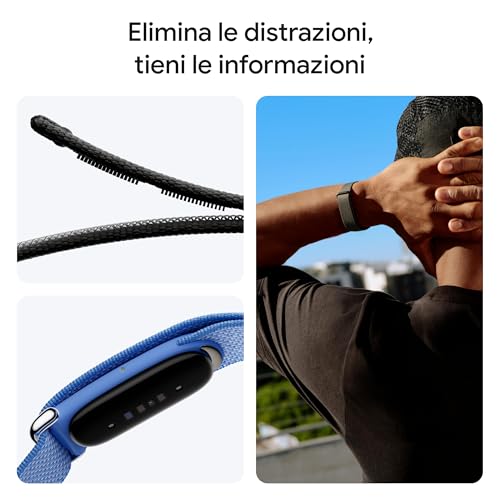
Display
no
This fitness tracker does not have a display. 74.2% of fitness trackers have a display.
Screen size
N/A
Display type
N/A
Screen resolution
N/A
Pixel density
N/A
Show more
Form factor
wristband
Hybrid design
no
This fitness tracker does not support Hybrid design. 2.1% of fitness trackers support Hybrid design.
Designed for kids
no
This fitness tracker is not designed for kids. 3.3% of fitness trackers are designed for kids.
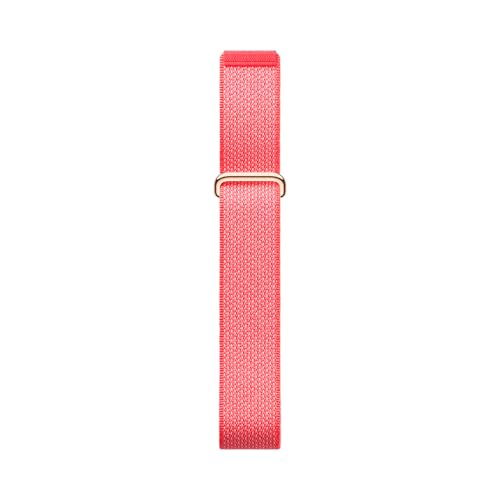
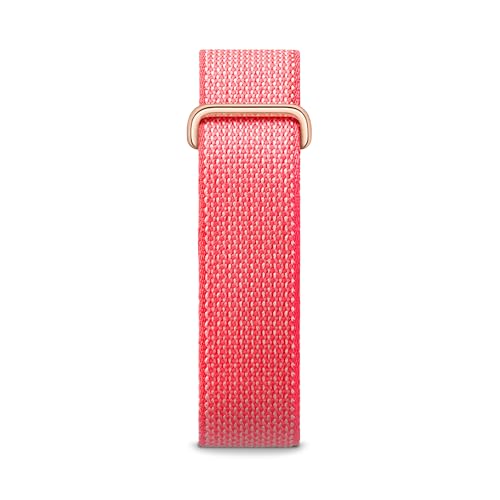
Replaceable watch band
yes
This fitness tracker has a replaceable watch band. 23.4% of fitness trackers have a replaceable watch band.
Band width
18.2 mm
Show more

Google Fitbit Air vs the average fitness tracker

246810TotalHealthSportsBatteryDisplayConnectivitySmart functionsDesignWellness
  • Logs single exercises
    This fitness tracker records the single exercises inside a workout, while the average fitness tracker does not. 9.1% of fitness trackers do this.
  • Blood oxygen monitoring
    This fitness tracker has a blood oxygen sensor, while the average fitness tracker does not. 32.1% of fitness trackers have a blood oxygen sensor.
  • Tracks HRV
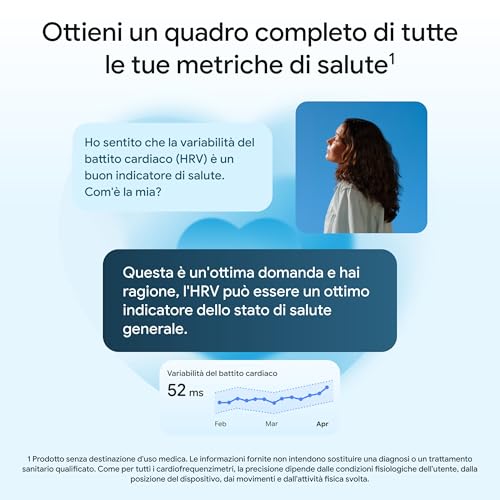
    This fitness tracker supports HRV tracking, while the average fitness tracker does not. 15.1% of fitness trackers support HRV tracking.
  • 22.5% higher list score
    List score
    9.8/ 10
    ✕
    What it is
    How often independent test sites, magazines and video reviewers put this model in their best-of lists for this category.
    How we count it
    Points: The model in the most lists of this category gets 10; the others get 8 to 10 in proportion. In no list yet: 7.5. Lists count 30% of the overall score.
    Enough data: Every list counts, even a single one. With fewer than 5 best-of lists in the category, this part is left out.
    Lists with this model (31)
    List score: in 31 of 54 lists (57%)
    9.8 vs 8.0
  • Smart alarm
    This fitness tracker supports a smart alarm, while the average fitness tracker does not. 30.8% of fitness trackers support a smart alarm.
  • Coaching features
    This fitness tracker supports coaching, while the average fitness tracker does not. 36.3% of fitness trackers support coaching.
  • Tracks respiration rate
    This fitness tracker supports respiratory rate tracking, while the average fitness tracker does not. 16% of fitness trackers support respiratory rate tracking.
  • 78.3% lighter
    This fitness tracker is lighter than the average fitness tracker (5.2 g vs 24 g). The average fitness tracker weighs 24 g.
    5.2 g vs 24 g
  • 22.5% higher list score
    List score
    9.8/ 10
    ✕
    What it is
    How often independent test sites, magazines and video reviewers put this model in their best-of lists for this category.
    How we count it
    Points: The model in the most lists of this category gets 10; the others get 8 to 10 in proportion. In no list yet: 7.5. Lists count 30% of the overall score.
    Enough data: Every list counts, even a single one. With fewer than 5 best-of lists in the category, this part is left out.
    Lists with this model (31)
    List score: in 31 of 54 lists (57%)
    9.8 vs 8.0
  • 9.6% higher review score
    Reviews score
    8.0/ 10
    ✕
    What it is
    Average grade from independent test sites, magazines and video reviewers, 1–10.
    How we count it
    Grades: Each review's own score is converted to 1–10; without one, we grade the review ourselves. Big test sites count more, short reviews half as much as full tests. A video review counts half.
    Score: The average grade is 80% of the review mark; the number of reviews is the other 20% (1 review = 5, the typical number in this category = 8, the most-reviewed model = 10).
    Enough data: With few reviews, the average grade is pulled toward the typical grade of this category. No reviews yet: 7.2 for now.
    Share: Reviews count 25% of the overall score.
    Score distribution
    ▼
    <55-66-77-88-99-10

    80%

    8.3

    Average grade

    20%

    6.9

    Popularity

    Grades by review (7)
    7 video reviews, each counting half as much as a written test. Reviews count 25% of the overall score.
    User ratings collected online are not part of this score.
    8.0 vs 7.3
  • 20.3% higher sentiment score
    9.5 vs 7.9
  • 9% better value for money
    Google Fitbit Air has a higher value-for-money score than the average fitness tracker (8.79 vs 8.1).
    8.79 vs 8.07
  • Blood oxygen monitoring
    This fitness tracker has a blood oxygen sensor, while the average fitness tracker does not. 32.1% of fitness trackers have a blood oxygen sensor.
  • Tracks HRV
    This fitness tracker supports HRV tracking, while the average fitness tracker does not. 15.1% of fitness trackers support HRV tracking.
  • Tracks respiration rate
    This fitness tracker supports respiratory rate tracking, while the average fitness tracker does not. 16% of fitness trackers support respiratory rate tracking.
  • Built-in temperature sensor
    This fitness tracker has a temperature sensor, while the average fitness tracker does not. 13.4% of fitness trackers have a temperature sensor.
  • Irregular heart rate alerts
    This fitness tracker supports irregular heart rate alerts, while the average fitness tracker does not. 13.6% of fitness trackers support irregular heart rate alerts.
  • Tracks skin temperature
    This fitness tracker supports skin temperature tracking, while the average fitness tracker does not. 15.3% of fitness trackers support skin temperature tracking.
  • Tracks menstrual cycle
    This fitness tracker supports menstrual cycle tracking, while the average fitness tracker does not. 45.2% of fitness trackers support menstrual cycle tracking.
  • Period notifications
    This fitness tracker has period notifications, while the average fitness tracker does not. 34.6% of fitness trackers have period notifications.
  • Readiness score support
    This fitness tracker shows a readiness score, while the average fitness tracker does not. 7.9% of fitness trackers show a readiness score.
  • Ovulation prediction
    This fitness tracker predicts ovulation, while the average fitness tracker does not. 44.1% of fitness trackers predict ovulation.
  • Cycle start prediction
    This fitness tracker predicts the start date, while the average fitness tracker does not. 45.8% of fitness trackers predict the start date.
  • 9 years newer release date
    This fitness tracker was released more recently than the average fitness tracker (2026 vs 2017). The average fitness tracker was released in 2017.
    2026 vs 2017
  • Logs single exercises
    This fitness tracker records the single exercises inside a workout, while the average fitness tracker does not. 9.1% of fitness trackers do this.
  • Tracks training load
    This fitness tracker supports training load tracking, while the average fitness tracker does not. 19.9% of fitness trackers support training load tracking.
  • Built-in gyroscope
    This fitness tracker has a gyroscope, while the average fitness tracker does not. 28.7% of fitness trackers have a gyroscope.
  • Modern Bluetooth version
    This fitness tracker supports a newer Bluetooth version than the average fitness tracker (5 vs 4.1). The average fitness tracker supports Bluetooth 4.1.
    5.0 vs 4.1
  • Smart alarm
    This fitness tracker supports a smart alarm, while the average fitness tracker does not. 30.8% of fitness trackers support a smart alarm.
  • 78.3% lighter
    This fitness tracker is lighter than the average fitness tracker (5.2 g vs 24 g). The average fitness tracker weighs 24 g.
    5.2 g vs 24 g
  • 2.7 mm thinner design
    This fitness tracker is thinner than the average fitness tracker (8.3 mm vs 11 mm). The average fitness tracker has a thickness of 11 mm.
    8.3 mm vs 11 mm
  • Coaching features
    This fitness tracker supports coaching, while the average fitness tracker does not. 36.3% of fitness trackers support coaching.
  • Tracks calorie intake
    This fitness tracker supports calorie intake tracking, while the average fitness tracker does not. 38.4% of fitness trackers support calorie intake tracking.
  • Water intake tracking
    This fitness tracker supports water intake tracking, while the average fitness tracker does not. 40.9% of fitness trackers support water intake tracking.
  • Points-based system
    This fitness tracker supports a points-based system, while the average fitness tracker does not. 37.2% of fitness trackers support a points-based system.
  • No notifications
    This fitness tracker does not support notifications, while the average fitness tracker does. 72.3% of fitness trackers support notifications.
  • 72.4% smaller battery capacity
    This fitness tracker has a lower battery capacity than the average fitness tracker (34.5 mAh vs 125 mAh). The average fitness tracker has 125 mAh of battery capacity.
    34.5 mAh vs 125 mAh
  • 3 days shorter battery life
    This fitness tracker has a lower battery life than the average fitness tracker (7 days vs 10 days). The average fitness tracker has 10 days of battery life.
    7 days vs 10 days
  • No stopwatch
    This fitness tracker does not have a stopwatch, while the average fitness tracker does. 60.5% of fitness trackers have a stopwatch.
  • No display
    This fitness tracker does not have a display, while the average fitness tracker does. 73.9% of fitness trackers have a display.
  • 1 m shorter Bluetooth range
    This fitness tracker has a shorter Bluetooth range than the average fitness tracker (9 m vs 10 m). The average fitness tracker offers a Bluetooth range of 10 m.
    9 m vs 10 m
  • 28.6% more expensive
    Google Fitbit Air is more expensive than the average fitness tracker (£90 vs £70).
    £90 vs £70
  • 28.6% more expensive
    Google Fitbit Air is more expensive than the average fitness tracker (£90 vs £70).
    £90 vs £70
  • 72.4% smaller battery capacity
    This fitness tracker has a lower battery capacity than the average fitness tracker (34.5 mAh vs 125 mAh). The average fitness tracker has 125 mAh of battery capacity.
    34.5 mAh vs 125 mAh
  • 3 days shorter battery life
    This fitness tracker has a lower battery life than the average fitness tracker (7 days vs 10 days). The average fitness tracker has 10 days of battery life.
    7 days vs 10 days
  • No display
    This fitness tracker does not have a display, while the average fitness tracker does. 73.9% of fitness trackers have a display.
  • 1 m shorter Bluetooth range
    This fitness tracker has a shorter Bluetooth range than the average fitness tracker (9 m vs 10 m). The average fitness tracker offers a Bluetooth range of 10 m.
    9 m vs 10 m
  • No notifications
    This fitness tracker does not support notifications, while the average fitness tracker does. 72.3% of fitness trackers support notifications.
  • No stopwatch
    This fitness tracker does not have a stopwatch, while the average fitness tracker does. 60.5% of fitness trackers have a stopwatch.

Video reviews

Hands-on testing, unboxing, and real-world video evaluations

9.0
Sohail Abdulla
≈ estimated
27/09/2026
Long-term test · about a month of daily use
Verdict
Google Fitbit Air is a simple, subscription-free tracker for people who want health tracking without a smartwatch.
9.0
Baris Alkis
≈ estimated
29/06/2026
Hands-on review · daily wear, battery and coach tests
Verdict
Google Fitbit Air is very good for most people, offering basic health data and a week-long battery, though the coach needs a subscription.

Third-party reviews

What we like about Google Fitbit Air

  • At 5.2 g it almost disappears on the wrist.
  • Seven days of battery life means a charge only once a week.
  • Irregular heart rate alerts warn you about unusual readings.
  • A smart alarm and vibrating alerts wake you without a sound.
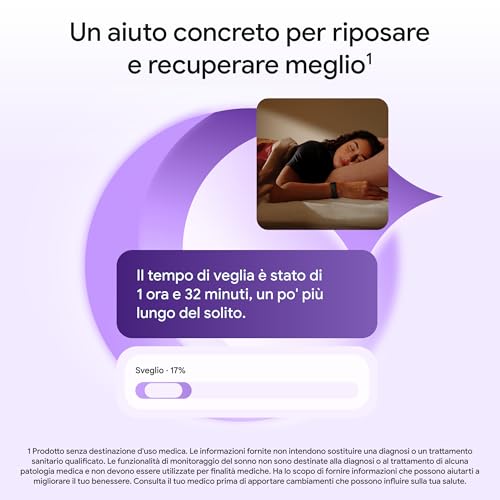
  • Sleep reports and a readiness score help with recovery planning.
  • It works with both Android and iOS phones.

What we don't like about Google Fitbit Air

  • There are no notifications, so calls and messages stay on the phone.
  • There is no GPS, so routes cannot be recorded.
  • There is no screen, so quick checks mid-workout are not possible.
  • The Bluetooth range is 9 m, so the phone must stay close.

Verdict

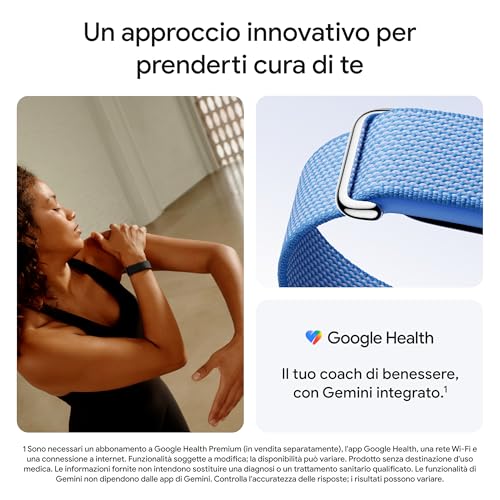
Weighing only 5.2 g, the Google Fitbit Air almost disappears on the wrist. It is a screenless tracker, so there is no display to read, and everything is checked in the app on your phone. It tracks sleep, heart rate, steps and activity, and it sends sleep reports and a readiness score. Two extras stand out: a temperature sensor and irregular heart rate alerts. Heart rate variability and respiration rate are tracked as well. The battery is rated at 7 days, and the band charges in 1.5 hours. The trade-off is that there are no notifications, and there is no GPS, so route tracking is not possible. It suits someone who wants a quiet tracker for sleep and daily health data and does not need a watch face or messages on the wrist.

Compare Google Fitbit Air with other products in the Fitness trackers category

1Product to compare no. 1
VS
2Product to compare no. 2
VS
3Product to compare no. 3 (optional)

Graphic comparison of Google Fitbit Air and other products in the Fitness trackers category

No results found