
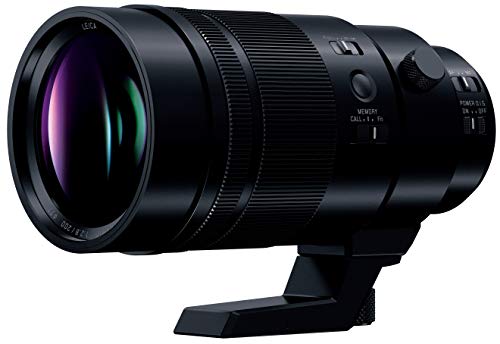
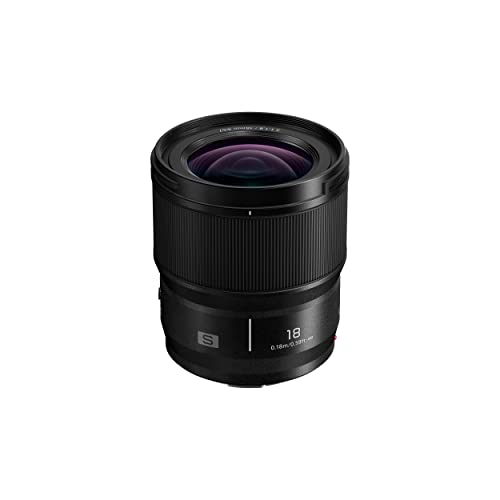
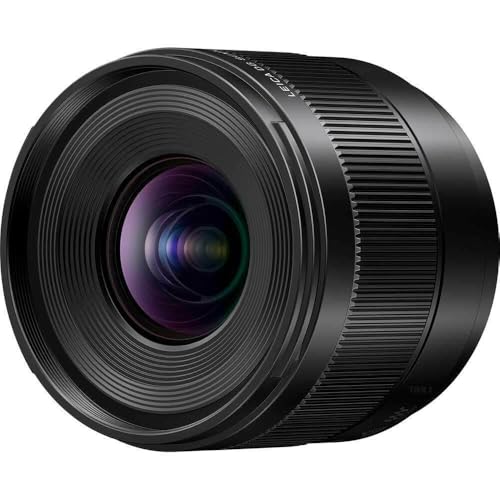
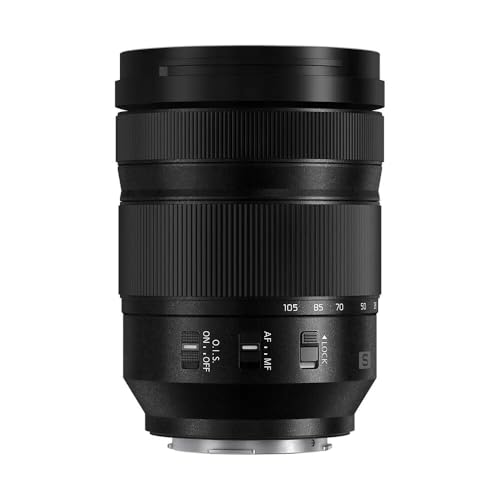
Are Panasonic Lumix camera lenses good?
Panasonic Lumix camera lenses have an average overall score of 8, ranking #7 among comparable camera lens brands, and a user rating of 9.3, placing them at #6 based on user reviews.
Panasonic Lumix lenses are especially good for photographers and filmmakers who want compact Micro Four Thirds kits or video-focused L-mount options. Lumix G offers small zooms, bright primes, macros, and long equivalent reach, while Lumix S adds f/1.8 primes, versatile zooms, and professional S PRO glass.
The key limitation is that Lumix G and Lumix S use incompatible mounts. Check the exact body-and-lens combination because Dual I.S., autofocus behavior, correction profiles, manual-focus response, and teleconverter support can vary.
The chart below compares Panasonic Lumix with other camera lens brands by average overall score.
[horizontal-chart-11494132347064144310168291166362011234964167001587]


Who are Panasonic Lumix camera lenses best for?
The following photographers and filmmakers should consider Panasonic Lumix camera lenses:
- Lumix G and other Micro Four Thirds owners: Lumix G, G X, and Leica DG lenses provide compact native choices from ultra-wide to super-telephoto, although body-specific stabilization and autofocus features should be confirmed when mixing brands.
- Lumix S and other L-mount owners: Lumix S lenses offer native full-frame integration, and the L-Mount Alliance also lets buyers compare Panasonic options with compatible Leica and Sigma lenses.
- Travel and outdoor photographers: Small Micro Four Thirds primes and zooms reduce carrying weight, while weather-sealed Leica DG or Lumix S models suit more demanding conditions when paired with a suitably sealed body.
- Wildlife and sports photographers: The 2× Micro Four Thirds field-of-view factor provides substantial apparent reach from relatively portable lenses, and Panasonic also offers stabilized 70–300 mm and professional telephoto options for L-mount.
- Hybrid photo-video creators: Selected Panasonic lenses provide quiet focus motors, power zoom, minimized focus breathing, linear manual-focus settings, or de-clicked aperture behavior that can matter more than still-photo sharpness alone.
- Portrait, event, and low-light photographers: Leica DG f/1.2–f/1.7 primes, Lumix G compact primes, the Lumix S f/1.8 family, and S PRO f/2.8 zooms cover different balances of background separation, autofocus, weight, and price.
How do Panasonic Lumix camera lenses compare with lenses from other brands?
Panasonic Lumix lenses differ most clearly by combining two alliance-based mounts with unusually strong attention to stabilization and hybrid photo-video use. Lumix G and Leica DG lenses use the shared Micro Four Thirds mount, while Lumix S and S PRO lenses use the full-frame L-mount shared with Leica and Sigma. This gives buyers broad cross-brand lens choice, but the G and S systems remain physically incompatible with each other.
The Micro Four Thirds side emphasizes portability and reach. Its 2× field-of-view factor makes a 12–60 mm lens frame like a 24–120 mm full-frame lens and a 100–400 mm lens frame like a 200–800 mm option, without changing the marked aperture. Compared with full-frame systems, equivalent background blur and high-ISO performance depend more on the camera format, but the smaller lenses are attractive for travel, wildlife, documentary video, and handheld work.
The L-mount side emphasizes full-frame image quality and a coordinated physical design. Panasonic offers an f/1.8 prime family with similar dimensions and controls, compact zooms such as the 18–40 mm and 20–60 mm, macro-capable lenses, and S PRO zooms for professional use. Sigma and Leica expand the same mount with additional price, size, focal-length, and optical-character choices.
Panasonic also distinguishes itself through body-lens integration. POWER O.I.S. lenses can work with compatible Lumix body stabilization through Dual I.S., while selected lenses support linear manual-focus response, video-oriented focusing, or correction profiles tuned for Lumix cameras. These benefits are model-specific, so they should be verified rather than assumed across every Micro Four Thirds or L-mount combination.
What are the main series of Panasonic Lumix camera lenses?
The main Panasonic Lumix camera lens series and families are as follows:
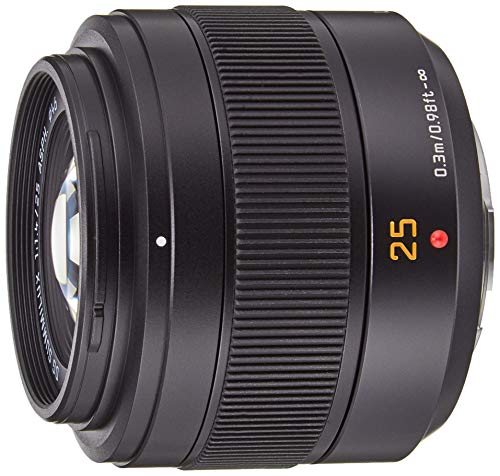
- Lumix G compact primes and zooms: These Micro Four Thirds lenses include small models such as the 14 mm f/2.5, 20 mm f/1.7, 25 mm f/1.7, 12–32 mm, 12–60 mm, and 45–150 mm. They prioritize portability, approachable pricing, and everyday focal lengths, although sealing, controls, stabilization, and maximum aperture vary considerably by model.
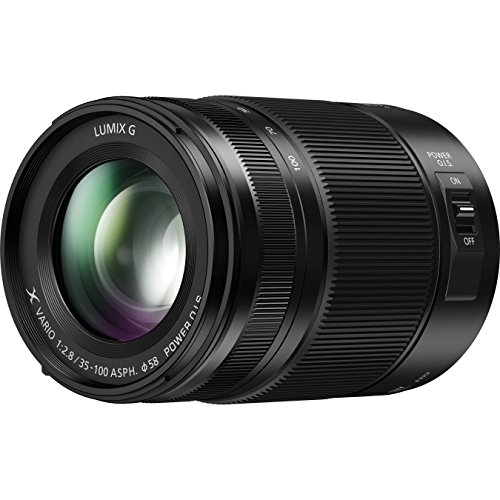
- Lumix G X and power-zoom lenses: The G X designation identifies higher-positioned or specialized Micro Four Thirds designs such as the 35–100 mm f/2.8 and compact PZ 14–42 mm. Selected power-zoom models are useful for controlled video zooming and compact kits, while faster constant-aperture zooms target events and professional hybrid work at a higher cost.
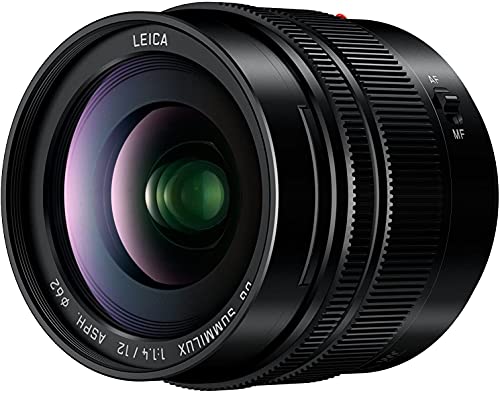
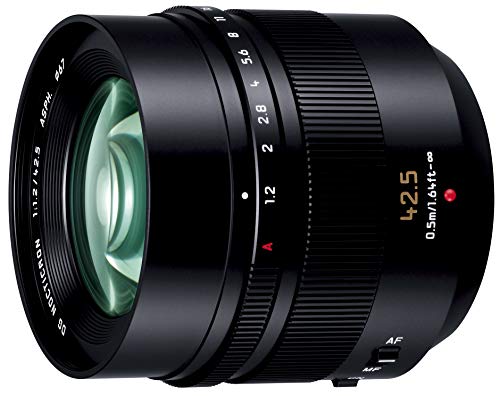
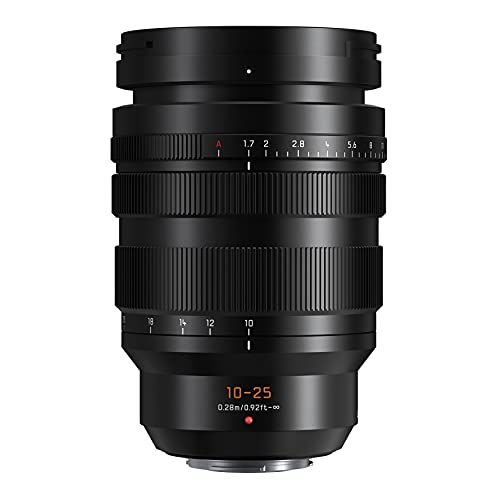
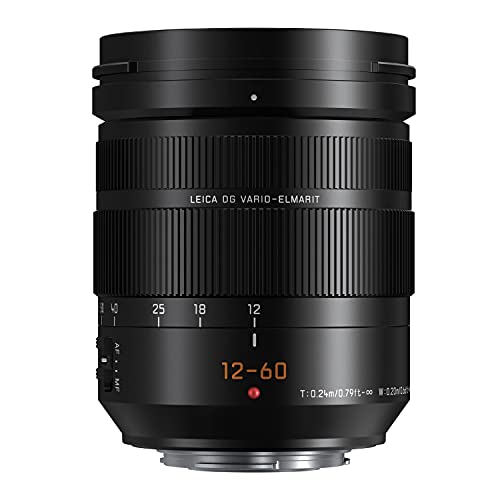
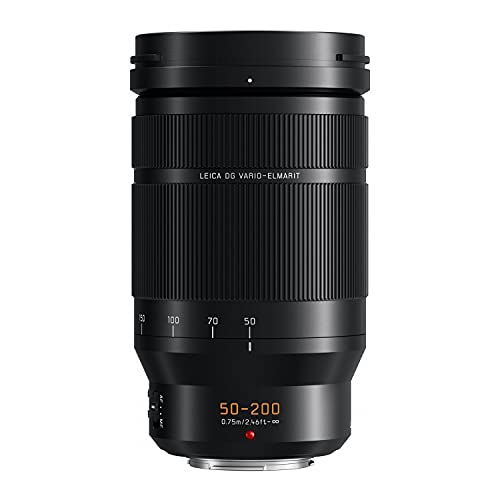
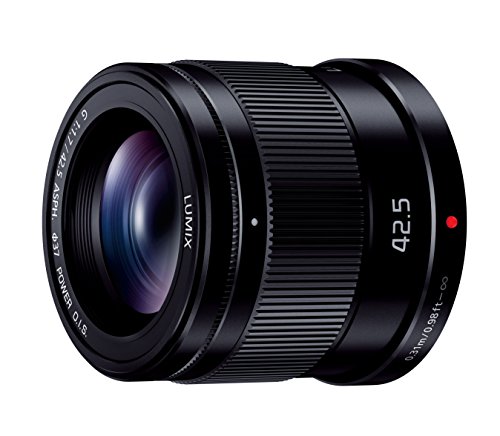
- Leica DG primes and zooms: Panasonic Leica DG lenses are premium Micro Four Thirds optics developed under Leica branding and quality standards, including the 9 mm f/1.7, 12 mm f/1.4, 25 mm f/1.4, 42.5 mm f/1.2 Nocticron, 10–25 mm f/1.7, 12–60 mm f/2.8–4, and 100–400 mm telephoto zooms. They emphasize brighter apertures, rendering, construction, or specialist capability, but the Leica name does not make them compatible with Leica L-mount cameras.
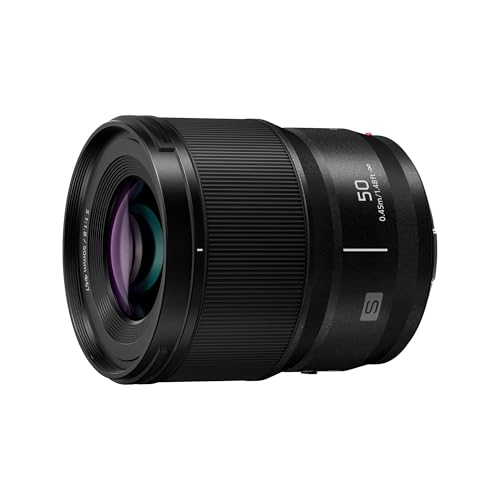
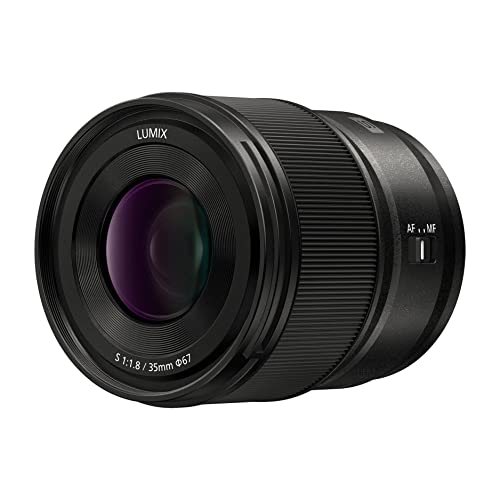
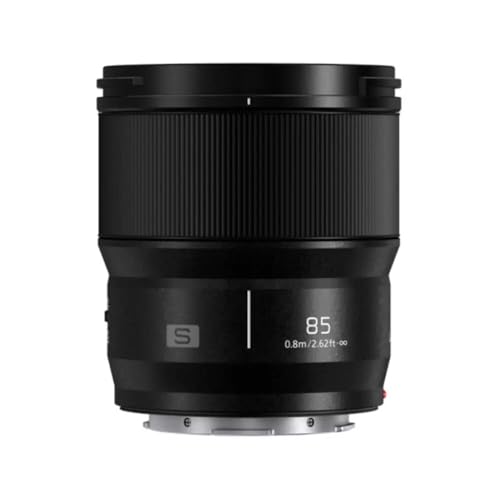
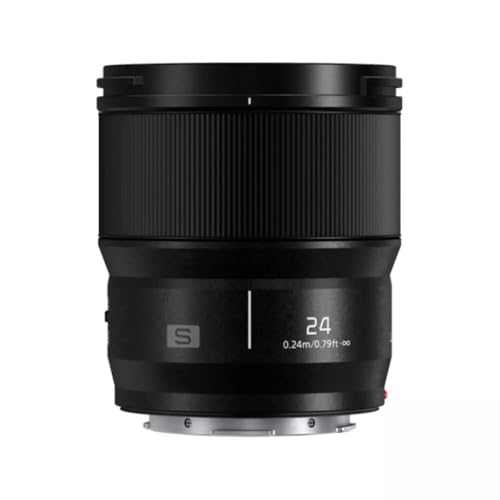
- Lumix S f/1.8 primes and compact L-mount lenses: Panasonic full-frame L-mount choices include similarly sized 18 mm, 24 mm, 35 mm, 50 mm, and 85 mm f/1.8 primes plus compact zooms such as the 18–40 mm, 20–60 mm, and 14–28 mm macro. Consistent controls and balance help when changing lenses on a gimbal, while the moderate prices and filter sizes make this family practical for hybrid shooters.
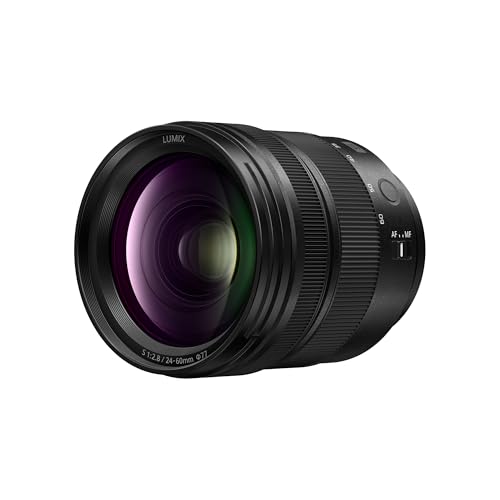
- Lumix S general-purpose, macro, and stabilized zooms: Models such as the 24–105 mm f/4 Macro O.I.S., 28–200 mm Macro O.I.S., 70–300 mm Macro O.I.S., 24–60 mm f/2.8, and 100 mm f/2.8 Macro cover travel, close-up, events, and telephoto use. These lenses emphasize useful focusing distances and flexible ranges, but buyers should compare aperture, stabilization, weather sealing, and size rather than assuming every non-PRO S lens occupies the same tier.
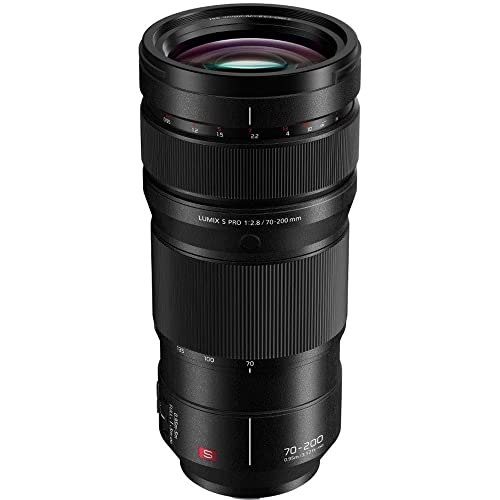
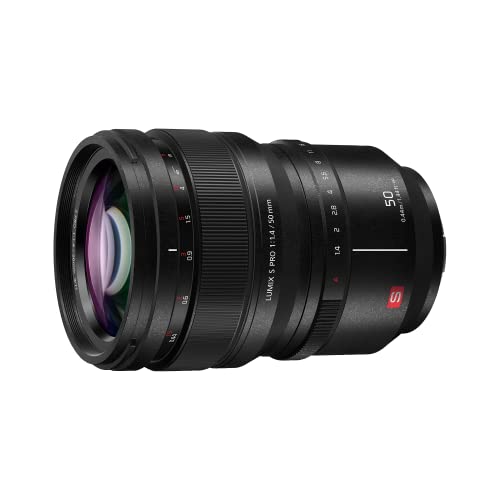
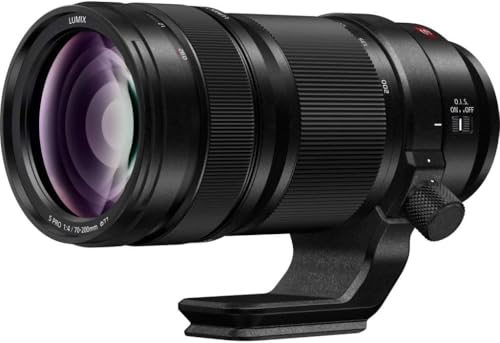
- Lumix S PRO professional lenses: S PRO is Panasonic's premium L-mount family, including the 16–35 mm f/4, 24–70 mm f/2.8, 70–200 mm f/4 O.I.S., 70–200 mm f/2.8 O.I.S., and 50 mm f/1.4. These lenses target demanding optical consistency, autofocus, handling, and weather resistance, but they are larger and more expensive than the compact S primes and zooms.
The chart below shows how Panasonic lenses are divided between Micro Four Thirds and L-mount designs.
[pie-chart-01185596669459963833170012888231670358060033567098]
How much do Panasonic Lumix camera lenses cost?
New Panasonic Lumix camera lenses generally cost about £140-£1,900. Compact Lumix G primes and basic Micro Four Thirds zooms commonly cost £140-£340, while Leica DG primes, faster zooms, macros, and stabilized telephotos usually occupy the £390-£1,900 range.
Lumix S f/1.8 primes and compact L-mount zooms commonly start around £410-£730, with general-purpose and S PRO lenses rising to roughly £1,700. Compare prices within the correct mount and include filters, tripod collars, teleconverters, and stabilization needs; L-mount buyers should also compare compatible Sigma and Leica options.
The chart below shows the price distribution of Panasonic Lumix camera lenses.
[vertical-chart-14240565001520236506172024118346977774151181087064]
What should you consider when choosing a Panasonic Lumix camera lens?
Consider the following factors while choosing a Panasonic Lumix camera lens:
- Mount and system identity: Confirm whether the camera uses Micro Four Thirds or L-mount before comparing any lens. Lumix G and Leica DG Micro Four Thirds lenses do not fit Lumix S bodies, and Lumix S lenses do not fit Lumix G cameras; Leica DG branding on a G lens does not mean Leica L-mount compatibility.
- Sensor format and field of view: Micro Four Thirds applies a 2× field-of-view factor, so a 12–60 mm lens frames like roughly 24–120 mm on full frame and a 100–400 mm lens provides an angle of view comparable to 200–800 mm. L-mount Lumix S lenses use full-frame coverage, although they can also be used on compatible APS-C L-mount bodies with a narrower field of view.
- Stabilization pairing: Check whether the lens includes MEGA O.I.S., POWER O.I.S., or no optical stabilization, and whether it supports Dual I.S. with the intended Lumix body. Coordinated lens and body stabilization can help handheld video and static subjects, but it cannot freeze subject motion and may not provide the same integration on another manufacturer's compatible body.
- Aperture, depth of field, and kit size: A Leica DG f/1.2 or f/1.7 prime and an S f/1.8 prime serve different sensor formats even when their focal lengths look similar. Compare the actual angle of view, low-light requirement, depth-of-field goal, weight, and filter size rather than choosing only by the lowest f-number.
- Autofocus and video behavior: Verify focus speed, noise, breathing, minimum focus distance, manual-focus response, and compatibility with body features such as linear focus settings. Power zoom, de-clicked aperture operation, and consistent dimensions across the S f/1.8 primes can be valuable for gimbals and video, but these features are not present on every Lumix lens.
- Weather sealing, controls, and support: Check sealing, hood inclusion, focus switches, aperture ring, tripod collar, internal or extending zoom, and teleconverter compatibility on the exact model. A splash-resistant lens still requires a suitably sealed camera, and large telephotos or S PRO zooms may need a monopod, stronger bag, or larger filters.
- Native integration and ecosystem value: Compare Panasonic lenses with OM System and other Micro Four Thirds choices or with Sigma and Leica L-mount alternatives where appropriate. A third-party or cross-brand lens may offer better price or focal coverage, while a native Panasonic lens may provide stronger Dual I.S., correction, autofocus tuning, firmware support, or video integration on a Lumix body.