Scored using Smartwatches Methodology v3.0
Smartwatches Methodology v3.0
Mathematical & Unbiased Scoring
Products in this category are scored under Frontum Smartwatches Methodology v3.0: the technical score from the specifications is the base, and independent expert and video reviews (up to ±0.5 points), owner opinions (up to ±0.3) and best-of lists (up to +0.3) move it up or down.
Explore Smartwatches Methodology v3.0

Tag Heuer Calibre E3 review: 127 specs compared

Avg. price:~£790Screen size:1.39 inchBattery life:1 daysDisplay type:AMOLED

Tag Heuer Calibre E3 Review: Compare 127 technical specifications and 2 expert and video reviews to see how this product ranks in the Smartwatches category and whether it is worth buying.
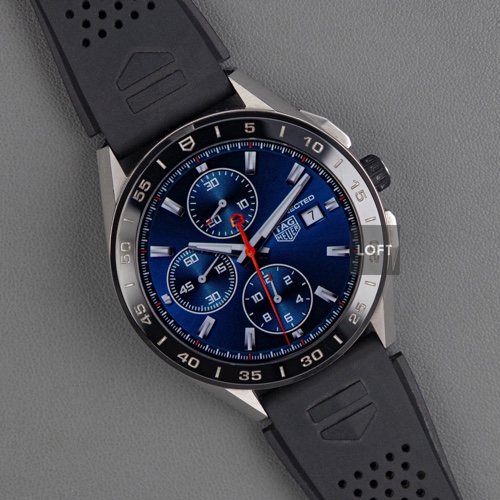
Tag Heuer Calibre E3
6.6/10

Overall score

Score
6.6/ 10
✕
What it is
Our main score for this model, 1–10. It combines specs, best-of lists, expert reviews and owners.
How we count it
Parts: Technical score 35%, List score 30%, Reviews score 25%, Sentiment score 10%
Marks: Each part gets a mark out of 10. For reviews, lists and owners, a typical model in this category gets about 8 and the best one gets 10.
No data yet: A part with no data shows "?". It counts as the mark of a weaker model in this category (4 in 5 models with data score higher). This way, models with reviews, lists and owners usually come out ahead.
Score distribution
â–¼
<55-66-77-88-99-10
Score components

35%

6.2

Technical score

30%

?

List scoreNot enough data yet, so we use 7.5, the mark of a weaker model in this category

25%

6.2

Reviews score

10%

?

Sentiment scoreNot enough data yet, so we use 6.8, the mark of a weaker model in this category

â–¼Worse than 63% of smartwatches
6.6

Value for money

Value for money
6.6/ 10
✕
What it is
An indicator that combines the smartwatch's overall rating with its cost.
When it matters
When you are looking for a smartwatch with a good balance between quality and price.
Score distribution
â–¼
<55-66-77-88-99-10
Score components

70%

6.6

Overall score

30%

6.3

Price

â–¼Worse than 97%
6.2

Technical score

Technical score
6.2/ 10
✕
What it is
How good the specs are compared with the other models in this category, 1–10.
How we count it
Areas: We rate the specs in each area against the other models in this category.
Weighting: The areas that matter most to buyers count more. The shares are shown under Score components.
Share: The technical score is 35% of the overall score.
Score distribution
â–¼
<55-66-77-88-99-10
Score components

24%

3.7

Health

21%

8.4

Fitness

16%

3.6

Battery

14%

7.6

Smart features

12%

8.8

Connectivity

9%

8.1

Display & Design

4%

3.1

Hardware

â–¼Worse than 53%
6.2

Reviews score

Reviews score
6.2/ 10
✕
What it is
Average grade from independent test sites, magazines and video reviewers, 1–10.
How we count it
Grades: Each review's own score is converted to 1–10; without one, we grade the review ourselves. Every review counts the same: written or video, short or full test.
Score: The average grade is 80% of the review mark; the number of reviews is the other 20% (1 review = 5, the typical number in this category = 8, the most-reviewed model = 10).
Enough data: With few reviews, the average grade is pulled toward the typical grade of this category. No reviews yet: 7.4 for now.
Share: Reviews count 25% of the overall score.
Score distribution
â–¼
<55-66-77-88-99-10

6.2

Mark 7.7 is below the typical mark 7.9 of this category, so it cannot lift the score above the technical score

80%

8.3

Average grade

20%

5.7

Popularity

Grades by review (2)
2 videos, average 9.0/10. We use 5 reviews; the 3 missing count as the category's typical 8.0: (9.0 × 2 + 8.0 × 3) ÷ 5 = 8.4. Reviews count 25% of the overall score.
User ratings collected online are not part of this score.
â–¼Worse than 67%
?

List score

List score
7.5/ 10
✕
What it is
How often independent test sites, magazines and video reviewers put this model in their best-of lists for this category.
How we count it
Points: The model in the most lists of this category gets 10; the others get 8 to 10 in proportion. In no list yet: 7.5. Lists count 30% of the overall score.
Enough data: Every list counts, even a single one. With fewer than 5 best-of lists in the category, this part is left out.
Lists with this model (0)
Not in any best-of list yet, so this part counts as 7.5. Models in a list get 8 to 10.
Not in any best-of list yet
Loading...
Loading category ranking...

Technical Specifications of smartwatch Tag Heuer Calibre E3

Technical score
Technical score
6.2/ 10
✕
What it is
How good the specs are compared with the other models in this category, 1–10.
How we count it
Areas: We rate the specs in each area against the other models in this category.
Weighting: The areas that matter most to buyers count more. The shares are shown under Score components.
Share: The technical score is 35% of the overall score.
Score distribution
â–¼
<55-66-77-88-99-10
Score components:

24%

3.7

Health

21%

8.4

Fitness

16%

3.6

Battery

14%

7.6

Smart features

12%

8.8

Connectivity

9%

8.1

Display & Design

4%

3.1

Hardware

6.2
Reviews score
6.2
List score
?
Value for money
Value for money
6.6/ 10
✕
What it is
An indicator that combines the smartwatch's overall rating with its cost.
When it matters
When you are looking for a smartwatch with a good balance between quality and price.
Score distribution
â–¼
<55-66-77-88-99-10
Score components:

70%

6.6

Overall score

30%

6.3

Price

6.6
Heart rate monitor
yes
This smartwatch includes a heart rate monitor. 9.5% of smartwatches include a heart rate monitor.
Blood oxygen monitoring
no
This smartwatch does not support blood oxygen monitoring. 69.7% of smartwatches support blood oxygen monitoring.
ECG
no
This smartwatch does not support ECG. 18.2% of smartwatches support ECG.
Irregular heart rate warnings
no
This smartwatch does not support irregular heart rate warnings. 50.6% of smartwatches support irregular heart rate warnings.
HRV tracking
no
This smartwatch does not support HRV tracking. 45.2% of smartwatches support HRV tracking.
Show more
Accelerometer
yes
This smartwatch includes an accelerometer. 0.5% of smartwatches include an accelerometer.
Barometer
no
This smartwatch does not include a barometer. 53.6% of smartwatches include a barometer.
Gyroscope
yes
This smartwatch includes a gyroscope. 28.9% of smartwatches include a gyroscope.
Cadence sensor
no
This smartwatch does not include a cadence sensor. 32.9% of smartwatches include a cadence sensor.
Distance tracking
yes
This smartwatch supports distance tracking. 3.7% of smartwatches support distance tracking.
Show more
Battery life
1 day
This smartwatch lasts 1 day on a charge, which is shorter than 88.1% of Smartwatches and the same as 8.1% of Smartwatches.
Battery life in training mode
6 h
This smartwatch records workouts for 6 h on a charge, which is shorter than 84.8% of Smartwatches and the same as 5.6% of Smartwatches.
Battery life with GPS on
5.5 h
This smartwatch lasts 5.5 h with GPS on, which is shorter than 91.9% of Smartwatches and the same as 0.3% of Smartwatches.
Battery power
440 mAh
This smartwatch has a 440 mAh battery, which is larger than 78.9% of Smartwatches and the same as 0.3% of Smartwatches.
Charge time
?
Show more
Operating system
Wear OS
This smartwatch runs Wear OS, which is more advanced than the system in 80.1% of Smartwatches and equal to 15.8% of Smartwatches.
Software update frequency
ended
This smartwatch has ended software update support which is less active than that of 46.1% of smartwatches and equal to that of 53.9% of smartwatches.
Third-party app support
yes
This smartwatch supports third-party apps. 48.5% of smartwatches support third-party apps.
Notifications
yes
This smartwatch supports notifications. 0.3% of smartwatches support notifications.
Voice assistant support
yes
This smartwatch supports voice assistants. 30.8% of smartwatches support voice assistants.
Show more
Cellular module
yes
This smartwatch includes a cellular module. 83.5% of smartwatches include a cellular module.
SIM cards
0
GPS
yes
This smartwatch supports GPS. 40.3% of smartwatches support GPS.
Galileo support
?
Dual-frequency GPS
no
This smartwatch does not support dual-frequency GPS. 15.1% of Smartwatches offer this.
Show more
Screen size
1.39 inch
This smartwatch has a 1.39 inch screen, which is smaller than 51.3% of Smartwatches and the same as 9% of Smartwatches.
Some sources mention multiple/uncertain size variants.
Display type
AMOLED
This smartwatch uses AMOLED, which is more advanced than the screen in 46.9% of Smartwatches and equal to 53.1% of Smartwatches.
Resolution
454x 454
This smartwatch has a display resolution of 454x454 which is higher than that of 76.5% of smartwatches and equal to that of 7% of smartwatches.
Pixel density
265 ppi
This smartwatch has a pixel density of 265 ppi, which is lower than 73.8% of Smartwatches and equal to 1.8% of Smartwatches.
Display brightness
?
Show more
CPU speed
?
Processor model
Snapdragon Wear 3100
This smartwatch uses the Snapdragon Wear 3100 processor model.
RAM
1 GB
This smartwatch has 1 GB of RAM, which is more than 34.1% of Smartwatches and equal to 41.8% of Smartwatches.
Internal storage
8 GB
This smartwatch has 8 GB of internal storage, which is more than 65.5% of Smartwatches and equal to 11.3% of Smartwatches.
External memory slot
no
This smartwatch does not include an external memory slot. 0.3% of smartwatches include an external memory slot.
Show more

Tag Heuer Calibre E3 vs the average smartwatch

246810TotalHealthFitnessBatteryConnectivityDisplay & DesignSmart featuresHardware
  • More advanced operating system
    This smartwatch runs a more advanced operating system than the average smartwatch (Wear OS vs Proprietary OS).
    Wear OS vs Proprietary OS
  • Built-in cellular module
    This smartwatch includes a cellular module, the average smartwatch does not. 16.6% of smartwatches include a cellular module.
  • Stronger display glass
    This smartwatch uses sapphire display glass, while the average smartwatch uses mineral glass.
    sapphire vs mineral glass
  • Maps support
    This smartwatch supports maps, the average smartwatch does not. 34.4% of smartwatches support maps.
    Maps via Google Maps app.
  • NFC functionality
    This smartwatch supports NFC, the average smartwatch does not. 45.2% of smartwatches support NFC.
  • Supports Wi-Fi
    This smartwatch supports Wi-Fi, the average smartwatch does not. 43.5% of smartwatches support Wi-Fi.
  • Rugged construction
    This smartwatch has a rugged design, the average smartwatch does not. 41.2% of smartwatches have a rugged design.
  • Better case material
    This smartwatch uses stainless steel, titanium for the case material, while the average smartwatch uses polycarbonate.
    stainless steel, titanium vs polycarbonate
  • Water intake tracking
    This smartwatch tracks water intake, the average smartwatch does not. 44.1% of smartwatches track water intake.
  • 135 mAh larger battery capacity
    This smartwatch has a larger battery than the average smartwatch (440 mAh vs 305 mAh). The average smartwatch has a 305 mAh battery.
    440 mAh vs 305 mAh
  • Built-in cellular module
    This smartwatch includes a cellular module, the average smartwatch does not. 16.6% of smartwatches include a cellular module.
  • Maps support
    This smartwatch supports maps, the average smartwatch does not. 34.4% of smartwatches support maps.
    Maps via Google Maps app.
  • NFC functionality
    This smartwatch supports NFC, the average smartwatch does not. 45.2% of smartwatches support NFC.
  • Supports Wi-Fi
    This smartwatch supports Wi-Fi, the average smartwatch does not. 43.5% of smartwatches support Wi-Fi.
  • Stronger display glass
    This smartwatch uses sapphire display glass, while the average smartwatch uses mineral glass.
    sapphire vs mineral glass
  • Rugged construction
    This smartwatch has a rugged design, the average smartwatch does not. 41.2% of smartwatches have a rugged design.
  • Better case material
    This smartwatch uses stainless steel, titanium for the case material, while the average smartwatch uses polycarbonate.
    stainless steel, titanium vs polycarbonate
  • Higher resolution
    This smartwatch has a display resolution of 454x454, while the average smartwatch reaches 360x360.
    454x454 vs 360x360
  • Better band material
    This smartwatch uses rubber, leather for the band material, while the average smartwatch uses silicone.
    rubber, leather vs silicone
  • More advanced operating system
    This smartwatch runs a more advanced operating system than the average smartwatch (Wear OS vs Proprietary OS).
    Wear OS vs Proprietary OS
  • More advanced processor model
    This smartwatch uses the Snapdragon Wear 3100 processor model, while the average smartwatch uses Silicon Labs EFM32 Giant Gecko.
    Snapdragon Wear 3,100 vs Silicon Labs EFM32 Giant Gecko
  • 2x more internal storage
    This smartwatch has more internal storage than the average smartwatch (8 GB vs 4 GB). The average smartwatch has 4 GB of internal storage.
    8 GB vs 4 GB
  • No blood oxygen monitoring
    This smartwatch does not support blood oxygen monitoring, the average smartwatch does. 69.6% of smartwatches support blood oxygen monitoring.
  • No irregular heart rate alerts
    This smartwatch does not support irregular heart rate warnings, the average smartwatch does. 50.6% of smartwatches support irregular heart rate warnings.
  • No stress monitoring
    This smartwatch does not support stress monitoring, the average smartwatch does. 68.7% of smartwatches support stress monitoring.
  • No elevation tracking
    This smartwatch does not support elevation tracking, the average smartwatch does. 67.6% of smartwatches support elevation tracking.
  • 15.5 h shorter GPS battery life
    This smartwatch lasts less time with GPS on than the average smartwatch (5.5 h vs 21 h). The average smartwatch lasts 21 h with GPS on.
    5.5 h vs 21 h
  • No barometer
    This smartwatch does not include a barometer, the average smartwatch does. 53.6% of smartwatches include a barometer.
  • 6 days shorter battery life
    This smartwatch runs for less time per charge than the average smartwatch (1 days vs 7 days). The average smartwatch runs for 7 days on a charge.
    1 days vs 7 days
  • 14 h shorter training battery life
    This smartwatch lasts less time in training mode than the average smartwatch (6 h vs 20 h). The average smartwatch lasts 20 h in training mode.
    6 h vs 20 h
  • 11.4% lower review score
    Reviews score
    6.2/ 10
    ✕
    What it is
    Average grade from independent test sites, magazines and video reviewers, 1–10.
    How we count it
    Grades: Each review's own score is converted to 1–10; without one, we grade the review ourselves. Every review counts the same: written or video, short or full test.
    Score: The average grade is 80% of the review mark; the number of reviews is the other 20% (1 review = 5, the typical number in this category = 8, the most-reviewed model = 10).
    Enough data: With few reviews, the average grade is pulled toward the typical grade of this category. No reviews yet: 7.4 for now.
    Share: Reviews count 25% of the overall score.
    Score distribution
    â–¼
    <55-66-77-88-99-10

    6.2

    Mark 7.7 is below the typical mark 7.9 of this category, so it cannot lift the score above the technical score

    80%

    8.3

    Average grade

    20%

    5.7

    Popularity

    Grades by review (2)
    2 videos, average 9.0/10. We use 5 reviews; the 3 missing count as the category's typical 8.0: (9.0 × 2 + 8.0 × 3) ÷ 5 = 8.4. Reviews count 25% of the overall score.
    User ratings collected online are not part of this score.
    6.2 vs 7.0
  • 7.18x more expensive
    Tag Heuer Calibre E3 is more expensive than the average smartwatch (£790 vs £110).
    £790 vs £110
  • 18.4% worse value for money
    Tag Heuer Calibre E3 has a lower value-for-money score than the average smartwatch (6.55 vs 7.8).
    6.55 vs 7.76
  • No blood oxygen monitoring
    This smartwatch does not support blood oxygen monitoring, the average smartwatch does. 69.6% of smartwatches support blood oxygen monitoring.
  • No irregular heart rate alerts
    This smartwatch does not support irregular heart rate warnings, the average smartwatch does. 50.6% of smartwatches support irregular heart rate warnings.
  • No stress monitoring
    This smartwatch does not support stress monitoring, the average smartwatch does. 68.7% of smartwatches support stress monitoring.
  • No cycle tracking
    This smartwatch does not support menstrual cycle tracking, the average smartwatch does. 66.8% of smartwatches support menstrual cycle tracking.
  • 1 years older
    This smartwatch was released earlier than the average smartwatch (2020 vs 2021). The average smartwatch was released in 2021.
    March 2020
    2020 vs 2021
  • No elevation tracking
    This smartwatch does not support elevation tracking, the average smartwatch does. 67.6% of smartwatches support elevation tracking.
  • No barometer
    This smartwatch does not include a barometer, the average smartwatch does. 53.6% of smartwatches include a barometer.
  • 83 fewer exercise types
    This smartwatch includes fewer exercise types than the average smartwatch (7 vs 90). The average smartwatch includes 90 exercise types.
    7 vs 90
  • 15.5 h shorter GPS battery life
    This smartwatch lasts less time with GPS on than the average smartwatch (5.5 h vs 21 h). The average smartwatch lasts 21 h with GPS on.
    5.5 h vs 21 h
  • 6 days shorter battery life
    This smartwatch runs for less time per charge than the average smartwatch (1 days vs 7 days). The average smartwatch runs for 7 days on a charge.
    1 days vs 7 days
  • 14 h shorter training battery life
    This smartwatch lasts less time in training mode than the average smartwatch (6 h vs 20 h). The average smartwatch lasts 20 h in training mode.
    6 h vs 20 h
  • Less current Bluetooth version
    This smartwatch uses a less current Bluetooth version than the average smartwatch (4.1 vs 5).
    4.1 vs 5
  • 31 g heavier
    This smartwatch is heavier than the average smartwatch (76 g vs 45 g). The average smartwatch weighs 45 g.
    76 g vs 45 g
  • 3.57 mm thicker
    This smartwatch is thicker than the average smartwatch (15.3 mm vs 11.7 mm). The average smartwatch is 11.7 mm thick.
    15.27 mm vs 11.7 mm
  • 61 ppi less sharp screen
    This smartwatch has a less sharp screen than the average smartwatch (265 ppi vs 326 ppi). The average smartwatch has a pixel density of 326 ppi.
    265 ppi vs 326 ppi
  • 0.01 inch smaller display
    This smartwatch has a smaller screen than the average smartwatch (1.4 inch vs 1.4 inch). The average smartwatch has a 1.4 inch screen.
    Some sources mention multiple/uncertain size variants.
    1.39 inch vs 1.4 inch
  • No smart alarm
    This smartwatch does not support a smart alarm, the average smartwatch does. 50.6% of smartwatches support smart alarms.
  • No camera remote
    This smartwatch does not include built-in camera remote control, the average smartwatch does. 85.5% of smartwatches that are equipped with a camera include built-in camera remote control.
  • No speaker
    This smartwatch does not include a built-in speaker, the average smartwatch does. 56.7% of smartwatches include a built-in speaker.

Video reviews

Hands-on testing, unboxing, and real-world video evaluations
9.0
DougFNJ Watch Reviews
≈ estimated
07/04/2020
Hands-on review · unboxing, design and app tour
Verdict
Tag Heuer Calibre E3 has a premium build and design plus a new heart rate sensor, and the reviewer highly recommends it.

Third-party reviews

What customers like about Tag Heuer Calibre E3

  • Iconic TAG Heuer Swiss watch design and craftsmanship
  • High-quality materials including titanium/steel cases and ceramic bezels
  • Sharp and vibrant 1.39-inch OLED display with sapphire crystal
  • Seamless integration and customization through the dedicated TAG Heuer Sports app
  • Excellent ergonomic physical controls with two pushers and a rotating crown
  • Interchangeable strap system that is easy to use and very comfortable

What customers don't like about Tag Heuer Calibre E3

  • Short battery life often requiring daily charging, especially when using GPS
  • High price compared to smartwatches with similar or more advanced tech specs
  • Limited fitness data customization on the watch faces compared to dedicated sports watches
  • Reduced functionality when paired with iPhones (e.g., cannot reply to notifications)
  • Lack of 'Swiss Made' certification (manufactured in China)
  • Concerns over long-term value and rapid technological obsolescence

Verdict

The TAG Heuer Connected Calibre E3 is a premium 45mm smartwatch featuring a high-resolution OLED display protected by scratch-resistant sapphire crystal and housed in a 15.27mm thick stainless steel or titanium case with a ceramic bezel. Key characteristics include a 440 mAh battery providing roughly 20 hours of life (full day), 50m water resistance, and a comprehensive sensor suite including GPS, heart rate, compass, and accelerometer. It runs on Wear OS, offering specialized sports tracking for golf, running, and cycling via dedicated TAG Heuer apps. Main pros are its luxury Swiss craftsmanship that mimics a traditional mechanical watch, a quick-change strap system, and a smooth, premium haptic feedback experience. However, notable cons include its high luxury price point compared to other Wear OS devices and a battery life that requires daily charging, which may be insufficient for multi-day use without its magnetic charger.

Compare Tag Heuer Calibre E3 with other Smartwatches

1Product to compare no. 1
VS
2Product to compare no. 2
VS
3Product to compare no. 3 (optional)

Graphic comparison of Tag Heuer Calibre E3 and other Smartwatches

No results found