Scored using Routers Methodology v1.0
Routers Methodology v1.0
Mathematical & Unbiased Scoring
Products in this category are scored under Frontum Routers Methodology v1.0: technical specifications plus authentic consumer ratings, with 0% commercial bias.
Explore Routers Methodology v1.0

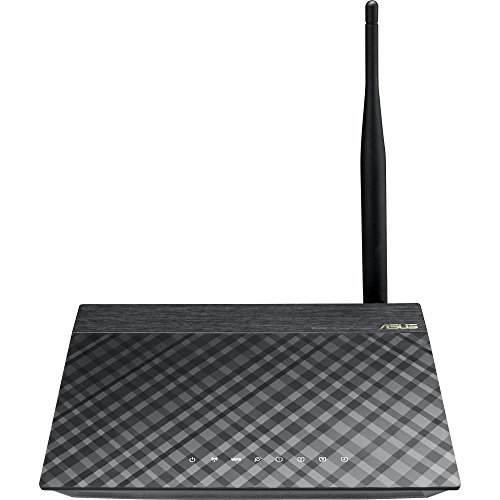
ASUS RT N10U Review | 77 Data compared

Avg. price:~£25Wi-Fi version:Wi-Fi 4 (802.11n)Wi-Fi speed:150 MbpsLAN port speeds:100 MbpsMesh Wi-Fi:no

ASUS RT N10U Review: Compare 77 technical specifications and user reviews to see how this product ranks in the Routers category and whether it is worth buying.
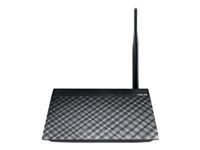
ASUS RT N10U
6.1/10

Overall score

Score
6.1/ 10
✕
What it is
An overall evaluation of the router's quality, based on technical analyses and user reviews.
When it matters
When you need a quick reference to identify the best routers on the market.
Score distribution
â–¼
<55-66-77-88-99-10
Score components

90%

6.1

Technical score

10%

?

User score

â–¼Worse than 87% of routers
7.3

Value for money

Value for money
7.3/ 10
✕
What it is
An indicator that combines the router's overall rating with its cost.
When it matters
When you are looking for a router with a good balance between network performance, features, and price.
Score distribution
â–¼
<55-66-77-88-99-10
Score components

70%

6.1

Overall score

30%

10

Price

â–¼Worse than 87%
6.1

Technical score

Technical score
6.1/ 10
✕
What it is
An assessment of the router's technical performance, covering key areas such as Wi-Fi performance, wired connectivity, security, software features, coverage, and design.
When it matters
When you want to compare routers based on technical performance and available features.
Score distribution
â–¼
<55-66-77-88-99-10
Score components

26%

4.6

Wireless

20%

5.5

Ports

18%

7.5

Networking

14%

9.1

Security

12%

4.5

Hardware

10%

6.5

Management

â–¼Worse than 83%
?

User score

User score
8.0/ 10
✕
What it is
A rating that combines user reviews and the total number of reviews received by the router.
When it matters
When you want to know how a router performs in daily use and how reliable it is for speed, coverage, and stability according to user feedback.
Score distribution
â–¼
<55-66-77-88-99-10
Score components

70%

?

User ratings

30%

?

Number of reviews

  • asus-rt-n10u
asus-rt-n10u
Best prices
    N/A~ £25
Best rankings
Available: ranking among products currently available (including other versions of this product).All: ranking among all products in the database.
Loading...
Loading category ranking...

Routers model ranking

Ranked #379 of 409 models in Routers (Overall score)

Technical Specifications of router ASUS RT N10U

Technical score
Technical score
6.1/ 10
✕
What it is
An assessment of the router's technical performance, covering key areas such as Wi-Fi performance, wired connectivity, security, software features, coverage, and design.
When it matters
When you want to compare routers based on technical performance and available features.
Score distribution
â–¼
<55-66-77-88-99-10
Score components:

26%

4.6

Wireless

20%

5.5

Ports

18%

7.5

Networking

14%

9.1

Security

12%

4.5

Hardware

10%

6.5

Management

6.1
User score
User score
8.0/ 10
✕
What it is
A rating that combines user reviews and the total number of reviews received by the router.
When it matters
When you want to know how a router performs in daily use and how reliable it is for speed, coverage, and stability according to user feedback.
Score distribution
â–¼
<55-66-77-88-99-10
Score components

70%

?

User ratings

30%

?

Number of reviews

?
Popularity
Popularity
1.0/ 10
✕
What it is
An indicator based on the number of reviews received by the router.
When it matters
When you prefer to choose a router reviewed and selected by many other buyers.
Score distribution
â–¼
<55-66-77-88-99-10
Popularity:
ASUS RT N10U has a popularity score of 1 point, which is lower than that of 72.1% of products in this category.
1.0
Value for money
Value for money
7.3/ 10
✕
What it is
An indicator that combines the router's overall rating with its cost.
When it matters
When you are looking for a router with a good balance between network performance, features, and price.
Score distribution
â–¼
<55-66-77-88-99-10
Score components:

70%

6.1

Overall score

30%

10

Price

7.3
Brand name
Asus
Wi-Fi version
Wi-Fi 4 (802.11n)
This router uses Wi-Fi Wi-Fi 4 (802.11n), which is less advanced than 60.8% of routers and equal to 37.3% of routers.
Wi-Fi bands
2.4 GHz
This router supports 2.4 GHz Wi-Fi bands, which are less versatile than 75.4% of routers and equal to 22.4% of routers.
Wi-Fi speed
150 Mbps
This router delivers 150 Mbps Wi-Fi speed, which is lower than 91.5% of routers and equal to 7% of routers.
Channel widths supported
20 MHz + 40 MHz
This router supports 20 MHz + 40 MHz channel width options, which is fewer than 59.3% of routers and the same as 35.1% of routers.
Show more
Wi-Fi security protocols
WPA2, WPA, WEP, WPS
This router supports WPA2, WPA, WEP, WPS Wi-Fi security protocols, which are less advanced than 67.5% of routers and equal to 11.6% of routers.
DoS protection
yes
This router includes DoS protection. 12.8% of routers include DoS protection.
SPI intrusion protection
yes
This router includes SPI-based intrusion protection. 6.1% of routers include SPI-based intrusion protection.
MAC address filtering
yes
This router supports MAC address filtering. 2.2% of routers include MAC address filtering.
URL filter
yes
This router supports URL filtering. 3.4% of routers include URL filtering.
Show more
IPv6 support
yes
This router supports IPv6. 11.5% of routers are IPv6-ready.
Dynamic routing
no
This router does not support dynamic routing. 52.5% of routers support dynamic routing.
Inter-VLAN routing
no
This router does not support inter-VLAN routing. 23.5% of routers support inter-VLAN routing.
VLAN tagging
no
This router does not support VLAN tagging. 62% of routers include VLAN tagging.
QoS
yes
This router includes QoS controls. 3.2% of routers include QoS controls.
Show more
N. of LAN ports
4
This router has 4 LAN ports, which is more than 23.7% of routers and the same as 69.2% of routers.
LAN port speeds
100 Mbps
This router offers 100 Mbps on its LAN ports, which is slower than 73.2% of routers and on par with 26.4% of routers.
N. of WAN ports
1
This router has 1 WAN ports, which is more than 1% of routers and the same as 90.1% of routers.
N. of USB ports
1
This router has 1 USB ports, which is more than 39.5% of routers and the same as 39.5% of routers.
Power over Ethernet (PoE)
no
This router does not support Power over Ethernet (PoE). 0.5% of routers can be powered over Ethernet.
Show more
Management interface
Web UI
This router uses Web UI for management, which is less advanced than 72.2% of routers and equal to 27.3% of routers.
Firmware upgrade method
Web UI
This router supports Web UI firmware update methods, which are less convenient than 69.5% of routers and equal to 29.7% of routers.
Traffic monitoring
yes
This router includes traffic monitoring. 18.1% of routers include traffic monitoring.
Guest Wi-Fi network
yes
This router offers a guest Wi‑Fi network. 8.6% of routers offer a guest Wi‑Fi network.
Captive portal
no
This router does not offer captive portal features. 23.5% of routers offer captive portal features.
Show more
CPU clock speed
0.3 GHz
This router runs at 0.3 GHz, which is slower than 94.2% of routers and on par with 4% of routers.
RAM capacity
32 MB
This router has 32 MB of RAM, which is less than 83.5% of routers and the same as 12% of routers.
Internal storage
0.007812 GB
This router has 0.007812 GB of internal storage, which is less than 72.7% of routers and the same as 20.6% of routers.
Hardware acceleration
no
This router does not offer hardware acceleration. 68.9% of routers offer hardware acceleration.
N. of external antennas
1
This router has 1 external antennas, which is fewer than 55.2% of routers and the same as 4.2% of routers.
Show more

ASUS RT N10U vs the average router

246810TotalWirelessSecurityNetworkingPortsManagementHardware
  • Wider temperature range
    This router is rated for 5 to 40 C, while the average router is rated for 0 to 40 C.
    5 to 40 C vs 0 to 40 C
  • 5.1 W lower power consumption
    This router uses less power than the average router (3 W vs 8.1 W). The average router uses 8.1 W power.
    3 W vs 8.1 W
  • Removable antennas
    This router has removable antennas, while the average router does not. 27.4% of routers have removable antennas.
  • 3.6x cheaper
    ASUS RT N10U is cheaper than the average router (£25 vs £90).
    £25 vs £90
  • 3.6x cheaper
    ASUS RT N10U is cheaper than the average router (£25 vs £90).
    £25 vs £90
  • Wider temperature range
    This router is rated for 5 to 40 C, while the average router is rated for 0 to 40 C.
    5 to 40 C vs 0 to 40 C
  • 5.1 W lower power consumption
    This router uses less power than the average router (3 W vs 8.1 W). The average router uses 8.1 W power.
    3 W vs 8.1 W
  • Removable antennas
    This router has removable antennas, while the average router does not. 27.4% of routers have removable antennas.
  • Limited firmware updates
    This router supports the firmware update methods Web UI, while the average router supports Web UI, App, Automatic.
    Web UI vs Web UI, App, Automatic
  • Slower LAN ports
    This router has a lower LAN port speed than the average router (100 Mbps vs 1 Gbps). The average router has a LAN port speed of 1 Gbps.
    100 Mbps vs 1 Gbps
  • Older Wi-Fi version
    This router uses an older Wi-Fi version than the average router (Wi-Fi 4 (802.11n) vs Wi-Fi 5 (802.11ac)). The average router uses Wi-Fi Wi-Fi 5 (802.11ac).
    Wi-Fi 4 (802.11n) vs Wi-Fi 5 (802.11ac)
  • No VLAN tagging
    This router does not support VLAN tagging, while the average router does. 61.9% of routers support VLAN tagging.
  • No hardware acceleration
    This router does not offer hardware acceleration, while the average router does. 68.7% of routers offer hardware acceleration.
  • Fewer Wi-Fi bands
    This router supports fewer Wi-Fi bands than the average router (2.4 GHz vs 2.4 GHz + 5 GHz). The average router supports 2.4 GHz + 5 GHz Wi-Fi bands.
    2.4 GHz vs 2.4 GHz + 5 GHz
  • 89.8% slower Wi-Fi speed
    This router has a lower Wi-Fi speed than the average router (150 Mbps vs 1475 Mbps). The average router reaches Wi-Fi speed of 1475 Mbps.
    150 Mbps vs 1,475 Mbps
  • Lower CPU clock speed
    This router has a lower CPU clock speed than the average router (0.3 GHz vs 2x0.5 GHz). The average router has a CPU clock speed of 2x0.5 GHz.
    0.3 GHz vs 2x0.5 GHz
  • 6.54x less popular
    ASUS RT N10U is less popular than the average router (1 vs 6.5).
    1 vs 6.54
  • 7.3% worse value for money
    ASUS RT N10U has worse value for money than the average router (7.28 vs 7.8).
    7.28 vs 7.82
  • Older Wi-Fi version
    This router uses an older Wi-Fi version than the average router (Wi-Fi 4 (802.11n) vs Wi-Fi 5 (802.11ac)). The average router uses Wi-Fi Wi-Fi 5 (802.11ac).
    Wi-Fi 4 (802.11n) vs Wi-Fi 5 (802.11ac)
  • Fewer Wi-Fi bands
    This router supports fewer Wi-Fi bands than the average router (2.4 GHz vs 2.4 GHz + 5 GHz). The average router supports 2.4 GHz + 5 GHz Wi-Fi bands.
    2.4 GHz vs 2.4 GHz + 5 GHz
  • 89.8% slower Wi-Fi speed
    This router has a lower Wi-Fi speed than the average router (150 Mbps vs 1475 Mbps). The average router reaches Wi-Fi speed of 1475 Mbps.
    150 Mbps vs 1,475 Mbps
  • Narrower channel widths
    This router has a lower supported channel width than the average router (20 MHz + 40 MHz vs 20 MHz + 40 MHz + 80 MHz). The average router supports channel width of 20 MHz + 40 MHz + 80 MHz.
    20 MHz + 40 MHz vs 20 MHz + 40 MHz + 80 MHz
  • 2 fewer spatial streams
    This router has fewer spatial streams than the average router (1 vs 3). The average router has 3 spatial streams.
    1 vs 3
  • No band steering
    This router does not support band steering, while the average router does. 51.8% of routers support band steering.
  • No beamforming
    This router does not support beamforming, while the average router does. 56.7% of routers support beamforming.
  • No VLAN tagging
    This router does not support VLAN tagging, while the average router does. 61.9% of routers support VLAN tagging.
  • No dynamic routing
    This router does not support dynamic routing, while the average router does. 52.3% of routers support dynamic routing.
  • Slower LAN ports
    This router has a lower LAN port speed than the average router (100 Mbps vs 1 Gbps). The average router has a LAN port speed of 1 Gbps.
    100 Mbps vs 1 Gbps
  • Limited firmware updates
    This router supports the firmware update methods Web UI, while the average router supports Web UI, App, Automatic.
    Web UI vs Web UI, App, Automatic
  • Weaker management tools
    This router uses the management interface Web UI, while the average router uses Web UI, App.
    Web UI vs Web UI, App
  • Less capable NAS services
    This router includes SMB, FTP, web access NAS services, while the average router includes SMB, FTP, time machine, NFS, web access.
    Requires attached USB storage.
    SMB, FTP, web access vs SMB, FTP, time machine, NFS, web access
  • No hardware acceleration
    This router does not offer hardware acceleration, while the average router does. 68.7% of routers offer hardware acceleration.
  • Lower CPU clock speed
    This router has a lower CPU clock speed than the average router (0.3 GHz vs 2x0.5 GHz). The average router has a CPU clock speed of 2x0.5 GHz.
    0.3 GHz vs 2x0.5 GHz
  • 87.5% less RAM
    This router has less RAM than the average router (32 MB vs 256 MB). The average router has 256 MB of RAM.
    32 MB vs 256 MB
  • 93.8% less internal storage
    This router has less internal storage than the average router (0 GB vs 0.1 GB). The average router offers 0.125 GB of internal storage.
    0.007812 GB vs 0.125 GB
  • 4 older release date
    This router is an older model than the average router (2011 vs 2015). The average router release year is 2015.
    July 2011
    2011 vs 2015
  • 1 fewer external antennas
    This router has fewer external antennas than the average router (1 vs 2). The average router has 2 external antennas.
    1 vs 2

Third-party reviews

What we like about ASUS RT N10U

  • Affordable price point for an entry-level router
  • Compact and lightweight design with a small physical footprint
  • User-friendly setup process with intuitive web interface (ASUSWRT)
  • Includes a USB port for 3G/4G dongle failover or basic printer/file sharing
  • Generally reliable signal strength for small homes or apartments
  • Low power consumption and runs cool during operation
  • Supports alternative firmware like Tomato or DD-WRT for advanced users

What we don't like about ASUS RT N10U

  • Maximum Wi-Fi speed is limited to 150 Mbps (N150)
  • Single-band only (2.4GHz); lacks the faster 5GHz band
  • Limited wireless range; signal quality may drop significantly in other rooms
  • Parental controls are basic and limited to simple access scheduling
  • Reports of occasional connection drops requiring manual reboots
  • Lacks modern features like IPv6 support and Mu-MIMO
  • USB functions are basic and may have compatibility issues with some modems

Verdict

The Asus RT-N10U is a Wireless-N150 router designed for home or small office use, featuring a single-band 2.4GHz frequency, a 300MHz Broadcom CPU, 32MB of RAM, and 8MB of flash memory. Key characteristics include its versatile 4-in-1 design (router, access point, range extender, and bridge), a detachable 5dBi high-gain antenna for improved coverage, and a built-in USB 2.0 port that supports printer sharing, FTP servers, and 3G/4G dongle failover. Its main pros are the intuitive ASUSWRT graphical interface, easy 30-second setup, and multi-role functionality. However, significant cons include its outdated N150 speed (limited to 150Mbps), lack of 5GHz band support, and occasional reports of connectivity stability issues that may require manual reboots.

Compare ASUS RT N10U with other routers

1Product to compare no. 1
VS
2Product to compare no. 2
VS
3Product to compare no. 3 (optional)

Graphic comparison of ASUS RT N10U and other routers

No results found