Scored using Projectors Methodology v3.0
Projectors Methodology v3.0
Mathematical & Unbiased Scoring
Products in this category are scored under Frontum Projectors Methodology v3.0: the technical score from the specifications is the base, and independent expert and video reviews (up to ±0.5 points), owner opinions (up to ±0.3) and best-of lists (up to +0.3) move it up or down.
Explore Projectors Methodology v3.0

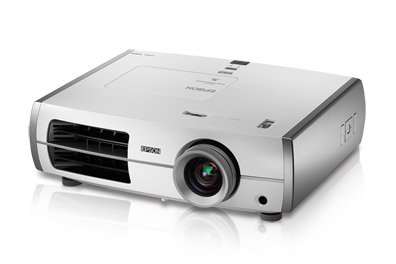
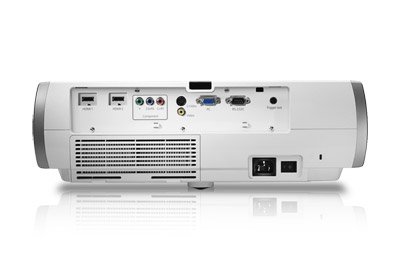
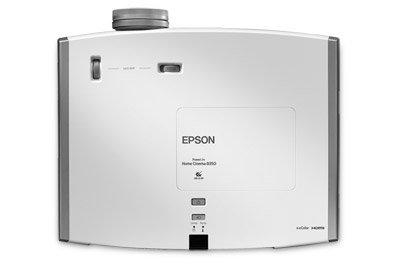
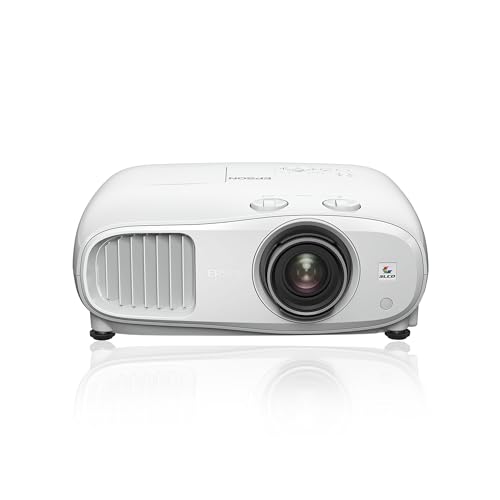
Epson PowerLite Home Cinema 8350 review: 86 specs compared

Avg. price:~£920Native panel resolution:1920x1080ANSI lumens:2000Throw ratio:1.32-2.82:1Lamp life:4000 hours

Epson PowerLite Home Cinema 8350 Review: Compare 86 technical specifications and 7 expert and video reviews to see how this product ranks in the Projectors category and whether it is worth buying.
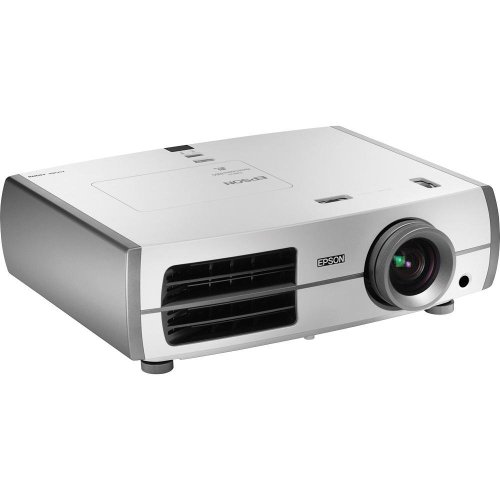
Epson PowerLite Home Cinema 8350
7.2/10

Overall score

Score
7.2/ 10
✕
What it is
Our main score for this model, 1–10. It combines specs, best-of lists, expert reviews and owners.
How we count it
Parts: Technical score 35%, List score 30%, Reviews score 25%, Sentiment score 10%
Marks: Each part gets a mark out of 10. For reviews, lists and owners, a typical model in this category gets about 8 and the best one gets 10.
No data yet: A part with no data shows "?". It counts as the mark of a weaker model in this category (4 in 5 models with data score higher). This way, models with reviews, lists and owners usually come out ahead.
Score distribution
â–¼
<55-66-77-88-99-10
Score components

35%

6.1

Technical score

30%

?

List scoreNot enough data yet, so we use 7.5, the mark of a weaker model in this category

25%

8.3

Reviews score

10%

?

Sentiment scoreNot enough data yet, so we use 6.8, the mark of a weaker model in this category

â–²Better than 53% of projectors
6.7

Value for money

Value for money
6.7/ 10
✕
What it is
An indicator that combines the projector's overall rating with its cost.
When it matters
When you are looking for a projector with a good balance between quality and price.
Score distribution
â–¼
<55-66-77-88-99-10
Score components

70%

7.2

Overall score

30%

5.7

Price

â–¼Worse than 60%
6.1

Technical score

Technical score
6.1/ 10
✕
What it is
How good the specs are compared with the other models in this category, 1–10.
How we count it
Areas: We rate the specs in each area against the other models in this category.
Weighting: The areas that matter most to buyers count more. The shares are shown under Score components.
Share: The technical score is 35% of the overall score.
Score distribution
â–¼
<55-66-77-88-99-10
Score components

42%

6.4

Image Quality

22%

8.2

Projection & Lens

12%

4.9

HDMI & Gaming

10%

4.4

Audio & Features

8%

4.6

Connectivity

6%

4.8

Design & Power

â–¼Worse than 65%
8.3

Reviews score

Reviews score
8.3/ 10
✕
What it is
Average grade from independent test sites, magazines and video reviewers, 1–10.
How we count it
Grades: Each review's own score is converted to 1–10; without one, we grade the review ourselves. Big test sites count more, short reviews half as much as full tests. A video review counts half.
Score: The average grade is 80% of the review mark; the number of reviews is the other 20% (1 review = 5, the typical number in this category = 8, the most-reviewed model = 10).
Enough data: With few reviews, the average grade is pulled toward the typical grade of this category. No reviews yet: 7.8 for now.
Share: Reviews count 25% of the overall score.
Score distribution
â–¼
<55-66-77-88-99-10

80%

8.4

Average grade

20%

8.0

Popularity

Grades by review (7)
5 reviews: 3 with a printed score, 2 estimated from the review. 2 video reviews, each counting half as much as a written test. Reviews count 25% of the overall score.
User ratings collected online are not part of this score.
â–²Better than 51%
?

List score

List score
7.5/ 10
✕
What it is
How often independent test sites, magazines and video reviewers put this model in their best-of lists for this category.
How we count it
Points: The model in the most lists of this category gets 10; the others get 8 to 10 in proportion. In no list yet: 7.5. Lists count 30% of the overall score.
Enough data: Every list counts, even a single one. With fewer than 5 best-of lists in the category, this part is left out.
Lists with this model (0)
Not in any best-of list yet, so this part counts as 7.5. Models in a list get 8 to 10.
Not in any best-of list yet
  • epson-powerlite-home-cinema-8350
  • epson-powerlite-home-cinema-8350
  • epson-powerlite-home-cinema-8350
  • epson-powerlite-home-cinema-8350
epson-powerlite-home-cinema-8350
Where to buy
*As an Amazon Associate, we earn from qualifying purchases.
Best rankings
Available: ranking among products currently available (including other versions of this product).All: ranking among all products in the database.

What reviewers say about the Epson PowerLite Home Cinema 8350

Based on 3 · 2

Reviewers are split on brightness: some find it plenty bright, others wish it had more punch.
Mixed views
Pick a topic to see who said what
Loading...
Loading category ranking...

Technical Specifications of projector Epson PowerLite Home Cinema 8350

Technical score
Technical score
6.1/ 10
✕
What it is
How good the specs are compared with the other models in this category, 1–10.
How we count it
Areas: We rate the specs in each area against the other models in this category.
Weighting: The areas that matter most to buyers count more. The shares are shown under Score components.
Share: The technical score is 35% of the overall score.
Score distribution
â–¼
<55-66-77-88-99-10
Score components:

42%

6.4

Image Quality

22%

8.2

Projection & Lens

12%

4.9

HDMI & Gaming

10%

4.4

Audio & Features

8%

4.6

Connectivity

6%

4.8

Design & Power

6.1
Reviews score
8.3
List score
?
Value for money
Value for money
6.7/ 10
✕
What it is
An indicator that combines the projector's overall rating with its cost.
When it matters
When you are looking for a projector with a good balance between quality and price.
Score distribution
â–¼
<55-66-77-88-99-10
Score components:

70%

7.2

Overall score

30%

5.7

Price

6.7
ANSI lumens
2000
This projector reaches 2000 ANSI lumens, dimmer than 54% of projectors and equal to 5% of projectors.
Contrast ratio
50,000:1
This projector has a contrast ratio of 50000:1, higher than 69.3% of projectors and equal to 2.3% of projectors.
Dynamic contrast ratio.
Native panel resolution
1920x1080
This projector uses a native resolution of 1920x1080, higher than 27% of projectors and equal to 59.2% of projectors.
Output resolution
1920x1080
This projector supports output resolution up to 1920x1080, higher than 25.9% of projectors and equal to 42.3% of projectors.
Projection technology
3LCD
Show more
What reviewers say
Throw ratio
1.32-2.82:1
Min throw distance
0.87 m
This projector needs a minimum throw distance of 0.87 m, shorter than 66.9% of projectors and equal to 0.9% of projectors.
Max projection size
300 inch
This projector supports projection sizes up to 300 inch, larger than 51.5% of projectors and equal to 38% of projectors.
Zoom ratio
2.1
This projector offers a zoom ratio of 2.1, wider than 94.4% of projectors and equal to 5% of projectors.
Motorized zoom
no
This projector does not have motorised zoom. 14.8% of projectors offer this.
Show more
Input lag
34 ms
This projector has input lag of 34 ms, higher than 59.5% of projectors and equal to 1.7% of projectors.
Auto low latency mode (ALLM)
no
This projector does not switch to low-latency mode automatically. 16.1% of projectors offer this.
Variable refresh rate (VRR)
no
This projector does not support variable refresh rate. 1.8% of projectors offer this.
HDMI version
1.3
This projector supports HDMI 1.3, older than 89.8% of projectors and equal to 7.3% of projectors.
Max HDMI bandwidth
10.2 Gbps
This projector supports HDMI bandwidth up to 10.2 Gbps, lower than 51.2% of projectors and equal to 46.5% of projectors.
Show more
N. of HDMI ports
2
This projector has 2 HDMI port/s, more than 45.9% of projectors and equal to 47.3% of projectors.
Wi-Fi connectivity
no
This projector does not connect to Wi-Fi networks. 53.4% of projectors offer this.
Wi-Fi version
N/A
Bluetooth connectivity
no
This projector does not support Bluetooth. 50.7% of projectors offer this.
Bluetooth version
N/A
Show more
Smart TV features
no
This projector does not have built-in smart TV features. 43.9% of projectors offer this.
Operating system
none
Android OS
no
This projector does not run Android OS. 19.1% of projectors run Android OS.
Dedicated smartphone app
no
This projector does not come with a dedicated smartphone app. 36.8% of projectors come with a dedicated smartphone app.
Remote control
yes
This projector includes a remote control. 1.5% of projectors offer this.
Show more
Light source type
lamp
This projector uses lamp light source technology, less advanced than 66.5% of projectors and equal to 33.5% of projectors.
Laser light source
no
This projector does not have a laser light source. 26.8% of projectors offer this.
Lamp life
4,000 hours
This projector offers lamp life of 4,000 hours, longer than 78.8% of projectors and equal to 9.6% of projectors.
Lamp life (eco mode)
4,000 hours
This projector offers eco-mode lamp life of 4,000 hours, longer than 93.8% of projectors and equal to 2.7% of projectors.
Operating power consumption
272 W
This projector uses 272 W of power, more than 61.4% of projectors and equal to 0.1% of projectors.
Normal mode power draw.
Show more

Epson PowerLite Home Cinema 8350 vs the average projector

246810TotalImage QualityProjection & LensHDMI & GamingConnectivityAudio & FeaturesDesign & Power
  • 0.8 2x wider zoom range
    This projector has a higher zoom ratio than the average projector (2.1 vs 1.3). The average projector has 1.3 of zoom ratio.
    2.1 vs 1.3
  • Supports lens memory
    This projector stores lens settings, while the average projector does not. 8.1% of projectors offer this.
  • 17.1 % more horizontal lens shift
    This projector has more horizontal lens shift than the average projector (47.1 % vs 30 %). The average projector has 30 % horizontal lens shift.
    47.1 % vs 30 %
  • Higher contrast ratio
    This projector has a higher contrast ratio than the average projector (50000:1 vs 10000:1). The average projector has 10000:1 of contrast ratio.
    Dynamic contrast ratio.
    50,000:1 vs 10,000:1
  • 32.3 % more vertical lens shift
    This projector has more vertical lens shift than the average projector (96.3 % vs 64 %). The average projector has 64 % vertical lens shift.
    96.3 % vs 64 %
  • 6 dB quieter eco mode
    This projector has a lower audible noise in eco mode than the average projector (22 dB vs 28 dB). The average projector has 28 dB of audible noise in eco mode.
    22 dB vs 28 dB
  • 50 inch larger image size
    This projector has a higher projection size than the average projector (300 inch vs 250 inch). The average projector has 250 inch of projection size.
    300 inch vs 250 inch
  • 12.2% higher review score
    Reviews score
    8.3/ 10
    ✕
    What it is
    Average grade from independent test sites, magazines and video reviewers, 1–10.
    How we count it
    Grades: Each review's own score is converted to 1–10; without one, we grade the review ourselves. Big test sites count more, short reviews half as much as full tests. A video review counts half.
    Score: The average grade is 80% of the review mark; the number of reviews is the other 20% (1 review = 5, the typical number in this category = 8, the most-reviewed model = 10).
    Enough data: With few reviews, the average grade is pulled toward the typical grade of this category. No reviews yet: 7.8 for now.
    Share: Reviews count 25% of the overall score.
    Score distribution
    â–¼
    <55-66-77-88-99-10

    80%

    8.4

    Average grade

    20%

    8.0

    Popularity

    Grades by review (7)
    5 reviews: 3 with a printed score, 2 estimated from the review. 2 video reviews, each counting half as much as a written test. Reviews count 25% of the overall score.
    User ratings collected online are not part of this score.
    8.3 vs 7.4
  • Higher contrast ratio
    This projector has a higher contrast ratio than the average projector (50000:1 vs 10000:1). The average projector has 10000:1 of contrast ratio.
    Dynamic contrast ratio.
    50,000:1 vs 10,000:1
  • 0.8 2x wider zoom range
    This projector has a higher zoom ratio than the average projector (2.1 vs 1.3). The average projector has 1.3 of zoom ratio.
    2.1 vs 1.3
  • Supports lens memory
    This projector stores lens settings, while the average projector does not. 8.1% of projectors offer this.
  • 17.1 % more horizontal lens shift
    This projector has more horizontal lens shift than the average projector (47.1 % vs 30 %). The average projector has 30 % horizontal lens shift.
    47.1 % vs 30 %
  • 32.3 % more vertical lens shift
    This projector has more vertical lens shift than the average projector (96.3 % vs 64 %). The average projector has 64 % vertical lens shift.
    96.3 % vs 64 %
  • 50 inch larger image size
    This projector has a higher projection size than the average projector (300 inch vs 250 inch). The average projector has 250 inch of projection size.
    300 inch vs 250 inch
  • 0.14 m shorter throw distance
    This projector has a lower throw distance than the average projector (0.9 m vs 1 m). The average projector has 1.0055 m of throw distance.
    0.87 m vs 1.0055 m
  • VGA input included
    This projector supports VGA input, while the average projector does not. 44.1% of projectors support VGA input.
  • 6 dB quieter eco mode
    This projector has a lower audible noise in eco mode than the average projector (22 dB vs 28 dB). The average projector has 28 dB of audible noise in eco mode.
    22 dB vs 28 dB
  • 3 dB quieter operation
    This projector has a lower audible noise than the average projector (28 dB vs 31 dB). The average projector has 31 dB of audible noise.
    28 dB vs 31 dB
  • Limited HDMI format
    This projector supports a less capable max HDMI input format than the average projector (1080p/60Hz vs 4K/120Hz). The average projector supports a max HDMI input format of 4K/120Hz.
    1080p/60Hz vs 4K/120Hz
  • Basic light source
    This projector has Basic light source than the average projector (lamp vs laser). The average projector uses a laser light source.
    lamp vs laser
  • No HDR10 support
    This projector does not support HDR10, while the average projector does. 57.6% of projectors support HDR10.
  • Older HDMI version
    This projector has Old HDMI standard than the average projector (1.3 vs 2). The average projector supports HDMI 2.
    1.3 vs 2
  • 43.3% lower HDMI bandwidth
    This projector has a lower HDMI bandwidth than the average projector (10.2 Gbps vs 18 Gbps). The average projector has 18 Gbps of HDMI bandwidth.
    10.2 Gbps vs 18 Gbps
  • No Wi-Fi connectivity
    This projector does not connect to Wi-Fi networks, while the average projector does. 53.4% of projectors offer this.
  • No Bluetooth connectivity
    This projector does not support Bluetooth, while the average projector does. 50.6% of projectors offer this.
  • 29.4% lower refresh rate
    This projector has a lower refresh rate than the average projector (60 Hz vs 85 Hz). The average projector has 85 Hz of refresh rate.
    60 Hz vs 85 Hz
  • No HDR10 support
    This projector does not support HDR10, while the average projector does. 57.6% of projectors support HDR10.
  • 29.4% lower refresh rate
    This projector has a lower refresh rate than the average projector (60 Hz vs 85 Hz). The average projector has 85 Hz of refresh rate.
    60 Hz vs 85 Hz
  • No 3D video
    This projector does not support 3D video, while the average projector does. 55.4% of projectors support 3D video.
  • 11 earlier release
    This projector was released earlier than the average projector (2010 vs 2021). The average projector was released in 2021.
    September 2010
    2010 vs 2021
  • 9.1% dimmer image
    This projector has lower ANSI lumens than the average projector (2000 vs 2,200). The average projector has 2,200 ANSI lumens.
    2,000 vs 2,200
  • No 3D glasses support
    This projector does not display 3D with glasses, while the average projector does. 54.4% of projectors offer 3D with glasses.
  • Limited HDMI format
    This projector supports a less capable max HDMI input format than the average projector (1080p/60Hz vs 4K/120Hz). The average projector supports a max HDMI input format of 4K/120Hz.
    1080p/60Hz vs 4K/120Hz
  • Older HDMI version
    This projector has Old HDMI standard than the average projector (1.3 vs 2). The average projector supports HDMI 2.
    1.3 vs 2
  • 43.3% lower HDMI bandwidth
    This projector has a lower HDMI bandwidth than the average projector (10.2 Gbps vs 18 Gbps). The average projector has 18 Gbps of HDMI bandwidth.
    10.2 Gbps vs 18 Gbps
  • More outdated HDCP support
    This projector supports an older HDCP version than the average projector (1.3 vs 2.2).
    Different digital inputs use HDCP 1.3 and 1.1.
    1.3 vs 2.2
  • 7 ms higher input lag
    This projector has a higher input lag than the average projector (34 ms vs 27 ms). The average projector has 27 ms of input lag.
    34 ms vs 27 ms
  • No Wi-Fi connectivity
    This projector does not connect to Wi-Fi networks, while the average projector does. 53.4% of projectors offer this.
  • No Bluetooth connectivity
    This projector does not support Bluetooth, while the average projector does. 50.6% of projectors offer this.
  • No headphone jack
    This projector does not have a 3.5 mm audio jack, while the average projector does. 84.4% of projectors offer a 3.5 mm audio jack.
  • 1 fewer USB ports
    This projector has fewer USB ports than the average projector (0 vs 1). The average projector has 1 USB ports.
    0 vs 1
  • No built-in speaker
    This projector does not have a built-in speaker, while the average projector does. 87% of projectors have one.
  • No sleep timer
    This projector does not have a sleep timer, while the average projector does. 82.4% of projectors have one.
  • Basic light source
    This projector has Basic light source than the average projector (lamp vs laser). The average projector uses a laser light source.
    lamp vs laser
  • 16,000 hours shorter lamp life
    This projector has a lower lamp life than the average projector (4,000 hours vs 20,000 hours). The average projector has 20,000 hours of lamp life.
    4,000 hours vs 20,000 hours
  • 16,000 hours shorter eco lamp life
    This projector has a lower lamp life in eco mode than the average projector (4,000 hours vs 20,000 hours). The average projector has 20,000 hours of lamp life in eco mode.
    4,000 hours vs 20,000 hours
  • 2.45x heavier weight
    This projector is heavier than the average projector (7.3 kg vs 2.98 kg). The average projector weighs 2.98 kg.
    7.3 kg vs 2.98 kg
  • 153 mm wider body
    This projector is wider than the average projector (450 mm vs 297 mm). The average projector has a width of 297 mm.
    450 mm vs 297 mm
  • 244 mm thicker body
    This projector is thicker than the average projector (394 mm vs 150 mm). The average projector has a thickness of 150 mm.
    394 mm vs 150 mm
  • 42 W higher power use
    This projector uses more power than the average projector (272 W vs 230 W). The average projector uses 230 W of power.
    Normal mode power draw.
    272 W vs 230 W

Video reviews

Hands-on testing, unboxing, and real-world video evaluations

9.0
X7natedog
≈ estimated
07/02/2012
Owner review · setup, remote and picture walkthrough
Verdict
The Epson PowerLite Home Cinema 8350 is a good buy if you want a 1080p projector without spending much.
7.0
projectordude
≈ estimated
19/11/2010
Short demo · out-of-box picture and setup check
Verdict
The Epson PowerLite Home Cinema 8350 delivers a sharp, bright picture for the money, but it needed a lot of adjusting, especially for 720p.
Brand video
Overview video

Expert reviews

In-depth analysis and verdict from leading tech publications

10
projectorcentral.com
✓ explicit
04/10/2010
Lab test · 1080p home projector
Verdict
The Epson Home Cinema 8350 is a near-silent 1080p projector whose zoom and lens shift fit awkward rooms, and it looks best in a dim room.
8.0
projectorreviews.com
≈ estimated
06/10/2010
Image quality review · Home theater projector
Verdict
The Epson Home Cinema 8350 looks very good out of the box, but its blacks are a shade lighter than the pricier 8700UB.
8.0
pcmag.com
✓ explicit
09/03/2011
Hands-on review · 1080p home theater
Verdict
The Epson Home Cinema 8350 is a 1080p projector with lens shift for flexible placement, though its blacks are not as deep as higher-end models.
8.0
uk.pcmag.com
✓ explicit
14/02/2011
Hands-on test · Home theater projector
Verdict
The Epson PowerLite Home Cinema 8350 is an affordable 1080p projector with lens shift and good image quality, but it lacks 3D and deep blacks.
9.0
projectorreviews.com
≈ estimated
07/10/2013
Hands-on test · Sports and TV
Verdict
The Epson Home Cinema 8350 is a bright, vivid projector for sports and TV in lit rooms, though it has no smooth-motion mode for fast action.

Third-party reviews

What customers like about Epson PowerLite Home Cinema 8350

  • Excellent value for money with high performance at a low price point
  • Outstanding placement flexibility due to extensive vertical and horizontal lens shift
  • Powerful 2.1:1 zoom range, among the best in its class
  • Very high brightness in 'Dynamic' mode, suitable for rooms with some ambient light
  • Strong out-of-the-box color accuracy and picture quality
  • Quiet operation, especially in Eco mode
  • No 'rainbow effect' as it uses 3LCD technology rather than a single-chip DLP
  • Low cost of operation with a long-life lamp (up to 4,000 hours)

What customers don't like about Epson PowerLite Home Cinema 8350

  • Lacks 3D support, which is common in competing DLP models
  • No Creative Frame Interpolation (CFI) for motion smoothing
  • Black levels, while good for the price, aren't as deep as more expensive high-contrast models
  • Known issues with 'dust blobs' appearing on the internal LCD panels over time
  • Large physical chassis compared to entry-level compact projectors
  • Remote control can be less sensitive or responsive than desired
  • Significant drop in light output (up to 39%) when using the lens at the telephoto end of the zoom

Verdict

The Epson PowerLite Home Cinema 8350 is a 1080p 3LCD home theatre projector featuring a native 1920 x 1080 resolution, a 50,000:1 dynamic contrast ratio, and a brightness of 2000 lumens for both colour and white light. Its primary advantages include exceptional installation flexibility provided by a 2.1x manual zoom and extensive horizontal and vertical lens shift, alongside high out-of-the-box colour accuracy and a long-lasting E-TORL lamp rated for up to 4,000 hours. Notable drawbacks include its lack of 3D support, the absence of Creative Frame Interpolation (CFI) for motion smoothing, and black level performance that, while respectable for its class, does not match more expensive 'ultra-high contrast' models.

Compare Epson PowerLite Home Cinema 8350 with other products in the Projectors category

1Product to compare no. 1
VS
2Product to compare no. 2
VS
3Product to compare no. 3 (optional)

Graphic comparison of Epson PowerLite Home Cinema 8350 and other products in the Projectors category

No results found