Are Epson projectors good?
Epson projectors have an average overall score of 7.5, ranking #6 among comparable projector brands, and a user rating of 9.2, placing them at #1 in user reviews.
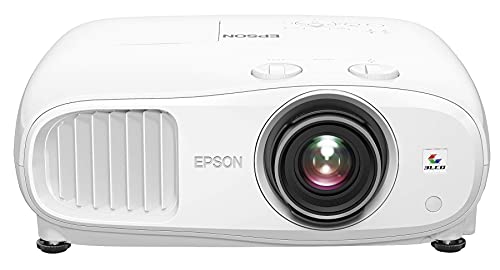
One reason Epson stays competitive is its 3LCD approach, which avoids rainbow artefacts and often delivers strong colour brightness for living rooms, classrooms, and mixed-use spaces. The better home models also offer solid motion, respectable contrast, and enough brightness to stay usable in less-than-perfect dark-room conditions.
Epson is less ideal if you want the sharpest enthusiast-grade native 4K image or the most stylish portable design. Some models are physically larger than DLP rivals, and the cinema-focused range is not always as premium-looking as Sony's. Still, for breadth, brightness, and overall value, Epson is one of the safer projector brands to buy.
The chart below compares projector brands by average overall score.
[horizontal-chart-06222294491359464560168876188160252806382230551488]
What are the main advantages of Epson projectors?
The main advantages of Epson projectors are as follows.
- Broad product range: Epson covers home cinema, gaming, business, education, ultra-short-throw, and portable smart projection better than many brands that specialise in only one area.
- 3LCD colour performance: Epson's 3LCD models usually maintain stronger colour brightness than many single-chip DLP rivals, which helps images look punchier in real rooms with some ambient light.
- No rainbow effect: Because Epson does not rely on the same colour-wheel approach as many DLP projectors, buyers sensitive to rainbow artefacts often find Epson easier to live with.
- Good brightness for the price: Many Epson projectors deliver practical 2,500-4,000+ lumen-style performance, which makes them versatile for home and work use.
- Strong value in mainstream home cinema: Epson often sits in a sweet spot where you get serious home-theatre features without having to pay Sony-level money.
What are the main disadvantages of Epson projectors?
The main disadvantages of Epson projectors are as follows.
- Not always the sharpest 4K presentation: Many Epson home models use pixel shifting rather than native 4K panels, so absolute fine-detail performance can trail top Sony projectors.
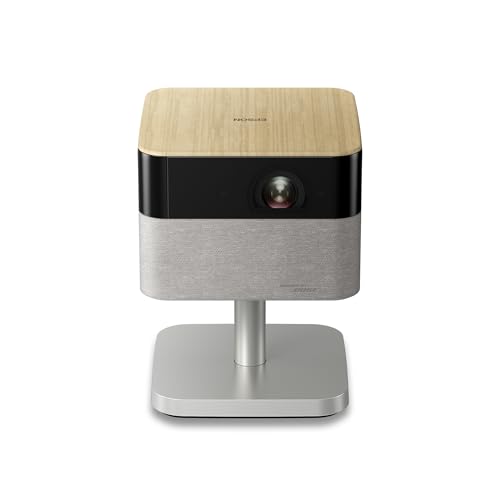
- Bulkier chassis: Epson projectors are often larger and less stylish than compact lifestyle models from Samsung, LG, Xgimi, or Nebula.
- Black levels vary by model: While good Epson cinema projectors can look excellent, cheaper models do not always deliver the same dark-scene depth as more premium home-cinema specialists.
- Built-in software is not always the main attraction: Epson's strengths are usually projector fundamentals, not the most elegant integrated smart-TV ecosystem.
- Many mainstream models are still lamp-based: Compared with LED- and laser-heavy rivals, some Epson projectors still bring bulb replacement and brightness-decay concerns over longer ownership.
- Premium pricing climbs quickly on the best models: Once you move into Epson's laser or higher-end home-cinema tiers, the value gap versus cheaper mainstream options narrows.
Who makes Epson projectors?
Epson projectors are made by Seiko Epson Corporation, the Japanese technology company best known for printers, imaging hardware, and business display equipment. Epson has been a major projector manufacturer for many years and is one of the more established specialist names in the category.
That long projector history matters because Epson is not just rebadging a handful of lifestyle models. It develops broad projector lines for home entertainment, education, business, and installation use, which is why the brand often feels deeper and more technically mature than small online-only competitors.
What are the main Epson projector series?
The main Epson projector series are as follows.
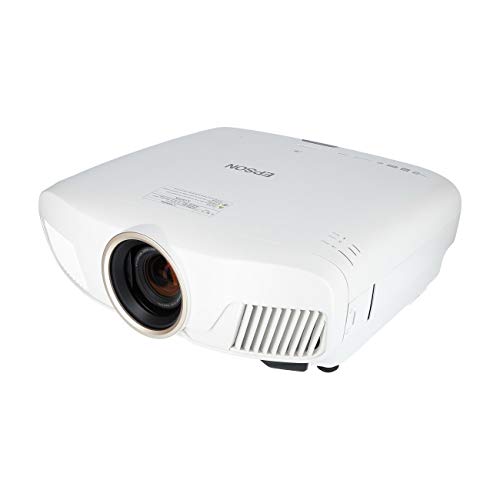
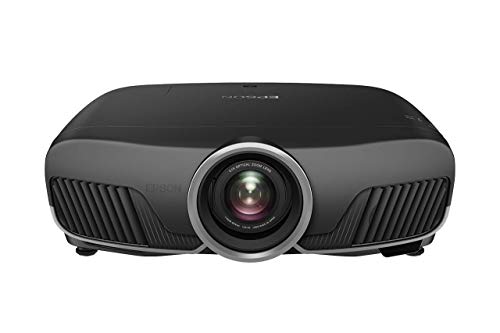
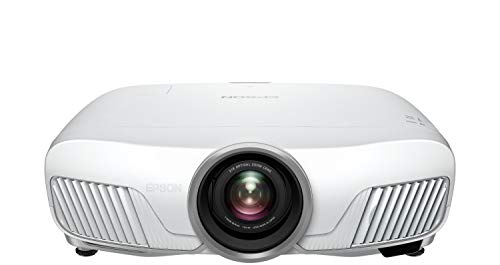
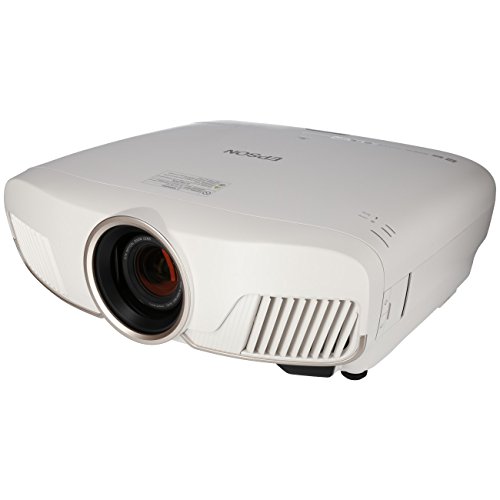
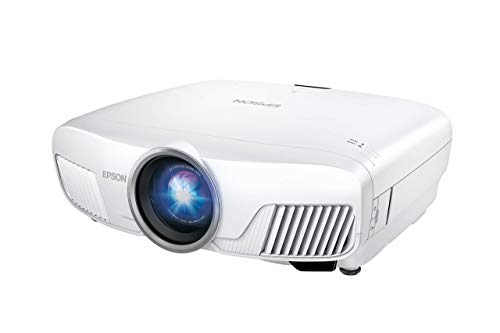
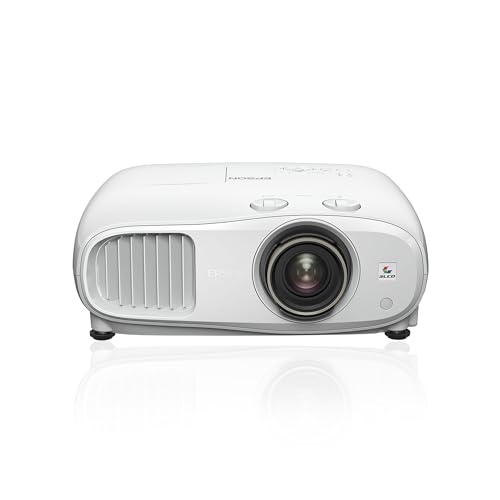
- Home Cinema / EH-TW models: Epson's mainstream home-theatre range, typically focused on movies, gaming, and balanced brightness for dedicated or mixed-use rooms.
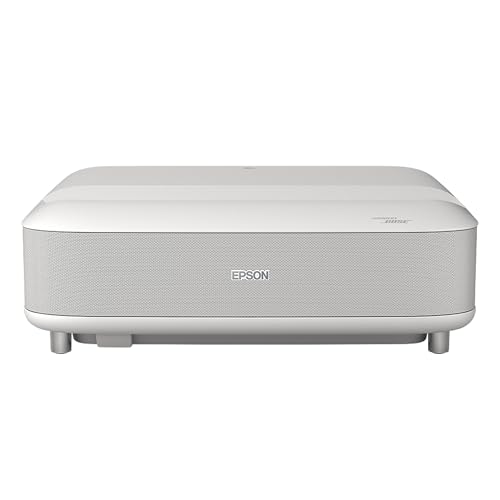
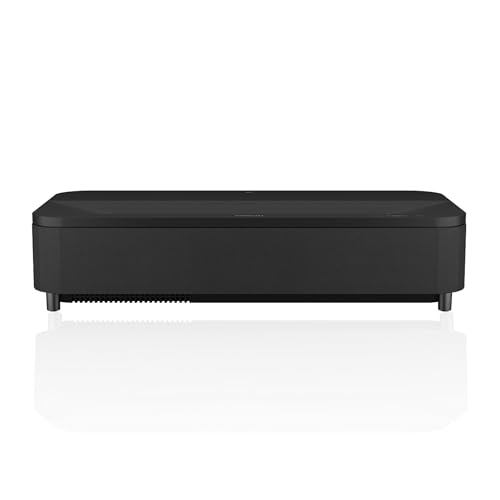
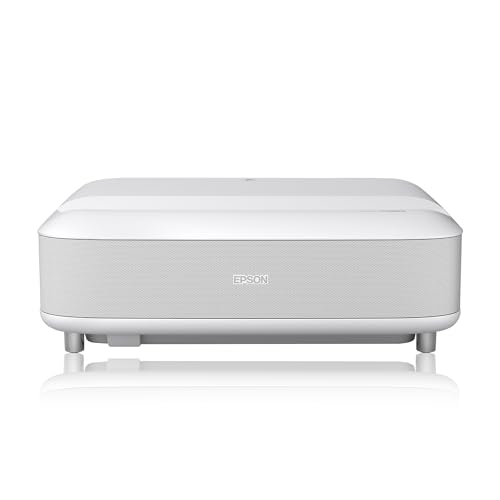
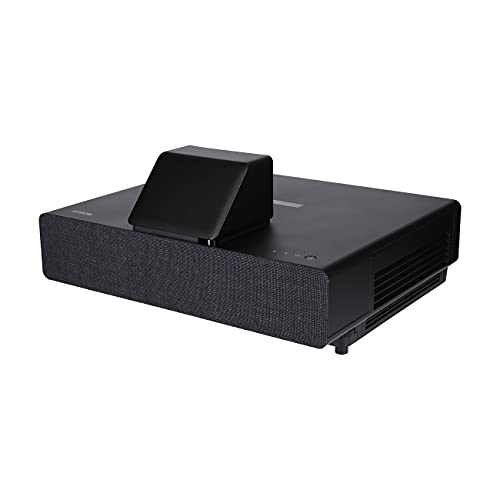
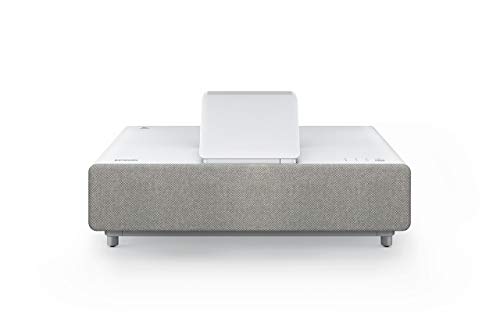
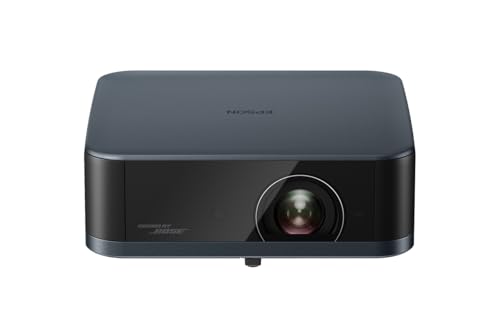
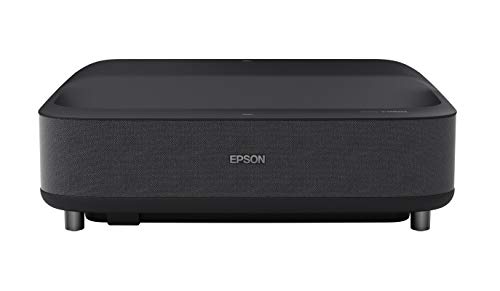
- EH-LS laser and ultra-short-throw models: The laser-led premium families, including living-room-friendly options designed to replace or complement a very large TV.
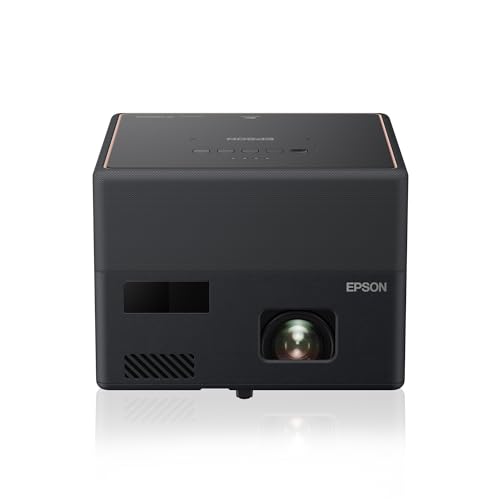
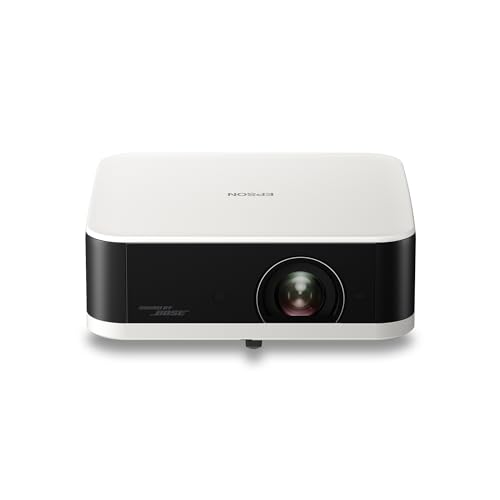
- EpiqVision / EF portable smart models: Smaller smart projectors built for casual streaming, portability, and easier setup rather than maximum cinema performance.
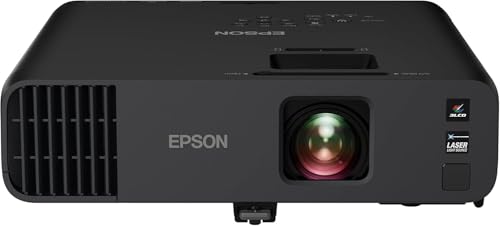
- EB business and education series: Epson's broad work-oriented lineup for classrooms, offices, and installed presentation spaces where brightness and reliability matter more than cinematic black levels.
How much do Epson projectors cost?
Epson projectors usually cost about £430 to £3,000 covering everything from practical 1080p home and office models to more serious home cinema options. One reason the brand stays popular is that its mid-range often gives you a lot of brightness and setup flexibility for the money.
\n
Epson often makes most sense around £860 to £1,700 where it starts adding better zoom, lens shift, lower input lag on some models, and stronger 4K-enhanced picture quality. That middle band is also where the brand often balances brightness and value better than many rivals.
\n
Within Epson's range, extra spend usually buys brighter light output, more placement flexibility, and a more refined cinema image rather than a completely different user experience. Higher-end models also make more sense if you need a bigger screen, a brighter room, or a longer-term fixed setup.
How do Epson projectors compare with Sony projectors?
Epson projectors usually offer a broader spread of price points and use cases than Sony projectors. Epson is easier to recommend if you want strong brightness, 3LCD colour performance, no rainbow artefacts, and better mainstream value across home and work setups. Sony is more narrowly focused on premium home cinema and tends to win on image refinement rather than affordability or range depth.
In practical buying terms, Epson often makes more sense for mixed-use rooms, buyers who want flexibility, or anyone trying to stay below flagship pricing. Sony makes more sense when the room is set up for film-first viewing and you are willing to pay extra for native 4K pedigree, stronger contrast, and a more luxurious cinematic image.
What should you consider while choosing the best Epson projector?
When comparing Epson projectors, keep the following checks in mind.
- 3LCD colour brightness: Epson's 3LCD designs usually keep colour brightness closer to white brightness, which helps sports, TV, and daytime viewing look fuller. If you watch with some ambient light, that can matter more than a small contrast advantage on paper.
- 4K type: A lot of Epson's better home models use 4K pixel shifting rather than native 4K panels. The image can still look very sharp, but you should know whether you are paying for true native 4K or a strong simulated 4K approach.
- Lamp or laser: Entry and mid-range Epson models are often lamp-based, while pricier ones move to laser. Lamps keep the purchase price down but add replacement cost later, whereas laser gives faster start-up, steadier brightness, and less maintenance.
- Placement flexibility: One reason Epson stays popular is that many home-cinema models offer generous zoom and lens shift. That is valuable if you cannot mount the projector dead-centre, and it is usually better than relying on digital keystone, which reduces sharpness.
- Gaming and HDMI: If you plan to game, check actual lag figures and whether the model accepts 1080p at 120Hz or only standard 60Hz signals. Epson can be strong here, but it varies a lot across office, home, and cinema models.
- Mid-range value: Epson often makes the most sense in the middle of the market, roughly where you want a bright 1080p or 4K-style home projector without going full premium. If a model gets too expensive, compare it directly with Sony, BenQ, or LG before assuming Epson is still the best value.