Scored using Headphones Methodology v1.0
Headphones Methodology v1.0
Mathematical & Unbiased Scoring
Products in this category are scored under Frontum Headphones Methodology v1.0: technical specifications plus authentic consumer ratings, with 0% commercial bias.
Explore Headphones Methodology v1.0

Grado PS500 Review | 93 Data compared

Avg. price:~£620Form factor:on-earConnectivity:wiredBattery life:N/A hoursActive noise cancellation (ANC):no

Grado PS500 Review: Compare 93 technical specifications and user reviews to see how this product ranks in the Headphones category and whether it is worth buying.
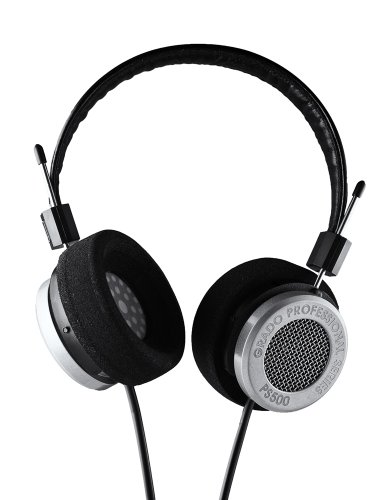
Grado PS500
5.3/10

Overall score

Score
5.3/ 10
✕
What it is
An overall evaluation of the headphones' quality, based on technical analyses and user reviews.
When it matters
When you need a quick reference to identify the best headphones on the market.
Score distribution
â–¼
<55-66-77-88-99-10
Score components

80%

4.6

Technical score

20%

8.1

User score

â–¼Worse than 92% of headphones
5.9

Value for money

Value for money
5.9/ 10
✕
What it is
An indicator that combines the headphones' overall rating with their cost.
When it matters
When you are looking for headphones that offer a strong balance of performance, features, and price.
Score distribution
â–¼
<55-66-77-88-99-10
Score components

70%

5.3

Overall score

30%

7.2

Price

â–¼Worse than 96%
4.6

Technical score

Technical score
4.6/ 10
✕
What it is
An assessment of technical performance for products in the Headphones category across these key areas: Sound, Calls & Controls, Connectivity, Features, Battery, Design.
When it matters
When you want to compare headphones based on technical performance and available features.
Score distribution
â–¼
<55-66-77-88-99-10
Score components

52%

5.0

Sound

20%

4.0

Features

10%

5.5

Design

8%

4.0

Connectivity

6%

4.0

Battery

4%

3.8

Calls & Controls

â–¼Worse than 99%
8.1

User score

User score
8.1/ 10
✕
What it is
A rating that combines user reviews and the total number of reviews received by the headphones.
When it matters
When you want to understand how headphones perform in real listening and how reliable they are in terms of comfort, audio quality, battery life, and long-term use.
Score distribution
â–¼
<55-66-77-88-99-10
Score components

70%

8.8

User ratings

30%

6.3

Number of reviews

Based on ratings from across the web.
â–²Better than 70%
  • grado-ps500
grado-ps500
Where to buy
*As an Amazon Associate, we earn from qualifying purchases.
Best rankings
Available: ranking among products currently available (including other versions of this product).All: ranking among all products in the database.
Loading...
Loading category ranking...

Technical Specifications of pair of headphones Grado PS500

Technical score
Technical score
4.6/ 10
✕
What it is
An assessment of technical performance for products in the Headphones category across these key areas: Sound, Calls & Controls, Connectivity, Features, Battery, Design.
When it matters
When you want to compare headphones based on technical performance and available features.
Score distribution
â–¼
<55-66-77-88-99-10
Score components:

52%

5.0

Sound

20%

4.0

Features

10%

5.5

Design

8%

4.0

Connectivity

6%

4.0

Battery

4%

3.8

Calls & Controls

4.6
User score
User score
8.1/ 10
✕
What it is
A rating that combines user reviews and the total number of reviews received by the headphones.
When it matters
When you want to understand how headphones perform in real listening and how reliable they are in terms of comfort, audio quality, battery life, and long-term use.
Score distribution
â–¼
<55-66-77-88-99-10
Score components

70%

8.8

User ratings

30%

6.3

Number of reviews

Based on ratings from across the web.
8.1
Popularity
Popularity
6.3/ 10
✕
What it is
An indicator based on the number of reviews received by the headphones.
When it matters
When you prefer headphones that have already been chosen and reviewed by many other users.
Score distribution
â–¼
<55-66-77-88-99-10
Popularity:
Grado PS500 has a popularity score of 6.3 points, which is higher than that of 55% of products in this category.
6.3
Value for money
Value for money
5.9/ 10
✕
What it is
An indicator that combines the headphones' overall rating with their cost.
When it matters
When you are looking for headphones that offer a strong balance of performance, features, and price.
Score distribution
â–¼
<55-66-77-88-99-10
Score components:

70%

5.3

Overall score

30%

7.2

Price

5.9
Active noise cancellation (ANC)
no
This pair of headphones does not support active noise cancellation. 27.5% of headphones support active noise cancellation.
Driver type
dynamic
Driver size
40 mm
This pair of headphones uses a driver size of 40 mm, larger driver size than 28.6% of headphones and equal to 53.3% of headphones.
Number of drivers
1
This pair of headphones uses 1 drivers, fewer drivers than 4% of headphones and equal to 96% of headphones.
Lowest frequency
14 Hz
This pair of headphones reaches a lowest frequency of 14 Hz, lower lowest frequency than 64.2% of headphones and equal to 0.4% of headphones.
Show more
Noise-canceling microphone
no
This pair of headphones does not support a noise-canceling microphone. 39% of headphones support noise-canceling microphones.
Can be used as a headset
no
This pair of headphones is not headset-ready, while 15.1% is. 84.9% of headphones can be used as headsets.
Number of microphones
0
This pair of headphones has 0 microphones, fewer microphones than 73.2% of headphones and equal to 26.9% of headphones.
Boom microphone
no
This pair of headphones does not include a boom microphone. 13.5% of headphones have a boom microphone.
Microphone SNR
N/A
Show more
Connectivity
wired
This pair of headphones supports wired connectivity, less flexible connectivity than 49.2% of headphones and equal to 50.8% of headphones.
Bluetooth version
N/A
Maximum Bluetooth range
N/A
Audio latency
N/A
Multipoint support
no
This pair of headphones does not support multipoint. 30.6% of headphones support multipoint.
Show more
Ambient sound mode
no
This pair of headphones does not offer ambient sound mode. 24.9% of headphones support ambient sound mode.
EQ support
no
This pair of headphones does not support EQ customization. 23.2% of headphones support EQ.
Companion app
no
This pair of headphones does not work with a companion app. 21.6% of headphones support companion apps.
Adjustable ANC levels
N/A
Voice assistant support
no
This pair of headphones does not support voice assistants. 60.9% of headphones support voice assistants.
Show more
Battery life
N/A
Battery life with ANC
N/A
Charging time
N/A
Quick charge
no
This pair of headphones does not support quick charging. 33.1% of headphones support quick charge.
Battery capacity
N/A
Show more
Brand name
Grado
Form factor
on-ear
Weight
300 g
This pair of headphones weighs 300 g, heavier than 80.9% of headphones and equal to 1.3% of headphones.
Acoustic design
open-back
Clamp force
?
Show more

Grado PS500 vs the average pair of headphones

246810TotalDesignSoundBatteryConnectivityCalls & ControlsFeatures
  • 9,000 Hz higher treble extension
    This pair of headphones has a higher highest frequency than the average pair of headphones (29,000 Hz vs 20,000 Hz). The average headphones reach a highest frequency of 20,000 Hz.
    29,000 Hz vs 20,000 Hz
  • 0.2 % lower distortion
    This pair of headphones has a lower total harmonic distortion than the average pair of headphones (0.1 % vs 0.3 %). The average headphones have total harmonic distortion of 0.3 %.
    0.1 % vs 0.3 %
  • 4 Hz lower bass extension
    This pair of headphones has a lower lowest frequency than the average pair of headphones (14 Hz vs 18 Hz). The average headphones reach a lowest frequency of 18 Hz.
    14 Hz vs 18 Hz
  • 0.8 m longer cable length
    This pair of headphones offers a more useful cable length than the average pair of headphones (2 m vs 1.2 m). The average headphones have a cable length of 1.2 m.
    2 m vs 1.2 m
  • Open-back design
    This pair of headphones uses an open-back design, while the average pair of headphones does not. 9.1% of headphones have an open-back design.
  • 0.45 dB tighter channel balance
    This pair of headphones has a lower channel balance tolerance than the average pair of headphones (0.1 dB vs 0.5 dB). The average headphones have channel balance tolerance of 0.5 dB.
    0.05 dB vs 0.5 dB
  • 0.8 m longer cable length
    This pair of headphones offers a more useful cable length than the average pair of headphones (2 m vs 1.2 m). The average headphones have a cable length of 1.2 m.
    2 m vs 1.2 m
  • Open-back design
    This pair of headphones uses an open-back design, while the average pair of headphones does not. 9.1% of headphones have an open-back design.
  • 9,000 Hz higher treble extension
    This pair of headphones has a higher highest frequency than the average pair of headphones (29,000 Hz vs 20,000 Hz). The average headphones reach a highest frequency of 20,000 Hz.
    29,000 Hz vs 20,000 Hz
  • 0.2 % lower distortion
    This pair of headphones has a lower total harmonic distortion than the average pair of headphones (0.1 % vs 0.3 %). The average headphones have total harmonic distortion of 0.3 %.
    0.1 % vs 0.3 %
  • 4 Hz lower bass extension
    This pair of headphones has a lower lowest frequency than the average pair of headphones (14 Hz vs 18 Hz). The average headphones reach a lowest frequency of 18 Hz.
    14 Hz vs 18 Hz
  • 0.45 dB tighter channel balance
    This pair of headphones has a lower channel balance tolerance than the average pair of headphones (0.1 dB vs 0.5 dB). The average headphones have channel balance tolerance of 0.5 dB.
    0.05 dB vs 0.5 dB
  • No passive noise reduction
    This pair of headphones does not offer passive noise reduction, while the average pair of headphones does. 82.6% of headphones have passive noise reduction.
  • 37.6% higher weight
    This pair of headphones is heavier than the average pair of headphones (300 g vs 218 g). The average pair of headphones weighs 218 g.
    300 g vs 218 g
  • No voice assistant support
    This pair of headphones does not support voice assistants, the average pair of headphones does. 60.8% of headphones support voice assistants.
  • Fixed cable
    This pair of headphones has a fixed cable, while the average pair of headphones has a detachable one. 62% of headphones have a detachable cable.
  • Not headset-ready
    This pair of headphones is not headset-ready, while the average pair of headphones is. 84.8% of headphones can be used as headsets.
  • 4 dB/mW lower sensitivity
    This pair of headphones has a lower sensitivity than the average pair of headphones (98 dB/mW vs 102 dB/mW). The average headphones have sensitivity of 102 dB/mW.
    98 dB/mW vs 102 dB/mW
  • 6.89x more expensive
    Grado PS500 is more expensive than the average pair of headphones (£620 vs £90).
    £620 vs £90
  • 23.2% worse value for money
    Grado PS500 has worse value for money than the average pair of headphones (5.9 vs 7.3).
    5.9 vs 7.27
  • 6.89x more expensive
    Grado PS500 is more expensive than the average pair of headphones (£620 vs £90).
    £620 vs £90
  • 23.2% worse value for money
    Grado PS500 has worse value for money than the average pair of headphones (5.9 vs 7.3).
    5.9 vs 7.27
  • 37.6% higher weight
    This pair of headphones is heavier than the average pair of headphones (300 g vs 218 g). The average pair of headphones weighs 218 g.
    300 g vs 218 g
  • Fixed cable
    This pair of headphones has a fixed cable, while the average pair of headphones has a detachable one. 62% of headphones have a detachable cable.
  • Tangle-prone cable
    This pair of headphones uses a tangle-prone cable, while the average pair of headphones is easier to manage. 64.2% of headphones use a tangle-free cable.
  • No travel bag
    This pair of headphones does not include a travel bag, the average pair of headphones does. 65.4% of headphones include a travel bag.
  • No passive noise reduction
    This pair of headphones does not offer passive noise reduction, while the average pair of headphones does. 82.6% of headphones have passive noise reduction.
  • 4 dB/mW lower sensitivity
    This pair of headphones has a lower sensitivity than the average pair of headphones (98 dB/mW vs 102 dB/mW). The average headphones have sensitivity of 102 dB/mW.
    98 dB/mW vs 102 dB/mW
  • 12 dB lower max SPL
    This pair of headphones has a lower max SPL than the average pair of headphones (98 dB vs 110 dB). The average headphones reach a max SPL of 110 dB.
    98 dB vs 110 dB
  • 5 dB SPL lower sound pressure level
    This pair of headphones has a lower sound pressure level than the average pair of headphones (98 dB SPL vs 103 dB SPL). The average headphones reach a sound pressure level of 103 dB SPL.
    98 dB SPL vs 103 dB SPL
  • No battery indicator
    This pair of headphones does not show battery level clearly, while the average pair of headphones does. 56.3% of headphones have a battery level indicator.
  • Not headset-ready
    This pair of headphones is not headset-ready, while the average pair of headphones is. 84.8% of headphones can be used as headsets.
  • 1 fewer microphones
    This pair of headphones has fewer microphones than the average pair of headphones (0 vs 1). The average headphones have 1 microphones.
    0 vs 1
  • No voice assistant support
    This pair of headphones does not support voice assistants, the average pair of headphones does. 60.8% of headphones support voice assistants.
  • 5 older release date
    This pair of headphones was released earlier than the average pair of headphones (2011 vs 2016). The average headphones were released in 2016.
    September 2011
    2011 vs 2016

Video reviews

Hands-on testing, unboxing, and real-world video evaluations

9.5
HiFi Huff
≈ estimated
17/07/2012
Long-term listening · desk use and sound tests
Verdict
Grado PS500 sounds outstanding for home listening, but the build feels cheap and it is not meant for travel.
Shop video

Expert reviews

In-depth analysis and verdict from leading tech publications

whathifi.com
06/06/2012
Hands-on test · Open-back sound
Verdict
The Grado PS500 is an open-back headphone with punchy bass and good timing, but it leaks a lot of sound and needs good sources.
expertreviews.co.uk
17/01/2012
Hands-on test · Detailed on-ear sound
Verdict
The Grado PS500 is a detailed, comfortable open-back headphone for home listening, but its leaky design rules out busy commutes.
H
headfonia.com
11/11/2011
Summary of the review
headfonics.com
25/10/2011
Hands-on review · Track-by-track listening
Verdict
The Grado PS-500 sounds lively and musical, is comfortable from the first minute, and drives well from a phone, though its open back leaks sound.
hifichoice.com
13/03/2012
Hands-on review · Sound quality
Verdict
The Grado PS500 is a detailed headphone with smooth, sweet treble that gets close to the pricier GS1000, though its hard headband may not suit every head.
headfonia.com
11/11/2011
Blog review · SR60-RS1 comparison
Verdict
The Grado PS500 sounds smoother and newer than the SR60-RS1 line, but lacks the classic Grado bite and attack on good recordings.
hifitest.de
29/08/2014
Hands-on test · Open-back home hi-fi
Verdict
The Grado PS500 is a detailed, airy headphone with standout mids for home and studio use, though its build feels plain for the price and it leaks sound.
connect.de
21/07/2014
Hands-on test · Open-back travel pick
Verdict
The Grado PS 500 is an airy, transparent on-ear headphone best suited to home use, though its open design and missing adapter and remote limit travel use.
on-mag.fr
02/03/2020
Lab test · Open-back hi-fi
Verdict
The Grado PS500e is a transparent, airy open-back headphone with fast, natural rhythm, best suited to precise listening, though its bass lacks the depth of some rivals.
misauriculares.com
21/04/2020
Personal review · Frequency measurements
Verdict
The Grado PS500 is a bright, U-shaped open-back headphone with a quiet background, but flimsy build and hard foam pads make it uncomfortable.
fwdmagazine.be
22/06/2012
Hands-on test · Open-back sound
Verdict
The Grado PS500 is a light, open-back headphone that delivers much of the PS1000's sound, but its bass lacks slam and it blocks no outside noise.

Third-party reviews

Based on ratings from across the web.
Reviews last updated: November 2026 · How we calculate this

What customers like about Grado PS500

  • Exceptional clarity, detail, and transparency
  • Punchy and well-controlled bass, often considered more balanced than other Grado models
  • Wide, immersive soundstage with precise instrument separation
  • Highly efficient and easy to drive, though they benefit significantly from a high-quality DAC
  • Lightweight design with a distinctive retro metal-and-wood hybrid aesthetic
  • Engaging, 'live' musical presentation that works well across diverse genres

What customers don't like about Grado PS500

  • Treble can be sharp or sibilant, potentially leading to listening fatigue
  • Stock L-Cush earpads are often reported as uncomfortable for long sessions
  • Attached cable is widely criticized for being too thick, heavy, and cumbersome
  • Minimal noise isolation and significant sound leakage due to the open-back design
  • Simple headband lacks adequate padding for some users
  • Questionable build quality for the price point, with some users noting a 'DIY' feel

Verdict

The Grado PS500 is an open-back, supra-aural headphone featuring 44mm dynamic drivers matched within 0.05dB, a frequency response of 14Hz – 29kHz, and a low 32-ohm impedance that makes it easily drivable by portable devices. Its core characteristic is a unique hybrid air chamber combining a mahogany inner core with powder-coated aluminum housing to minimize resonance, paired with an 8-conductor ultra-high purity copper cable. Main pros include its exceptional midrange clarity, balanced yet punchy bass response, and a spacious, highly detailed soundstage ideal for critical listening. However, notable cons include potential treble fatigue for sensitive listeners, a bulky non-detachable cable that limits portability, and an on-ear design that some users find uncomfortable for long sessions without third-party pad upgrades.

Compare Grado PS500 with other products in the Headphones category

1Product to compare no. 1
VS
2Product to compare no. 2
VS
3Product to compare no. 3 (optional)

Graphic comparison of Grado PS500 and other products in the Headphones category

No results found