Scored using Graphics cards Methodology v3.0
Graphics cards Methodology v3.0
Mathematical & Unbiased Scoring
Products in this category are scored under Frontum Graphics cards Methodology v3.0: the technical score from the specifications is the base, and independent expert and video reviews (up to ±0.5 points), owner opinions (up to ±0.3) and best-of lists (up to +0.3) move it up or down.
Explore Graphics cards Methodology v3.0

GUNNIR Arc Pro B50 Low Profile 16GB review: 117 specs compared

Avg. price:~£510VRAM:16 GBMemory bus width:?Thermal Design Power (TDP):?

GUNNIR Arc Pro B50 Low Profile 16GB Review: Compare 117 technical specifications to see how this product ranks in the Graphics cards category and whether it is worth buying.
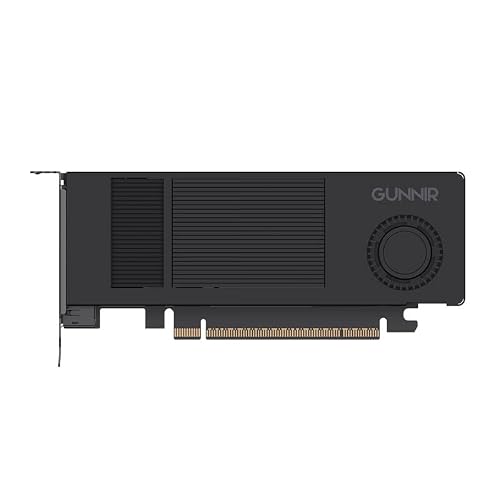
GUNNIR Arc Pro B50 Low Profile 16GB
7.5/10

Overall score

Score
7.5/ 10
✕
What it is
Our main score for this model, 1–10. It combines specs, expert reviews, best-of lists and owners.
How we count it
Parts: Technical score 40%, Reviews score 25%, List score 25%, Sentiment score 10%
Marks: Each part gets a mark out of 10. For reviews, lists and owners, a typical model in this category gets about 8 and the best one gets 10.
No data yet: A part with no data shows "?". It counts as the mark of a weaker model in this category (4 in 5 models with data score higher). This way, models with reviews, lists and owners usually come out ahead.
Score distribution
â–¼
<55-66-77-88-99-10
Score components

40%

7.8

Technical score

25%

?

Reviews scoreNot enough data yet, so we use 7.6, the mark of a weaker model in this category

25%

?

List scoreNot enough data yet, so we use 7.5, the mark of a weaker model in this category

10%

6.2

Sentiment score

â–²Better than 54% of graphics cards
7.6

Value for money

Value for money
7.6/ 10
✕
What it is
An indicator that combines the graphics card's overall rating with its cost.
When it matters
When you are looking for a graphics card that offers a strong balance of performance, features, and price.
Score distribution
â–¼
<55-66-77-88-99-10
Score components

70%

7.5

Overall score

30%

7.8

Price

â–²Better than 62%
7.8

Technical score

Technical score
7.8/ 10
✕
What it is
How good the specs are compared with the other models in this category, 1–10.
How we count it
Areas: We rate the specs in each area against the other models in this category.
Weighting: The areas that matter most to buyers count more. The shares are shown under Score components.
Share: The technical score is 40% of the overall score.
Score distribution
â–¼
<55-66-77-88-99-10
Score components

44%

7.3

Performance

24%

8.7

Memory

12%

7.4

Power

11%

8.4

Features

5%

9.3

Design

4%

7.3

Connectivity

â–²Better than 65%
?

Reviews score

Reviews score
✕
What it is
Average grade from independent test sites, magazines and video reviewers, 1–10.
How we count it
Grades: Each review's own score is converted to 1–10; without one, we grade the review ourselves. Big test sites count more, short reviews half as much as full tests. A video review counts half.
Score: The average grade is 80% of the review mark; the number of reviews is the other 20% (1 review = 5, the typical number in this category = 8, the most-reviewed model = 10).
Enough data: With few reviews, the average grade is pulled toward the typical grade of this category. No reviews yet: 7.6 for now.
Share: Reviews count 25% of the overall score.
Score distribution
â–¼
<55-66-77-88-99-10
Grades by review (0)
We have not found an independent test of this model yet. Until we do, its review part counts as 7.6.
User ratings collected online are not part of this score.
No expert tests yet
?

List score

List score
7.5/ 10
✕
What it is
How often independent test sites, magazines and video reviewers put this model in their best-of lists for this category.
How we count it
Points: The model in the most lists of this category gets 10; the others get 8 to 10 in proportion. In no list yet: 7.5. Lists count 25% of the overall score.
Enough data: Every list counts, even a single one. With fewer than 5 best-of lists in the category, this part is left out.
Lists with this model (0)
Not in any best-of list yet, so this part counts as 7.5. Models in a list get 8 to 10.
Not in any best-of list yet
  • gunnir-arc-pro-b50-low-profile-16gb
  • gunnir-arc-pro-b50-low-profile-16gb
  • gunnir-arc-pro-b50-low-profile-16gb
  • gunnir-arc-pro-b50-low-profile-16gb
  • gunnir-arc-pro-b50-low-profile-16gb
  • gunnir-arc-pro-b50-low-profile-16gb
  • gunnir-arc-pro-b50-low-profile-16gb
gunnir-arc-pro-b50-low-profile-16gb
Where to buy
*As an Amazon Associate, we earn from qualifying purchases.
Best rankings
Available: ranking among products currently available (including other versions of this product).All: ranking among all products in the database.

What owners say about the GUNNIR Arc Pro B50 Low Profile 16GB

Based on 22 owners sharing their experience in online comments

41%positive9%mixed50%negative

Owners value its gaming and local AI performance, while driver gaps and uneven gaming frame rates hold it back.

What owners dislike

  • Frame rates can dip to the 50s in physics-heavy moments, and some games need XeSS or FSR upscaling to reach 60 fps at 1440p.4
  • Early drivers hold back frame rates, XPU support is limited, and one owner could not get it working in a VM via passthrough.3

Points mentioned by at least 3 owners, most mentioned first.

Loading...
Loading category ranking...

Technical Specifications of graphics card GUNNIR Arc Pro B50 Low Profile 16GB

Technical score
Technical score
7.8/ 10
✕
What it is
How good the specs are compared with the other models in this category, 1–10.
How we count it
Areas: We rate the specs in each area against the other models in this category.
Weighting: The areas that matter most to buyers count more. The shares are shown under Score components.
Share: The technical score is 40% of the overall score.
Score distribution
â–¼
<55-66-77-88-99-10
Score components:

44%

7.3

Performance

24%

8.7

Memory

12%

7.4

Power

11%

8.4

Features

5%

9.3

Design

4%

7.3

Connectivity

7.8
Reviews score
7.6
List score
?
Value for money
Value for money
7.6/ 10
✕
What it is
An indicator that combines the graphics card's overall rating with its cost.
When it matters
When you are looking for a graphics card that offers a strong balance of performance, features, and price.
Score distribution
â–¼
<55-66-77-88-99-10
Score components:

70%

7.5

Overall score

30%

7.8

Price

7.6
3DMark Time Spy benchmark score
?
3DMark Port Royal score
?
PassMark (G3D) result
?
PassMark (DirectCompute) result
?
FP32 performance
?
Show more
VRAM
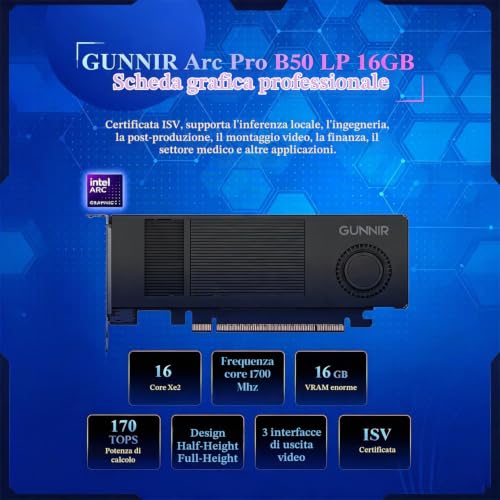
16 GB
This graphics card has 16 GB of VRAM, which is more than 62% of graphics cards and equal to 28.1% of graphics cards.
Memory type
?
Memory bus width
?
Maximum memory bandwidth
?
Effective memory speed
?
Show more
PCI Express (PCIe) version
?
PCIe lanes
?
DirectX version
?
Vulkan version
?
OpenGL version
?
Show more
Max displays supported
?
Max digital resolution
?
DisplayPort outputs
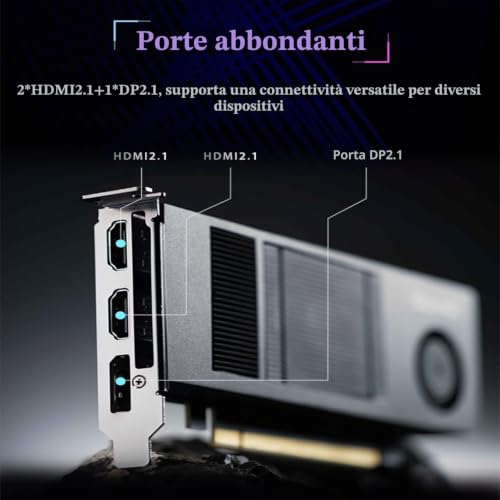
1
This graphics card offers 1 DisplayPort outputs, which is fewer than 88.1% of graphics cards and equal to 8.7% of graphics cards.
DisplayPort version
?
DisplayPort link rates
?
Show more
Thermal Design Power (TDP)
?
Power consumption while under peak load
70 W
This graphics card draws 70 W under peak load, which is lower than 94.2% of graphics cards and equal to 1.3% of graphics cards.
Recommended PSU wattage
?
Board power limit
70 W
This graphics card has a board power limit of 70 W, which is lower than that of 94.1% of graphics cards and equal to that of 1.4% of graphics cards.
PCIe power spec
?
Show more
Size
?
Length
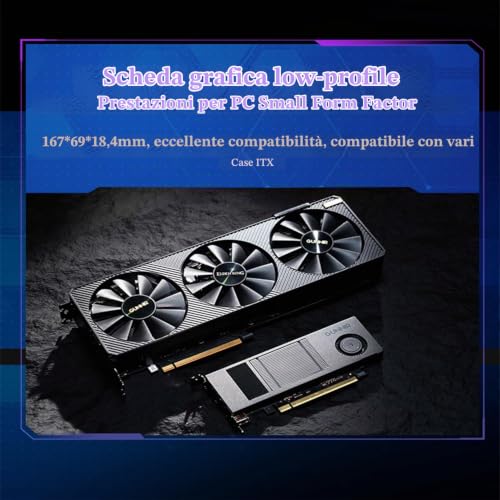
167 mm
This graphics card is 167 mm long, which is shorter than 96.4% of graphics cards and equal in length to 0.3% of graphics cards.
Height
69 mm
This graphics card is 69 mm tall, which is shorter than 92.5% of graphics cards and equal in height to 1.6% of graphics cards.
Slot width
1 slot/s
This graphics card occupies 1 slot/s, which is slimmer than 96.1% of graphics cards and equal in width to 3.9% of graphics cards.
Weight
?
Show more

GUNNIR Arc Pro B50 Low Profile 16GB vs the average graphics card

246810TotalPerformanceMemoryFeaturesConnectivityPowerDesign
  • 3.8% higher boost clock speed
    This graphics card has a higher boost GPU clock than the average graphics card (2,600 MHz vs 2,505 MHz). The average graphics card has a boost GPU clock of 2,505 MHz.
    2,600 MHz vs 2,505 MHz
  • 4 GB more VRAM
    This graphics card has more VRAM than the average graphics card (16 GB vs 12 GB). The average graphics card has 12 GB VRAM.
    16 GB vs 12 GB
  • 1.5 slot/s slimmer design
    This graphics card occupies fewer slots than the average graphics card (1 slot/s vs 2.5 slot/s). The average graphics card occupies 2.5 slot/s.
    1 slot/s vs 2.5 slot/s
  • 115.2 mm shorter card length
    This graphics card is shorter than the average graphics card (167 mm vs 282.2 mm). The average graphics card has a length of 282.2 mm.
    167 mm vs 282.2 mm
  • 56 mm lower card height
    This graphics card is shorter than the average graphics card (69 mm vs 125 mm). The average graphics card has a height of 125 mm.
    69 mm vs 125 mm
  • 68.2% lower board power limit
    This graphics card has a lower board power limit than the average graphics card (70 W vs 220 W). The average graphics card has a board power limit of 220 W.
    70 W vs 220 W
  • 68.2% lower peak power draw
    This graphics card has a lower peak power draw than the average graphics card (70 W vs 220 W). The average graphics card has a peak power draw of 220 W.
    70 W vs 220 W
  • 3.8% higher boost clock speed
    This graphics card has a higher boost GPU clock than the average graphics card (2,600 MHz vs 2,505 MHz). The average graphics card has a boost GPU clock of 2,505 MHz.
    2,600 MHz vs 2,505 MHz
  • 4 GB more VRAM
    This graphics card has more VRAM than the average graphics card (16 GB vs 12 GB). The average graphics card has 12 GB VRAM.
    16 GB vs 12 GB
  • 68.2% lower board power limit
    This graphics card has a lower board power limit than the average graphics card (70 W vs 220 W). The average graphics card has a board power limit of 220 W.
    70 W vs 220 W
  • 68.2% lower peak power draw
    This graphics card has a lower peak power draw than the average graphics card (70 W vs 220 W). The average graphics card has a peak power draw of 220 W.
    70 W vs 220 W
  • 1.5 slot/s slimmer design
    This graphics card occupies fewer slots than the average graphics card (1 slot/s vs 2.5 slot/s). The average graphics card occupies 2.5 slot/s.
    1 slot/s vs 2.5 slot/s
  • 115.2 mm shorter card length
    This graphics card is shorter than the average graphics card (167 mm vs 282.2 mm). The average graphics card has a length of 282.2 mm.
    167 mm vs 282.2 mm
  • 56 mm lower card height
    This graphics card is shorter than the average graphics card (69 mm vs 125 mm). The average graphics card has a height of 125 mm.
    69 mm vs 125 mm
  • 2 fewer fans
    This graphics card has fewer fans than the average graphics card (1 vs 3).
    1 vs 3
  • No CUDA support
    This graphics card does not support CUDA, the average graphics card does.
  • 24 fewer ray tracing cores
    This graphics card has fewer ray tracing cores than the average graphics card (16 vs 40). The average graphics card has 40 ray tracing cores.
    16 vs 40
  • No DLSS support
    This graphics card does not support DLSS, the average graphics card does.
  • 2 fewer DisplayPort outputs
    This graphics card has fewer DisplayPort outputs than the average graphics card (1 vs 3). The average graphics card has 3 DisplayPort outputs.
    1 vs 3
  • 20.5% lower sentiment score
    6.2 vs 7.8
  • 11.5% lower base clock speed
    This graphics card has a lower base GPU clock than the average graphics card (1,700 MHz vs 1920 MHz). The average graphics card has a base GPU clock of 1920 MHz.
    1,700 MHz vs 1,920 MHz
  • 16 fewer AI cores
    This graphics card has fewer AI cores than the average graphics card (128 vs 144). The average graphics card has 144 AI cores.
    128 vs 144
  • 20.5% lower sentiment score
    6.2 vs 7.8
  • No CUDA support
    This graphics card does not support CUDA, the average graphics card does.
  • 24 fewer ray tracing cores
    This graphics card has fewer ray tracing cores than the average graphics card (16 vs 40). The average graphics card has 40 ray tracing cores.
    16 vs 40
  • 11.5% lower base clock speed
    This graphics card has a lower base GPU clock than the average graphics card (1,700 MHz vs 1920 MHz). The average graphics card has a base GPU clock of 1920 MHz.
    1,700 MHz vs 1,920 MHz
  • 16 fewer AI cores
    This graphics card has fewer AI cores than the average graphics card (128 vs 144). The average graphics card has 144 AI cores.
    128 vs 144
  • No DLSS support
    This graphics card does not support DLSS, the average graphics card does.
  • 2 fewer DisplayPort outputs
    This graphics card has fewer DisplayPort outputs than the average graphics card (1 vs 3). The average graphics card has 3 DisplayPort outputs.
    1 vs 3
  • 2 fewer fans
    This graphics card has fewer fans than the average graphics card (1 vs 3).
    1 vs 3

Third-party reviews

What customers like about GUNNIR Arc Pro B50 Low Profile 16GB

  • At 69 mm high it fits slim cases that full-size cards cannot enter.
  • One slot width saves room on the motherboard.
  • A 70 W peak load keeps power needs low.
  • 16 GB of memory is generous for a card this size.
  • AV1 encode and decode handle modern video formats.
  • Two HDMI ports connect to TVs and monitors easily.

What customers don't like about GUNNIR Arc Pro B50 Low Profile 16GB

  • Only 16 ray tracing units limit ray tracing in games.
  • One fan is a limit for keeping the card cool under long heavy loads.
  • A single DisplayPort output is a limit for multi-screen desks.
  • No CUDA support, which some AI and creative tools need.
  • No DLSS, so Nvidia's upscaling is not an option.

Verdict

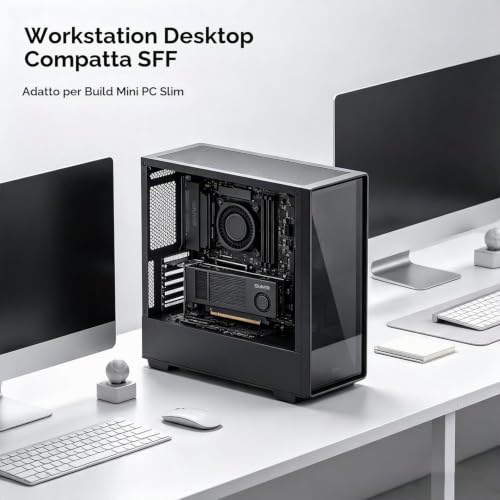
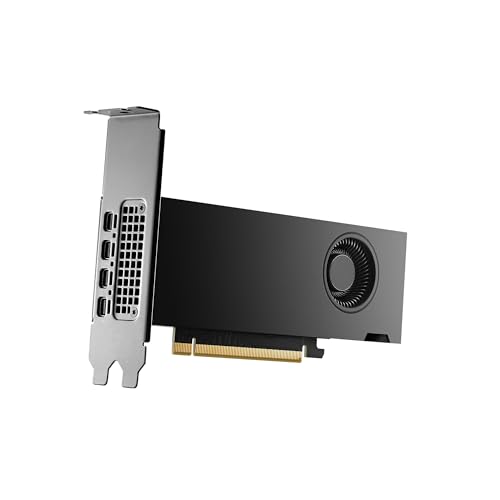
A 70 W peak draw and a height of 69 mm make the GUNNIR Arc Pro B50 Low Profile 16GB a card for small, lean builds. It takes one slot and measures 167 mm long, so it fits cases where a full-height card would not. Its 170 TOPS of INT8 work suits AI inference. The 16 GB of memory is generous for a card this size, and AV1 encode and decode are on board for video work. The trade-off is that it is built for work, not play. It has just one fan and one DisplayPort output, its 16 ray tracing units are few, and it has no CUDA or DLSS. It suits a buyer building a small, low-power workstation who does not need gaming features.

Compare GUNNIR Arc Pro B50 Low Profile 16GB with other products in the Graphics cards category

1Product to compare no. 1
VS
2Product to compare no. 2
VS
3Product to compare no. 3 (optional)

Graphic comparison of GUNNIR Arc Pro B50 Low Profile 16GB and other products in the Graphics cards category

No results found