Scored using Washing machines Methodology v2.0
Washing machines Methodology v2.0
Mathematical & Unbiased Scoring
Products in this category are scored under Frontumo Washing machines Methodology v2.0: technical specifications plus grades from 80 independent expert reviews and 72 video reviews, with 0% commercial bias.
Explore Washing machines Methodology v2.0

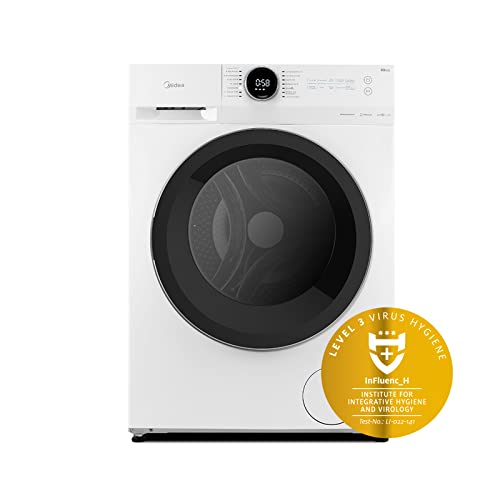
Midea MF10EW70BA Review | 101 Data compared

Avg. price:~£330Capacity:7 kgMaximum spin speed:1400 RPMEnergy efficiency class:AType:self-standingLoading type:front-loading

Midea MF10EW70BA Review: Compare 101 technical specifications and expert reviews to see how this product ranks in the Washing machines category and whether it is worth buying.

6.7

Overall score

Score
6.7/ 10
✕
What it is
An overall evaluation of the washing machine's quality, based on technical analyses and user reviews.
When it matters
When you need a quick reference to identify the best washing machines on the market.
Score distribution
â–¼
<55-66-77-88-99-10
Score components

100%

6.7

Technical score

â–¼Worse than 75% of washing-machines
6.7

Technical score

Technical score
6.7/ 10
✕
What it is
An assessment of the washing machine's technical performance, covering five key areas: performance, energy efficiency, washing programs, features, and design.
When it matters
When you want to compare washing machines based on technical performance and available features.
Score distribution
â–¼
<55-66-77-88-99-10
Score components

25%

6.5

Performance

25%

9.6

Energy efficiency

20%

5.4

Washing programs

20%

4.4

Features

10%

7.1

Design

â–¼Worse than 75% of washing-machines
?

Review score

Review score
✕
What it is
Average grade from independent test sites, magazines and video reviewers, 1–10.
How we count it
Grades: Each review's own score is converted to 1–10; without one, we grade the review ourselves.
Weighting: Big test sites count more, short reviews half as much as full tests. A video review counts half.
Share: Too few models in this category have enough reviews yet, so reviews are shown but do not count in the overall score.
Score distribution
â–¼
<55-66-77-88-99-10
Grades by review (0)
We have not found an independent test of this model yet, so its overall score is our technical score alone.
Shop star ratings are not part of this score.
No expert tests yet
  • No image
No image

Best prices

    N/A~ £330

Best rankings

Available: ranking among products currently available (including other versions of this product).All: ranking among all products in the database.
Loading...
Loading category ranking...

Technical Specifications of washing machine Midea MF10EW70BA

Technical score
Technical score
6.7/ 10
✕
What it is
An assessment of the washing machine's technical performance, covering five key areas: performance, energy efficiency, washing programs, features, and design.
When it matters
When you want to compare washing machines based on technical performance and available features.
Score distribution
â–¼
<55-66-77-88-99-10
Score components:

25%

6.5

Performance

25%

9.6

Energy efficiency

20%

5.4

Washing programs

20%

4.4

Features

10%

7.1

Design

6.7
Review score
Review score
✕
What it is
Average grade from independent test sites, magazines and video reviewers, 1–10.
How we count it
Grades: Each review's own score is converted to 1–10; without one, we grade the review ourselves.
Weighting: Big test sites count more, short reviews half as much as full tests. A video review counts half.
Share: Too few models in this category have enough reviews yet, so reviews are shown but do not count in the overall score.
Score distribution
â–¼
<55-66-77-88-99-10
Grades by review (0)
We have not found an independent test of this model yet, so its overall score is our technical score alone.
Shop star ratings are not part of this score.
?
Popularity
Popularity
1.0/ 10
✕
What it is
An indicator based on the number of reviews received by the washing machine.
When it matters
When you prefer to purchase a product chosen and reviewed by many other consumers.
Score distribution
â–¼
<55-66-77-88-99-10
Popularity:
Midea MF10EW70BA has a popularity of 1 point, which is higher than 0% of washing machines.
1.0
Value for money
Value for money
7.2/ 10
✕
What it is
An indicator that combines the washing machine's overall rating with its cost.
When it matters
When you are looking for a washing machine with a good balance between quality and price.
Score distribution
â–¼
<55-66-77-88-99-10
Score components:

60%

6.7

Overall score

40%

8.5

Price

7.2
Capacity
7 kg
Capacity
7 kg
This washing machine holds 7 kg, which is less than 73.7% of washing machines and equal to 16.1% of washing machines.
Drum volume
48 L
Drum volume
48 L
This washing machine has a 48 L drum, which is smaller than 78.4% of washing machines and equal to 3.5% of washing machines.
Spin-drying efficiency class
B
Spin-drying efficiency class
B
This washing machine has spin-drying class B, which is more efficient than in 10.5% of washing machines and the same as in 83.8% of washing machines.
Maximum spin speed
1,400 RPM
Maximum spin speed
1,400 RPM
This washing machine spins at 1,400 RPM, which is faster than 31.5% of washing machines and equal to 63.2% of washing machines.
Minimum spin speed
800 RPM
Minimum spin speed
800 RPM
This washing machine has a minimum spin of 800 RPM, which is higher than 89.5% of washing machines and equal to 10.5% of washing machines.
Show more
Energy efficiency class
A
Energy efficiency class
A
This washing machine has energy class A, which is better than 45.8% of washing machines and the same as 54.2% of washing machines.
Energy consumption per 100 cycles
44 kWh/100 cycles
Energy consumption per 100 cycles
44 kWh/100 cycles
This washing machine uses 44 kWh/100 cycles, which is lower than 88.8% of washing machines and equal to 3.4% of washing machines.
Annual energy consumption
96.8 kWh/year
Annual energy consumption
96.8 kWh/year
This washing machine uses 96.8 kWh/year, which is lower than 93.6% of washing machines and equal to 3.6% of washing machines.
Annual energy cost
24.2 £
Annual energy cost
24.2 £
This washing machine has a yearly running cost of £24.2, which is lower than 93.7% of washing machines and equal to 3.4% of washing machines.
Water consumption per cycle
45 L
Water consumption per cycle
45 L
This washing machine uses 45 L of water per cycle, which is lower than 58.3% of washing machines and equal to 10.3% of washing machines.
Show more
N. of washing programs
8
N. of washing programs
8
This washing machine offers 8 wash programmes, which is fewer than 98.4% of washing machines and equal to 0.6% of washing machines.
Quick 15, Quick 45, Cotton, Jeans, Delicates, Eco 40-60, Spin, Rinse + Spin, Mixed.
N. of downloadable programs
0
N. of downloadable programs
0
This washing machine offers 0 downloadable programmes, which is fewer than 9.4% of washing machines and equal to 90.6% of washing machines.
N. of washing programs under 1 hour
3
N. of washing programs under 1 hour
3
This washing machine has 3 programmes under an hour, which is more than 77.8% of washing machines and equal to 14.3% of washing machines.
Quick 15, Quick 45, Delicates
Fastest cycle duration
15 min
Fastest cycle duration
15 min
This washing machine has a fastest cycle of 15 min, which is shorter than 24.5% of washing machines and equal to 44.3% of washing machines.
Fast 12' (washes up to 2 kg of lightly soiled cotton or linen at 30°C in 12 minutes) and Fast 60' (washes up to 4 kg at temperatures up to 60°C in about an hour)
ECO cycle duration
208 min
ECO cycle duration
208 min
This washing machine has an ECO cycle of 208 min, which is shorter than 69.6% of washing machines and equal to 7.6% of washing machines.
Show more
N. of advanced features
3
N. of advanced features
3
This washing machine has 3 advanced features, which is fewer than 96.1% of washing machines and equal to 1.9% of washing machines.
Overflow protection, Steam technology, Extra rinse function.
Foam control system
no
Foam control system
no
This washing machine does not feature a foam control system. 78.9% of washing machines have a foam control system.
Laundry detection system
no
Laundry detection system
no
This washing machine does not have a laundry detection system. 91.6% of washing machines have this feature.
Unbalanced load detection
no
Unbalanced load detection
no
This washing machine does not have unbalanced load detection. 90.7% of washing machines have unbalanced load detection.
Load balancing system
no
Load balancing system
no
This washing machine does not feature a load balancing system. 46.1% of washing machines have a load balancing system.
Show more
Color
white
Color
white
This washing machine comes in white, which is more conventional than the colour in 12.8% of washing machines and the same as the colour in 87.2% of washing machines.
Type
self-standing
Type
self-standing
This washing machine is self-standing, which is more flexible to place than the type in 3.2% of washing machines and the same as the type in 96.8% of washing machines.
Loading type
front-loading
Loading type
front-loading
This washing machine is front-loading, which is more practical than the design in 9.3% of washing machines and the same as the design in 90.8% of washing machines.
Display
yes
Display
yes
This washing machine has a display. 95.5% of washing machines have a display.
Child lock
yes
Child lock
yes
This washing machine has a child lock. 99.6% of washing machines have a child lock.
Show more

Midea MF10EW70BA vs the average washing machine

246810TotalPerformanceEnergy efficiencyWashing programsFeaturesDesign
  • 7 kWh/100 cycles less energy use
    Energy consumption per 100 cycles
    44 kWh/100 cycles
    This washing machine uses less electricity than the average washing machine (44 kWh/100 cycles vs 51 kWh/100 cycles). The average washing machine uses 51 kWh/100 cycles.
    44 kWh/100 cycles vs 51 kWh/100 cycles
  • 3 dB quieter spinning
    Spin noise level
    72 dB
    This washing machine is quieter on spin than the average washing machine (72 dB vs 75 dB). The average washing machine spins at 75 dB.
    72 dB vs 75 dB
  • 1 more quick programmes
    N. of washing programs under 1 hour
    3
    This washing machine offers more quick programmes than the average washing machine (3 vs 2). The average washing machine has 2 programmes under an hour.
    Quick 15, Quick 45, Delicates
    3 vs 2
  • Better noise class
    Noise emission class
    A
    This washing machine has a better noise class than the average washing machine (A vs B).
    A vs B
  • Jeans cycle
    Jeans cycle
    yes
    This washing machine has a cycle for jeans, the average washing machine does not have. 48.9% of washing machines have a jeans cycle.
  • 14.4% smaller volume
    Volume
    240,231.25 cm³
    This washing machine has a smaller volume than the average washing machine (240231.3 cm³ vs 280500 cm³). The average washing machine has a volume of 280500 cm³.
    240,231.25 cm³ vs 280,500 cm³
  • 9 cm shallower
    Depth
    47.5 cm
    This washing machine is shallower than the average washing machine (47.5 cm vs 56.5 cm). The average washing machine is 56.5 cm deep.
    47.5 cm vs 56.5 cm
  • 9.8% lighter
    Weight
    60 kg
    This washing machine is lighter than the average washing machine (60 kg vs 66.5 kg). The average washing machine weighs 66.5 kg.
    60 kg vs 66.5 kg
  • 3 dB quieter spinning
    Spin noise level
    72 dB
    This washing machine is quieter on spin than the average washing machine (72 dB vs 75 dB). The average washing machine spins at 75 dB.
    72 dB vs 75 dB
  • Better noise class
    Noise emission class
    A
    This washing machine has a better noise class than the average washing machine (A vs B).
    A vs B
  • 7 kWh/100 cycles less energy use
    Energy consumption per 100 cycles
    44 kWh/100 cycles
    This washing machine uses less electricity than the average washing machine (44 kWh/100 cycles vs 51 kWh/100 cycles). The average washing machine uses 51 kWh/100 cycles.
    44 kWh/100 cycles vs 51 kWh/100 cycles
  • 2 L less water per cycle
    Water consumption per cycle
    45 L
    This washing machine uses less water per cycle than the average washing machine (45 L vs 47 L). The average washing machine uses 47 L of water per cycle.
    45 L vs 47 L
  • 17% lower energy use
    Annual energy consumption
    96.8 kWh/year
    This washing machine uses less energy than the average washing machine (96.8 kWh/year vs 116.6 kWh/year). The average washing machine uses 116.6 kWh/year.
    96.8 kWh/year vs 116.6 kWh/year
  • 5 £ lower yearly running cost
    Annual energy cost
    24.2 £
    This washing machine costs less to run than the average washing machine (24.2 £ vs 29.2 £). The average washing machine has a yearly running cost of 29.2 £.
    24.2 £ vs 29.2 £
  • 1 more quick programmes
    N. of washing programs under 1 hour
    3
    This washing machine offers more quick programmes than the average washing machine (3 vs 2). The average washing machine has 2 programmes under an hour.
    Quick 15, Quick 45, Delicates
    3 vs 2
  • Jeans cycle
    Jeans cycle
    yes
    This washing machine has a cycle for jeans, the average washing machine does not have. 48.9% of washing machines have a jeans cycle.
  • 10 min shorter eco cycle
    ECO cycle duration
    208 min
    This washing machine has a shorter ECO cycle than the average washing machine (208 min vs 218 min). The average washing machine's ECO cycle takes 218 min.
    208 min vs 218 min
  • 14.4% smaller volume
    Volume
    240,231.25 cm³
    This washing machine has a smaller volume than the average washing machine (240231.3 cm³ vs 280500 cm³). The average washing machine has a volume of 280500 cm³.
    240,231.25 cm³ vs 280,500 cm³
  • 9 cm shallower
    Depth
    47.5 cm
    This washing machine is shallower than the average washing machine (47.5 cm vs 56.5 cm). The average washing machine is 56.5 cm deep.
    47.5 cm vs 56.5 cm
  • 9.8% lighter
    Weight
    60 kg
    This washing machine is lighter than the average washing machine (60 kg vs 66.5 kg). The average washing machine weighs 66.5 kg.
    60 kg vs 66.5 kg
  • 0.3 cm narrower
    Width
    59.5 cm
    This washing machine is narrower than the average washing machine (59.5 cm vs 59.8 cm). The average washing machine is 59.8 cm wide.
    59.5 cm vs 59.8 cm
  • 7 fewer wash programmes
    N. of washing programs
    8
    This washing machine offers fewer wash programmes than the average washing machine (8 vs 15). The average washing machine offers 15 wash programmes.
    Quick 15, Quick 45, Cotton, Jeans, Delicates, Eco 40-60, Spin, Rinse + Spin, Mixed.
    8 vs 15
  • 8 year/s shorter motor warranty
    Motor warranty
    2 year/s
    This washing machine has a shorter motor warranty than the average washing machine (2 year/s vs 10 year/s). The average washing machine has a motor warranty of 10 year/s.
    2 year/s vs 10 year/s
  • 400 RPM higher minimum spin
    Minimum spin speed
    800 RPM
    This washing machine has a higher minimum spin than the average washing machine (800 RPM vs 400 RPM). The average washing machine has a minimum spin of 400 RPM.
    800 RPM vs 400 RPM
  • Does not have a special drum design
    Special drum design
    no
    This washing machine does not have a special drum design, the average washing machine does. 54.3% of washing machines have a special drum design.
  • Does not have a fast function
    Fast function
    no
    This washing machine does not have a fast function, the average washing machine does. 50.5% of washing machines have a fast function.
  • 8 fewer advanced features
    N. of advanced features
    3
    This washing machine has fewer advanced features than the average washing machine (3 vs 11). The average washing machine has 11 advanced features.
    Overflow protection, Steam technology, Extra rinse function.
    3 vs 11
  • Does not have an anti-crease feature
    Anti-crease function
    no
    This washing machine does not have an anti-crease function, the average washing machine has. 67.7% of washing machines include an anti-crease function.
  • Does not have an anti-stain cycle
    Anti-stain function
    no
    This washing machine does not have an anti-stain cycle, the average washing machine does. 68.4% of washing machines have an anti-stain cycle.
  • 8 year/s shorter motor warranty
    Motor warranty
    2 year/s
    This washing machine has a shorter motor warranty than the average washing machine (2 year/s vs 10 year/s). The average washing machine has a motor warranty of 10 year/s.
    2 year/s vs 10 year/s
  • 400 RPM higher minimum spin
    Minimum spin speed
    800 RPM
    This washing machine has a higher minimum spin than the average washing machine (800 RPM vs 400 RPM). The average washing machine has a minimum spin of 400 RPM.
    800 RPM vs 400 RPM
  • 10 L less drum space
    Drum volume
    48 L
    This washing machine has a smaller drum than the average washing machine (48 L vs 58 L). The average washing machine has a drum of 58 L.
    48 L vs 58 L
  • 1 kg less capacity
    Capacity
    7 kg
    This washing machine holds less laundry than the average washing machine (7 kg vs 8 kg). The average washing machine holds 8 kg.
    7 kg vs 8 kg
  • 1 fewer spin speeds
    N. of spin speeds
    3
    This washing machine has fewer spin speeds than the average washing machine (3 vs 4). The average washing machine has 4 spin speeds.
    800, 1,000, 1,400 RPM
    3 vs 4
  • 7 fewer wash programmes
    N. of washing programs
    8
    This washing machine offers fewer wash programmes than the average washing machine (8 vs 15). The average washing machine offers 15 wash programmes.
    Quick 15, Quick 45, Cotton, Jeans, Delicates, Eco 40-60, Spin, Rinse + Spin, Mixed.
    8 vs 15
  • Does not have a fast function
    Fast function
    no
    This washing machine does not have a fast function, the average washing machine does. 50.5% of washing machines have a fast function.
  • Does not have an anti-stain cycle
    Anti-stain function
    no
    This washing machine does not have an anti-stain cycle, the average washing machine does. 68.4% of washing machines have an anti-stain cycle.
  • Does not have an anti-crease feature
    Anti-crease function
    no
    This washing machine does not have an anti-crease function, the average washing machine has. 67.7% of washing machines include an anti-crease function.
  • 2 fewer temperature settings
    N. of temperature settings
    4
    This washing machine offers fewer temperature settings than the average washing machine (4 vs 6). The average washing machine offers 6 temperature settings.
    cold, 20°, 40°, 60°
    4 vs 6
  • Does not have a duvet cycle
    Duvet cycle
    no
    This washing machine does not have a duvet cycle, the average washing machine does. 50.3% of washing machines have a duvet cycle.
  • Does not have a hygiene cycle
    Hygiene cycle
    no
    This washing machine does not have a hygiene cycle, the average washing machine does. 60.6% of washing machines have a hygiene cycle.
    SteamCare (deep-cleaning steam technology for daily laundry that eliminates bacteria and odors)
  • Does not have an allergen cycle
    Anti-Allergy cycle
    no
    This washing machine does not have an allergen cycle, the average washing machine does not have. 60.7% of washing machines have an allergen cycle.
  • Does not have an outdoor/sport cycle
    Outdoor/Sport cycle
    no
    This washing machine does not have a special cycle for outdoor/sport clothes, while the average washing machine does. 70.9% of washing machines have such a cycle.
  • Does not have a wool cycle
    Wool cycle
    no
    This washing machine does not have a wool cycle, the average washing machine does not have. 95.6% of washing machines have a wool cycle.
  • 8 fewer advanced features
    N. of advanced features
    3
    This washing machine has fewer advanced features than the average washing machine (3 vs 11). The average washing machine has 11 advanced features.
    Overflow protection, Steam technology, Extra rinse function.
    3 vs 11
  • No self-cleaning cycle
    Self-cleaning function
    no
    This washing machine is not self-cleaning, the average washing machine is. 69.8% of washing machines are self-cleaning.
  • Does not feature a foam control system
    Foam control system
    no
    This washing machine does not feature a foam control system, the average washing machine does. 78.9% of washing machines have this feature.
  • Does not have a laundry detection system
    Laundry detection system
    no
    This washing machine does not have a laundry detection system, the average washing machine does. 91.6% of washing machines have a laundry detection system.
  • Does not have a pause-and-add feature
    Pause and add
    no
    This washing machine does not have a Pause & Add feature, the average washing machine does. 86.9% of washing machines have a Pause & Add feature.
  • No unbalanced load detection
    Unbalanced load detection
    no
    This washing machine does not have an unbalanced load detection system, which the average washing machine has. 90.7% of washing machines feature unbalanced load detection.
  • More basic extra feature
    Additional feature 1
    Lunar Dial
    This washing machine offers a less advanced extra feature than the average washing machine (Lunar Dial vs EEBUS-based energy management system).
    Lunar Dial combines screen display and knob functions into an elegant, seamless design inspired by the moon.
    Lunar Dial vs EEBUS-based energy management system
  • Does not have a special drum design
    Special drum design
    no
    This washing machine does not have a special drum design, the average washing machine does. 54.3% of washing machines have a special drum design.

Video reviews

Hands-on testing, unboxing, and real-world video evaluations
Overview video
Hands-on video, no verdict

Third-party reviews

What we like about Midea MF10EW70BA

  • A 47.5 cm depth fits tight bathrooms and small kitchens.
  • Three programs finish in under an hour.
  • Class A energy use comes to 96.8 kWh a year.
  • A 1400 RPM spin leaves laundry drier.
  • An inverter motor is fitted as standard.
  • Steam is included for fabric care.

What we don't like about Midea MF10EW70BA

  • The 48 L drum is small for a family.
  • The lowest spin is 800 RPM, so laundry can come out damp.
  • The motor warranty is only 2 years.
  • There is no foam control or laundry detection system.
  • There is no wool cycle and no outdoor or sport cycle.

Verdict

The Midea MF10EW70BA is a 7 kg washing machine with 1400 RPM spin speed and an A energy rating. This washing machine excels in energy efficiency, consuming only 44 kWh per 100 cycles, and runs quietly at 72 dB during spinning, earning an A noise rating. It features essential programs including Quick 15, Quick 45, Cotton, Jeans, Mixed, Delicates, Eco 40-60, Spin, and Rinse + Spin. The machine stands out with its compact design, being 14.4% smaller in volume and 10.4% lighter than typical models at 60 kg. While it performs efficiently, there are several limitations to consider: the manufacturer does not specify any special drum design for fabric care, it lacks self-cleaning functionality, foam control, and Pause & Add feature. The machine comes with a basic 2-year motor warranty, has no anti-stain or anti-crease features, and provides fewer washing programs compared to similar models in its class.

Compare Midea MF10EW70BA with other washing machines

1Product to compare no. 1
VS
2Product to compare no. 2
VS
3Product to compare no. 3 (optional)

Graphic comparison of Midea MF10EW70BA and other washing machines

No results found