Scored using Washing machines Methodology v3.0
Washing machines Methodology v3.0
Mathematical & Unbiased Scoring
Products in this category are scored under Frontum Washing machines Methodology v3.0: the technical score from the specifications is the base, and independent expert and video reviews (up to ±0.5 points), owner opinions (up to ±0.3) and best-of lists (up to +0.3) move it up or down.
Explore Washing machines Methodology v3.0

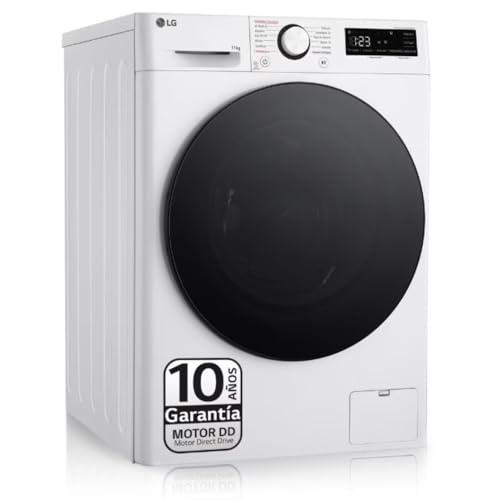
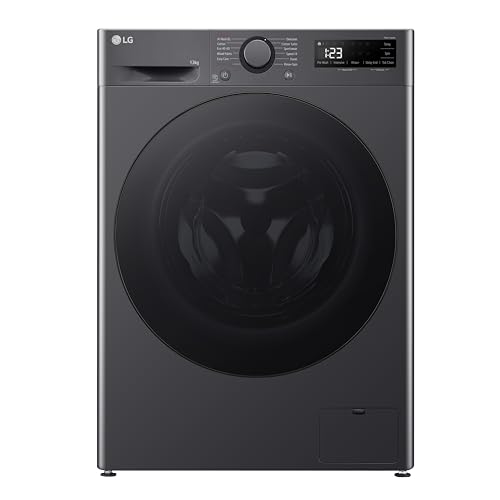
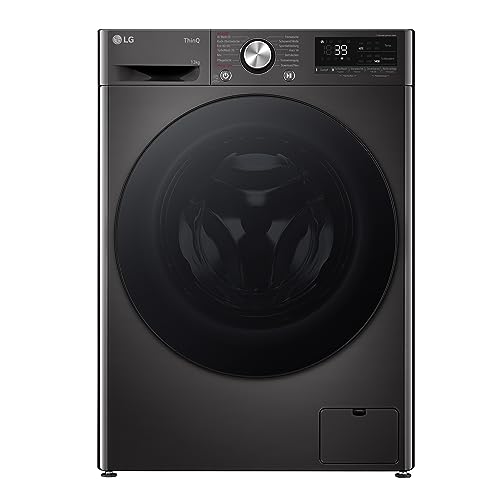
LG R7 F4WR703YB review: 101 specs compared

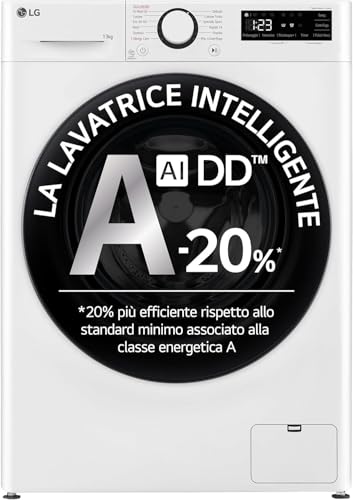
Avg. price:~£770Capacity:13 kgMaximum spin speed:1400 RPMEnergy efficiency class:AType:self-standingLoading type:front-loading

LG R7 F4WR703YB Review: Compare 101 technical specifications to see how this product ranks in the Washing machines category and whether it is worth buying.
LG R7 F4WR703YB
8.3/10

Overall score

Score
8.3/ 10
✕
What it is
Our main score for this model, 1–10. It combines specs, ratings from across the web and best-of lists.
How we count it
Parts: Technical score 70%, User score 25%, List score 5%
Marks: Each part gets a mark out of 10. For reviews, lists and owners, a typical model in this category gets about 8 and the best one gets 10.
No data yet: A part with no data shows "?". It counts as the mark of a weaker model in this category (4 in 5 models with data score higher). This way, models with reviews, lists and owners usually come out ahead.
Score distribution
â–¼
<55-66-77-88-99-10
Score components

70%

8.1

Technical score

25%

9.0

User score

5%

?

List scoreNot enough data yet, so we use 7.5, the mark of a weaker model in this category

â–²Better than 85% of washing machines
7.3

Value for money

Value for money
7.3/ 10
✕
What it is
An indicator that combines the washing machine's overall rating with its cost.
When it matters
When you are looking for a washing machine with a good balance between quality and price.
Score distribution
â–¼
<55-66-77-88-99-10
Score components

70%

8.3

Overall score

30%

4.8

Price

â–¼Worse than 71%
8.1

Technical score

Technical score
8.1/ 10
✕
What it is
How good the specs are compared with the other models in this category, 1–10.
How we count it
Areas: We rate the specs in each area against the other models in this category.
Weighting: The areas that matter most to buyers count more. The shares are shown under Score components.
Share: The technical score is 70% of the overall score.
Score distribution
â–¼
<55-66-77-88-99-10
Score components

25%

9.0

Performance

25%

8.2

Energy efficiency

20%

7.6

Washing programs

20%

7.9

Features

10%

6.9

Design

â–²Better than 72%
9.0

User score

User score
9.0/ 10
✕
What it is
How happy buyers are with this model, based on ratings from across the web.
How we count it
Enough data: A model needs at least 1 rating from across the web. Without one, it counts as 7.9, the mark of a weaker rated model in this category.
Share: User score counts 25% of the overall score.
Score distribution
â–¼
<55-66-77-88-99-10

70%

8.6

Rating

30%

10

Popularity

â–²Better than 87%
?

List score

List score
7.5/ 10
✕
What it is
How often independent test sites, magazines and video reviewers put this model in their best-of lists for this category.
How we count it
Points: The model in the most lists of this category gets 10; the others get 8 to 10 in proportion. In no list yet: 7.5. Lists count 5% of the overall score.
Enough data: Every list counts, even a single one. With fewer than 5 best-of lists in the category, this part is left out.
Lists with this model (0)
Not in any best-of list yet, so this part counts as 7.5. Models in a list get 8 to 10.
Not in any best-of list yet
  • lg-r7-f4wr703yb
  • lg-r7-f4wr703yb
  • lg-r7-f4wr703yb
  • lg-r7-f4wr703yb
  • lg-r7-f4wr703yb
  • lg-r7-f4wr703yb
  • lg-r7-f4wr703yb
  • lg-r7-f4wr703yb
lg-r7-f4wr703yb
lg-r7-f4wr703yb
lg-r7-f4wr703yb
lg-r7-f4wr703yb
lg-r7-f4wr703yb
lg-r7-f4wr703yb
lg-r7-f4wr703yb
lg-r7-f4wr703yb
Where to buy
*As an Amazon Associate, we earn from qualifying purchases.
Best rankings
Available: ranking among products currently available (including other versions of this product).All: ranking among all products in the database.
Loading...
Loading category ranking...

Technical Specifications of washing machine LG R7 F4WR703YB

Technical score
Technical score
8.1/ 10
✕
What it is
How good the specs are compared with the other models in this category, 1–10.
How we count it
Areas: We rate the specs in each area against the other models in this category.
Weighting: The areas that matter most to buyers count more. The shares are shown under Score components.
Share: The technical score is 70% of the overall score.
Score distribution
â–¼
<55-66-77-88-99-10
Score components:

25%

9.0

Performance

25%

8.2

Energy efficiency

20%

7.6

Washing programs

20%

7.9

Features

10%

6.9

Design

8.1
Value for money
Value for money
7.3/ 10
✕
What it is
An indicator that combines the washing machine's overall rating with its cost.
When it matters
When you are looking for a washing machine with a good balance between quality and price.
Score distribution
â–¼
<55-66-77-88-99-10
Score components:

70%

8.3

Overall score

30%

4.8

Price

7.3
Capacity
13 kg
This washing machine holds 13 kg, which is more than 96.9% of washing machines and equal to 1.2% of washing machines.
Drum volume
?
Spin-drying efficiency class
A
This washing machine has spin-drying class A, which is more efficient than in 93.9% of washing machines and the same as in 6.1% of washing machines.
Maximum spin speed
1,400 RPM
This washing machine spins at 1,400 RPM, which is faster than 31.1% of washing machines and equal to 64% of washing machines.
Minimum spin speed
400 RPM
This washing machine has a minimum spin of 400 RPM, which is lower than 27.6% of washing machines and equal to 71.7% of washing machines.
Show more
Energy efficiency class
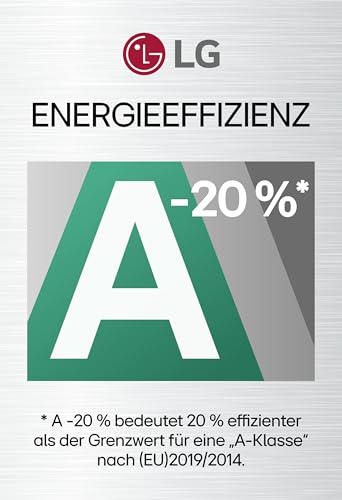
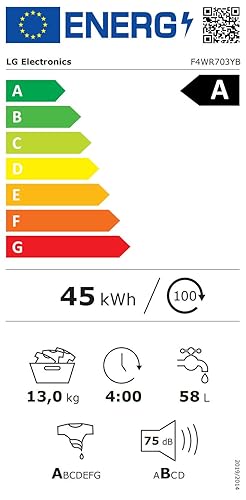
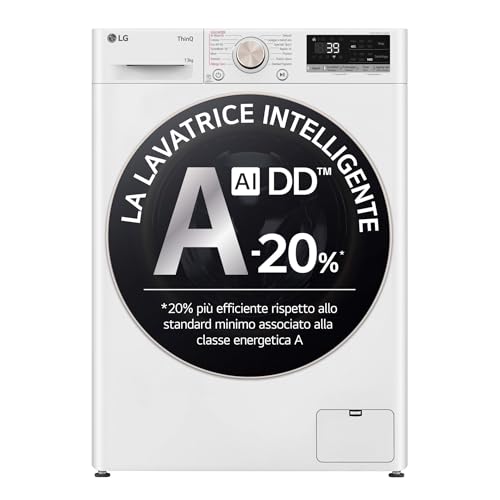
A
This washing machine has energy class A, which is better than 38% of washing machines and the same as 62% of washing machines.
Energy consumption per 100 cycles
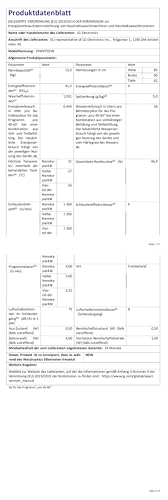
44 kWh/100 cycles
This washing machine uses 44 kWh/100 cycles, which is lower than 83.4% of washing machines and equal to 4.3% of washing machines.
Annual energy consumption
96.8 kWh/year
This washing machine uses 96.8 kWh/year, which is lower than 83.5% of washing machines and equal to 4.4% of washing machines.
Annual energy cost
24.2 £
This washing machine has a yearly running cost of £24.2, which is lower than 83.8% of washing machines and equal to 4.3% of washing machines.
Water consumption per cycle
58 L
This washing machine uses 58 L of water per cycle, which is higher than 97.4% of washing machines and equal to 0.8% of washing machines.
Show more
N. of washing programs
14
This washing machine offers 14 wash programmes, which is fewer than 60.7% of washing machines and equal to 20.4% of washing machines.
AI Wash, Cotton, Eco 40-60, TurboWash 39, Mixed, Synthetic, Anti-Allergy, Delicates, Hand Wash/Wool, Sportswear, Quick 14, Duvet, Drum Cleaning, Download Programs.
N. of downloadable programs
20
This washing machine offers 20 downloadable programmes, which is more than 93.7% of washing machines and equal to 3.6% of washing machines.
LG ThinQ â„¢ app allows you to download up to 20 washing programs.
N. of washing programs under 1 hour
2
This washing machine has 2 programmes under an hour, which is more than 42.3% of washing machines and equal to 37% of washing machines.
Quick 14, TurboWash 39
Fastest cycle duration
14 min
This washing machine has a fastest cycle of 14 min, which is shorter than 69.8% of washing machines and equal to 29.6% of washing machines.
ECO cycle duration
240 min
This washing machine has an ECO cycle of 240 min, which is longer than 92.8% of washing machines and equal to 6.6% of washing machines.
Show more
N. of advanced features
18
This washing machine has 18 advanced features, which is more than 76.7% of washing machines and equal to 5.1% of washing machines.
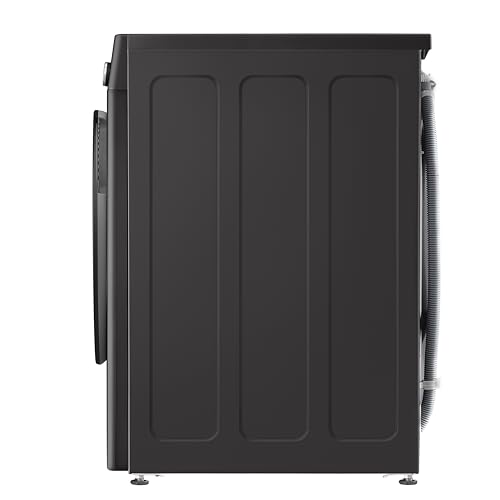
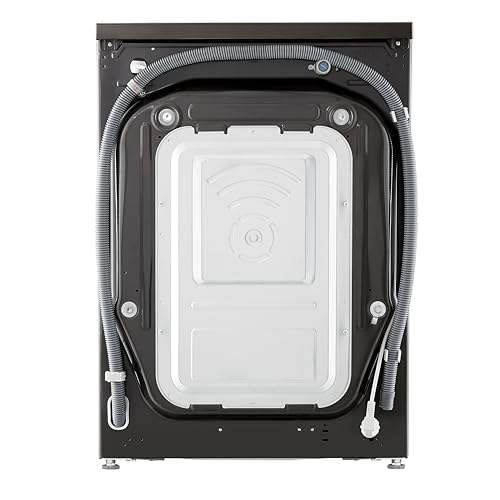
Overflow protection, Foam control system, Unbalanced load detection, Load balancing system, Laundry detection system, Self-cleaning function, Pause & Add, Water Jet system, Smart diagnosis function, Wi-Fi connectivity, AI Technology, Consumption statistics, Voice control, Steam technology, Night/Silent option, Extra rinse function, Stain removal function, Quick function.
Foam control system
yes
This washing machine features a foam control system. 79.8% of washing machines have a foam control system.
Laundry detection system
yes
This washing machine has a laundry detection system. 93% of washing machines have this feature.
Unbalanced load detection
yes
This washing machine has unbalanced load detection. 92.5% of washing machines have unbalanced load detection.
Load balancing system
yes
This washing machine features a load balancing system. 46.2% of washing machines have a load balancing system.
Show more
Color
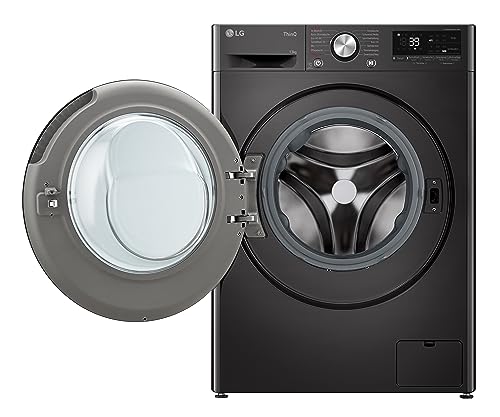
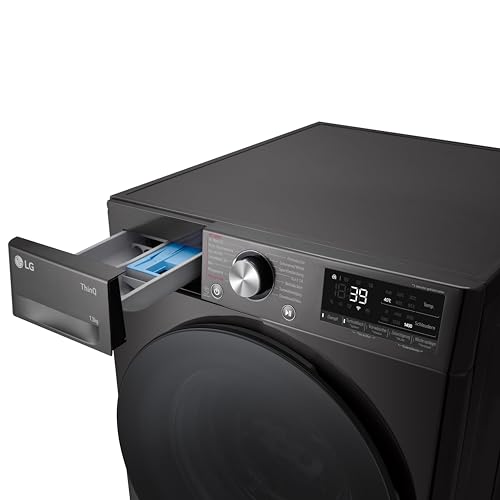
black
This washing machine comes in black, which is less conventional than the colour in 85.9% of washing machines and the same as the colour in 5% of washing machines.
Type
self-standing
This washing machine is self-standing, which is more flexible to place than the type in 3.2% of washing machines and the same as the type in 96.8% of washing machines.
Loading type
front-loading
This washing machine is front-loading, which is more practical than the design in 8.9% of washing machines and the same as the design in 91.1% of washing machines.
Display
yes
This washing machine has a display. 96.2% of washing machines have a display.
Child lock
yes
This washing machine has a child lock. 99.7% of washing machines have a child lock.
Show more

LG R7 F4WR703YB vs the average washing machine

246810TotalPerformanceEnergy efficiencyWashing programsFeaturesDesign
  • 5 kg more capacity
    This washing machine holds more laundry than the average washing machine (13 kg vs 8 kg). The average washing machine holds 8 kg.
    13 kg vs 8 kg
  • 6 kWh/100 cycles less energy use
    This washing machine uses less electricity than the average washing machine (44 kWh/100 cycles vs 50 kWh/100 cycles). The average washing machine uses 50 kWh/100 cycles.
    44 kWh/100 cycles vs 50 kWh/100 cycles
  • Has Wi-Fi
    This washing machine has Wi-Fi, the average washing machine does not. 27% of washing machines have Wi-Fi.
  • 2 more spin speeds
    This washing machine has more spin speeds than the average washing machine (6 vs 4). The average washing machine has 4 spin speeds.
    400, 600, 800, 1,000, 1,200, 1,400 RPM
    6 vs 4
  • Uses AI technology
    This washing machine uses an AI technology, the average washing machine does not. 16.4% of washing machines use an AI technology.
    AI DD (uses sensors to detect the weight and softness of your laundry, then adjusts wash motions for optimal cleaning, providing 18% more fabric protection)
  • More efficient spin drying
    This washing machine dries more efficiently than the average washing machine (A vs B).
    A vs B
  • 6 more advanced features
    This washing machine has more advanced features than the average washing machine (18 vs 12). The average washing machine has 12 advanced features.
    Overflow protection, Foam control system, Unbalanced load detection, Load balancing system, Laundry detection system, Self-cleaning function, Pause & Add, Water Jet system, Smart diagnosis function, Wi-Fi connectivity, AI Technology, Consumption statistics, Voice control, Steam technology, Night/Silent option, Extra rinse function, Stain removal function, Quick function.
    18 vs 12
  • Includes a water jets system
    This washing machine has a water jets system, the average washing machine does not. 18.8% of washing machines feature a water jets system.
    TurboWashâ„¢ 360Ëš (uses high-pressure nozzles and efficient water circulation to reduce washing time by up to 20 minutes while maintaining excellent cleaning performance)
  • 11.1% higher user score
    User score
    9.0/ 10
    ✕
    What it is
    How happy buyers are with this model, based on ratings from across the web.
    How we count it
    Enough data: A model needs at least 1 rating from across the web. Without one, it counts as 7.9, the mark of a weaker rated model in this category.
    Share: User score counts 25% of the overall score.
    Score distribution
    â–¼
    <55-66-77-88-99-10

    70%

    8.6

    Rating

    30%

    10

    Popularity

    9.0 vs 8.1
  • 5 kg more capacity
    This washing machine holds more laundry than the average washing machine (13 kg vs 8 kg). The average washing machine holds 8 kg.
    13 kg vs 8 kg
  • 2 more spin speeds
    This washing machine has more spin speeds than the average washing machine (6 vs 4). The average washing machine has 4 spin speeds.
    400, 600, 800, 1,000, 1,200, 1,400 RPM
    6 vs 4
  • More efficient spin drying
    This washing machine dries more efficiently than the average washing machine (A vs B).
    A vs B
  • 6 kWh/100 cycles less energy use
    This washing machine uses less electricity than the average washing machine (44 kWh/100 cycles vs 50 kWh/100 cycles). The average washing machine uses 50 kWh/100 cycles.
    44 kWh/100 cycles vs 50 kWh/100 cycles
  • Has a night/silent option
    This washing machine has a Night/Silent function, which the average washing machine does not have. 23.9% of washing machines include a Night/Silent option.
    in-app cycle "Silent"
  • 1 min shorter quickest cycle
    This washing machine has a shorter fastest cycle than the average washing machine (14 min vs 15 min). The average washing machine's quickest cycle takes 15 min.
    14 min vs 15 min
  • Has Wi-Fi
    This washing machine has Wi-Fi, the average washing machine does not. 27% of washing machines have Wi-Fi.
  • Uses AI technology
    This washing machine uses an AI technology, the average washing machine does not. 16.4% of washing machines use an AI technology.
    AI DD (uses sensors to detect the weight and softness of your laundry, then adjusts wash motions for optimal cleaning, providing 18% more fabric protection)
  • 6 more advanced features
    This washing machine has more advanced features than the average washing machine (18 vs 12). The average washing machine has 12 advanced features.
    Overflow protection, Foam control system, Unbalanced load detection, Load balancing system, Laundry detection system, Self-cleaning function, Pause & Add, Water Jet system, Smart diagnosis function, Wi-Fi connectivity, AI Technology, Consumption statistics, Voice control, Steam technology, Night/Silent option, Extra rinse function, Stain removal function, Quick function.
    18 vs 12
  • Includes a water jets system
    This washing machine has a water jets system, the average washing machine does not. 18.8% of washing machines feature a water jets system.
    TurboWashâ„¢ 360Ëš (uses high-pressure nozzles and efficient water circulation to reduce washing time by up to 20 minutes while maintaining excellent cleaning performance)
  • Has a load balancing system
    This washing machine features a load balancing system, the average washing machine does not. 46.2% of washing machines have this feature.
  • Can self-diagnose its problems
    This washing machine can self-diagnose its problems, the average washing machine cannot. 40.2% of washing machines have this feature.
    Smart diagnosis (enables the washing machine to send its diagnostic data directly to the Call Center through your phone when issues occur)
  • Shows consumption statistics
    This washing machine can shows its consumption statistics in the app, the average washing machine cannot. 32.1% of washing machines can do this.
    Energy Monitoring (checks the energy consumption of the recently used cycles and monthly average)
  • Can be controlled by voice
    This washing machine can be controlled by voice, the average washing machine cannot. 33.1% of washing machines can be controlled by voice.
    Voice control via the LG ThinQâ„¢ app with Amazon Alexa or Google Home.
  • 1 fewer wash programmes
    This washing machine offers fewer wash programmes than the average washing machine (14 vs 15). The average washing machine offers 15 wash programmes.
    AI Wash, Cotton, Eco 40-60, TurboWash 39, Mixed, Synthetic, Anti-Allergy, Delicates, Hand Wash/Wool, Sportswear, Quick 14, Duvet, Drum Cleaning, Download Programs.
    14 vs 15
  • 11 L more water per cycle
    This washing machine uses more water per cycle than the average washing machine (58 L vs 47 L). The average washing machine uses 47 L of water per cycle.
    58 L vs 47 L
  • Does not have an anti-crease feature
    This washing machine does not have an anti-crease function, the average washing machine has. 68.1% of washing machines include an anti-crease function.
  • 5 h shorter maximum delay
    This washing machine can delay its start for less time than the average washing machine (19 h vs 24 h). The average washing machine can delay its start by up to 24 h.
    19 h vs 24 h
  • Does not have a hygiene cycle
    This washing machine does not have a hygiene cycle, the average washing machine does. 66.4% of washing machines have a hygiene cycle.
  • 22 min longer eco cycle
    This washing machine has a longer ECO cycle than the average washing machine (240 min vs 218 min). The average washing machine's ECO cycle takes 218 min.
    240 min vs 218 min
  • 11.8% larger volume
    This washing machine has a larger volume than the average washing machine (313,650 cm³ vs 280,500 cm³). The average washing machine has a volume of 280,500 cm³.
    313,650 cm³ vs 280,500 cm³
  • 5 cm deeper
    This washing machine is deeper than the average washing machine (61.5 cm vs 56.5 cm). The average washing machine is 56.5 cm deep.
    61.5 cm vs 56.5 cm
  • 87.8% more expensive
    LG R7 F4WR703YB is more expensive than the average washing machine (£770 vs £410).
    £770 vs £410
  • 4.6% worse value for money
    LG R7 F4WR703YB has worse value for money than the average washing machine (7.25 vs 7.6).
    7.25 vs 7.59
  • 1 dB louder spinning
    This washing machine is louder on spin than the average washing machine (75 dB vs 74 dB). The average washing machine spins at 74 dB.
    75 dB vs 74 dB
  • 11 L more water per cycle
    This washing machine uses more water per cycle than the average washing machine (58 L vs 47 L). The average washing machine uses 47 L of water per cycle.
    58 L vs 47 L
  • 23.4% higher yearly water use
    This washing machine uses more water per year than the average washing machine (12,760 L/year vs 10,340 L/year). The average washing machine uses 10,340 L/year of water a year.
    12,760 L/year vs 10,340 L/year
  • 4.6 £ higher yearly water cost
    This washing machine costs more for water than the average washing machine (24.2 £ vs 19.6 £). The average washing machine has a yearly water cost of 19.646 £.
    24.244 £ vs 19.646 £
  • 1 fewer wash programmes
    This washing machine offers fewer wash programmes than the average washing machine (14 vs 15). The average washing machine offers 15 wash programmes.
    AI Wash, Cotton, Eco 40-60, TurboWash 39, Mixed, Synthetic, Anti-Allergy, Delicates, Hand Wash/Wool, Sportswear, Quick 14, Duvet, Drum Cleaning, Download Programs.
    14 vs 15
  • Does not have an anti-crease feature
    This washing machine does not have an anti-crease function, the average washing machine has. 68.1% of washing machines include an anti-crease function.
  • Does not have a hygiene cycle
    This washing machine does not have a hygiene cycle, the average washing machine does. 66.4% of washing machines have a hygiene cycle.
  • 22 min longer eco cycle
    This washing machine has a longer ECO cycle than the average washing machine (240 min vs 218 min). The average washing machine's ECO cycle takes 218 min.
    240 min vs 218 min
  • 20 fewer downloadable programmes
    This washing machine offers fewer downloadable programmes than the average washing machine (20 vs 0). The average washing machine offers 0 downloadable programmes.
    LG ThinQ â„¢ app allows you to download up to 20 washing programs.
    20 vs 0
  • 5 h shorter maximum delay
    This washing machine can delay its start for less time than the average washing machine (19 h vs 24 h). The average washing machine can delay its start by up to 24 h.
    19 h vs 24 h
  • More basic extra feature
    This washing machine offers a less advanced extra feature than the average washing machine (Tub Clean Coach vs EEBUS-based energy management system).
    Tub Clean Coach displays the number of remaining cycles before the Tub Clean function needs to be run.
    Tub Clean Coach vs EEBUS-based energy management system
  • 11.8% larger volume
    This washing machine has a larger volume than the average washing machine (313,650 cm³ vs 280,500 cm³). The average washing machine has a volume of 280,500 cm³.
    313,650 cm³ vs 280,500 cm³
  • 5 cm deeper
    This washing machine is deeper than the average washing machine (61.5 cm vs 56.5 cm). The average washing machine is 56.5 cm deep.
    61.5 cm vs 56.5 cm
  • 9% heavier
    This washing machine is heavier than the average washing machine (73 kg vs 67 kg). The average washing machine weighs 67 kg.
    73 kg vs 67 kg
  • 0.2 cm wider
    This washing machine is wider than the average washing machine (60 cm vs 59.8 cm). The average washing machine is 59.8 cm wide.
    60 cm vs 59.8 cm
  • More unusual colour
    This washing machine comes in a less conventional colour than the average washing machine (black vs white).
    black vs white

Video reviews

Hands-on testing, unboxing, and real-world video evaluations

Not graded

Third-party reviews

What customers like about LG R7 F4WR703YB

  • Energy use is 44 kWh per 100 cycles.
  • A 13 kg drum takes a full load of bedding.
  • Six spin speeds and a fast function suit different loads.
  • Wi-Fi and AI technology are built in.
  • A Night/Silent option suits late loads.
  • An inverter motor comes with a motor warranty of 10 years.

What customers don't like about LG R7 F4WR703YB

  • Water use is 58 L per cycle, or 12760 L a year.
  • The yearly water cost is about as high as the electricity bill, among the highest in the category.
  • Spin noise reaches 75 dB, and the noise class is B.
  • At 73 kg it is hard to move on your own.
  • At 61.5 cm deep it needs room front to back.

Verdict

The LG R7 F4WR703YB is an A-rated washing machine with an impressive 13 kg capacity and 1400 RPM spin speed. Its AI DD technology uses sensors to detect laundry weight and softness, adjusting wash motions for optimal cleaning while providing 18% more fabric protection. The machine features TurboWash 360° with high-pressure nozzles that reduce washing time by up to 20 minutes, and consumes only 44 kWh per 100 cycles. Smart features include Wi-Fi connectivity, voice control through Amazon Alexa or Google Home via the LG ThinQ app, and smart diagnosis that sends data directly to the Call Center when issues occur. The machine has six spin speed options ranging from 400 to 1400 RPM, and includes specialized programs like Quick 14, Duvet, and Silent mode for night washing. On the downside, the ECO cycle takes 240 minutes to complete, water consumption is relatively high at 58 liters per cycle, and the machine lacks an anti-crease feature and hygiene cycle. The machine's volume is 11.8% larger than standard, and the maximum delay start is limited to 19 hours.

Compare LG R7 F4WR703YB with other washing machines

1Product to compare no. 1
VS
2Product to compare no. 2
VS
3Product to compare no. 3 (optional)

Graphic comparison of LG R7 F4WR703YB and other washing machines

No results found