Scored using Washer-dryers Methodology v3.0
Washer-dryers Methodology v3.0
Mathematical & Unbiased Scoring
Products in this category are scored under Frontum Washer-dryers Methodology v3.0: the technical score from the specifications is the base, and independent expert and video reviews (up to ±0.5 points), owner opinions (up to ±0.3) and best-of lists (up to +0.3) move it up or down.
Explore Washer-dryers Methodology v3.0

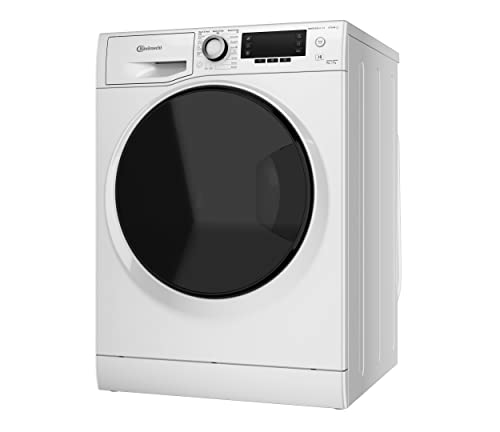
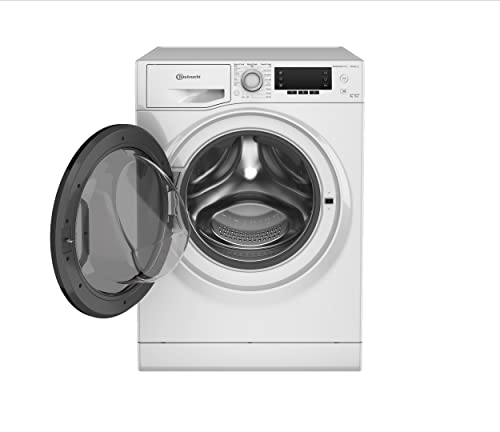
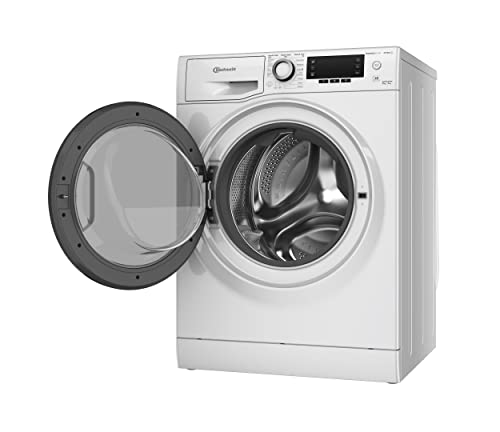
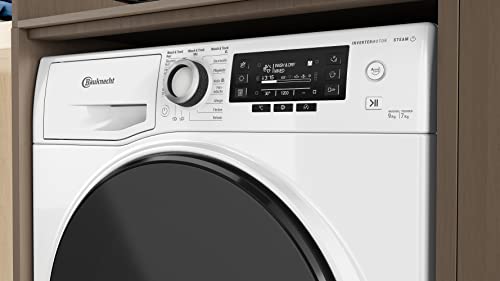
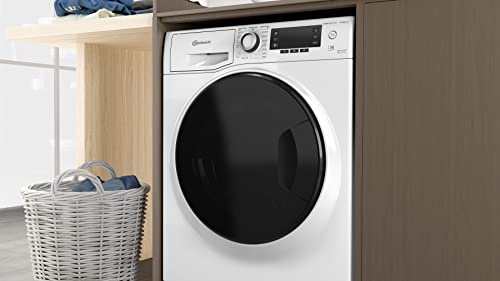
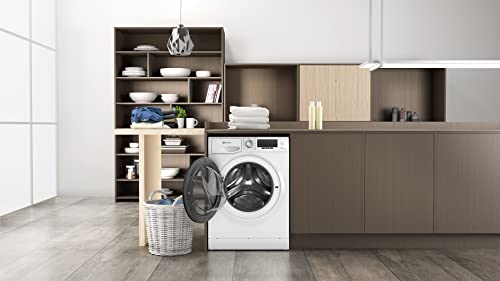
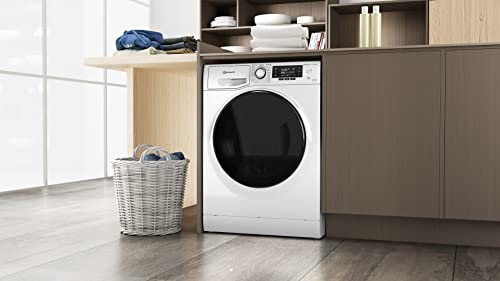
Bauknecht WATK Sense 97S 52 N review: 104 specs compared

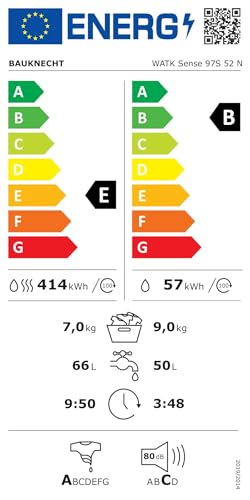
Avg. price:~£340Washing capacity:9 kgDrying capacity:7 kgDrying technology:condenserWashing energy efficiency class:BCombined energy efficiency class:E

Bauknecht WATK Sense 97S 52 N Review: Compare 104 technical specifications to see how this product ranks in the Washer-dryers category and whether it is worth buying.
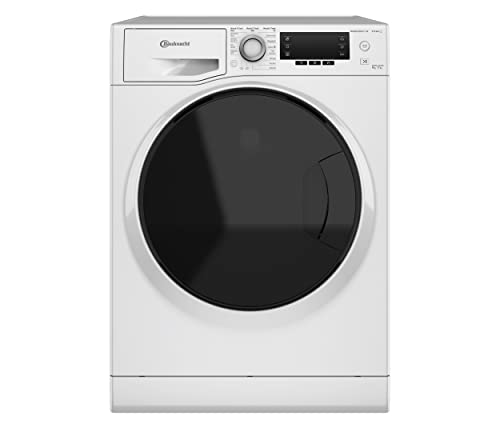
Bauknecht WATK Sense 97S 52 N
6.7/10

Overall score

Score
6.7/ 10
✕
What it is
Our main score for this model, 1–10. It combines specs and ratings from across the web.
How we count it
Parts: Technical score 75%, User score 25%
Marks: Each part gets a mark out of 10. For reviews, lists and owners, a typical model in this category gets about 8 and the best one gets 10.
No data yet: A part with no data shows "?". It counts as the mark of a weaker model in this category (4 in 5 models with data score higher). This way, models with reviews, lists and owners usually come out ahead.
Score distribution
â–¼
<55-66-77-88-99-10
Score components

75%

6.4

Technical score

25%

?

User scoreNot enough data yet, so we use 7.6, the mark of a weaker model in this category

â–¼Worse than 78% of washer dryers
7.5

Value for money

Value for money
7.5/ 10
✕
What it is
An indicator that combines the washer-dryer's overall rating with its cost.
When it matters
When you are looking for a washer-dryer with a good balance between quality and price.
Score distribution
â–¼
<55-66-77-88-99-10
Score components

70%

6.7

Overall score

30%

9.3

Price

â–²Better than 58%
6.4

Technical score

Technical score
6.4/ 10
✕
What it is
How good the specs are compared with the other models in this category, 1–10.
How we count it
Areas: We rate the specs in each area against the other models in this category.
Weighting: The areas that matter most to buyers count more. The shares are shown under Score components.
Share: The technical score is 75% of the overall score.
Score distribution
â–¼
<55-66-77-88-99-10
Score components

25%

7.5

Performance

25%

5.2

Energy efficiency

25%

8.2

Programs

20%

4.3

Features

5%

6.2

Design

â–¼Worse than 78%
?

User score

User score
7.6/ 10
✕
What it is
How happy buyers are with this model, based on ratings from across the web.
How we count it
Enough data: A model needs at least 1 rating from across the web. Without one, it counts as 7.6, the mark of a weaker rated model in this category.
Share: User score counts 25% of the overall score.
Score distribution
â–¼
<55-66-77-88-99-10
No ratings from across the web yet, so it counts as 7.6, the mark of a weaker rated model in this category.
No ratings from across the web yet
  • bauknecht-watk-sense-97s-52-n
  • bauknecht-watk-sense-97s-52-n
  • bauknecht-watk-sense-97s-52-n
  • bauknecht-watk-sense-97s-52-n
  • bauknecht-watk-sense-97s-52-n
  • bauknecht-watk-sense-97s-52-n
  • bauknecht-watk-sense-97s-52-n
  • bauknecht-watk-sense-97s-52-n
  • bauknecht-watk-sense-97s-52-n
  • bauknecht-watk-sense-97s-52-n
  • bauknecht-watk-sense-97s-52-n
  • bauknecht-watk-sense-97s-52-n
  • bauknecht-watk-sense-97s-52-n
  • bauknecht-watk-sense-97s-52-n
  • bauknecht-watk-sense-97s-52-n
  • bauknecht-watk-sense-97s-52-n
  • bauknecht-watk-sense-97s-52-n
  • bauknecht-watk-sense-97s-52-n
bauknecht-watk-sense-97s-52-n
Where to buy
    N/A~ £340
Best rankings
Available: ranking among products currently available (including other versions of this product).All: ranking among all products in the database.
Loading...
Loading category ranking...

Technical Specifications of washer-dryer Bauknecht WATK Sense 97S 52 N

Technical score
Technical score
6.4/ 10
✕
What it is
How good the specs are compared with the other models in this category, 1–10.
How we count it
Areas: We rate the specs in each area against the other models in this category.
Weighting: The areas that matter most to buyers count more. The shares are shown under Score components.
Share: The technical score is 75% of the overall score.
Score distribution
â–¼
<55-66-77-88-99-10
Score components:

25%

7.5

Performance

25%

5.2

Energy efficiency

25%

8.2

Programs

20%

4.3

Features

5%

6.2

Design

6.4
Value for money
Value for money
7.5/ 10
✕
What it is
An indicator that combines the washer-dryer's overall rating with its cost.
When it matters
When you are looking for a washer-dryer with a good balance between quality and price.
Score distribution
â–¼
<55-66-77-88-99-10
Score components:

70%

6.7

Overall score

30%

9.3

Price

7.5
Washing capacity
9 kg
This washer-dryer has a washing capacity of 9 kg which is bigger than the capacity of 42.8% of washer-dryers and equal to the capacity of 27.9% of washer-dryers.
Drying capacity
7 kg
This washer-dryer has a drying capacity of 7 kg which is bigger than the capacity of 87.9% of washer-dryers and equal to the capacity of 8.6% of washer-dryers.
Drum volume
?
Spin efficiency class
A
This washer-dryer has A spin efficiency class which is better than the spin efficiency class of 87.7% of washer-dryers and equal to that of 12.3% of washer-dryers.
Maximum spin speed
1,600 RPM
The maximum spin speed of this washer-dryer is 1,600 RPM which is higher than the maximum spin speed of 85.1% of washer-dryers and equal to the maximum spin speed of 14.9% of washer-dryers.
Show more
Washing energy efficiency class
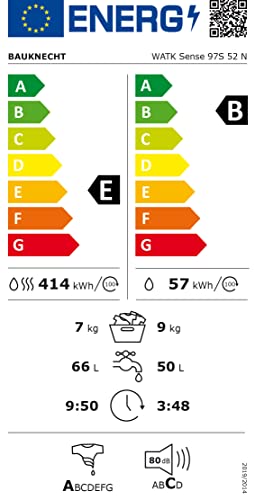
B
This washer-dryer has B washing energy efficiency class which is worse than the washing energy efficiency of 59.8% of washer-dryers and equal to that of 15.3% of washer-dryers.
Combined energy efficiency class
E
This washer-dryer has E combined energy efficiency class which is worse than the combined energy efficiency of 57.1% of washer-dryers and equal to that of 39.9% of washer-dryers.
Energy consumption per 100 washing cycles
57 kWh/100 cycles
This washer-dryer has an energy consumption per 100 washing cycles of 57 kWh/100 cycles which is higher than the energy consumption of 63.7% of washer-dryers and equal to that of 4.1% of washer-dryers.
Energy consumption per 100 combined cycles
414 kWh/100 cycles
This washer-dryer has an energy consumption per 100 combined cycles of 414 kWh/100 cycles which is higher than the energy consumption of 91.4% of washer-dryers and equal to that of 3% of washer-dryers.
Water consumption per washing cycle
50 L
This washer-dryer has a water consumption per washing cycle of 50 L which is higher than the water consumption of 64% of washer-dryers and equal to that of 14.3% of washer-dryers.
Show more
Number of washing programs
16
This washer-dryer has 16 different washing programs which is more than the n. of programs of 78.3% of washer-dryers and equal to that of 13%.
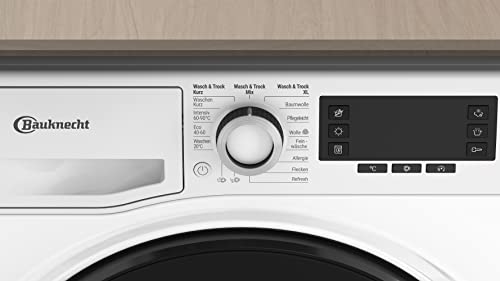
Wash & Dry Mix, Wash & Dry XL, Cotton, Synthetics, Wool, Delicates, Allergy, Stains, Refresh, Spin & Drain, Rinse & Spin, Cold Wash 20°C, Eco 40-60, Intensive 60–90°C, Quick Wash, Quick Wash & Dry
Number of drying programs
3
This washer-dryer has 3 different drying programs which is more than the n. of programs of 31.6% of washer-dryers and equal to that of 18.8% of washer-dryers.
Wash & Dry Mix, Wash & Dry XL, Wash & Dry Short
Fast washing cycle duration
30 min
The fast washing cycle duration of this washer-dryer is 30 min which is more than the fast cycle duration of 84% of washer-dryers and equal to that of 11.2% of washer-dryers.
30 minutes program delivers perfect laundry in just 30 minutes with a quick and easy process.
Maximum washing cycle duration
228 min
The maximum washing cycle duration of this washer-dryer is 228 min which is less than the maximum cycle duration of 54.2% of washer-dryers and equal to that of 17.1% of washer-dryers.
Maximum combined cycle duration
590 min
The maximum combined cycle duration of this washer-dryer is 590 min which is less than the maximum combined duration of 86.7% of washer-dryers and equal to that of 3.5% of washer-dryers.
Show more
N. of features
12
This washer-dryer has 12 advanced features, which is less than the number of features in 76.2% of washer-dryers and equal to the number in 7.9% of washer-dryers.
Unbalanced load detection, Automatic drying, Acqua Stop, Pre-mix technology, Time remaining indicator, Time remaining indicator, Steam function, Extra rinse function, Anti-stain function, Pause & Add Feature, Delay start option, Drying level selection
N. of downloadable programs
0
This washer-dryer has 0 downloadable programs which is less than the n. of programs of 27% of washer-dryers and equal to that of 73% of washer-dryers.
Foam control system
no
This washer-dryer does not feature a foam control system. 59.6% of washer-dryers have a foam control system.
Unbalanced load detection
yes
This washer-dryer has unbalanced load detection. 96.2% of washer-dryers have this feature.
Automatic load balancing during spin
no
This washer-dryer does not feature automatic load balancing. 44.2% of washer-dryers have automatic load balancing.
Show more
Installation type
free-standing
This washer-dryer is a free-standing model, which is less integrated than 11% of washer-dryers and as integrated as 89.1% of washer-dryers.
Color
white
This washer-dryer is white in color. 67.5%.
Display
yes
This washer-dryer has a display. 99.7% of washer-dryers have a display.
Noise-reducing design
no
This washer-dryer does not have a noise-reducing design. 6.2% of washer-dryers have a noise-reducing design.
Special drum design
no
This washer-dryer does not have a special drum design. 53.1% of washer-dryers have a special drum design.
Show more

Bauknecht WATK Sense 97S 52 N vs the average washer-dryer

246810TotalPerformanceEnergy efficiencyProgramsFeaturesDesign
  • 3 more washing program/s
    This washer-dryer has more washing programs than the average washer-dryer (16 vs 13). The average washer-dryer has 13 washing programs.
    Wash & Dry Mix, Wash & Dry XL, Cotton, Synthetics, Wool, Delicates, Allergy, Stains, Refresh, Spin & Drain, Rinse & Spin, Cold Wash 20°C, Eco 40-60, Intensive 60–90°C, Quick Wash, Quick Wash & Dry
    16 vs 13
  • Better spin efficiency class
    This washer-dryer has a better spin efficiency class than the average washer-dryer (A vs B). The average washer-dryer is classified in the B spin efficiency rating class.
    A vs B
  • 200 RPM higher maximum spin speed
    This washer-dryer has a higher maximum spin speed than the average washer-dryer (1,600 RPM vs 1,400 RPM). The average washer-dryer has a maximum spin speed of 1,400 RPM.
    1,600 RPM vs 1,400 RPM
  • 15 min shorter minimum combined cycle
    The minimum combined cycle duration of this washer-dryer is shorter than the minimum combined duration of the average washer-dryer (45 min vs 60 min). The minimum combined cycle duration of an average washer-dryer takes 60 min.
    45 min vs 60 min
  • Has the AquaStop feature
    This washer-dryer has the AquaStop feature, the average washer-dryer does not. 43.8% of washer-dryers have an AquaStop feature.
    Bauknecht’s Multiple Water Protection+ includes a special hose and safety valve to reliably prevent water damage.
  • Features pre-mix technology
    This washer-dryer features pre-mix technology, the average washer-dryer does not. 34.3% of washer-dryers have pre-mix technology.
    Active Care Wash & Dry Technology (increases cleaning power of water-detergent mixture during washing and measures moisture during drying for optimal results)
  • 1 kg bigger drying capacity
    This washer-dryer has a bigger drying capacity than the average washer-dryer (7 kg vs 6 kg). The average washer-dryer has a drying capacity of 6 kg.
    7 kg vs 6 kg
  • Has quick washing & drying
    This washer-dryer has a quick washing & drying option, the average washer-dryer does not. 40.9% of washer-dryers have a quick washing & drying option.
  • 61.8% cheaper
    Bauknecht WATK Sense 97S 52 N is cheaper than the average washer-dryer (£340 vs £550). The average washer-dryer costs 550.
    £340 vs £550
  • Better spin efficiency class
    This washer-dryer has a better spin efficiency class than the average washer-dryer (A vs B). The average washer-dryer is classified in the B spin efficiency rating class.
    A vs B
  • 200 RPM higher maximum spin speed
    This washer-dryer has a higher maximum spin speed than the average washer-dryer (1,600 RPM vs 1,400 RPM). The average washer-dryer has a maximum spin speed of 1,400 RPM.
    1,600 RPM vs 1,400 RPM
  • 1 kg bigger drying capacity
    This washer-dryer has a bigger drying capacity than the average washer-dryer (7 kg vs 6 kg). The average washer-dryer has a drying capacity of 6 kg.
    7 kg vs 6 kg
  • 13 L lower water consumption for combined cycles
    This washer-dryer has a lower water consumption for combined cycles than the average washer-dryer (66 L vs 79 L). The average washer-dryer consumes 79 L per combined cycle.
    66 L vs 79 L
  • 3 more washing program/s
    This washer-dryer has more washing programs than the average washer-dryer (16 vs 13). The average washer-dryer has 13 washing programs.
    Wash & Dry Mix, Wash & Dry XL, Cotton, Synthetics, Wool, Delicates, Allergy, Stains, Refresh, Spin & Drain, Rinse & Spin, Cold Wash 20°C, Eco 40-60, Intensive 60–90°C, Quick Wash, Quick Wash & Dry
    16 vs 13
  • 15 min shorter minimum combined cycle
    The minimum combined cycle duration of this washer-dryer is shorter than the minimum combined duration of the average washer-dryer (45 min vs 60 min). The minimum combined cycle duration of an average washer-dryer takes 60 min.
    45 min vs 60 min
  • Has quick washing & drying
    This washer-dryer has a quick washing & drying option, the average washer-dryer does not. 40.9% of washer-dryers have a quick washing & drying option.
  • Has the AquaStop feature
    This washer-dryer has the AquaStop feature, the average washer-dryer does not. 43.8% of washer-dryers have an AquaStop feature.
    Bauknecht’s Multiple Water Protection+ includes a special hose and safety valve to reliably prevent water damage.
  • Features pre-mix technology
    This washer-dryer features pre-mix technology, the average washer-dryer does not. 34.3% of washer-dryers have pre-mix technology.
    Active Care Wash & Dry Technology (increases cleaning power of water-detergent mixture during washing and measures moisture during drying for optimal results)
  • 0.5 cm narrower
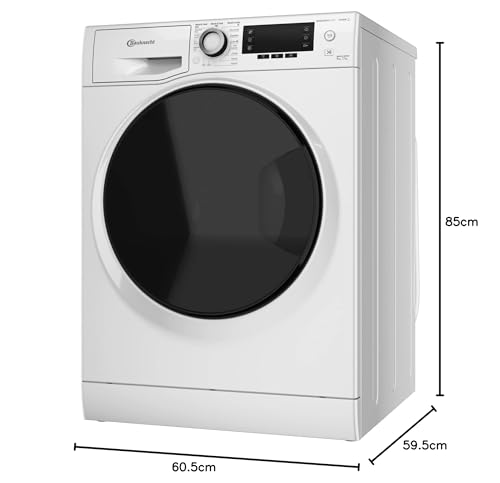
    This washer-dryer is narrower than the average washer-dryer (59.5 cm vs 60 cm). The average washer-dryer has a width of 60 cm.
    59.5 cm vs 60 cm
  • 106 kWh/100 cycles higher energy consumption for combined cycles
    This washer-dryer has a higher energy consumption for combined cycles than the average washer-dryer (414 kWh/100 cycles vs 308 kWh/100 cycles). The average washer-dryer consumes 308 kWh/100 cycles per 100 combined cycles.
    414 kWh/100 cycles vs 308 kWh/100 cycles
  • 8 year/s shorter motor warranty
    This washer-dryer has a shorter motor warranty than the average washer-dryer (2 year/s vs 10 year/s). The average washer-dryer includes a 10 year/s warranty for the motor.
    2 year/s vs 10 year/s
  • 2 fewer advanced feature/s
    This washer-dryer has fewer advanced features than the average washer-dryer (12 vs 14). The average washer-dryer has 14 advanced features.
    Unbalanced load detection, Automatic drying, Acqua Stop, Pre-mix technology, Time remaining indicator, Time remaining indicator, Steam function, Extra rinse function, Anti-stain function, Pause & Add Feature, Delay start option, Drying level selection
    12 vs 14
  • 6 dB louder during spinning
    This washer-dryer is louder during spinning than the average washer-dryer (80 dB vs 74 dB). The average washer-dryer has a spinning noise level of 74 dB.
    80 dB vs 74 dB
  • 6 kWh/100 cycles higher energy consumption for washing
    This washer-dryer has a higher energy consumption for washing than the average washer-dryer (57 kWh/100 cycles vs 51 kWh/100 cycles). The average washer-dryer consumes 51 kWh/100 cycles per 100 washing cycles.
    57 kWh/100 cycles vs 51 kWh/100 cycles
  • Worse combined energy efficiency
    This washer-dryer has a worse combined energy efficiency class than the average washer-dryer (E vs D). The average washer-dryer is classified in the D combined energy efficiency rating class.
    E vs D
  • Worse washing energy efficiency class
    This washer-dryer has a worse washing energy efficiency class than the average washer-dryer (B vs A). The average washer-dryer is classified in the A washing energy efficiency rating class.
    B vs A
  • Does not feature a foam control system
    This washer-dryer does not feature a foam control system, the average washer-dryer does. 59.6% of washer-dryers have this feature.
  • 8 year/s shorter motor warranty
    This washer-dryer has a shorter motor warranty than the average washer-dryer (2 year/s vs 10 year/s). The average washer-dryer includes a 10 year/s warranty for the motor.
    2 year/s vs 10 year/s
  • 6 dB louder during spinning
    This washer-dryer is louder during spinning than the average washer-dryer (80 dB vs 74 dB). The average washer-dryer has a spinning noise level of 74 dB.
    80 dB vs 74 dB
  • 200 RPM higher minimum spin speed
    This washer-dryer has a higher minimum spin speed than the average washer-dryer (600 RPM vs 400 RPM). The average washer-dryer has a minimum spin speed of 400 RPM.
    600 RPM vs 400 RPM
  • 106 kWh/100 cycles higher energy consumption for combined cycles
    This washer-dryer has a higher energy consumption for combined cycles than the average washer-dryer (414 kWh/100 cycles vs 308 kWh/100 cycles). The average washer-dryer consumes 308 kWh/100 cycles per 100 combined cycles.
    414 kWh/100 cycles vs 308 kWh/100 cycles
  • 6 kWh/100 cycles higher energy consumption for washing
    This washer-dryer has a higher energy consumption for washing than the average washer-dryer (57 kWh/100 cycles vs 51 kWh/100 cycles). The average washer-dryer consumes 51 kWh/100 cycles per 100 washing cycles.
    57 kWh/100 cycles vs 51 kWh/100 cycles
  • Worse combined energy efficiency
    This washer-dryer has a worse combined energy efficiency class than the average washer-dryer (E vs D). The average washer-dryer is classified in the D combined energy efficiency rating class.
    E vs D
  • Worse washing energy efficiency class
    This washer-dryer has a worse washing energy efficiency class than the average washer-dryer (B vs A). The average washer-dryer is classified in the A washing energy efficiency rating class.
    B vs A
  • 2 L higher water consumption for washing
    This washer-dryer has a higher water consumption for washing than the average washer-dryer (50 L vs 48 L). The average washer-dryer consumes 48 L per washing cycle.
    50 L vs 48 L
  • 212 kWh/year higher annual energy consumption (combined)
    This washer-dryer has a higher annual energy consumption (wash & dry) than the average washer-dryer (828 kWh/year vs 616 kWh/year). The average washer-dryer consumes 616 kWh/year per year for combined cycles.
    828 kWh/year vs 616 kWh/year
  • Does not have a pre-wash function
    This washer-dryer does not have a special pre-wash function, the average washer-dryer does. 87.6% of washer-dryers have a pre-wash function.
  • Does not have an anti-crease function
    This washer-dryer does not have an anti-crease function, the average washer-dryer has. 56.9% of washer-dryers include an anti-crease function.
  • 90 min shorter maximum combined cycle
    The maximum combined cycle duration of this washer-dryer is shorter than the maximum combined duration of the average washer-dryer (590 min vs 500 min). The maximum combined cycle duration of an average washer-dryer takes 500 min.
    590 min vs 500 min
  • 15 min longer fast washing cycle
    The fast washing cycle duration of this washer-dryer is longer than the fast cycle duration of the average washer-dryer (30 min vs 15 min). The fast cycle duration of an average washer-dryer takes 15 min.
    30 minutes program delivers perfect laundry in just 30 minutes with a quick and easy process.
    30 min vs 15 min
  • 1 h shorter maximum delay start
    This washer-dryer has a shorter maximum delay start than the average washer-dryer (23 h vs 24 h). The maximum delay start of an average washer-dryer is 24 h.
    23 h vs 24 h
  • 4 min shorter maximum washing cycle
    The maximum washing cycle duration of this washer-dryer is shorter than the maximum cycle duration of the average washer-dryer (228 min vs 224 min). The maximum cycle duration of an average washer-dryer takes 224 min.
    228 min vs 224 min
  • 2 fewer advanced feature/s
    This washer-dryer has fewer advanced features than the average washer-dryer (12 vs 14). The average washer-dryer has 14 advanced features.
    Unbalanced load detection, Automatic drying, Acqua Stop, Pre-mix technology, Time remaining indicator, Time remaining indicator, Steam function, Extra rinse function, Anti-stain function, Pause & Add Feature, Delay start option, Drying level selection
    12 vs 14
  • Does not feature a foam control system
    This washer-dryer does not feature a foam control system, the average washer-dryer does. 59.6% of washer-dryers have this feature.
  • Does not have a laundry detection system
    This washer-dryer does not have a laundry detection system, the average washer-dryer does. 94.2% of washer-dryers have a laundry detection system.
  • Does not have a special drum design
    This washer-dryer does not have a special drum design, the average washer-dryer does. 53.1% of washer-dryers have a special drum design.
  • 3 cm larger depth
    This washer-dryer has a larger depth than the average washer-dryer (60.5 cm vs 57.5 cm). The average washer-dryer has a depth of 57.5 cm.
    60.5 cm vs 57.5 cm
  • 5.9% larger volume
    This washer-dryer has a larger volume than the average washer-dryer (305,978.8 cm³ vs 288,990 cm³). The average washer-dryer has a volume of 288,990 cm³.
    305,978.75 cm³ vs 288,990 cm³
  • 5.4 kg heavier
    This washer-dryer is heavier than the average washer-dryer (73.4 kg vs 68 kg). The average washer-dryer weighs 68 kg.
    73.4 kg vs 68 kg

Verdict

The Bauknecht WATK Sense 97S 52 N freestanding washer-dryer provides high-capacity laundry versatility with a nine-kilogram washing drum and an expansive seven-kilogram drying capacity. Powered by a durable Dynamic Inverter motor, it reaches a rapid maximum spin speed of 1600 RPM while producing 80 decibels during high-speed extraction. Rated in energy class B for washing and class E for combined cycles, the machine utilizes 66 liters of water per full operation. The appliance features an integrated SteamCare system that harnesses pure vapor to eliminate bacteria, soften fabric fibers, and diminish deep wrinkles. Daily convenience is supported by a 30-minute quick wash for lightly soiled loads, a 24-hour delay timer, a Pause and Add door function, and an electronic child safety lock. This model is exceptionally well-suited for larger households seeking generous drying capacity.

Compare Bauknecht WATK Sense 97S 52 N with other washer-dryers

1Product to compare no. 1
VS
2Product to compare no. 2
VS
3Product to compare no. 3 (optional)

Graphic comparison of Bauknecht WATK Sense 97S 52 N and other washer-dryers

No results found