Scored using Washer-dryers Methodology v3.0
Washer-dryers Methodology v3.0
Mathematical & Unbiased Scoring
Products in this category are scored under Frontum Washer-dryers Methodology v3.0: the technical score from the specifications is the base, and independent expert and video reviews (up to ±0.5 points), owner opinions (up to ±0.3) and best-of lists (up to +0.3) move it up or down.
Explore Washer-dryers Methodology v3.0

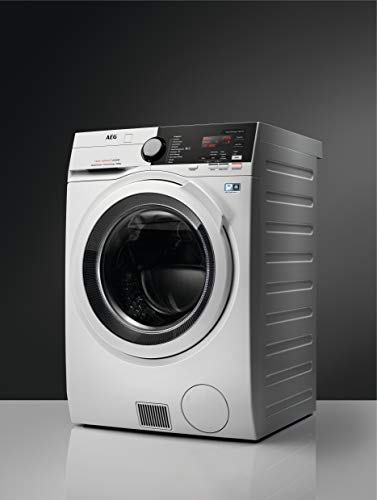
AEG L7WEE961 LAVAMAT 7000 Series ProSteam review: 104 specs compared

Avg. price:~£700Washing capacity:9 kgDrying capacity:6 kgDrying technology:condenserWashing energy efficiency class:CCombined energy efficiency class:E

AEG L7WEE961 LAVAMAT 7000 Series ProSteam Review: Compare 104 technical specifications to see how this product ranks in the Washer-dryers category and whether it is worth buying.
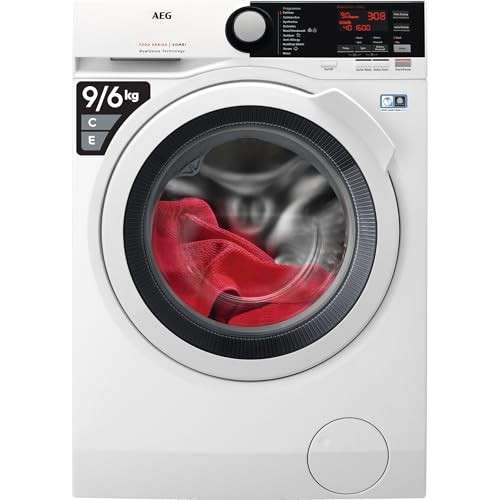
AEG L7WEE961 LAVAMAT 7000 Series ProSteam
6.5/10

Overall score

Score
6.5/ 10
✕
What it is
Our main score for this model, 1–10. It combines specs and ratings from across the web.
How we count it
Parts: Technical score 75%, User score 25%
Marks: Each part gets a mark out of 10. For reviews, lists and owners, a typical model in this category gets about 8 and the best one gets 10.
No data yet: A part with no data shows "?". It counts as the mark of a weaker model in this category (4 in 5 models with data score higher). This way, models with reviews, lists and owners usually come out ahead.
Score distribution
▼
<55-66-77-88-99-10
Score components

75%

5.8

Technical score

25%

8.6

User score

▼Worse than 86% of washer dryers
6.5

Value for money

Value for money
6.5/ 10
✕
What it is
An indicator that combines the washer-dryer's overall rating with its cost.
When it matters
When you are looking for a washer-dryer with a good balance between quality and price.
Score distribution
▼
<55-66-77-88-99-10
Score components

70%

6.5

Overall score

30%

6.5

Price

▼Worse than 88%
5.8

Technical score

Technical score
5.8/ 10
✕
What it is
How good the specs are compared with the other models in this category, 1–10.
How we count it
Areas: We rate the specs in each area against the other models in this category.
Weighting: The areas that matter most to buyers count more. The shares are shown under Score components.
Share: The technical score is 75% of the overall score.
Score distribution
▼
<55-66-77-88-99-10
Score components

25%

8.8

Performance

25%

4.8

Energy efficiency

25%

4.0

Programs

20%

5.4

Features

5%

6.8

Design

▼Worse than 94%
8.6

User score

User score
8.6/ 10
✕
What it is
How happy buyers are with this model, based on ratings from across the web.
How we count it
Enough data: A model needs at least 1 rating from across the web. Without one, it counts as 7.6, the mark of a weaker rated model in this category.
Share: User score counts 25% of the overall score.
Score distribution
▼
<55-66-77-88-99-10

70%

8.3

Rating

30%

9.2

Popularity

▲Better than 87%
  • aeg-l7wee961-lavamat-7000-series-prosteam
  • aeg-l7wee961-lavamat-7000-series-prosteam
  • aeg-l7wee961-lavamat-7000-series-prosteam
  • aeg-l7wee961-lavamat-7000-series-prosteam
  • aeg-l7wee961-lavamat-7000-series-prosteam
  • aeg-l7wee961-lavamat-7000-series-prosteam
aeg-l7wee961-lavamat-7000-series-prosteam
Where to buy
    N/A~ £700
Best rankings
Available: ranking among products currently available (including other versions of this product).All: ranking among all products in the database.
Loading...
Loading category ranking...

Technical Specifications of washer-dryer AEG L7WEE961 LAVAMAT 7000 Series ProSteam

Technical score
Technical score
5.8/ 10
✕
What it is
How good the specs are compared with the other models in this category, 1–10.
How we count it
Areas: We rate the specs in each area against the other models in this category.
Weighting: The areas that matter most to buyers count more. The shares are shown under Score components.
Share: The technical score is 75% of the overall score.
Score distribution
▼
<55-66-77-88-99-10
Score components:

25%

8.8

Performance

25%

4.8

Energy efficiency

25%

4.0

Programs

20%

5.4

Features

5%

6.8

Design

5.8
Value for money
Value for money
6.5/ 10
✕
What it is
An indicator that combines the washer-dryer's overall rating with its cost.
When it matters
When you are looking for a washer-dryer with a good balance between quality and price.
Score distribution
▼
<55-66-77-88-99-10
Score components:

70%

6.5

Overall score

30%

6.5

Price

6.5
Washing capacity
9 kg
This washer-dryer has a washing capacity of 9 kg which is bigger than the capacity of 42.8% of washer-dryers and equal to the capacity of 27.9% of washer-dryers.
Drying capacity
6 kg
This washer-dryer has a drying capacity of 6 kg which is bigger than the capacity of 37.2% of washer-dryers and equal to the capacity of 50.3% of washer-dryers.
Drum volume
69 L
This washer-dryer has a drum volume of 69 L which is bigger than the drum volume of 79.5% of washer-dryers and equal to the drum volume of 6.8% of washer-dryers.
Spin efficiency class
B
This washer-dryer has B spin efficiency class which is better than the spin efficiency class of 1.1% of washer-dryers and equal to that of 86.3% of washer-dryers.
Maximum spin speed
1,600 RPM
The maximum spin speed of this washer-dryer is 1,600 RPM which is higher than the maximum spin speed of 85.1% of washer-dryers and equal to the maximum spin speed of 14.9% of washer-dryers.
Show more
Washing energy efficiency class
C
This washer-dryer has C washing energy efficiency class which is worse than the washing energy efficiency of 75.4% of washer-dryers and equal to that of 12.5% of washer-dryers.
Combined energy efficiency class
E
This washer-dryer has E combined energy efficiency class which is worse than the combined energy efficiency of 57.1% of washer-dryers and equal to that of 39.9% of washer-dryers.
Energy consumption per 100 washing cycles
65 kWh/100 cycles
This washer-dryer has an energy consumption per 100 washing cycles of 65 kWh/100 cycles which is higher than the energy consumption of 81.5% of washer-dryers and equal to that of 1.5% of washer-dryers.
Energy consumption per 100 combined cycles
376 kWh/100 cycles
This washer-dryer has an energy consumption per 100 combined cycles of 376 kWh/100 cycles which is higher than the energy consumption of 80.2% of washer-dryers and equal to that of 2.6% of washer-dryers.
Water consumption per washing cycle
49 L
This washer-dryer has a water consumption per washing cycle of 49 L which is higher than the water consumption of 55.9% of washer-dryers and equal to that of 7.7% of washer-dryers.
Show more
Number of washing programs
10
This washer-dryer has 10 different washing programs which is less than the n. of programs of 89.3% of washer-dryers and equal to that of 9.1% of washer-dryers.
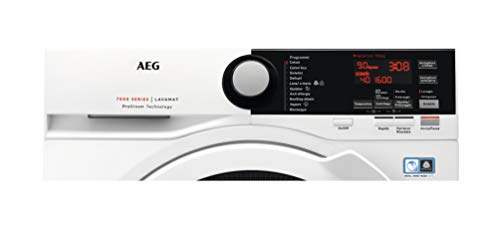
Eco 40-60, Cotton, Synthetics, Delicates, Wool/Handwash, Outdoor, Anti-Allergy, NonStop 60min, Steam, Rinse.
Number of drying programs
2
This washer-dryer has 2 different drying programs which is less than the n. of programs of 68.8% of washer-dryers and equal to that of 27.7% of washer-dryers.
Eco 40-60 + Cupboard Dry Level, NonStop 60min.
Fast washing cycle duration
-
Maximum washing cycle duration
220 min
The maximum washing cycle duration of this washer-dryer is 220 min which is more than the maximum cycle duration of 54.2% of washer-dryers and equal to that of 2.9% of washer-dryers.
Maximum combined cycle duration
485 min
The maximum combined cycle duration of this washer-dryer is 485 min which is more than the maximum combined duration of 52.3% of washer-dryers and equal to that of 2.7% of washer-dryers.
Show more
N. of features
15
This washer-dryer has 15 advanced features, which is more than the number of features in 50.8% of washer-dryers and equal to the number in 4.2% of washer-dryers.
Foam control system
N. of downloadable programs
0
This washer-dryer has 0 downloadable programs which is less than the n. of programs of 27% of washer-dryers and equal to that of 73% of washer-dryers.
Foam control system
yes
This washer-dryer features a foam control system. 59.6% of washer-dryers have a foam control system.
Unbalanced load detection
yes
This washer-dryer has unbalanced load detection. 96.2% of washer-dryers have this feature.
Automatic load balancing during spin
no
This washer-dryer does not feature automatic load balancing. 44.2% of washer-dryers have automatic load balancing.
Show more
Installation type
free-standing
This washer-dryer is a free-standing model, which is less integrated than 11% of washer-dryers and as integrated as 89.1% of washer-dryers.
Color
white
This washer-dryer is white in color. 67.5%.
Display
yes
This washer-dryer has a display. 99.7% of washer-dryers have a display.
Noise-reducing design
no
This washer-dryer does not have a noise-reducing design. 6.2% of washer-dryers have a noise-reducing design.
Special drum design
yes
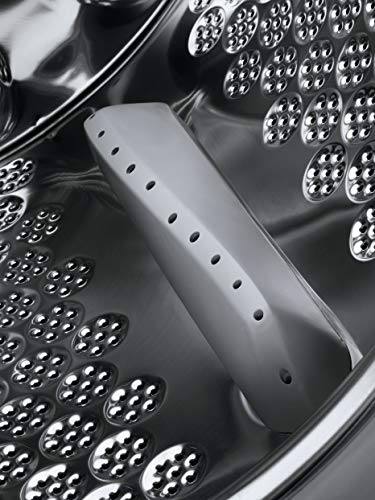
This washer-dryer has a special drum design. 53.1% of washer-dryers have a special drum design.
ProTex Drum uses fine water jets and more holes to reduce fabric friction and wear, even during spin.
Show more

AEG L7WEE961 LAVAMAT 7000 Series ProSteam vs the average washer-dryer

246810TotalPerformanceEnergy efficiencyProgramsFeaturesDesign
  • 200 RPM higher maximum spin speed
    This washer-dryer has a higher maximum spin speed than the average washer-dryer (1,600 RPM vs 1,400 RPM). The average washer-dryer has a maximum spin speed of 1,400 RPM.
    1,600 RPM vs 1,400 RPM
  • 2 more spin speed options
    This washer-dryer offers a higher number of spin speeds than the average washer-dryer (7 vs 5). The average washer-dryer has 5 spin speeds.
    400, 600, 800, 1,000, 1,200, 1,400, 1,600 RPM
    7 vs 5
  • Has the AquaStop feature
    This washer-dryer has the AquaStop feature, the average washer-dryer does not. 43.8% of washer-dryers have an AquaStop feature.
  • 9 L bigger drum volume
    This washer-dryer has a bigger drum volume than the average washer-dryer (69 L vs 60 L). The average washer-dryer has a drum volume of 60 L.
    69 L vs 60 L
  • Has quick washing & drying
    This washer-dryer has a quick washing & drying option, the average washer-dryer does not. 40.9% of washer-dryers have a quick washing & drying option.
    NonStop 1kg in 1h program washes and dries small loads in about an hour for clothes ready when you need them.
  • Has a fast cycle option
    This washer-dryer has a fast cycle option, the average washer-dryer does not. 48.7% of washer-dryers have a fast cycle option.
    Rapid Option (shortens cycle duration for quick and efficient washes)
  • 3 dB more silent during washing
    This washer-dryer is more silent during washing than the average washer-dryer (51 dB vs 54 dB). The average washer-dryer has a washing noise level of 54 dB.
    51 dB vs 54 dB
  • Has an outdoor/sport cycle
    This washer-dryer has a special cycle for outdoor/sport clothes, while the average washer-dryer does not. 35.2% of washer-dryers have such a cycle.
  • 7.5% higher user score
    User score
    8.6/ 10
    ✕
    What it is
    How happy buyers are with this model, based on ratings from across the web.
    How we count it
    Enough data: A model needs at least 1 rating from across the web. Without one, it counts as 7.6, the mark of a weaker rated model in this category.
    Share: User score counts 25% of the overall score.
    Score distribution
    ▼
    <55-66-77-88-99-10

    70%

    8.3

    Rating

    30%

    9.2

    Popularity

    8.6 vs 8.0
  • 200 RPM higher maximum spin speed
    This washer-dryer has a higher maximum spin speed than the average washer-dryer (1,600 RPM vs 1,400 RPM). The average washer-dryer has a maximum spin speed of 1,400 RPM.
    1,600 RPM vs 1,400 RPM
  • 2 more spin speed options
    This washer-dryer offers a higher number of spin speeds than the average washer-dryer (7 vs 5). The average washer-dryer has 5 spin speeds.
    400, 600, 800, 1,000, 1,200, 1,400, 1,600 RPM
    7 vs 5
  • 9 L bigger drum volume
    This washer-dryer has a bigger drum volume than the average washer-dryer (69 L vs 60 L). The average washer-dryer has a drum volume of 60 L.
    69 L vs 60 L
  • 3 dB more silent during washing
    This washer-dryer is more silent during washing than the average washer-dryer (51 dB vs 54 dB). The average washer-dryer has a washing noise level of 54 dB.
    51 dB vs 54 dB
  • 9 L lower water consumption for combined cycles
    This washer-dryer has a lower water consumption for combined cycles than the average washer-dryer (70 L vs 79 L). The average washer-dryer consumes 79 L per combined cycle.
    70 L vs 79 L
  • Has quick washing & drying
    This washer-dryer has a quick washing & drying option, the average washer-dryer does not. 40.9% of washer-dryers have a quick washing & drying option.
    NonStop 1kg in 1h program washes and dries small loads in about an hour for clothes ready when you need them.
  • Has a fast cycle option
    This washer-dryer has a fast cycle option, the average washer-dryer does not. 48.7% of washer-dryers have a fast cycle option.
    Rapid Option (shortens cycle duration for quick and efficient washes)
  • Has an outdoor/sport cycle
    This washer-dryer has a special cycle for outdoor/sport clothes, while the average washer-dryer does not. 35.2% of washer-dryers have such a cycle.
  • Has the AquaStop feature
    This washer-dryer has the AquaStop feature, the average washer-dryer does not. 43.8% of washer-dryers have an AquaStop feature.
  • 1 more advanced feature/s
    This washer-dryer has a higher number of advanced features than the average washer-dryer (15 vs 14). The average washer-dryer has 14 advanced features.
    Foam control system
    15 vs 14
  • 0.3 cm lower height
    This washer-dryer has a lower height than the average washer-dryer (84.7 cm vs 85 cm). The average washer-dryer has a height of 85 cm.
    84.7 cm vs 85 cm
  • 0.3 cm narrower
    This washer-dryer is narrower than the average washer-dryer (59.7 cm vs 60 cm). The average washer-dryer has a width of 60 cm.
    59.7 cm vs 60 cm
  • 3 fewer washing program/s
    This washer-dryer has fewer washing programs than the average washer-dryer (10 vs 13). The average washer-dryer has 13 washing programs.
    Eco 40-60, Cotton, Synthetics, Delicates, Wool/Handwash, Outdoor, Anti-Allergy, NonStop 60min, Steam, Rinse.
    10 vs 13
  • 14 kWh/100 cycles higher energy consumption for washing
    This washer-dryer has a higher energy consumption for washing than the average washer-dryer (65 kWh/100 cycles vs 51 kWh/100 cycles). The average washer-dryer consumes 51 kWh/100 cycles per 100 washing cycles.
    65 kWh/100 cycles vs 51 kWh/100 cycles
  • 68 kWh/100 cycles higher energy consumption for combined cycles
    This washer-dryer has a higher energy consumption for combined cycles than the average washer-dryer (376 kWh/100 cycles vs 308 kWh/100 cycles). The average washer-dryer consumes 308 kWh/100 cycles per 100 combined cycles.
    376 kWh/100 cycles vs 308 kWh/100 cycles
  • 1 fewer drying program/s
    This washer-dryer has fewer drying programs than the average washer-dryer (2 vs 3). The average washer-dryer has 3 drying programs.
    Eco 40-60 + Cupboard Dry Level, NonStop 60min.
    2 vs 3
  • Worse washing energy efficiency class
    This washer-dryer has a worse washing energy efficiency class than the average washer-dryer (C vs A). The average washer-dryer is classified in the A washing energy efficiency rating class.
    C vs A
  • Worse combined energy efficiency
    This washer-dryer has a worse combined energy efficiency class than the average washer-dryer (E vs D). The average washer-dryer is classified in the D combined energy efficiency rating class.
    E vs D
  • Does not have a hygiene cycle
    This washer-dryer does not have a hygiene cycle, the average washer-dryer does. 60% of washer-dryers have a hygiene cycle.
  • 2 dB louder during spinning
    This washer-dryer is louder during spinning than the average washer-dryer (76 dB vs 74 dB). The average washer-dryer has a spinning noise level of 74 dB.
    76 dB vs 74 dB
  • 12.6% worse value for money
    AEG L7WEE961 LAVAMAT 7000 Series ProSteam has worse value for money than the average washer-dryer (6.51 vs 7.3).
    6.51 vs 7.33
  • 27.3% more expensive
    AEG L7WEE961 LAVAMAT 7000 Series ProSteam is more expensive than the average washer-dryer (£700 vs £550). The average washer-dryer costs 550.
    £700 vs £550
  • 2 dB louder during spinning
    This washer-dryer is louder during spinning than the average washer-dryer (76 dB vs 74 dB). The average washer-dryer has a spinning noise level of 74 dB.
    76 dB vs 74 dB
  • 1 dB louder during drying
    This washer-dryer is louder during drying than the average washer-dryer (60 dB vs 59 dB). The average washer-dryer has a drying noise level of 59 dB.
    60 dB vs 59 dB
  • 14 kWh/100 cycles higher energy consumption for washing
    This washer-dryer has a higher energy consumption for washing than the average washer-dryer (65 kWh/100 cycles vs 51 kWh/100 cycles). The average washer-dryer consumes 51 kWh/100 cycles per 100 washing cycles.
    65 kWh/100 cycles vs 51 kWh/100 cycles
  • 68 kWh/100 cycles higher energy consumption for combined cycles
    This washer-dryer has a higher energy consumption for combined cycles than the average washer-dryer (376 kWh/100 cycles vs 308 kWh/100 cycles). The average washer-dryer consumes 308 kWh/100 cycles per 100 combined cycles.
    376 kWh/100 cycles vs 308 kWh/100 cycles
  • Worse washing energy efficiency class
    This washer-dryer has a worse washing energy efficiency class than the average washer-dryer (C vs A). The average washer-dryer is classified in the A washing energy efficiency rating class.
    C vs A
  • Worse combined energy efficiency
    This washer-dryer has a worse combined energy efficiency class than the average washer-dryer (E vs D). The average washer-dryer is classified in the D combined energy efficiency rating class.
    E vs D
  • 27 kWh/year higher annual energy consumption (wash)
    This washer-dryer has a higher annual energy consumption (wash) than the average washer-dryer (130 kWh/year vs 103 kWh/year). The average washer-dryer consumes 103 kWh/year per year for washing.
    130 kWh/year vs 103 kWh/year
  • 136 kWh/year higher annual energy consumption (combined)
    This washer-dryer has a higher annual energy consumption (wash & dry) than the average washer-dryer (752 kWh/year vs 616 kWh/year). The average washer-dryer consumes 616 kWh/year per year for combined cycles.
    752 kWh/year vs 616 kWh/year
  • 1 L higher water consumption for washing
    This washer-dryer has a higher water consumption for washing than the average washer-dryer (49 L vs 48 L). The average washer-dryer consumes 48 L per washing cycle.
    49 L vs 48 L
  • 3 fewer washing program/s
    This washer-dryer has fewer washing programs than the average washer-dryer (10 vs 13). The average washer-dryer has 13 washing programs.
    Eco 40-60, Cotton, Synthetics, Delicates, Wool/Handwash, Outdoor, Anti-Allergy, NonStop 60min, Steam, Rinse.
    10 vs 13
  • 1 fewer drying program/s
    This washer-dryer has fewer drying programs than the average washer-dryer (2 vs 3). The average washer-dryer has 3 drying programs.
    Eco 40-60 + Cupboard Dry Level, NonStop 60min.
    2 vs 3
  • Does not have a hygiene cycle
    This washer-dryer does not have a hygiene cycle, the average washer-dryer does. 60% of washer-dryers have a hygiene cycle.
  • 4 h shorter maximum delay start
    This washer-dryer has a shorter maximum delay start than the average washer-dryer (20 h vs 24 h). The maximum delay start of an average washer-dryer is 24 h.
    20 h vs 24 h
  • No self-cleaning cycle
    This washer-dryer does not have a self-cleaning cycle, the average washer-dryer does. 75.4% of washer-dryers have a self-cleaning cycle.
  • 1 fewer temperature settings
    This washer-dryer offers fewer temperature settings than the average washer-dryer (5 vs 6). The average washer-dryer has 6 temperature settings.
    cold, 30°, 40°, 60°, 95°
    5 vs 6
  • 10.4% larger volume
    This washer-dryer has a larger volume than the average washer-dryer (319,70.8 cm³ vs 288,990 cm³). The average washer-dryer has a volume of 288,990 cm³.
    319,070.829 cm³ vs 288,990 cm³
  • 5.6 cm larger depth
    This washer-dryer has a larger depth than the average washer-dryer (63.1 cm vs 57.5 cm). The average washer-dryer has a depth of 57.5 cm.
    63.1 cm vs 57.5 cm
  • 10.5 kg heavier
    This washer-dryer is heavier than the average washer-dryer (78.5 kg vs 68 kg). The average washer-dryer weighs 68 kg.
    78.5 kg vs 68 kg

Third-party reviews

Verdict

AEG L7WEE961 LAVAMAT 7000 Series ProSteam handles up to 9kg for washing and 6kg for drying, making it a solid choice for medium to large families. It uses an Inverter Silence motor with permanent magnets for quiet and efficient operation and includes ProSense and DualSense technologies to adapt wash cycles and drum movements based on fabric type and load. The 1600 RPM spin helps reduce drying times, while functions such as steam, stain removal, extra rinse and anti-crease support garment care. Programs like NonStop 60min offer quick results for small loads. Although it includes Aqua Stop for added safety and a spacious 69-litre drum, the model is limited to just 2 drying and 10 washing programmes, reducing flexibility. It also consumes more energy than average in both wash-only and combined cycles and lacks self-cleaning, automatic load balancing and Wi-Fi connectivity.

Compare AEG L7WEE961 LAVAMAT 7000 Series ProSteam with other washer-dryers

1Product to compare no. 1
VS
2Product to compare no. 2
VS
3Product to compare no. 3 (optional)

Graphic comparison of AEG L7WEE961 LAVAMAT 7000 Series ProSteam and other washer-dryers

No results found