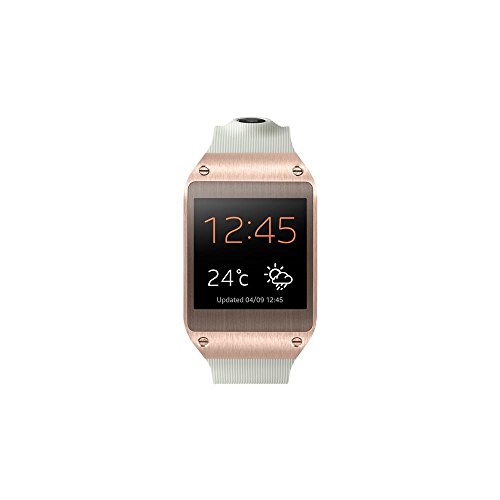
Samsung Galaxy Gear Review | 126 Data compared

double-arrow
  • Avg. price: ~£260
  • Screen size: 1.63 inch
  • Battery life: 1 day/s
  • Display type: AMOLED

Samsung Galaxy Gear review. Compare 126 technical specifications and user reviews to see how it ranks among smartwatches and if it is worth buying.

5.6

Overall score

What it is: An overall evaluation of the smartwatch's quality, based on technical analyses and user reviews.

When it matters: When you need a quick reference to identify the best Smartwatches on the market.

Score components:

90.0%

5.4

Technical Score

10.0%

7.4

User score

Good
5.4

Technical Score

What it is: An assessment of the smartwatch's technical performance, covering eight key areas: performance & hardware, software, camera, connectivity, display, battery, audio, and design.

When it matters: When you want to compare Smartwatches based on technical performance and available features.

Score components:

24.0%

2.9

Health

21.0%

7.1

Fitness

16.0%

5.8

Battery

14.0%

7.6

Smart features

12.0%

2.5

Connectivity

9.0%

7.4

Display & Design

4.0%

5.7

Hardware

Good
7.4

User score

What it is: A rating that combines user reviews and the total number of reviews received by the smartwatch

When it matters: When you want to know how a smartwatch handles daily tasks and how reliable it remains over time according to user feedback.

Score components:

70.0%

7.3

User reviews

30.0%

7.7

Popularity

User score:
amazon
3.9
(164)
amazon
3.6
(152)
amazon
2.8
(38)
amazon
3.1
(7)

(Reviews last updated: Apr 2026)

Very good
    • samsung-galaxy-gear
    samsung-galaxy-gear

    Best prices

    Best rankings

    ?

    Available: ranking among products currently available (including other versions of this product).
    All: ranking among all products in the database.

    Technical Specifications of smartwatch Samsung Galaxy Gear

    Technical Score

    What it is: An assessment of the smartwatch's technical performance, covering eight key areas: performance & hardware, software, camera, connectivity, display, battery, audio, and design.

    When it matters: When you want to compare Smartwatches based on technical performance and available features.

    Score components:

    24.0%

    2.9

    Health

    21.0%

    7.1

    Fitness

    16.0%

    5.8

    Battery

    14.0%

    7.6

    Smart features

    12.0%

    2.5

    Connectivity

    9.0%

    7.4

    Display & Design

    4.0%

    5.7

    Hardware

    5.4
    Samsung Galaxy Gear has a technical score of 5.38 points, which is lower than 75% of smartwatches.
    User score

    What it is: A rating that combines user reviews and the total number of reviews received by the smartwatch

    When it matters: When you want to know how a smartwatch handles daily tasks and how reliable it remains over time according to user feedback.

    Score components:

    70.0%

    7.3

    User reviews

    30.0%

    7.7

    Popularity

    User score:
    amazon
    3.9
    (164)
    amazon
    3.6
    (152)
    amazon
    2.8
    (38)
    amazon
    3.1
    (7)

    (Reviews last updated: Apr 2026)

    7.4
    Samsung Galaxy Gear has a user score of 7.42 points, which is lower than 76.7% of smartwatches.
    Popularity
    What it is: An indicator based on the number of reviews received by the smartwatch.
    When it matters: When you prefer to purchase a product chosen and reviewed by many other consumers.
    7.7
    Samsung Galaxy Gear has a popularity of 7.7 points, which is higher than 69.8% of smartphones.
    Ratio quality/price

    What it is: An indicator that combines the smartwatch's overall rating with its cost.

    When it matters: When you are looking for a smartwatch with a good balance between quality and price.

    Score components:

    60.0%

    5.6

    Overall score

    40.0%

    9.2

    Price

    6.7
    Samsung Galaxy Gear has a quality-to-price ratio of 6.7 points, which is lower than 76.1% of smartphones.
    Brand name
    What it is: The company that designs, sells, and supports the watch.
    When it matters: When brand ecosystem, style, or support matters to you.

    Importance: MEDIUM

    Samsung
    Heart rate monitor
    What it is: A built-in sensor that measures your pulse directly from the wrist.
    When it matters: When you want health data from your wrist during the day or night.

    Importance: HIGH

    yes
    Samsung Galaxy Gear includes a heart rate monitor. 90.4% of smartwatches include a heart rate monitor.
    Blood oxygen monitoring
    What it is: A wrist-based feature that estimates blood oxygen saturation over time.
    When it matters: When you want health data from your wrist during the day or night.

    Importance: HIGH

    no
    Samsung Galaxy Gear does not support blood oxygen monitoring. 64.4% of smartwatches support blood oxygen monitoring.
    Readings are for wellness use, not medical diagnosis.
    ECG
    What it is: The ability to record a single-lead electrocardiogram from the wrist.
    When it matters: When you want health data from your wrist during the day or night.

    Importance: HIGH

    no
    Samsung Galaxy Gear does not support ECG. 15.1% of smartwatches support ECG.
    Availability may vary by region or model version.
    Irregular heart rate warnings
    What it is: Notifications that flag heart-rate patterns which appear unusually irregular.
    When it matters: When you want health data from your wrist during the day or night.

    Importance: MEDIUM

    no
    Samsung Galaxy Gear does not support irregular heart rate warnings. 43.7% of smartwatches support irregular heart rate warnings.
    Show more
    Accelerometer
    What it is: A motion sensor that measures acceleration, steps, gestures, and general movement.
    When it matters: When you track workouts and want better training data.

    Importance: MEDIUM

    yes
    Samsung Galaxy Gear includes an accelerometer. 99.1% of smartwatches include an accelerometer.
    Barometer
    What it is: A pressure sensor used for altitude changes, elevation estimates, and weather-related context.
    When it matters: When you run, ride, hike, or navigate without relying on your phone.

    Importance: MEDIUM

    no
    Samsung Galaxy Gear does not include a barometer. 45.6% of smartwatches include a barometer.
    Gyroscope
    What it is: A motion sensor that measures rotation and helps interpret wrist movement more accurately.
    When it matters: When you track workouts and want better training data.

    Importance: MEDIUM

    yes
    Samsung Galaxy Gear includes a gyroscope. 64.6% of smartwatches include a gyroscope.
    Cadence sensor
    What it is: A sensor input used to measure step or pedal rhythm during training.
    When it matters: When you track workouts and want better training data.

    Importance: MEDIUM

    no
    Samsung Galaxy Gear does not include a cadence sensor. 20.1% of smartwatches include a cadence sensor.
    Distance tracking
    What it is: The ability to measure how far you move during walks, runs, rides, or other activities.
    When it matters: When you track workouts and want better training data.

    Importance: MEDIUM

    yes
    Samsung Galaxy Gear supports distance tracking. 95.7% of smartwatches support distance tracking.
    Show more
    Battery life
    What it is: The typical endurance the watch can deliver on a full charge under the stated usage pattern.
    When it matters: When you do not want to charge the watch too often.

    Importance: HIGH

    Good value: >=7 days

    1 day/s
    Samsung Galaxy Gear offers a battery life of 1 day/s which is shorter than that of 87.3% of smartwatches and equal to that of 8.6% of smartwatches.
    Battery life in training mode
    What it is: The expected endurance while workout tracking and related training functions are active.
    When it matters: When you do not want to charge the watch too often.

    Importance: HIGH

    Good value: >=36.8 h

    ?
    Battery life with GPS on
    What it is: The expected runtime when satellite tracking stays active throughout use.
    When it matters: When you do not want to charge the watch too often.

    Importance: HIGH

    Good value: >=35 h

    N/A
    Battery power
    What it is: The battery capacity, usually measured in milliampere-hours (mAh).
    When it matters: When you do not want to charge the watch too often.

    Importance: HIGH

    Good value: >=397 mAh

    373 mAh
    Samsung Galaxy Gear has a battery capacity of 373 mAh which is larger than the batteries in 71.4% of smartwatches of smartwatches.
    Charge time
    What it is: The time needed to recharge the battery from empty to full or to a stated percentage.
    When it matters: When you want to top up the battery quickly.

    Importance: HIGH

    Good value: <=102 min

    120 min
    Samsung Galaxy Gear charges in 120 min which is faster than 12.9% of smartwatches and equal to the charge time of 43.4% of smartwatches.
    Approximate value from reported charging range: 120 minutes.
    Show more
    Operating system
    What it is: The software platform that runs the watch interface, apps, and core functions.
    When it matters: When you care about apps, features, and long-term support.

    Importance: HIGH

    Tizen
    Samsung Galaxy Gear runs Tizen which is more advanced than the operating system in 55.1% of smartwatches and the same as that in 2.3% of smartwatches.
    Software update frequency
    What it is: Shows how actively the watch is still updated: regular means ongoing updates throughout active support, occasional means updates every few months or only from time to time, and ended means active software support has mostly stopped.
    When it matters: When you care how actively the watch is still supported with fixes, patches, and new features.

    Importance: MEDIUM

    ended
    Samsung Galaxy Gear has ended software update support which is equal to that of 57.5% of smartwatches.
    Software support appears ended or discontinued.
    Third-party app support
    What it is: Support for installing or using apps from developers beyond the watch maker.
    When it matters: When you care about apps, features, and long-term support.

    Importance: MEDIUM

    yes
    Samsung Galaxy Gear supports third-party apps. 47.6% of smartwatches support third-party apps.
    Notifications
    What it is: Mirroring of calls, messages, apps, or other alerts on the watch.
    When it matters: When you want to check alerts without taking out your phone.

    Importance: MEDIUM

    yes
    Samsung Galaxy Gear supports notifications. 99.9% of smartwatches support notifications.
    Voice assistant support
    What it is: Support for a voice assistant that can answer queries or trigger actions from the wrist.
    When it matters: When you want to control the watch or reply without typing.

    Importance: MEDIUM

    yes
    Samsung Galaxy Gear supports voice assistants. 68% of smartwatches support voice assistants.
    Show more
    Cellular module
    What it is: Built-in mobile connectivity that can keep the watch online away from the phone.
    When it matters: When you want calls, messages, or data without your phone nearby.

    Importance: HIGH

    no
    Samsung Galaxy Gear does not include a cellular module. 17.2% of smartwatches include a cellular module.
    SIM cards
    What it is: The number or type of SIM options the watch accepts for cellular service.
    When it matters: When you want calls, messages, or data without your phone nearby.

    Importance: LOW

    Good value: eSIM support

    ?
    GPS
    What it is: Built-in satellite positioning that lets the watch record location during outdoor activity.
    When it matters: When you run, ride, hike, or navigate without relying on your phone.

    Importance: HIGH

    no
    Samsung Galaxy Gear does not support GPS. 56.1% of smartwatches support GPS.
    Galileo support
    What it is: Support for Galileo satellites alongside other positioning systems.
    When it matters: When you run, ride, hike, or navigate without relying on your phone.

    Importance: MEDIUM

    no
    Samsung Galaxy Gear does not support Galileo navigation. 38.7% of smartwatches support Galileo navigation.
    Compass
    What it is: A directional sensor that helps the watch determine heading and orientation.
    When it matters: When you run, ride, hike, or navigate without relying on your phone.

    Importance: MEDIUM

    no
    Samsung Galaxy Gear does not include a compass. 49.3% of smartwatches include a compass.
    Show more
    Screen size
    What it is: The diagonal measurement of the visible display area, usually expressed in inches.
    When it matters: When you want the screen to be easy to read at a glance.

    Importance: HIGH

    Good value: >=1.5 inch

    1.63 inch
    Samsung Galaxy Gear has a screen size of 1.63 inch which is larger than the screens of 76.7% of smartwatches and equal to those of 0.5% of smartwatches.
    Display type
    What it is: The screen technology used by the watch, such as AMOLED, OLED, or memory-in-pixel LCD.
    When it matters: When you want the screen to be easy to read at a glance.

    Importance: HIGH

    AMOLED
    Samsung Galaxy Gear uses a AMOLED display type which is more advanced than that of 48.8% of smartwatches and the same as that of 51.3% of smartwatches.
    Resolution
    What it is: The total number of pixels available on the watch display.
    When it matters: When you want the screen to be easy to read at a glance.

    Importance: MEDIUM

    Good value: >=416 x 416

    320 x 320
    Samsung Galaxy Gear has a display resolution of 320 x 320 which is lower than that of 57% of smartwatches and equal to that of 2.7% of smartwatches.
    Pixel density
    What it is: The number of pixels packed into each inch of the display.
    When it matters: When you want the screen to be easy to read at a glance.

    Importance: MEDIUM

    Good value: >=326 ppi

    278 ppi
    Samsung Galaxy Gear has a pixel density of 278 ppi which is lower than that of 70.5% of smartwatches and equal to that of 0.9% of smartwatches.
    Display brightness
    What it is: The peak brightness the display can reach, usually expressed in nits.
    When it matters: When you want the screen to stay readable outdoors and in strong sunlight.

    Importance: HIGH

    Good value: >=1000 nits

    ?
    Show more
    CPU speed
    What it is: The clock speed of the watch processor, usually expressed in GHz or MHz.
    When it matters: When you want apps and menus to feel smooth.

    Importance: MEDIUM

    Good value: Modern standard

    0.8 GHz
    Samsung Galaxy Gear uses a CPU configuration of 0.8 GHz which is slower than that in 71.2% of smartwatches of smartwatches.
    Processor model
    What it is: The processor model is the chipset or SoC that powers the watch's performance, connectivity, and efficiency.
    When it matters: When you care about app responsiveness, platform generation, and long-term feature support.

    Importance: LOW

    Good value: modern smartwatch chipset

    ?
    RAM
    What it is: The amount of working memory available for apps, watch faces, and background tasks.
    When it matters: When you want apps and menus to feel smooth.

    Importance: MEDIUM

    Good value: >=1 GB

    0.5 GB
    Samsung Galaxy Gear has 0.5 GB of RAM which is smaller than the RAM in 72.6% of smartwatches and equal to that of 19.2% of smartwatches.
    Internal storage
    What it is: Built-in storage for apps, music, watch faces, and other local data.
    When it matters: When you want more room for apps, music, or offline data.

    Importance: MEDIUM

    Good value: >=8 GB

    4 GB
    Samsung Galaxy Gear uses 4 GB for internal storage which is larger than that of 40.5% of smartwatches and equal to that of 26.9% of smartwatches.
    External memory slot
    What it is: A slot for expandable storage such as a memory card, if the watch provides one.
    When it matters: When you want more room for apps, music, or offline data.

    Importance: LOW

    no
    Samsung Galaxy Gear does not include an external memory slot. 0.3% of smartwatches include an external memory slot.
    Show more

    Samsung Galaxy Gear vs the average smartwatch

    • Includes wireless charging
      Samsung Galaxy Gear supports wireless charging, the average smartwatch does not. 24.9% of smartwatches support wireless charging.
      What it is: Support for recharging the watch through a charging pad, puck, or other cable-free method.
      When it matters: When you want to top up the battery quickly.

      Importance: MEDIUM

      Samsung Galaxy Gear supports wireless charging, the average smartwatch does not. 24.9% of smartwatches support wireless charging.
    • Better camera setup
      Samsung Galaxy Gear supports camera, the average smartwatch does not. 2% of smartwatches support camera.
      Rear camera.
      What it is: Whether the watch includes a camera for photos, video, or calling.
      When it matters: When you want to take photos or video calls from the watch itself.

      Importance: LOW

      Samsung Galaxy Gear supports camera, the average smartwatch does not. 2% of smartwatches support camera.
    • Supports Emergency SOS
      Samsung Galaxy Gear includes Emergency SOS, the average smartwatch does not. 42.4% of smartwatches include Emergency SOS.
      What it is: An emergency feature that can contact help or alert trusted people from the watch.
      When it matters: When you want extra help in an emergency.

      Importance: HIGH

      Samsung Galaxy Gear includes Emergency SOS, the average smartwatch does not. 42.4% of smartwatches include Emergency SOS.
    • Supports third-party apps
      Samsung Galaxy Gear supports third-party apps, the average smartwatch does not. 47.6% of smartwatches support third-party apps.
      What it is: Support for installing or using apps from developers beyond the watch maker.
      When it matters: When you care about apps, features, and long-term support.

      Importance: MEDIUM

      Samsung Galaxy Gear supports third-party apps, the average smartwatch does not. 47.6% of smartwatches support third-party apps.
    • Supports calorie tracking
      Samsung Galaxy Gear supports calorie tracking, the average smartwatch does not. 43.8% of smartwatches support calorie tracking.
      What it is: Estimated calorie burn based on movement, heart data, and user profile inputs.
      When it matters: When you track workouts and want better training data.

      Importance: MEDIUM

      Samsung Galaxy Gear supports calorie tracking, the average smartwatch does not. 43.8% of smartwatches support calorie tracking.
    • Supports Wi-Fi
      Samsung Galaxy Gear supports Wi-Fi, the average smartwatch does not. 43.4% of smartwatches support Wi-Fi.
      What it is: Built-in Wi-Fi that lets the watch connect to wireless networks directly.
      When it matters: When you want the watch to work smoothly with your phone and accessories.

      Importance: MEDIUM

      Samsung Galaxy Gear supports Wi-Fi, the average smartwatch does not. 43.4% of smartwatches support Wi-Fi.
    • 0.23 inch larger screen size
      Samsung Galaxy Gear has a larger screen size than the average smartwatch (1.6 inch vs 1.40 inch). The average smartwatch screen is 1.40 inch.
      What it is: The diagonal measurement of the visible display area, usually expressed in inches.
      When it matters: When you want the screen to be easy to read at a glance.

      Importance: HIGH

      Good value: >=1.5 inch

      Samsung Galaxy Gear has a larger screen size than the average smartwatch (1.6 inch vs 1.40 inch). The average smartwatch screen is 1.40 inch.1.63 inch vs 1.40 inch
    • More advanced operating system
      Samsung Galaxy Gear runs a more advanced operating system than the average smartwatch (Tizen vs Proprietary OS).
      What it is: The software platform that runs the watch interface, apps, and core functions.
      When it matters: When you care about apps, features, and long-term support.

      Importance: HIGH

      Samsung Galaxy Gear runs a more advanced operating system than the average smartwatch (Tizen vs Proprietary OS).Tizen vs Proprietary OS
    • Supports calorie tracking
      Samsung Galaxy Gear supports calorie tracking, the average smartwatch does not. 43.8% of smartwatches support calorie tracking.
    • Has weight tracking
      Samsung Galaxy Gear supports weight tracking, the average smartwatch does not. 39.2% of smartwatches support weight tracking.
    • Supports water intake tracking
      Samsung Galaxy Gear tracks water intake, the average smartwatch does not. 48.2% of smartwatches track water intake.
    • Includes wireless charging
      Samsung Galaxy Gear supports wireless charging, the average smartwatch does not. 24.9% of smartwatches support wireless charging.
    • 73 mAh larger battery capacity
      Samsung Galaxy Gear has a larger battery capacity than the average smartwatch (373 mAh vs 300 mAh). The average smartwatch battery is 300 mAh.
    • Supports Wi-Fi
      Samsung Galaxy Gear supports Wi-Fi, the average smartwatch does not. 43.4% of smartwatches support Wi-Fi.
    • 0.23 inch larger screen size
      Samsung Galaxy Gear has a larger screen size than the average smartwatch (1.6 inch vs 1.40 inch). The average smartwatch screen is 1.40 inch.
    • Better case material
      Samsung Galaxy Gear uses stainless steel for the case material, while the average smartwatch uses polycarbonate.
    • Supports Emergency SOS
      Samsung Galaxy Gear includes Emergency SOS, the average smartwatch does not. 42.4% of smartwatches include Emergency SOS.
    • Supports third-party apps
      Samsung Galaxy Gear supports third-party apps, the average smartwatch does not. 47.6% of smartwatches support third-party apps.
    • More advanced operating system
      Samsung Galaxy Gear runs a more advanced operating system than the average smartwatch (Tizen vs Proprietary OS).
    • Better camera setup
      Samsung Galaxy Gear supports camera, the average smartwatch does not. 2% of smartwatches support camera.
    • 1 more microphones
      Samsung Galaxy Gear has more microphones than the average smartwatch (2 vs 1). The average smartwatch includes 1 microphones.
    • No blood oxygen
      Samsung Galaxy Gear does not support blood oxygen monitoring, the average smartwatch does. 64.4% of smartwatches support blood oxygen monitoring.
      Readings are for wellness use, not medical diagnosis.
    • No stress monitoring
      Samsung Galaxy Gear does not support stress monitoring, the average smartwatch does. 65.4% of smartwatches support stress monitoring.
    • No sleep tracking
      Samsung Galaxy Gear does not support sleep tracking, the average smartwatch does. 94% of smartwatches support sleep tracking.
    • No smart scales
      Samsung Galaxy Gear does not support smart scale compatibility, the average smartwatch does. 56.8% of smartwatches support smart scale compatibility.
    • No elevation tracking
      Samsung Galaxy Gear does not support elevation tracking, the average smartwatch does. 62.7% of smartwatches support elevation tracking.
    • No auto activity detection
      Samsung Galaxy Gear does not support automatic activity detection, the average smartwatch does. 85.5% of smartwatches support automatic activity detection.
    • No swim mode
      Samsung Galaxy Gear does not include a swim sport mode, the average smartwatch does. 74.9% of smartwatches include a swim sport mode.
    • No exercise tagging
      Samsung Galaxy Gear does not support exercise tagging, the average smartwatch does. 94.3% of smartwatches support exercise tagging.
    • 6 day/s shorter battery life
      Samsung Galaxy Gear offers 1 day/s of battery life, while the average smartwatch offers 7 day/s.
    • No GPS
      Samsung Galaxy Gear does not support GPS, the average smartwatch does. 56.1% of smartwatches support GPS.
    • Less complete iOS compatibility
      Samsung Galaxy Gear offers less complete iOS compatibility than the average smartwatch (no vs yes).
      none
    • Older Bluetooth version
      Samsung Galaxy Gear supports an older Bluetooth version than the average smartwatch (4 vs 5.0). The average smartwatch uses 5.0.
    • 48.5 m lower waterproof depth
      Samsung Galaxy Gear has a shallower waterproof rating than the average smartwatch (1.5 m vs 50 m). The average smartwatch reaches 50 m.
      Based on IP immersion rating (controlled lab conditions, not a swim/diving certification).
    • 28.8 g heavier weight
      Samsung Galaxy Gear is heavier than the average smartwatch (73.8 g vs 45 g). The average smartwatch weighs 45 g.
    • 48 ppi lower pixel density
      Samsung Galaxy Gear has a lower pixel density than the average smartwatch (278 ppi vs 326 ppi). The average smartwatch display reaches 326 ppi.
    • Lower resolution
      Samsung Galaxy Gear has a display resolution of 320x 320, while the average smartwatch reaches 352x 430.
    • No smart alarm
      Samsung Galaxy Gear does not support a smart alarm, the average smartwatch does. 52.7% of smartwatches support this feature.
      No native smart alarm; third-party app required.
    • 4 MP lower main megapixels
      Samsung Galaxy Gear has a lower main camera resolution than the average smartwatch (1 MP vs 5 MP). The average smartwatch camera reaches 5 MP.
      No built-in main camera; supports remote camera control
    • 0.5 GB less RAM
      Samsung Galaxy Gear has less RAM than the average smartwatch (0.5 GB vs 1 GB). The average smartwatch includes 1 GB of RAM.
    • 8 year/s older release date
      Samsung Galaxy Gear is an older model than the average smartwatch (2,013 vs 2,021). The average smartwatch was released in 2,021.
      September 2,013
    • Slower CPU speed
      Samsung Galaxy Gear uses a CPU configuration of 0.8 GHz, while the average smartwatch uses 1 GHz.
    • No GPS
      Samsung Galaxy Gear does not support GPS, the average smartwatch does. 56.1% of smartwatches support GPS.
      What it is: Built-in satellite positioning that lets the watch record location during outdoor activity.
      When it matters: When you run, ride, hike, or navigate without relying on your phone.

      Importance: HIGH

      Samsung Galaxy Gear does not support GPS, the average smartwatch does. 56.1% of smartwatches support GPS.
    • No blood oxygen
      Samsung Galaxy Gear does not support blood oxygen monitoring, the average smartwatch does. 64.4% of smartwatches support blood oxygen monitoring.
      Readings are for wellness use, not medical diagnosis.
      What it is: A wrist-based feature that estimates blood oxygen saturation over time.
      When it matters: When you want health data from your wrist during the day or night.

      Importance: HIGH

      Samsung Galaxy Gear does not support blood oxygen monitoring, the average smartwatch does. 64.4% of smartwatches support blood oxygen monitoring.
    • 48.5 m lower waterproof depth
      Samsung Galaxy Gear has a shallower waterproof rating than the average smartwatch (1.5 m vs 50 m). The average smartwatch reaches 50 m.
      Based on IP immersion rating (controlled lab conditions, not a swim/diving certification).
      What it is: The stated depth or water-resistance class the watch is rated to withstand.
      When it matters: When you wear the watch in rain, sweat, or water.

      Importance: HIGH

      Good value: >=50 m

      Samsung Galaxy Gear has a shallower waterproof rating than the average smartwatch (1.5 m vs 50 m). The average smartwatch reaches 50 m.1.5 m vs 50 m
    • No stress monitoring
      Samsung Galaxy Gear does not support stress monitoring, the average smartwatch does. 65.4% of smartwatches support stress monitoring.
      What it is: Stress estimates derived from heart rate, HRV, or similar body signals.
      When it matters: When you want health data from your wrist during the day or night.

      Importance: HIGH

      Samsung Galaxy Gear does not support stress monitoring, the average smartwatch does. 65.4% of smartwatches support stress monitoring.
    • No elevation tracking
      Samsung Galaxy Gear does not support elevation tracking, the average smartwatch does. 62.7% of smartwatches support elevation tracking.
      What it is: Tracking of climbed, descended, or current elevation during activities.
      When it matters: When you run, ride, hike, or navigate without relying on your phone.

      Importance: MEDIUM

      Samsung Galaxy Gear does not support elevation tracking, the average smartwatch does. 62.7% of smartwatches support elevation tracking.
    • No sleep tracking
      Samsung Galaxy Gear does not support sleep tracking, the average smartwatch does. 94% of smartwatches support sleep tracking.
      What it is: Automatic recording of sleep duration, stages, or sleep quality from overnight wear.
      When it matters: When you want health data from your wrist during the day or night.

      Importance: HIGH

      Samsung Galaxy Gear does not support sleep tracking, the average smartwatch does. 94% of smartwatches support sleep tracking.
    • No auto activity detection
      Samsung Galaxy Gear does not support automatic activity detection, the average smartwatch does. 85.5% of smartwatches support automatic activity detection.
      What it is: The ability to recognize certain workouts automatically without manual start.
      When it matters: When you track workouts and want better training data.

      Importance: MEDIUM

      Samsung Galaxy Gear does not support automatic activity detection, the average smartwatch does. 85.5% of smartwatches support automatic activity detection.
    • 6 day/s shorter battery life
      Samsung Galaxy Gear offers 1 day/s of battery life, while the average smartwatch offers 7 day/s.
      What it is: The typical endurance the watch can deliver on a full charge under the stated usage pattern.
      When it matters: When you do not want to charge the watch too often.

      Importance: HIGH

      Good value: >=7 days

      Samsung Galaxy Gear offers 1 day/s of battery life, while the average smartwatch offers 7 day/s.1 day/s vs 7 day/s

    Graphic comparison of Samsung Galaxy Gear and other Smartwatches

    Attribute category
    Attribute
    No results found

    Third-party reviews

    What customers like about Samsung Galaxy Gear?

    • Vibrant and sharp Super AMOLED display with 320x320 resolution
    • Ability to make and receive phone calls directly from the wrist
    • Integrated 1.9MP camera for quick photos and short 720p videos
    • Premium build quality featuring a stainless steel/aluminum frame
    • Responsive and fast user interface for basic navigation

    What customers dislike about Samsung Galaxy Gear?

    • Very limited compatibility, initially restricted to only a few Samsung Galaxy devices
    • Short battery life typically requiring daily charging (approx. 25 hours)
    • Requirement of a separate external charging cradle/case to power the device
    • High launch price that many reviewers felt was not justified by its utility
    • Limited selection of high-quality third-party apps
    • Bulky design that may be uncomfortable or aesthetically unappealing to some

    Expert reviews

    S
    sammobile.com
    07/10/2013

    The SamMobile review characterizes the Samsung Galaxy Gear (SM-V700) as a bold but "rushed" first-generation, companion smartwatch, highlighting the 1.63-inch Super AMOLED display and the 1.9-megapixel camera as key pros. While the device offers a pleasant interface with intuitive, gesture-based navigation and convenient hands-free calling, it is criticized for a thick, industrial...Read more

    W
    whistleout.com.au
    25/11/2013

    The Samsung Galaxy Gear is characterized as a bold but flawed first-generation wearable that operates primarily as a smartphone accessory, featuring a vibrant 1.63-inch Super AMOLED display and useful notification capabilities for calls and SMS. While praised for its screen, the device is criticized for a bulky, uncomfortable design with a stiff strap, and a 1.9-megapixel camera...Read more

    G
    gadgetguy.com.au
    08/10/2013

    The Samsung Galaxy Gear (SM-V700) is a pioneering first-generation smartwatch that functions as a phone companion, offering features like a 1.63-inch Super AMOLED screen, an 800MHz processor, and a 1.9-megapixel camera built into the strap. GadgetGuy's review highlights the device's premium, durable feel with its stainless steel body, yet notes it is plagued by severe limitations,...Read more

    P
    pcmag.com
    01/10/2013

    PCMag describes the Samsung Galaxy Gear as an ambitious but flawed $299.99 "science project" featuring a sharp 1.63-inch Super AMOLED display, a 1.9-megapixel strap camera, and functional, albeit novel, call capabilities. However, significant drawbacks include extremely limited compatibility with only select Samsung devices at launch, disappointing battery life, and a sluggish,...Read more

    T
    theguardian.com
    26/09/2013

    A 2013 Guardian analysis argued the Samsung Galaxy Gear was a rushed, "prototype" product designed to preempt Apple, resulting in a device lacking a clear purpose or "killer" functionality. While boasting technical ambition through integration of a camera, microphone, and apps like Evernote, the device was crippled by a sluggish interface, poor 25-hour battery life, and high £299...Read more

    B
    businessinsider.com
    05/10/2013

    In October 2013, Business Insider described the Samsung Galaxy Gear as a sturdy, high-quality, but "chunky" first-generation wearable that felt like a shrunken-down smartphone rather than a fashionable device. While praising its vibrant 1.63-inch Super AMOLED display and convenient notification system, the review highlighted significant downsides, including a slow S Voice assistant,...Read more

    T
    techguide.com.au
    07/10/2013

    The Samsung Galaxy Gear offers a premium design with a high-quality stainless steel body and a vibrant 1.63-inch Super AMOLED screen. Pros include the S Voice capability for hands-free calling and messaging, plus a 1.9-megapixel camera built into the strap. However, the device suffers from a very limited, closed ecosystem that is initially compatible only with the Galaxy Note 3,...Read more

    A
    au.pcmag.com
    01/10/2013

    The Samsung Galaxy Gear is a "companion device" featuring a vibrant 1.63-inch Super AMOLED display, a unique 1.9-megapixel autofocus camera, and call functionality. However, it is hindered by limited compatibility, a high $299 price, a "baffling" interface, and poor battery life. Ultimately, it feels more like a "compelling science project" than a polished consumer product, with its...Read more

    W
    wired.com
    22/10/2013

    The WIRED review characterizes the original Samsung Galaxy Gear as a "too little, too soon" device, highlighting its sharp 1.63-inch Super AMOLED display and sturdy, stylish brushed metal design as key pros. Significant cons include extremely limited compatibility with only a few Samsung devices at launch, a high $299 price tag, and poor battery life that lasts only a day or two....Read more

    C
    cnet.com
    27/09/2013

    The CNET review of the Samsung Galaxy Gear describes the smartwatch as an ambitious, $299 device prioritizing style with a 1.6-inch AMOLED display and a built-in 1.9-megapixel camera. While offering solid build quality and basic functionalities like voice calling and step tracking, the device is plagued by a confusing interface, unreliable "S Voice" controls, and a restrictive,...Read more

    S
    smh.com.au
    05/09/2013

    The SMH hands-on review of the Samsung Galaxy Gear highlights a premium, well-built design featuring a 1.63-inch Super AMOLED display and a 1.9-megapixel camera built into the strap. While physically comfortable to wear, the device's functionality is mixed, serving as a companion with dual microphones, a speaker, and basic app support, though with a poorly positioned camera. Major...Read more

    I
    ign.com
    17/10/2013

    The Samsung Galaxy Gear, reviewed by IGN, is characterized as a well-built but incomplete device that fails to justify its $300 price tag, offering a premium stainless steel design with a robust strap. While the 1.63-inch Super AMOLED display is sharp and vibrant, the screen's failure to remain constantly lit and the device's heavy, bulky feel are notable drawbacks. Pros include an...Read more

    T
    theverge.com
    01/10/2013

    In a 2013 review for The Verge, Vlad Savov described the Samsung Galaxy Gear as a bulky "tank for your wrist" that feels more like a shrunken-down smartphone than a refined timepiece. While praised for its sturdy steel construction and vibrant Super AMOLED display, the device is criticized for being uncomfortable and featuring a non-interchangeable strap. Functionally, the review...Read more

    S
    sueddeutsche.de
    20/12/2013

    According to a Süddeutsche Zeitung review, the Samsung Galaxy Gear is described as a "watch that isn't one," highlighting a significant identity crisis for the first-generation wearable. While praised for its high-quality AMOLED display, integrated 1.9-megapixel camera, and functional, albeit awkward, wrist-based calling, the device falls short in usability. Critical drawbacks...Read more

    M
    mobiflip.de
    25/12/2013

    The MobiFlip review highlights the Samsung Galaxy Gear as a premium-feeling, sturdy first-generation smartwatch that excels in build quality, specifically praising its 1.63-inch Super AMOLED display and the 1.9-megapixel camera. Standout functional pros include the ability to make clear phone calls via the built-in speaker and microphone, although it is constrained by limited app...Read more

    S
    spiegel.de
    02/11/2013

    In a November 2013 review, Der Spiegel characterized the Samsung Galaxy Gear as an ambitious yet unpolished "demonstration object" that fails to deliver on the promise of a true smartwatch, despite featuring a sharp 1.63-inch Super AMOLED display and a 1.9-megapixel camera. While praised for its premium brushed metal housing and convenient hands-free calling functionality, the...Read more

    P
    pcwelt.de
    19/11/2013

    The PC-WELT review characterizes the Samsung Galaxy Gear as a premium, yet flawed, first-generation smartwatch featuring a high-quality 1.63-inch AMOLED display and a stylish stainless steel housing. While the device offers fast, responsive navigation and an integrated 1.9-megapixel camera, it is noted for being bulky, having a novel but limited camera, and offering restricted...Read more

    C
    computerwoche.de
    04/01/2014

    The Samsung Galaxy Gear acts as a stylish, albeit flawed, companion device for smartphones, featuring a high-quality, readable 1.63-inch Super AMOLED display and a 1.9-megapixel camera built into the strap. Key advantages include functional calling via a built-in speaker and microphone, though the experience is marred by a restrictive, unpolished interface that requires a charging...Read more

    S
    smartdroid.de
    29/12/2013

    The Smartdroid.de review highlights the original Samsung Galaxy Gear as a high-quality but flawed first attempt, praising its premium stainless steel build and vibrant 1.63-inch Super AMOLED display. A key feature is the 1.9-megapixel camera built into the strap, which allows for quick, though somewhat limited, snapshots. Functionally, the watch excels at handling phone calls...Read more

    C
    chip.de
    07/09/2013

    The Samsung Galaxy Gear, evaluated in a Chip.de video review, features a premium stainless steel housing and a vibrant 1.63-inch Super AMOLED display. Key pros include the ability to make calls directly from the wrist and a 1.9-megapixel camera built into the strap for quick, 720p video clips. However, significant cons include limited compatibility with only specific Samsung devices...Read more

    P
    pcwelt.de
    04/09/2013

    The PC-Welt review highlights the Samsung Galaxy Gear as a pioneering but flawed smartwatch, featuring high-quality construction with a stainless steel body and a sharp 1.63-inch Super AMOLED display. Key features include a 1.9-megapixel camera on the strap for quick photos and 720p videos, along with a speaker and microphone for taking calls on the wrist. However, the device is...Read more

    F
    futurezone.at
    03/10/2013

    The original Samsung Galaxy Gear is described by Futurezone as an ambitious, prototype-like device with a premium build and a sharp Super AMOLED display. Key pros include the unique 1.9-megapixel camera and a "cool factor," though the bulky design is considered uncomfortable and less versatile. Functionality is heavily hampered by a restrictive ecosystem, limited compatibility with...Read more

    G
    geeko.lesoir.be
    23/10/2013

    The 2013 Geeko review of the Samsung Galaxy Gear highlighted it as an ambitious, high-end, but ultimately unrefined, first-generation smartwatch. Key pros included a premium, durable build featuring a brushed metal frame, a high-quality 1.63-inch Super AMOLED display, and innovative features such as a 1.9-megapixel camera integrated into the strap and the ability to make calls...Read more

    P
    phonandroid.com
    28/10/2013

    The Phonandroid review portrays the Samsung Galaxy Gear as an ambitious pioneer, highlighting its premium steel build, vibrant Super AMOLED screen, integrated 1.9-megapixel camera for quick captures, and the ability to handle calls directly from the wrist. However, significant drawbacks are noted, including extremely limited initial compatibility with only specific Samsung devices,...Read more

    L
    lesnumeriques.com
    01/01/2014

    Les Numériques reviews the Samsung Galaxy Gear as a flawed "gadget" with a 2/5 rating, praising its premium metal design and 1.63-inch Super AMOLED screen while criticising its bulky, uncomfortable form factor and non-replaceable strap. While the 1.9MP camera and call functionality are technically impressive, the watch suffers from severe limitations, including lack of app support,...Read more

    0
    01net.com
    17/10/2013

    The 01net review characterizes the Samsung Galaxy Gear as a stylish, well-built device featuring a vibrant 1.63-inch Super AMOLED display and a unique 1.9-megapixel camera embedded in the strap. While praised for its design and solid construction, it is ultimately described as a prototype-like product with significant, limiting flaws. Key cons include a severe lack of quality...Read more

    F
    frandroid.com
    30/11/2013

    The Frandroid review of the original Samsung Galaxy Gear describes the device as a high-potential but rushed first attempt, highlighting its impressive 1.63-inch Super AMOLED display and a 1.9-megapixel camera integrated into the strap. While the build quality is praised for its premium feel, the watch is criticized for its significant bulk and limited compatibility, which initially...Read more

    A
    adslzone.net
    21/12/2013

    The Samsung Galaxy Gear, featuring a 1.63-inch Super AMOLED screen, is described as a well-built but bulky pioneer with a 1.9-megapixel camera integrated into the non-replaceable strap [ADSLZone]. While the 800 MHz processor offers a fluid experience, the device's IP55 rating restricts it to splash resistance rather than full submersion [ADSLZone]. Functionally, the watch excels...Read more

    E
    es.gizmodo.com
    04 de septiembre de 2013

    The 2013 Gizmodo review characterizes the Samsung Galaxy Gear as a pioneering yet deeply flawed "beta product" with a vibrant 1.63-inch Super AMOLED display and a sturdy stainless-steel design, alongside a 1.9MP camera and speakerphone for "Dick Tracy" style calls. Performance is described as sluggish and frustrating, with a heavy, non-intuitive Android interface and extreme,...Read more

    X
    xataka.com
    13 de noviembre de 2013

    Xataka’s review defines the Samsung Galaxy Gear as a premium yet experimental, "prototype-like" device, highlighting its excellent 1.63-inch Super AMOLED screen, quality build, and functional, camera-equipped strap. Key criticisms focus on poor notification management, frustratingly short battery life, and a highly inconsistent wake-up gesture that hinders daily usability....Read more

    T
    tweakers.net
    22/10/2013

    Tweakers characterizes the Samsung Galaxy Gear as a premium, well-built device featuring a 1.63-inch Super AMOLED display and a 1.9-megapixel camera, yet ultimately deems it a "tech demo" rather than a finished product. While the smartwatch offers fast, responsive performance, it is hindered by poor battery life that barely lasts a full day. The review highlights significant,...Read more

    Video reviews

    Compare Samsung Galaxy Gear with other Smartwatches

    VS
    VS

    Compare