Scored using Projectors Methodology v3.0
Projectors Methodology v3.0
Mathematical & Unbiased Scoring
Products in this category are scored under Frontum Projectors Methodology v3.0: the technical score from the specifications is the base, and independent expert and video reviews (up to ±0.5 points), owner opinions (up to ±0.3) and best-of lists (up to +0.3) move it up or down.
Explore Projectors Methodology v3.0

Strong MIRA1 review: 86 specs compared

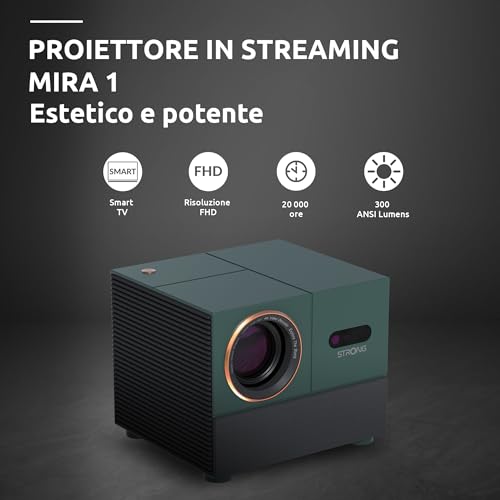
Avg. price:~£180Native panel resolution:1920x1080ANSI lumens:300Throw ratio:1.24:1Lamp life:30000 hours

Strong MIRA1 Review: Compare 86 technical specifications and 2 expert and video reviews to see how this product ranks in the Projectors category and whether it is worth buying.
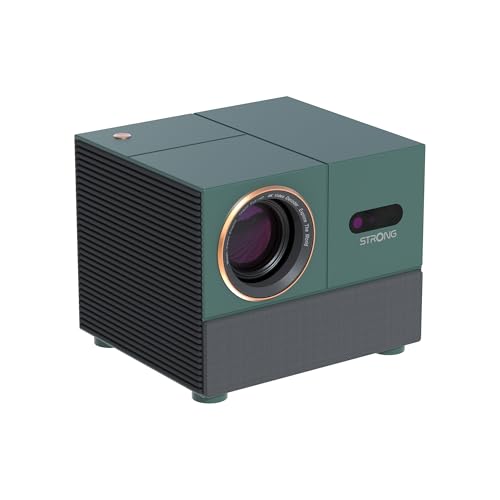
Strong MIRA1
6.7/10

Overall score

Score
6.7/ 10
✕
What it is
Our main score for this model, 1–10. It combines specs, best-of lists, expert reviews and owners.
How we count it
Parts: Technical score 35%, List score 30%, Reviews score 25%, Sentiment score 10%
Marks: Each part gets a mark out of 10. For reviews, lists and owners, a typical model in this category gets about 8 and the best one gets 10.
No data yet: A part with no data shows "?". It counts as the mark of a weaker model in this category (4 in 5 models with data score higher). This way, models with reviews, lists and owners usually come out ahead.
Score distribution
â–¼
<55-66-77-88-99-10
Score components

35%

6.4

Technical score

30%

?

List scoreNot enough data yet, so we use 7.5, the mark of a weaker model in this category

25%

6.4

Reviews score

10%

?

Sentiment scoreNot enough data yet, so we use 6.8, the mark of a weaker model in this category

â–¼Worse than 76% of projectors
7.6

Value for money

Value for money
7.6/ 10
✕
What it is
An indicator that combines the projector's overall rating with its cost.
When it matters
When you are looking for a projector with a good balance between quality and price.
Score distribution
â–¼
<55-66-77-88-99-10
Score components

70%

6.7

Overall score

30%

9.6

Price

â–²Better than 78%
6.4

Technical score

Technical score
6.4/ 10
✕
What it is
How good the specs are compared with the other models in this category, 1–10.
How we count it
Areas: We rate the specs in each area against the other models in this category.
Weighting: The areas that matter most to buyers count more. The shares are shown under Score components.
Share: The technical score is 35% of the overall score.
Score distribution
â–¼
<55-66-77-88-99-10
Score components

42%

5.8

Image Quality

22%

6.3

Projection & Lens

12%

5.8

HDMI & Gaming

10%

8.2

Audio & Features

8%

7.2

Connectivity

6%

7.2

Design & Power

â–¼Worse than 57%
6.4

Reviews score

Reviews score
6.4/ 10
✕
What it is
Average grade from independent test sites, magazines and video reviewers, 1–10.
How we count it
Grades: Each review's own score is converted to 1–10; without one, we grade the review ourselves. Big test sites count more, short reviews half as much as full tests. A video review counts half.
Score: The average grade is 80% of the review mark; the number of reviews is the other 20% (1 review = 5, the typical number in this category = 8, the most-reviewed model = 10).
Enough data: With few reviews, the average grade is pulled toward the typical grade of this category. No reviews yet: 7.8 for now.
Share: Reviews count 25% of the overall score.
Score distribution
â–¼
<55-66-77-88-99-10

6.4

Mark 8.1 is below the typical mark 8.2 of this category, so it cannot lift the score above the technical score

80%

8.6

Average grade

20%

6.1

Popularity

Grades by review (2)
2 video reviews, each counting half as much as a written test. Reviews count 25% of the overall score.
User ratings collected online are not part of this score.
â–¼Worse than 72%
?

List score

List score
7.5/ 10
✕
What it is
How often independent test sites, magazines and video reviewers put this model in their best-of lists for this category.
How we count it
Points: The model in the most lists of this category gets 10; the others get 8 to 10 in proportion. In no list yet: 7.5. Lists count 30% of the overall score.
Enough data: Every list counts, even a single one. With fewer than 5 best-of lists in the category, this part is left out.
Lists with this model (0)
Not in any best-of list yet, so this part counts as 7.5. Models in a list get 8 to 10.
Not in any best-of list yet
  • strong-mira1
  • strong-mira1
  • strong-mira1
  • strong-mira1
  • strong-mira1
  • strong-mira1
  • strong-mira1
strong-mira1
strong-mira1
strong-mira1
strong-mira1
strong-mira1
strong-mira1
strong-mira1
Where to buy
*As an Amazon Associate, we earn from qualifying purchases.
Best rankings
Available: ranking among products currently available (including other versions of this product).All: ranking among all products in the database.
Loading...
Loading category ranking...

Technical Specifications of projector Strong MIRA1

Technical score
Technical score
6.4/ 10
✕
What it is
How good the specs are compared with the other models in this category, 1–10.
How we count it
Areas: We rate the specs in each area against the other models in this category.
Weighting: The areas that matter most to buyers count more. The shares are shown under Score components.
Share: The technical score is 35% of the overall score.
Score distribution
â–¼
<55-66-77-88-99-10
Score components:

42%

5.8

Image Quality

22%

6.3

Projection & Lens

12%

5.8

HDMI & Gaming

10%

8.2

Audio & Features

8%

7.2

Connectivity

6%

7.2

Design & Power

6.4
Reviews score
6.4
List score
?
Value for money
Value for money
7.6/ 10
✕
What it is
An indicator that combines the projector's overall rating with its cost.
When it matters
When you are looking for a projector with a good balance between quality and price.
Score distribution
â–¼
<55-66-77-88-99-10
Score components:

70%

6.7

Overall score

30%

9.6

Price

7.6
ANSI lumens
300
This projector reaches 300 ANSI lumens, dimmer than 86.7% of projectors and equal to 2.9% of projectors.
Contrast ratio
10,000:1
This projector has a contrast ratio of 10000:1, lower than 50.1% of projectors and equal to 7.4% of projectors.
Native panel resolution
1920x1080
This projector uses a native resolution of 1920x1080, higher than 27% of projectors and equal to 59.2% of projectors.
Output resolution
1920x1080
This projector supports output resolution up to 1920x1080, higher than 25.9% of projectors and equal to 42.3% of projectors.
Projection technology
LCD
Show more
Throw ratio
1.24:1
Min throw distance
1 m
This projector needs a minimum throw distance of 1 m, shorter than 50.1% of projectors and equal to 10% of projectors.
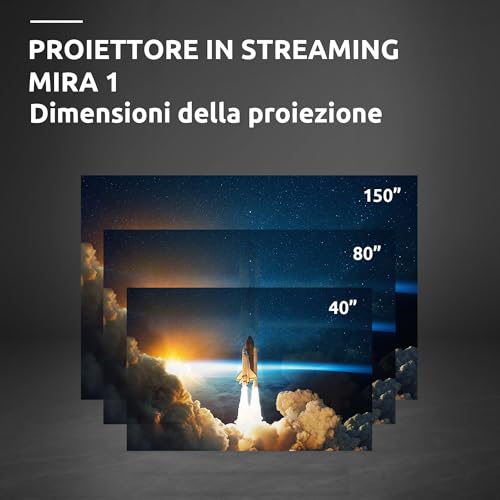
Max projection size
150 inch
This projector supports projection sizes up to 150 inch, smaller than 67.2% of projectors and equal to 10.2% of projectors.
Zoom ratio
N/A
Motorized zoom
no
This projector does not have motorised zoom. 14.8% of projectors offer this.
Show more
Input lag
?
Auto low latency mode (ALLM)
no
This projector does not switch to low-latency mode automatically. 16.1% of projectors offer this.
Variable refresh rate (VRR)
no
This projector does not support variable refresh rate. 1.8% of projectors offer this.
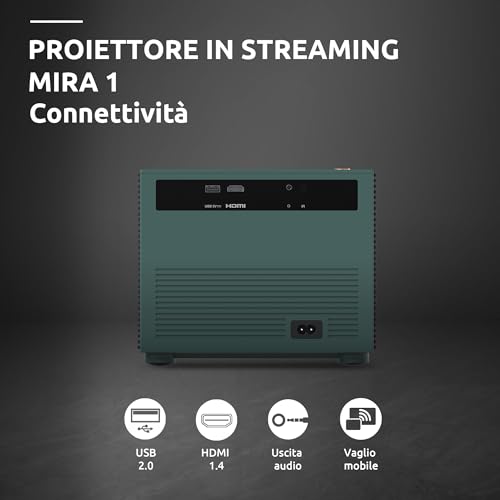
HDMI version
1.4
This projector supports HDMI 1.4, older than 54% of projectors and equal to 35.7% of projectors.
Max HDMI bandwidth
10.2 Gbps
This projector supports HDMI bandwidth up to 10.2 Gbps, lower than 51.2% of projectors and equal to 46.5% of projectors.
Show more
N. of HDMI ports
1
This projector has 1 HDMI port/s, fewer than 54.2% of projectors and equal to 42.9% of projectors.
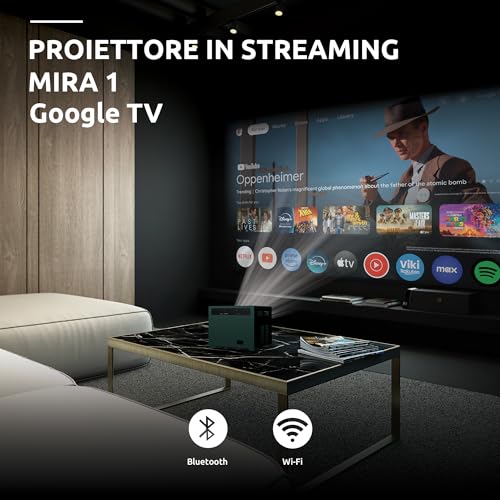
Wi-Fi connectivity
yes
This projector connects to Wi-Fi networks for streaming. 46.7% of projectors offer this.
Wi-Fi version
Wi-Fi 5 (802.11ac)
This projector uses Wi-Fi 5 (802.11ac), which is newer than 55.6% of projectors and the same as in 27.5% of projectors.
Bluetooth connectivity
yes
This projector supports Bluetooth for speakers and headphones. 49.4% of projectors offer this.
Bluetooth version
5
This projector supports Bluetooth 5, more modern than 62.4% of projectors and equal to 17.1% of projectors.
Show more
Smart TV features
yes
This projector has built-in smart TV features. 56.2% of projectors offer this.
Operating system
Google TV
Android OS
no
This projector does not run Android OS. 19.1% of projectors run Android OS.
Dedicated smartphone app
?
Remote control
yes
This projector includes a remote control. 1.5% of projectors offer this.
Show more
Light source type
led
This projector uses led light source technology, more advanced than 33.6% of projectors and equal to 39.9% of projectors.
Laser light source
no
This projector does not have a laser light source. 26.8% of projectors offer this.
Lamp life
30,000 hours
This projector offers lamp life of 30,000 hours, shorter than 67.9% of projectors and equal to 25.9% of projectors.
Lamp life (eco mode)
?
Operating power consumption
80 W
This projector uses 80 W of power, less than 76.5% of projectors and equal to 0.8% of projectors.
Show more

Strong MIRA1 vs the average projector

246810TotalImage QualityProjection & LensHDMI & GamingConnectivityAudio & FeaturesDesign & Power
  • Advanced focus control
    This projector offers more advanced focus control than the average projector (auto-focus vs manual). Typical projector: manual.
    auto-focus vs manual
  • Supports auto keystone correction
    Strong MIRA1 corrects keystone distortion automatically, while the average projector does not. 36.9% of projectors offer this.
  • Supports HDMI ARC
    This projector supports HDMI ARC, while the average projector does not. 35.2% of projectors support HDMI ARC.
  • Supports smart TV apps
    This projector has built-in smart TV features, while the average projector does not. 43.9% of projectors offer smart TV features.
  • Includes stereo speakers
    This projector has stereo speakers, while the average projector does not. 47.8% of projectors have stereo speakers.
  • Built-in Chromecast
    This projector supports built-in Chromecast, while the average projector does not. 24.9% of projectors support built-in Chromecast.
  • Supports voice commands
    This projector supports voice commands, while the average projector does not. 36.1% of projectors support voice commands.
  • Supports AirPlay
    This projector supports AirPlay, while the average projector does not. 40.3% of projectors offer this.
  • 3.67x cheaper
    Strong MIRA1 is cheaper than the average projector (£180 vs £660).
    £180 vs £660
  • Advanced focus control
    This projector offers more advanced focus control than the average projector (auto-focus vs manual). Typical projector: manual.
    auto-focus vs manual
  • Supports auto keystone correction
    Strong MIRA1 corrects keystone distortion automatically, while the average projector does not. 36.9% of projectors offer this.
  • Motorized focus
    This projector supports motorized focus, while the average projector does not. 45.6% of projectors support motorized focus.
  • Supports HDMI ARC
    This projector supports HDMI ARC, while the average projector does not. 35.2% of projectors support HDMI ARC.
  • Built-in Chromecast
    This projector supports built-in Chromecast, while the average projector does not. 24.9% of projectors support built-in Chromecast.
  • Supports AirPlay
    This projector supports AirPlay, while the average projector does not. 40.3% of projectors offer this.
  • Supports Miracast mirroring
    This projector supports Miracast, while the average projector does not. 46.4% of projectors offer this.
  • Supports smart TV apps
    This projector has built-in smart TV features, while the average projector does not. 43.9% of projectors offer smart TV features.
  • Includes stereo speakers
    This projector has stereo speakers, while the average projector does not. 47.8% of projectors have stereo speakers.
  • Supports voice commands
    This projector supports voice commands, while the average projector does not. 36.1% of projectors support voice commands.
  • 10,000 hours longer lamp life
    This projector has a higher lamp life than the average projector (30,000 hours vs 20,000 hours). The average projector has 20,000 hours of lamp life.
    30,000 hours vs 20,000 hours
  • 150 W lower power use
    This projector uses less power than the average projector (80 W vs 230 W). The average projector uses 230 W of power.
    80 W vs 230 W
  • 86.4% dimmer image
    This projector has lower ANSI lumens than the average projector (300 vs 2,200). The average projector has 2,200 ANSI lumens.
    300 vs 2,200
  • 1 fewer HDMI ports
    This projector has fewer HDMI ports than the average projector (1 vs 2). The average projector has 2 HDMI ports.
    1 vs 2
  • Basic light source
    This projector has Basic light source than the average projector (led vs laser). The average projector uses a laser light source.
    led vs laser
  • 43.3% lower HDMI bandwidth
    This projector has a lower HDMI bandwidth than the average projector (10.2 Gbps vs 18 Gbps). The average projector has 18 Gbps of HDMI bandwidth.
    10.2 Gbps vs 18 Gbps
  • 100 inch smaller image size
    This projector has a lower projection size than the average projector (150 inch vs 250 inch). The average projector has 250 inch of projection size.
    150 inch vs 250 inch
  • Older HDMI version
    This projector has Old HDMI standard than the average projector (1.4 vs 2). The average projector supports HDMI 2.0.
    1.4 vs 2.0
  • Narrower color gamut
    This projector has a lower color gamut coverage than the average projector (98% NTSC % vs 99% Rec.709 %). The average projector has 99% Rec.709 % of color gamut coverage.
    98% NTSC % vs 99% Rec.709 %
  • 29.4% lower refresh rate
    This projector has a lower refresh rate than the average projector (60 Hz vs 85 Hz). The average projector has 85 Hz of refresh rate.
    60 Hz vs 85 Hz
  • 13.5% lower review score
    Reviews score
    6.4/ 10
    ✕
    What it is
    Average grade from independent test sites, magazines and video reviewers, 1–10.
    How we count it
    Grades: Each review's own score is converted to 1–10; without one, we grade the review ourselves. Big test sites count more, short reviews half as much as full tests. A video review counts half.
    Score: The average grade is 80% of the review mark; the number of reviews is the other 20% (1 review = 5, the typical number in this category = 8, the most-reviewed model = 10).
    Enough data: With few reviews, the average grade is pulled toward the typical grade of this category. No reviews yet: 7.8 for now.
    Share: Reviews count 25% of the overall score.
    Score distribution
    â–¼
    <55-66-77-88-99-10

    6.4

    Mark 8.1 is below the typical mark 8.2 of this category, so it cannot lift the score above the technical score

    80%

    8.6

    Average grade

    20%

    6.1

    Popularity

    Grades by review (2)
    2 video reviews, each counting half as much as a written test. Reviews count 25% of the overall score.
    User ratings collected online are not part of this score.
    6.4 vs 7.4
  • 86.4% dimmer image
    This projector has lower ANSI lumens than the average projector (300 vs 2,200). The average projector has 2,200 ANSI lumens.
    300 vs 2,200
  • Narrower color gamut
    This projector has a lower color gamut coverage than the average projector (98% NTSC % vs 99% Rec.709 %). The average projector has 99% Rec.709 % of color gamut coverage.
    98% NTSC % vs 99% Rec.709 %
  • 29.4% lower refresh rate
    This projector has a lower refresh rate than the average projector (60 Hz vs 85 Hz). The average projector has 85 Hz of refresh rate.
    60 Hz vs 85 Hz
  • No 3D video
    This projector does not support 3D video, while the average projector does. 55.4% of projectors support 3D video.
  • No 3D glasses support
    This projector does not display 3D with glasses, while the average projector does. 54.4% of projectors offer 3D with glasses.
  • 100 inch smaller image size
    This projector has a lower projection size than the average projector (150 inch vs 250 inch). The average projector has 250 inch of projection size.
    150 inch vs 250 inch
  • 43.3% lower HDMI bandwidth
    This projector has a lower HDMI bandwidth than the average projector (10.2 Gbps vs 18 Gbps). The average projector has 18 Gbps of HDMI bandwidth.
    10.2 Gbps vs 18 Gbps
  • Older HDMI version
    This projector has Old HDMI standard than the average projector (1.4 vs 2). The average projector supports HDMI 2.0.
    1.4 vs 2.0
  • 1 fewer HDMI ports
    This projector has fewer HDMI ports than the average projector (1 vs 2). The average projector has 2 HDMI ports.
    1 vs 2
  • No RS-232 control
    This projector does not support RS-232 control, while the average projector does. 50.6% of projectors support RS-232 control.
  • Basic light source
    This projector has Basic light source than the average projector (led vs laser). The average projector uses a laser light source.
    led vs laser
  • 78 mm taller body
    This projector is taller than the average projector (200 mm vs 122 mm). The average projector has a height of 122 mm.
    200 mm vs 122 mm

Video reviews

Hands-on testing, unboxing, and real-world video evaluations

9.0
CZARNYEU
≈ estimated
21/12/2025
Hands-on review · image, menus and Google TV
Verdict
The Strong MIRA1 is a well-designed projector with great picture quality and auto-setup; it is easy to recommend.

Third-party reviews

What customers like about Strong MIRA1

  • A 150 inch maximum picture fills a big wall.
  • A 10000:1 contrast ratio gives deep blacks in a dark room.
  • 98% NTSC color coverage makes colors rich.
  • Auto-focus and auto keystone correction speed up setup.
  • Wi-Fi, Bluetooth and AirPlay give several ways to connect.
  • It draws 80 W when running.

What customers don't like about Strong MIRA1

  • 300 ANSI lumens is too dim for a room with the lights on.
  • The 60 Hz refresh rate and HDMI 1.4 port limit fast games and 4K sources.
  • Only one HDMI port, so a second device needs a switch.
  • No manual focus, so you cannot fine-tune sharpness.
  • There is no motorized zoom, so picture size changes need the projector moved.

Verdict

With 300 ANSI lumens, the Strong MIRA1 is a projector for a dark room and a plain wall, not a bright living room. It produces a picture up to 150 inch wide, and the 10000:1 contrast ratio gives deep blacks. Its 98% NTSC color coverage and HDR10 support give films and games a rich look. The 60 Hz refresh rate and HDMI 1.4 port are dated, so it will not suit fast games. Auto-focus, auto keystone correction and a built-in speaker make setup easy, since there is no need to adjust by hand. Wi-Fi, Bluetooth, AirPlay and smart TV features cover streaming, and it draws 80 W when running. At 2.5 kg and 200 mm square, it is heavy for travel, so it suits a fixed screen in a spare room with the blinds down.

Compare Strong MIRA1 with other products in the Projectors category

1Product to compare no. 1
VS
2Product to compare no. 2
VS
3Product to compare no. 3 (optional)

Graphic comparison of Strong MIRA1 and other products in the Projectors category

No results found