Scored using Camera lenses Methodology v1.0
Camera lenses Methodology v1.0
Mathematical & Unbiased Scoring
Products in this category are evaluated mathematically under Frontumo Camera lenses Methodology v1.0 using verified laboratory benchmarks, technical specifications, and authentic consumer ratings with 0% commercial bias.
Explore Camera lenses Methodology v1.0

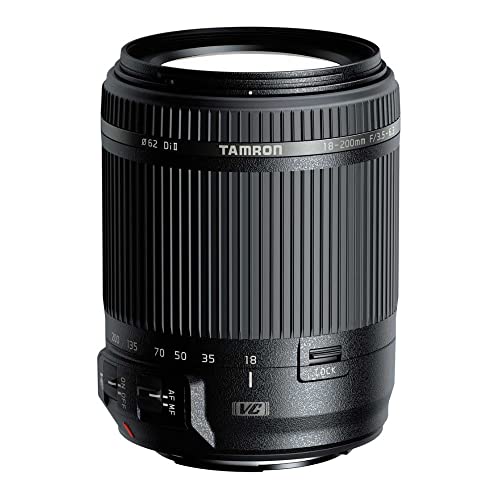
Tamron 18 200mm F3 5 6 3 Di II VC Review | 54 Data compared

Avg. price:~£220Lens mount:Canon EF, Nikon F, Sony AMaximum focal length:200 mmMaximum aperture (telephoto end):6.3Optical image stabilization:yesMaximum angle of view:75.6 °

Tamron 18 200mm F3 5 6 3 Di II VC Review: Compare 54 technical specifications and user reviews to see how this product ranks in the Camera lenses category and whether it is worth buying.

6.3

Overall score

Score
6.3/ 10
✕
What it is
An overall evaluation of the camera lens's quality, based on technical analyses and user reviews.
When it matters
When you need a quick reference to identify the best camera lenses on the market.
Score distribution
â–¼
<55-66-77-88-99-10
Score components

80%

5.5

Technical score

20%

9.3

User score

â–¼Worse than 72% of camera-lenses
5.5

Technical score

Technical score
5.5/ 10
✕
What it is
An assessment of technical performance for products in the Camera lenses category across these key areas: Mount & Format, Optics & Aperture, Focus & Controls, Stabilization, Build & Handling, Lab Scores.
When it matters
When you want to compare camera lenses based on technical performance and available features.
Score distribution
â–¼
<55-66-77-88-99-10
Score components

35%

3.2

Optics & Aperture

24%

7.1

Build & Handling

20%

6.0

Focus & Controls

10%

?

Lab Scores

8%

8.2

Stabilization

3%

1.0

Mount & Format

â–¼Worse than 79% of camera-lenses
9.3

User score

User score
9.3/ 10
✕
What it is
A rating that combines user reviews and the total number of reviews received by the camera lens.
When it matters
When real-world owner satisfaction and review volume matter to your decision.
Score distribution
â–¼
<55-66-77-88-99-10
Score components

70%

9.0

User ratings

30%

10

Number of reviews

Based on 11,125 buyer reviews from online shops.
How we calculate this
User ratings – average star rating across all shop listings, weighted by how many reviews each has, on a 1–10 scale.
Number of reviews – how many buyer reviews the product has, on a logarithmic scale; the 8% most-reviewed models in the category get 10.
★Better than 90% of camera-lenses
  • tamron-18-200mm-f3-5-6-3-di-ii-vc
  • tamron-18-200mm-f3-5-6-3-di-ii-vc
  • tamron-18-200mm-f3-5-6-3-di-ii-vc
  • tamron-18-200mm-f3-5-6-3-di-ii-vc
  • tamron-18-200mm-f3-5-6-3-di-ii-vc
  • tamron-18-200mm-f3-5-6-3-di-ii-vc
  • tamron-18-200mm-f3-5-6-3-di-ii-vc
  • tamron-18-200mm-f3-5-6-3-di-ii-vc
tamron-18-200mm-f3-5-6-3-di-ii-vc

Best prices

*As an Amazon Associate, we earn from qualifying purchases.

Best rankings

Available: ranking among products currently available (including other versions of this product).All: ranking among all products in the database.
Loading...
Loading category ranking...

Technical Specifications of camera lens Tamron 18 200mm F3 5 6 3 Di II VC

Technical score
Technical score
5.5/ 10
✕
What it is
An assessment of technical performance for products in the Camera lenses category across these key areas: Mount & Format, Optics & Aperture, Focus & Controls, Stabilization, Build & Handling, Lab Scores.
When it matters
When you want to compare camera lenses based on technical performance and available features.
Score distribution
â–¼
<55-66-77-88-99-10
Score components:

35%

3.2

Optics & Aperture

24%

7.1

Build & Handling

20%

6.0

Focus & Controls

10%

?

Lab Scores

8%

8.2

Stabilization

3%

1.0

Mount & Format

5.5
User score
User score
9.3/ 10
✕
What it is
A rating that combines user reviews and the total number of reviews received by the camera lens.
When it matters
When real-world owner satisfaction and review volume matter to your decision.
Score distribution
â–¼
<55-66-77-88-99-10
Score components

70%

9.0

User ratings

30%

10

Number of reviews

Based on 11,125 buyer reviews from online shops.
How we calculate this
User ratings – average star rating across all shop listings, weighted by how many reviews each has, on a 1–10 scale.
Number of reviews – how many buyer reviews the product has, on a logarithmic scale; the 8% most-reviewed models in the category get 10.
9.3
Popularity
Popularity
10.0/ 10
✕
What it is
An indicator based on the number of reviews received by the camera lens.
When it matters
When you want to see which camera lenses attract the most buyer attention and review activity.
Score distribution
â–¼
<55-66-77-88-99-10
Popularity:
Tamron 18 200mm F3 5 6 3 Di II VC has a popularity score of 10 points, which is higher than 91.6% of camera lenses.
10
Value for money
Value for money
7.2/ 10
✕
What it is
An indicator that combines the camera lens's overall rating with its cost.
When it matters
When you want to know how much overall quality you get for the price.
Score distribution
â–¼
<55-66-77-88-99-10
Score components:

60%

6.3

Overall score

40%

9.4

Price

7.2
Lens type
zoom
Lens mount
Canon EF, Nikon F, Sony A
Sensor format coverage
APS-C
Filter thread size
62 mm
Teleconverter compatibility
no
Teleconverter compatibility
no
This camera lens does not support teleconverters. 15.3% of camera lenses support teleconverters.
Show more
Minimum focal length
18 mm
Maximum focal length
200 mm
Optical zoom
11.1xx
Maximum angle of view
75.6 °
Minimum angle of view
8 °
Show more
Focus motor
DC motor
Minimum focus distance
0.45 m
Minimum focus distance
0.45 m
This camera lens focuses as close as 0.45 m, which is farther than 63.6% of camera lenses and equal to 5.4% of camera lenses.
Maximum reproduction ratio
0.25xx
Maximum reproduction ratio
0.25x
This camera lens reaches a reproduction ratio of 0.25x, which is higher than 70% of camera lenses and equal to 4.5% of camera lenses.
Full-time manual focus
yes
Full-time manual focus
yes
This camera lens supports full-time manual focus. 68.3% of camera lenses support full-time manual focus.
Internal focusing
yes
Internal focusing
yes
This camera lens supports internal focusing. 83.6% of camera lenses support internal focusing.
Show more
Optical image stabilization
yes
Optical image stabilization
yes
This camera lens supports optical image stabilization. 29% of camera lenses include optical image stabilization.
Stabilization effectiveness (CIPA stops)
4 stops
Stabilization effectiveness (CIPA stops)
4 stops
This camera lens offers 4 stops of stabilization, which is stronger than 21.3% of camera lenses and equal to 44.5% of camera lenses.
Weight
400 g
Weight
400 g
This camera lens weighs 400 g, which is lighter than 63.9% of camera lenses and equal to the weight of 0.5% of camera lenses.
Lens length
96.6 mm
Lens length
96.6 mm
This camera lens is 96.6 mm long, which is longer than 54.3% of camera lenses.
Lens diameter
75 mm
Lens diameter
75 mm
This camera lens has a diameter of 75 mm, which is slimmer than 55% of camera lenses and equal to that of 1.6% of camera lenses.
Weather sealing (splashproof)
yes
Weather sealing (splashproof)
yes
This camera lens supports weather sealing. 50.2% of camera lenses support weather sealing.
Metal mount
no
Metal mount
no
This camera lens does not use a metal lens mount. 93.7% of camera lenses use a metal lens mount.
Show more
DxOMark overall score
?
DxOMark sharpness score
?
DxOMark transmission
?
DxOMark distortion
?
DxOMark vignetting
?
Show more

Tamron 18 200mm F3 5 6 3 Di II VC vs the average camera lens

246810TotalMount & FormatOptics & ApertureFocus & ControlsStabilizationBuild & HandlingLab Scores
  • Has optical image stabilization
    Optical image stabilization
    yes
    This camera lens has optical image stabilization, the average camera lens does not. 29% of camera lenses include optical image stabilization.
  • Has zoom lock switch
    Zoom lock switch
    yes
    This camera lens has a zoom lock switch, the average camera lens does not. 8.6% of camera lenses include a zoom lock switch.
    Zoom lock switch present.
  • 110 g lighter
    Weight
    400 g
    This camera lens is lighter than the average camera lens (400 g vs 510 g). The average lens weighs 510 g.
    400 g vs 510 g
  • 0.06 x higher maximum reproduction ratio
    Maximum reproduction ratio
    0.25 x
    This camera lens has a higher maximum reproduction ratio than the average camera lens (0.3 x vs 0.2 x). The average lens has a maximum reproduction ratio of 0.192 x.
    0.25 x vs 0.192 x
  • 37.3% more popular
    Tamron 18 200mm F3 5 6 3 Di II VC is more popular than the average camera lens (10 vs 7.3).
    10 vs 7.29
  • 2.41x cheaper
    Tamron 18 200mm F3 5 6 3 Di II VC is cheaper than the average camera lens (£220 vs £530).
    £220 vs £530
  • 11% higher user score
    User score
    9.3/ 10
    ✕
    What it is
    A rating that combines user reviews and the total number of reviews received by the camera lens.
    When it matters
    When real-world owner satisfaction and review volume matter to your decision.
    Score distribution
    â–¼
    â–¼
    <55-66-77-88-99-10
    Tamron 18 200mm F3 5 6 3 Di II VC
    the average camera lens
    Tamron 18 200mm F3 5 6 3 Di II VC has a higher user score than the average camera lens (9.28 vs 8.360).
    9.28 vs 8.36
  • Has zoom lock switch
    Zoom lock switch
    yes
    This camera lens has a zoom lock switch, the average camera lens does not. 8.6% of camera lenses include a zoom lock switch.
    Zoom lock switch present.
  • 0.06 x higher maximum reproduction ratio
    Maximum reproduction ratio
    0.25 x
    This camera lens has a higher maximum reproduction ratio than the average camera lens (0.3 x vs 0.2 x). The average lens has a maximum reproduction ratio of 0.192 x.
    0.25 x vs 0.192 x
  • Has optical image stabilization
    Optical image stabilization
    yes
    This camera lens has optical image stabilization, the average camera lens does not. 29% of camera lenses include optical image stabilization.
  • 110 g lighter
    Weight
    400 g
    This camera lens is lighter than the average camera lens (400 g vs 510 g). The average lens weighs 510 g.
    400 g vs 510 g
  • 3.5 higher f-number at telephoto end
    Maximum aperture (telephoto end)
    6.3
    This camera lens has a dimmer maximum telephoto aperture than the average camera lens (f/6.3 vs f/2.8). The average lens has a maximum telephoto aperture of f/2.8.
    6.3 vs 2.8
  • 2 fewer aperture blades
    Aperture blades
    7
    This camera lens has fewer aperture blades than the average camera lens (7 vs 9). The average lens has 9 aperture blades.
    7 vs 9
  • No metal mount
    Metal mount
    no
    This camera lens does not use a metal lens mount, the average camera lens does. 93.6% of camera lenses use a metal lens mount.
  • 1 fewer aspherical elements
    Aspherical elements
    1
    This camera lens has fewer aspherical elements than the average camera lens (1 vs 2). The average lens has 2 aspherical elements.
    1 vs 2
  • 1 fewer low-dispersion elements
    Low-dispersion elements
    1
    This camera lens has fewer low-dispersion elements than the average camera lens (1 vs 2). The average lens has 2 low-dispersion elements.
    1 vs 2
  • 0.15 m longer minimum focus distance
    Minimum focus distance
    0.45 m
    This camera lens has a higher minimum focus distance than the average camera lens (0.5 m vs 0.3 m). The average lens has a minimum focus distance of 0.3 m.
    0.45 m vs 0.3 m
  • 4.35 mm longer lens
    Lens length
    96.6 mm
    This camera lens is longer than the average camera lens (96.6 mm vs 92.25 mm). The average lens has a length of 92.25 mm.
    96.6 mm vs 92.25 mm
  • Older release date
    Release date
    2015
    This camera lens was released earlier than the average camera lens.
    August 2015
    2015 vs 2016
  • 3.5 higher f-number at telephoto end
    Maximum aperture (telephoto end)
    6.3
    This camera lens has a dimmer maximum telephoto aperture than the average camera lens (f/6.3 vs f/2.8). The average lens has a maximum telephoto aperture of f/2.8.
    6.3 vs 2.8
  • 2 fewer aperture blades
    Aperture blades
    7
    This camera lens has fewer aperture blades than the average camera lens (7 vs 9). The average lens has 9 aperture blades.
    7 vs 9
  • 1 fewer aspherical elements
    Aspherical elements
    1
    This camera lens has fewer aspherical elements than the average camera lens (1 vs 2). The average lens has 2 aspherical elements.
    1 vs 2
  • 1 fewer low-dispersion elements
    Low-dispersion elements
    1
    This camera lens has fewer low-dispersion elements than the average camera lens (1 vs 2). The average lens has 2 low-dispersion elements.
    1 vs 2
  • 0.15 m longer minimum focus distance
    Minimum focus distance
    0.45 m
    This camera lens has a higher minimum focus distance than the average camera lens (0.5 m vs 0.3 m). The average lens has a minimum focus distance of 0.3 m.
    0.45 m vs 0.3 m
  • No metal mount
    Metal mount
    no
    This camera lens does not use a metal lens mount, the average camera lens does. 93.6% of camera lenses use a metal lens mount.
  • 4.35 mm longer lens
    Lens length
    96.6 mm
    This camera lens is longer than the average camera lens (96.6 mm vs 92.25 mm). The average lens has a length of 92.25 mm.
    96.6 mm vs 92.25 mm
  • Older release date
    Release date
    2015
    This camera lens was released earlier than the average camera lens.
    August 2015
    2015 vs 2016

Video reviews

Hands-on testing, unboxing, and real-world video evaluations

Expert reviews

In-depth analysis and verdict from leading tech publications

E
ephotozine.com
19/02/2016
Summary of the review
A
amateurphotographer.com
16/03/2016
Summary of the review
T
trustedreviews.com
16/03/2016
Summary of the review
W
whatdigitalcamera.com
16/03/2016
Summary of the review
D
dxomark.com
14/01/2016
Summary of the review
D
dxomark.com
30/12/2015
Summary of the review
D
dustinabbott.net
26/08/2015
Summary of the review
R
radojuva.com
02/09/2020
Summary of the review
D
digitalcameraworld.com
22/06/2022
Summary of the review
0
01net.com
21/03/2016
Summary of the review
D
dxomark.fr
01/12/2015
Summary of the review
L
lesnumeriques.com
24/05/2016
Summary of the review
F
forum.lesnumeriques.com
24/05/2016
Summary of the review
L
lesnumeriques.com
24/05/2016
Summary of the review
F
fotodng.com
01/09/2015
Summary of the review
D
digitalcamaralens.com
21/09/2015
Summary of the review
C
canonistas.com
25 de noviembre de 2015
Summary of the review
R
radojuva.com
02/09/2020
Summary of the review
L
lucaghigliano.it
19/04/2026
Summary of the review

Third-party reviews

Based on 11,125 buyer reviews from online shops.
Reviews last updated: July 2026 · How we calculate this

What we like about Tamron 18 200mm F3 5 6 3 Di II VC

  • Lightweight and compact design (approx. 400g), making it ideal for travel and all-day carry.
  • Versatile 11x focal range (18-200mm) that eliminates the need for frequent lens changes.
  • Effective Vibration Compensation (VC) image stabilization for sharp handheld shooting.
  • Excellent value for money, often cited as a high-quality beginner or budget-friendly option.
  • Moisture-resistant construction with a rubber gasket around the mount.
  • Quiet autofocus operation due to the DC motor-gear train.

What we don't like about Tamron 18 200mm F3 5 6 3 Di II VC

  • Softness at the telephoto end (200mm), particularly when shooting wide open.
  • Sluggish autofocus speed, especially in low-light conditions.
  • Mechanical focus ring rotates during autofocus, which can be irritating or interfere with handling.
  • Short focus throw (approx. 30°) makes precise manual focusing difficult.
  • Visible barrel distortion at 18mm and pin-cushion distortion at 200mm.
  • Prone to lens flare and ghosting when shooting toward bright light sources.

Verdict

The Tamron 18-200mm f/3.5-6.3 Di II VC (Model B018) is a versatile all-in-one superzoom lens designed for APS-C DSLR cameras, offering a wide 11.1x zoom range equivalent to 27-300mm on full-frame systems. Its optical construction includes 16 elements in 14 groups, featuring Low Dispersion (LD) and hybrid aspherical elements to minimize aberrations, alongside a 7-blade rounded diaphragm for smoother bokeh. Weighing approximately 400g, it is exceptionally lightweight and includes Vibration Compensation (VC) for effective image stabilization, a moisture-resistant construction, and a zoom lock switch for portability. While it is highly affordable and compact, some downsides include noticeable distortion at the zoom extremes, reduced sharpness at the edges of the frame, and a relatively small f/6.3 maximum aperture at the telephoto end which can limit performance in low-light conditions.

Compare Tamron 18 200mm F3 5 6 3 Di II VC with other products in the Camera lenses category

1Product to compare no. 1
VS
2Product to compare no. 2
VS
3Product to compare no. 3 (optional)

Graphic comparison of Tamron 18 200mm F3 5 6 3 Di II VC and other products in the Camera lenses category

No results found