Scored using Camera lenses Methodology v1.0
Camera lenses Methodology v1.0
Mathematical & Unbiased Scoring
Products in this category are evaluated mathematically under Frontumo Camera lenses Methodology v1.0 using verified laboratory benchmarks, technical specifications, and authentic consumer ratings with 0% commercial bias.
Explore Camera lenses Methodology v1.0

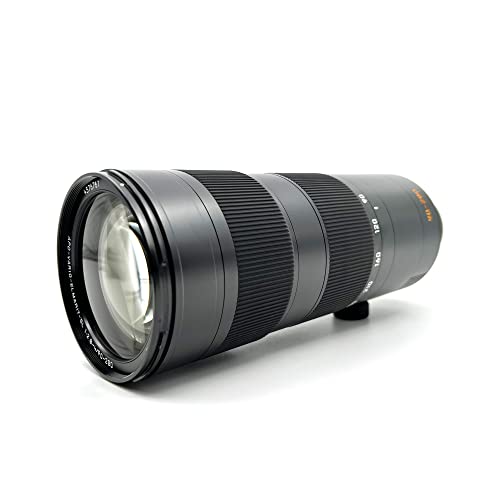
Nikon AF-S NIKKOR 120 300mm F 2 8E FL ED SR VR Review | 54 Data compared

Avg. price:~£9,420Lens mount:Nikon FMaximum focal length:300 mmMaximum aperture (telephoto end):2.8Optical image stabilization:yesMaximum angle of view:20.3 °

Nikon AF-S NIKKOR 120 300mm F 2 8E FL ED SR VR Review: Compare 54 technical specifications and user reviews to see how this product ranks in the Camera lenses category and whether it is worth buying.

7.3

Overall score

Score
7.3/ 10
✕
What it is
An overall evaluation of the camera lens's quality, based on technical analyses and user reviews.
When it matters
When you need a quick reference to identify the best camera lenses on the market.
Score distribution
â–¼
<55-66-77-88-99-10
Score components

80%

7.3

Technical score

20%

?

User score

â–²Better than 70% of camera-lenses
7.3

Technical score

Technical score
7.3/ 10
✕
What it is
An assessment of technical performance for products in the Camera lenses category across these key areas: Mount & Format, Optics & Aperture, Focus & Controls, Stabilization, Build & Handling, Lab Scores.
When it matters
When you want to compare camera lenses based on technical performance and available features.
Score distribution
â–¼
<55-66-77-88-99-10
Score components

35%

7.7

Optics & Aperture

24%

6.0

Build & Handling

20%

7.4

Focus & Controls

10%

?

Lab Scores

8%

8.2

Stabilization

3%

8.2

Mount & Format

â–²Better than 80% of camera-lenses
?

User score

User score
8.0/ 10
✕
What it is
A rating that combines user reviews and the total number of reviews received by the camera lens.
When it matters
When real-world owner satisfaction and review volume matter to your decision.
Score distribution
â–¼
<55-66-77-88-99-10
Score components

70%

?

User ratings

30%

?

Number of reviews

  • nikon-af-s-nikkor-120-300mm-f-2-8e-fl-ed-sr-vr
  • nikon-af-s-nikkor-120-300mm-f-2-8e-fl-ed-sr-vr
  • nikon-af-s-nikkor-120-300mm-f-2-8e-fl-ed-sr-vr
  • nikon-af-s-nikkor-120-300mm-f-2-8e-fl-ed-sr-vr
  • nikon-af-s-nikkor-120-300mm-f-2-8e-fl-ed-sr-vr
  • nikon-af-s-nikkor-120-300mm-f-2-8e-fl-ed-sr-vr
  • nikon-af-s-nikkor-120-300mm-f-2-8e-fl-ed-sr-vr
  • nikon-af-s-nikkor-120-300mm-f-2-8e-fl-ed-sr-vr
  • nikon-af-s-nikkor-120-300mm-f-2-8e-fl-ed-sr-vr
  • nikon-af-s-nikkor-120-300mm-f-2-8e-fl-ed-sr-vr
  • nikon-af-s-nikkor-120-300mm-f-2-8e-fl-ed-sr-vr
  • nikon-af-s-nikkor-120-300mm-f-2-8e-fl-ed-sr-vr
  • nikon-af-s-nikkor-120-300mm-f-2-8e-fl-ed-sr-vr
  • nikon-af-s-nikkor-120-300mm-f-2-8e-fl-ed-sr-vr
  • nikon-af-s-nikkor-120-300mm-f-2-8e-fl-ed-sr-vr
  • nikon-af-s-nikkor-120-300mm-f-2-8e-fl-ed-sr-vr
  • nikon-af-s-nikkor-120-300mm-f-2-8e-fl-ed-sr-vr
  • nikon-af-s-nikkor-120-300mm-f-2-8e-fl-ed-sr-vr
  • nikon-af-s-nikkor-120-300mm-f-2-8e-fl-ed-sr-vr
  • nikon-af-s-nikkor-120-300mm-f-2-8e-fl-ed-sr-vr
nikon-af-s-nikkor-120-300mm-f-2-8e-fl-ed-sr-vr

Best prices

*As an Amazon Associate, we earn from qualifying purchases.

Best rankings

Available: ranking among products currently available (including other versions of this product).All: ranking among all products in the database.
Loading...
Loading category ranking...

Technical Specifications of camera lens Nikon AF-S NIKKOR 120 300mm F 2 8E FL ED SR VR

Technical score
Technical score
7.3/ 10
✕
What it is
An assessment of technical performance for products in the Camera lenses category across these key areas: Mount & Format, Optics & Aperture, Focus & Controls, Stabilization, Build & Handling, Lab Scores.
When it matters
When you want to compare camera lenses based on technical performance and available features.
Score distribution
â–¼
<55-66-77-88-99-10
Score components:

35%

7.7

Optics & Aperture

24%

6.0

Build & Handling

20%

7.4

Focus & Controls

10%

?

Lab Scores

8%

8.2

Stabilization

3%

8.2

Mount & Format

7.3
User score
User score
8.0/ 10
✕
What it is
A rating that combines user reviews and the total number of reviews received by the camera lens.
When it matters
When real-world owner satisfaction and review volume matter to your decision.
Score distribution
â–¼
<55-66-77-88-99-10
Score components

70%

?

User ratings

30%

?

Number of reviews

?
Popularity
Popularity
1.0/ 10
✕
What it is
An indicator based on the number of reviews received by the camera lens.
When it matters
When you want to see which camera lenses attract the most buyer attention and review activity.
Score distribution
â–¼
<55-66-77-88-99-10
Popularity:
Nikon AF-S NIKKOR 120 300mm F 2 8E FL ED SR VR has a popularity score of 1 point, which is lower than 91.7% of camera lenses.
1.0
Value for money
Value for money
5.4/ 10
✕
What it is
An indicator that combines the camera lens's overall rating with its cost.
When it matters
When you want to know how much overall quality you get for the price.
Score distribution
â–¼
<55-66-77-88-99-10
Score components:

60%

7.3

Overall score

40%

1.0

Price

5.4
Lens type
telephoto zoom
Lens mount
Nikon F
Sensor format coverage
Full-frame
Filter thread size
112 mm
Teleconverter compatibility
yes
Teleconverter compatibility
yes
This camera lens supports teleconverters. 15.2% of camera lenses support teleconverters.
Supports Nikon TC-14E/TC-17E/TC-20E teleconverters.
Show more
Minimum focal length
120 mm
Maximum focal length
300 mm
Optical zoom
2.5xx
Maximum angle of view
20.3 °
Minimum angle of view
8.2 °
Show more
Focus motor
SWM
Minimum focus distance
2 m
Minimum focus distance
2 m
This camera lens focuses as close as 2 m, which is farther than 95.4% of camera lenses and equal to 0.6% of camera lenses.
Maximum reproduction ratio
0.16xx
Maximum reproduction ratio
0.16x
This camera lens reaches a reproduction ratio of 0.16x, which is lower than 61.1% of camera lenses and equal to 3.1% of camera lenses.
Full-time manual focus
yes
Full-time manual focus
yes
This camera lens supports full-time manual focus. 68.3% of camera lenses support full-time manual focus.
Internal focusing
yes
Internal focusing
yes
This camera lens supports internal focusing. 83.6% of camera lenses support internal focusing.
Show more
Optical image stabilization
yes
Optical image stabilization
yes
This camera lens supports optical image stabilization. 29% of camera lenses include optical image stabilization.
Stabilization effectiveness (CIPA stops)
4 stops
Stabilization effectiveness (CIPA stops)
4 stops
This camera lens offers 4 stops of stabilization, which is stronger than 21.3% of camera lenses and equal to 44.5% of camera lenses.
Weight
3,477 g
Weight
3,477 g
This camera lens weighs 3,477 g, which is heavier than 99% of camera lenses.
Lens length
303.5 mm
Lens length
303.5 mm
This camera lens is 303.5 mm long, which is longer than 97% of camera lenses.
Lens diameter
128 mm
Lens diameter
128 mm
This camera lens has a diameter of 128 mm, which is wider than 97.2% of camera lenses and equal to that of 0.6% of camera lenses.
Weather sealing (splashproof)
yes
Weather sealing (splashproof)
yes
This camera lens supports weather sealing. 50.2% of camera lenses support weather sealing.
Metal mount
yes
Metal mount
yes
This camera lens uses a metal lens mount. 93.6% of camera lenses use a metal lens mount.
Show more
DxOMark overall score
?
DxOMark sharpness score
?
DxOMark transmission
?
DxOMark distortion
?
DxOMark vignetting
?
Show more

Nikon AF-S NIKKOR 120 300mm F 2 8E FL ED SR VR vs the average camera lens

246810TotalMount & FormatOptics & ApertureFocus & ControlsStabilizationBuild & HandlingLab Scores
  • Has optical image stabilization
    Optical image stabilization
    yes
    This camera lens has optical image stabilization, the average camera lens does not. 29% of camera lenses include optical image stabilization.
  • Teleconverter compatible
    Teleconverter compatibility
    yes
    This camera lens supports teleconverters, while the average camera lens does not.
    Supports Nikon TC-14E/TC-17E/TC-20E teleconverters.
  • Has focus hold button
    Focus hold button
    yes
    This camera lens has a focus hold button, the average camera lens does not. 16.6% of camera lenses include a focus hold button.
  • Has focus distance scale
    Focus distance scale
    yes
    This camera lens has a focus distance scale, the average camera lens does not. 48.6% of camera lenses include a focus distance scale.
  • Has internal zoom
    Internal zoom
    yes
    This camera lens has internal zoom, the average camera lens does not. 10.1% of camera lenses support internal zoom.
    Maintains length during zooming.
  • Newer release date
    Release date
    2020
    This camera lens was released more recently than the average camera lens.
    2020 vs 2016
  • Teleconverter compatible
    Teleconverter compatibility
    yes
    This camera lens supports teleconverters, while the average camera lens does not.
    Supports Nikon TC-14E/TC-17E/TC-20E teleconverters.
  • Has focus hold button
    Focus hold button
    yes
    This camera lens has a focus hold button, the average camera lens does not. 16.6% of camera lenses include a focus hold button.
  • Has focus distance scale
    Focus distance scale
    yes
    This camera lens has a focus distance scale, the average camera lens does not. 48.6% of camera lenses include a focus distance scale.
  • Has internal zoom
    Internal zoom
    yes
    This camera lens has internal zoom, the average camera lens does not. 10.1% of camera lenses support internal zoom.
    Maintains length during zooming.
  • Has optical image stabilization
    Optical image stabilization
    yes
    This camera lens has optical image stabilization, the average camera lens does not. 29% of camera lenses include optical image stabilization.
  • Newer release date
    Release date
    2020
    This camera lens was released more recently than the average camera lens.
    2020 vs 2016
  • 2,967 g heavier
    Weight
    3,477 g
    This camera lens is heavier than the average camera lens (3477 g vs 510 g). The average lens weighs 510 g.
    3,477 g vs 510 g
  • 211.25 mm longer lens
    Lens length
    303.5 mm
    This camera lens is longer than the average camera lens (303.5 mm vs 92.25 mm). The average lens has a length of 92.25 mm.
    303.5 mm vs 92.25 mm
  • 2 fewer aspherical elements
    Aspherical elements
    0
    This camera lens has fewer aspherical elements than the average camera lens (0 vs 2). The average lens has 2 aspherical elements.
    0 vs 2
  • 51 mm wider lens barrel
    Lens diameter
    128 mm
    This camera lens is wider than the average camera lens (128 mm vs 77 mm). The average lens has a diameter of 77 mm.
    128 mm vs 77 mm
  • 1.7 m longer minimum focus distance
    Minimum focus distance
    2 m
    This camera lens has a higher minimum focus distance than the average camera lens (2 m vs 0.3 m). The average lens has a minimum focus distance of 0.3 m.
    2 m vs 0.3 m
  • 1 fewer low-dispersion elements
    Low-dispersion elements
    1
    This camera lens has fewer low-dispersion elements than the average camera lens (1 vs 2). The average lens has 2 low-dispersion elements.
    1 vs 2
  • 17.77x more expensive
    Nikon AF-S NIKKOR 120 300mm F 2 8E FL ED SR VR is more expensive than the average camera lens (£9,420 vs £530).
    £9,420 vs £530
  • 7.29x less popular
    Nikon AF-S NIKKOR 120 300mm F 2 8E FL ED SR VR is less popular than the average camera lens (1 vs 7.3).
    1 vs 7.29
  • 27.1% worse value for money
    Nikon AF-S NIKKOR 120 300mm F 2 8E FL ED SR VR has a worse value-for-money score than the average camera lens (5.42 vs 6.9).
    5.42 vs 6.89
  • 4.5% lower user score
    User score
    8.0/ 10
    ✕
    What it is
    A rating that combines user reviews and the total number of reviews received by the camera lens.
    When it matters
    When real-world owner satisfaction and review volume matter to your decision.
    Score distribution
    â–¼
    â–¼
    <55-66-77-88-99-10
    Nikon AF-S NIKKOR 120 300mm F 2 8E FL ED SR VR
    the average camera lens
    Nikon AF-S NIKKOR 120 300mm F 2 8E FL ED SR VR has a lower user score than the average camera lens (8.00 vs 8.360).
    8 vs 8.36
  • 2 fewer aspherical elements
    Aspherical elements
    0
    This camera lens has fewer aspherical elements than the average camera lens (0 vs 2). The average lens has 2 aspherical elements.
    0 vs 2
  • 1 fewer low-dispersion elements
    Low-dispersion elements
    1
    This camera lens has fewer low-dispersion elements than the average camera lens (1 vs 2). The average lens has 2 low-dispersion elements.
    1 vs 2
  • 2 fewer fluorite elements
    Fluorite elements
    2
    This camera lens has fewer fluorite elements than the average camera lens (2 vs 0). The average lens has 0 fluorite elements.
    2 vs 0
  • 1.7 m longer minimum focus distance
    Minimum focus distance
    2 m
    This camera lens has a higher minimum focus distance than the average camera lens (2 m vs 0.3 m). The average lens has a minimum focus distance of 0.3 m.
    2 m vs 0.3 m
  • 0.03 x lower maximum reproduction ratio
    Maximum reproduction ratio
    0.16 x
    This camera lens has a lower maximum reproduction ratio than the average camera lens (0.2 x vs 0.2 x). The average lens has a maximum reproduction ratio of 0.192 x.
    0.16 x vs 0.192 x
  • 2,967 g heavier
    Weight
    3,477 g
    This camera lens is heavier than the average camera lens (3477 g vs 510 g). The average lens weighs 510 g.
    3,477 g vs 510 g
  • 211.25 mm longer lens
    Lens length
    303.5 mm
    This camera lens is longer than the average camera lens (303.5 mm vs 92.25 mm). The average lens has a length of 92.25 mm.
    303.5 mm vs 92.25 mm
  • 51 mm wider lens barrel
    Lens diameter
    128 mm
    This camera lens is wider than the average camera lens (128 mm vs 77 mm). The average lens has a diameter of 77 mm.
    128 mm vs 77 mm

Expert reviews

In-depth analysis and verdict from leading tech publications

D
digitalcameraworld.com
28/05/2020
Summary of the review
S
shutterbug.com
05/03/2021
Summary of the review
N
naturalart.ca
06/12/2020
Summary of the review
D
dpreview.com
17/08/2020
Summary of the review
T
tombolphoto.com
03/10/2020
Summary of the review
F
fotomagazin.de
23/07/2021
Summary of the review

Third-party reviews

What we like about Nikon AF-S NIKKOR 120 300mm F 2 8E FL ED SR VR

  • Extremely sharp image quality throughout the zoom range, often edging out prime lenses
  • Excellent, soft bokeh and superior handling of chromatic aberration and color fringing
  • Fast, accurate, and reliable autofocus performance, ideal for sports and wildlife
  • Robust build quality with professional weather-sealing and durable construction
  • Highly functional Sport VR mode and customizable buttons for improved operability
  • Versatile zoom range that provides a superior alternative to carrying multiple prime lenses

What we don't like about Nikon AF-S NIKKOR 120 300mm F 2 8E FL ED SR VR

  • Extremely high price point (suggested $9,499.95)
  • Heavy weight (approximately 7 pounds) makes it physically demanding for handheld use
  • Large, 112mm front filter thread is expensive and requires special filters
  • Lack of a rear filter holder, limiting filter options

Verdict

The Nikon AF-S NIKKOR 120-300mm f/2.8E FL ED SR VR is a professional-grade telephoto zoom designed for sports and wildlife, featuring a constant f/2.8 aperture and 25 elements in 19 groups, including fluorite (FL), extra-low dispersion (ED), and short-wavelength refractive (SR) glass to virtually eliminate chromatic aberration. Its main characteristics include 4.0 stops of Vibration Reduction (VR) with a dedicated 'Sport' mode, an electromagnetic diaphragm for high-speed burst accuracy, and advanced ARNEO and Nano Crystal coatings to suppress flare. The lens's main pros are its prime-level sharpness across the entire zoom range, exceptional low-light performance, and robust weather-sealed construction. However, its primary cons are its significant weight of approximately 3,250g, a massive 112mm filter thread that makes accessories expensive, and a very high professional price point.

Compare Nikon AF-S NIKKOR 120 300mm F 2 8E FL ED SR VR with other products in the Camera lenses category

1Product to compare no. 1
VS
2Product to compare no. 2
VS
3Product to compare no. 3 (optional)

Graphic comparison of Nikon AF-S NIKKOR 120 300mm F 2 8E FL ED SR VR and other products in the Camera lenses category

No results found