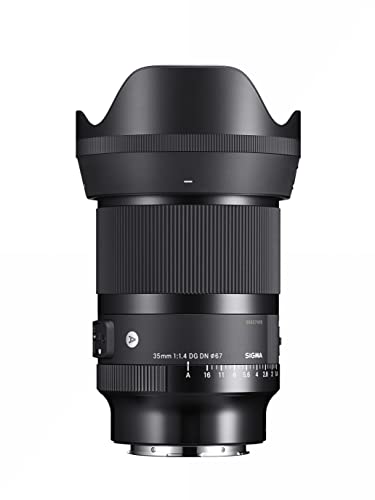
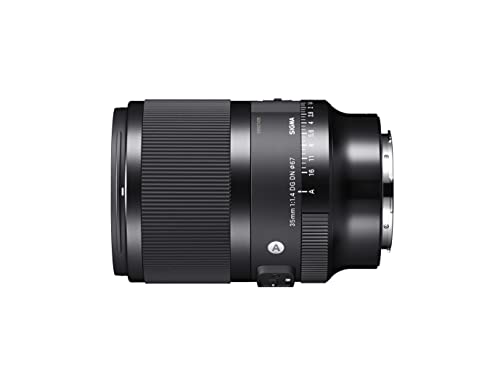
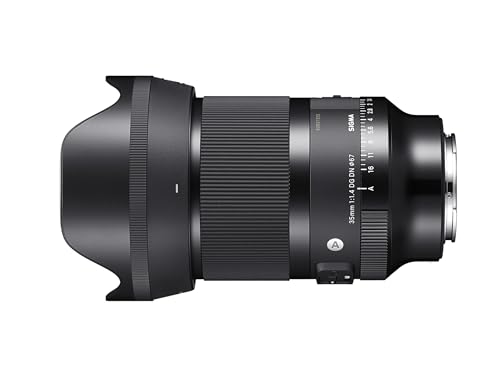
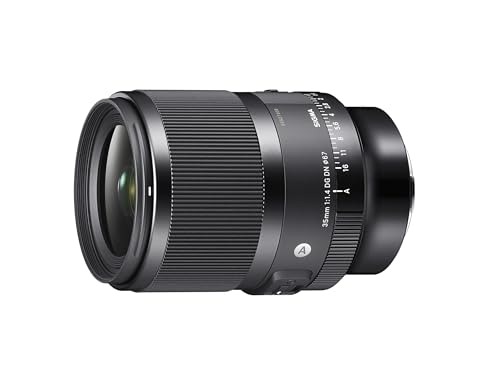
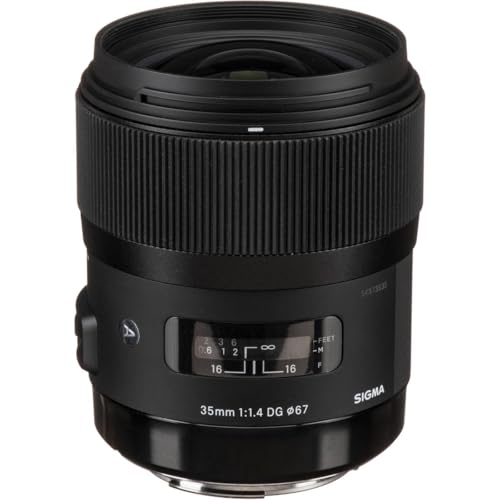
Sigma 35mm F 1 4 DG DN Art Review | 54 Data compared

double-arrow
  • Avg. price in UK: ~£700
  • Avg. price in US: ~$870
  • Lens mount: Sony E, L-Mount
  • Maximum focal length: 35 mm
  • Maximum aperture (telephoto end): 1.4
  • Optical image stabilization: no
  • Maximum angle of view: 63.4 °

Sigma 35mm F 1 4 DG DN Art review. Compare 54 technical specifications and user reviews to see how it ranks among camera lenses and if it is worth buying.

8.5

Overall score

What it is: An overall evaluation of the camera lens's quality, based on technical analyses and user reviews.

When it matters: When you need a quick reference to identify the best camera lenses on the market.

Score components:

80.0%

8.2

Technical Score

20.0%

9.6

User score

Excellent
8.2

Technical Score

What it is: An assessment of the camera lens's technical performance, covering eight key areas: sharpness, aperture flexibility, autofocus, stabilization, build quality, mount compatibility, close-focus performance, and design.

When it matters: When you want to compare camera lenses based on technical performance and available features.

Score components:

35.0%

8.6

Optics & Aperture

24.0%

9.4

Build & Handling

20.0%

8.1

Focus & Controls

10.0%

9.4

Lab Scores

8.0%

4.2

Stabilization

3.0%

1.0

Mount & Format

Excellent
9.6

User score

What it is: A rating that combines user reviews and the total number of reviews received by the camera lens.

When it matters: When real-world owner satisfaction and review volume matter to your decision.

Score components:

70.0%

9.4

User reviews

30.0%

10

Popularity

User score:
United Kingdom
amazon
4.7
(438)
amazon
4.6
(12)
United States
Amazon_logo.png
4.7
(429)
Amazon_logo.png
4.6
(15)
Amazon_logo.png
4.2
(14)

(Reviews last updated: July 2026)

Exceptional
  • 7.3
    Low-light photography

    Score components:

    70.0%

    10

    Maximum aperture (telephoto end)

    30.0%

    1.0

    Optical image stabilization

  • 7.1
    Travel

    Score components:

    30.0%

    8.3

    Lens length

    25.0%

    7.8

    Lens diameter

    25.0%

    10

    Weather sealing (splashproof)

    20.0%

    1.0

    Optical image stabilization

  • sigma-35mm-f-1-4-dg-dn-art
  • sigma-35mm-f-1-4-dg-dn-art
  • sigma-35mm-f-1-4-dg-dn-art
  • sigma-35mm-f-1-4-dg-dn-art
  • sigma-35mm-f-1-4-dg-dn-art
  • sigma-35mm-f-1-4-dg-dn-art
  • sigma-35mm-f-1-4-dg-dn-art
sigma-35mm-f-1-4-dg-dn-art

Best prices in UK

Best rankings

?

Available: ranking among products currently available (including other versions of this product).
All: ranking among all products in the database.

Verdict

The Sigma 35mm f/1.4 DG DN Art is a high-performance prime lens designed specifically for full-frame mirrorless systems (E-mount and L-mount), featuring a sophisticated optical layout of 15 elements in 11 groups—including FLD, ELD, SLD, and aspherical elements—to deliver exceptional edge-to-edge sharpness and 11 rounded diaphragm blades for smooth bokeh. Weighing 640g with a 67mm filter thread and a 30cm minimum focusing distance, it boasts a professional build with comprehensive weather sealing, a de-clickable aperture ring, a customizable AFL button, and a quiet stepping motor for precise autofocus. Its primary advantages include elite image quality at a competitive price and a robust, feature-rich design, though it does face some drawbacks such as noticeable focus breathing in video, longitudinal chromatic aberration (fringing) at wide apertures, and performance that is slightly soft when focusing at its minimum distance.

Technical Specifications of Sigma 35mm F 1 4 DG DN Art

Technical Score

What it is: An assessment of the camera lens's technical performance, covering eight key areas: sharpness, aperture flexibility, autofocus, stabilization, build quality, mount compatibility, close-focus performance, and design.

When it matters: When you want to compare camera lenses based on technical performance and available features.

Score components:

35.0%

8.6

Optics & Aperture

24.0%

9.4

Build & Handling

20.0%

8.1

Focus & Controls

10.0%

9.4

Lab Scores

8.0%

4.2

Stabilization

3.0%

1.0

Mount & Format

8.2
Sigma 35mm F 1 4 DG DN Art has a technical score of 8.2 points, which is higher than 96% of camera lenses.
User score

What it is: A rating that combines user reviews and the total number of reviews received by the camera lens.

When it matters: When real-world owner satisfaction and review volume matter to your decision.

Score components:

70.0%

9.4

User reviews

30.0%

10

Popularity

User score:
United Kingdom
amazon
4.7
(438)
amazon
4.6
(12)
United States
Amazon_logo.png
4.7
(429)
Amazon_logo.png
4.6
(15)
Amazon_logo.png
4.2
(14)

(Reviews last updated: July 2026)

9.6
Sigma 35mm F 1 4 DG DN Art has a user score of 9.55 points, which is higher than 94.6% of camera lenses.
Popularity
What it is: An indicator based on the number of reviews received by the camera lens.
When it matters: When you want to see which camera lenses attract the most buyer attention and review activity.
10
Sigma 35mm F 1 4 DG DN Art has a popularity of 10 points, which is higher than 69.2% of products in this category.
Ratio quality/price

What it is: An indicator that combines the camera lens's overall rating with its cost.

When it matters: When you want to know how much overall quality you get for the price.

Score components:

60.0%

8.5

Overall score

40.0%

6.8

Price

8.0
Sigma 35mm F 1 4 DG DN Art has a quality-to-price ratio of 8 points, which is higher than 90.8% of products in this category.
Lens type
What it is: The optical category that indicates whether the lens is a prime, zoom, macro, fisheye, or another design.
When it matters: When you are choosing between a prime, zoom, macro, or specialty lens for the kind of subjects you shoot.

Importance: LOW

prime
Lens mount
What it is: The mechanical and electronic interface that determines which cameras the lens can be attached to.
When it matters: When camera compatibility and access to the right lens ecosystem are central to your buying decision.

Importance: LOW

Sony E, L-Mount
Sensor format coverage
What it is: The largest sensor size the lens is designed to cover without severe vignetting.
When it matters: When you need the lens to fully cover your camera sensor without heavy corner darkening.

Importance: LOW

Full-frame
Filter thread size
What it is: The diameter of the front filter thread used for screw-in filters and compatible accessories.
When it matters: When you plan to use screw-in filters such as polarizers, ND filters, or protective glass.

Importance: LOW

67 mm
Teleconverter compatibility
What it is: Whether the lens can be used with compatible teleconverters to extend focal length.
When it matters: When you want to extend reach for wildlife or sports without changing to a different long lens.

Importance: HIGH

no
Sigma 35mm F 1 4 DG DN Art does not support teleconverters. 15.3% of camera lenses support teleconverters.
Show more
Minimum focal length
What it is: The shortest focal length the lens can provide, which determines its widest framing.
When it matters: When wide framing matters for landscapes, interiors, architecture, or travel shots.

Importance: LOW

35 mm
Maximum focal length
What it is: The longest focal length the lens can reach, which determines its telephoto reach.
When it matters: When you need more reach for wildlife, sports, stage events, or distant details.

Importance: LOW

35 mm
Optical zoom
What it is: The ratio between the longest and shortest focal lengths available in the lens zoom range.
When it matters: When you want one lens to cover a broader range of compositions without swapping glass.

Importance: LOW

?
Maximum angle of view
What it is: The widest scene the lens can capture at its shortest focal length.
When it matters: When you need to fit more of a room, skyline, or landscape into the frame.

Importance: LOW

63.4 °
Minimum angle of view
What it is: The narrowest scene the lens captures at its longest focal length.
When it matters: When you want tighter framing on faraway subjects without moving closer.

Importance: LOW

63.4 °
Show more
Focus motor
What it is: The autofocus drive system responsible for moving lens elements into focus.
When it matters: When fast, quiet autofocus matters for video, wildlife, street shots, or moving subjects.

Importance: LOW

STM
Minimum focus distance
What it is: The shortest distance at which the lens can focus on a subject.
When it matters: When you like shooting details, food, flowers, or products from a very short distance.

Importance: MEDIUM

0.3 m
Sigma 35mm F 1 4 DG DN Art focuses as close as 0.3 m, which is closer than 48.3% of camera lenses and equal to 7.9% of camera lenses.
Maximum reproduction ratio
What it is: The highest magnification the lens can achieve when focusing at its closest distance.
When it matters: When close-up magnification matters for macro work, textures, or small product details.

Importance: MEDIUM

0.185x
Sigma 35mm F 1 4 DG DN Art reaches a reproduction ratio of 0.185x, which is higher than 45.8% of camera lenses and equal to 5% of camera lenses.
Full-time manual focus
What it is: The ability to adjust focus manually without leaving autofocus mode.
When it matters: When you want to fine-tune focus instantly without switching out of autofocus.

Importance: HIGH

yes
Sigma 35mm F 1 4 DG DN Art supports full-time manual focus. 68.3% of camera lenses support full-time manual focus.
Override via DMF mode.
Internal focusing
What it is: A focusing design in which internal elements move while the outer barrel length stays unchanged.
When it matters: When you use polarizers, gimbals, or close-up setups that benefit from a lens that does not extend while focusing.

Importance: HIGH

yes
Sigma 35mm F 1 4 DG DN Art supports internal focusing. 83.6% of camera lenses support internal focusing.
Show more
Optical image stabilization
What it is: A hardware system that shifts optical elements to counteract camera shake and reduce blur.
When it matters: When you want steadier handheld shots and less blur, especially in low light or at longer focal lengths.

Importance: HIGH

no
Sigma 35mm F 1 4 DG DN Art does not support optical image stabilization. 29% of camera lenses include optical image stabilization.
Stabilization effectiveness (CIPA stops)
What it is: The rated stabilizer benefit, measured in stops, under CIPA testing standards.
When it matters: When you are comparing stabilized lenses and want to know how much handheld shutter-speed advantage they offer.

Importance: HIGH

?
Weight
What it is: The total mass of the lens, affecting portability and handling balance on the camera body.
When it matters: When you carry a lens all day for travel, hiking, or event coverage and want to keep your kit manageable.

Importance: HIGH

?
Lens length
What it is: The physical length of the lens body from mount to front edge.
When it matters: When bag space, balance, or front clearance matters in a compact travel or video setup.

Importance: HIGH

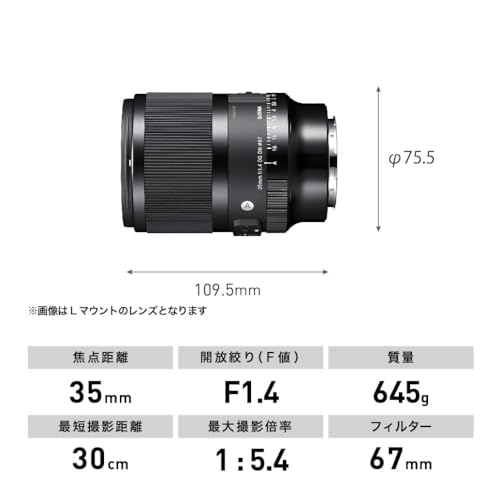
109.5 mm
Sigma 35mm F 1 4 DG DN Art is 109.5 mm long, which is longer than 66.4% of camera lenses and equal to the length of 0.2% of camera lenses.
Lens diameter
What it is: The widest outer diameter of the lens barrel.
When it matters: When grip comfort, filter size, or fit inside a tight camera bag matters to you.

Importance: MEDIUM

75.5 mm
Sigma 35mm F 1 4 DG DN Art has a diameter of 75.5 mm, which is slimmer than 54.6% of camera lenses and equal to that of 0.2% of camera lenses.
Weather sealing (splashproof)
What it is: Protective sealing intended to resist splashes, dust, and light environmental exposure.
When it matters: When you often shoot outdoors in light rain, dust, or changing conditions.

Importance: HIGH

yes
Sigma 35mm F 1 4 DG DN Art supports weather sealing. 50.2% of camera lenses support weather sealing.
Metal mount
What it is: A lens mount made of metal rather than plastic for greater durability at the camera connection point.
When it matters: When durability matters because you change lenses often or use heavier gear for work.

Importance: HIGH

yes
Sigma 35mm F 1 4 DG DN Art uses a metal lens mount. 93.1% of camera lenses use a metal lens mount.
Show more
DxOMark overall score
What it is: The combined DxOMark lens rating based on lab-tested optical performance.
When it matters: When you want a quick lab-based summary of overall optical performance before comparing lenses in detail.

Importance: HIGH

43
Sigma 35mm F 1 4 DG DN Art has a DxOMark overall score of 43, which is higher than that of 93.1% of camera lenses.
DxOMark sharpness score
What it is: The DxOMark subscore that reflects how much detail the lens can resolve across the frame.
When it matters: When fine detail matters for landscapes, product work, or high-resolution cameras.

Importance: HIGH

?
DxOMark transmission
What it is: The measured light transmission of the lens, expressed as T-stop rather than nominal f-number.
When it matters: When real light loss matters for exposure consistency in studio, cinema, or mixed-lens shoots.

Importance: MEDIUM

1.6 T-stop
Sigma 35mm F 1 4 DG DN Art has a DxOMark transmission of 1.6 T-stop, which is lower than that of 92.4% of camera lenses and equal to that of 5.5% of camera lenses.
DxOMark distortion
What it is: The DxOMark metric that measures how much the lens bends straight lines away from their true shape.
When it matters: When straight lines matter in architecture, interiors, copy work, or product photography.

Importance: MEDIUM

?
DxOMark vignetting
What it is: The DxOMark measurement of corner darkening relative to the center of the image.
When it matters: When even corner brightness matters for skies, studio backdrops, or clean product shots.

Importance: MEDIUM

?
Show more

Sigma 35mm F 1 4 DG DN Art vs the average camera lens

  • 1.4 lower f-number at telephoto end
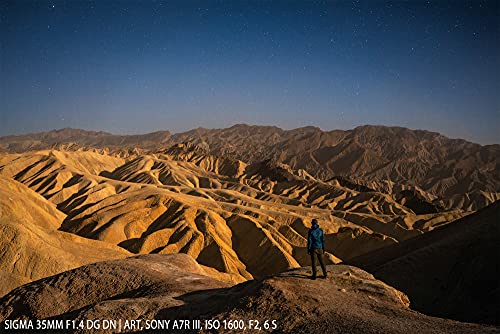
    Sigma 35mm F 1 4 DG DN Art has a brighter maximum telephoto aperture than the average camera lens (f/1.4 vs f/2.8). The average lens has a maximum telephoto aperture of f/2.8.
    What it is: The widest aperture available at the long end of the zoom range, affecting light intake and background blur.
    When it matters: When you shoot at the long end in low light or want stronger background blur for portraits and sports.

    Importance: HIGH

    Sigma 35mm F 1 4 DG DN Art has a brighter maximum telephoto aperture than the average camera lens (f/1.4 vs f/2.8). The average lens has a maximum telephoto aperture of f/2.8.1.4 vs 2.8
  • Has focus hold button
    Sigma 35mm F 1 4 DG DN Art has a focus hold button, the average camera lens does not. 16.5% of camera lenses include a focus hold button.
    What it is: A button on the lens barrel used to lock focus temporarily during shooting.
    When it matters: When you want to lock focus quickly during sports, wildlife, or recomposed portraits.

    Importance: MEDIUM

    Sigma 35mm F 1 4 DG DN Art has a focus hold button, the average camera lens does not. 16.5% of camera lenses include a focus hold button.
  • Has aperture ring
    Sigma 35mm F 1 4 DG DN Art has an aperture ring, the average camera lens does not. 31.2% of camera lenses include an aperture ring.
    What it is: A dedicated ring on the lens used to control the aperture directly.
    When it matters: When you want direct tactile control over exposure while shooting photos or video.

    Importance: MEDIUM

    Sigma 35mm F 1 4 DG DN Art has an aperture ring, the average camera lens does not. 31.2% of camera lenses include an aperture ring.
  • Has de-clickable aperture ring
    Sigma 35mm F 1 4 DG DN Art has a de-clickable aperture ring, the average camera lens does not. 18.4% of camera lenses support a de-clickable aperture ring.
    What it is: An aperture ring that can switch from stepped clicks to smooth rotation for video work.
    When it matters: When you shoot video and need smooth aperture changes without audible or visible click steps.

    Importance: MEDIUM

    Sigma 35mm F 1 4 DG DN Art has a de-clickable aperture ring, the average camera lens does not. 18.4% of camera lenses support a de-clickable aperture ring.
  • 2 more aperture blades
    Sigma 35mm F 1 4 DG DN Art has more aperture blades than the average camera lens (11 vs 9). The average lens has 9 aperture blades.
    What it is: The number of diaphragm blades that shape the aperture opening and influence blur rendering.
    When it matters: When the look of out-of-focus highlights matters in portraits, close-ups, or cinematic video.

    Importance: HIGH

    Sigma 35mm F 1 4 DG DN Art has more aperture blades than the average camera lens (11 vs 9). The average lens has 9 aperture blades.11 vs 9
  • 17 points higher DxOMark score
    Sigma 35mm F 1 4 DG DN Art has a higher DxOMark overall score than the average camera lens (43 vs 26). The average lens has a DxOMark overall score of 26.
    What it is: The combined DxOMark lens rating based on lab-tested optical performance.
    When it matters: When you want a quick lab-based summary of overall optical performance before comparing lenses in detail.

    Importance: HIGH

    Sigma 35mm F 1 4 DG DN Art has a higher DxOMark overall score than the average camera lens (43 vs 26). The average lens has a DxOMark overall score of 26.43 vs 26
  • 1.5 T-stop lower transmission value
    Sigma 35mm F 1 4 DG DN Art has a lower T-stop value than the average camera lens (1.6 T-stop vs 3.1 T-stop). The average lens has a T-stop value of 3.1 T-stop.
    What it is: The measured light transmission of the lens, expressed as T-stop rather than nominal f-number.
    When it matters: When real light loss matters for exposure consistency in studio, cinema, or mixed-lens shoots.

    Importance: MEDIUM

    Sigma 35mm F 1 4 DG DN Art has a lower T-stop value than the average camera lens (1.6 T-stop vs 3.1 T-stop). The average lens has a T-stop value of 3.1 T-stop.1.6 T-stop vs 3.1 T-stop
  • 2 more low-dispersion elements
    Sigma 35mm F 1 4 DG DN Art has more low-dispersion elements than the average camera lens (4 vs 2). The average lens has 2 low-dispersion elements.
    What it is: Optical elements designed to reduce color fringing by controlling how different wavelengths focus.
    When it matters: When you want cleaner edges and less color fringing in high-contrast scenes.

    Importance: MEDIUM

    Sigma 35mm F 1 4 DG DN Art has more low-dispersion elements than the average camera lens (4 vs 2). The average lens has 2 low-dispersion elements.4 vs 2
  • 1.4 lower f-number at telephoto end
    Sigma 35mm F 1 4 DG DN Art has a brighter maximum telephoto aperture than the average camera lens (f/1.4 vs f/2.8). The average lens has a maximum telephoto aperture of f/2.8.
  • 2 more aperture blades
    Sigma 35mm F 1 4 DG DN Art has more aperture blades than the average camera lens (11 vs 9). The average lens has 9 aperture blades.
  • 2 more low-dispersion elements
    Sigma 35mm F 1 4 DG DN Art has more low-dispersion elements than the average camera lens (4 vs 2). The average lens has 2 low-dispersion elements.
  • Has focus hold button
    Sigma 35mm F 1 4 DG DN Art has a focus hold button, the average camera lens does not. 16.5% of camera lenses include a focus hold button.
  • Has aperture ring
    Sigma 35mm F 1 4 DG DN Art has an aperture ring, the average camera lens does not. 31.2% of camera lenses include an aperture ring.
  • Has de-clickable aperture ring
    Sigma 35mm F 1 4 DG DN Art has a de-clickable aperture ring, the average camera lens does not. 18.4% of camera lenses support a de-clickable aperture ring.
  • Newer release date
    Sigma 35mm F 1 4 DG DN Art was released more recently than the average camera lens.
  • 17 points higher DxOMark score
    Sigma 35mm F 1 4 DG DN Art has a higher DxOMark overall score than the average camera lens (43 vs 26). The average lens has a DxOMark overall score of 26.
  • 1.5 T-stop lower transmission value
    Sigma 35mm F 1 4 DG DN Art has a lower T-stop value than the average camera lens (1.6 T-stop vs 3.1 T-stop). The average lens has a T-stop value of 3.1 T-stop.
  • 17.5 mm longer lens
    Sigma 35mm F 1 4 DG DN Art is longer than the average camera lens (109.5 mm vs 92 mm). The average lens has a length of 92 mm.
  • 17.5 mm longer lens
    Sigma 35mm F 1 4 DG DN Art is longer than the average camera lens (109.5 mm vs 92 mm). The average lens has a length of 92 mm.
    What it is: The physical length of the lens body from mount to front edge.
    When it matters: When bag space, balance, or front clearance matters in a compact travel or video setup.

    Importance: HIGH

    Sigma 35mm F 1 4 DG DN Art is longer than the average camera lens (109.5 mm vs 92 mm). The average lens has a length of 92 mm.109.5 mm vs 92 mm

Graphic comparison of Sigma 35mm F 1 4 DG DN Art and

Attribute category
Attribute
No results found

Third-party reviews

(Reviews last updated: July 2026)

What customers like about Sigma 35mm F 1 4 DG DN Art?

  • Exceptional image sharpness, even wide open at f/1.4
  • Superb build quality with comprehensive weather sealing
  • Excellent value for money compared to first-party alternatives
  • Smooth and pleasing background bokeh
  • Fast, quiet, and highly accurate autofocus performance
  • Useful physical controls including a de-clickable aperture ring and AFL button
  • Great low-light capabilities

What customers dislike about Sigma 35mm F 1 4 DG DN Art?

  • Noticeable weight and bulk compared to f/1.8 alternatives
  • Slightly slower subject tracking during high-speed burst shooting compared to top-tier first-party options
  • Minor longitudinal chromatic aberration (color fringing) wide open
  • Some field curvature and native distortion before applying profile corrections
  • Lack of physical distance and depth of field scales

Expert reviews

D
dpreview.com
17/06/2021
Summary of the review
D
dustinabbott.net
27/04/2021
Summary of the review
U
uk.pcmag.com
17/09/2021
Summary of the review
F
findingrange.com
23/06/2021
Summary of the review
T
the-digital-picture.com
21/05/2021
Summary of the review
O
opticallimits.com
08/09/2024
Summary of the review
W
wavelength.focuscamera.com
27/04/2021
Summary of the review
5
5050travelog.com
10/05/2026
Summary of the review
D
dpreview.com
27/04/2021
Summary of the review
C
calumet.de
01/04/2021
Summary of the review
D
digitalkamera.de
27/02/2023
Summary of the review
P
phototrend.fr
28/04/2021
Summary of the review
L
les-guides-sony.com
03/05/2021
Summary of the review
A
alphadxd.fr
27/04/2021
Summary of the review
P
photolari.com
27/04/2021
Summary of the review
D
digitalcamaralens.com
04/03/2022
Summary of the review
F
fotografia.it
30/04/2026
Summary of the review
N
nadir.it
Aprile 2021
Summary of the review
J
juzaphoto.com
21/03/2023
Summary of the review
V
visdief.nl
03/01/2026
Summary of the review

Video reviews

Compare Sigma 35mm F 1 4 DG DN Art with

VS
VS

Compare