Scored using Bread Makers Methodology v3.0
Bread Makers Methodology v3.0
Mathematical & Unbiased Scoring
Products in this category are scored under Frontum Bread Makers Methodology v3.0: the technical score from the specifications is the base, and independent expert and video reviews (up to ±0.5 points), owner opinions (up to ±0.3) and best-of lists (up to +0.3) move it up or down.
Explore Bread Makers Methodology v3.0

Russell Hobbs Classics 18036-56 review: 47 specs compared

Avg. price:~£90Power:660 WMaximum capacity:1 kgNumber of programs:12Automatic ingredient dispenser:no

Russell Hobbs Classics 18036-56 Review: Compare 47 technical specifications, 4 expert reviews and 1 best-of list to see how this product ranks in the Bread Makers category and whether it is worth buying.
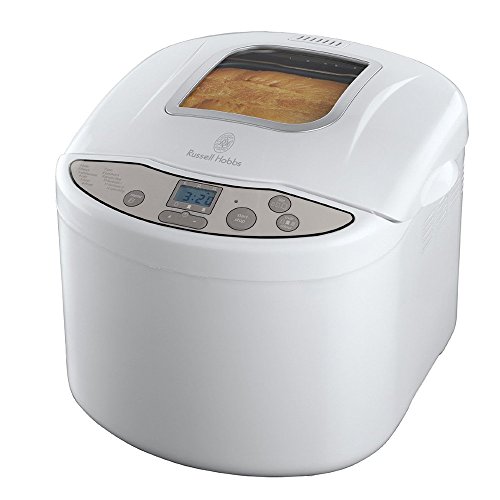
Russell Hobbs Classics 18036-56
7.5/10

Overall score

Score
7.5/ 10
✕
What it is
Our main score for this model, 1–10. It combines specs, best-of lists, expert reviews and ratings from across the web.
How we count it
Parts: Technical score 30%, List score 30%, Reviews score 20%, User score 20%
Marks: Each part gets a mark out of 10. For reviews, lists and owners, a typical model in this category gets about 8 and the best one gets 10.
No data yet: A part with no data shows "?". It counts as the mark of a weaker model in this category (4 in 5 models with data score higher). This way, models with reviews, lists and owners usually come out ahead.
Score distribution
▼
<55-66-77-88-99-10
Score components

30%

6.6

Technical score

30%

7.5

List score

20%

7.8

Reviews score

20%

8.6

User score

▼Worse than 62% of bread makers
7.7

Value for money

Value for money
7.7/ 10
✕
What it is
An indicator that combines the bread maker's overall rating with its price.
When it matters
When you are looking for a bread maker with a good balance between quality and price.
Score distribution
▼
<55-66-77-88-99-10
Score components

70%

7.5

Overall score

30%

8.3

Price

▼Worse than 56%
6.6

Technical score

Technical score
6.6/ 10
✕
What it is
How good the specs are compared with the other models in this category, 1–10.
How we count it
Areas: We rate the specs in each area against the other models in this category.
Weighting: The areas that matter most to buyers count more. The shares are shown under Score components.
Share: The technical score is 30% of the overall score.
Score distribution
▼
<55-66-77-88-99-10
Score components

45%

5.9

Performance

25%

6.4

Programs

15%

7.8

Convenience

5%

7.4

Design

5%

10

Safety

5%

5.3

Accessories

▼Worse than 66%
7.8

Reviews score

Reviews score
7.8/ 10
✕
What it is
Average grade from independent test sites, magazines and video reviewers, 1–10.
How we count it
Grades: Each review's own score is converted to 1–10; without one, we grade the review ourselves. Big test sites count more, short reviews half as much as full tests. A video review counts half.
Score: The average grade is 80% of the review mark; the number of reviews is the other 20% (1 review = 5, the typical number in this category = 8, the most-reviewed model = 10).
Enough data: With few reviews, the average grade is pulled toward the typical grade of this category. No reviews yet: 7.8 for now.
Share: Reviews count 20% of the overall score.
Score distribution
▼
<55-66-77-88-99-10

80%

7.7

Average grade

20%

8.4

Popularity

Grades by review (4)
4 reviews: 3 with a printed score, 1 estimated from the review. Reviews count 20% of the overall score.
Ratings from across the web count in the User score, not in this score.
▼Worse than 80%
8.6

User score

User score
8.6/ 10
✕
What it is
How happy buyers are with this model, based on ratings from across the web.
How we count it
Enough data: A model needs at least 1 rating from across the web. Without one, it counts as 7.8, the mark of a weaker rated model in this category.
Share: User score counts 20% of the overall score.
Score distribution
▼
<55-66-77-88-99-10

70%

8.4

Rating

30%

9.1

Popularity

▲Better than 60%
7.5

List score

List score
7.5/ 10
✕
What it is
How often independent test sites, magazines and video reviewers put this model in their best-of lists for this category.
How we count it
Points: The model in the most lists of this category gets 10; the others get 8 to 10 in proportion. In no list yet: 7.5. Lists count 30% of the overall score.
Enough data: Every list counts, even a single one. With fewer than 5 best-of lists in the category, this part is left out.
Lists with this model (1)
List score: in 1 of 27 lists (4%)
▲Better than 68%
  • russell-hobbs-classics-18036-56
  • russell-hobbs-classics-18036-56
  • russell-hobbs-classics-18036-56
  • russell-hobbs-classics-18036-56
  • russell-hobbs-classics-18036-56
  • russell-hobbs-classics-18036-56
  • russell-hobbs-classics-18036-56
  • russell-hobbs-classics-18036-56
russell-hobbs-classics-18036-56
Where to buy
*As an Amazon Associate, we earn from qualifying purchases.
Best rankings
Available: ranking among products currently available (including other versions of this product).All: ranking among all products in the database.

What reviewers say about the Russell Hobbs Classics 18036-56

Based on 5

Reviewers find it easy to use, with handy programs and delay timer, but the accessories disappoint and baking takes too long.
Praised
Criticised
Pick a topic to see who said what
Loading...
Loading category ranking...

Bread Makers model ranking

Ranked #54 of 125 models in Bread Makers (Overall score)

Technical Specifications of bread maker Russell Hobbs Classics 18036-56

Technical score
Technical score
6.6/ 10
✕
What it is
How good the specs are compared with the other models in this category, 1–10.
How we count it
Areas: We rate the specs in each area against the other models in this category.
Weighting: The areas that matter most to buyers count more. The shares are shown under Score components.
Share: The technical score is 30% of the overall score.
Score distribution
▼
<55-66-77-88-99-10
Score components:

45%

5.9

Performance

25%

6.4

Programs

15%

7.8

Convenience

5%

7.4

Design

5%

10

Safety

5%

5.3

Accessories

6.6
Reviews score
7.8
User score
8.6
List score
7.5
Value for money
Value for money
7.7/ 10
✕
What it is
An indicator that combines the bread maker's overall rating with its price.
When it matters
When you are looking for a bread maker with a good balance between quality and price.
Score distribution
▼
<55-66-77-88-99-10
Score components:

70%

7.5

Overall score

30%

8.3

Price

7.7
Power
660 W
This bread maker is rated at 660 W, which is higher than 64.4% of bread makers and equal to 1.5% of bread makers.
Maximum capacity
1 kg
This bread maker handles up to 1 kg of flour, which is higher than 27.8% of bread makers and equal to 41.4% of bread makers.
Number of loaf sizes
3
This bread maker has a loaf size count of 3, which is more than 35.9% of bread makers and equal to 63.4% of bread makers.
Number of kneading blades
1
This bread maker has a kneading blade count of 1, which is fewer than 21.1% of bread makers and equal to 79% of bread makers.
Number of browning levels
3
This bread maker has 3 browning levels, which is more than 1.5% of bread makers and equal to 96.2% of bread makers.
Show more
Number of programs
12
This bread maker has 12 programs, which is fewer than 74.4% of bread makers and equal to 23.3% of bread makers.
Custom program
?
Gluten-free bread
yes
This bread maker supports gluten-free bread. 6% of bread makers offer this.
Sourdough support
no
This bread maker does not support sourdough. 13.1% of bread makers offer this.
Pizza dough
yes
This bread maker supports pizza dough. 29.6% of bread makers offer this.
Show more
What reviewers say
Delayed start
yes
This bread maker has a delayed start. 0% of bread makers offer this.
Maximum delayed start timer
13 hours
This bread maker can delay its start by 13 hours, which is shorter than 56.4% of bread makers and equal to 42.1% of bread makers.
Automatic ingredient dispenser
no
This bread maker does not have an automatic ingredient dispenser. 30.1% of bread makers offer this.
Ingredient add signal
yes
This bread maker has an ingredient add signal. 5.3% of bread makers offer this.
Pause function
?
Show more
What reviewers say
Overheat protection
yes
This bread maker has overheat protection. 0% of bread makers offer this.
BPA-free
yes
This bread maker has BPA-free food-contact parts. 2.3% of bread makers offer this.
PFOA-free
yes
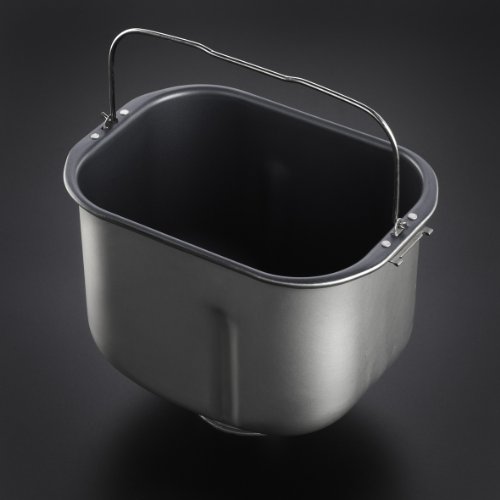
This bread maker has a PFOA-free non-stick pan. 1.6% of bread makers offer this.
Dough hook extractor
yes
This bread maker includes a dough hook extractor. 12% of bread makers offer this.
Measuring cup
yes
This bread maker includes a measuring cup. 0% of bread makers offer this.
Measuring spoon
no
This bread maker does not include a measuring spoon. 99.3% of bread makers offer this.
Recipe book
no
This bread maker does not include a recipe book. 48.5% of bread makers offer this.
Additional moulds
none
Show more
What reviewers say
Color
white
Body material
plastic
Bowl shape
square
Height
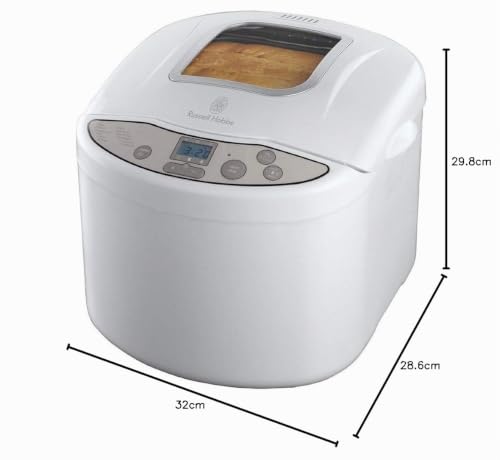
29.8 cm
This bread maker stands 29.8 cm tall, which is shorter than 64.4% of bread makers and equal to 3.8% of bread makers.
Width
32 cm
This bread maker is 32 cm wide, which is wider than 67.9% of bread makers.
Show more

Russell Hobbs Classics 18036-56 vs the average bread maker

246810TotalPerformanceProgramsDesignConvenienceSafetyAccessories
  • Supports dishwasher-safe parts
    This bread maker has dishwasher-safe parts, while the average bread maker does not. 31.1% of bread makers offer this.
  • 60 W more power
    This bread maker has more power than the average bread maker (660 W vs 600 W). The average bread maker is rated at 600 W.
    660 W vs 600 W
  • 20% lighter
    This bread maker is lighter than the average bread maker (4.4 kg vs 5.5 kg). The average bread maker weighs 5.5 kg.
    4.4 kg vs 5.5 kg
  • 2.81 cm shallower
    This bread maker is shallower than the average bread maker (28.6 cm vs 31.4 cm). The average bread maker is 31.4075 cm.
    28.6 cm vs 31.4075 cm
  • 0.2 cm shorter
    This bread maker is shorter than the average bread maker (29.8 cm vs 30 cm). The average bread maker is 30 cm.
    29.8 cm vs 30 cm
  • 3.6% higher user score
    User score
    8.6/ 10
    ✕
    What it is
    How happy buyers are with this model, based on ratings from across the web.
    How we count it
    Enough data: A model needs at least 1 rating from across the web. Without one, it counts as 7.8, the mark of a weaker rated model in this category.
    Share: User score counts 20% of the overall score.
    Score distribution
    ▼
    <55-66-77-88-99-10

    70%

    8.4

    Rating

    30%

    9.1

    Popularity

    8.6 vs 8.3
  • 5.6% cheaper
    Russell Hobbs Classics 18036-56 is cheaper than the average bread maker (£90 vs £95).
    £90 vs £95
  • 60 W more power
    This bread maker has more power than the average bread maker (660 W vs 600 W). The average bread maker is rated at 600 W.
    660 W vs 600 W
  • 20% lighter
    This bread maker is lighter than the average bread maker (4.4 kg vs 5.5 kg). The average bread maker weighs 5.5 kg.
    4.4 kg vs 5.5 kg
  • 2.81 cm shallower
    This bread maker is shallower than the average bread maker (28.6 cm vs 31.4 cm). The average bread maker is 31.4075 cm.
    28.6 cm vs 31.4075 cm
  • 0.2 cm shorter
    This bread maker is shorter than the average bread maker (29.8 cm vs 30 cm). The average bread maker is 30 cm.
    29.8 cm vs 30 cm
  • Supports dishwasher-safe parts
    This bread maker has dishwasher-safe parts, while the average bread maker does not. 31.1% of bread makers offer this.
  • 4 fewer programs
    This bread maker has fewer programs than the average bread maker (12 vs 16). The average bread maker has 16 programs.
    12 vs 16
  • 2 hours shorter delay timer
    This bread maker can delay its start for shorter than the average bread maker (13 hours vs 15 hours). The average bread maker delays its start for 15 hours.
    13 hours vs 15 hours
  • No yoghurt making
    This bread maker does not support yoghurt making, while the average bread maker does. 53.8% of bread makers support yoghurt making.
  • No measuring spoon
    This bread maker does not include a measuring spoon, while the average bread maker does. 98.5% of bread makers offer this.
  • 0.2 m shorter cord
    This bread maker has a shorter cord than the average bread maker (0.8 m vs 1 m). The average bread maker has a 1 m cord.
    0.8 m vs 1 m
  • 7.4% lower list score
    List score
    7.5/ 10
    ✕
    What it is
    How often independent test sites, magazines and video reviewers put this model in their best-of lists for this category.
    How we count it
    Points: The model in the most lists of this category gets 10; the others get 8 to 10 in proportion. In no list yet: 7.5. Lists count 30% of the overall score.
    Enough data: Every list counts, even a single one. With fewer than 5 best-of lists in the category, this part is left out.
    Lists with this model (1)
    List score: in 1 of 27 lists (4%)
    7.5 vs 8.1
  • 3.75 cm wider
    This bread maker is wider than the average bread maker (32 cm vs 28.25 cm). The average bread maker is 28.25 cm.
    32 cm vs 28.25 cm
  • 4.9% lower review score
    Reviews score
    7.8/ 10
    ✕
    What it is
    Average grade from independent test sites, magazines and video reviewers, 1–10.
    How we count it
    Grades: Each review's own score is converted to 1–10; without one, we grade the review ourselves. Big test sites count more, short reviews half as much as full tests. A video review counts half.
    Score: The average grade is 80% of the review mark; the number of reviews is the other 20% (1 review = 5, the typical number in this category = 8, the most-reviewed model = 10).
    Enough data: With few reviews, the average grade is pulled toward the typical grade of this category. No reviews yet: 7.8 for now.
    Share: Reviews count 20% of the overall score.
    Score distribution
    ▼
    <55-66-77-88-99-10

    80%

    7.7

    Average grade

    20%

    8.4

    Popularity

    Grades by review (4)
    4 reviews: 3 with a printed score, 1 estimated from the review. Reviews count 20% of the overall score.
    Ratings from across the web count in the User score, not in this score.
    7.8 vs 8.2
  • 7.4% lower list score
    List score
    7.5/ 10
    ✕
    What it is
    How often independent test sites, magazines and video reviewers put this model in their best-of lists for this category.
    How we count it
    Points: The model in the most lists of this category gets 10; the others get 8 to 10 in proportion. In no list yet: 7.5. Lists count 30% of the overall score.
    Enough data: Every list counts, even a single one. With fewer than 5 best-of lists in the category, this part is left out.
    Lists with this model (1)
    List score: in 1 of 27 lists (4%)
    7.5 vs 8.1
  • 4.9% lower review score
    Reviews score
    7.8/ 10
    ✕
    What it is
    Average grade from independent test sites, magazines and video reviewers, 1–10.
    How we count it
    Grades: Each review's own score is converted to 1–10; without one, we grade the review ourselves. Big test sites count more, short reviews half as much as full tests. A video review counts half.
    Score: The average grade is 80% of the review mark; the number of reviews is the other 20% (1 review = 5, the typical number in this category = 8, the most-reviewed model = 10).
    Enough data: With few reviews, the average grade is pulled toward the typical grade of this category. No reviews yet: 7.8 for now.
    Share: Reviews count 20% of the overall score.
    Score distribution
    ▼
    <55-66-77-88-99-10

    80%

    7.7

    Average grade

    20%

    8.4

    Popularity

    Grades by review (4)
    4 reviews: 3 with a printed score, 1 estimated from the review. Reviews count 20% of the overall score.
    Ratings from across the web count in the User score, not in this score.
    7.8 vs 8.2
  • 0.5% worse value for money
    Russell Hobbs Classics 18036-56 has worse value for money than the average bread maker (7.73 vs 7.7).
    7.73 vs 7.7
  • 4 fewer programs
    This bread maker has fewer programs than the average bread maker (12 vs 16). The average bread maker has 16 programs.
    12 vs 16
  • No yoghurt making
    This bread maker does not support yoghurt making, while the average bread maker does. 53.8% of bread makers support yoghurt making.
  • 0.2 m shorter cord
    This bread maker has a shorter cord than the average bread maker (0.8 m vs 1 m). The average bread maker has a 1 m cord.
    0.8 m vs 1 m
  • 3.75 cm wider
    This bread maker is wider than the average bread maker (32 cm vs 28.25 cm). The average bread maker is 28.25 cm.
    32 cm vs 28.25 cm
  • 2 hours shorter delay timer
    This bread maker can delay its start for shorter than the average bread maker (13 hours vs 15 hours). The average bread maker delays its start for 15 hours.
    13 hours vs 15 hours
  • No measuring spoon
    This bread maker does not include a measuring spoon, while the average bread maker does. 98.5% of bread makers offer this.

Expert reviews

In-depth analysis and verdict from leading tech publications

9.0
foodepedia.co.uk
≈ estimated
23/09/2015
Hands-on trial · Simple breadmaker
Verdict
The Russell Hobbs Classics 18036-56 is a sturdy beginner's breadmaker that turns out a well-shaped loaf with little effort, though each bake takes about three and a half hours.
8.0
trustedreviews.com
✓ explicit
21/01/2015
Lab test · Compact breadmaker
Verdict
The Russell Hobbs Classics 18036-56 is a compact breadmaker with a 13-hour delay timer and two fast bakes, but its loaf is good, not great, and goes dense with wholemeal.
2.0
expertreviews.co.uk
✓ explicit
10/06/2016
Expert test · Compact breadmaker
Verdict
The Russell Hobbs Classics 18036-56 is one of the most compact machines tested, with simple controls that make a good white loaf, but its fast bake comes out underbaked.
7.0
fairedupain.com
✓ explicit
Not Dated
Hands-on test · Square white breadmaker
Verdict
The Russell Hobbs Classics 18036-56 is a simple breadmaker that bakes loaves up to 1kg, though its quick bakes come out denser and smaller.

Third-party reviews

What customers like about Russell Hobbs Classics 18036-56

  • Excellent value for money
  • Simple and very easy to use
  • Features 12 useful programmable functions, including gluten-free and dough
  • Non-stick baking pan is easy to clean
  • Consistently delivers well-shaped loaves with good crust texture on standard settings
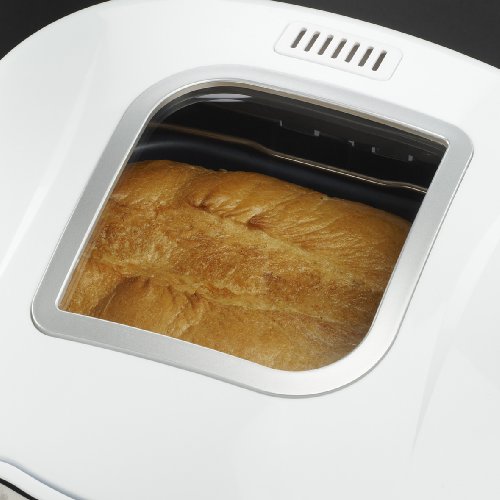
  • Helpful large viewing window to track progress
  • Convenient 13-hour delay start timer

What customers don't like about Russell Hobbs Classics 18036-56

  • Kneading process can be quite noisy
  • The mixing paddle frequently gets stuck in the bottom of the baked bread
  • Fastbake function often results in dense, underbaked, or heavy-textured bread
  • Annoyingly short power cable limits placement on countertops
  • Recipe booklet includes very few recipes
  • The friction-based pan insertion mechanism makes it difficult to secure and remove
  • Takes up a considerable amount of kitchen counter or storage space

Verdict

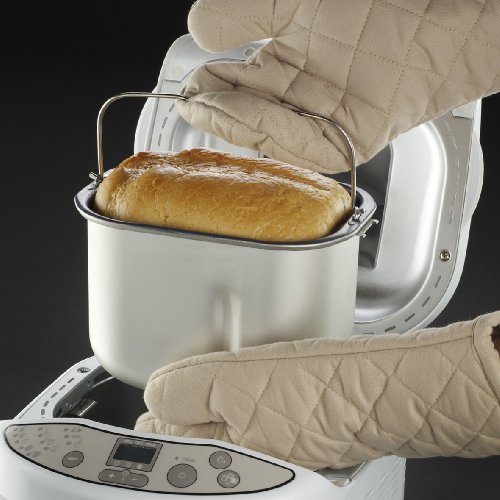
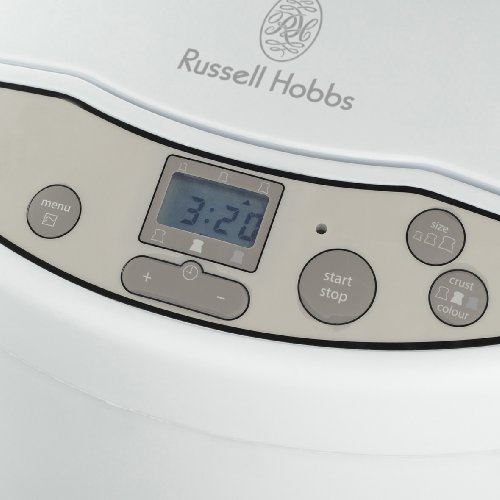
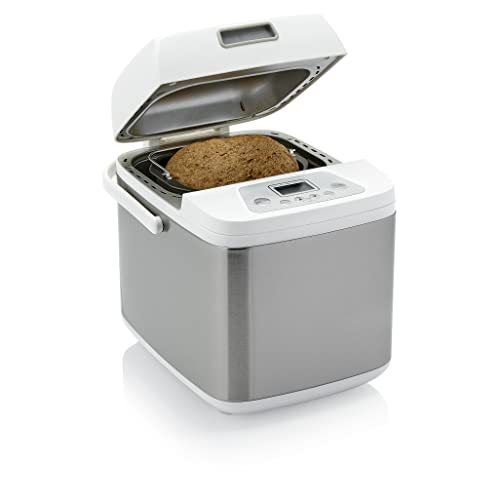
The Russell Hobbs Classics 18036-56 is a 660-watt compact bread maker featuring 12 programmable functions that accommodate a variety of recipes including basic white, French, whole-wheat, gluten-free, cake, pizza dough, and jam. It gives users versatile baking flexibility with three distinct loaf weight adjustments (450g, 700g, and 1kg) and three crust browning settings (light, medium, and dark). Notable advantages include an integrated LCD display, a large viewing window, a 13-hour delay start timer, a 55-minute fast bake option, an automated 1-hour keep warm function, and a 7-minute power-cut memory backup. Furthermore, its dishwasher-safe, non-stick bread pan and kneading blades ensure an effortless cleanup process. However, some users note minor drawbacks, such as a relatively loud mechanical noise during its intensive kneading phase, a short power cord that limits kitchen placement, and a friction-reliant pan securing mechanism without a standard bayonet lock.

Compare Russell Hobbs Classics 18036-56 with other bread makers

1Product to compare no. 1
VS
2Product to compare no. 2
VS
3Product to compare no. 3 (optional)

Graphic comparison of Russell Hobbs Classics 18036-56 and other bread makers

No results found