Scored using Bread Makers Methodology v3.0
Bread Makers Methodology v3.0
Mathematical & Unbiased Scoring
Products in this category are scored under Frontum Bread Makers Methodology v3.0: the technical score from the specifications is the base, and independent expert and video reviews (up to ±0.5 points), owner opinions (up to ±0.3) and best-of lists (up to +0.3) move it up or down.
Explore Bread Makers Methodology v3.0

Progress 15-Program 2lb review: 47 specs compared

Avg. price:~£80Power:550 WMaximum capacity:2 kgNumber of programs:15Automatic ingredient dispenser:no

Progress 15-Program 2lb Review: Compare 47 technical specifications to see how this product ranks in the Bread Makers category and whether it is worth buying.
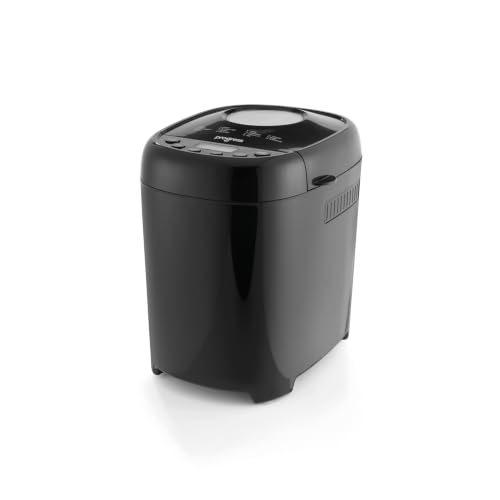
Progress 15-Program 2lb
7.6/10

Overall score

Score
7.6/ 10
✕
What it is
Our main score for this model, 1–10. It combines specs, best-of lists, expert reviews and ratings from across the web.
How we count it
Parts: Technical score 30%, List score 30%, Reviews score 20%, User score 20%
Marks: Each part gets a mark out of 10. For reviews, lists and owners, a typical model in this category gets about 8 and the best one gets 10.
No data yet: A part with no data shows "?". It counts as the mark of a weaker model in this category (4 in 5 models with data score higher). This way, models with reviews, lists and owners usually come out ahead.
Score distribution
â–¼
<55-66-77-88-99-10
Score components

30%

7.7

Technical score

30%

?

List scoreNot enough data yet, so we use 7.5, the mark of a weaker model in this category

20%

?

Reviews scoreNot enough data yet, so we use 7.8, the mark of a weaker model in this category

20%

7.3

User score

â–²Better than 54% of bread makers
7.9

Value for money

Value for money
7.9/ 10
✕
What it is
An indicator that combines the bread maker's overall rating with its price.
When it matters
When you are looking for a bread maker with a good balance between quality and price.
Score distribution
â–¼
<55-66-77-88-99-10
Score components

70%

7.6

Overall score

30%

8.5

Price

â–²Better than 67%
7.7

Technical score

Technical score
7.7/ 10
✕
What it is
How good the specs are compared with the other models in this category, 1–10.
How we count it
Areas: We rate the specs in each area against the other models in this category.
Weighting: The areas that matter most to buyers count more. The shares are shown under Score components.
Share: The technical score is 30% of the overall score.
Score distribution
â–¼
<55-66-77-88-99-10
Score components

45%

7.0

Performance

25%

7.8

Programs

15%

7.8

Convenience

5%

9.2

Design

5%

10

Safety

5%

10

Accessories

â–²Better than 85%
?

Reviews score

Reviews score
✕
What it is
Average grade from independent test sites, magazines and video reviewers, 1–10.
How we count it
Grades: Each review's own score is converted to 1–10; without one, we grade the review ourselves. Big test sites count more, short reviews half as much as full tests. A video review counts half.
Score: The average grade is 80% of the review mark; the number of reviews is the other 20% (1 review = 5, the typical number in this category = 8, the most-reviewed model = 10).
Enough data: With few reviews, the average grade is pulled toward the typical grade of this category. No reviews yet: 7.8 for now.
Share: Reviews count 20% of the overall score.
Score distribution
â–¼
<55-66-77-88-99-10
Grades by review (0)
We have not found an independent test of this model yet. Until we do, its review part counts as 7.8.
Ratings from across the web count in the User score, not in this score.
No expert tests yet
7.3

User score

User score
7.3/ 10
✕
What it is
How happy buyers are with this model, based on ratings from across the web.
How we count it
Enough data: A model needs at least 1 rating from across the web. Without one, it counts as 7.8, the mark of a weaker rated model in this category.
Share: User score counts 20% of the overall score.
Score distribution
â–¼
<55-66-77-88-99-10

70%

7.9

Rating

30%

6.0

Popularity

â–¼Worse than 97%
?

List score

List score
7.5/ 10
✕
What it is
How often independent test sites, magazines and video reviewers put this model in their best-of lists for this category.
How we count it
Points: The model in the most lists of this category gets 10; the others get 8 to 10 in proportion. In no list yet: 7.5. Lists count 30% of the overall score.
Enough data: Every list counts, even a single one. With fewer than 5 best-of lists in the category, this part is left out.
Lists with this model (0)
Not in any best-of list yet, so this part counts as 7.5. Models in a list get 8 to 10.
Not in any best-of list yet
  • progress-15-program-2lb
  • progress-15-program-2lb
  • progress-15-program-2lb
  • progress-15-program-2lb
  • progress-15-program-2lb
  • progress-15-program-2lb
  • progress-15-program-2lb
progress-15-program-2lb
Where to buy
*As an Amazon Associate, we earn from qualifying purchases.
Best rankings
Available: ranking among products currently available (including other versions of this product).All: ranking among all products in the database.
Loading...
Loading category ranking...

Bread Makers model ranking

Ranked #43 of 125 models in Bread Makers (Overall score)

Technical Specifications of bread maker Progress 15-Program 2lb

Technical score
Technical score
7.7/ 10
✕
What it is
How good the specs are compared with the other models in this category, 1–10.
How we count it
Areas: We rate the specs in each area against the other models in this category.
Weighting: The areas that matter most to buyers count more. The shares are shown under Score components.
Share: The technical score is 30% of the overall score.
Score distribution
â–¼
<55-66-77-88-99-10
Score components:

45%

7.0

Performance

25%

7.8

Programs

15%

7.8

Convenience

5%

9.2

Design

5%

10

Safety

5%

10

Accessories

7.7
Reviews score
7.8
User score
7.3
List score
?
Value for money
Value for money
7.9/ 10
✕
What it is
An indicator that combines the bread maker's overall rating with its price.
When it matters
When you are looking for a bread maker with a good balance between quality and price.
Score distribution
â–¼
<55-66-77-88-99-10
Score components:

70%

7.6

Overall score

30%

8.5

Price

7.9
Power
550 W
This bread maker is rated at 550 W, which is lower than 58.3% of bread makers and equal to 34.1% of bread makers.
Maximum capacity
2 kg
This bread maker handles up to 2 kg of flour, which is higher than 95.5% of bread makers and equal to 4.5% of bread makers.
Number of loaf sizes
3
This bread maker has a loaf size count of 3, which is more than 35.9% of bread makers and equal to 63.4% of bread makers.
Number of kneading blades
1
This bread maker has a kneading blade count of 1, which is fewer than 21.1% of bread makers and equal to 79% of bread makers.
Number of browning levels
3
This bread maker has 3 browning levels, which is more than 1.5% of bread makers and equal to 96.2% of bread makers.
Show more
Number of programs
15
This bread maker has 15 programs, which is fewer than 54.9% of bread makers and equal to 12% of bread makers.
Custom program
yes
This bread maker supports custom programs. 26.7% of bread makers offer this.
Gluten-free bread
yes
This bread maker supports gluten-free bread. 6% of bread makers offer this.
Sourdough support
no
This bread maker does not support sourdough. 13.1% of bread makers offer this.
Pizza dough
yes
This bread maker supports pizza dough. 29.6% of bread makers offer this.
Show more
Delayed start
yes
This bread maker has a delayed start. 0% of bread makers offer this.
Maximum delayed start timer
13 hours
This bread maker can delay its start by 13 hours, which is shorter than 56.4% of bread makers and equal to 42.1% of bread makers.
Automatic ingredient dispenser
no
This bread maker does not have an automatic ingredient dispenser. 30.1% of bread makers offer this.
Ingredient add signal
yes
This bread maker has an ingredient add signal. 5.3% of bread makers offer this.
Pause function
yes
This bread maker has a pause function. 20.8% of bread makers offer this.
at any point during the cycle
Show more
Overheat protection
yes
This bread maker has overheat protection. 0% of bread makers offer this.
BPA-free
yes
This bread maker has BPA-free food-contact parts. 2.3% of bread makers offer this.
PFOA-free
yes
This bread maker has a PFOA-free non-stick pan. 1.6% of bread makers offer this.
Dough hook extractor
yes
This bread maker includes a dough hook extractor. 12% of bread makers offer this.
Measuring cup
yes
This bread maker includes a measuring cup. 0% of bread makers offer this.
Measuring spoon
yes
This bread maker includes a measuring spoon. 1.5% of bread makers offer this.
Recipe book
yes
This bread maker includes a recipe book. 52.3% of bread makers offer this.
Additional moulds
none
Show more
Color
black
Body material
stainless steel
Bowl shape
?
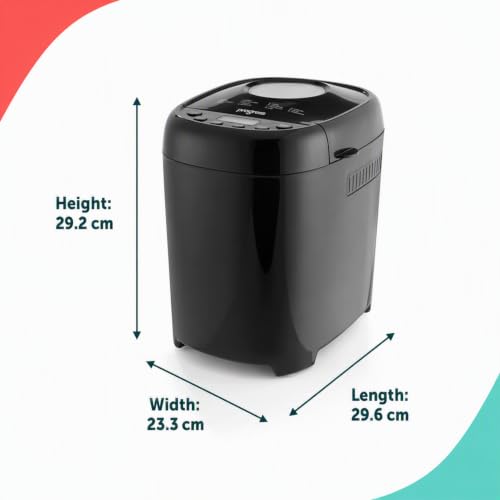
Height
29.2 cm
This bread maker stands 29.2 cm tall, which is shorter than 76.5% of bread makers.
Width
23.3 cm
This bread maker is 23.3 cm wide, which is narrower than 94.7% of bread makers.
Show more

Progress 15-Program 2lb vs the average bread maker

246810TotalPerformanceProgramsDesignConvenienceSafetyAccessories
  • 2x more flour capacity
    This bread maker handles more flour than the average bread maker (2 kg vs 1 kg). The average bread maker handles up to 1 kg.
    2 kg vs 1 kg
  • Supports dishwasher-safe parts
    This bread maker has dishwasher-safe parts, while the average bread maker does not. 31.1% of bread makers offer this.
  • Includes a recipe book
    This bread maker includes a recipe book, while the average bread maker does not. 48.1% of bread makers offer this.
  • 4.95 cm narrower
    This bread maker is narrower than the average bread maker (23.3 cm vs 28.25 cm). The average bread maker is 28.25 cm.
    23.3 cm vs 28.25 cm
  • 38.2% lighter
    This bread maker is lighter than the average bread maker (3.4 kg vs 5.5 kg). The average bread maker weighs 5.5 kg.
    3.4 kg vs 5.5 kg
  • 0.8 cm shorter
    This bread maker is shorter than the average bread maker (29.2 cm vs 30 cm). The average bread maker is 30 cm.
    29.2 cm vs 30 cm
  • 1.81 cm shallower
    This bread maker is shallower than the average bread maker (29.6 cm vs 31.4 cm). The average bread maker is 31.4075 cm.
    29.6 cm vs 31.4075 cm
  • 18.8% cheaper
    Progress 15-Program 2lb is cheaper than the average bread maker (£80 vs £95).
    £80 vs £95
  • 18.8% cheaper
    Progress 15-Program 2lb is cheaper than the average bread maker (£80 vs £95).
    £80 vs £95
  • 2.3% better value for money
    Progress 15-Program 2lb has better value for money than the average bread maker (7.88 vs 7.7).
    7.88 vs 7.7
  • 2x more flour capacity
    This bread maker handles more flour than the average bread maker (2 kg vs 1 kg). The average bread maker handles up to 1 kg.
    2 kg vs 1 kg
  • 4.95 cm narrower
    This bread maker is narrower than the average bread maker (23.3 cm vs 28.25 cm). The average bread maker is 28.25 cm.
    23.3 cm vs 28.25 cm
  • 38.2% lighter
    This bread maker is lighter than the average bread maker (3.4 kg vs 5.5 kg). The average bread maker weighs 5.5 kg.
    3.4 kg vs 5.5 kg
  • 0.8 cm shorter
    This bread maker is shorter than the average bread maker (29.2 cm vs 30 cm). The average bread maker is 30 cm.
    29.2 cm vs 30 cm
  • 1.81 cm shallower
    This bread maker is shallower than the average bread maker (29.6 cm vs 31.4 cm). The average bread maker is 31.4075 cm.
    29.6 cm vs 31.4075 cm
  • Supports dishwasher-safe parts
    This bread maker has dishwasher-safe parts, while the average bread maker does not. 31.1% of bread makers offer this.
  • Includes a recipe book
    This bread maker includes a recipe book, while the average bread maker does not. 48.1% of bread makers offer this.
  • 2 hours shorter delay timer
    This bread maker can delay its start for shorter than the average bread maker (13 hours vs 15 hours). The average bread maker delays its start for 15 hours.
    13 hours vs 15 hours
  • 50 W less power
    This bread maker has less power than the average bread maker (550 W vs 600 W). The average bread maker is rated at 600 W.
    550 W vs 600 W
  • 1 fewer programs
    This bread maker has fewer programs than the average bread maker (15 vs 16). The average bread maker has 16 programs.
    15 vs 16
  • 12.0% lower user score
    User score
    7.3/ 10
    ✕
    What it is
    How happy buyers are with this model, based on ratings from across the web.
    How we count it
    Enough data: A model needs at least 1 rating from across the web. Without one, it counts as 7.8, the mark of a weaker rated model in this category.
    Share: User score counts 20% of the overall score.
    Score distribution
    â–¼
    <55-66-77-88-99-10

    70%

    7.9

    Rating

    30%

    6.0

    Popularity

    7.3 vs 8.3
  • 50 W less power
    This bread maker has less power than the average bread maker (550 W vs 600 W). The average bread maker is rated at 600 W.
    550 W vs 600 W
  • 1 fewer programs
    This bread maker has fewer programs than the average bread maker (15 vs 16). The average bread maker has 16 programs.
    15 vs 16
  • 2 hours shorter delay timer
    This bread maker can delay its start for shorter than the average bread maker (13 hours vs 15 hours). The average bread maker delays its start for 15 hours.
    13 hours vs 15 hours

Third-party reviews

What customers like about Progress 15-Program 2lb

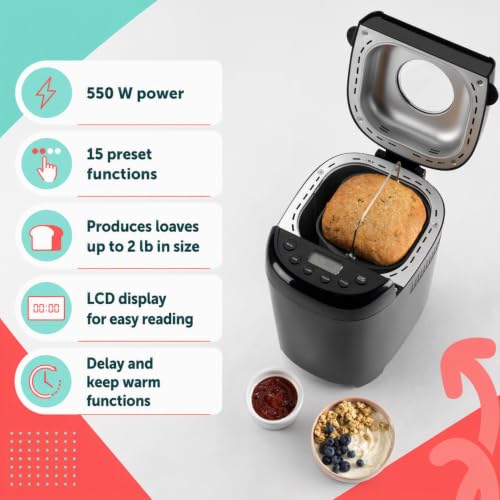
  • Versatile range of 15 automatic preset programs including settings for jam and yoghurt
  • Large baking capacity supporting loaves up to 2lbs
  • Offers customization with 3 selectable crust color options
  • Convenient built-in delay start timer and automatic keep-warm function
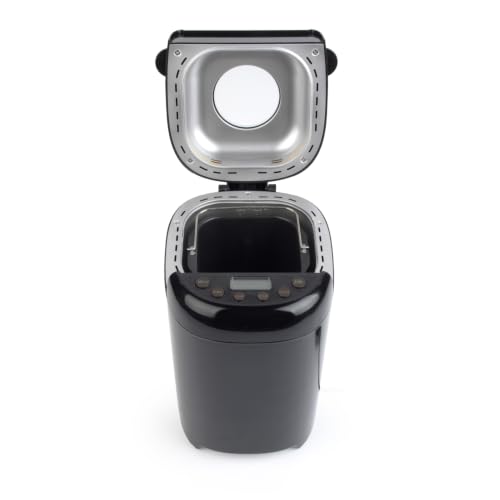
  • User-friendly design with a clear backlit digital display and intuitive controls
  • Compact footprint and lightweight build making it easy to store and move
  • Efficiently automates the mixing and kneading process to save manual labor

What customers don't like about Progress 15-Program 2lb

  • Instruction manual and included recipes can occasionally be unclear or lacking detail
  • Kneading paddle can get stuck inside the baked loaf and requires manual removal
  • Noticeable noise or vibration levels during the intensive kneading cycles
  • Taller, vertical loaf shape which differs from traditional wide supermarket bakery loaves
  • A few instances of uneven ingredient mixing, leaving unmixed flour pockets in corners

Verdict

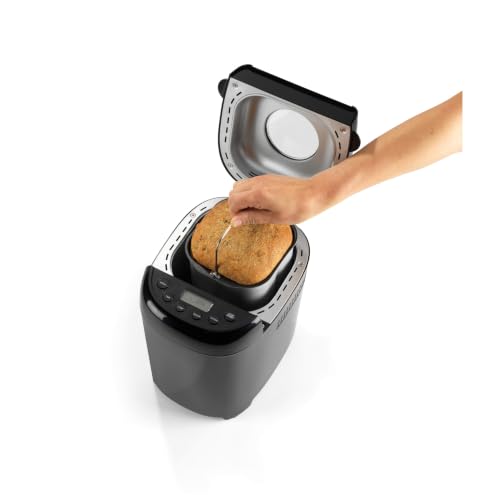
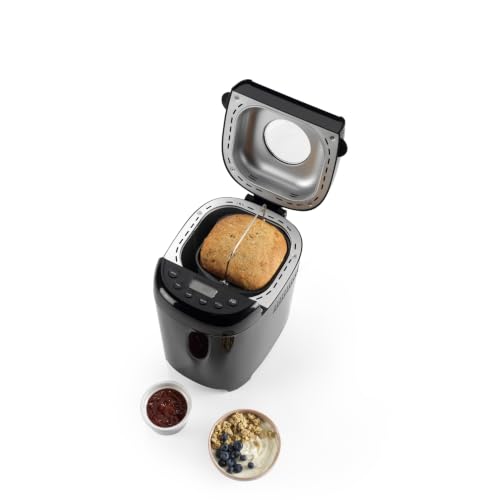
The Progress 15-Program Bread Maker is a compact kitchen appliance that accommodates loaf sizes up to 2 lbs and features 15 automatic preset programs for baking bread, making jam, and preparing yogurt. It offers excellent versatility with 3 adjustable crust settings (light, medium, and dark), a clear backlit digital display, a convenient delay start timer, and an automatic keep-warm function to ensure fresh results with minimal effort. Main pros include its easy-to-use control interface and the flexibility to handle multiple recipes like gluten-free or whole wheat bread, while a notable con is that the machine lacks an integrated automatic ingredient dispenser, meaning extra seeds, fruits, or nuts must be added manually during the cycle.

Compare Progress 15-Program 2lb with other bread makers

1Product to compare no. 1
VS
2Product to compare no. 2
VS
3Product to compare no. 3 (optional)

Graphic comparison of Progress 15-Program 2lb and other bread makers

No results found