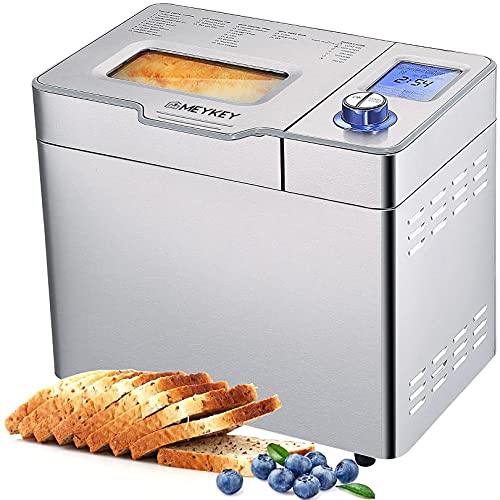
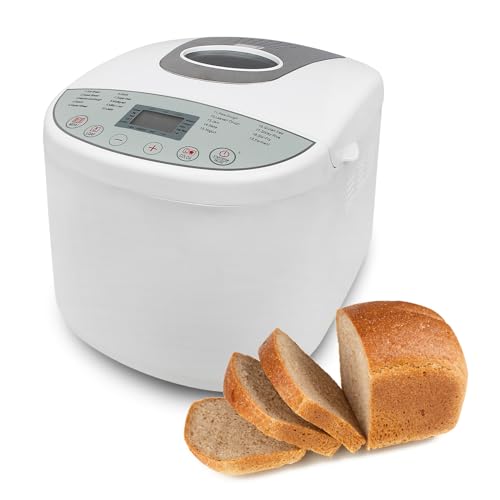
A sourdough program gives wild yeast the long, warm rise it needs, which ordinary yeast cycles cut short. Commercial yeast lifts a loaf in about an hour, while a starter needs three to five hours to do the same. The program kneads gently, then holds the dough at around 30 °C for those extra hours before baking.
Many machines split the job into two settings. The starter setting mixes flour and water and keeps them warm for about 12–24 hours until the culture bubbles and smells sour. The bake setting then uses part of that starter in a fresh dough. On other models you skip the first step and pour in a starter you already feed at home.
The whole bake run takes roughly 5–7 hours, against about 3 hours for a basic white loaf. Rye and spelt settings on the same machines use a shorter knead, because these flours turn gummy when worked too long. A program that lists a spoon of dried yeast next to the starter is a hybrid cycle. It rises faster but tastes milder.
Can a sourdough bread maker bake bread without commercial yeast?
Yes, a sourdough bread maker bakes bread with no commercial yeast at all, as long as your starter is active. A ripe starter has doubled in size within 4–8 hours of its last feed and smells pleasantly sour. Most recipes use about 20–30% starter by flour weight. A loaf with 500 g of flour therefore takes 100–150 g of starter.
Expect a lower, denser loaf than a yeasted one, with a tighter crumb and a thicker crust. A cool kitchen of 18–20 °C slows a weak starter so much that the program ends before the dough has fully risen. A warmer spot, a fresher feed or 1–2 g of dried yeast as a backup fixes a flat loaf. The sour taste stays almost the same.