Scored using Washing machines Methodology v3.0
Washing machines Methodology v3.0
Mathematical & Unbiased Scoring
Products in this category are scored under Frontum Washing machines Methodology v3.0: the technical score from the specifications is the base, and independent expert and video reviews (up to ±0.5 points), owner opinions (up to ±0.3) and best-of lists (up to +0.3) move it up or down.
Explore Washing machines Methodology v3.0

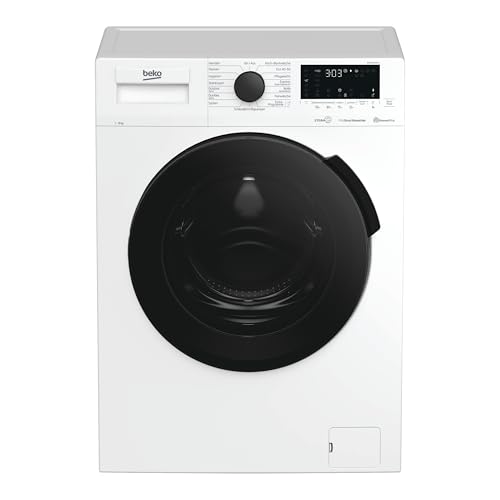
Beko WTA 8612 XSWR b100 review: 101 specs compared

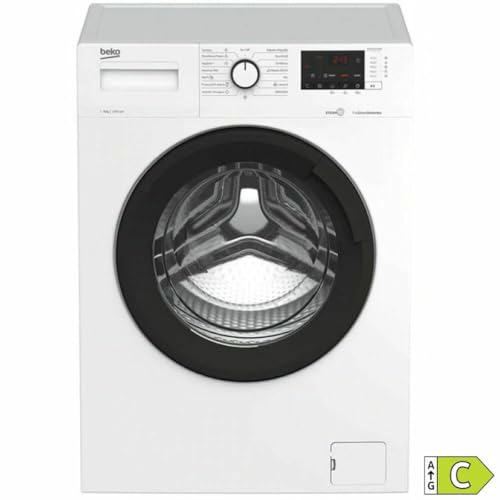
Avg. price:~£410Capacity:8 kgMaximum spin speed:1200 RPMEnergy efficiency class:CType:self-standingLoading type:front-loading

Beko WTA 8612 XSWR b100 Review: Compare 101 technical specifications to see how this product ranks in the Washing machines category and whether it is worth buying.
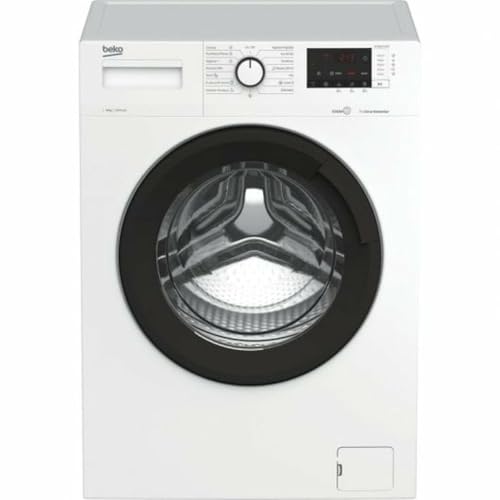
Beko WTA 8612 XSWR b100
7.7/10

Overall score

Score
7.7/ 10
✕
What it is
Our main score for this model, 1–10. It combines specs, ratings from across the web and best-of lists.
How we count it
Parts: Technical score 70%, User score 25%, List score 5%
Marks: Each part gets a mark out of 10. For reviews, lists and owners, a typical model in this category gets about 8 and the best one gets 10.
No data yet: A part with no data shows "?". It counts as the mark of a weaker model in this category (4 in 5 models with data score higher). This way, models with reviews, lists and owners usually come out ahead.
Score distribution
â–¼
<55-66-77-88-99-10
Score components

70%

7.4

Technical score

25%

8.8

User score

5%

?

List scoreNot enough data yet, so we use 7.5, the mark of a weaker model in this category

â–¼Worse than 51% of washing machines
7.8

Value for money

Value for money
7.8/ 10
✕
What it is
An indicator that combines the washing machine's overall rating with its cost.
When it matters
When you are looking for a washing machine with a good balance between quality and price.
Score distribution
â–¼
<55-66-77-88-99-10
Score components

70%

7.7

Overall score

30%

7.8

Price

â–²Better than 63%
7.4

Technical score

Technical score
7.4/ 10
✕
What it is
How good the specs are compared with the other models in this category, 1–10.
How we count it
Areas: We rate the specs in each area against the other models in this category.
Weighting: The areas that matter most to buyers count more. The shares are shown under Score components.
Share: The technical score is 70% of the overall score.
Score distribution
â–¼
<55-66-77-88-99-10
Score components

25%

7.3

Performance

25%

7.2

Energy efficiency

20%

8.3

Washing programs

20%

6.3

Features

10%

8.1

Design

â–¼Worse than 63%
8.8

User score

User score
8.8/ 10
✕
What it is
How happy buyers are with this model, based on ratings from across the web.
How we count it
Enough data: A model needs at least 1 rating from across the web. Without one, it counts as 7.9, the mark of a weaker rated model in this category.
Share: User score counts 25% of the overall score.
Score distribution
â–¼
<55-66-77-88-99-10

70%

8.8

Rating

30%

8.9

Popularity

â–²Better than 76%
?

List score

List score
7.5/ 10
✕
What it is
How often independent test sites, magazines and video reviewers put this model in their best-of lists for this category.
How we count it
Points: The model in the most lists of this category gets 10; the others get 8 to 10 in proportion. In no list yet: 7.5. Lists count 5% of the overall score.
Enough data: Every list counts, even a single one. With fewer than 5 best-of lists in the category, this part is left out.
Lists with this model (0)
Not in any best-of list yet, so this part counts as 7.5. Models in a list get 8 to 10.
Not in any best-of list yet
  • beko-wta-8612-xswr-b100
  • beko-wta-8612-xswr-b100
  • beko-wta-8612-xswr-b100
  • beko-wta-8612-xswr-b100
  • beko-wta-8612-xswr-b100
beko-wta-8612-xswr-b100
Where to buy
*As an Amazon Associate, we earn from qualifying purchases.
Best rankings
Available: ranking among products currently available (including other versions of this product).All: ranking among all products in the database.
Loading...
Loading category ranking...

Technical Specifications of washing machine Beko WTA 8612 XSWR b100

Technical score
Technical score
7.4/ 10
✕
What it is
How good the specs are compared with the other models in this category, 1–10.
How we count it
Areas: We rate the specs in each area against the other models in this category.
Weighting: The areas that matter most to buyers count more. The shares are shown under Score components.
Share: The technical score is 70% of the overall score.
Score distribution
â–¼
<55-66-77-88-99-10
Score components:

25%

7.3

Performance

25%

7.2

Energy efficiency

20%

8.3

Washing programs

20%

6.3

Features

10%

8.1

Design

7.4
Value for money
Value for money
7.8/ 10
✕
What it is
An indicator that combines the washing machine's overall rating with its cost.
When it matters
When you are looking for a washing machine with a good balance between quality and price.
Score distribution
â–¼
<55-66-77-88-99-10
Score components:

70%

7.7

Overall score

30%

7.8

Price

7.8
Capacity
8 kg
This washing machine holds 8 kg, which is more than 27.3% of washing machines and equal to 26.3% of washing machines.
Drum volume
?
Spin-drying efficiency class
B
This washing machine has spin-drying class B, which is more efficient than in 9.6% of washing machines and the same as in 84.2% of washing machines.
Maximum spin speed
1,200 RPM
This washing machine spins at 1,200 RPM, which is slower than 71.2% of washing machines and equal to 22.2% of washing machines.
Minimum spin speed
600 RPM
This washing machine has a minimum spin of 600 RPM, which is higher than 74.6% of washing machines and equal to 14.1% of washing machines.
Show more
Energy efficiency class
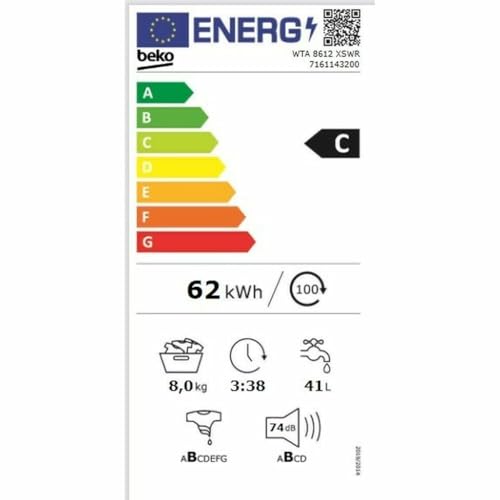
C
This washing machine has energy class C, which is worse than 74% of washing machines and the same as 8.4% of washing machines.
Energy consumption per 100 cycles
62 kWh/100 cycles
This washing machine uses 62 kWh/100 cycles, which is higher than 75.3% of washing machines and equal to 3% of washing machines.
Annual energy consumption
136.4 kWh/year
This washing machine uses 136.4 kWh/year, which is higher than 75.2% of washing machines and equal to 2.5% of washing machines.
Annual energy cost
34.1 £
This washing machine has a yearly running cost of £34.1, which is higher than 74.7% of washing machines and equal to 2.4% of washing machines.
Water consumption per cycle
41 L
This washing machine uses 41 L of water per cycle, which is lower than 87.8% of washing machines and equal to 4.6% of washing machines.
Show more
N. of washing programs
15
This washing machine offers 15 wash programmes, which is more than 39.5% of washing machines and equal to 37% of washing machines.
Cotton, Eco Cotton, Synthetics, Quick 28'/14', Mixed, Wool / Hand Wash, GentleCareâ„¢, Spin + Drain, Rinse, Dark Clothes / Jeans, Sport, StainExpertâ„¢ - Stain Pro, Hygiene+ with Steam Program, Duvet with Steam, Shirts with Steam
N. of downloadable programs
0
This washing machine offers 0 downloadable programmes, which is fewer than 9.1% of washing machines and equal to 90.9% of washing machines.
N. of washing programs under 1 hour
1
This washing machine has 1 programmes under an hour, which is fewer than 57.8% of washing machines and equal to 41.9% of washing machines.
Quick 28'/14'
Fastest cycle duration
14 min
This washing machine has a fastest cycle of 14 min, which is shorter than 69.8% of washing machines and equal to 29.6% of washing machines.
Super Quick 14 min (wash up to 2 kg of lightly soiled garments)
ECO cycle duration
207 min
This washing machine has an ECO cycle of 207 min, which is shorter than 78% of washing machines and equal to 1.9% of washing machines.
Show more
N. of advanced features
12
This washing machine has 12 advanced features, which is more than 49.1% of washing machines and equal to 7% of washing machines.
AquaStop system, Overflow protection, Foam control system, Unbalanced load detection, Laundry detection system, Self-cleaning function, Pause & Add, Steam technology, Anti-crease function, Extra rinse function, Stain removal function, Quick function.
Foam control system
yes
This washing machine features a foam control system. 79.8% of washing machines have a foam control system.
Laundry detection system
yes
This washing machine has a laundry detection system. 93% of washing machines have this feature.
OptiSense (optimizes water, detergent, energy, and time consumption using four smart sensors that monitor laundry and the washing machine)
Unbalanced load detection
yes
This washing machine has unbalanced load detection. 92.5% of washing machines have unbalanced load detection.
Load balancing system
no
This washing machine does not feature a load balancing system. 46.2% of washing machines have a load balancing system.
Show more
Color
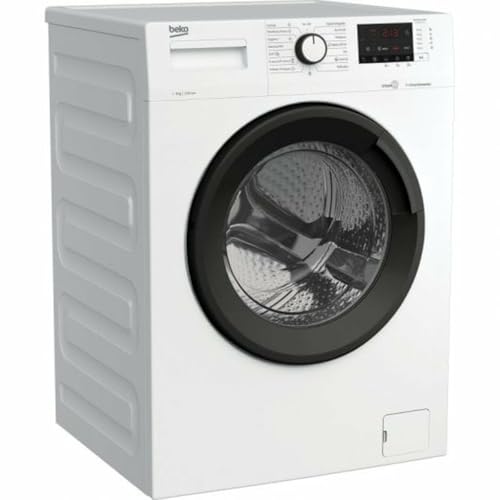
white
This washing machine comes in white, which is more conventional than the colour in 14.2% of washing machines and the same as the colour in 85.8% of washing machines.
Type
self-standing
This washing machine is self-standing, which is more flexible to place than the type in 3.2% of washing machines and the same as the type in 96.8% of washing machines.
Loading type
front-loading
This washing machine is front-loading, which is more practical than the design in 8.9% of washing machines and the same as the design in 91.1% of washing machines.
Display
yes
This washing machine has a display. 96.2% of washing machines have a display.
Child lock
yes
This washing machine has a child lock. 99.7% of washing machines have a child lock.
Show more

Beko WTA 8612 XSWR b100 vs the average washing machine

246810TotalPerformanceEnergy efficiencyWashing programsFeaturesDesign
  • 6 L less water per cycle
    This washing machine uses less water per cycle than the average washing machine (41 L vs 47 L). The average washing machine uses 47 L of water per cycle.
    41 L vs 47 L
  • Has an anti-vibration design
    This washing machine has an anti-vibration design, the average washing machine does not have. 31.5% of washing machines have an anti-vibration design.
    Anti-vibration walls
  • Has the AquaStop feature
    This washing machine has the AquaStop feature, the average washing machine does not. 34% of washing machines have an AquaStop feature.
  • Jeans cycle
    This washing machine has a cycle for jeans, the average washing machine does not have. 46.7% of washing machines have a jeans cycle.
  • Shirt cycle
    This washing machine has a cycle for shirts, the average washing machine does not have. 46.6% of washing machines have a shirt cycle.
  • 1 cm lower height
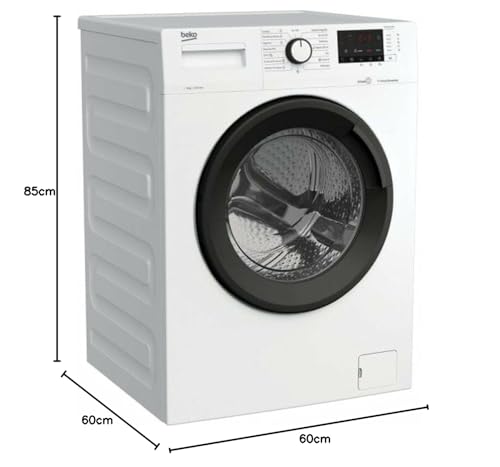
    This washing machine is shorter than the average washing machine (84 cm vs 85 cm). The average washing machine is 85 cm tall.
    84 cm vs 85 cm
  • 1 min shorter quickest cycle
    This washing machine has a shorter fastest cycle than the average washing machine (14 min vs 15 min). The average washing machine's quickest cycle takes 15 min.
    Super Quick 14 min (wash up to 2 kg of lightly soiled garments)
    14 min vs 15 min
  • 11 min shorter eco cycle
    This washing machine has a shorter ECO cycle than the average washing machine (207 min vs 218 min). The average washing machine's ECO cycle takes 218 min.
    207 min vs 218 min
  • 8.6% higher user score
    User score
    8.8/ 10
    ✕
    What it is
    How happy buyers are with this model, based on ratings from across the web.
    How we count it
    Enough data: A model needs at least 1 rating from across the web. Without one, it counts as 7.9, the mark of a weaker rated model in this category.
    Share: User score counts 25% of the overall score.
    Score distribution
    â–¼
    <55-66-77-88-99-10

    70%

    8.8

    Rating

    30%

    8.9

    Popularity

    8.8 vs 8.1
  • 6 L less water per cycle
    This washing machine uses less water per cycle than the average washing machine (41 L vs 47 L). The average washing machine uses 47 L of water per cycle.
    41 L vs 47 L
  • 12.8% lower yearly water use
    This washing machine uses less water per year than the average washing machine (9,020 L/year vs 10,340 L/year). The average washing machine uses 10,340 L/year of water a year.
    9,020 L/year vs 10,340 L/year
  • 2.51 £ lower yearly water cost
    This washing machine costs less for water than the average washing machine (17.1 £ vs 19.6 £). The average washing machine has a yearly water cost of 19.646 £.
    17.138 £ vs 19.646 £
  • Jeans cycle
    This washing machine has a cycle for jeans, the average washing machine does not have. 46.7% of washing machines have a jeans cycle.
  • Shirt cycle
    This washing machine has a cycle for shirts, the average washing machine does not have. 46.6% of washing machines have a shirt cycle.
  • 1 min shorter quickest cycle
    This washing machine has a shorter fastest cycle than the average washing machine (14 min vs 15 min). The average washing machine's quickest cycle takes 15 min.
    Super Quick 14 min (wash up to 2 kg of lightly soiled garments)
    14 min vs 15 min
  • 11 min shorter eco cycle
    This washing machine has a shorter ECO cycle than the average washing machine (207 min vs 218 min). The average washing machine's ECO cycle takes 218 min.
    207 min vs 218 min
  • Has the AquaStop feature
    This washing machine has the AquaStop feature, the average washing machine does not. 34% of washing machines have an AquaStop feature.
  • Has an anti-vibration design
    This washing machine has an anti-vibration design, the average washing machine does not have. 31.5% of washing machines have an anti-vibration design.
    Anti-vibration walls
  • 1 cm lower height
    This washing machine is shorter than the average washing machine (84 cm vs 85 cm). The average washing machine is 85 cm tall.
    84 cm vs 85 cm
  • 200 RPM lower spin speed
    This washing machine spins slower than the average washing machine (1,200 RPM vs 1,400 RPM). The average washing machine spins at 1,400 RPM.
    1,200 RPM vs 1,400 RPM
  • Worse energy grade
    This washing machine has a worse energy class than the average washing machine (C vs A).
    C vs A
  • 12 kWh/100 cycles more energy use
    This washing machine uses more electricity than the average washing machine (62 kWh/100 cycles vs 50 kWh/100 cycles). The average washing machine uses 50 kWh/100 cycles.
    62 kWh/100 cycles vs 50 kWh/100 cycles
  • 200 RPM higher minimum spin
    This washing machine has a higher minimum spin than the average washing machine (600 RPM vs 400 RPM). The average washing machine has a minimum spin of 400 RPM.
    600 RPM vs 400 RPM
  • Does not have a duvet cycle
    This washing machine does not have a duvet cycle, the average washing machine does. 54.7% of washing machines have a duvet cycle.
  • 5 h shorter maximum delay
    This washing machine can delay its start for less time than the average washing machine (19 h vs 24 h). The average washing machine can delay its start by up to 24 h.
    19 h vs 24 h
  • 1 fewer quick programmes
    This washing machine offers fewer quick programmes than the average washing machine (1 vs 2). The average washing machine has 2 programmes under an hour.
    Quick 28'/14'
    1 vs 2
  • 2 dB louder washing
    This washing machine is louder than the average washing machine when washing (55 dB vs 53 dB). The average washing machine washes at 53 dB.
    55 dB vs 53 dB
  • 200 RPM lower spin speed
    This washing machine spins slower than the average washing machine (1,200 RPM vs 1,400 RPM). The average washing machine spins at 1,400 RPM.
    1,200 RPM vs 1,400 RPM
  • 200 RPM higher minimum spin
    This washing machine has a higher minimum spin than the average washing machine (600 RPM vs 400 RPM). The average washing machine has a minimum spin of 400 RPM.
    600 RPM vs 400 RPM
  • 2 dB louder washing
    This washing machine is louder than the average washing machine when washing (55 dB vs 53 dB). The average washing machine washes at 53 dB.
    55 dB vs 53 dB
  • Worse energy grade
    This washing machine has a worse energy class than the average washing machine (C vs A).
    C vs A
  • 12 kWh/100 cycles more energy use
    This washing machine uses more electricity than the average washing machine (62 kWh/100 cycles vs 50 kWh/100 cycles). The average washing machine uses 50 kWh/100 cycles.
    62 kWh/100 cycles vs 50 kWh/100 cycles
  • 22.8% higher energy use
    This washing machine uses more energy than the average washing machine (136.4 kWh/year vs 111.1 kWh/year). The average washing machine uses 111.1 kWh/year.
    136.4 kWh/year vs 111.1 kWh/year
  • 6 £ higher yearly running cost
    This washing machine costs more to run than the average washing machine (34.1 £ vs 28.1 £). The average washing machine has a yearly running cost of 28.1 £.
    34.1 £ vs 28.1 £
  • Does not have a duvet cycle
    This washing machine does not have a duvet cycle, the average washing machine does. 54.7% of washing machines have a duvet cycle.
  • 1 fewer quick programmes
    This washing machine offers fewer quick programmes than the average washing machine (1 vs 2). The average washing machine has 2 programmes under an hour.
    Quick 28'/14'
    1 vs 2
  • 5 h shorter maximum delay
    This washing machine can delay its start for less time than the average washing machine (19 h vs 24 h). The average washing machine can delay its start by up to 24 h.
    19 h vs 24 h
  • 0.2 cm wider
    This washing machine is wider than the average washing machine (60 cm vs 59.8 cm). The average washing machine is 59.8 cm wide.
    60 cm vs 59.8 cm
  • 6% larger volume
    This washing machine has a larger volume than the average washing machine (297,360 cm³ vs 280,500 cm³). The average washing machine has a volume of 280,500 cm³.
    297,360 cm³ vs 280,500 cm³
  • 2.5 cm deeper
    This washing machine is deeper than the average washing machine (59 cm vs 56.5 cm). The average washing machine is 56.5 cm deep.
    59 cm vs 56.5 cm

Third-party reviews

What customers like about Beko WTA 8612 XSWR b100

  • An 8 kg capacity takes a full family load.
  • 41 L of water per cycle keeps water use down.
  • Steam helps freshen clothes between washes.
  • A spin of 1200 rpm leaves clothes drier.
  • The anti-vibration design limits shaking during the spin.
  • The inverter motor comes with a 10 year motor warranty.

What customers don't like about Beko WTA 8612 XSWR b100

  • The spin reaches 74 dB, which is loud in a quiet home.
  • There is no Wi-Fi, so it cannot be run from a phone.
  • With no automatic dosing, detergent is measured by hand.
  • There is no load balancing system to even out uneven loads.

Verdict

Engineered to deliver dependable fabric hygiene and frugal water management, the Beko WTA 8612 XSWR b100 front-loading washing machine accommodates an 8 kg laundry load with a 1200 RPM spin speed. Driven by a brushless ProSmart inverter motor covered by a ten-year guarantee, it operates in energy Class C, consuming 62 kWh per hundred cycles and an exceptionally economical 41 litres of water. The appliance features fifteen wash programs, led by the Xpress Super Short cycle that refreshes a small load of garments in just 14 minutes. Its signature SteamCure technology injects steam before the wash to loosen encrusted grime and again after spinning to reduce creases for effortless ironing. Comprehensive AquaStop leak prevention ensures flood protection. Trade-offs comprise the moderate 1200 RPM top spin rate, manual detergent measuring, no smart Wi-Fi networking, and Class C energy consumption.

Compare Beko WTA 8612 XSWR b100 with other washing machines

1Product to compare no. 1
VS
2Product to compare no. 2
VS
3Product to compare no. 3 (optional)

Graphic comparison of Beko WTA 8612 XSWR b100 and other washing machines

No results found