Scored using Washing machines Methodology v3.0
Washing machines Methodology v3.0
Mathematical & Unbiased Scoring
Products in this category are scored under Frontum Washing machines Methodology v3.0: the technical score from the specifications is the base, and independent expert and video reviews (up to ±0.5 points), owner opinions (up to ±0.3) and best-of lists (up to +0.3) move it up or down.
Explore Washing machines Methodology v3.0

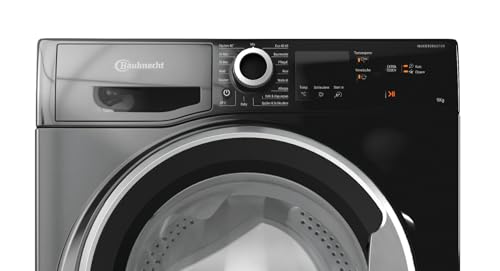
Bauknecht W9 S6300 A review: 101 specs compared

Avg. price:~£520Capacity:9 kgMaximum spin speed:1400 RPMEnergy efficiency class:AType:self-standingLoading type:front-loading

Bauknecht W9 S6300 A Review: Compare 168 technical specifications to see how this product ranks in the Washing machines category and whether it is worth buying.
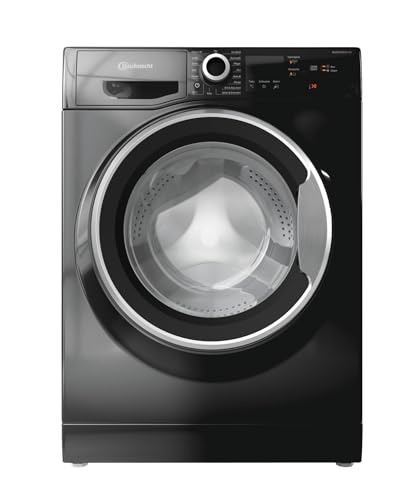
Bauknecht W9 S6300 A
8.0/10

Overall score

Score
8.0/ 10
✕
What it is
Our main score for this model, 1–10. It combines specs, ratings from across the web and best-of lists.
How we count it
Parts: Technical score 70%, User score 25%, List score 5%
Marks: Each part gets a mark out of 10. For reviews, lists and owners, a typical model in this category gets about 8 and the best one gets 10.
No data yet: A part with no data shows "?". It counts as the mark of a weaker model in this category (4 in 5 models with data score higher). This way, models with reviews, lists and owners usually come out ahead.
Score distribution
â–¼
<55-66-77-88-99-10
Score components

70%

8.0

Technical score

25%

?

User scoreNot enough data yet, so we use 8.0, the mark of a weaker model in this category

5%

?

List scoreNot enough data yet, so we use 7.5, the mark of a weaker model in this category

â–²Better than 58% of washing machines
7.7

Value for money

Value for money
7.7/ 10
✕
What it is
An indicator that combines the washing machine's overall rating with its cost.
When it matters
When you are looking for a washing machine with a good balance between quality and price.
Score distribution
â–¼
<55-66-77-88-99-10
Score components

70%

8.0

Overall score

30%

6.9

Price

â–²Better than 50%
8.0

Technical score

Technical score
8.0/ 10
✕
What it is
How good the specs are compared with the other models in this category, 1–10.
How we count it
Areas: We rate the specs in each area against the other models in this category.
Weighting: The areas that matter most to buyers count more. The shares are shown under Score components.
Share: The technical score is 70% of the overall score.
Score distribution
â–¼
<55-66-77-88-99-10
Score components

25%

8.4

Performance

25%

8.4

Energy efficiency

20%

8.5

Washing programs

20%

7.0

Features

10%

7.2

Design

â–²Better than 61%
?

User score

User score
8.0/ 10
✕
What it is
How happy buyers are with this model, based on ratings from across the web.
How we count it
Enough data: A model needs at least 1 rating from across the web. Without one, it counts as 8.0, the mark of a weaker rated model in this category.
Share: User score counts 25% of the overall score.
Score distribution
â–¼
<55-66-77-88-99-10
No ratings from across the web yet, so it counts as 8.0, the mark of a weaker rated model in this category.
No ratings from across the web yet
?

List score

List score
7.5/ 10
✕
What it is
How often independent test sites, magazines and video reviewers put this model in their best-of lists for this category.
How we count it
Points: The model in the most lists of this category gets 10; the others get 8 to 10 in proportion. In no list yet: 7.5. Lists count 5% of the overall score.
Enough data: Every list counts, even a single one. With fewer than 5 best-of lists in the category, this part is left out.
Lists with this model (0)
Not in any best-of list yet, so this part counts as 7.5. Models in a list get 8 to 10.
Not in any best-of list yet
  • bauknecht-w9-s6300-a
  • bauknecht-w9-s6300-a
  • bauknecht-w9-s6300-a
  • bauknecht-w9-s6300-a
  • bauknecht-w9-s6300-a
  • bauknecht-w9-s6300-a
  • bauknecht-w9-s6300-a
  • bauknecht-w9-s6300-a
bauknecht-w9-s6300-a
Best prices
    N/A~ £520
Best rankings
Available: ranking among products currently available (including other versions of this product).All: ranking among all products in the database.
Loading...
Loading category ranking...

Technical Specifications of washing machine Bauknecht W9 S6300 A

Technical score
Technical score
8.0/ 10
✕
What it is
How good the specs are compared with the other models in this category, 1–10.
How we count it
Areas: We rate the specs in each area against the other models in this category.
Weighting: The areas that matter most to buyers count more. The shares are shown under Score components.
Share: The technical score is 70% of the overall score.
Score distribution
â–¼
<55-66-77-88-99-10
Score components:

25%

8.4

Performance

25%

8.4

Energy efficiency

20%

8.5

Washing programs

20%

7.0

Features

10%

7.2

Design

8.0
Value for money
Value for money
7.7/ 10
✕
What it is
An indicator that combines the washing machine's overall rating with its cost.
When it matters
When you are looking for a washing machine with a good balance between quality and price.
Score distribution
â–¼
<55-66-77-88-99-10
Score components:

70%

8.0

Overall score

30%

6.9

Price

7.7
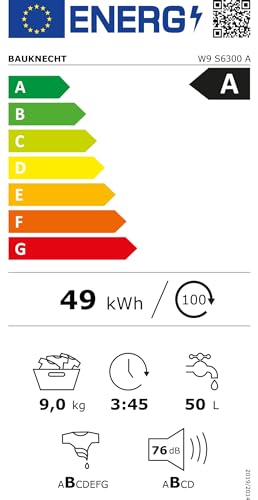
Capacity
9 kg
This washing machine holds 9 kg, which is more than 53.6% of washing machines and equal to 23.9% of washing machines.
Drum volume
?
Spin-drying efficiency class
B
This washing machine has spin-drying class B, which is more efficient than in 10% of washing machines and the same as in 83.5% of washing machines.
Maximum spin speed
1,400 RPM
This washing machine spins at 1,400 RPM, which is faster than 31.2% of washing machines and equal to 63.8% of washing machines.
Minimum spin speed
?
Show more
Energy efficiency class
A
This washing machine has energy class A, which is better than 38.3% of washing machines and the same as 61.7% of washing machines.
Energy consumption per 100 cycles
49 kWh/100 cycles
This washing machine uses 49 kWh/100 cycles, which is lower than 50.7% of washing machines and equal to 12.7% of washing machines.
Annual energy consumption
107.8 kWh/year
This washing machine uses 107.8 kWh/year, which is lower than 55.1% of washing machines and equal to 12% of washing machines.
Annual energy cost
26.9 £
This washing machine has a yearly running cost of £26.9, which is lower than 64.8% of washing machines and equal to 2.6% of washing machines.
Water consumption per cycle
50 L
This washing machine uses 50 L of water per cycle, which is higher than 69.6% of washing machines and equal to 13.5% of washing machines.
Show more
N. of washing programs
16
This washing machine offers 16 wash programmes, which is more than 76.4% of washing machines and equal to 15.8% of washing machines.
N. of downloadable programs
?
N. of washing programs under 1 hour
?
Fastest cycle duration
30 min
This washing machine has a fastest cycle of 30 min, which is longer than 83.7% of washing machines and equal to 14.5% of washing machines.
ECO cycle duration
225 min
This washing machine has an ECO cycle of 225 min, which is longer than 57.1% of washing machines and equal to 1.8% of washing machines.
Show more
N. of advanced features
?
Foam control system
?
Laundry detection system
yes
This washing machine has a laundry detection system. 92.7% of washing machines have this feature.
Unbalanced load detection
yes
This washing machine has unbalanced load detection. 91.7% of washing machines have unbalanced load detection.
Load balancing system
no
This washing machine does not feature a load balancing system. 46.8% of washing machines have a load balancing system.
Show more
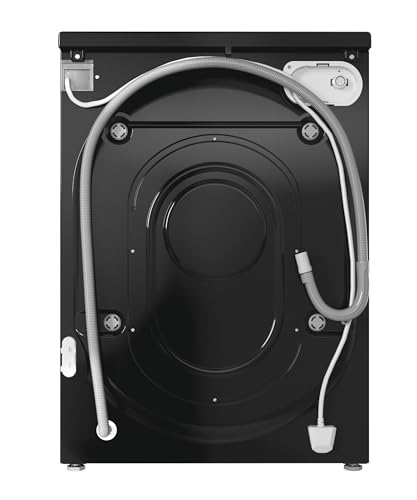
Color
black
This washing machine comes in black, which is less conventional than the colour in 86.1% of washing machines and the same as the colour in 5% of washing machines.
Type
self-standing
This washing machine is self-standing, which is more flexible to place than the type in 3.3% of washing machines and the same as the type in 96.8% of washing machines.
Loading type
front-loading
This washing machine is front-loading, which is more practical than the design in 9% of washing machines and the same as the design in 91% of washing machines.
Display
yes
This washing machine has a display. 96.2% of washing machines have a display.
Child lock
yes
This washing machine has a child lock. 99.7% of washing machines have a child lock.
Show more

Bauknecht W9 S6300 A vs the average washing machine

246810TotalPerformanceEnergy efficiencyWashing programsFeaturesDesign
  • 1 more wash programmes
    This washing machine offers more wash programmes than the average washing machine (16 vs 15). The average washing machine offers 15 wash programmes.
    16 vs 15
  • Has the AquaStop feature
    This washing machine has the AquaStop feature, the average washing machine does not. 36.3% of washing machines have an AquaStop feature.
  • Refresh cycle
    This washing machine has a Refresh cycle, which the average washing machine does not include. 24.1% of washing machines have a Refresh cycle.
  • 1 kg more capacity
    This washing machine holds more laundry than the average washing machine (9 kg vs 8 kg). The average washing machine holds 8 kg.
    9 kg vs 8 kg
  • Baby-care cycle
    This washing machine has a special cycle for baby's clothes, the average washing machine does not have. 46.5% of washing machines have such cycle.
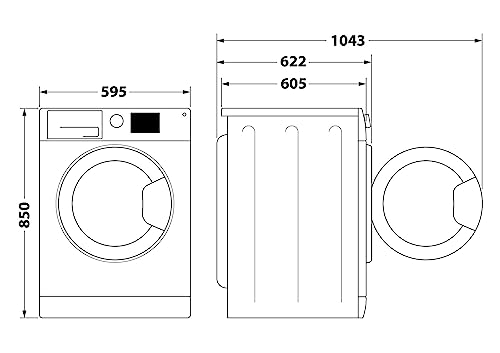
  • 0.3 cm narrower
    This washing machine is narrower than the average washing machine (59.5 cm vs 59.8 cm). The average washing machine is 59.8 cm wide.
    59.5 cm vs 59.8 cm
  • 1 kWh/100 cycles less energy use
    This washing machine uses less electricity than the average washing machine (49 kWh/100 cycles vs 50 kWh/100 cycles). The average washing machine uses 50 kWh/100 cycles.
    49 kWh/100 cycles vs 50 kWh/100 cycles
  • 1 kg more capacity
    This washing machine holds more laundry than the average washing machine (9 kg vs 8 kg). The average washing machine holds 8 kg.
    9 kg vs 8 kg
  • 1 kWh/100 cycles less energy use
    This washing machine uses less electricity than the average washing machine (49 kWh/100 cycles vs 50 kWh/100 cycles). The average washing machine uses 50 kWh/100 cycles.
    49 kWh/100 cycles vs 50 kWh/100 cycles
  • 1 more wash programmes
    This washing machine offers more wash programmes than the average washing machine (16 vs 15). The average washing machine offers 15 wash programmes.
    16 vs 15
  • Refresh cycle
    This washing machine has a Refresh cycle, which the average washing machine does not include. 24.1% of washing machines have a Refresh cycle.
  • Baby-care cycle
    This washing machine has a special cycle for baby's clothes, the average washing machine does not have. 46.5% of washing machines have such cycle.
  • Has the AquaStop feature
    This washing machine has the AquaStop feature, the average washing machine does not. 36.3% of washing machines have an AquaStop feature.
  • 0.3 cm narrower
    This washing machine is narrower than the average washing machine (59.5 cm vs 59.8 cm). The average washing machine is 59.8 cm wide.
    59.5 cm vs 59.8 cm
  • 3 L more water per cycle
    This washing machine uses more water per cycle than the average washing machine (50 L vs 47 L). The average washing machine uses 47 L of water per cycle.
    50 L vs 47 L
  • 2 dB louder spinning
    This washing machine is louder on spin than the average washing machine (76 dB vs 74 dB). The average washing machine spins at 74 dB.
    76 dB vs 74 dB
  • Does not have an outdoor/sport cycle
    This washing machine does not have a special cycle for outdoor/sport clothes, while the average washing machine does. 72.9% of washing machines have such a cycle.
  • 15 min longer quickest cycle
    This washing machine has a longer fastest cycle than the average washing machine (30 min vs 15 min). The average washing machine's quickest cycle takes 15 min.
    30 min vs 15 min
  • 9.1% larger volume
    This washing machine has a larger volume than the average washing machine (305978.8 cm³ vs 280500 cm³). The average washing machine has a volume of 280500 cm³.
    305,978.75 cm³ vs 280,500 cm³
  • 4 cm deeper
    This washing machine is deeper than the average washing machine (60.5 cm vs 56.5 cm). The average washing machine is 56.5 cm deep.
    60.5 cm vs 56.5 cm
  • 7 min longer eco cycle
    This washing machine has a longer ECO cycle than the average washing machine (225 min vs 218 min). The average washing machine's ECO cycle takes 218 min.
    225 min vs 218 min
  • More unusual colour
    This washing machine comes in a less conventional colour than the average washing machine (black vs white).
    black vs white
  • 26.8% more expensive
    Bauknecht W9 S6300 A is more expensive than the average washing machine (£520 vs £410).
    £520 vs £410
  • 2 dB louder spinning
    This washing machine is louder on spin than the average washing machine (76 dB vs 74 dB). The average washing machine spins at 74 dB.
    76 dB vs 74 dB
  • 3 L more water per cycle
    This washing machine uses more water per cycle than the average washing machine (50 L vs 47 L). The average washing machine uses 47 L of water per cycle.
    50 L vs 47 L
  • 6.4% higher yearly water use
    This washing machine uses more water per year than the average washing machine (11000 L/year vs 10340 L/year). The average washing machine uses 10340 L/year of water a year.
    11,000 L/year vs 10,340 L/year
  • 1.25 £ higher yearly water cost
    This washing machine costs more for water than the average washing machine (20.9 £ vs 19.6 £). The average washing machine has a yearly water cost of 19.646 £.
    20.9 £ vs 19.646 £
  • Does not have an outdoor/sport cycle
    This washing machine does not have a special cycle for outdoor/sport clothes, while the average washing machine does. 72.9% of washing machines have such a cycle.
  • 15 min longer quickest cycle
    This washing machine has a longer fastest cycle than the average washing machine (30 min vs 15 min). The average washing machine's quickest cycle takes 15 min.
    30 min vs 15 min
  • 7 min longer eco cycle
    This washing machine has a longer ECO cycle than the average washing machine (225 min vs 218 min). The average washing machine's ECO cycle takes 218 min.
    225 min vs 218 min
  • 9.1% larger volume
    This washing machine has a larger volume than the average washing machine (305978.8 cm³ vs 280500 cm³). The average washing machine has a volume of 280500 cm³.
    305,978.75 cm³ vs 280,500 cm³
  • 4 cm deeper
    This washing machine is deeper than the average washing machine (60.5 cm vs 56.5 cm). The average washing machine is 56.5 cm deep.
    60.5 cm vs 56.5 cm
  • More unusual colour
    This washing machine comes in a less conventional colour than the average washing machine (black vs white).
    black vs white
  • 2.2% heavier
    This washing machine is heavier than the average washing machine (68.5 kg vs 67 kg). The average washing machine weighs 67 kg.
    68.5 kg vs 67 kg

Third-party reviews

What we like about Bauknecht W9 S6300 A

  • Energy class A, at 49 kWh per 100 cycles.
  • 16 washing programs give plenty of choice.
  • The Baby Care cycle suits clothes for a new baby.
  • The Wool cycle suits knitwear.
  • The anti-stain function helps with marks.
  • A 1400 RPM spin takes more water out before drying.

What we don't like about Bauknecht W9 S6300 A

  • Spin noise of 76 dB is loud in a small flat.
  • The ECO cycle takes 225 min, so the low-power option is slow.
  • Loads over 9 kg need two runs.
  • At 60.5 cm deep, it needs a good run of floor space.
  • At 68.5 kg it is heavy to move.

Verdict

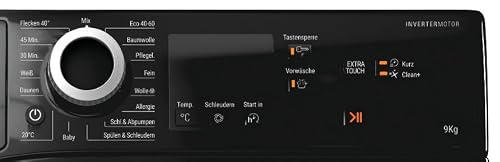
A couple or a small family that washes on a steady routine will like the Bauknecht W9 S6300 A. It uses 49 kWh per 100 cycles and has an inverter motor. Each cycle uses 50 L of water. There are 16 washing programs, and the Baby Care cycle is handy for a new baby's clothes. The ECO cycle takes 225 min, and the anti-stain function helps with marks. The Anti-Allergy cycle suits bedding, and the Wool cycle covers knitwear. The fastest cycle takes 30 min, so this is not the machine for a quick top-up. Spin noise reaches 76 dB, so the final minutes are easy to hear. The drum holds 9 kg, so bigger loads need two runs. It suits a buyer who is in no hurry and wants steady, low-power washing.

Compare Bauknecht W9 S6300 A with other washing machines

1Product to compare no. 1
VS
2Product to compare no. 2
VS
3Product to compare no. 3 (optional)

Graphic comparison of Bauknecht W9 S6300 A and other washing machines

No results found