Scored using Washer-dryers Methodology v1.0
Washer-dryers Methodology v1.0
Mathematical & Unbiased Scoring
Products in this category are scored under Frontum Washer-dryers Methodology v1.0: technical specifications plus authentic consumer ratings, with 0% commercial bias.
Explore Washer-dryers Methodology v1.0

Hoover H-WASH&DRY 300 ‎H3DS4965DACE Review | 104 Data compared

Avg. price:~£430Washing capacity:9 kgDrying capacity:6 kgDrying technology:condenserWashing energy efficiency class:CCombined energy efficiency class:E

Hoover H-WASH&DRY 300 ‎H3DS4965DACE Review: Compare 104 technical specifications and user reviews to see how this product ranks in the Washer-dryers category and whether it is worth buying.
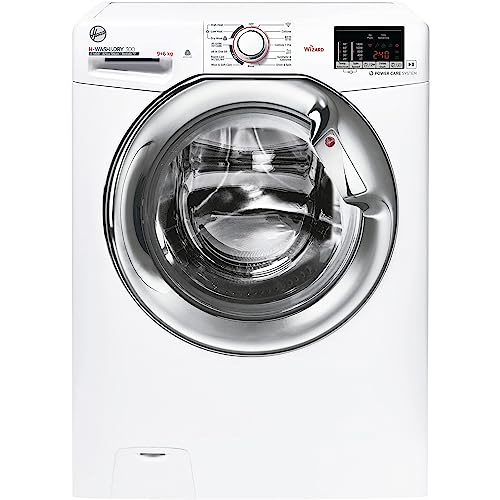
Hoover H-WASH&DRY 300 ‎H3DS4965DACE
6.6/10

Overall score

Score
6.6/ 10
✕
What it is
An overall evaluation of the washer-dryer's quality, based on technical analyses and user reviews.
When it matters
When you need a quick reference to identify the best washer-dryers on the market.
Score distribution
▼
<55-66-77-88-99-10
Score components

70%

6.2

Technical score

30%

7.6

User score

▼Worse than 76% of washer dryers
7.2

Value for money

Value for money
7.2/ 10
✕
What it is
An indicator that combines the washer-dryer's overall rating with its cost.
When it matters
When you are looking for a washer-dryer with a good balance between quality and price.
Score distribution
▼
<55-66-77-88-99-10
Score components

70%

6.6

Overall score

30%

8.6

Price

▲Better than 50%
6.2

Technical score

Technical score
6.2/ 10
✕
What it is
An assessment of the washer-dryer's technical performance, covering five key areas: performance, energy efficiency, washing and drying programs, features, and design.
When it matters
When you want to compare washer-dryers based on technical performance and available features.
Score distribution
▼
<55-66-77-88-99-10
Score components

25%

5.9

Performance

25%

5.1

Energy efficiency

25%

6.3

Washing & Drying

20%

8.0

Features

5%

6.3

Design

▼Worse than 76%
7.6

User score

User score
7.6/ 10
✕
What it is
A rating that combines user reviews and the total number of reviews received by the washer-dryer.
When it matters
When you want to know how a washer-dryer performs in everyday use and how reliable it is according to user reviews.
Score distribution
▼
<55-66-77-88-99-10
Score components

70%

7.4

User ratings

30%

8.0

Number of reviews

Based on ratings from across the web.
▼Worse than 59%
  • hoover-h-wash%26dry-300-%E2%80%8Eh3ds4965dace
hoover-h-wash%26dry-300-%E2%80%8Eh3ds4965dace
Best prices
*As an Amazon Associate, we earn from qualifying purchases.
Best rankings
Available: ranking among products currently available (including other versions of this product).All: ranking among all products in the database.
Loading...
Loading category ranking...

Technical Specifications of washer-dryer Hoover H-WASH&DRY 300 ‎H3DS4965DACE

Technical score
Technical score
6.2/ 10
✕
What it is
An assessment of the washer-dryer's technical performance, covering five key areas: performance, energy efficiency, washing and drying programs, features, and design.
When it matters
When you want to compare washer-dryers based on technical performance and available features.
Score distribution
▼
<55-66-77-88-99-10
Score components:

25%

5.9

Performance

25%

5.1

Energy efficiency

25%

6.3

Washing & Drying

20%

8.0

Features

5%

6.3

Design

6.2
User score
User score
7.6/ 10
✕
What it is
A rating that combines user reviews and the total number of reviews received by the washer-dryer.
When it matters
When you want to know how a washer-dryer performs in everyday use and how reliable it is according to user reviews.
Score distribution
▼
<55-66-77-88-99-10
Score components

70%

7.4

User ratings

30%

8.0

Number of reviews

Based on ratings from across the web.
7.6
Popularity
Popularity
8.0/ 10
✕
What it is
An indicator based on the number of reviews received by the washer-dryer.
When it matters
When you prefer to purchase a product chosen and reviewed by many other consumers.
Score distribution
▼
<55-66-77-88-99-10
Popularity:
Hoover H-WASH&DRY 300 ‎H3DS4965DACE has a user popularity of 8 points, which is lower than 64.6% of washer-dryers.
8.0
Value for money
Value for money
7.2/ 10
✕
What it is
An indicator that combines the washer-dryer's overall rating with its cost.
When it matters
When you are looking for a washer-dryer with a good balance between quality and price.
Score distribution
▼
<55-66-77-88-99-10
Score components:

70%

6.6

Overall score

30%

8.6

Price

7.2
Washing capacity
9 kg
This washer-dryer has a washing capacity of 9 kg which is bigger than the capacity of 45% of washer-dryers and equal to the capacity of 29.6% of washer-dryers.
Drying capacity
6 kg
This washer-dryer has a drying capacity of 6 kg which is bigger than the capacity of 37.6% of washer-dryers and equal to the capacity of 51.3% of washer-dryers.
Drum volume
?
Spin efficiency class
B
This washer-dryer has B spin efficiency class which is better than the spin efficiency class of 1.1% of washer-dryers and equal to that of 84.7% of washer-dryers.
Maximum spin speed
1,400 RPM
The maximum spin speed of this washer-dryer is 1,400 RPM which is higher than the maximum spin speed of 6.4% of washer-dryers and equal to the maximum spin speed of 71.4% of washer-dryers.
Show more
Washing energy efficiency class
C
This washer-dryer has C washing energy efficiency class which is worse than the washing energy efficiency of 67.2% of washer-dryers and equal to that of 17.5% of washer-dryers.
Combined energy efficiency class
E
This washer-dryer has E combined energy efficiency class which is better than the combined energy efficiency of 3.8% of washer-dryers and equal to that of 50.8% of washer-dryers.
Energy consumption per 100 washing cycles
66 kWh/100 cycles
This washer-dryer has an energy consumption per 100 washing cycles of 66 kWh/100 cycles which is higher than the energy consumption of 79.4% of washer-dryers and equal to that of 1.6% of washer-dryers.
Energy consumption per 100 combined cycles
377 kWh/100 cycles
This washer-dryer has an energy consumption per 100 combined cycles of 377 kWh/100 cycles which is higher than the energy consumption of 78.3% of washer-dryers and equal to that of 9.5% of washer-dryers.
Water consumption per washing cycle
49 L
This washer-dryer has a water consumption per washing cycle of 49 L which is higher than the water consumption of 56.6% of washer-dryers and equal to that of 9.5% of washer-dryers.
Show more
Number of washing programs
12
This washer-dryer has 12 different washing programs which is less than the n. of programs of 74.1% of washer-dryers and equal to that of 6.4% of washer-dryers.
Cottons, Eco 40-60, Wash & Dry, Cotton + Prewash, 20°C, Synthetic & Colored, Drain & Spin, Rinse, Wool & Soft Care, Rapid Care 14' 30' 44', All In One 59', Remote Control (Wi-Fi)
Number of drying programs
4
This washer-dryer has 4 different drying programs which is more than the n. of programs of 48.2% of washer-dryers and equal to that of 41.3% of washer-dryers.
Wool Dry, Low Heat, High Heat, Wash & Dry
Fast washing cycle duration
14 min
The fast washing cycle duration of this washer-dryer is 14 min which is less than the fast cycle duration of 63.4% of washer-dryers and equal to that of 36.6% of washer-dryers.
Maximum washing cycle duration
228 min
The maximum washing cycle duration of this washer-dryer is 228 min which is less than the maximum cycle duration of 59.6% of washer-dryers and equal to that of 14.8% of washer-dryers.
Maximum combined cycle duration
470 min
The maximum combined cycle duration of this washer-dryer is 470 min which is more than the maximum combined duration of 60.3% of washer-dryers and equal to that of 4.4% of washer-dryers.
Show more
N. of features
21
This washer-dryer has 21 advanced features, which is more than the number of features in 68.8% of washer-dryers and equal to the number in 9.5% of washer-dryers.
Foam control system, Unbalanced load detection, Automatic load balancing during spin, Laundry detection system, Automatic drying, Pre-mix technology, Favorite function, Wi-Fi, Bluetooth, Voice control, Wash assist, Consumption statistics, Smart diagnosis, Time remaining indicator, Time remaining indicator, Steam function, Anti-stain function, Anti-crease function, Pause & Add Feature, Delay start option, Drying level selection
N. of downloadable programs
40
This washer-dryer has 40 downloadable programs which is more than the n. of programs of 73.7% of washer-dryers and equal to that of 5.3% of washer-dryers.
Foam control system
yes
This washer-dryer features a foam control system. 59.5% of washer-dryers have a foam control system.
Unbalanced load detection
yes
This washer-dryer has unbalanced load detection. 94.7% of washer-dryers have this feature.
Automatic load balancing during spin
yes
This washer-dryer features automatic load balancing. 38.9% of washer-dryers have automatic load balancing.
Show more
Installation type
free-standing
This washer-dryer is free-standing type. 9.5% of washer-dryers a different type.
Color
white
This washer-dryer is white in color. 76.8%.
Display
yes
This washer-dryer has a display. 100% of washer-dryers have a display.
Noise-reducing design
no
This washer-dryer does not have a noise-reducing design. 7.4% of washer-dryers have a noise-reducing design.
Special drum design
no
This washer-dryer does not have a special drum design. 47.9% of washer-dryers have a special drum design.
Show more

Hoover H-WASH&DRY 300 ‎H3DS4965DACE vs the average washer-dryer

246810TotalPerformanceEnergy efficiencyWashing & DryingFeaturesDesign
  • 7 more advanced feature/s
    This washer-dryer has a higher number of advanced features than the average washer-dryer (21 vs 14). The average washer-dryer has 14 advanced features.
    Foam control system, Unbalanced load detection, Automatic load balancing during spin, Laundry detection system, Automatic drying, Pre-mix technology, Favorite function, Wi-Fi, Bluetooth, Voice control, Wash assist, Consumption statistics, Smart diagnosis, Time remaining indicator, Time remaining indicator, Steam function, Anti-stain function, Anti-crease function, Pause & Add Feature, Delay start option, Drying level selection
    21 vs 14
  • Has Wi-Fi
    This washer-dryer has Wi-Fi, the average washer-dryer does not. 31.1% of washer-dryers have Wi-Fi.
  • Has automatic load balancing
    This washer-dryer features automatic load balancing, the average washer-dryer does not. 38.9% of washer-dryers have automatic load balancing.
  • Features pre-mix technology
    This washer-dryer features pre-mix technology, the average washer-dryer does not. 38.4% of washer-dryers have pre-mix technology.
    Power Care System (pre-mixes detergent and water for deep fiber penetration and better stain removal at low temperatures)
  • Has a colors cycle
    This washer-dryer has a colors cycle, the average washer-dryer does not. 32.6% of washer-dryers have a colors cycle.
  • Has Bluetooth
    This washer-dryer features Bluetooth technology, the average washer-dryer does not. 14.2% of washer-dryers have Bluetooth technology.
  • Can be controlled by voice
    This washer-dryer can be controlled by voice, the average washer-dryer cannot. 42.1% of washer-dryers can be controlled by voice.
  • Can save favorite settings
    This washer-dryer can save selected settings to favorites, the average washer-dryer cannot. 45.8% of washer-dryers have this feature.
    In-app function
  • 30.2% cheaper
    Hoover H-WASH&DRY 300 ‎H3DS4965DACE is cheaper than the average washer-dryer (£430 vs £560). The average washer-dryer costs 560.000.
    £430 vs £560
  • Has a colors cycle
    This washer-dryer has a colors cycle, the average washer-dryer does not. 32.6% of washer-dryers have a colors cycle.
  • 1 min shorter fast washing cycle
    The fast washing cycle duration of this washer-dryer is shorter than the fast cycle duration of the average washer-dryer (14 min vs 15 min). The fast cycle duration of an average washer-dryer takes 15 min.
    14 min vs 15 min
  • 7 more advanced feature/s
    This washer-dryer has a higher number of advanced features than the average washer-dryer (21 vs 14). The average washer-dryer has 14 advanced features.
    Foam control system, Unbalanced load detection, Automatic load balancing during spin, Laundry detection system, Automatic drying, Pre-mix technology, Favorite function, Wi-Fi, Bluetooth, Voice control, Wash assist, Consumption statistics, Smart diagnosis, Time remaining indicator, Time remaining indicator, Steam function, Anti-stain function, Anti-crease function, Pause & Add Feature, Delay start option, Drying level selection
    21 vs 14
  • Has Wi-Fi
    This washer-dryer has Wi-Fi, the average washer-dryer does not. 31.1% of washer-dryers have Wi-Fi.
  • Has automatic load balancing
    This washer-dryer features automatic load balancing, the average washer-dryer does not. 38.9% of washer-dryers have automatic load balancing.
  • Features pre-mix technology
    This washer-dryer features pre-mix technology, the average washer-dryer does not. 38.4% of washer-dryers have pre-mix technology.
    Power Care System (pre-mixes detergent and water for deep fiber penetration and better stain removal at low temperatures)
  • Has Bluetooth
    This washer-dryer features Bluetooth technology, the average washer-dryer does not. 14.2% of washer-dryers have Bluetooth technology.
  • Can save favorite settings
    This washer-dryer can save selected settings to favorites, the average washer-dryer cannot. 45.8% of washer-dryers have this feature.
    In-app function
  • Can be controlled by voice
    This washer-dryer can be controlled by voice, the average washer-dryer cannot. 42.1% of washer-dryers can be controlled by voice.
  • 3 kg lighter
    This washer-dryer is lighter than the average washer-dryer (65 kg vs 68 kg). The average washer-dryer weighs 68 kg.
    65 kg vs 68 kg
  • Does not have an inverter motor
    This washer-dryer does not have an inverter motor, the average washer-dryer does. 89.5% of washer-dryers have an inverter motor.
  • 51.5 kWh/100 cycles higher energy consumption for combined cycles
    This washer-dryer has a higher energy consumption for combined cycles than the average washer-dryer (377 kWh/100 cycles vs 325.5 kWh/100 cycles). The average washer-dryer consumes 325.5 kWh/100 cycles per 100 combined cycles.
    377 kWh/100 cycles vs 325.5 kWh/100 cycles
  • 11 kWh/100 cycles higher energy consumption for washing
    This washer-dryer has a higher energy consumption for washing than the average washer-dryer (66 kWh/100 cycles vs 55 kWh/100 cycles). The average washer-dryer consumes 55 kWh/100 cycles per 100 washing cycles.
    66 kWh/100 cycles vs 55 kWh/100 cycles
  • 1 fewer washing program/s
    This washer-dryer has fewer washing programs than the average washer-dryer (12 vs 13). The average washer-dryer has 13 washing programs.
    Cottons, Eco 40-60, Wash & Dry, Cotton + Prewash, 20°C, Synthetic & Colored, Drain & Spin, Rinse, Wool & Soft Care, Rapid Care 14' 30' 44', All In One 59', Remote Control (Wi-Fi)
    12 vs 13
  • 6 dB louder during spinning
    This washer-dryer is louder during spinning than the average washer-dryer (81 dB vs 75 dB). The average washer-dryer has a spinning noise level of 75 dB.
    81 dB vs 75 dB
  • No selectable drying times
    This washer-dryer does not have selectable drying times, the average washer-dryer does. 84.7% of washer-dryers have selectable drying times.
  • Does not have an extra rinse function
    This washer-dryer does not have a special extra rinse function, the average washer-dryer does. 66.8% of washer-dryers feature such function.
  • No self-cleaning cycle
    This washer-dryer does not have a self-cleaning cycle, the average washer-dryer does. 72.1% of washer-dryers have a self-cleaning cycle.
  • Does not have an inverter motor
    This washer-dryer does not have an inverter motor, the average washer-dryer does. 89.5% of washer-dryers have an inverter motor.
  • 6 dB louder during spinning
    This washer-dryer is louder during spinning than the average washer-dryer (81 dB vs 75 dB). The average washer-dryer has a spinning noise level of 75 dB.
    81 dB vs 75 dB
  • 1 fewer spin speed options
    This washer-dryer has fewer spin speeds than the average washer-dryer (4 vs 5). The average washer-dryer has 5 spin speeds.
    400, 800, 1,000, 1,400 RPM
    4 vs 5
  • Worse noise emission class
    This washer-dryer has a worse noise emission class than the average washer-dryer (D vs B). The average washer-dryer has the B noise emission class.
    D vs B
  • 51.5 kWh/100 cycles higher energy consumption for combined cycles
    This washer-dryer has a higher energy consumption for combined cycles than the average washer-dryer (377 kWh/100 cycles vs 325.5 kWh/100 cycles). The average washer-dryer consumes 325.5 kWh/100 cycles per 100 combined cycles.
    377 kWh/100 cycles vs 325.5 kWh/100 cycles
  • 11 kWh/100 cycles higher energy consumption for washing
    This washer-dryer has a higher energy consumption for washing than the average washer-dryer (66 kWh/100 cycles vs 55 kWh/100 cycles). The average washer-dryer consumes 55 kWh/100 cycles per 100 washing cycles.
    66 kWh/100 cycles vs 55 kWh/100 cycles
  • Worse washing energy efficiency class
    This washer-dryer has a worse washing energy efficiency class than the average washer-dryer (C vs B). The average washer-dryer is classified in the B washing energy efficiency rating class.
    C vs B
  • 7 L higher water consumption for combined cycles
    This washer-dryer has a higher water consumption for combined cycles than the average washer-dryer (86 L vs 79 L). The average washer-dryer consumes 79 L per combined cycle.
    86 L vs 79 L
  • 1 L higher water consumption for washing
    This washer-dryer has a higher water consumption for washing than the average washer-dryer (49 L vs 48 L). The average washer-dryer consumes 48 L per washing cycle.
    49 L vs 48 L
  • 22 kWh/year higher annual energy consumption (wash)
    This washer-dryer has a higher annual energy consumption (wash) than the average washer-dryer (132 kWh/year vs 110 kWh/year). The average washer-dryer consumes 110 kWh/year per year for washing.
    132 kWh/year vs 110 kWh/year
  • 103 kWh/year higher annual energy consumption (combined)
    This washer-dryer has a higher annual energy consumption (wash & dry) than the average washer-dryer (754 kWh/year vs 651 kWh/year). The average washer-dryer consumes 651 kWh/year per year for combined cycles.
    754 kWh/year vs 651 kWh/year
  • 1 fewer washing program/s
    This washer-dryer has fewer washing programs than the average washer-dryer (12 vs 13). The average washer-dryer has 13 washing programs.
    Cottons, Eco 40-60, Wash & Dry, Cotton + Prewash, 20°C, Synthetic & Colored, Drain & Spin, Rinse, Wool & Soft Care, Rapid Care 14' 30' 44', All In One 59', Remote Control (Wi-Fi)
    12 vs 13
  • No selectable drying times
    This washer-dryer does not have selectable drying times, the average washer-dryer does. 84.7% of washer-dryers have selectable drying times.
  • Does not have an extra rinse function
    This washer-dryer does not have a special extra rinse function, the average washer-dryer does. 66.8% of washer-dryers feature such function.
  • No self-cleaning cycle
    This washer-dryer does not have a self-cleaning cycle, the average washer-dryer does. 72.1% of washer-dryers have a self-cleaning cycle.
  • Does not have a gentle cycle
    This washer-dryer does not have a gentle cycle, the average washer-dryer does. 77.4% of washer-dryers have a gentle cycle.
  • 7 min shorter maximum washing cycle
    The maximum washing cycle duration of this washer-dryer is shorter than the maximum cycle duration of the average washer-dryer (228 min vs 221 min). The maximum cycle duration of an average washer-dryer takes 221 min.
    228 min vs 221 min

Third-party reviews

Based on ratings from across the web.
Reviews last updated: October 2026 · How we calculate this

Verdict

The freestanding Hoover H-WASH&DRY 300 H3DS4965DACE washer-dryer provides comprehensive family laundry care with a nine-kilogram wash capacity and a six-kilogram condensation drying drum. Spinning reaches up to 1400 revolutions per minute with a sound output of 81 decibels under standard motor propulsion. Wash-only cycles achieve energy efficiency class C with 66 kilowatt-hours and 49 liters of water per cycle. The full continuous wash and dry cycle is rated in energy class E with 377 kilowatt-hours and 86 liters of water per hundred cycles. Smart connectivity through the hOn mobile application allows users to download specialized cycles and run remote diagnostics, while built-in steam treatments relax fabric fibers to reduce iron work. A rapid 14-minute cycle handles urgent refreshes, and the cabinet measures 60 centimeters wide, 58 centimeters deep, and 85 centimeters high.

Compare Hoover H-WASH&DRY 300 ‎H3DS4965DACE with other washer-dryers

1Product to compare no. 1
VS
2Product to compare no. 2
VS
3Product to compare no. 3 (optional)

Graphic comparison of Hoover H-WASH&DRY 300 ‎H3DS4965DACE and other washer-dryers

No results found