Scored using Washer-dryers Methodology v1.0
Washer-dryers Methodology v1.0
Mathematical & Unbiased Scoring
Products in this category are evaluated mathematically under Frontumo Washer-dryers Methodology v1.0 using verified laboratory benchmarks, technical specifications, and authentic consumer ratings with 0% commercial bias.
Explore Washer-dryers Methodology v1.0

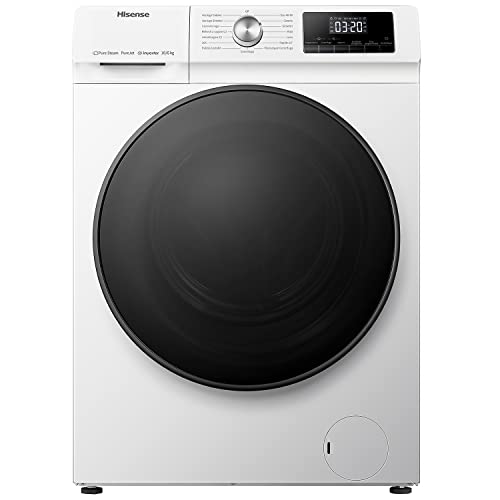
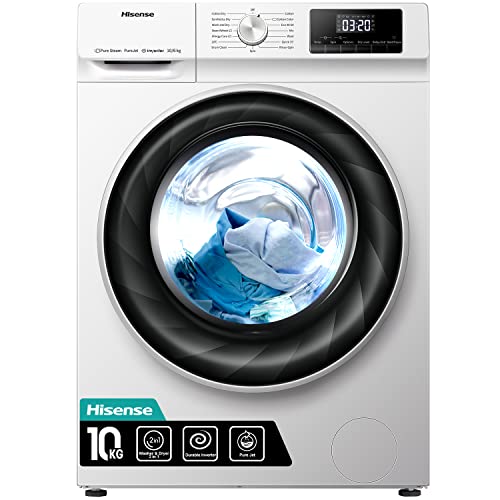
Hisense WDQR1014EVAJMB Review | 104 Data compared

Avg. price:~£420Washing capacity:10 kgDrying capacity:6 kgDrying technology:condenserWashing energy efficiency class:BCombined energy efficiency class:E

Hisense WDQR1014EVAJMB Review: Compare 104 technical specifications and user reviews to see how this product ranks in the Washer-dryers category and whether it is worth buying.

6.8

Overall score

Score
6.8/ 10
✕
What it is
An overall evaluation of the washer-dryer's quality, based on technical analyses and user reviews.
When it matters
When you need a quick reference to identify the best washer-dryers on the market.
Score distribution
▼
<55-66-77-88-99-10
Score components

70%

6.5

Technical score

30%

7.7

User score

▼Worse than 70% of washer-dryers
6.5

Technical score

Technical score
6.5/ 10
✕
What it is
An assessment of the washer-dryer's technical performance, covering five key areas: performance, energy efficiency, washing and drying programs, features, and design.
When it matters
When you want to compare washer-dryers based on technical performance and available features.
Score distribution
▼
<55-66-77-88-99-10
Score components

25%

8.2

Performance

25%

6.3

Energy efficiency

25%

5.7

Washing & Drying

20%

5.1

Features

5%

7.5

Design

▼Worse than 66% of washer-dryers
7.7

User score

User score
7.7/ 10
✕
What it is
A rating that combines user reviews and the total number of reviews received by the washer-dryer.
When it matters
When you want to know how a washer-dryer performs in everyday use and how reliable it is according to user reviews.
Score distribution
▼
<55-66-77-88-99-10
Score components

70%

7.0

User ratings

30%

9.3

Number of reviews

Based on 258 buyer reviews from online shops.
How we calculate this
User ratings – average star rating across all shop listings, weighted by how many reviews each has, on a 1–10 scale.
Number of reviews – how many buyer reviews the product has, on a logarithmic scale; the 8% most-reviewed models in the category get 10.
▼Worse than 57% of washer-dryers
  • No image
No image

Best prices

*As an Amazon Associate, we earn from qualifying purchases.

Best rankings

Available: ranking among products currently available (including other versions of this product).All: ranking among all products in the database.
Loading...
Loading category ranking...

Technical Specifications of washer-dryer Hisense WDQR1014EVAJMB

Technical score
Technical score
6.5/ 10
✕
What it is
An assessment of the washer-dryer's technical performance, covering five key areas: performance, energy efficiency, washing and drying programs, features, and design.
When it matters
When you want to compare washer-dryers based on technical performance and available features.
Score distribution
▼
<55-66-77-88-99-10
Score components:

25%

8.2

Performance

25%

6.3

Energy efficiency

25%

5.7

Washing & Drying

20%

5.1

Features

5%

7.5

Design

6.5
User score
User score
7.7/ 10
✕
What it is
A rating that combines user reviews and the total number of reviews received by the washer-dryer.
When it matters
When you want to know how a washer-dryer performs in everyday use and how reliable it is according to user reviews.
Score distribution
▼
<55-66-77-88-99-10
Score components

70%

7.0

User ratings

30%

9.3

Number of reviews

Based on 258 buyer reviews from online shops.
How we calculate this
User ratings – average star rating across all shop listings, weighted by how many reviews each has, on a 1–10 scale.
Number of reviews – how many buyer reviews the product has, on a logarithmic scale; the 8% most-reviewed models in the category get 10.
7.7
Popularity
Popularity
9.3/ 10
✕
What it is
An indicator based on the number of reviews received by the washer-dryer.
When it matters
When you prefer to purchase a product chosen and reviewed by many other consumers.
Score distribution
▼
<55-66-77-88-99-10
Popularity:
Hisense WDQR1014EVAJMB has a user popularity of 9.3 points, which is lower than 78.8% of washer-dryers.
9.3
Value for money
Value for money
7.4/ 10
✕
What it is
An indicator that combines the washer-dryer's overall rating with its cost.
When it matters
When you are looking for a washer-dryer with a good balance between quality and price.
Score distribution
▼
<55-66-77-88-99-10
Score components:

60%

6.8

Overall score

40%

8.7

Price

7.4
Washing capacity
10 kg
Washing capacity
10 kg
This washer-dryer has a washing capacity of 10 kg which is bigger than the capacity of 75.1% of washer-dryers and equal to the capacity of 16.9% of washer-dryers.
Drying capacity
6 kg
Drying capacity
6 kg
This washer-dryer has a drying capacity of 6 kg which is bigger than the capacity of 37.6% of washer-dryers and equal to the capacity of 51.3% of washer-dryers.
Drum volume
?
Spin efficiency class
B
Spin efficiency class
B
This washer-dryer has B spin efficiency class which is better than the spin efficiency class of 1.1% of washer-dryers and equal to that of 84.7% of washer-dryers.
Maximum spin speed
1,400 RPM
Maximum spin speed
1,400 RPM
The maximum spin speed of this washer-dryer is 1,400 RPM which is higher than the maximum spin speed of 6.4% of washer-dryers and equal to the maximum spin speed of 71.4% of washer-dryers.
Show more
Washing energy efficiency class
B
Washing energy efficiency class
B
This washer-dryer has B washing energy efficiency class which is better than the washing energy efficiency of 33.3% of washer-dryers and equal to that of 18.5% of washer-dryers.
Combined energy efficiency class
E
Combined energy efficiency class
E
This washer-dryer has E combined energy efficiency class which is better than the combined energy efficiency of 3.8% of washer-dryers and equal to that of 50.8% of washer-dryers.
Energy consumption per 100 washing cycles
60 kWh/100 cycles
Energy consumption per 100 washing cycles
60 kWh/100 cycles
This washer-dryer has an energy consumption per 100 washing cycles of 60 kWh/100 cycles which is higher than the energy consumption of 63% of washer-dryers and equal to that of 1.1% of washer-dryers.
Energy consumption per 100 combined cycles
370 kWh/100 cycles
Energy consumption per 100 combined cycles
370 kWh/100 cycles
This washer-dryer has an energy consumption per 100 combined cycles of 370 kWh/100 cycles which is higher than the energy consumption of 70.9% of washer-dryers and equal to that of 1.6% of washer-dryers.
Water consumption per washing cycle
40 L
Water consumption per washing cycle
40 L
This washer-dryer has a water consumption per washing cycle of 40 L which is lower than the water consumption of 95.2% of washer-dryers and equal to that of 3.2% of washer-dryers.
Show more
Number of washing programs
12
Number of washing programs
12
This washer-dryer has 12 different washing programs which is less than the n. of programs of 74.1% of washer-dryers and equal to that of 6.4% of washer-dryers.
Cotton, Synthetics, Wool, Quick 15', Mix, Eco 40-60, Spin, Wash & Dry, Steam Refresh, Allergy Care, 20°C, Drum Clean
Number of drying programs
3
Number of drying programs
3
This washer-dryer has 3 different drying programs which is less than the n. of programs of 52.4% of washer-dryers and equal to that of 15.3% of washer-dryers.
Cotton Dry, Synthetic Dry, Wash & Dry
Fast washing cycle duration
15 min
Fast washing cycle duration
15 min
The fast washing cycle duration of this washer-dryer is 15 min which is less than the fast cycle duration of 24% of washer-dryers and equal to that of 38.9% of washer-dryers.
The Hisense Quick Wash program washes loads around 1kg with a 15-minute fast wash.
Maximum washing cycle duration
239 min
Maximum washing cycle duration
239 min
The maximum washing cycle duration of this washer-dryer is 239 min which is less than the maximum cycle duration of 82.5% of washer-dryers and equal to that of 9.8% of washer-dryers.
Maximum combined cycle duration
463 min
Maximum combined cycle duration
463 min
The maximum combined cycle duration of this washer-dryer is 463 min which is more than the maximum combined duration of 70.7% of washer-dryers and equal to that of 0.5% of washer-dryers.
Show more
N. of features
14
N. of features
14
This washer-dryer has 14 advanced features, which is more than the number of features in 37% of washer-dryers and equal to the number in 13.2% of washer-dryers.
Foam control system, Unbalanced load detection, Laundry detection system, Automatic dosing system, Water jets system, Time remaining indicator, Time remaining indicator, Steam function, Extra rinse function, Anti-crease function, Power-Save mode, Pause & Add Feature, Delay start option, Drying level selection
N. of downloadable programs
-
Foam control system
yes
Foam control system
yes
This washer-dryer features a foam control system. 59.5% of washer-dryers have a foam control system.
Unbalanced load detection
yes
Unbalanced load detection
yes
This washer-dryer has unbalanced load detection. 94.7% of washer-dryers have this feature.
Automatic load balancing during spin
no
Automatic load balancing during spin
no
This washer-dryer does not feature automatic load balancing. 38.9% of washer-dryers have automatic load balancing.
Show more
Installation type
free-standing
Installation type
free-standing
This washer-dryer is free-standing type. 9.5% of washer-dryers a different type.
Color
black
Color
black
This washer-dryer is black in color. 0%.
Display
yes
Display
yes
This washer-dryer has a display. 100% of washer-dryers have a display.
The Big LED Touchscreen allows you to easily select your preferred program from a wide range of options.
Noise-reducing design
no
Noise-reducing design
no
This washer-dryer does not have a noise-reducing design. 7.4% of washer-dryers have a noise-reducing design.
Special drum design
yes
Special drum design
yes
This washer-dryer has a special drum design. 47.9% of washer-dryers have a special drum design.
Snowflake Pattern Drum (unique embossed design removes tough stains while being gentle on delicate fabrics, with chrome finish that lasts longer and repels debris)
Show more

Hisense WDQR1014EVAJMB vs the average washer-dryer

246810TotalPerformanceEnergy efficiencyWashing & DryingFeaturesDesign
  • 8 L lower water consumption for washing
    Water consumption per washing cycle
    40 L
    This washer-dryer has a lower water consumption for washing than the average washer-dryer (40 L vs 48 L). The average washer-dryer consumes 48 L per washing cycle.
    40 L vs 48 L
  • 4 dB more silent during washing
    Washing noise level
    50 dB
    This washer-dryer is more silent during washing than the average washer-dryer (50 dB vs 54 dB). The average washer-dryer has a washing noise level of 54 dB.
    50 dB vs 54 dB
  • Has an automatic dosing system
    Automatic dosing system
    yes
    This washer-dryer features an automatic dosing system, the average washer-dryer does not. 9.5% of washer-dryers feature an automatic dosing system.
    Auto Dosing technology automatically dispenses the correct amount of liquid detergent for each load, with storage capacity for up to 14 washes, eliminating the need to add detergent every time.
  • 1 kg bigger washing capacity
    Washing capacity
    10 kg
    This washer-dryer has a bigger washing capacity than the average washer-dryer (10 kg vs 9 kg). The average washer-dryer has a washing capacity of 9 kg.
    10 kg vs 9 kg
  • Has power save mode
    Power-Save mode
    yes
    This washer-dryer includes a power save mode, the average washer-dryer does not. 17.4% of washer-dryers come with a power save mode.
  • Has a special drum design
    Special drum design
    yes
    This washer-dryer has a special drum design, the average washer-dryer does not. 47.9% of washer-dryers have a special drum design.
    Snowflake Pattern Drum (unique embossed design removes tough stains while being gentle on delicate fabrics, with chrome finish that lasts longer and repels debris)
  • Includes a water jets system
    Water jets system
    yes
    This washer-dryer has a water jets system, the average washer-dryer does not. 27.4% of washer-dryers feature a water jets system.
    PureJet System (creates strong water flow to dissolve detergent fast and remove dirt efficiently)
  • 1 more spin speed options
    N. of spin speeds
    6
    This washer-dryer offers a higher number of spin speeds than the average washer-dryer (6 vs 5). The average washer-dryer has 5 spin speeds.
    400, 600, 800, 1,000, 1,200, 1,400 RPM
    6 vs 5
  • 33.3% cheaper
    Hisense WDQR1014EVAJMB is cheaper than the average washer-dryer (£420 vs £560). The average washer-dryer costs 560.000.
    £420 vs £560
  • 4 dB more silent during washing
    Washing noise level
    50 dB
    This washer-dryer is more silent during washing than the average washer-dryer (50 dB vs 54 dB). The average washer-dryer has a washing noise level of 54 dB.
    50 dB vs 54 dB
  • 1 kg bigger washing capacity
    Washing capacity
    10 kg
    This washer-dryer has a bigger washing capacity than the average washer-dryer (10 kg vs 9 kg). The average washer-dryer has a washing capacity of 9 kg.
    10 kg vs 9 kg
  • 1 more spin speed options
    N. of spin speeds
    6
    This washer-dryer offers a higher number of spin speeds than the average washer-dryer (6 vs 5). The average washer-dryer has 5 spin speeds.
    400, 600, 800, 1,000, 1,200, 1,400 RPM
    6 vs 5
  • 3 dB more silent during spinning
    Spin noise level
    72 dB
    This washer-dryer is more silent during spinning than the average washer-dryer (72 dB vs 75 dB). The average washer-dryer has a spinning noise level of 75 dB.
    72 dB vs 75 dB
  • 8 L lower water consumption for washing
    Water consumption per washing cycle
    40 L
    This washer-dryer has a lower water consumption for washing than the average washer-dryer (40 L vs 48 L). The average washer-dryer consumes 48 L per washing cycle.
    40 L vs 48 L
  • 1,600 L/year lower annual water consumption (wash)
    Annual water consumption (Wash)
    8,000 L/year
    This washer-dryer has a lower annual water consumption (wash) than the average washer-dryer (8000 L/year vs 9600 L/year). The average washer-dryer consumes 9600 L/year per year for washing.
    8,000 L/year vs 9,600 L/year
  • Has an allergen cycle
    Allergen cycle
    yes
    This washer-dryer has an allergen cycle, the average washer-dryer does not. 48.9% of washer-dryers have an allergen cycle.
  • 22 min longer maximum combined cycle
    Maximum combined cycle duration
    463 min
    The maximum combined cycle duration of this washer-dryer is longer than the maximum combined duration of the average washer-dryer (463 min vs 485 min). The maximum combined cycle duration of an average washer-dryer takes 485 min.
    463 min vs 485 min
  • Has an automatic dosing system
    Automatic dosing system
    yes
    This washer-dryer features an automatic dosing system, the average washer-dryer does not. 9.5% of washer-dryers feature an automatic dosing system.
    Auto Dosing technology automatically dispenses the correct amount of liquid detergent for each load, with storage capacity for up to 14 washes, eliminating the need to add detergent every time.
  • Has power save mode
    Power-Save mode
    yes
    This washer-dryer includes a power save mode, the average washer-dryer does not. 17.4% of washer-dryers come with a power save mode.
  • Includes a water jets system
    Water jets system
    yes
    This washer-dryer has a water jets system, the average washer-dryer does not. 27.4% of washer-dryers feature a water jets system.
    PureJet System (creates strong water flow to dissolve detergent fast and remove dirt efficiently)
  • Has a special drum design
    Special drum design
    yes
    This washer-dryer has a special drum design, the average washer-dryer does not. 47.9% of washer-dryers have a special drum design.
    Snowflake Pattern Drum (unique embossed design removes tough stains while being gentle on delicate fabrics, with chrome finish that lasts longer and repels debris)
  • 0.5 cm narrower
    Width
    59.5 cm
    This washer-dryer is narrower than the average washer-dryer (59.5 cm vs 60 cm). The average washer-dryer has a width of 60 cm.
    59.5 cm vs 60 cm
  • 0.5 cm lower height
    Height
    84.5 cm
    This washer-dryer has a lower height than the average washer-dryer (84.5 cm vs 85 cm). The average washer-dryer has a height of 85 cm.
    84.5 cm vs 85 cm
  • 1 fewer drying program/s
    Number of drying programs
    3
    This washer-dryer has fewer drying programs than the average washer-dryer (3 vs 4). The average washer-dryer has 4 drying programs.
    Cotton Dry, Synthetic Dry, Wash & Dry
    3 vs 4
  • 8 year/s shorter motor warranty
    Motor warranty
    2 year/s
    This washer-dryer has a shorter motor warranty than the average washer-dryer (2 year/s vs 10 year/s). The average washer-dryer includes a 10 year/s warranty for the motor.
    2 year/s vs 10 year/s
  • 1 fewer washing program/s
    Number of washing programs
    12
    This washer-dryer has fewer washing programs than the average washer-dryer (12 vs 13). The average washer-dryer has 13 washing programs.
    Cotton, Synthetics, Wool, Quick 15', Mix, Eco 40-60, Spin, Wash & Dry, Steam Refresh, Allergy Care, 20°C, Drum Clean
    12 vs 13
  • 44.5 kWh/100 cycles higher energy consumption for combined cycles
    Energy consumption per 100 combined cycles
    370 kWh/100 cycles
    This washer-dryer has a higher energy consumption for combined cycles than the average washer-dryer (370 kWh/100 cycles vs 325.5 kWh/100 cycles). The average washer-dryer consumes 325.5 kWh/100 cycles per 100 combined cycles.
    370 kWh/100 cycles vs 325.5 kWh/100 cycles
  • 5 kWh/100 cycles higher energy consumption for washing
    Energy consumption per 100 washing cycles
    60 kWh/100 cycles
    This washer-dryer has a higher energy consumption for washing than the average washer-dryer (60 kWh/100 cycles vs 55 kWh/100 cycles). The average washer-dryer consumes 55 kWh/100 cycles per 100 washing cycles.
    60 kWh/100 cycles vs 55 kWh/100 cycles
  • 9 L higher water consumption for combined cycles
    Water consumption per combined cycle
    88 L
    This washer-dryer has a higher water consumption for combined cycles than the average washer-dryer (88 L vs 79 L). The average washer-dryer consumes 79 L per combined cycle.
    88 L vs 79 L
  • No automatic drying
    Automatic drying
    no
    This washer-dryer does not feature automatic drying, the average washer-dryer does. 91.1% of washer-dryers feature automatic drying.
  • Does not have an anti-stain function
    Anti-stain function
    no
    This washer-dryer does not have an anti-stain function, the average washer-dryer does. 69.5% of washer-dryers have an anti-stain function.
  • 8 year/s shorter motor warranty
    Motor warranty
    2 year/s
    This washer-dryer has a shorter motor warranty than the average washer-dryer (2 year/s vs 10 year/s). The average washer-dryer includes a 10 year/s warranty for the motor.
    2 year/s vs 10 year/s
  • 44.5 kWh/100 cycles higher energy consumption for combined cycles
    Energy consumption per 100 combined cycles
    370 kWh/100 cycles
    This washer-dryer has a higher energy consumption for combined cycles than the average washer-dryer (370 kWh/100 cycles vs 325.5 kWh/100 cycles). The average washer-dryer consumes 325.5 kWh/100 cycles per 100 combined cycles.
    370 kWh/100 cycles vs 325.5 kWh/100 cycles
  • 5 kWh/100 cycles higher energy consumption for washing
    Energy consumption per 100 washing cycles
    60 kWh/100 cycles
    This washer-dryer has a higher energy consumption for washing than the average washer-dryer (60 kWh/100 cycles vs 55 kWh/100 cycles). The average washer-dryer consumes 55 kWh/100 cycles per 100 washing cycles.
    60 kWh/100 cycles vs 55 kWh/100 cycles
  • 9 L higher water consumption for combined cycles
    Water consumption per combined cycle
    88 L
    This washer-dryer has a higher water consumption for combined cycles than the average washer-dryer (88 L vs 79 L). The average washer-dryer consumes 79 L per combined cycle.
    88 L vs 79 L
  • 1,800 L/year higher annual water consumption (combined)
    Annual water consumption (Wash & Dry)
    17,600 L/year
    This washer-dryer has a higher annual water consumption (wash & dry) than the average washer-dryer (17600 L/year vs 15800 L/year). The average washer-dryer consumes 15800 L/year per year for combined cycles.
    17,600 L/year vs 15,800 L/year
  • 1 fewer drying program/s
    Number of drying programs
    3
    This washer-dryer has fewer drying programs than the average washer-dryer (3 vs 4). The average washer-dryer has 4 drying programs.
    Cotton Dry, Synthetic Dry, Wash & Dry
    3 vs 4
  • 1 fewer washing program/s
    Number of washing programs
    12
    This washer-dryer has fewer washing programs than the average washer-dryer (12 vs 13). The average washer-dryer has 13 washing programs.
    Cotton, Synthetics, Wool, Quick 15', Mix, Eco 40-60, Spin, Wash & Dry, Steam Refresh, Allergy Care, 20°C, Drum Clean
    12 vs 13
  • Does not have an anti-stain function
    Anti-stain function
    no
    This washer-dryer does not have an anti-stain function, the average washer-dryer does. 69.5% of washer-dryers have an anti-stain function.
  • Does not have a gentle cycle
    Gentle cycle
    no
    This washer-dryer does not have a gentle cycle, the average washer-dryer does. 77.4% of washer-dryers have a gentle cycle.
  • 18 min shorter maximum washing cycle
    Maximum washing cycle duration
    239 min
    The maximum washing cycle duration of this washer-dryer is shorter than the maximum cycle duration of the average washer-dryer (239 min vs 221 min). The maximum cycle duration of an average washer-dryer takes 221 min.
    239 min vs 221 min
  • No automatic drying
    Automatic drying
    no
    This washer-dryer does not feature automatic drying, the average washer-dryer does. 91.1% of washer-dryers feature automatic drying.
  • 3 cm larger depth
    Depth
    61 cm
    This washer-dryer has a larger depth than the average washer-dryer (61 cm vs 58 cm). The average washer-dryer has a depth of 58 cm.
    61 cm vs 58 cm
  • 3.7% larger volume
    Volume
    306,692.75 cm³
    This washer-dryer has a larger volume than the average washer-dryer (306692.8 cm³ vs 295800 cm³). The average washer-dryer has a volume of 295800 cm³.
    306,692.75 cm³ vs 295,800 cm³
  • X
    Color
    black
    This washer-dryer is black in color, the average washer-dryer is white. 0.00% of washer-dryers are this color.
    black vs white

Third-party reviews

Based on 258 buyer reviews from online shops.
Reviews last updated: March 2026 · How we calculate this

Verdict

Hisense WDQR1014EVAJMB supports a large load of 10kg for washing and 6kg for drying, making it suitable for families with large volumes of laundry. It works silently at just 50 dB during washing thanks to the inverter motor and includes smart functions such as automatic detergent dosing for 14 cycles, Steam Refresh to remove odors and PureJet system to improve detergent dissolution. With a low water consumption of 40 liters per cycle, clear LED display and useful extras such as child lock, pause & add and multiple drying levels, it combines practicality and ease of use. Despite good yield and excellent quality-price ratio, energy use in combined cycles is high: 370 kWh for 100 cycles. The motor warranty is limited to 2 years and it lacks automatic drying and Wi-Fi. Furthermore, it only offers 12 washing and 3 drying programs, which can be limiting for those looking for more customization.

Compare Hisense WDQR1014EVAJMB with other washer-dryers

1Product to compare no. 1
VS
2Product to compare no. 2
VS
3Product to compare no. 3 (optional)

Graphic comparison of Hisense WDQR1014EVAJMB and other washer-dryers

No results found