Scored using Washer-dryers Methodology v3.0
Washer-dryers Methodology v3.0
Mathematical & Unbiased Scoring
Products in this category are scored under Frontum Washer-dryers Methodology v3.0: the technical score from the specifications is the base, and independent expert and video reviews (up to ±0.5 points), owner opinions (up to ±0.3) and best-of lists (up to +0.3) move it up or down.
Explore Washer-dryers Methodology v3.0

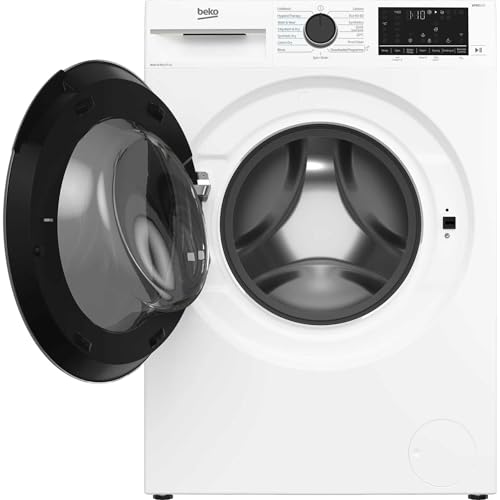
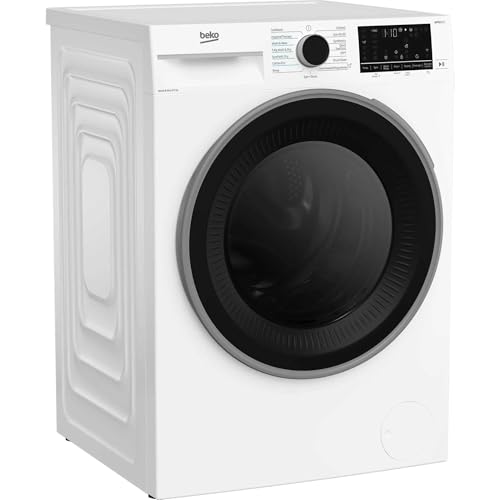
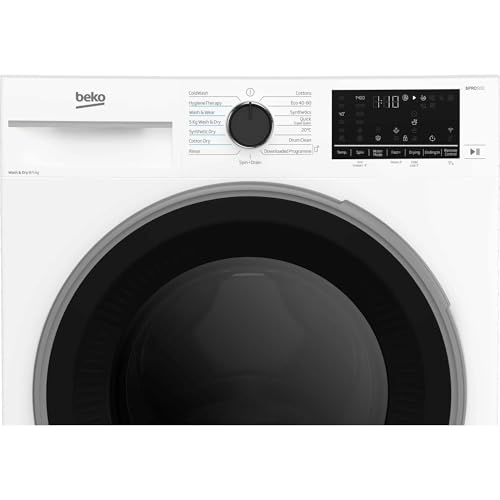
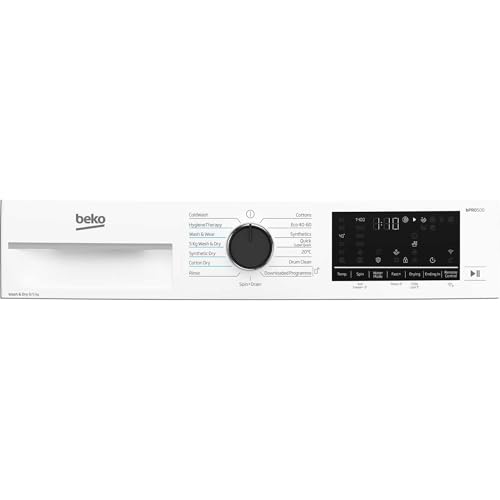
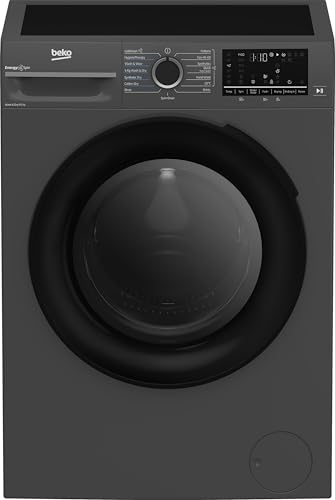
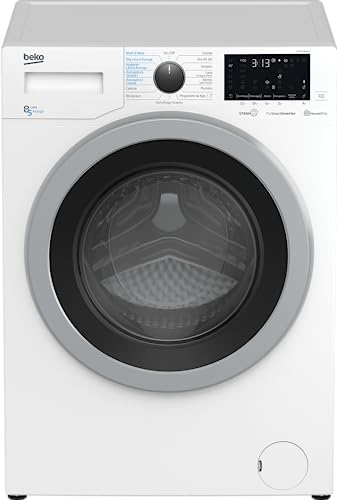
Beko B3D58545UW review: 104 specs compared

Avg. price:~£420Washing capacity:8 kgDrying capacity:5 kgDrying technology:condenserWashing energy efficiency class:ACombined energy efficiency class:D

Beko B3D58545UW Review: Compare 104 technical specifications to see how this product ranks in the Washer-dryers category and whether it is worth buying.
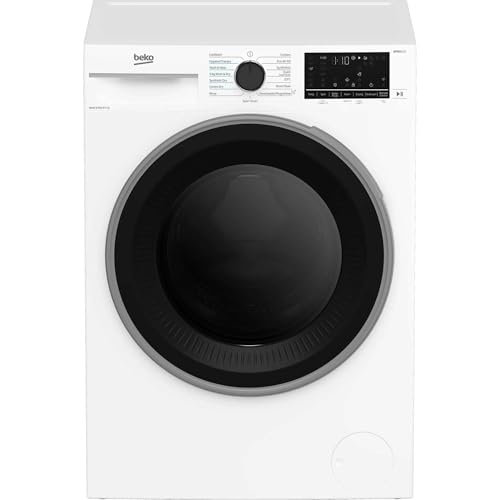
Beko B3D58545UW
8.0/10

Overall score

Score
8.0/ 10
✕
What it is
Our main score for this model, 1–10. It combines specs and ratings from across the web.
How we count it
Parts: Technical score 75%, User score 25%
Marks: Each part gets a mark out of 10. For reviews, lists and owners, a typical model in this category gets about 8 and the best one gets 10.
No data yet: A part with no data shows "?". It counts as the mark of a weaker model in this category (4 in 5 models with data score higher). This way, models with reviews, lists and owners usually come out ahead.
Score distribution
▼
<55-66-77-88-99-10
Score components

75%

8.2

Technical score

25%

7.5

User score

▲Better than 89% of washer dryers
8.2

Value for money

Value for money
8.2/ 10
✕
What it is
An indicator that combines the washer-dryer's overall rating with its cost.
When it matters
When you are looking for a washer-dryer with a good balance between quality and price.
Score distribution
▼
<55-66-77-88-99-10
Score components

70%

8.0

Overall score

30%

8.7

Price

★Better than 94%
8.2

Technical score

Technical score
8.2/ 10
✕
What it is
How good the specs are compared with the other models in this category, 1–10.
How we count it
Areas: We rate the specs in each area against the other models in this category.
Weighting: The areas that matter most to buyers count more. The shares are shown under Score components.
Share: The technical score is 75% of the overall score.
Score distribution
▼
<55-66-77-88-99-10
Score components

25%

7.3

Performance

25%

9.3

Energy efficiency

25%

8.5

Programs

20%

7.6

Features

5%

7.8

Design

★Better than 94%
7.5

User score

User score
7.5/ 10
✕
What it is
How happy buyers are with this model, based on ratings from across the web.
How we count it
Enough data: A model needs at least 1 rating from across the web. Without one, it counts as 7.6, the mark of a weaker rated model in this category.
Share: User score counts 25% of the overall score.
Score distribution
▼
<55-66-77-88-99-10

70%

8.2

Rating

30%

5.9

Popularity

▼Worse than 63%
  • beko-b3d58545uw
  • beko-b3d58545uw
  • beko-b3d58545uw
  • beko-b3d58545uw
  • beko-b3d58545uw
beko-b3d58545uw
beko-b3d58545uw
beko-b3d58545uw
beko-b3d58545uw
beko-b3d58545uw
Where to buy
*As an Amazon Associate, we earn from qualifying purchases.
Best rankings
Available: ranking among products currently available (including other versions of this product).All: ranking among all products in the database.
Loading...
Loading category ranking...

Technical Specifications of washer-dryer Beko B3D58545UW

Technical score
Technical score
8.2/ 10
✕
What it is
How good the specs are compared with the other models in this category, 1–10.
How we count it
Areas: We rate the specs in each area against the other models in this category.
Weighting: The areas that matter most to buyers count more. The shares are shown under Score components.
Share: The technical score is 75% of the overall score.
Score distribution
▼
<55-66-77-88-99-10
Score components:

25%

7.3

Performance

25%

9.3

Energy efficiency

25%

8.5

Programs

20%

7.6

Features

5%

7.8

Design

8.2
Value for money
Value for money
8.2/ 10
✕
What it is
An indicator that combines the washer-dryer's overall rating with its cost.
When it matters
When you are looking for a washer-dryer with a good balance between quality and price.
Score distribution
▼
<55-66-77-88-99-10
Score components:

70%

8.0

Overall score

30%

8.7

Price

8.2
Washing capacity
8 kg
This washer-dryer has a washing capacity of 8 kg which is smaller than the capacity of 58.3% of washer-dryers and equal to the capacity of 33.1% of washer-dryers.
Drying capacity
5 kg
This washer-dryer has a drying capacity of 5 kg which is smaller than the capacity of 63.1% of washer-dryers and equal to the capacity of 30.3% of washer-dryers.
Drum volume
?
Spin efficiency class
B
This washer-dryer has B spin efficiency class which is better than the spin efficiency class of 1.1% of washer-dryers and equal to that of 86.3% of washer-dryers.
Maximum spin speed
1,400 RPM
The maximum spin speed of this washer-dryer is 1,400 RPM which is higher than the maximum spin speed of 7.3% of washer-dryers and equal to the maximum spin speed of 74.3% of washer-dryers.
Show more
Washing energy efficiency class
A
This washer-dryer has A washing energy efficiency class which is better than the washing energy efficiency of 40.6% of washer-dryers and equal to that of 59.4% of washer-dryers.
Combined energy efficiency class
D
This washer-dryer has D combined energy efficiency class which is better than the combined energy efficiency of 43.2% of washer-dryers and equal to that of 52.4% of washer-dryers.
Energy consumption per 100 washing cycles
47 kWh/100 cycles
This washer-dryer has an energy consumption per 100 washing cycles of 47 kWh/100 cycles which is lower than the energy consumption of 73.3% of washer-dryers and equal to that of 10.4% of washer-dryers.
Energy consumption per 100 combined cycles
264 kWh/100 cycles
This washer-dryer has an energy consumption per 100 combined cycles of 264 kWh/100 cycles which is lower than the energy consumption of 94% of washer-dryers and equal to that of 1.5% of washer-dryers.
Water consumption per washing cycle
47 L
This washer-dryer has a water consumption per washing cycle of 47 L which is lower than the water consumption of 58.5% of washer-dryers and equal to that of 4.4% of washer-dryers.
Show more
Number of washing programs
?
Number of drying programs
5
This washer-dryer has 5 different drying programs which is more than the n. of programs of 87.1% of washer-dryers and equal to that of 7.4% of washer-dryers.
Fast washing cycle duration
28 min
The fast washing cycle duration of this washer-dryer is 28 min which is more than the fast cycle duration of 83.6% of washer-dryers.
Maximum washing cycle duration
218 min
The maximum washing cycle duration of this washer-dryer is 218 min which is more than the maximum cycle duration of 57.9% of washer-dryers and equal to that of 18.3% of washer-dryers.
Maximum combined cycle duration
510 min
The maximum combined cycle duration of this washer-dryer is 510 min which is less than the maximum combined duration of 52.3% of washer-dryers and equal to that of 0.8% of washer-dryers.
Show more
N. of features
?
N. of downloadable programs
?
Foam control system
yes
This washer-dryer features a foam control system. 59.6% of washer-dryers have a foam control system.
Unbalanced load detection
yes
This washer-dryer has unbalanced load detection. 96.2% of washer-dryers have this feature.
Automatic load balancing during spin
yes
This washer-dryer features automatic load balancing. 44.2% of washer-dryers have automatic load balancing.
Show more
Installation type
free-standing
This washer-dryer is a free-standing model, which is less integrated than 10.7% of washer-dryers and as integrated as 89.3% of washer-dryers.
Color
white
This washer-dryer is white in color. 67.5%.
Display
yes
This washer-dryer has a display. 99.7% of washer-dryers have a display.
Noise-reducing design
no
This washer-dryer does not have a noise-reducing design. 6.2% of washer-dryers have a noise-reducing design.
Special drum design
yes
This washer-dryer has a special drum design. 53.1% of washer-dryers have a special drum design.
Show more

Beko B3D58545UW vs the average washer-dryer

246810TotalPerformanceEnergy efficiencyProgramsFeaturesDesign
  • 2 more drying program/s
    This washer-dryer has more drying programs than the average washer-dryer (5 vs 3). The average washer-dryer has 3 drying programs.
    5 vs 3
  • 44 kWh/100 cycles lower energy consumption for combined cycles
    This washer-dryer has a lower energy consumption for combined cycles than the average washer-dryer (264 kWh/100 cycles vs 308 kWh/100 cycles). The average washer-dryer consumes 308 kWh/100 cycles per 100 combined cycles.
    264 kWh/100 cycles vs 308 kWh/100 cycles
  • Has Wi-Fi
    This washer-dryer has Wi-Fi, the average washer-dryer does not. 36.4% of washer-dryers have Wi-Fi.
  • 4 kWh/100 cycles lower energy consumption for washing
    This washer-dryer has a lower energy consumption for washing than the average washer-dryer (47 kWh/100 cycles vs 51 kWh/100 cycles). The average washer-dryer consumes 51 kWh/100 cycles per 100 washing cycles.
    47 kWh/100 cycles vs 51 kWh/100 cycles
  • Has the AquaStop feature
    This washer-dryer has the AquaStop feature, the average washer-dryer does not. 43.8% of washer-dryers have an AquaStop feature.
  • Has quick washing & drying
    This washer-dryer has a quick washing & drying option, the average washer-dryer does not. 40.9% of washer-dryers have a quick washing & drying option.
  • Has a fast cycle option
    This washer-dryer has a fast cycle option, the average washer-dryer does not. 48.7% of washer-dryers have a fast cycle option.
  • Has automatic load balancing
    This washer-dryer features automatic load balancing, the average washer-dryer does not. 44.2% of washer-dryers have automatic load balancing.
  • 12.2% better value for money
    Beko B3D58545UW has better value for money than the average washer-dryer (8.21 vs 7.3).
    8.21 vs 7.32
  • 31% cheaper
    Beko B3D58545UW is cheaper than the average washer-dryer (£420 vs £550). The average washer-dryer costs 550.000.
    £420 vs £550
  • 44 kWh/100 cycles lower energy consumption for combined cycles
    This washer-dryer has a lower energy consumption for combined cycles than the average washer-dryer (264 kWh/100 cycles vs 308 kWh/100 cycles). The average washer-dryer consumes 308 kWh/100 cycles per 100 combined cycles.
    264 kWh/100 cycles vs 308 kWh/100 cycles
  • 4 kWh/100 cycles lower energy consumption for washing
    This washer-dryer has a lower energy consumption for washing than the average washer-dryer (47 kWh/100 cycles vs 51 kWh/100 cycles). The average washer-dryer consumes 51 kWh/100 cycles per 100 washing cycles.
    47 kWh/100 cycles vs 51 kWh/100 cycles
  • 14 L lower water consumption for combined cycles
    This washer-dryer has a lower water consumption for combined cycles than the average washer-dryer (65 L vs 79 L). The average washer-dryer consumes 79 L per combined cycle.
    65 L vs 79 L
  • 2,800 L/year lower annual water consumption (combined)
    This washer-dryer has a lower annual water consumption (wash & dry) than the average washer-dryer (13,000 L/year vs 15,800 L/year). The average washer-dryer consumes 15,800 L/year per year for combined cycles.
    13,000 L/year vs 15,800 L/year
  • 2 more drying program/s
    This washer-dryer has more drying programs than the average washer-dryer (5 vs 3). The average washer-dryer has 3 drying programs.
    5 vs 3
  • Has quick washing & drying
    This washer-dryer has a quick washing & drying option, the average washer-dryer does not. 40.9% of washer-dryers have a quick washing & drying option.
  • Has a fast cycle option
    This washer-dryer has a fast cycle option, the average washer-dryer does not. 48.7% of washer-dryers have a fast cycle option.
  • Has a mini load function
    This washer-dryer has a Mini Load function, which the average washer-dryer does not. 1.4% of washer-dryers feature a Mini Load function.
  • Has a shirt cycle
    This washer-dryer has a cycle for shirts, the average washer-dryer does not. 14.4% of washer-dryers have a shirt cycle.
  • Has an outdoor/sport cycle
    This washer-dryer has a special cycle for outdoor/sport clothes, while the average washer-dryer does not. 35.2% of washer-dryers have such a cycle.
  • Has Wi-Fi
    This washer-dryer has Wi-Fi, the average washer-dryer does not. 36.4% of washer-dryers have Wi-Fi.
  • Has the AquaStop feature
    This washer-dryer has the AquaStop feature, the average washer-dryer does not. 43.8% of washer-dryers have an AquaStop feature.
  • Has automatic load balancing
    This washer-dryer features automatic load balancing, the average washer-dryer does not. 44.2% of washer-dryers have automatic load balancing.
  • Can be controlled by voice
    This washer-dryer can be controlled by voice, the average washer-dryer cannot. 37.9% of washer-dryers can be controlled by voice.
  • Has wash assist feature
    This washer-dryer has a wash assist feature, the average washer-dryer does not. 39.3% of washer-dryers have a wash assist feature.
  • Can save favorite settings
    This washer-dryer can save selected settings to favorites, the average washer-dryer cannot. 44.7% of washer-dryers have this feature.
  • 0.5 cm lower height
    This washer-dryer has a lower height than the average washer-dryer (84.5 cm vs 85 cm). The average washer-dryer has a height of 85 cm.
    84.5 cm vs 85 cm
  • 4 kg lighter
    This washer-dryer is lighter than the average washer-dryer (64 kg vs 68 kg). The average washer-dryer weighs 68 kg.
    64 kg vs 68 kg
  • 1 kg smaller drying capacity
    This washer-dryer has a smaller drying capacity than the average washer-dryer (5 kg vs 6 kg). The average washer-dryer has a drying capacity of 6 kg.
    5 kg vs 6 kg
  • 1 kg smaller washing capacity
    This washer-dryer has a smaller washing capacity than the average washer-dryer (8 kg vs 9 kg). The average washer-dryer has a washing capacity of 9 kg.
    8 kg vs 9 kg
  • 200 RPM higher minimum spin speed
    This washer-dryer has a higher minimum spin speed than the average washer-dryer (600 RPM vs 400 RPM). The average washer-dryer has a minimum spin speed of 400 RPM.
    600 RPM vs 400 RPM
  • Does not have an anti-stain function
    This washer-dryer does not have an anti-stain function, the average washer-dryer does. 67.3% of washer-dryers have an anti-stain function.
  • 2 dB louder during spinning
    This washer-dryer is louder during spinning than the average washer-dryer (76 dB vs 74 dB). The average washer-dryer has a spinning noise level of 74 dB.
    76 dB vs 74 dB
  • No refresh cycle
    This washer-dryer does not have a refresh cycle, the average washer-dryer does. 76.8% of washer-dryers have a refresh cycle.
  • 1 fewer spin speed options
    This washer-dryer has fewer spin speeds than the average washer-dryer (4 vs 5). The average washer-dryer has 5 spin speeds.
    4 vs 5
  • 13 min longer fast washing cycle
    The fast washing cycle duration of this washer-dryer is longer than the fast cycle duration of the average washer-dryer (28 min vs 15 min). The fast cycle duration of an average washer-dryer takes 15 min.
    28 min vs 15 min
  • 2.6% lower user score
    User score
    7.5/ 10
    ✕
    What it is
    How happy buyers are with this model, based on ratings from across the web.
    How we count it
    Enough data: A model needs at least 1 rating from across the web. Without one, it counts as 7.6, the mark of a weaker rated model in this category.
    Share: User score counts 25% of the overall score.
    Score distribution
    ▼
    <55-66-77-88-99-10

    70%

    8.2

    Rating

    30%

    5.9

    Popularity

    7.5 vs 7.7
  • 1 kg smaller drying capacity
    This washer-dryer has a smaller drying capacity than the average washer-dryer (5 kg vs 6 kg). The average washer-dryer has a drying capacity of 6 kg.
    5 kg vs 6 kg
  • 1 kg smaller washing capacity
    This washer-dryer has a smaller washing capacity than the average washer-dryer (8 kg vs 9 kg). The average washer-dryer has a washing capacity of 9 kg.
    8 kg vs 9 kg
  • 200 RPM higher minimum spin speed
    This washer-dryer has a higher minimum spin speed than the average washer-dryer (600 RPM vs 400 RPM). The average washer-dryer has a minimum spin speed of 400 RPM.
    600 RPM vs 400 RPM
  • 2 dB louder during spinning
    This washer-dryer is louder during spinning than the average washer-dryer (76 dB vs 74 dB). The average washer-dryer has a spinning noise level of 74 dB.
    76 dB vs 74 dB
  • 1 fewer spin speed options
    This washer-dryer has fewer spin speeds than the average washer-dryer (4 vs 5). The average washer-dryer has 5 spin speeds.
    4 vs 5
  • Does not have an anti-stain function
    This washer-dryer does not have an anti-stain function, the average washer-dryer does. 67.3% of washer-dryers have an anti-stain function.
  • No refresh cycle
    This washer-dryer does not have a refresh cycle, the average washer-dryer does. 76.8% of washer-dryers have a refresh cycle.
  • 13 min longer fast washing cycle
    The fast washing cycle duration of this washer-dryer is longer than the fast cycle duration of the average washer-dryer (28 min vs 15 min). The fast cycle duration of an average washer-dryer takes 15 min.
    28 min vs 15 min
  • X
    This washer-dryer has a right door hinge, the average washer-dryer has left. 0.00% of washer-dryers have this type of door hinge.
    right vs left

Third-party reviews

What customers like about Beko B3D58545UW

  • The motor is covered for 10 years.
  • At 64 kg it is light for a washer-dryer.
  • Its 84.5 cm height suits tight spaces.
  • The combined wash and dry uses 264 kWh per 100 cycles.
  • The shirt cycle handles shirts on their own.
  • Mini-Load handles small loads without a full cycle.

What customers don't like about Beko B3D58545UW

  • Spin noise reaches 76 dB.
  • Drying is limited to 5 kg.
  • A combined cycle can run up to 510 min.
  • The combined wash and dry is rated class D.

Verdict

In a tight flat, the Beko B3D58545UW is a sensible pick, with 8 kg of washing and 5 kg of drying. At 64 kg and 84.5 cm high, it is light for its size, so it is easier to shift. A Wi-Fi link lets you control it from a phone. The shirt cycle and the Mini-Load setting are handy extras for small loads. A quick wash takes 28 min for 8 kg. The combined wash and dry uses 264 kWh per 100 cycles. The trade-off is noise, since the spin runs at 76 dB, which is loud in a quiet home. It suits a single person or a couple who wash often and want a light machine they can move. The motor is covered for 10 years.

Compare Beko B3D58545UW with other washer-dryers

1Product to compare no. 1
VS
2Product to compare no. 2
VS
3Product to compare no. 3 (optional)

Graphic comparison of Beko B3D58545UW and other washer-dryers

No results found