Scored using Tumble dryers Methodology v3.0
Tumble dryers Methodology v3.0
Mathematical & Unbiased Scoring
Products in this category are scored under Frontum Tumble dryers Methodology v3.0: the technical score from the specifications is the base, and independent expert and video reviews (up to ±0.5 points), owner opinions (up to ±0.3) and best-of lists (up to +0.3) move it up or down.
Explore Tumble dryers Methodology v3.0

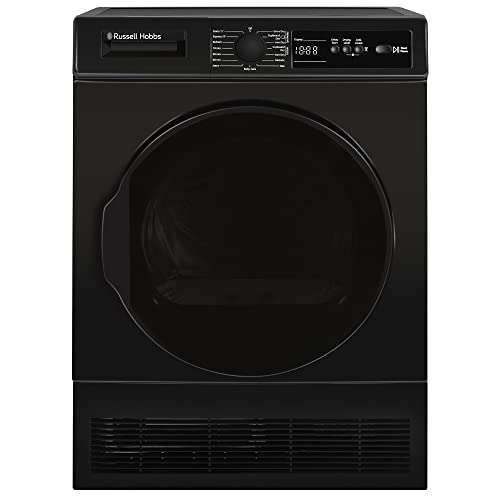
Russell Hobbs RH8CTD701B review: 80 specs compared

Avg. price:~£300Drying technology:condenserCapacity:8 kgEnergy efficiency class (old label):BInstallation type:self-standing

Russell Hobbs RH8CTD701B Review: Compare 80 technical specifications to see how this product ranks in the Tumble dryers category and whether it is worth buying.
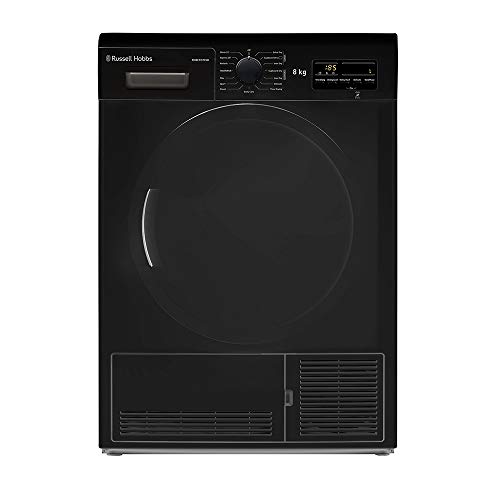
Russell Hobbs RH8CTD701B
6.7/10

Overall score

Score
6.7/ 10
✕
What it is
Our main score for this model, 1–10. It combines specs and ratings from across the web.
How we count it
Parts: Technical score 75%, User score 25%
Marks: Each part gets a mark out of 10. For reviews, lists and owners, a typical model in this category gets about 8 and the best one gets 10.
No data yet: A part with no data shows "?". It counts as the mark of a weaker model in this category (4 in 5 models with data score higher). This way, models with reviews, lists and owners usually come out ahead.
Score distribution
â–¼
<55-66-77-88-99-10
Score components

75%

5.9

Technical score

25%

9.1

User score

â–¼Worse than 81% of tumble dryers
7.5

Value for money

Value for money
7.5/ 10
✕
What it is
An indicator that combines the dryer's overall rating with its cost.
When it matters
When you are looking for a dryer with a good balance between quality and price.
Score distribution
â–¼
<55-66-77-88-99-10
Score components

70%

6.7

Overall score

30%

9.6

Price

â–¼Worse than 57%
5.9

Technical score

Technical score
5.9/ 10
✕
What it is
How good the specs are compared with the other models in this category, 1–10.
How we count it
Areas: We rate the specs in each area against the other models in this category.
Weighting: The areas that matter most to buyers count more. The shares are shown under Score components.
Share: The technical score is 75% of the overall score.
Score distribution
â–¼
<55-66-77-88-99-10
Score components

35%

5.2

Performance

30%

4.6

Features

25%

8.2

Drying programs

10%

6.3

Design

â–¼Worse than 88%
9.1

User score

User score
9.1/ 10
✕
What it is
How happy buyers are with this model, based on ratings from across the web.
How we count it
Enough data: A model needs at least 1 rating from across the web. Without one, it counts as 8.1, the mark of a weaker rated model in this category.
Share: User score counts 25% of the overall score.
Score distribution
â–¼
<55-66-77-88-99-10

70%

9.0

Rating

30%

9.3

Popularity

â–²Better than 82%
  • russell-hobbs-rh8ctd701b
  • russell-hobbs-rh8ctd701b
  • russell-hobbs-rh8ctd701b
russell-hobbs-rh8ctd701b
Where to buy
*As an Amazon Associate, we earn from qualifying purchases.
Best rankings
Available: ranking among products currently available (including other versions of this product).All: ranking among all products in the database.
Loading...
Loading category ranking...

Technical Specifications of tumble dryer Russell Hobbs RH8CTD701B

Technical score
Technical score
5.9/ 10
✕
What it is
How good the specs are compared with the other models in this category, 1–10.
How we count it
Areas: We rate the specs in each area against the other models in this category.
Weighting: The areas that matter most to buyers count more. The shares are shown under Score components.
Share: The technical score is 75% of the overall score.
Score distribution
â–¼
<55-66-77-88-99-10
Score components:

35%

5.2

Performance

30%

4.6

Features

25%

8.2

Drying programs

10%

6.3

Design

5.9
Value for money
Value for money
7.5/ 10
✕
What it is
An indicator that combines the dryer's overall rating with its cost.
When it matters
When you are looking for a dryer with a good balance between quality and price.
Score distribution
â–¼
<55-66-77-88-99-10
Score components:

70%

6.7

Overall score

30%

9.6

Price

7.5
Drying technology
condenser
This tumble dryer uses a condenser drying system, which is less efficient than 74.6% of tumble dryers and equal to 15.3% of tumble dryers.
Capacity
8 kg
This tumble dryer holds 8 kg of laundry, which is more than 18.6% of tumble dryers and equal to 40% of tumble dryers.
Drum volume
?
Inverter motor
no
This tumble dryer does not have an inverter motor. 42.6% of tumble dryers have an inverter motor.
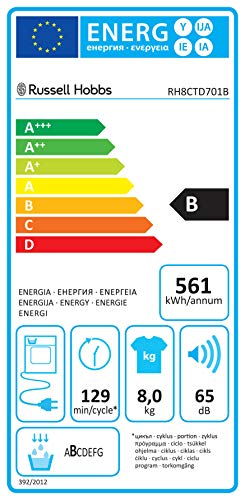
Energy efficiency class (old label)
B
This tumble dryer has an energy efficiency class that is worse than that of 74.3% of tumble dryers and equal to that of 16.5% of tumble dryers.
Show more
N. of drying programs
15
This tumble dryer has 15 different drying programs which is more than the n. of programs of 57% of tumble dryers and equal to that of 34.7% of tumble dryers.
Cotton (Extra Dry, Cupboard Dry, Iron Dry), Synthetics (Cupboard Dry, Iron Dry), Delicate, Time drying, Baby Care, Duvet, Sport, Mix, Wool Refresh , Refresh, Express 29', Shirts 12'
N. of downloadable programs
0
This tumble dryer has 0 downloadable programs which is fewer than the n. of downloadable programs of 24.6% of tumble dryers and equal to that of 75.4% of tumble dryers.
Temperature selection
yes
This tumble dryer offers temperature selection. 43.1% of tumble dryers offer temperature selection.
Low temperature selection button only
Selectable drying times
yes
This tumble dryer has adjustable drying times. 97.4% of tumble dryers have adjustable drying times.
10 - 180 min
Selectable drying level
yes
This tumble dryer allows drying level customization. 95.4%.
3 drying levels
Show more
N. of advanced features
6
This tumble dryer has 6 features which is fewer than the n. of features of 89.7% of tumble dryers and equal to that of 2.9% of tumble dryers.
Humidity sensors, Delayed start option, Pause & Add option, Selectable drying times, Selectable drying level, Gentle drying
Laundry detection system
no
This tumble dryer lacks a laundry detection system. 43.8% of tumble dryers include this feature.
Humidity sensors
yes
This tumble dryer is equipped with humidity sensors. 90.8% of tumble dryers have humidity sensors.
Sensor drying (automatically stops at desired dryness level to save energy and prevent over-drying)
Delayed start option
yes
This tumble dryer has a delayed start option. 92.8% of tumble dryers have this feature.
Maximum delayed start
23 h
The maximum delayed start of this tumble dryer is 23 h which is shorter than the maximum delayed start of 74.7% of tumble dryers and equal to that of 3.1% of tumble dryers.
Show more
Installation type
self-standing
This tumble dryer is self-standing, which is less suited to fitted kitchens than 0.7% of tumble dryers and equal to 99.3% of tumble dryers.
Loading type
front-loading
This tumble dryer is front-loading, which is equal to 100% of tumble dryers.
Display
yes
This tumble dryer has a display. 94.4% of tumble dryers have a display.
LED display
Child lock
yes
This tumble dryer includes a child lock. 94% of tumble dryers have a child lock.
Antivibration design
?
Show more

Russell Hobbs RH8CTD701B vs the average tumble dryer

246810TotalPerformanceDrying programsFeaturesDesign
  • 1 more drying programs
    This tumble dryer offers more drying programs than the average tumble dryer (15 vs 14). The average dryer has 14 drying programs.
    Cotton (Extra Dry, Cupboard Dry, Iron Dry), Synthetics (Cupboard Dry, Iron Dry), Delicate, Time drying, Baby Care, Duvet, Sport, Mix, Wool Refresh , Refresh, Express 29', Shirts 12'
    15 vs 14
  • Adjustable temperature
    This tumble dryer offers temperature selection, while the average tumble dryer does not. 43.1% of dryers provide temperature selection.
    Low temperature selection button only
  • Baby program
    This tumble dryer has a Baby program, which the average tumble dryer does not. 22.1% of dryers feature a Baby program.
  • 65.5 min shorter ECO cycle duration
    This tumble dryer has a shorter ECO cycle duration than the average tumble dryer (129 min vs 194.5 min). The average dryer’s ECO cycle takes 194.5 min.
    129 min vs 194.5 min
  • 12.3% higher user score
    User score
    9.1/ 10
    ✕
    What it is
    How happy buyers are with this model, based on ratings from across the web.
    How we count it
    Enough data: A model needs at least 1 rating from across the web. Without one, it counts as 8.1, the mark of a weaker rated model in this category.
    Share: User score counts 25% of the overall score.
    Score distribution
    â–¼
    <55-66-77-88-99-10

    70%

    9.0

    Rating

    30%

    9.3

    Popularity

    9.1 vs 8.1
  • 18.9% lighter
    This tumble dryer is lighter than the average tumble dryer (36.5 kg vs 45 kg). The average dryer weighs 45 kg.
    36.5 kg vs 45 kg
  • 1 min shorter fast cycle duration
    This tumble dryer has a shorter fast cycle duration than the average tumble dryer (29 min vs 30 min). The average dryer’s fast cycle takes 30 min.
    29 min vs 30 min
  • 60% cheaper
    Russell Hobbs RH8CTD701B is cheaper than the average tumble dryer (£300 vs £480).
    £300 vs £480
  • 12.3% higher user score
    User score
    9.1/ 10
    ✕
    What it is
    How happy buyers are with this model, based on ratings from across the web.
    How we count it
    Enough data: A model needs at least 1 rating from across the web. Without one, it counts as 8.1, the mark of a weaker rated model in this category.
    Share: User score counts 25% of the overall score.
    Score distribution
    â–¼
    <55-66-77-88-99-10

    70%

    9.0

    Rating

    30%

    9.3

    Popularity

    9.1 vs 8.1
  • 60% cheaper
    Russell Hobbs RH8CTD701B is cheaper than the average tumble dryer (£300 vs £480).
    £300 vs £480
  • 1 more drying programs
    This tumble dryer offers more drying programs than the average tumble dryer (15 vs 14). The average dryer has 14 drying programs.
    Cotton (Extra Dry, Cupboard Dry, Iron Dry), Synthetics (Cupboard Dry, Iron Dry), Delicate, Time drying, Baby Care, Duvet, Sport, Mix, Wool Refresh , Refresh, Express 29', Shirts 12'
    15 vs 14
  • Adjustable temperature
    This tumble dryer offers temperature selection, while the average tumble dryer does not. 43.1% of dryers provide temperature selection.
    Low temperature selection button only
  • Baby program
    This tumble dryer has a Baby program, which the average tumble dryer does not. 22.1% of dryers feature a Baby program.
  • 65.5 min shorter ECO cycle duration
    This tumble dryer has a shorter ECO cycle duration than the average tumble dryer (129 min vs 194.5 min). The average dryer’s ECO cycle takes 194.5 min.
    129 min vs 194.5 min
  • 1 min shorter fast cycle duration
    This tumble dryer has a shorter fast cycle duration than the average tumble dryer (29 min vs 30 min). The average dryer’s fast cycle takes 30 min.
    29 min vs 30 min
  • 18.9% lighter
    This tumble dryer is lighter than the average tumble dryer (36.5 kg vs 45 kg). The average dryer weighs 45 kg.
    36.5 kg vs 45 kg
  • 3 fewer advanced features
    This tumble dryer has fewer features than the average tumble dryer (6 vs 9). The average dryer has 9 features.
    Humidity sensors, Delayed start option, Pause & Add option, Selectable drying times, Selectable drying level, Gentle drying
    6 vs 9
  • 2.37x higher part-load energy use
    This tumble dryer uses more energy per partial-load cycle than the average tumble dryer (2.6 kWh vs 1.08 kWh). The average tumble dryer uses 1.08 kWh at partial load.
    2.56 kWh vs 1.08 kWh
  • 2.45x higher full-load energy use
    This tumble dryer uses more energy per full-load cycle than the average tumble dryer (4.7 kWh vs 1.91 kWh). The average tumble dryer uses 1.91 kWh.
    4.68 kWh vs 1.91 kWh
  • Less efficient drying system
    This tumble dryer uses a condenser drying system, which is less efficient than the average tumble dryer (condenser vs heat pump).
    condenser vs heat pump
  • Lacks bidirectional motion for even drying
    This tumble dryer does not ensure even drying with bidirectional drum motion, while the average tumble dryer does. 66.5% of dryers use this technology.
  • Does not have a special drum design
    This tumble dryer does not have a special drum design, while the average tumble dryer does. 59.2% of dryers feature a special drum design.
  • Does not prevent wrinkles with post-dry tumbling
    This tumble dryer does not prevent wrinkles with post-dry tumbling, while the average tumble dryer does. 91.1% of dryers include this feature.
  • Does not have an interior light
    This tumble dryer does not have an interior light, the average tumble dryer does. 50.6% of dryers have this feature.
  • 2.37x higher part-load energy use
    This tumble dryer uses more energy per partial-load cycle than the average tumble dryer (2.6 kWh vs 1.08 kWh). The average tumble dryer uses 1.08 kWh at partial load.
    2.56 kWh vs 1.08 kWh
  • 2.45x higher full-load energy use
    This tumble dryer uses more energy per full-load cycle than the average tumble dryer (4.7 kWh vs 1.91 kWh). The average tumble dryer uses 1.91 kWh.
    4.68 kWh vs 1.91 kWh
  • Less efficient drying system
    This tumble dryer uses a condenser drying system, which is less efficient than the average tumble dryer (condenser vs heat pump).
    condenser vs heat pump
  • Worse energy efficiency class
    This tumble dryer has a worse energy efficiency class than the average tumble dryer (B vs A+++). The average dryer has an energy efficiency class of A+++.
    B vs A+++
  • 2.39x higher yearly energy use
    This tumble dryer uses more energy a year than the average tumble dryer (561 kWh/year vs 235 kWh/year). The average tumble dryer uses 235 kWh/year.
    561 kWh/year vs 235 kWh/year
  • 2.39x higher annual energy cost
    This tumble dryer has a higher annual energy cost than the average tumble dryer (168.3 £/year vs 70.5 £/year). The average annual energy cost for dryers is 70.5 £/year.
    168.3 £/year vs 70.5 £/year
  • Lacks bidirectional motion for even drying
    This tumble dryer does not ensure even drying with bidirectional drum motion, while the average tumble dryer does. 66.5% of dryers use this technology.
  • Does not prevent wrinkles with post-dry tumbling
    This tumble dryer does not prevent wrinkles with post-dry tumbling, while the average tumble dryer does. 91.1% of dryers include this feature.
  • 3 fewer advanced features
    This tumble dryer has fewer features than the average tumble dryer (6 vs 9). The average dryer has 9 features.
    Humidity sensors, Delayed start option, Pause & Add option, Selectable drying times, Selectable drying level, Gentle drying
    6 vs 9
  • 1 h shorter maximum delayed start
    This tumble dryer allows for a shorter maximum delayed start than the average tumble dryer (23 h vs 24 h). The average dryer allows for 24 h hours of delayed start.
    23 h vs 24 h
  • Does not have a special drum design
    This tumble dryer does not have a special drum design, while the average tumble dryer does. 59.2% of dryers feature a special drum design.
  • Does not have an interior light
    This tumble dryer does not have an interior light, the average tumble dryer does. 50.6% of dryers have this feature.
  • No transparent door
    This tumble dryer does not have a transparent door, the average tumble dryer does. 88.3% of dryers have this feature.
  • 0.7% higher height
    This tumble dryer has a higher height than the average tumble dryer (85.5 cm vs 84.9 cm). The average dryer has a height of 84.9 cm.
    85.5 cm vs 84.9 cm
  • 0.9% larger volume
    This tumble dryer has a larger volume than the average tumble dryer (310,334.2 cm³ vs 307,582.8 cm³). The average dryer has a volume of 307,582.758 cm³.
    310,334.22 cm³ vs 307,582.758 cm³
  • Less flexible door hinge
    This tumble dryer has a less flexible hinge than the average tumble dryer (right vs reversible).
    right vs reversible

Third-party reviews

Verdict

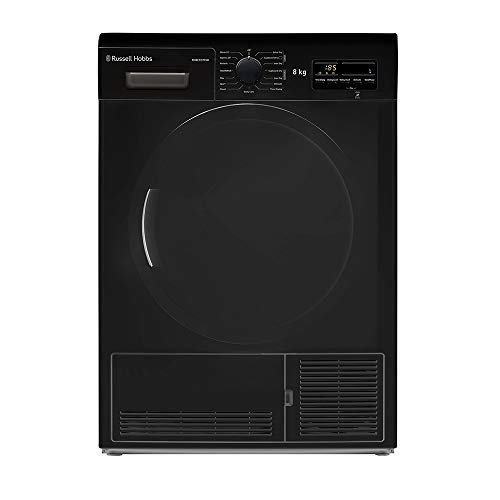
The Russell Hobbs RH8CTD701B condenser tumble dryer pairs a striking contemporary black finish with swift drying performance and comprehensive program versatility for style-conscious homes. Built with an eight-kilogram capacity drum behind an opaque dark door, this freestanding appliance operates in energy efficiency class B, consuming 561 kilowatt-hours annually at a quiet 65 decibels. Traditional condenser mechanics deliver rapid turnaround times that outpace typical heat pump models, completing a standard cycle in 129 minutes alongside an ultra-fast 29-minute express program for urgent garments. Integrated electronic humidity sensors monitor moisture levels continually, allowing users to select four precise dryness levels or customize drying durations directly. Outfitted with fifteen dedicated programs including baby care, duvets, outdoor sportswear, shirts, and a refreshing cycle, alongside a 23-hour delay timer and child safety lock, it delivers dependable everyday functionality.

Compare Russell Hobbs RH8CTD701B with other dryers

1Product to compare no. 1
VS
2Product to compare no. 2
VS
3Product to compare no. 3 (optional)

Graphic comparison of Russell Hobbs RH8CTD701B and other dryers

No results found