Scored using Tumble dryers Methodology v3.0
Tumble dryers Methodology v3.0
Mathematical & Unbiased Scoring
Products in this category are scored under Frontum Tumble dryers Methodology v3.0: the technical score from the specifications is the base, and independent expert and video reviews (up to ±0.5 points), owner opinions (up to ±0.3) and best-of lists (up to +0.3) move it up or down.
Explore Tumble dryers Methodology v3.0

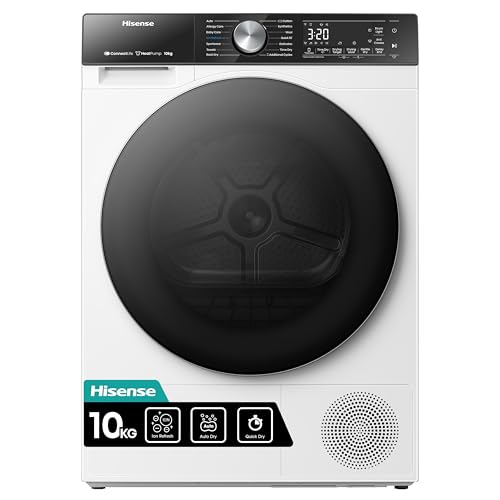
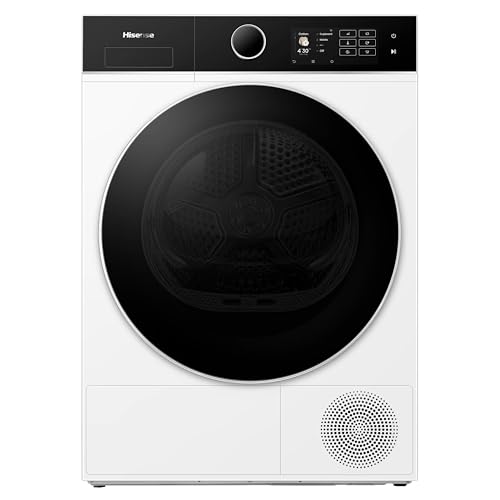
Hisense DH5I104BWAB review: 80 specs compared

Avg. price:~£770Drying technology:heat pumpCapacity:10 kgEnergy efficiency class (old label):?Installation type:self-standing

Hisense DH5I104BWAB Review: Compare 168 technical specifications and 1 expert reviews to see how this product ranks in the Tumble dryers category and whether it is worth buying.
Hisense DH5I104BWAB
8.5/10

Overall score

Score
8.5/ 10
✕
What it is
Our main score for this model, 1–10. It combines specs and ratings from across the web.
How we count it
Parts: Technical score 75%, User score 25%
Marks: Each part gets a mark out of 10. For reviews, lists and owners, a typical model in this category gets about 8 and the best one gets 10.
No data yet: A part with no data shows "?". It counts as the mark of a weaker model in this category (4 in 5 models with data score higher). This way, models with reviews, lists and owners usually come out ahead.
Score distribution
â–¼
<55-66-77-88-99-10
Score components

75%

8.7

Technical score

25%

7.9

User score

★Better than 90% of tumble dryers
7.7

Value for money

Value for money
7.7/ 10
✕
What it is
An indicator that combines the dryer's overall rating with its cost.
When it matters
When you are looking for a dryer with a good balance between quality and price.
Score distribution
â–¼
<55-66-77-88-99-10
Score components

70%

8.5

Overall score

30%

5.9

Price

â–²Better than 56%
8.7

Technical score

Technical score
8.7/ 10
✕
What it is
How good the specs are compared with the other models in this category, 1–10.
How we count it
Areas: We rate the specs in each area against the other models in this category.
Weighting: The areas that matter most to buyers count more. The shares are shown under Score components.
Share: The technical score is 75% of the overall score.
Score distribution
â–¼
<55-66-77-88-99-10
Score components

35%

8.8

Performance

30%

8.3

Features

25%

9.5

Drying programs

10%

7.6

Design

★Better than 94%
7.9

User score

User score
7.9/ 10
✕
What it is
How happy buyers are with this model, based on ratings from across the web.
How we count it
Enough data: A model needs at least 1 rating from across the web. Without one, it counts as 8.1, the mark of a weaker rated model in this category.
Share: User score counts 25% of the overall score.
Score distribution
â–¼
<55-66-77-88-99-10

70%

8.4

Rating

30%

6.7

Popularity

â–¼Worse than 64%
  • hisense-dh5i104bwab
  • hisense-dh5i104bwab
  • hisense-dh5i104bwab
  • hisense-dh5i104bwab
  • hisense-dh5i104bwab
hisense-dh5i104bwab
hisense-dh5i104bwab
hisense-dh5i104bwab
hisense-dh5i104bwab
hisense-dh5i104bwab
Best prices
*As an Amazon Associate, we earn from qualifying purchases.
Best rankings
Available: ranking among products currently available (including other versions of this product).All: ranking among all products in the database.
Loading...
Loading category ranking...

Technical Specifications of tumble dryer Hisense DH5I104BWAB

Technical score
Technical score
8.7/ 10
✕
What it is
How good the specs are compared with the other models in this category, 1–10.
How we count it
Areas: We rate the specs in each area against the other models in this category.
Weighting: The areas that matter most to buyers count more. The shares are shown under Score components.
Share: The technical score is 75% of the overall score.
Score distribution
â–¼
<55-66-77-88-99-10
Score components:

35%

8.8

Performance

30%

8.3

Features

25%

9.5

Drying programs

10%

7.6

Design

8.7
Value for money
Value for money
7.7/ 10
✕
What it is
An indicator that combines the dryer's overall rating with its cost.
When it matters
When you are looking for a dryer with a good balance between quality and price.
Score distribution
â–¼
<55-66-77-88-99-10
Score components:

70%

8.5

Overall score

30%

5.9

Price

7.7
Drying technology
heat pump
This tumble dryer uses a heat pump drying system, which is more efficient than 25.6% of tumble dryers and equal to 74.5% of tumble dryers.
Capacity
10 kg
This tumble dryer holds 10 kg of laundry, which is more than 88.3% of tumble dryers and equal to 10.6% of tumble dryers.
Drum volume
125 L
This tumble dryer has a drum volume of 125 L, which is larger than 78.4% of tumble dryers and equal to 20.1% of tumble dryers.
Inverter motor
yes
This tumble dryer has an inverter motor. 42.6% of tumble dryers have an inverter motor.
Energy efficiency class (old label)
?
Show more
N. of drying programs
18
This tumble dryer has 18 different drying programs which is more than the n. of programs of 96.9% of tumble dryers and equal to that of 0.9% of tumble dryers.
N. of downloadable programs
0
This tumble dryer has 0 downloadable programs which is fewer than the n. of downloadable programs of 24.6% of tumble dryers and equal to that of 75.4% of tumble dryers.
Temperature selection
yes
This tumble dryer offers temperature selection. 43.1% of tumble dryers offer temperature selection.
Selectable drying times
yes
This tumble dryer has adjustable drying times. 97.4% of tumble dryers have adjustable drying times.
Selectable drying level
yes
This tumble dryer allows drying level customization. 95.4%.
Show more
N. of advanced features
?
Laundry detection system
yes
This tumble dryer includes a laundry detection system. 43.8% of tumble dryers include this feature.
Humidity sensors
yes
This tumble dryer is equipped with humidity sensors. 90.8% of tumble dryers have humidity sensors.
Delayed start option
yes
This tumble dryer has a delayed start option. 92.8% of tumble dryers have this feature.
Maximum delayed start
24 h
The maximum delayed start of this tumble dryer is 24 h which is longer than the maximum delayed start of 25.5% of tumble dryers and equal to that of 74.5% of tumble dryers.
Show more
Installation type
self-standing
This tumble dryer is self-standing, which is less suited to fitted kitchens than 0.7% of tumble dryers and equal to 99.3% of tumble dryers.
Loading type
front-loading
This tumble dryer is front-loading, which is equal to 100% of tumble dryers.
Display
yes
This tumble dryer has a display. 94.4% of tumble dryers have a display.
Child lock
yes
This tumble dryer includes a child lock. 94% of tumble dryers have a child lock.
Antivibration design
yes
This tumble dryer has an antivibration design. 0.3% of tumble dryers offer this.
Show more

Hisense DH5I104BWAB vs the average tumble dryer

246810TotalPerformanceDrying programsFeaturesDesign
  • 4 more drying programs
    This tumble dryer offers more drying programs than the average tumble dryer (18 vs 14). The average dryer has 14 drying programs.
    18 vs 14
  • Has an inverter motor
    This tumble dryer has an inverter motor, the average tumble dryer does not. 42.6% of dryers have an inverter motor.
  • 2 kg larger capacity
    This tumble dryer holds more laundry than the average tumble dryer (10 kg vs 8 kg). The average tumble dryer holds 8 kg.
    10 kg vs 8 kg
  • Supports Wi-Fi
    This tumble dryer is Wi-Fi enabled, while the average tumble dryer is not. 28.4% of dryers support Wi-Fi connectivity.
  • Includes a laundry detection system
    This tumble dryer includes a laundry detection system, which the average tumble dryer does not have. 43.8% of dryers offer this system.
  • 5 dB quieter
    This tumble dryer is quieter than the average tumble dryer (60 dB vs 65 dB). The average tumble dryer runs at 65 dB.
    60 dB vs 65 dB
  • Includes an ECO function
    This tumble dryer has an ECO function, which the average tumble dryer does not. 21.5% of dryers include an ECO function.
  • Better water recovery efficiency class
    This tumble dryer has a better water recovery efficiency class than the average tumble dryer (A vs B). The average dryer has a water recovery efficiency class of B.
    A vs B
  • Has an inverter motor
    This tumble dryer has an inverter motor, the average tumble dryer does not. 42.6% of dryers have an inverter motor.
  • 2 kg larger capacity
    This tumble dryer holds more laundry than the average tumble dryer (10 kg vs 8 kg). The average tumble dryer holds 8 kg.
    10 kg vs 8 kg
  • 5 dB quieter
    This tumble dryer is quieter than the average tumble dryer (60 dB vs 65 dB). The average tumble dryer runs at 65 dB.
    60 dB vs 65 dB
  • Better water recovery efficiency class
    This tumble dryer has a better water recovery efficiency class than the average tumble dryer (A vs B). The average dryer has a water recovery efficiency class of B.
    A vs B
  • 8.7% larger drum
    This tumble dryer has a larger drum than the average tumble dryer (125 L vs 115 L). The average tumble dryer has a drum of 115 L.
    125 L vs 115 L
  • 32.8% lower yearly energy use
    This tumble dryer uses less energy a year than the average tumble dryer (158 kWh/year vs 235 kWh/year). The average tumble dryer uses 235 kWh/year.
    158 kWh/year vs 235 kWh/year
  • 4 more drying programs
    This tumble dryer offers more drying programs than the average tumble dryer (18 vs 14). The average dryer has 14 drying programs.
    18 vs 14
  • Adjustable temperature
    This tumble dryer offers temperature selection, while the average tumble dryer does not. 43.1% of dryers provide temperature selection.
  • Includes a fast drying function
    This tumble dryer includes a rapid drying function, while the average tumble dryer does not. 22.8% of dryers have a rapid drying function.
  • Has an allergen program
    This tumble dryer has an allergen program, the average tumble dryer does not. 31% of dryers have this program.
  • Hygiene program
    This tumble dryer has a Hygiene program, while the average tumble dryer does not. 39% of dryers have a Hygiene program.
  • Baby program
    This tumble dryer has a Baby program, which the average tumble dryer does not. 22.1% of dryers feature a Baby program.
  • Has a silent mode/program
    This tumble dryer has a silent mode/program, which the average tumble dryer lacks. 25.1% of dryers have a silent mode/program.
  • Bed linen program
    This tumble dryer has a Bed Linen program, the average tumble dryer does not. 42.7% of dryers have this program.
  • 1 min shorter fast cycle duration
    This tumble dryer has a shorter fast cycle duration than the average tumble dryer (29 min vs 30 min). The average dryer’s fast cycle takes 30 min.
    29 min vs 30 min
  • Supports Wi-Fi
    This tumble dryer is Wi-Fi enabled, while the average tumble dryer is not. 28.4% of dryers support Wi-Fi connectivity.
  • Includes a laundry detection system
    This tumble dryer includes a laundry detection system, which the average tumble dryer does not have. 43.8% of dryers offer this system.
  • Includes an ECO function
    This tumble dryer has an ECO function, which the average tumble dryer does not. 21.5% of dryers include an ECO function.
  • Can pair with washing machine
    This tumble dryer can pair with a washing machine, while the average tumble dryer cannot. 22.9% of dryers offer this pairing capability.
  • Provides guided drying
    This tumble dryer provides guided drying, which the average tumble dryer does not. 27.9% of dryers include guided drying functionality.
  • Has an ECO indicator
    This tumble dryer features an ECO indicator, while the average tumble dryer does not. 20.5% of dryers have this indicator.
  • Compatible with voice assistants
    This tumble dryer is compatible with voice assistants, which the average tumble dryer is not. 33.5% of dryers are voice assistant compatible.
  • Shows consumption statistics
    This tumble dryer displays consumption statistics, while the average tumble dryer does not. 33.2% of dryers show consumption data.
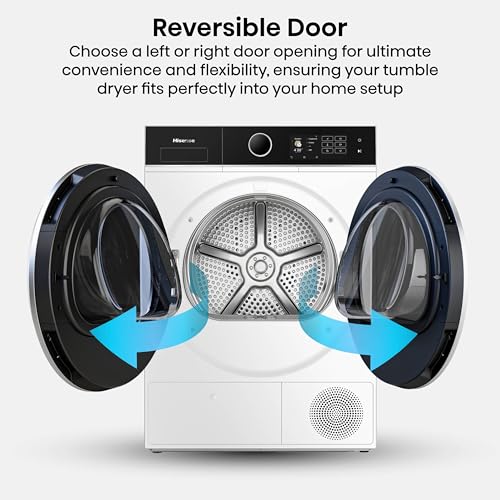
  • Includes a reversible door
    This tumble dryer has a reversible door, which the average tumble dryer does not. 25.9% of dryers have reversible doors.
  • Has a drying rack
    This tumble dryer includes a drying rack, while the average tumble dryer lacks one. 9.9% of dryers come with a drying rack.
  • 0.2% narrower
    This tumble dryer is narrower than the average tumble dryer (59.5 cm vs 59.6 cm). The average dryer has a width of 59.6 cm.
    59.5 cm vs 59.6 cm
  • 0.5% lower height
    This tumble dryer has a lower height than the average tumble dryer (84.5 cm vs 84.9 cm). The average dryer has a height of 84.9 cm.
    84.5 cm vs 84.9 cm
  • 23.1% higher part-load energy use
    This tumble dryer uses more energy per partial-load cycle than the average tumble dryer (1.3 kWh vs 1.08 kWh). The average tumble dryer uses 1.08 kWh at partial load.
    1.33 kWh vs 1.08 kWh
  • 5.1% larger depth
    This tumble dryer has a larger depth than the average tumble dryer (64 cm vs 60.9 cm). The average dryer has a depth of 60.9 cm.
    64 cm vs 60.9 cm
  • 4.6% larger volume
    This tumble dryer has a larger volume than the average tumble dryer (321776 cm³ vs 307582.8 cm³). The average dryer has a volume of 307582.758 cm³.
    321,776 cm³ vs 307,582.758 cm³
  • 26.7% heavier
    This tumble dryer is heavier than the average tumble dryer (57 kg vs 45 kg). The average dryer weights 45 kg.
    57 kg vs 45 kg
  • 2.6% higher full-load energy use
    This tumble dryer uses more energy per full-load cycle than the average tumble dryer (2 kWh vs 1.91 kWh). The average tumble dryer uses 1.91 kWh.
    1.96 kWh vs 1.91 kWh
  • 60.4% more expensive
    Hisense DH5I104BWAB is more expensive than the average tumble dryer (£770 vs £480).
    £770 vs £480
  • 10.5 min longer ECO cycle duration
    This tumble dryer has a longer ECO cycle duration than the average tumble dryer (205 min vs 194.5 min). The average dryer’s ECO cycle takes 194.5 min.
    205 min vs 194.5 min
  • 2.5% lower user score
    User score
    7.9/ 10
    ✕
    What it is
    How happy buyers are with this model, based on ratings from across the web.
    How we count it
    Enough data: A model needs at least 1 rating from across the web. Without one, it counts as 8.1, the mark of a weaker rated model in this category.
    Share: User score counts 25% of the overall score.
    Score distribution
    â–¼
    <55-66-77-88-99-10

    70%

    8.4

    Rating

    30%

    6.7

    Popularity

    7.9 vs 8.1
  • 60.4% more expensive
    Hisense DH5I104BWAB is more expensive than the average tumble dryer (£770 vs £480).
    £770 vs £480
  • 2.5% lower user score
    User score
    7.9/ 10
    ✕
    What it is
    How happy buyers are with this model, based on ratings from across the web.
    How we count it
    Enough data: A model needs at least 1 rating from across the web. Without one, it counts as 8.1, the mark of a weaker rated model in this category.
    Share: User score counts 25% of the overall score.
    Score distribution
    â–¼
    <55-66-77-88-99-10

    70%

    8.4

    Rating

    30%

    6.7

    Popularity

    7.9 vs 8.1
  • 23.1% higher part-load energy use
    This tumble dryer uses more energy per partial-load cycle than the average tumble dryer (1.3 kWh vs 1.08 kWh). The average tumble dryer uses 1.08 kWh at partial load.
    1.33 kWh vs 1.08 kWh
  • 2.6% higher full-load energy use
    This tumble dryer uses more energy per full-load cycle than the average tumble dryer (2 kWh vs 1.91 kWh). The average tumble dryer uses 1.91 kWh.
    1.96 kWh vs 1.91 kWh
  • 10.5 min longer ECO cycle duration
    This tumble dryer has a longer ECO cycle duration than the average tumble dryer (205 min vs 194.5 min). The average dryer’s ECO cycle takes 194.5 min.
    205 min vs 194.5 min
  • 5.1% larger depth
    This tumble dryer has a larger depth than the average tumble dryer (64 cm vs 60.9 cm). The average dryer has a depth of 60.9 cm.
    64 cm vs 60.9 cm
  • 4.6% larger volume
    This tumble dryer has a larger volume than the average tumble dryer (321776 cm³ vs 307582.8 cm³). The average dryer has a volume of 307582.758 cm³.
    321,776 cm³ vs 307,582.758 cm³
  • 26.7% heavier
    This tumble dryer is heavier than the average tumble dryer (57 kg vs 45 kg). The average dryer weights 45 kg.
    57 kg vs 45 kg

Expert reviews

In-depth analysis and verdict from leading tech publications

10
trustedreviews.com
✓ explicit
03/10/2025
Hands-on test · Heat pump dryer
Verdict
The Hisense DH5I104BWAB is a large 10 kg heat pump dryer with low energy use and a steam refresh, but it is not built to fit under a worktop.

Third-party reviews

What we like about Hisense DH5I104BWAB

  • A 10 kg drum takes most of a week's washing in one go.
  • 18 drying programs include baby, bed linen and wool settings.
  • It runs at 60 dB, so it stays quiet in a kitchen or open-plan room.
  • The heat pump uses 158 kWh a year.
  • A fast cycle finishes in 29 min.
  • The companion app sends a message when the load is ready.

What we don't like about Hisense DH5I104BWAB

  • At 57 kg it is heavy to move for cleaning.
  • At 64 cm deep it will not tuck under a worktop.
  • The water filter under the condensate tank is fiddly to reach.
  • Each full cycle uses 1.96 kWh, which adds up over a busy week.

Verdict

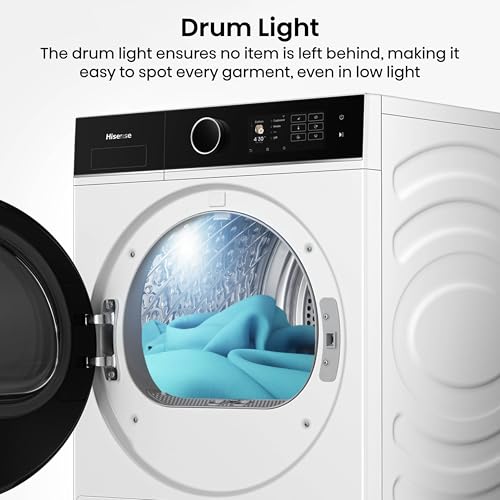
A busy family with a weekly pile of laundry will get the most from the Hisense DH5I104BWAB. Its 10 kg drum takes a large load in one go, and the 18 programs include baby, bed linen and wool settings. It runs quietly at 60 dB, which suits a kitchen or open-plan flat. A fast cycle finishes in 29 min. The companion app tells you when the load is ready. The downsides are size and weight. At 64 cm deep and 57 kg it is hard to move, and it will not tuck under a worktop. It also has an allergen program, an interior light and a delayed start, so the cycle can finish at the right time. It suits a family that dries big, mixed loads and wants quiet running.

Compare Hisense DH5I104BWAB with other dryers

1Product to compare no. 1
VS
2Product to compare no. 2
VS
3Product to compare no. 3 (optional)

Graphic comparison of Hisense DH5I104BWAB and other dryers

No results found