Scored using Tumble dryers Methodology v3.0
Tumble dryers Methodology v3.0
Mathematical & Unbiased Scoring
Products in this category are scored under Frontum Tumble dryers Methodology v3.0: the technical score from the specifications is the base, and independent expert and video reviews (up to ±0.5 points), owner opinions (up to ±0.3) and best-of lists (up to +0.3) move it up or down.
Explore Tumble dryers Methodology v3.0

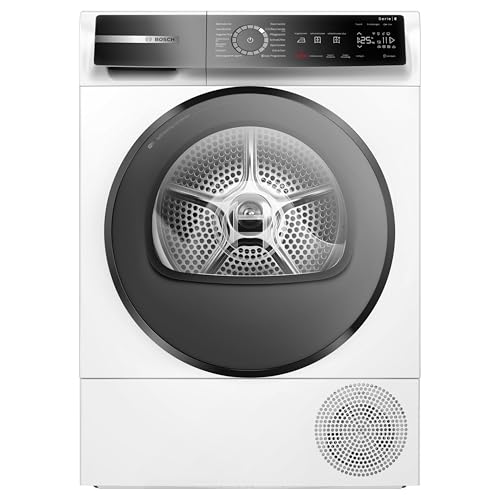
Bosch WRB247C9GB review: 80 specs compared

Avg. price:~£790Drying technology:heat pumpCapacity:9 kgEnergy efficiency class (old label):?Installation type:self-standing

Bosch WRB247C9GB Review: Compare 168 technical specifications and 1 expert and video reviews to see how this product ranks in the Tumble dryers category and whether it is worth buying.

8.1/10

Overall score

Score
8.1/ 10
✕
What it is
Our main score for this model, 1–10. It combines specs and ratings from across the web.
How we count it
Parts: Technical score 75%, User score 25%
Marks: Each part gets a mark out of 10. For reviews, lists and owners, a typical model in this category gets about 8 and the best one gets 10.
No data yet: A part with no data shows "?". It counts as the mark of a weaker model in this category (4 in 5 models with data score higher). This way, models with reviews, lists and owners usually come out ahead.
Score distribution
â–¼
<55-66-77-88-99-10
Score components

75%

8.2

Technical score

25%

?

User scoreNot enough data yet, so we use 8.1, the mark of a weaker model in this category

â–²Better than 78% of tumble dryers
7.4

Value for money

Value for money
7.4/ 10
✕
What it is
An indicator that combines the dryer's overall rating with its cost.
When it matters
When you are looking for a dryer with a good balance between quality and price.
Score distribution
â–¼
<55-66-77-88-99-10
Score components

70%

8.1

Overall score

30%

5.8

Price

â–¼Worse than 63%
8.2

Technical score

Technical score
8.2/ 10
✕
What it is
How good the specs are compared with the other models in this category, 1–10.
How we count it
Areas: We rate the specs in each area against the other models in this category.
Weighting: The areas that matter most to buyers count more. The shares are shown under Score components.
Share: The technical score is 75% of the overall score.
Score distribution
â–¼
<55-66-77-88-99-10
Score components

35%

7.8

Performance

30%

8.1

Features

25%

8.9

Drying programs

10%

7.8

Design

â–²Better than 80%
?

User score

User score
8.1/ 10
✕
What it is
How happy buyers are with this model, based on ratings from across the web.
How we count it
Enough data: A model needs at least 1 rating from across the web. Without one, it counts as 8.1, the mark of a weaker rated model in this category.
Share: User score counts 25% of the overall score.
Score distribution
â–¼
<55-66-77-88-99-10
No ratings from across the web yet, so it counts as 8.1, the mark of a weaker rated model in this category.
No ratings from across the web yet
  • No image
No image
Best prices
    N/A~ £790
Best rankings
Available: ranking among products currently available (including other versions of this product).All: ranking among all products in the database.
Loading...
Loading category ranking...

Technical Specifications of tumble dryer Bosch WRB247C9GB

Technical score
Technical score
8.2/ 10
✕
What it is
How good the specs are compared with the other models in this category, 1–10.
How we count it
Areas: We rate the specs in each area against the other models in this category.
Weighting: The areas that matter most to buyers count more. The shares are shown under Score components.
Share: The technical score is 75% of the overall score.
Score distribution
â–¼
<55-66-77-88-99-10
Score components:

35%

7.8

Performance

30%

8.1

Features

25%

8.9

Drying programs

10%

7.8

Design

8.2
Value for money
Value for money
7.4/ 10
✕
What it is
An indicator that combines the dryer's overall rating with its cost.
When it matters
When you are looking for a dryer with a good balance between quality and price.
Score distribution
â–¼
<55-66-77-88-99-10
Score components:

70%

8.1

Overall score

30%

5.8

Price

7.4
Drying technology
heat pump
This tumble dryer uses a heat pump drying system, which is more efficient than 25.6% of tumble dryers and equal to 74.5% of tumble dryers.
Capacity
9 kg
This tumble dryer holds 9 kg of laundry, which is more than 58.8% of tumble dryers and equal to 29.3% of tumble dryers.
Drum volume
112 L
This tumble dryer has a drum volume of 112 L, which is smaller than 53.8% of tumble dryers and equal to 33% of tumble dryers.
Inverter motor
no
This tumble dryer does not have an inverter motor. 42.6% of tumble dryers have an inverter motor.
Energy efficiency class (old label)
?
Show more
N. of drying programs
14
This tumble dryer has 14 different drying programs which is more than the n. of programs of 40.5% of tumble dryers and equal to that of 16.3% of tumble dryers.
N. of downloadable programs
5
This tumble dryer has 5 downloadable programs which is more than the n. of downloadable programs of 76.5% of tumble dryers and equal to that of 1.1% of tumble dryers.
Temperature selection
yes
This tumble dryer offers temperature selection. 43.1% of tumble dryers offer temperature selection.
Selectable drying times
yes
This tumble dryer has adjustable drying times. 97.4% of tumble dryers have adjustable drying times.
Selectable drying level
yes
This tumble dryer allows drying level customization. 95.4%.
Show more
N. of advanced features
?
Laundry detection system
yes
This tumble dryer includes a laundry detection system. 43.8% of tumble dryers include this feature.
Humidity sensors
yes
This tumble dryer is equipped with humidity sensors. 90.8% of tumble dryers have humidity sensors.
Delayed start option
yes
This tumble dryer has a delayed start option. 92.8% of tumble dryers have this feature.
Maximum delayed start
24 h
The maximum delayed start of this tumble dryer is 24 h which is longer than the maximum delayed start of 25.5% of tumble dryers and equal to that of 74.5% of tumble dryers.
Show more
Installation type
self-standing
This tumble dryer is self-standing, which is less suited to fitted kitchens than 0.7% of tumble dryers and equal to 99.3% of tumble dryers.
Loading type
front-loading
This tumble dryer is front-loading, which is equal to 100% of tumble dryers.
Display
yes
This tumble dryer has a display. 94.4% of tumble dryers have a display.
Child lock
yes
This tumble dryer includes a child lock. 94% of tumble dryers have a child lock.
Antivibration design
yes
This tumble dryer has an antivibration design. 0.3% of tumble dryers offer this.
Show more

Bosch WRB247C9GB vs the average tumble dryer

246810TotalPerformanceDrying programsFeaturesDesign
  • 39.8% lower part-load energy use
    This tumble dryer uses less energy per partial-load cycle than the average tumble dryer (0.7 kWh vs 1.08 kWh). The average tumble dryer uses 1.08 kWh at partial load.
    0.65 kWh vs 1.08 kWh
  • 34.6% lower full-load energy use
    This tumble dryer uses less energy per full-load cycle than the average tumble dryer (1.3 kWh vs 1.91 kWh). The average tumble dryer uses 1.91 kWh.
    1.25 kWh vs 1.91 kWh
  • Supports Wi-Fi
    This tumble dryer is Wi-Fi enabled, while the average tumble dryer is not. 28.4% of dryers support Wi-Fi connectivity.
  • Includes a laundry detection system
    This tumble dryer includes a laundry detection system, which the average tumble dryer does not have. 43.8% of dryers offer this system.
  • 6 dB quieter
    This tumble dryer is quieter than the average tumble dryer (59 dB vs 65 dB). The average tumble dryer runs at 65 dB.
    59 dB vs 65 dB
  • Includes an ECO function
    This tumble dryer has an ECO function, which the average tumble dryer does not. 21.5% of dryers include an ECO function.
  • Better water recovery efficiency class
    This tumble dryer has a better water recovery efficiency class than the average tumble dryer (A vs B). The average dryer has a water recovery efficiency class of B.
    A vs B
  • 1 kg larger capacity
    This tumble dryer holds more laundry than the average tumble dryer (9 kg vs 8 kg). The average tumble dryer holds 8 kg.
    9 kg vs 8 kg
  • 39.8% lower part-load energy use
    This tumble dryer uses less energy per partial-load cycle than the average tumble dryer (0.7 kWh vs 1.08 kWh). The average tumble dryer uses 1.08 kWh at partial load.
    0.65 kWh vs 1.08 kWh
  • 34.6% lower full-load energy use
    This tumble dryer uses less energy per full-load cycle than the average tumble dryer (1.3 kWh vs 1.91 kWh). The average tumble dryer uses 1.91 kWh.
    1.25 kWh vs 1.91 kWh
  • 6 dB quieter
    This tumble dryer is quieter than the average tumble dryer (59 dB vs 65 dB). The average tumble dryer runs at 65 dB.
    59 dB vs 65 dB
  • Better water recovery efficiency class
    This tumble dryer has a better water recovery efficiency class than the average tumble dryer (A vs B). The average dryer has a water recovery efficiency class of B.
    A vs B
  • 1 kg larger capacity
    This tumble dryer holds more laundry than the average tumble dryer (9 kg vs 8 kg). The average tumble dryer holds 8 kg.
    9 kg vs 8 kg
  • 36.6% lower yearly energy use
    This tumble dryer uses less energy a year than the average tumble dryer (149 kWh/year vs 235 kWh/year). The average tumble dryer uses 235 kWh/year.
    149 kWh/year vs 235 kWh/year
  • 36.6% lower annual energy cost
    This tumble dryer has a lower annual energy cost than the average tumble dryer (44.7 £/year vs 70.5 £/year). The average annual energy cost for dryers is 70.5 £/year.
    44.7 £/year vs 70.5 £/year
  • Adjustable temperature
    This tumble dryer offers temperature selection, while the average tumble dryer does not. 43.1% of dryers provide temperature selection.
  • Features a mini load function
    This tumble dryer includes a mini load function, while the average tumble dryer does not. 6.8% of dryers have a mini load function.
  • Hygiene program
    This tumble dryer has a Hygiene program, while the average tumble dryer does not. 39% of dryers have a Hygiene program.
  • Has a silent mode/program
    This tumble dryer has a silent mode/program, which the average tumble dryer lacks. 25.1% of dryers have a silent mode/program.
  • Bed linen program
    This tumble dryer has a Bed Linen program, the average tumble dryer does not. 42.7% of dryers have this program.
  • 5 more downloadable programs
    This tumble dryer supports more downloadable programs than the average tumble dryer (5 vs 0). The average dryer offers 0 downloadable programs.
    5 vs 0
  • Supports Wi-Fi
    This tumble dryer is Wi-Fi enabled, while the average tumble dryer is not. 28.4% of dryers support Wi-Fi connectivity.
  • Includes a laundry detection system
    This tumble dryer includes a laundry detection system, which the average tumble dryer does not have. 43.8% of dryers offer this system.
  • Includes an ECO function
    This tumble dryer has an ECO function, which the average tumble dryer does not. 21.5% of dryers include an ECO function.
  • Can self-diagnose issues
    This tumble dryer supports smart diagnosis, while the average tumble dryer lacks this feature. 30.6% of dryers can self-diagnose issues.
  • Compatible with voice assistants
    This tumble dryer is compatible with voice assistants, which the average tumble dryer is not. 33.5% of dryers are voice assistant compatible.
  • Shows consumption statistics
    This tumble dryer displays consumption statistics, while the average tumble dryer does not. 33.2% of dryers show consumption data.
  • More advanced extra feature
    This tumble dryer offers Iron Assist, which is more advanced than the average tumble dryer (Iron Assist vs Elevated door).
    Iron Assist vs Elevated door
  • Includes a reversible door
    This tumble dryer has a reversible door, which the average tumble dryer does not. 25.9% of dryers have reversible doors.
  • 0.8% lower height
    This tumble dryer has a lower height than the average tumble dryer (84.2 cm vs 84.9 cm). The average dryer has a height of 84.9 cm.
    84.2 cm vs 84.9 cm
  • Includes a self-cleaning condenser
    This tumble dryer has a self-cleaning condenser, which the average tumble dryer lacks. 11.8% of dryers have self-cleaning condensers.
  • More convenient drainage
    This tumble dryer collects water more conveniently than the average tumble dryer (direct drain vs water tank (door)).
    direct drain vs water tank (door)
  • 0.3% wider
    This tumble dryer is wider than the average tumble dryer (59.8 cm vs 59.6 cm). The average dryer has a width of 59.6 cm.
    59.8 cm vs 59.6 cm
  • 2.6% smaller drum
    This tumble dryer has a smaller drum than the average tumble dryer (112 L vs 115 L). The average tumble dryer has a drum of 115 L.
    112 L vs 115 L
  • 10 min longer fast cycle duration
    This tumble dryer has a longer fast cycle duration than the average tumble dryer (40 min vs 30 min). The average dryer’s fast cycle takes 30 min.
    40 min vs 30 min
  • 70.5 min longer ECO cycle duration
    This tumble dryer has a longer ECO cycle duration than the average tumble dryer (265 min vs 194.5 min). The average dryer’s ECO cycle takes 194.5 min.
    265 min vs 194.5 min
  • 17.1% heavier
    This tumble dryer is heavier than the average tumble dryer (52.7 kg vs 45 kg). The average dryer weights 45 kg.
    52.7 kg vs 45 kg
  • 2.6% larger volume
    This tumble dryer has a larger volume than the average tumble dryer (315704.5 cm³ vs 307582.8 cm³). The average dryer has a volume of 307582.758 cm³.
    315,704.532 cm³ vs 307,582.758 cm³
  • 3% larger depth
    This tumble dryer has a larger depth than the average tumble dryer (62.7 cm vs 60.9 cm). The average dryer has a depth of 60.9 cm.
    62.7 cm vs 60.9 cm
  • 64.6% more expensive
    Bosch WRB247C9GB is more expensive than the average tumble dryer (£790 vs £480).
    £790 vs £480
  • 64.6% more expensive
    Bosch WRB247C9GB is more expensive than the average tumble dryer (£790 vs £480).
    £790 vs £480
  • 2.6% smaller drum
    This tumble dryer has a smaller drum than the average tumble dryer (112 L vs 115 L). The average tumble dryer has a drum of 115 L.
    112 L vs 115 L
  • 10 min longer fast cycle duration
    This tumble dryer has a longer fast cycle duration than the average tumble dryer (40 min vs 30 min). The average dryer’s fast cycle takes 30 min.
    40 min vs 30 min
  • 70.5 min longer ECO cycle duration
    This tumble dryer has a longer ECO cycle duration than the average tumble dryer (265 min vs 194.5 min). The average dryer’s ECO cycle takes 194.5 min.
    265 min vs 194.5 min
  • 0.3% wider
    This tumble dryer is wider than the average tumble dryer (59.8 cm vs 59.6 cm). The average dryer has a width of 59.6 cm.
    59.8 cm vs 59.6 cm
  • 17.1% heavier
    This tumble dryer is heavier than the average tumble dryer (52.7 kg vs 45 kg). The average dryer weights 45 kg.
    52.7 kg vs 45 kg
  • 2.6% larger volume
    This tumble dryer has a larger volume than the average tumble dryer (315704.5 cm³ vs 307582.8 cm³). The average dryer has a volume of 307582.758 cm³.
    315,704.532 cm³ vs 307,582.758 cm³
  • 3% larger depth
    This tumble dryer has a larger depth than the average tumble dryer (62.7 cm vs 60.9 cm). The average dryer has a depth of 60.9 cm.
    62.7 cm vs 60.9 cm
  • Less flexible door hinge
    This tumble dryer has a less flexible hinge than the average tumble dryer (right vs reversible).
    right vs reversible

Video reviews

Hands-on testing, unboxing, and real-world video evaluations
9.0
MM2025
≈ estimated
24/05/2026
First look · mixed-load cycle and self-clean
Verdict
Bosch WRB247C9GB dries brilliantly and runs very quietly, though its self-clean cycle is fairly noisy.

Third-party reviews

What we like about Bosch WRB247C9GB

  • Annual energy use of 149 kWh keeps bills low.
  • At 59 dB it is quiet enough to run during an evening at home.
  • Laundry detection sets the cycle to suit the load.
  • The display shows the remaining time and lets you pick options with a tap.
  • A mini load setting handles a few items without a full drum.
  • A transparent door and interior light let you see the load.

What we don't like about Bosch WRB247C9GB

  • At 52.7 kg it is hard to move once it is in place.
  • The eco cycle takes 265 min, so the lowest-energy setting is slow.
  • The self-clean cycle makes a fair amount of noise.
  • As a premium machine, its upfront cost is higher than a basic dryer.

Verdict

For a home that dries washing most evenings and wants it quiet, the Bosch WRB247C9GB is a strong choice. It uses a heat pump, so it draws little power: 1.25 kWh on a full load and 0.65 kWh on a part load. At 59 dB it runs quietly, and Silent mode keeps the noise down further for night drying. A self-cleaning condenser helps keep the lint filter clean, and a mini load setting handles a small wash. Wi-Fi and voice assistant support let you check or start a cycle remotely. The trade-off is weight: at 52.7 kg it is a two-person job to move, and the eco cycle takes 265 min. It suits a family that wants low running costs and quiet drying and does not mind a heavy machine.

Compare Bosch WRB247C9GB with other dryers

1Product to compare no. 1
VS
2Product to compare no. 2
VS
3Product to compare no. 3 (optional)

Graphic comparison of Bosch WRB247C9GB and other dryers

No results found