Portronics Roar Review | 130 Data compared

double-arrow
  • Avg. price in UK: ~£70
  • Avg. price in US: ~$40
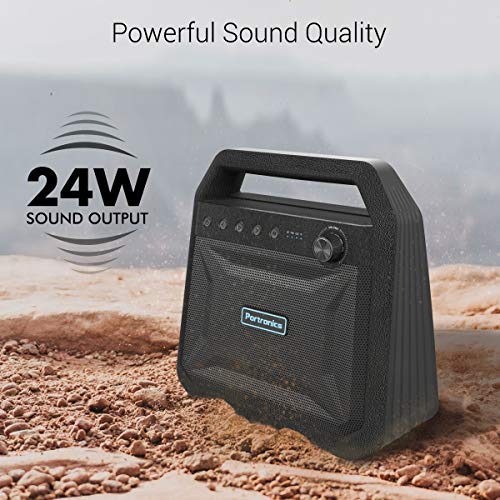
  • Audio output power: 24.00 W
  • Battery life: 7 hours
  • IP rating: IPX6
  • Bluetooth version: 4.2
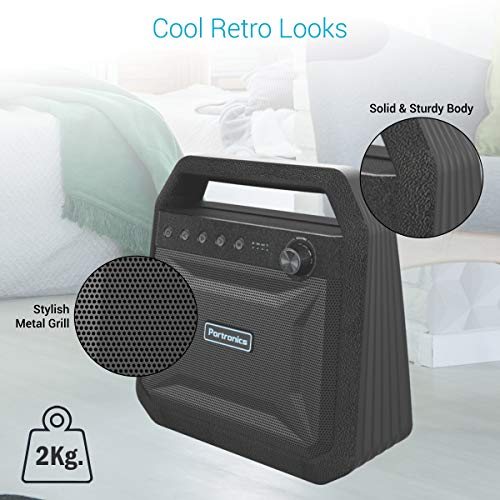
  • Weight: 2000 g

Portronics Roar review. Compare 130 technical specifications and user reviews to see how this product ranks in the Portable Speakers category and whether it is worth buying.

6.6

Overall score

What it is: An overall evaluation of products in the Portable Speakers category, based on technical analysis and user reviews.

When it matters: When you need a quick reference for identifying the best products in the Portable Speakers category.

Score components:

80.0%

6.0

Technical Score

20.0%

8.9

User score

Good
6.0

Technical Score

What it is: An assessment of technical performance for products in the Portable Speakers category across these key areas: Audio, Connectivity, Battery, Durability, Controls, Design, Smart features.

When it matters: When you want to compare products in the Portable Speakers category by technical performance, specifications, and available features.

Score components:

32.0%

6.6

Audio

20.0%

5.3

Battery

18.0%

6.7

Durability

16.0%

5.8

Connectivity

8.0%

4.9

Controls

3.0%

7.4

Design

3.0%

4.1

Smart features

Good
8.9

User score

What it is: A rating that combines user reviews with the total review volume for products in the Portable Speakers category.

When it matters: When you want to know how products in the Portable Speakers category perform in everyday use and how reliable owners find them over time.

Score components:

70.0%

8.4

User reviews

30.0%

10

Popularity

User score:
United Kingdom
amazon
4.2
(302)

(Reviews last updated: August 2026)

Excellent
  • 7.3
    Outdoor durability

    Score components:

    40.0%

    10

    Water resistance

    25.0%

    5.4

    IP rating

    20.0%

    8.0

    Weight

    15.0%

    2.2

    Battery life

  • 4.0
    Powerful sound

    Score components:

    45.0%

    3.6

    Audio output power

    25.0%

    2.2

    Battery life

    15.0%

    8.0

    Weight

    15.0%

    4.0

    Party mode

  • 4.5
    Home listening

    Score components:

    35.0%

    4.0

    Multi-room support

    30.0%

    4.0

    Wi-Fi connectivity

    20.0%

    3.6

    Audio output power

    15.0%

    8.0

    Weight

  • portronics-roar
  • portronics-roar
  • portronics-roar
  • portronics-roar
  • portronics-roar
  • portronics-roar
  • portronics-roar
  • portronics-roar
portronics-roar
portronics-roar
portronics-roar
portronics-roar
portronics-roar
portronics-roar
portronics-roar
portronics-roar

Best prices in UK

Best rankings

?

Available: ranking among products currently available (including other versions of this product).
All: ranking among all products in the database.

Verdict

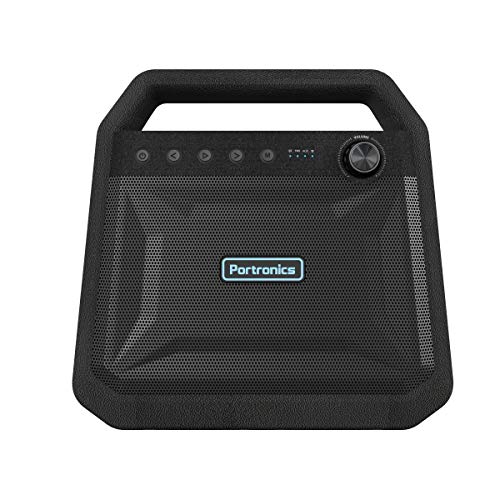
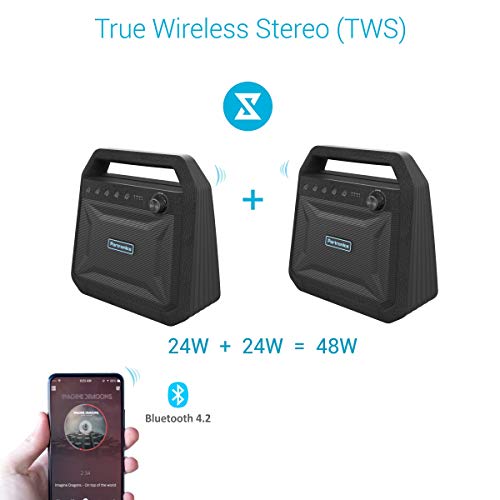
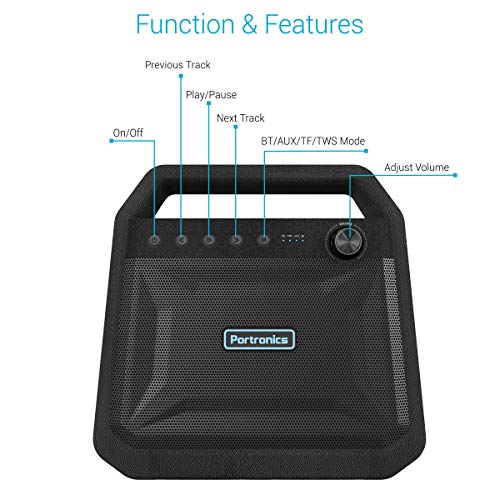
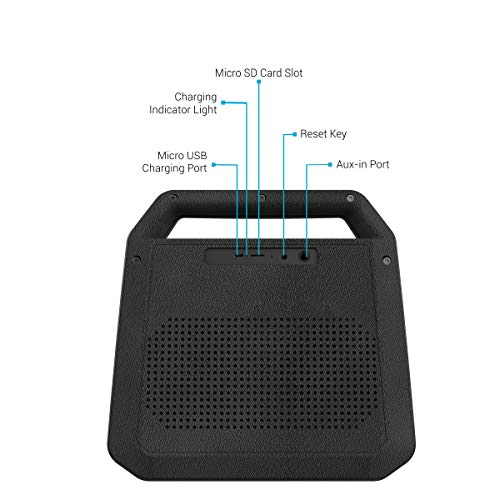
The Portronics Roar (POR-549) is a retro-styled portable Bluetooth speaker featuring dual 12W drivers that deliver a combined 24W audio output with a frequency response of 20Hz–20kHz and a built-in handle for easy carrying. Key advantages include True Wireless Stereo (TWS) pairing to combine two units for 48W of sound, a large 6,000mAh lithium-ion battery providing up to 7 hours of playback, splash-resistant durability, and versatile playback options including Bluetooth 4.2 BLE, a micro SD card slot, and a 3.5mm AUX port. On the downside, the device relies on an outdated Bluetooth 4.2 version, takes a lengthy 4 hours to fully recharge via micro-USB, lacks a built-in microphone for hands-free calling, is relatively heavy at 2 kg, and can suffer from audio distortion when pushed to maximum volume levels.

Technical Specifications of portable speaker Portronics Roar

Technical Score

What it is: An assessment of technical performance for products in the Portable Speakers category across these key areas: Audio, Connectivity, Battery, Durability, Controls, Design, Smart features.

When it matters: When you want to compare products in the Portable Speakers category by technical performance, specifications, and available features.

Score components:

32.0%

6.6

Audio

20.0%

5.3

Battery

18.0%

6.7

Durability

16.0%

5.8

Connectivity

8.0%

4.9

Controls

3.0%

7.4

Design

3.0%

4.1

Smart features

6.0
Portronics Roar has a technical score of 6.03 points, which is lower than 87.9% of products in this category.
User score

What it is: A rating that combines user reviews with the total review volume for products in the Portable Speakers category.

When it matters: When you want to know how products in the Portable Speakers category perform in everyday use and how reliable owners find them over time.

Score components:

70.0%

8.4

User reviews

30.0%

10

Popularity

User score:
United Kingdom
amazon
4.2
(302)

(Reviews last updated: August 2026)

8.9
Portronics Roar has a user score of 8.88 points, which is higher than 71.7% of products in this category.
Popularity
What it is: An indicator based on the number of reviews received by products in the Portable Speakers category.
When it matters: When you prefer products in the Portable Speakers category that have been chosen and reviewed by many other buyers.
10
Portronics Roar has a popularity of 10 points, which is higher than 66.6% of products in this category.
Ratio quality/price

What it is: An indicator that combines the overall score of products in the Portable Speakers category with their prices.

When it matters: When you are comparing products in the Portable Speakers category and want a good balance between quality and price.

Score components:

60.0%

6.6

Overall score

40.0%

10

Price

7.6
Portronics Roar has a quality-to-price ratio of 7.6 points, which is lower than 59.4% of products in this category.
Audio output power
What it is: The maximum continuous power the speaker system can deliver.
When it matters: When you need enough output to fill a larger or noisier space.

Importance: HIGH

Good value: >= 20 W

24.00 W
Portronics Roar has an audio output power of 24.00 W which is higher than that of 58.4% of portable speakers and equal to that of 1.1% of portable speakers.
Total RMS output: 24.00 W.
Driver unit size
What it is: The diameter of each main speaker driver.
When it matters: When the size of the main driver influences bass reach and output capability.

Importance: HIGH

Good value: >= 50 mm

127.00 mm
Portronics Roar has a driver unit size of 127.00 mm which is larger than that of 92.7% of portable speakers and equal to that of 1% of portable speakers.
Primary driver diameter: 127.00 mm.
Number of drivers
What it is: The total number of speaker drivers built into the unit.
When it matters: When fuller driver arrays and broader sound coverage matter.

Importance: MEDIUM

Good value: >= 2

2
Portronics Roar has 2 drivers, which is more than 24.5% of portable speakers and equal to the number in 45.5% of portable speakers.
Acoustic drivers: 2.
Frequency response tolerance
What it is: The allowed deviation around the stated frequency response curve.
When it matters: When a flatter and more accurate frequency response matters.

Importance: MEDIUM

Good value: <= 3 dB

?
Lowest frequency
What it is: The lowest audible frequency the speaker can reproduce.
When it matters: When deeper bass extension matters.

Importance: HIGH

Good value: <= 60 Hz

20.00 Hz
Portronics Roar has a lowest frequency of 20.00 Hz which is lower than that of 84.8% of portable speakers and equal to that of 14% of portable speakers.
Lower frequency-response endpoint: 20.00 Hz.
Show more
Bluetooth connectivity
What it is: Indicates whether the speaker can receive audio over Bluetooth.
When it matters: When wireless playback from phones, tablets, or computers matters.

Importance: MEDIUM

Good value: yes

yes
Portronics Roar supports Bluetooth audio. 5.4% of portable speakers offer this feature.
Bluetooth version
What it is: The generation of Bluetooth supported by the speaker hardware.
When it matters: When compatibility and efficiency with newer Bluetooth devices matter.

Importance: LOW

Good value: >= 5.0

4.2
Portronics Roar supports Bluetooth version 4.2 which is older than that of 53.8% of portable speakers and equal to that of 17.8% of portable speakers.
Bluetooth version: 4.2.
Maximum Bluetooth range
What it is: The farthest distance at which the Bluetooth link can remain usable.
When it matters: When the source device may be far from the speaker.

Importance: MEDIUM

Good value: >= 10 m

10.00 m
Portronics Roar has a maximum Bluetooth range of 10.00 m which is longer than that of 4.3% of portable speakers and equal to that of 70.2% of portable speakers.
Maximum Bluetooth range: 10.00 m.
Bluetooth profiles supported
What it is: The Bluetooth operating profiles available for playback, control, or calls.
When it matters: When Bluetooth playback, control, and call compatibility depend on specific profiles.

Importance: LOW

A2DP
Bluetooth LE Audio
What it is: Shows whether the speaker supports the low-energy Bluetooth audio standard.
When it matters: When newer low-power Bluetooth audio features matter.

Importance: LOW

Good value: yes

no
Portronics Roar does not support Bluetooth LE Audio. 2.5% of portable speakers offer this feature.
Show more
Battery life
What it is: The playback time available from one full battery charge.
When it matters: When you need longer playback between charges.

Importance: HIGH

Good value: >= 20 h

7 hours
Portronics Roar has a battery life of 7 hours which is shorter than that of 80.7% of portable speakers and equal to that of 3.3% of portable speakers.
Battery capacity
What it is: The amount of electrical charge the internal battery can store.
When it matters: When longer untethered playback or power-bank use needs more stored charge.

Importance: HIGH

Good value: >= 5000 mAh

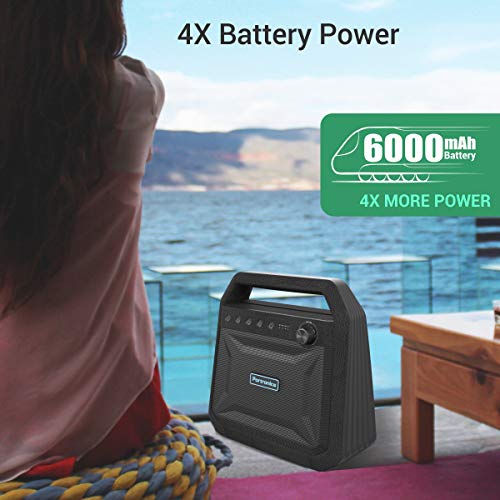
6,000 mAh
Portronics Roar has a battery capacity of 6,000 mAh which is larger than that of 88.1% of portable speakers and equal to that of 1.5% of portable speakers.
Charging time
What it is: The time needed to recharge the battery fully.
When it matters: When the speaker needs to be ready again quickly.

Importance: MEDIUM

Good value: <= 4 h

4 hours
Portronics Roar has a charging time of 4 hours which is longer than that of 67% of portable speakers and equal to that of 19.3% of portable speakers.
Maximum charging input power
What it is: The maximum charging power the speaker can accept from a compatible power source.
When it matters: When faster charging requires the speaker to accept more input power.

Importance: LOW

Good value: >= 20 W

5 W
Portronics Roar has a maximum charging input power of 5 W which is lower than that of 58.7% of portable speakers and equal to that of 38.5% of portable speakers.
Built-in rechargeable battery
What it is: Indicates whether the speaker uses a battery that can be recharged.
When it matters: When portable use without disposable batteries or continuous mains power matters.

Importance: LOW

Good value: yes

yes
Portronics Roar has a built-in rechargeable battery. 18.7% of portable speakers offer this feature.
Show more
IP rating
What it is: The ingress protection code for dust and water resistance.
When it matters: When dust and water protection need to match the intended environment.

Importance: HIGH

Good value: IP67+

IPX6
Portronics Roar has an IP rating of IPX6 which provides worse ingress protection than 52.5% of portable speakers and the same ingress protection as 9.7% of portable speakers.
Water resistance
What it is: Indicates whether the enclosure can resist water exposure.
When it matters: When the speaker may be used near pools, rain, or splashes.

Importance: MEDIUM

Good value: yes

yes
Portronics Roar is water resistant. 38.3% of portable speakers offer this feature.
Dust resistance
What it is: Shows whether the enclosure is protected against dust ingress.
When it matters: When the speaker may be exposed to sand, soil, or dusty environments.

Importance: MEDIUM

Good value: yes

yes
Portronics Roar is dust resistant. 48.6% of portable speakers offer this feature.
Waterproof depth rating
What it is: The maximum water depth the speaker is rated to withstand.
When it matters: When the speaker may be submerged or used very close to water.

Importance: MEDIUM

Good value: >= 1 m

0 m
Portronics Roar is not rated for underwater use. 47.6% of cameras have a native waterproof depth rating.
Drop resistance
What it is: Indicates whether the housing is designed to survive accidental drops.
When it matters: When the speaker may be bumped or suffer an accidental fall during outdoor or travel use.

Importance: LOW

Good value: yes

?
Show more
On-device controls placement
What it is: The physical area of the speaker where its controls are located.
When it matters: When you want controls that are easy to reach in the speaker intended placement.

Importance: LOW

top
Touchscreen
What it is: Indicates whether a touch-sensitive screen is integrated.
When it matters: When direct visual control is more convenient than buttons or an app.

Importance: LOW

Good value: yes

no
Portronics Roar does not have a touchscreen. 0.3% of portable speakers offer this feature.
The speaker does not have an integrated touchscreen.
Smartphone app control
What it is: Shows whether the speaker can be controlled from a phone app.
When it matters: When remote settings, updates, or sound adjustment from a phone matter.

Importance: LOW

Good value: yes

no
Portronics Roar does not support smartphone app control. 54% of portable speakers offer this feature.
No compatible mobile app for speaker control.
Remote control
What it is: Indicates whether a dedicated remote control is supplied or supported.
When it matters: When you want to control playback from across the room.

Importance: LOW

Good value: yes

no
Portronics Roar does not include a remote control. 15% of portable speakers offer this feature.
No dedicated remote control is documented.
Fast pairing
What it is: Shows whether setup with compatible devices can be completed more quickly.
When it matters: When quick setup with compatible devices matters.

Importance: LOW

Good value: yes

no
Portronics Roar does not support fast pairing. 22.5% of portable speakers offer this feature.
No qualifying fast-pair capability; initial pairing is manual or standard.
Show more
Weight
What it is: The total mass of the portable speaker.
When it matters: When carrying the speaker frequently or packing light matters.

Importance: LOW

Good value: <= 1000 g

2000 g
Portronics Roar weighs 2000 g which is heavier than that of 71.5% of portable speakers and equal to that of 0.9% of portable speakers.
Height
What it is: The vertical external dimension of the speaker body.
When it matters: When the speaker must fit beneath shelves or in a compact bag.

Importance: LOW

Good value: <= 20 cm

25.9 cm
Portronics Roar has a height of 25.9 cm which is taller than that of 87.8% of portable speakers.
Width
What it is: The side-to-side external dimension of the speaker body.
When it matters: When the speaker must fit a narrow shelf, bag, or tabletop.

Importance: LOW

Good value: <= 25 cm

?
Depth
What it is: The front-to-back depth of the speaker housing.
When it matters: When the speaker should take up less front-to-back space.

Importance: LOW

Good value: <= 10 cm

11.8 cm
Portronics Roar has a depth of 11.8 cm which is deeper than that of 68% of portable speakers and equal to that of 0.3% of portable speakers.
Carry options
What it is: The available ways to carry, hang, or attach the speaker.
When it matters: When a handle, strap, or attachment point changes how you carry the speaker.

Importance: LOW

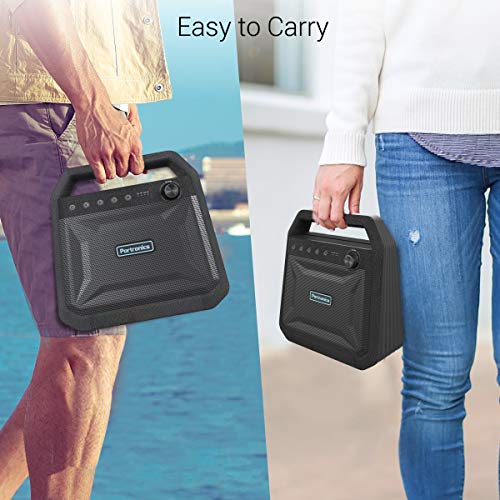
handle
Show more
Companion app name
What it is: The official app used to control settings and functions of the speaker.
When it matters: When app compatibility and the available control features depend on the official app.

Importance: LOW

?
Firmware updates
What it is: Indicates whether the speaker can receive firmware revisions after purchase.
When it matters: When post-purchase fixes and feature improvements matter.

Importance: LOW

Good value: yes

no
Portronics Roar does not support firmware updates. 47.2% of portable speakers offer this feature.
No supported user-accessible firmware update path.
Firmware update method
What it is: The path used to install firmware updates on the speaker.
When it matters: When the convenience and reliability of installing updates matters.

Importance: LOW

?
Voice assistant support
What it is: Indicates whether the speaker can work with supported voice assistants.
When it matters: When hands-free control through a compatible assistant matters.

Importance: LOW

Good value: yes

no
Portronics Roar does not support voice assistants. 26.5% of portable speakers offer this feature.
No direct supported voice-assistant control.
Spotify Connect
What it is: Shows whether Spotify can stream directly to the speaker over the network.
When it matters: When Spotify should stream directly without keeping phone audio active.

Importance: LOW

Good value: yes

no
Portronics Roar does not support Spotify Connect. 10.8% of portable speakers offer this feature.
Does not support native Spotify Connect.
Show more

Portronics Roar vs the average portable speaker

  • 77 mm larger main driver
    Portronics Roar has a larger main driver than the average portable speaker (127 mm vs 50.00 mm).
    Primary driver diameter: 127.00 mm.
    What it is: The diameter of each main speaker driver.
    When it matters: When the size of the main driver influences bass reach and output capability.

    Importance: HIGH

    Good value: >= 50 mm

    Portronics Roar has a larger main driver than the average portable speaker (127 mm vs 50.00 mm).127.00 mm vs 50.00 mm
  • 3,400 mAh more battery capacity
    Portronics Roar has a larger battery capacity than the average portable speaker (6,000 mAh vs 2,600 mAh).
    What it is: The amount of electrical charge the internal battery can store.
    When it matters: When longer untethered playback or power-bank use needs more stored charge.

    Importance: HIGH

    Good value: >= 5000 mAh

    Portronics Roar has a larger battery capacity than the average portable speaker (6,000 mAh vs 2,600 mAh).6000 mAh vs 2600 mAh
  • 40 Hz deeper bass extension
    Portronics Roar has deeper bass extension than the average portable speaker (20 Hz vs 60.00 Hz).
    Lower frequency-response endpoint: 20.00 Hz.
    What it is: The lowest audible frequency the speaker can reproduce.
    When it matters: When deeper bass extension matters.

    Importance: HIGH

    Good value: <= 60 Hz

    Portronics Roar has deeper bass extension than the average portable speaker (20 Hz vs 60.00 Hz).20.00 Hz vs 60.00 Hz
  • Has built-in stereo speakers
    Portronics Roar has built-in stereo speakers, while the average portable speaker does not have built-in stereo speakers.
    Provides true stereo output within the unit.
    What it is: Shows whether the device uses separate left and right audio channels.
    When it matters: When true left-and-right channel playback matters without pairing a second speaker.

    Importance: LOW

    Good value: yes

    Portronics Roar has built-in stereo speakers, while the average portable speaker does not have built-in stereo speakers.
  • Has an external memory card slot
    Portronics Roar has an external memory card slot, while the average portable speaker does not have an external memory card slot.
    Has a removable memory-card slot for playback.
    What it is: Indicates whether removable memory cards can be inserted for playback.
    When it matters: When playing files directly from removable storage matters.

    Importance: LOW

    Good value: yes

    Portronics Roar has an external memory card slot, while the average portable speaker does not have an external memory card slot.
  • Has an FM radio
    Portronics Roar has an FM radio, while the average portable speaker does not have an FM radio.
    What it is: Shows whether the speaker includes an FM radio receiver.
    When it matters: When listening to broadcast radio without a separate source matters.

    Importance: LOW

    Good value: yes

    Portronics Roar has an FM radio, while the average portable speaker does not have an FM radio.
  • Supports playback mute
    Portronics Roar supports playback mute, while the average portable speaker does not support playback mute.
    Speaker playback audio can be directly muted.
    What it is: Indicates whether audio or microphone output can be muted directly.
    When it matters: When audio needs to be silenced immediately from the speaker.

    Importance: LOW

    Good value: yes

    Portronics Roar supports playback mute, while the average portable speaker does not support playback mute.
  • Better ingress protection
    Portronics Roar has better ingress protection than the average portable speaker (IPX6 vs IPX5).
    What it is: The ingress protection code for dust and water resistance.
    When it matters: When dust and water protection need to match the intended environment.

    Importance: HIGH

    Good value: IP67+

    Portronics Roar has better ingress protection than the average portable speaker (IPX6 vs IPX5).IPX6 vs IPX5
  • 77 mm larger main driver
    Portronics Roar has a larger main driver than the average portable speaker (127 mm vs 50.00 mm).
  • 40 Hz deeper bass extension
    Portronics Roar has deeper bass extension than the average portable speaker (20 Hz vs 60.00 Hz).
  • Has built-in stereo speakers
    Portronics Roar has built-in stereo speakers, while the average portable speaker does not have built-in stereo speakers.
  • 4 W more audio output power
    Portronics Roar has more audio output power than the average portable speaker (24 W vs 20.00 W).
  • Has an external memory card slot
    Portronics Roar has an external memory card slot, while the average portable speaker does not have an external memory card slot.
  • 3,400 mAh more battery capacity
    Portronics Roar has a larger battery capacity than the average portable speaker (6,000 mAh vs 2,600 mAh).
  • Better ingress protection
    Portronics Roar has better ingress protection than the average portable speaker (IPX6 vs IPX5).
  • Has an FM radio
    Portronics Roar has an FM radio, while the average portable speaker does not have an FM radio.
  • Supports playback mute
    Portronics Roar supports playback mute, while the average portable speaker does not support playback mute.
  • 1 fewer microphones
    Portronics Roar has fewer microphones than the average portable speaker (0 vs 1).
    Built-in microphones: 0.
  • 20 dB lower signal-to-noise ratio
    Portronics Roar has a lower signal-to-noise ratio than the average portable speaker (60 dB vs 80 dB).
    Signal-to-noise ratio: 60.00 dB.
  • 2 dB SPL lower maximum sound pressure
    Portronics Roar has a lower maximum sound pressure level than the average portable speaker (90 dB SPL vs 92.00 dB SPL).
    Sound pressure level: 90.00 dB.
  • 0.8 Bluetooth levels older
    Portronics Roar has an older Bluetooth version than the average portable speaker (4.2 vs 5.0).
    Bluetooth version: 4.2.
  • 5 hours shorter battery life
    Portronics Roar has a shorter battery life than the average portable speaker (7 hours vs 12 hours).
  • 1 hours longer charging time
    Portronics Roar has a longer charging time than the average portable speaker (4 hours vs 3 hours).
  • 5 W lower charging input power
    Portronics Roar has lower charging input power than the average portable speaker (5 W vs 10 W).
  • Does not have a battery level indicator
    Portronics Roar does not have a battery level indicator, while the average portable speaker has a battery level indicator.
  • Does not support smartphone app control
    Portronics Roar does not support smartphone app control, while the average portable speaker supports smartphone app control.
    No compatible mobile app for speaker control.
  • Does not support auto power-off
    Portronics Roar does not support auto power-off, while the average portable speaker supports auto power-off.
    No automatic inactivity-based power-off.
  • 1,200 g heavier
    Portronics Roar is heavier than the average portable speaker (2000 g vs 800 g).
  • 13.5 cm taller
    Portronics Roar is taller than the average portable speaker (25.9 cm vs 12.4 cm).
  • 3.5 cm deeper
    Portronics Roar is deeper than the average portable speaker (11.8 cm vs 8.3 cm).
  • 5 hours shorter battery life
    Portronics Roar has a shorter battery life than the average portable speaker (7 hours vs 12 hours).
    What it is: The playback time available from one full battery charge.
    When it matters: When you need longer playback between charges.

    Importance: HIGH

    Good value: >= 20 h

    Portronics Roar has a shorter battery life than the average portable speaker (7 hours vs 12 hours).7 hours vs 12 hours
  • 1 fewer microphones
    Portronics Roar has fewer microphones than the average portable speaker (0 vs 1).
    Built-in microphones: 0.
    What it is: The number of microphones built into the speaker.
    When it matters: When voice pickup, calls, or beamforming performance matter.

    Importance: LOW

    Good value: >= 1

    Portronics Roar has fewer microphones than the average portable speaker (0 vs 1).0 vs 1
  • Does not support smartphone app control
    Portronics Roar does not support smartphone app control, while the average portable speaker supports smartphone app control.
    No compatible mobile app for speaker control.
    What it is: Shows whether the speaker can be controlled from a phone app.
    When it matters: When remote settings, updates, or sound adjustment from a phone matter.

    Importance: LOW

    Good value: yes

    Portronics Roar does not support smartphone app control, while the average portable speaker supports smartphone app control.
  • 20 dB lower signal-to-noise ratio
    Portronics Roar has a lower signal-to-noise ratio than the average portable speaker (60 dB vs 80 dB).
    Signal-to-noise ratio: 60.00 dB.
    What it is: The ratio between the wanted audio signal and background noise.
    When it matters: When cleaner audio with less background noise matters.

    Importance: MEDIUM

    Good value: >= 80 dB

    Portronics Roar has a lower signal-to-noise ratio than the average portable speaker (60 dB vs 80 dB).60.00 dB vs 80 dB
  • 1 hours longer charging time
    Portronics Roar has a longer charging time than the average portable speaker (4 hours vs 3 hours).
    What it is: The time needed to recharge the battery fully.
    When it matters: When the speaker needs to be ready again quickly.

    Importance: MEDIUM

    Good value: <= 4 h

    Portronics Roar has a longer charging time than the average portable speaker (4 hours vs 3 hours).4 hours vs 3 hours
  • 5 W lower charging input power
    Portronics Roar has lower charging input power than the average portable speaker (5 W vs 10 W).
    What it is: The maximum charging power the speaker can accept from a compatible power source.
    When it matters: When faster charging requires the speaker to accept more input power.

    Importance: LOW

    Good value: >= 20 W

    Portronics Roar has lower charging input power than the average portable speaker (5 W vs 10 W).5 W vs 10 W
  • Does not have a battery level indicator
    Portronics Roar does not have a battery level indicator, while the average portable speaker has a battery level indicator.
    What it is: Shows whether the remaining battery level can be displayed clearly.
    When it matters: When you want to know the remaining charge before or during use.

    Importance: LOW

    Good value: yes

    Portronics Roar does not have a battery level indicator, while the average portable speaker has a battery level indicator.
  • 0.8 Bluetooth levels older
    Portronics Roar has an older Bluetooth version than the average portable speaker (4.2 vs 5.0).
    Bluetooth version: 4.2.
    What it is: The generation of Bluetooth supported by the speaker hardware.
    When it matters: When compatibility and efficiency with newer Bluetooth devices matter.

    Importance: LOW

    Good value: >= 5.0

    Portronics Roar has an older Bluetooth version than the average portable speaker (4.2 vs 5.0).4.2 vs 5.0

Graphic comparison of Portronics Roar and other products in the Portable Speakers category

Attribute category
Attribute
No results found

Third-party reviews

United Kingdom

(Reviews last updated: August 2026)

What customers like about Portronics Roar?

  • High volume clarity with minimal distortion
  • Good bass thump and 24W audio output
  • Versatile music play options including Bluetooth, Micro SD card, and 3.5mm AUX input
  • Long-lasting 6,000mAh battery providing up to 7 hours of playback
  • Can be operated continuously while connected to a power source
  • Sturdy design with a stylish metallic front grille
  • Supports True Wireless Stereo (TWS) to pair two speakers together

What customers dislike about Portronics Roar?

  • Heavy body weighing around 2 kg, making it less portable than expected
  • Occasional Bluetooth disconnection issues reported by some users
  • Lacks a built-in battery level indicator
  • Uses an older Bluetooth 4.2 version rather than newer standards
  • No official dustproof or waterproof IP rating

Video reviews

Compare Portronics Roar with other products in the Portable Speakers category

VS
VS

Compare