Scored using Portable Speakers Methodology v1.0
Portable Speakers Methodology v1.0
Mathematical & Unbiased Scoring
Products in this category are scored under Frontum Portable Speakers Methodology v1.0: technical specifications plus authentic consumer ratings, with 0% commercial bias.
Explore Portable Speakers Methodology v1.0

Linn Series 3 Review | 130 Data compared

Avg. price:~£3,030Audio output power:200.00 WBattery life:?IP rating:?Bluetooth version:4.2Weight:6900 g

Linn Series 3 Review: Compare 130 technical specifications and user reviews to see how this product ranks in the Portable Speakers category and whether it is worth buying.

6.9/10

Overall score

Score
6.9/ 10
✕
What it is
An overall evaluation of products in the Portable Speakers category, based on technical analysis and user reviews.
When it matters
When you need a quick reference for identifying the best products in the Portable Speakers category.
Score distribution
â–¼
<55-66-77-88-99-10
Score components

80%

6.9

Technical score

20%

?

User score

â–²Better than 63% of portable speakers
5.1

Value for money

Value for money
5.1/ 10
✕
What it is
An indicator that combines the overall score of products in the Portable Speakers category with their prices.
When it matters
When you are comparing products in the Portable Speakers category and want a good balance between quality and price.
Score distribution
â–¼
<55-66-77-88-99-10
Score components

70%

6.9

Overall score

30%

1.0

Price

â–¼Worse than 99%
6.9

Technical score

Technical score
6.9/ 10
✕
What it is
An assessment of technical performance for products in the Portable Speakers category across these key areas: Audio, Connectivity, Battery, Durability, Controls, Design, Smart features.
When it matters
When you want to compare products in the Portable Speakers category by technical performance, specifications, and available features.
Score distribution
â–¼
<55-66-77-88-99-10
Score components

32%

7.4

Audio

20%

7.0

Battery

18%

6.9

Durability

16%

6.1

Connectivity

8%

6.8

Controls

3%

3.5

Design

3%

9.1

Smart features

â–²Better than 72%
?

User score

User score
8.0/ 10
✕
What it is
A rating that combines user reviews with the total review volume for products in the Portable Speakers category.
When it matters
When you want to know how products in the Portable Speakers category perform in everyday use and how reliable owners find them over time.
Score distribution
â–¼
<55-66-77-88-99-10
Score components

70%

?

User ratings

30%

?

Number of reviews

  • No image
No image
Where to buy
    N/A~ £3,030
Best rankings
Available: ranking among products currently available (including other versions of this product).All: ranking among all products in the database.
Loading...
Loading category ranking...

Technical Specifications of portable speaker Linn Series 3

Technical score
Technical score
6.9/ 10
✕
What it is
An assessment of technical performance for products in the Portable Speakers category across these key areas: Audio, Connectivity, Battery, Durability, Controls, Design, Smart features.
When it matters
When you want to compare products in the Portable Speakers category by technical performance, specifications, and available features.
Score distribution
â–¼
<55-66-77-88-99-10
Score components:

32%

7.4

Audio

20%

7.0

Battery

18%

6.9

Durability

16%

6.1

Connectivity

8%

6.8

Controls

3%

3.5

Design

3%

9.1

Smart features

6.9
User score
User score
8.0/ 10
✕
What it is
A rating that combines user reviews with the total review volume for products in the Portable Speakers category.
When it matters
When you want to know how products in the Portable Speakers category perform in everyday use and how reliable owners find them over time.
Score distribution
â–¼
<55-66-77-88-99-10
Score components

70%

?

User ratings

30%

?

Number of reviews

?
Popularity
Popularity
1.0/ 10
✕
What it is
An indicator based on the number of reviews received by products in the Portable Speakers category.
When it matters
When you prefer products in the Portable Speakers category that have been chosen and reviewed by many other buyers.
Score distribution
â–¼
<55-66-77-88-99-10
Popularity:
Linn Series 3 has a popularity score of 1 point, which is lower than 59.2% of products in this category.
1.0
Value for money
Value for money
5.1/ 10
✕
What it is
An indicator that combines the overall score of products in the Portable Speakers category with their prices.
When it matters
When you are comparing products in the Portable Speakers category and want a good balance between quality and price.
Score distribution
â–¼
<55-66-77-88-99-10
Score components:

70%

6.9

Overall score

30%

1.0

Price

5.1
Audio output power
200 W
This portable speaker has an audio output power of 200 W which is higher than that of 96.6% of portable speakers and equal to that of 0.7% of portable speakers.
Driver unit size
160 mm
This portable speaker has a driver unit size of 160 mm which is larger than that of 96.1% of portable speakers.
Uses a 160 mm primary driver.
Number of drivers
2
This portable speaker has 2 drivers, which is more than 24.5% of portable speakers and equal to the number in 45.5% of portable speakers.
Frequency response tolerance
?
Lowest frequency
42 Hz
This portable speaker has a lowest frequency of 42 Hz which is lower than that of 74.6% of portable speakers and equal to that of 0.2% of portable speakers.
Show more
Bluetooth connectivity
yes
This portable speaker supports Bluetooth audio. 5.4% of portable speakers offer this feature.
Bluetooth version
4.2
This portable speaker supports Bluetooth version 4.2 which is older than that of 53.8% of portable speakers and equal to that of 17.8% of portable speakers.
Maximum Bluetooth range
10 m
This portable speaker has a maximum Bluetooth range of 10 m which is longer than that of 4.3% of portable speakers and equal to that of 70.2% of portable speakers.
Bluetooth profiles supported
?
Bluetooth LE Audio
no
This portable speaker does not support Bluetooth LE Audio. 2.5% of portable speakers offer this feature.
Show more
Battery life
?
Battery capacity
?
Charging time
?
Maximum charging input power
?
Built-in rechargeable battery
no
This portable speaker does not have a built-in rechargeable battery. 81.4% of portable speakers offer this feature.
Show more
IP rating
?
Water resistance
no
This portable speaker is not water resistant. 61.7% of portable speakers offer this feature.
Dust resistance
?
Waterproof depth rating
?
Drop resistance
?
Show more
On-device controls placement
top
Touchscreen
?
Smartphone app control
yes
This portable speaker supports smartphone app control. 46.1% of portable speakers offer this feature.
Compatible mobile app provides speaker control or settings.
Remote control
no
This portable speaker does not include a remote control. 15% of portable speakers offer this feature.
Fast pairing
no
This portable speaker does not support fast pairing. 22.5% of portable speakers offer this feature.
Show more
Weight
6,900 g
This portable speaker weighs 6,900 g which is heavier than that of 93.4% of portable speakers.
Height
29.6 cm
This portable speaker has a height of 29.6 cm which is taller than that of 90.2% of portable speakers.
Width
25 cm
This portable speaker has a width of 25 cm which is wider than that of 69.3% of portable speakers and equal to that of 1% of portable speakers.
Depth
20.6 cm
This portable speaker has a depth of 20.6 cm which is deeper than that of 91.1% of portable speakers.
Carry options
none
Show more
Companion app name
?
Firmware updates
yes
This portable speaker supports firmware updates. 52.9% of portable speakers offer this feature.
Supports user-accessible firmware updates.
Firmware update method
OTA; App
Voice assistant support
yes
This portable speaker supports voice assistants. 73.6% of portable speakers offer this feature.
Supports direct voice-assistant control.
Spotify Connect
yes
This portable speaker supports Spotify Connect. 89.3% of portable speakers offer this feature.
Show more

Linn Series 3 vs the average portable speaker

246810TotalAudioConnectivityBatteryDurabilityControlsDesignSmart features
  • 180 W more audio output power
    This portable speaker has more audio output power than the average portable speaker (200 W vs 20 W).
    200 W vs 20 W
  • 110 mm larger main driver
    This portable speaker has a larger main driver than the average portable speaker (160 mm vs 50 mm).
    Uses a 160 mm primary driver.
    160 mm vs 50 mm
  • Supports Wi-Fi connectivity
    This portable speaker supports Wi-Fi connectivity, while the average portable speaker does not support Wi-Fi connectivity.
  • 2,000 Hz higher maximum frequency
    This portable speaker has a higher maximum frequency than the average portable speaker (22,000 Hz vs 20,000 Hz).
    22,000 Hz vs 20,000 Hz
  • 9 dB SPL higher maximum sound pressure
    This portable speaker has a higher maximum sound pressure level than the average portable speaker (101 dB SPL vs 92 dB SPL).
    101 dB SPL vs 92 dB SPL
  • Supports AirPlay
    This portable speaker supports AirPlay, while the average portable speaker does not support AirPlay.
  • Has an equalizer
    This portable speaker has an equalizer, while the average portable speaker does not have an equalizer.
    Offers user-selectable EQ, tone adjustment, or sound presets.
  • 18 Hz deeper bass extension
    This portable speaker has deeper bass extension than the average portable speaker (42 Hz vs 60 Hz).
    42 Hz vs 60 Hz
  • 180 W more audio output power
    This portable speaker has more audio output power than the average portable speaker (200 W vs 20 W).
    200 W vs 20 W
  • 110 mm larger main driver
    This portable speaker has a larger main driver than the average portable speaker (160 mm vs 50 mm).
    Uses a 160 mm primary driver.
    160 mm vs 50 mm
  • 2,000 Hz higher maximum frequency
    This portable speaker has a higher maximum frequency than the average portable speaker (22,000 Hz vs 20,000 Hz).
    22,000 Hz vs 20,000 Hz
  • 9 dB SPL higher maximum sound pressure
    This portable speaker has a higher maximum sound pressure level than the average portable speaker (101 dB SPL vs 92 dB SPL).
    101 dB SPL vs 92 dB SPL
  • 18 Hz deeper bass extension
    This portable speaker has deeper bass extension than the average portable speaker (42 Hz vs 60 Hz).
    42 Hz vs 60 Hz
  • Supports Wi-Fi connectivity
    This portable speaker supports Wi-Fi connectivity, while the average portable speaker does not support Wi-Fi connectivity.
  • Supports AirPlay
    This portable speaker supports AirPlay, while the average portable speaker does not support AirPlay.
  • Has Ethernet support
    This portable speaker has Ethernet support, while the average portable speaker does not have Ethernet support.
  • Wi-Fi standard detailed
    This portable speaker supports Wi-Fi 5 (802.11ac), while the average portable speaker supports Wi-Fi 4 (802.11n).
    Wi-Fi 5 (802.11ac) vs Wi-Fi 4 (802.11n)
  • Has an equalizer
    This portable speaker has an equalizer, while the average portable speaker does not have an equalizer.
    Offers user-selectable EQ, tone adjustment, or sound presets.
  • Supports party mode
    This portable speaker supports party mode, while the average portable speaker does not support party mode.
    Supports synchronized multi-speaker party/group playback.
  • Has a programmable button
    This portable speaker has a programmable button, while the average portable speaker does not have a programmable button.
    Has a user-programmable physical button.
  • Supports multi-room audio
    This portable speaker supports multi-room audio, while the average portable speaker does not support multi-room audio.
    Supports synchronized multi-room playback.
  • Supports Spotify Connect
    This portable speaker supports Spotify Connect, while the average portable speaker does not support Spotify Connect.
  • Supports voice assistants
    This portable speaker supports voice assistants, while the average portable speaker does not support voice assistants.
    Supports direct voice-assistant control.
  • Supports firmware updates
    This portable speaker supports firmware updates, while the average portable speaker does not support firmware updates.
    Supports user-accessible firmware updates.
  • Supports Tidal Connect
    This portable speaker supports Tidal Connect, while the average portable speaker does not support Tidal Connect.
  • Is not water resistant
    This portable speaker is not water resistant, while the average portable speaker is water resistant.
  • 1 fewer microphones
    This portable speaker has fewer microphones than the average portable speaker (0 vs 1).
    0 vs 1
  • Does not have a built-in rechargeable battery
    This portable speaker does not have a built-in rechargeable battery, while the average portable speaker has a built-in rechargeable battery.
  • 6,100 g heavier
    This portable speaker is heavier than the average portable speaker (6,900 g vs 800 g).
    6,900 g vs 800 g
  • Does not include a passive radiator
    This portable speaker does not include a passive radiator, while the average portable speaker includes a passive radiator.
  • Does not have a 3.5 mm AUX input
    This portable speaker does not have a 3.5 mm AUX input, while the average portable speaker has a 3.5 mm AUX input.
    No built-in 3.5 mm AUX input.
  • Does not support True Wireless Stereo
    This portable speaker does not support True Wireless Stereo, while the average portable speaker supports True Wireless Stereo.
  • 1 fewer USB ports
    This portable speaker has fewer USB ports than the average portable speaker (0 vs 1).
    0 vs 1
  • 33.67x more expensive
    Linn Series 3 is more expensive than the average portable speaker (£3,030 vs £90).
    £3,030 vs £90
  • 47.1% worse value for money
    Linn Series 3 offers worse value for money than the average portable speaker (5.13 vs 7.5).
    5.13 vs 7.55
  • 4.21x less popular
    Linn Series 3 is less popular than the average portable speaker (1 vs 4.21).
    1 vs 4.21
  • 1 fewer microphones
    This portable speaker has fewer microphones than the average portable speaker (0 vs 1).
    0 vs 1
  • Does not include a passive radiator
    This portable speaker does not include a passive radiator, while the average portable speaker includes a passive radiator.
  • 65 ms higher audio latency
    This portable speaker has higher audio latency than the average portable speaker (150 ms vs 85 ms).
    150 ms vs 85 ms
  • Does not have a 3.5 mm AUX input
    This portable speaker does not have a 3.5 mm AUX input, while the average portable speaker has a 3.5 mm AUX input.
    No built-in 3.5 mm AUX input.
  • 1 fewer USB ports
    This portable speaker has fewer USB ports than the average portable speaker (0 vs 1).
    0 vs 1
  • 0.8 Bluetooth levels older
    This portable speaker has an older Bluetooth version than the average portable speaker (4.2 vs 5).
    4.2 vs 5
  • Does not have a built-in rechargeable battery
    This portable speaker does not have a built-in rechargeable battery, while the average portable speaker has a built-in rechargeable battery.
  • Is not water resistant
    This portable speaker is not water resistant, while the average portable speaker is water resistant.
  • Does not support True Wireless Stereo
    This portable speaker does not support True Wireless Stereo, while the average portable speaker supports True Wireless Stereo.
  • Does not provide voice prompts
    This portable speaker does not provide voice prompts, while the average portable speaker provides voice prompts.
    No spoken status prompts; feedback is absent, visual, or tone-based.
  • 6,100 g heavier
    This portable speaker is heavier than the average portable speaker (6,900 g vs 800 g).
    6,900 g vs 800 g
  • 17.2 cm taller
    This portable speaker is taller than the average portable speaker (29.6 cm vs 12.4 cm).
    29.6 cm vs 12.4 cm
  • 12.3 cm deeper
    This portable speaker is deeper than the average portable speaker (20.6 cm vs 8.3 cm).
    20.6 cm vs 8.3 cm
  • 6.9 cm wider
    This portable speaker is wider than the average portable speaker (25 cm vs 18.1 cm).
    25 cm vs 18.1 cm

Video reviews

Hands-on testing, unboxing, and real-world video evaluations

Expert reviews

In-depth analysis and verdict from leading tech publications
W
wired.com
10/10/2019
Summary of the review
T
trustedreviews.com
30/10/2019
Summary of the review
W
whathifi.com
22/01/2020
Summary of the review
H
hifiplus.com
29/04/2020
Summary of the review
S
soundstagesimplifi.com
01/02/2022
Summary of the review
S
sound-advice.online
30/03/2022
Summary of the review
T
techradar.com
18/11/2019
Summary of the review
P
pocket-lint.com
05/07/2020
Summary of the review
Q
qobuz.com
11/09/2020
Summary of the review
A
afdigitale.it
23/01/2020
Summary of the review
H
hifi.nl
29/05/2020
Summary of the review

Third-party reviews

What customers like about Linn Series 3

  • Exceptional audio clarity and outstanding midrange precision.
  • Remarkable low-end agility with deep, tightly controlled bass response.
  • Elegant, unique cabinet design crafted from high-quality natural mineral ceramic.
  • Versatile connectivity options including Wi-Fi, Bluetooth, AirPlay, and HDMI ARC.
  • Integrated Space Optimisation technology that automatically adjusts sound to the room layout.
  • User-friendly capacitive glass touch-control interface with convenient preset buttons.
  • Seamless multi-room integration and impressive true-stereo scaling when paired with a companion speaker.

What customers don't like about Linn Series 3

  • Extremely high price tag, making it significantly more expensive than premium competitors.
  • Lacks native support for Master Quality Authenticated (MQA) audio tracks.
  • Slightly limited maximum volume and outright audio scale for its price tier.
  • To create a stereo pair, the companion speaker requires a physical Ethernet cable connection rather than a wireless one.
  • Polarising, unconventional wine-glass or egg-shaped aesthetic that may not suit all interior styles.
  • Occasional software and connection instabilities reported when streaming via Bluetooth with certain Android smartphones.

Verdict

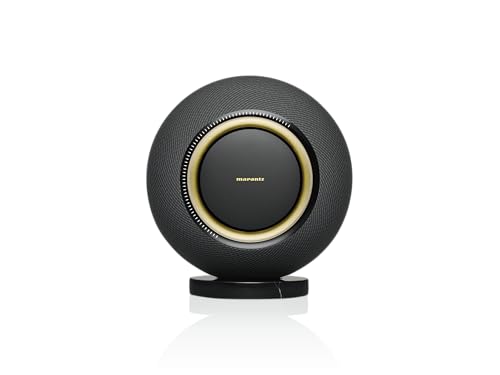
The Linn Series 3 is an ultra-premium, egg-shaped wireless speaker that combines a 19mm silk dome tweeter and a 160mm long-throw mid-bass driver driven by 200W of total Class-D amplification (100W per driver). It utilizes an advanced Exakt linear phase digital crossover engine to support high-resolution audio streaming up to 24-bit/192kHz over Wi-Fi, Ethernet, Bluetooth 4.2, and Apple AirPlay 2, alongside physical HDMI ARC connectivity for television integration. Key advantages include its exquisite, hand-finished ceramic mineral cabinet, exceptionally clear and tonally precise room-filling audio performance up to a continuous 101dB, and intuitive touch-sensitive glass controls. However, its major drawbacks include an exceptionally high price tag, a lack of analog auxiliary inputs, and an absence of support for MQA files or Tidal Masters.

Compare Linn Series 3 with other products in the Portable Speakers category

1Product to compare no. 1
VS
2Product to compare no. 2
VS
3Product to compare no. 3 (optional)

Graphic comparison of Linn Series 3 and other products in the Portable Speakers category

No results found