

















What is headless ecommerce and when should you decouple the frontend?
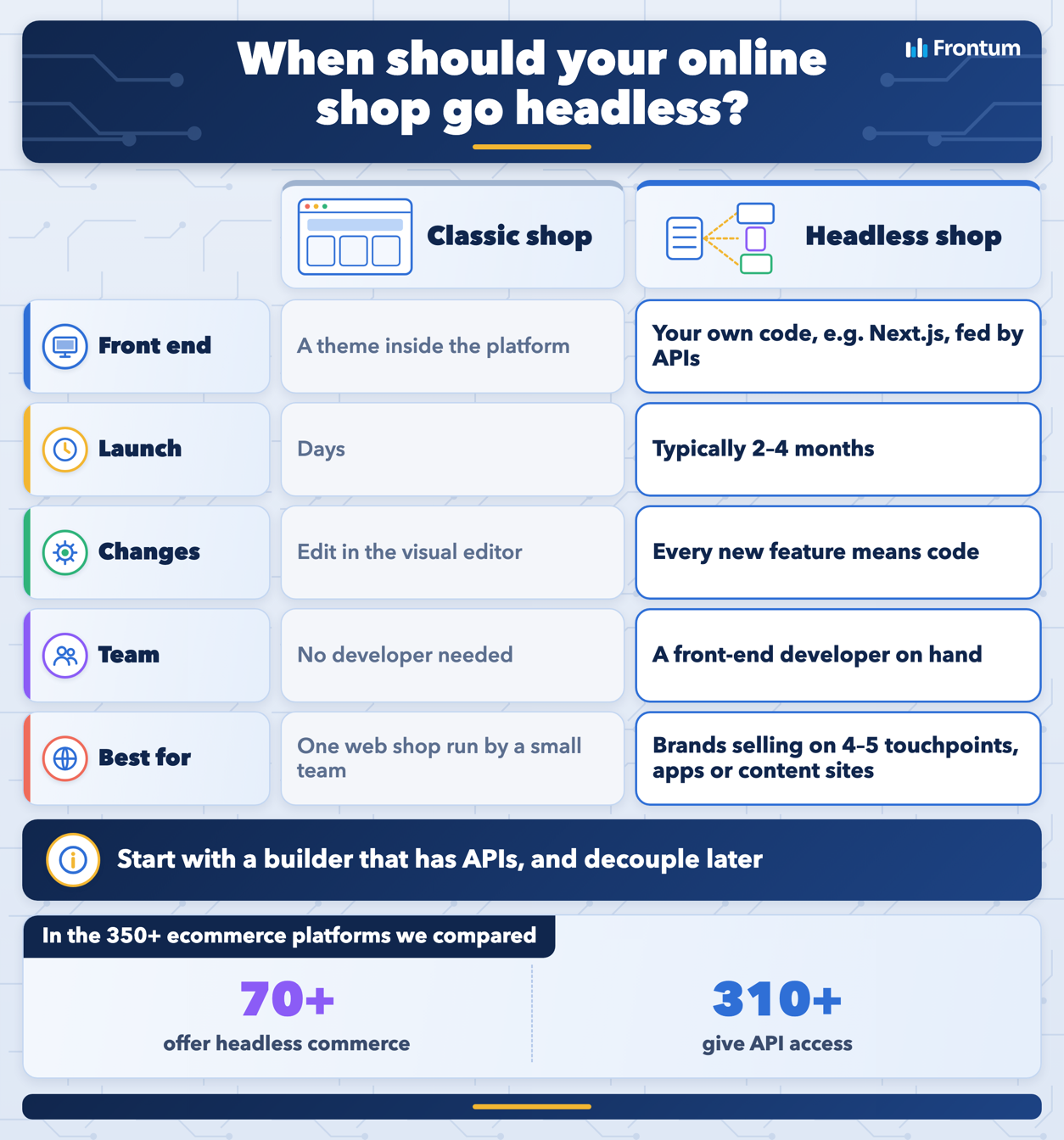
Headless ecommerce separates the shop's front end, the pages customers see, from the commerce engine that holds products, prices, carts and orders. The two talk only through APIs. Your developers build the storefront in a framework such as Next.js, and the platform supplies data and runs checkout. A classic theme-based shop launches in days, while a headless build typically takes 2–4 months.
You should decouple when the front end limits the business. Typical triggers are a content-heavy brand that wants the shop inside its editorial site, a native app that shares the catalogue, or a design no theme can match. Brands selling through 4 or 5 touchpoints gain most, because one back end feeds them all. The payoff is full control over every page and every request.
Staying coupled is the better call for a single web shop run by a small team. A headless build needs a front-end developer on hand, and every new feature, from a size filter to a promo banner, means code. Duda Ecommerce and Ecwid at £20 a month pair headless APIs with a visual builder, so you start with the builder and decouple later.