Scored using Fitness trackers Methodology v1.0
Fitness trackers Methodology v1.0
Mathematical & Unbiased Scoring
Products in this category are evaluated mathematically under Frontumo Fitness trackers Methodology v1.0 using verified laboratory benchmarks, technical specifications, and authentic consumer ratings with 0% commercial bias.
Explore Fitness trackers Methodology v1.0

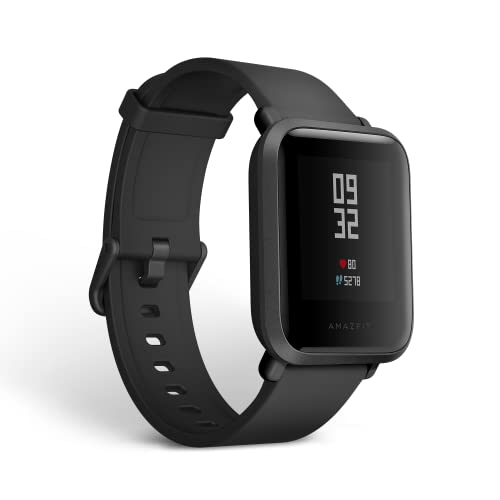
Amazfit Bip Review | 171 Data compared

Avg. price:~£70Battery life:45 daysScreen size:1.28 inchHeart rate monitor:yesGPS:yesWaterproof depth rating:1 m

Amazfit Bip Review: Compare 171 technical specifications and user reviews to see how this product ranks in the Fitness trackers category and whether it is worth buying.

8.3

Overall score

Score
8.3/ 10
✕
What it is
An overall evaluation of the fitness tracker's quality, based on technical analyses and user reviews.
When it matters
When you need a quick reference to identify the best fitness trackers on the market.
Score distribution
▼
<55-66-77-88-99-10
Score components

80%

8.1

Technical score

20%

9.0

User score

▲Better than 89% of fitness-trackers
8.1

Technical score

Technical score
8.1/ 10
✕
What it is
An assessment of technical performance for products in the Fitness trackers category across these key areas: Health, Sports & Navigation, Smart Features, App & Wellness, Connectivity, Battery, Display, Design & Durability.
When it matters
When you want to compare fitness trackers based on technical performance and available features.
Score distribution
▼
<55-66-77-88-99-10
Score components

20%

8.2

Sports & Navigation

20%

8.5

Battery

18%

7.6

Health

18%

7.8

Display

8%

8.0

Smart Features

8%

9.1

App & Wellness

4%

7.5

Connectivity

4%

7.1

Design & Durability

▲Better than 87% of fitness-trackers
9.0

User score

User score
9.0/ 10
✕
What it is
A rating that combines user reviews and the total number of reviews received by the fitness tracker.
When it matters
When you want to know how a fitness tracker performs in daily use and how reliable it remains over time according to user feedback.
Score distribution
▼
<55-66-77-88-99-10
Score components

70%

8.8

User ratings

30%

9.6

Number of reviews

Based on 8,281 buyer reviews from online shops.
How we calculate this
User ratings – average star rating across all shop listings, weighted by how many reviews each has, on a 1–10 scale.
Number of reviews – how many buyer reviews the product has, on a logarithmic scale; the 8% most-reviewed models in the category get 10.
★Better than 92% of fitness-trackers
  • amazfit-bip
  • amazfit-bip
  • amazfit-bip
  • amazfit-bip
  • amazfit-bip
  • amazfit-bip
  • amazfit-bip
amazfit-bip
amazfit-bip
amazfit-bip
amazfit-bip
amazfit-bip
amazfit-bip
amazfit-bip

Best prices

*As an Amazon Associate, we earn from qualifying purchases.

Best rankings

Available: ranking among products currently available (including other versions of this product).All: ranking among all products in the database.
Loading...
Loading category ranking...

Technical Specifications of fitness tracker Amazfit Bip

Technical score
Technical score
8.1/ 10
✕
What it is
An assessment of technical performance for products in the Fitness trackers category across these key areas: Health, Sports & Navigation, Smart Features, App & Wellness, Connectivity, Battery, Display, Design & Durability.
When it matters
When you want to compare fitness trackers based on technical performance and available features.
Score distribution
▼
<55-66-77-88-99-10
Score components:

20%

8.2

Sports & Navigation

20%

8.5

Battery

18%

7.6

Health

18%

7.8

Display

8%

8.0

Smart Features

8%

9.1

App & Wellness

4%

7.5

Connectivity

4%

7.1

Design & Durability

8.1
User score
User score
9.0/ 10
✕
What it is
A rating that combines user reviews and the total number of reviews received by the fitness tracker.
When it matters
When you want to know how a fitness tracker performs in daily use and how reliable it remains over time according to user feedback.
Score distribution
▼
<55-66-77-88-99-10
Score components

70%

8.8

User ratings

30%

9.6

Number of reviews

Based on 8,281 buyer reviews from online shops.
How we calculate this
User ratings – average star rating across all shop listings, weighted by how many reviews each has, on a 1–10 scale.
Number of reviews – how many buyer reviews the product has, on a logarithmic scale; the 8% most-reviewed models in the category get 10.
9.0
Popularity
Popularity
9.6/ 10
✕
What it is
An indicator based on the number of reviews received by the fitness tracker.
When it matters
When you prefer to buy a product chosen and reviewed by many other consumers.
Score distribution
▼
<55-66-77-88-99-10
Popularity:
Amazfit Bip has a popularity score of 9.6 points, which is higher than 85.9% of fitness trackers.
9.6
Value for money
Value for money
8.8/ 10
✕
What it is
An indicator that combines the fitness tracker's overall rating with its cost.
When it matters
When you are looking for a fitness tracker with a good balance between quality and price.
Score distribution
▼
<55-66-77-88-99-10
Score components:

60%

8.3

Overall score

40%

10

Price

8.8
Heart rate monitor
yes
Heart rate monitor
yes
This fitness tracker supports heart rate monitoring. 40.2% of fitness trackers support heart rate monitoring.
Resting heart rate
yes
Resting heart rate
yes
This fitness tracker supports Resting heart rate. 52.6% of fitness trackers support Resting heart rate.
Fast/slow heart rate alerts
yes
Fast/slow heart rate alerts
yes
This fitness tracker supports high and low heart rate alerts. 65.8% of fitness trackers support high and low heart rate alerts.
High heart rate alert only.
Irregular heart rate alerts
no
Irregular heart rate alerts
no
This fitness tracker does not support irregular heart rate alerts. 12.4% of fitness trackers support irregular heart rate alerts.
Blood oxygen sensor
no
Blood oxygen sensor
no
This fitness tracker does not have a blood oxygen sensor. 25.4% of fitness trackers have a blood oxygen sensor.
Show more
GPS
yes
GPS
yes
This fitness tracker has GPS. 89.5% of fitness trackers have GPS.
Satellite systems supported
GPS + GLONASS
Satellite systems supported
GPS + GLONASS
This fitness tracker supports GPS + GLONASS satellite systems which is more versatile than that of 89.3% of fitness trackers and the same as that of 5.1% of fitness trackers.
Multi-GNSS support.
GNSS bands supported
?
Galileo support
no
Galileo support
no
This fitness tracker does not support Galileo. 4.9% of fitness trackers support Galileo.
Acquires GPS faster
yes
Acquires GPS faster
yes
This fitness tracker supports faster GPS acquisition. 92.4% of fitness trackers support faster GPS acquisition.
Faster satellite lock claimed.
Show more
Notifications
yes
Notifications
yes
This fitness tracker supports notifications. 27.5% of fitness trackers support notifications.
Vibrating alerts
yes
Vibrating alerts
yes
This fitness tracker supports vibration alerts. 16.3% of fitness trackers support vibration alerts.
Call control
yes
Call control
yes
This fitness tracker supports call controls. 58.7% of fitness trackers support call controls.
Reject/mute only.
Call answering
no
Call answering
no
This fitness tracker does not support call answering. 1% of fitness trackers support call answering.
Calendar sync
no
Calendar sync
no
This fitness tracker does not support calendar sync. 20.3% of fitness trackers support calendar sync.
Show more
Activity reports
yes
Activity reports
yes
This fitness tracker supports activity reports. 5.7% of fitness trackers support activity reports.
via Zepp app
Goal setting
yes
Goal setting
yes
This fitness tracker supports goal setting. 2.4% of fitness trackers support goal setting.
Achievements
yes
Achievements
yes
This fitness tracker supports achievements. 24.3% of fitness trackers support achievements.
Inactivity alerts
yes
Inactivity alerts
yes
This fitness tracker supports inactivity alerts. 23.5% of fitness trackers support inactivity alerts.
Coaching
no
Coaching
no
This fitness tracker does not support coaching. 34% of fitness trackers support coaching.
Show more
Bluetooth version
4
Bluetooth version
4
This fitness tracker supports Bluetooth 4 which is newer than in 5.1% of fitness trackers and equal to that in 51.3% of fitness trackers.
Maximum Bluetooth range
?
NFC
no
NFC
no
This fitness tracker does not have NFC. 13% of fitness trackers have NFC.
Wi-Fi connectivity
?
Wi-Fi version
no
Wi-Fi version
no
This fitness tracker does not support modern Wi-Fi. 1% of fitness trackers support modern Wi-Fi.
no Wi-Fi support.
Show more
Battery life
45 days
Battery life
45 days
This fitness tracker offers a battery life of 45 days which is longer than that of 86.6% of fitness trackers.
Shorter with always-on display
Battery life with GPS on
22 h
Battery life with GPS on
22 h
This fitness tracker offers a GPS-on battery life of 22 h which is longer than that of 100% of fitness trackers.
Approximate GPS runtime.
Battery life in training mode
22 h
Battery life in training mode
22 h
This fitness tracker offers a training-mode battery life of 22 h which is longer than that of 75% of fitness trackers.
GPS running mode.
Battery life in power-saving mode
?
Battery capacity
190 mAh
Battery capacity
190 mAh
This fitness tracker has a battery capacity of 190 mAh which is higher than that of 75% of fitness trackers and equal to that of 2.6% of fitness trackers.
Show more
Display
yes
Display
yes
This fitness tracker has a display. 24.1% of fitness trackers have a display.
Screen size
1.28 inch
Screen size
1.28 inch
This fitness tracker has a screen size of 1.28 inch which is larger than that of 69.2% of fitness trackers and equal to that of 0.7% of fitness trackers.
Display type
LCD
Display type
LCD
This fitness tracker uses LCD display technology which is less advanced than that of 68.2% of fitness trackers and the same as that of 4.6% of fitness trackers.
Screen resolution
176x 176
Screen resolution
176x 176
This fitness tracker has a screen resolution of 176x176 which is higher than that of 76.7% of fitness trackers.
Pixel density
195 ppi
Pixel density
195 ppi
This fitness tracker has a pixel density of 195 ppi which is lower than that of 60.2% of fitness trackers.
Show more
Form factor
watch
Hybrid design
no
Hybrid design
no
This fitness tracker does not support Hybrid design. 2.4% of fitness trackers support Hybrid design.
Designed for kids
no
Designed for kids
no
This fitness tracker is not designed for kids. 2.4% of fitness trackers are designed for kids.
Replaceable watch band
yes
Replaceable watch band
yes
This fitness tracker has a replaceable watch band. 25.6% of fitness trackers have a replaceable watch band.
Quick-release band system.
Band width
20 mm
Show more

Amazfit Bip vs the average fitness tracker

246810TotalHealthSports & NavigationBatteryDisplayConnectivitySmart FeaturesDesign & DurabilityApp & Wellness
  • 35 days longer battery life
    Battery life
    45 days
    This fitness tracker has a higher battery life than the average fitness tracker (45 days vs 10 days). The average fitness tracker has 10 days of battery life.
    Shorter with always-on display
    45 days vs 10 days
  • Always-on display
    Always-on display
    yes
    This fitness tracker has an always-on display, while the average fitness tracker does not. 25.6% of fitness trackers have an always-on display.
    Low-power display remains continuously visible.
  • Built-in GPS
    GPS
    yes
    This fitness tracker has GPS, while the average fitness tracker does not. 11% of fitness trackers have GPS.
  • Lower resting heart rate
    Resting heart rate
    yes
    This fitness tracker supports Resting heart rate, while the average fitness tracker does not. 47.7% of fitness trackers support Resting heart rate.
  • 15 h longer GPS battery life
    Battery life with GPS on
    22 h
    This fitness tracker has a higher battery life with GPS on than the average fitness tracker (22 h vs 7 h). The average fitness tracker has 7 h of battery life with GPS on.
    Approximate GPS runtime.
    22 h vs 7 h
  • Touchscreen
    Touchscreen
    yes
    This fitness tracker has a touchscreen, while the average fitness tracker does not. 43.8% of fitness trackers have a touchscreen.
  • Auto pause
    Auto pause
    yes
    This fitness tracker supports auto pause, while the average fitness tracker does not. 23.2% of fitness trackers support auto pause.
  • 72.7% larger battery capacity
    Battery capacity
    190 mAh
    This fitness tracker has a higher battery capacity than the average fitness tracker (190 mAh vs 110 mAh). The average fitness tracker has 110 mAh of battery capacity.
    190 mAh vs 110 mAh
  • 12.8% higher user score
    User score
    9.0/ 10
    ✕
    What it is
    A rating that combines user reviews and the total number of reviews received by the fitness tracker.
    When it matters
    When you want to know how a fitness tracker performs in daily use and how reliable it remains over time according to user feedback.
    Score distribution
    ▼
    ▼
    <55-66-77-88-99-10
    Amazfit Bip
    the average fitness tracker
    Amazfit Bip has a higher user score than the average fitness tracker (9.02 vs 8.000).
    9.02 vs 8
  • 10.8% better value for money
    Amazfit Bip has a higher value-for-money score than the average fitness tracker (8.77 vs 7.9).
    8.77 vs 7.92
  • 88.6% more popular
    Amazfit Bip has a higher popularity than the average fitness tracker (9.55 vs 5.1).
    9.55 vs 5.07
  • Lower resting heart rate
    Resting heart rate
    yes
    This fitness tracker supports Resting heart rate, while the average fitness tracker does not. 47.7% of fitness trackers support Resting heart rate.
  • Heart rate alerts
    Fast/slow heart rate alerts
    yes
    This fitness tracker supports high and low heart rate alerts, while the average fitness tracker does not. 34.5% of fitness trackers support high and low heart rate alerts.
    High heart rate alert only.
  • Cycle start prediction
    Predicts start date
    yes
    This fitness tracker predicts the start date, while the average fitness tracker does not. 42.5% of fitness trackers predict the start date.
  • 35 days longer battery life
    Battery life
    45 days
    This fitness tracker has a higher battery life than the average fitness tracker (45 days vs 10 days). The average fitness tracker has 10 days of battery life.
    Shorter with always-on display
    45 days vs 10 days
  • 15 h longer GPS battery life
    Battery life with GPS on
    22 h
    This fitness tracker has a higher battery life with GPS on than the average fitness tracker (22 h vs 7 h). The average fitness tracker has 7 h of battery life with GPS on.
    Approximate GPS runtime.
    22 h vs 7 h
  • 72.7% larger battery capacity
    Battery capacity
    190 mAh
    This fitness tracker has a higher battery capacity than the average fitness tracker (190 mAh vs 110 mAh). The average fitness tracker has 110 mAh of battery capacity.
    190 mAh vs 110 mAh
  • 14 h longer training-mode battery life
    Battery life in training mode
    22 h
    This fitness tracker has a higher battery life in training mode than the average fitness tracker (22 h vs 8 h). The average fitness tracker has 8 h of battery life in training mode.
    GPS running mode.
    22 h vs 8 h
  • Always-on display
    Always-on display
    yes
    This fitness tracker has an always-on display, while the average fitness tracker does not. 25.6% of fitness trackers have an always-on display.
    Low-power display remains continuously visible.
  • Touchscreen
    Touchscreen
    yes
    This fitness tracker has a touchscreen, while the average fitness tracker does not. 43.8% of fitness trackers have a touchscreen.
  • Color display
    Color display
    yes
    This fitness tracker has a color display, while the average fitness tracker does not. 37.7% of fitness trackers have a color display.
  • Branded damage-resistant glass
    Has branded damage-resistant glass
    yes
    This fitness tracker uses branded damage-resistant glass, while the average fitness tracker does not. 22.2% of fitness trackers use branded damage-resistant glass.
    Corning Gorilla Glass 3.
  • Durable display glass
    Display glass type
    Gorilla Glass 3
    This fitness tracker uses more durable display glass than the average fitness tracker (Gorilla Glass 3 vs glass). The average fitness tracker uses glass display glass.
    Gorilla Glass 3 vs glass
  • 0.24 inch larger screen size
    Screen size
    1.28 inch
    This fitness tracker has a higher screen size than the average fitness tracker (1.3 inch vs 1.04 inch). The average fitness tracker has a screen size of 1.04 inch.
    1.28 inch vs 1.04 inch
  • Phone finder support
    Find my phone
    yes
    This fitness tracker supports phone finding, while the average fitness tracker does not. 49.3% of fitness trackers support phone finding.
  • Call control
    Call control
    yes
    This fitness tracker supports call controls, while the average fitness tracker does not. 41.5% of fitness trackers support call controls.
    Reject/mute only.
  • Camera remote control
    Camera remote control
    yes
    This fitness tracker supports camera remote control, while the average fitness tracker does not. 38.9% of fitness trackers support camera remote control.
    Requires third-party app support.
  • 1 more physical buttons
    N. of physical buttons
    1
    This fitness tracker has a higher physical buttons than the average fitness tracker (1 vs 0). The average fitness tracker has 0 of physical buttons.
    1 vs 0
  • 2.17x higher CPU speed
    CPU speed
    0.208 GHz
    This fitness tracker has a higher CPU speed than the average fitness tracker (0.2 GHz vs 0.1 GHz). The average fitness tracker has 0.096 GHz of CPU speed.
    0.208 GHz vs 0.096 GHz
  • Gesture control
    Gesture control
    yes
    This fitness tracker supports gesture controls, while the average fitness tracker does not. 40.8% of fitness trackers support gesture controls.
  • 2 mm thinner design
    Thickness
    9 mm
    This fitness tracker is thinner than the average fitness tracker (9 mm vs 11 mm). The average fitness tracker has a thickness of 11 mm.
    Without sensor base.
    9 mm vs 11 mm
  • Tracks calorie intake
    Calorie intake tracking
    yes
    This fitness tracker supports calorie intake tracking, while the average fitness tracker does not. 39.3% of fitness trackers support calorie intake tracking.
  • Points-based system
    Points-based system
    yes
    This fitness tracker supports a points-based system, while the average fitness tracker does not. 38.6% of fitness trackers support a points-based system.
    Uses PAI.
  • No automatic activity detection
    Automatic activity detection
    no
    This fitness tracker does not support automatic activity detection, while the average fitness tracker does. 52% of fitness trackers support automatic activity detection.
  • 1 hours longer charging time
    Charging time
    2.5 hours
    This fitness tracker has a higher charging time than the average fitness tracker (2.5 hours vs 1.5 hours). The average fitness tracker needs 1.5 hours to charge.
    2.5 hours vs 1.5 hours
  • 49 m lower waterproof depth rating
    Waterproof depth rating
    1 m
    This fitness tracker has a lower waterproof depth rating than the average fitness tracker (1 m vs 50 m). The average fitness tracker has a waterproof depth rating of 50 m.
    1 m vs 50 m
  • No shock resistance standard
    Shock resistance standard
    MIL-STD-810
    This fitness tracker meets a weaker shock resistance standard than the average fitness tracker (MIL-STD-810 vs MIL-STD-810G). The average fitness tracker meets the MIL-STD-810G shock resistance standard.
    MIL-STD-810 vs MIL-STD-810G
  • 28% heavier
    Thickness
    32 g mm
    This fitness tracker is heavier than the average fitness tracker (32 g vs 25 g). The average fitness tracker weighs 25 g.
    Without sensor base.
    32 g vs 25 g
  • Lower screen resolution
    Screen resolution
    176 x 176
    This fitness tracker has a lower screen resolution than the average fitness tracker (176x176 vs 194x368). The average fitness tracker has a screen resolution of 194x368.
    176x176 vs 194x368
  • 20.4% lower pixel density
    Pixel density
    195 ppi
    This fitness tracker has a lower pixel density than the average fitness tracker (195 ppi vs 245 ppi). The average fitness tracker has a pixel density of 245 ppi.
    195 ppi vs 245 ppi
  • 1 hours longer charging time
    Charging time
    2.5 hours
    This fitness tracker has a higher charging time than the average fitness tracker (2.5 hours vs 1.5 hours). The average fitness tracker needs 1.5 hours to charge.
    2.5 hours vs 1.5 hours
  • Lower screen resolution
    Screen resolution
    176 x 176
    This fitness tracker has a lower screen resolution than the average fitness tracker (176x176 vs 194x368). The average fitness tracker has a screen resolution of 194x368.
    176x176 vs 194x368
  • 20.4% lower pixel density
    Pixel density
    195 ppi
    This fitness tracker has a lower pixel density than the average fitness tracker (195 ppi vs 245 ppi). The average fitness tracker has a pixel density of 245 ppi.
    195 ppi vs 245 ppi
  • 49 m lower waterproof depth rating
    Waterproof depth rating
    1 m
    This fitness tracker has a lower waterproof depth rating than the average fitness tracker (1 m vs 50 m). The average fitness tracker has a waterproof depth rating of 50 m.
    1 m vs 50 m
  • No shock resistance standard
    Shock resistance standard
    MIL-STD-810
    This fitness tracker meets a weaker shock resistance standard than the average fitness tracker (MIL-STD-810 vs MIL-STD-810G). The average fitness tracker meets the MIL-STD-810G shock resistance standard.
    MIL-STD-810 vs MIL-STD-810G
  • 28% heavier
    Thickness
    32 g mm
    This fitness tracker is heavier than the average fitness tracker (32 g vs 25 g). The average fitness tracker weighs 25 g.
    Without sensor base.
    32 g vs 25 g

Video reviews

Hands-on testing, unboxing, and real-world video evaluations

Expert reviews

In-depth analysis and verdict from leading tech publications

J
jamiebalfour.scot
21/05/2018
Summary of the review
T
techradar.com
18/11/2019
Summary of the review
R
review-hub.co.uk
07/02/2018
Summary of the review
C
coachweb.com
28/06/2022
Summary of the review
T
techradar.com
18/11/2019
Summary of the review
S
stuff.tv
09/03/2018
Summary of the review
C
cnet.com
27/06/2018
Summary of the review
S
singlespeedgoldcoast.com
14/11/2018
Summary of the review
T
techadvisor.com
23/11/2018
Summary of the review
C
chekyang.com
19/10/2018
Summary of the review
T
techreviewer.de
01/10/2024
Summary of the review
J
journaldugeek.com
14/11/2018
Summary of the review
C
computerhoy.20minutos.es
11/12/2018
Summary of the review
P
profesionalreview.com
24/01/2018
Summary of the review
X
xiaomitoday.it
20/08/2017
Summary of the review
A
andreagaleazzi.com
04/11/2017
Summary of the review
T
test-aankoop.be
Undated
Summary of the review
H
hardloopzone.nl
Undated
Summary of the review
N
nl.techreviewer.de
01/10/2024
Summary of the review
T
tweakers.net
28/01/2018
Summary of the review

Third-party reviews

Based on 8,281 buyer reviews from online shops.
Reviews last updated: June 2026 · How we calculate this

What we like about Amazfit Bip

  • Incredible battery life that can last for several weeks on a single charge
  • Highly readable, always-on reflective display that performs exceptionally well in direct sunlight
  • Built-in GPS and heart rate monitoring at an entry-level price point
  • Lightweight and comfortable design suitable for 24/7 wear and sleep tracking
  • Wide compatibility with both Android and iOS devices through the companion app

What we don't like about Amazfit Bip

  • Plastic build and overall aesthetic can feel cheap compared to premium smartwatches
  • The companion app (Mi Fit/Zepp) is often described as less polished or intuitive than competitors like Fitbit
  • Limited selection of official watch faces and no support for third-party installable apps
  • Heart rate and GPS accuracy can sometimes be inconsistent during intense workouts
  • Basic notification system only allows for viewing alerts without the ability to reply

Verdict

The Amazfit Bip is a budget-friendly fitness tracker featuring a 1.28-inch always-on reflective color touchscreen protected by 2.5D Corning Gorilla Glass 3. It includes built-in GPS and GLONASS for accurate activity mapping, a PPG optical heart rate sensor, a triaxial acceleration sensor, a barometer, and a geomagnetic sensor. Its primary advantage is an exceptional battery life of up to 45 days on a single 190mAh charge, alongside a lightweight 31g design and an IP68 dustproof and water-resistant rating. While it excels in outdoor visibility and long-term wear, it is limited by a plastic build, basic non-actionable notifications, no support for third-party apps, and a lack of dedicated swimming tracking modes.

Compare Amazfit Bip with other products in the Fitness trackers category

1Product to compare no. 1
VS
2Product to compare no. 2
VS
3Product to compare no. 3 (optional)

Graphic comparison of Amazfit Bip and other products in the Fitness trackers category

No results found