Scored using Coffee Machines Methodology v2.0
Coffee Machines Methodology v2.0
Mathematical & Unbiased Scoring
Products in this category are scored under Frontumo Coffee Machines Methodology v2.0: technical specifications plus grades from 901 independent expert reviews and 1,046 video reviews, with 0% commercial bias.
Explore Coffee Machines Methodology v2.0

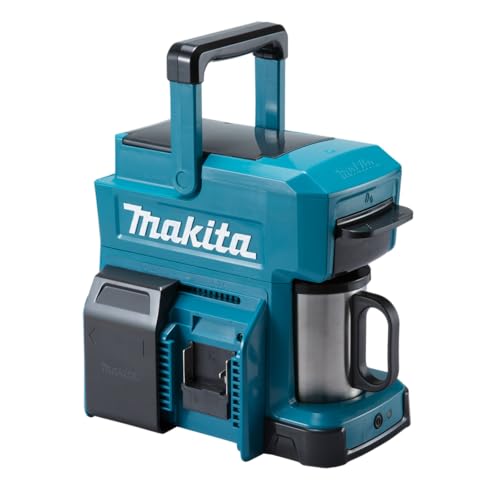
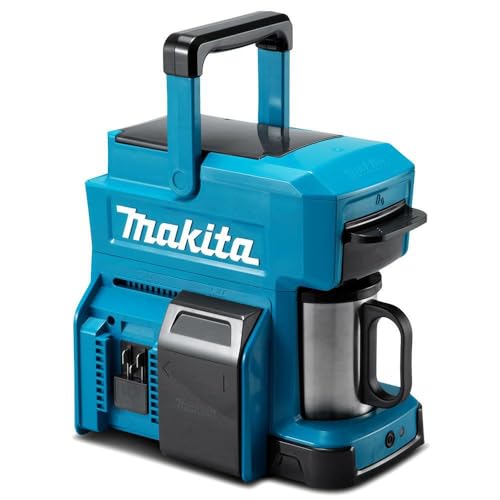
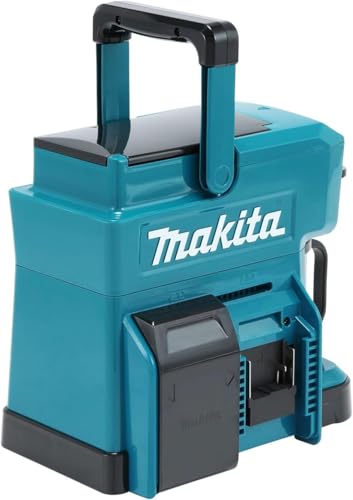
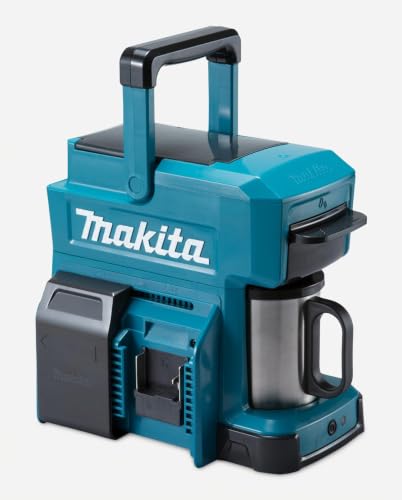
Makita DCM501Z Review | 73 Data compared

Avg. price:~£95Type:Filter Coffee MachineWater Container Capacity:0.240 LPump Pressure:N/A barBuilt-in Coffee Grinder:noAutomatic Milk Frother:no

Makita DCM501Z Review: Compare 73 technical specifications and 17 expert and video reviews to see how this product ranks in the Coffee Machines category and whether it is worth buying.

4.6

Overall score

Score
4.6/ 10
✕
What it is
An overall evaluation of the coffee machine's quality, based on technical analyses and user reviews.
When it matters
When you need a quick reference to identify the best coffee machines on the market.
Score distribution
â–¼
<55-66-77-88-99-10
Score components

95%

4.5

Technical score

5%

7.1

Review score ( 5 · 12)

Review score 5% · 7.1 · based on 17 independent reviews
Every model in this category gets the same split: reviews 5%, technical score 95%. This model has enough reviews, so its review score is the weighted average of their grades.
â–¼Worse than 99% of coffee-machines
4.5

Technical score

Technical score
4.5/ 10
✕
What it is
An assessment of technical performance across brewing and drink preparation, coffee formats, maintenance and convenience, and design and dimensions.
When it matters
When you want to compare coffee machines based on technical performance and available features.
Score distribution
â–¼
<55-66-77-88-99-10
Score components

35%

3.1

Performance

25%

5.0

Coffee Preparation

25%

5.2

Features

15%

5.8

Design

â–¼Worse than 98% of coffee-machines
7.1

Review score

Review score
7.1/ 10
✕
What it is
Average grade from independent test sites, magazines and video reviewers, 1–10.
How we count it
Grades: Each review's own score is converted to 1–10; without one, we grade the review ourselves.
Weighting: Big test sites count more, short reviews half as much as full tests. A video review counts half.
Share: Reviews are 5% of the overall score for every model in this category; each of the 2 needed reviews that is missing counts as 7/10.
Score distribution
â–¼
<55-66-77-88-99-10
Grades by review (17)
5 reviews: 2 with a printed score, 3 estimated from the review. 12 video reviews, each counting half as much as a written test. Share in the overall score: 5%, the same for every model in this category.
Video reviews 6
estimated from the review
Shop star ratings are not part of this score.
â–¼Worse than 93% of coffee-machines
  • makita-dcm501z
  • makita-dcm501z
  • makita-dcm501z
  • makita-dcm501z
  • makita-dcm501z
  • makita-dcm501z
  • makita-dcm501z
  • makita-dcm501z
  • makita-dcm501z
  • makita-dcm501z
makita-dcm501z
makita-dcm501z
makita-dcm501z
makita-dcm501z
makita-dcm501z
makita-dcm501z
makita-dcm501z
makita-dcm501z
makita-dcm501z
makita-dcm501z

Best prices

*As an Amazon Associate, we earn from qualifying purchases.

Best rankings

Available: ranking among products currently available (including other versions of this product).All: ranking among all products in the database.
Loading...
Loading category ranking...

Technical Specifications of coffee machine Makita DCM501Z

Technical score
Technical score
4.5/ 10
✕
What it is
An assessment of technical performance across brewing and drink preparation, coffee formats, maintenance and convenience, and design and dimensions.
When it matters
When you want to compare coffee machines based on technical performance and available features.
Score distribution
â–¼
<55-66-77-88-99-10
Score components:

35%

3.1

Performance

25%

5.0

Coffee Preparation

25%

5.2

Features

15%

5.8

Design

4.5
Review score
Review score
7.1/ 10
✕
What it is
Average grade from independent test sites, magazines and video reviewers, 1–10.
How we count it
Grades: Each review's own score is converted to 1–10; without one, we grade the review ourselves.
Weighting: Big test sites count more, short reviews half as much as full tests. A video review counts half.
Share: Reviews are 5% of the overall score for every model in this category; each of the 2 needed reviews that is missing counts as 7/10.
Score distribution
â–¼
<55-66-77-88-99-10
Grades by review (17)
5 reviews: 2 with a printed score, 3 estimated from the review. 12 video reviews, each counting half as much as a written test. Share in the overall score: 5%, the same for every model in this category.
Video reviews 6
estimated from the review
Shop star ratings are not part of this score.
7.1
Popularity
Popularity
9.1/ 10
✕
What it is
An indicator based on the number of reviews received by the coffee machine.
When it matters
When you prefer to purchase a product chosen and reviewed by many other consumers.
Score distribution
â–¼
<55-66-77-88-99-10
Popularity:
Makita DCM501Z has a popularity of 9.1 points, which is higher than 78% of coffee machines.
9.1
Value for money
Value for money
6.1/ 10
✕
What it is
An indicator that combines the coffee machine's overall rating with its cost.
When it matters
When you are looking for a coffee machine with a good balance between quality and price.
Score distribution
â–¼
<55-66-77-88-99-10
Score components:

60%

4.6

Overall score

40%

9.7

Price

6.1
Power
190 W
Power
190 W
This coffee machine provides 190 W of heating power, which is lower than the power of 99.3% of coffee machines.
Higher wattage generally supports faster heating but may increase energy use.
Water Container Capacity
0.24 L
Water Container Capacity
0.24 L
This coffee machine holds up to 0.24 L in its water tank, which is smaller than 98.1% of coffee machines and equal to that of 1% of coffee machines.
A larger water tank reduces how often it needs to be refilled.
Pump Pressure
N/A
Heating Time
?
Heating System
Heating Element
Show more
What reviewers say
Type
Filter Coffee Machine
Works with Powdered Coffee
yes
Works with Powdered Coffee
yes
This coffee machine accepts ground coffee. 40.3% of coffee machines accept ground coffee.
Compatibility with powdered coffee allows use of pre-ground coffee.
Works with Beans
no
Works with Beans
no
This coffee machine does not accept whole coffee beans. 38.1% of coffee machines accept whole coffee beans.
Bean compatibility indicates whether the machine can brew from whole coffee beans.
Works with ESE Pods
no
Works with ESE Pods
no
This coffee machine does not accept ESE pods. 24.3% of coffee machines accept ESE pods.
ESE pod compatibility allows use of standard Easy Serving Espresso pods.
Works with Capsules
yes
Works with Capsules
yes
This coffee machine accepts coffee capsules. 71.6% of coffee machines accept coffee capsules.
Capsule compatibility indicates whether the machine accepts coffee capsules.
Show more
What reviewers say
Water Level Indicator
no
Water Level Indicator
no
This coffee machine does not have a water level indicator. 60.4% of coffee machines have a water level indicator.
A water level indicator makes it easier to monitor the remaining reservoir water.
Water Filter
no
Water Filter
no
This coffee machine does not have a water filter. 35.9% of coffee machines have a water filter.
A water filter can improve water quality and reduce the need for frequent descaling.
Descaling Program
no
Descaling Program
no
This coffee machine does not have a descaling programme. 66.8% of coffee machines have a descaling programme.
A descaling program simplifies maintenance by guiding the machine through limescale removal.
Cleaning Alert
no
Cleaning Alert
no
This coffee machine does not alert you when cleaning is needed. 60% of coffee machines offer cleaning alerts.
A cleaning alert reminds you when routine machine cleaning is due.
Automatic Milk Circuit Cleaning
no
Automatic Milk Circuit Cleaning
no
This coffee machine does not clean its milk circuit automatically. 21.7% of coffee machines offer automatic milk circuit cleaning.
Automatic milk-circuit cleaning simplifies hygiene after preparing milk drinks.
Show more
Built-in Installation
no
Color
Blue
Vintage Look
no
Vintage Look
no
This coffee machine does not have vintage styling. 12.6% of coffee machines have this look.
A vintage look describes a deliberately retro or classic machine design rather than a modern aesthetic.
Housing Material
Plastic
Drip Tray Material
N/A
Show more
What reviewers say

Makita DCM501Z vs the average coffee machine

246810TotalPerformanceCoffee PreparationFeaturesDesign
  • Accepts coffee capsules
    Works with Capsules
    yes
    This coffee machine accepts coffee capsules, while the average coffee machine does not. 28.6% of coffee machines accept coffee capsules.
    Capsule compatibility indicates whether the machine accepts coffee capsules.
  • 65 mm shorter body
    Height
    260.00 mm
    This coffee machine has a lower profile under overhead cabinets than the average coffee machine (260 mm vs 325 mm).
    Height affects overhead clearance and cabinet placement.
    260.00 mm vs 325.00 mm
  • 87 mm shallower depth
    Depth
    243.00 mm
    This coffee machine requires less counter depth than the average coffee machine (243 mm vs 330 mm).
    Depth affects front-to-back counter space and placement clearance.
    243.00 mm vs 330.00 mm
  • 51.1% lighter body
    Weight
    2.200 kg
    This coffee machine is lighter and easier to move than the average coffee machine (2.2 kg vs 4.5 kg).
    Lower weight can make the machine easier to move, while higher weight may indicate a more substantial build.
    2.200 kg vs 4.500 kg
  • 39 mm narrower body
    Width
    185.00 mm
    This coffee machine takes up less counter width than the average coffee machine (185 mm vs 224 mm).
    Width affects how much counter space the machine needs.
    185.00 mm vs 224.00 mm
  • 19.9% more popular
    Makita DCM501Z is more popular than the average coffee machine (9.13 vs 7.6).
    9.13 vs 7.62
  • 68.4% cheaper
    Makita DCM501Z is cheaper than the average coffee machine (£95 vs £160).
    £95 vs £160
  • 47.2% more compact volume
    Volume
    11,688.3 cm³
    This coffee machine takes up less overall space than the average coffee machine (11688.3 cm³ vs 22143 cm³).
    11,688.3 cm³ vs 22,143 cm³
  • 19.9% more popular
    Makita DCM501Z is more popular than the average coffee machine (9.13 vs 7.6).
    9.13 vs 7.62
  • 68.4% cheaper
    Makita DCM501Z is cheaper than the average coffee machine (£95 vs £160).
    £95 vs £160
  • Accepts coffee capsules
    Works with Capsules
    yes
    This coffee machine accepts coffee capsules, while the average coffee machine does not. 28.6% of coffee machines accept coffee capsules.
    Capsule compatibility indicates whether the machine accepts coffee capsules.
  • 65 mm shorter body
    Height
    260.00 mm
    This coffee machine has a lower profile under overhead cabinets than the average coffee machine (260 mm vs 325 mm).
    Height affects overhead clearance and cabinet placement.
    260.00 mm vs 325.00 mm
  • 87 mm shallower depth
    Depth
    243.00 mm
    This coffee machine requires less counter depth than the average coffee machine (243 mm vs 330 mm).
    Depth affects front-to-back counter space and placement clearance.
    243.00 mm vs 330.00 mm
  • 51.1% lighter body
    Weight
    2.200 kg
    This coffee machine is lighter and easier to move than the average coffee machine (2.2 kg vs 4.5 kg).
    Lower weight can make the machine easier to move, while higher weight may indicate a more substantial build.
    2.200 kg vs 4.500 kg
  • 39 mm narrower body
    Width
    185.00 mm
    This coffee machine takes up less counter width than the average coffee machine (185 mm vs 224 mm).
    Width affects how much counter space the machine needs.
    185.00 mm vs 224.00 mm
  • 47.2% more compact volume
    Volume
    11,688.3 cm³
    This coffee machine takes up less overall space than the average coffee machine (11688.3 cm³ vs 22143 cm³).
    11,688.3 cm³ vs 22,143 cm³
  • 1,210 W lower power
    Power
    190 W
    This coffee machine offers lower heating power than the average coffee machine (190 W vs 1400 W).
    Higher wattage generally supports faster heating but may increase energy use.
    190 W vs 1,400 W
  • 1 fewer boilers
    Number of Boilers
    0
    This coffee machine has fewer independent heating circuits than the average coffee machine (0 vs 1).
    Multiple boilers can support brewing and steaming with less interruption.
    0 vs 1
  • No descaling programme
    Descaling Program
    no
    This coffee machine does not have a descaling programme, while the average coffee machine does. 66.6% of coffee machines have a descaling programme.
    A descaling program simplifies maintenance by guiding the machine through limescale removal.
  • 1.16 L smaller water tank
    Water Container Capacity
    0.240 L
    This coffee machine has a smaller water reservoir than the average coffee machine (0.2 L vs 1.4 L).
    A larger water tank reduces how often it needs to be refilled.
    0.240 L vs 1.400 L
  • Cannot brew two cups at once
    Two-Cup Function
    no
    This coffee machine cannot brew two cups at once, while the average coffee machine can. 68.9% of coffee machines offer two-cup brewing.
    A two-cup function can prepare two servings at the same time when the machine supports simultaneous output.
  • No cleaning alerts
    Cleaning Alert
    no
    This coffee machine does not alert you when cleaning is needed, while the average coffee machine does. 59.8% of coffee machines offer cleaning alerts.
    A cleaning alert reminds you when routine machine cleaning is due.
  • No water level indicator
    Water Level Indicator
    no
    This coffee machine does not have a water level indicator, while the average coffee machine does. 60.3% of coffee machines have a water level indicator.
    A water level indicator makes it easier to monitor the remaining reservoir water.
  • Fixed cup clearance
    Adjustable Cup Clearance
    no
    This coffee machine does not have adjustable cup clearance, while the average coffee machine does. 67.3% of coffee machines have this feature.
    Adjustable cup clearance allows the dispensing area or support to accommodate different cup heights.
  • 17.5% worse value for money
    Makita DCM501Z has worse value for money than the average coffee machine (6.15 vs 7.2).
    6.15 vs 7.22
  • 1,210 W lower power
    Power
    190 W
    This coffee machine offers lower heating power than the average coffee machine (190 W vs 1400 W).
    Higher wattage generally supports faster heating but may increase energy use.
    190 W vs 1,400 W
  • 1 fewer boilers
    Number of Boilers
    0
    This coffee machine has fewer independent heating circuits than the average coffee machine (0 vs 1).
    Multiple boilers can support brewing and steaming with less interruption.
    0 vs 1
  • 1.16 L smaller water tank
    Water Container Capacity
    0.240 L
    This coffee machine has a smaller water reservoir than the average coffee machine (0.2 L vs 1.4 L).
    A larger water tank reduces how often it needs to be refilled.
    0.240 L vs 1.400 L
  • No hot water dispenser
    Hot Water Dispenser
    no
    This coffee machine does not have a hot water dispenser, while the average coffee machine does. 57.6% of coffee machines have a hot water dispenser.
    A hot water dispenser supplies hot water for tea, coffee, or other drinks.
  • No descaling programme
    Descaling Program
    no
    This coffee machine does not have a descaling programme, while the average coffee machine does. 66.6% of coffee machines have a descaling programme.
    A descaling program simplifies maintenance by guiding the machine through limescale removal.
  • Cannot brew two cups at once
    Two-Cup Function
    no
    This coffee machine cannot brew two cups at once, while the average coffee machine can. 68.9% of coffee machines offer two-cup brewing.
    A two-cup function can prepare two servings at the same time when the machine supports simultaneous output.
  • No water level indicator
    Water Level Indicator
    no
    This coffee machine does not have a water level indicator, while the average coffee machine does. 60.3% of coffee machines have a water level indicator.
    A water level indicator makes it easier to monitor the remaining reservoir water.
  • No cleaning alerts
    Cleaning Alert
    no
    This coffee machine does not alert you when cleaning is needed, while the average coffee machine does. 59.8% of coffee machines offer cleaning alerts.
    A cleaning alert reminds you when routine machine cleaning is due.
  • No sleep mode
    Sleep Mode
    no
    This coffee machine does not have a sleep mode, while the average coffee machine does. 85.4% of coffee machines have a sleep mode.
    Sleep mode reduces energy use while the machine is not being used.
  • Fixed cup clearance
    Adjustable Cup Clearance
    no
    This coffee machine does not have adjustable cup clearance, while the average coffee machine does. 67.3% of coffee machines have this feature.
    Adjustable cup clearance allows the dispensing area or support to accommodate different cup heights.
  • 42 cm lower cup clearance
    Maximum Cup Height
    90.00 cm
    This coffee machine accepts shorter cups than the average coffee machine (90 cm vs 132 cm).
    A greater maximum cup height accommodates taller cups and mugs.
    90.00 cm vs 132.00 cm
  • Non-transparent water reservoir
    Transparent Reservoir
    no
    This coffee machine does not have a transparent water reservoir, while the average coffee machine does. 91.4% of coffee machines have this feature.
    A transparent reservoir lets the user see the water level through the tank.

Video reviews

Hands-on testing, unboxing, and real-world video evaluations

Not graded yet
Shop video

What reviewers agree on

Based on 9 · 12

Reviewers love that it runs on cordless tool batteries and takes ground coffee, but battery life and small capacity disappoint.
Praised
Mixed views
Criticised
Pick a topic to see who said what

Expert reviews

In-depth analysis and verdict from leading tech publications

6.6
computerbild.de
✓ explicit
04/02/2024
Hands-on test · Battery coffee maker
Verdict
The Makita DCM501Z is a simple, compact coffee maker for camping that brews one cup at a time, but only runs on Makita batteries.
6.0
haus.de
≈ estimated
12/03/2022
Hands-on test · Battery pod machine
Verdict
The Makita DCM501Z is a simple, sturdy pod machine for job sites and camping, but its battery empties after about three large cups.
6.0
coffeeness.de
≈ estimated
19/10/2023
Expert review · Battery coffee maker
Verdict
The Makita DCM501Z is a sturdy, quiet battery brewer for off-grid coffee, but its coffee comes out very strong and bitter.
5.8
autozeitung.de
✓ explicit
20/02/2026
Head-to-head test · Battery coffee makers
Verdict
The Makita DCM501Z is well built and easy to use, but it brews at only 68.4 °C and its battery can run out mid-brew.

Third-party reviews

What we like about Makita DCM501Z

  • Extremely portable and convenient for jobsites, camping, and remote locations
  • Compatible with both Makita 12V max CXT and 18V LXT battery platforms
  • Easy to use and clean, with no paper filters required (permanent filter included)
  • Produces hot, fresh coffee or tea in roughly 3-5 minutes
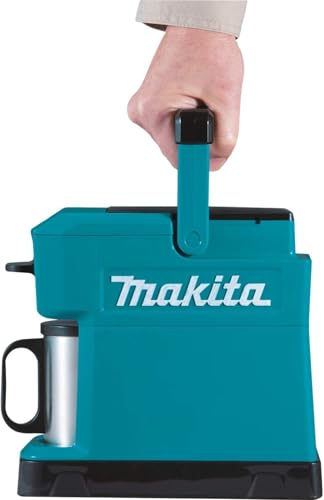
  • Robust design with protective battery covers and a carry handle

What we don't like about Makita DCM501Z

  • Drains batteries quickly; requires large Amp-hour batteries (e.g., 5.0Ah or 6.0Ah) for multiple cups
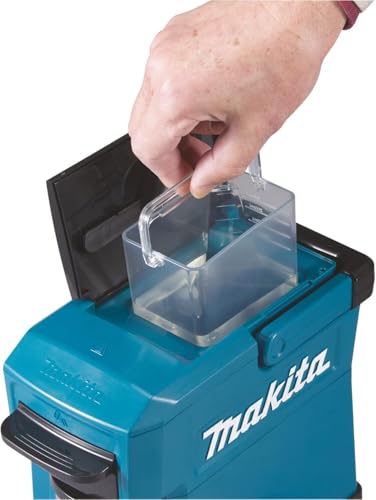
  • Small water tank capacity (240ml) limits brewing to one cup at a time
  • Machine can be messy due to dripping during or after brewing
  • Sold as a bare tool (no batteries or charger included)
  • Coffee temperature is not as hot as traditional electric kettles

Verdict

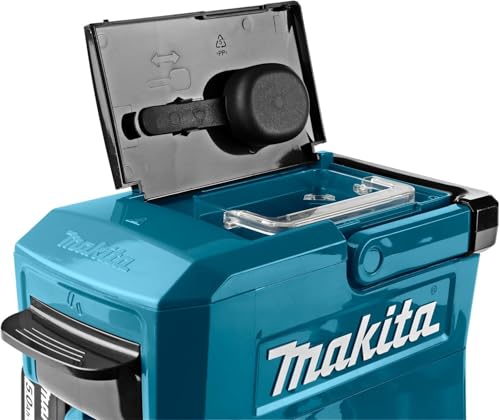
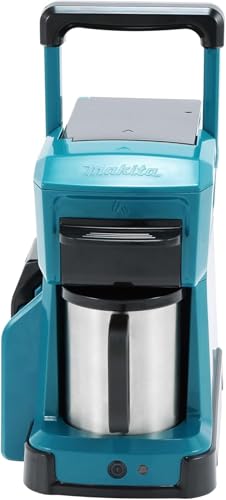
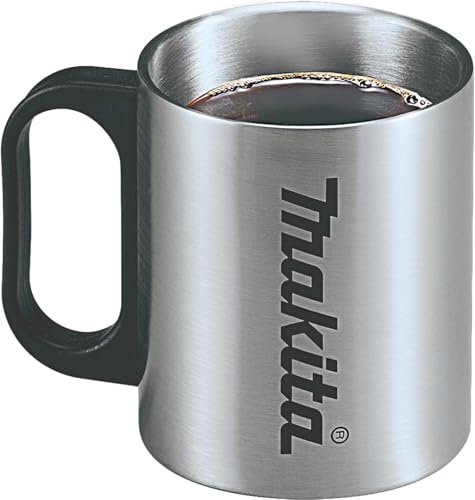
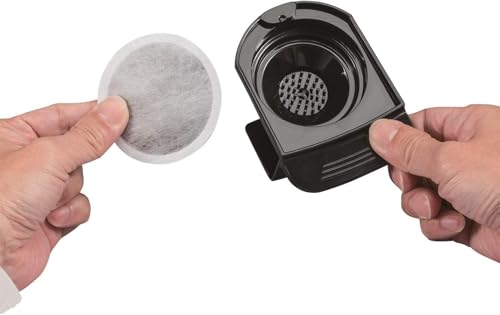
The Makita DCM501Z is a rugged, cordless single-serve coffee maker designed for job sites and camping, operating on 10.8V/12V Max CXT or 14.4V/18V LXT lithium-ion batteries. It features a removable 240ml water tank, a permanent drip filter that eliminates the need for paper filters, and a dual-compatibility brew system accepting both ground coffee and 60mm café pods. Key advantages include a rapid 5-minute brew time for a 160ml cup (using an 18V battery), an integrated carry handle, built-in boil-dry protection, and an included stainless-steel mug designed to fit seamlessly with a 90mm clearance to prevent dust entry. However, notable drawbacks include its heavy power consumption—which can quickly drain a 5.0Ah battery after brewing just 2 to 3 cups—the lack of an AC mains adapter, and a small single-cup reservoir that requires frequent refills.

Compare Makita DCM501Z with other coffee machines

1Product to compare no. 1
VS
2Product to compare no. 2
VS
3Product to compare no. 3 (optional)

Graphic comparison of Makita DCM501Z and other coffee machines

No results found