Scored using Bread Makers Methodology v3.0
Bread Makers Methodology v3.0
Mathematical & Unbiased Scoring
Products in this category are scored under Frontum Bread Makers Methodology v3.0: the technical score from the specifications is the base, and independent expert and video reviews (up to ±0.5 points), owner opinions (up to ±0.3) and best-of lists (up to +0.3) move it up or down.
Explore Bread Makers Methodology v3.0

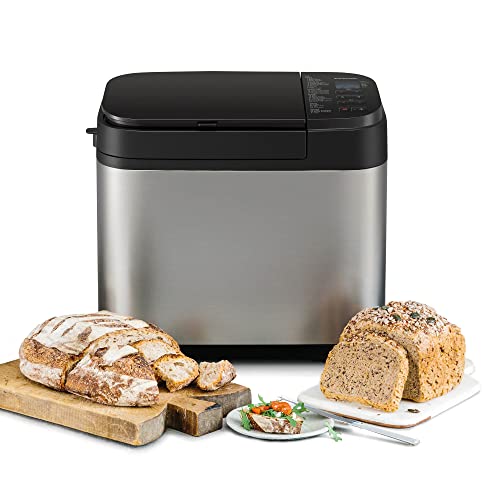
Panasonic SD-B2510 review: 47 specs compared

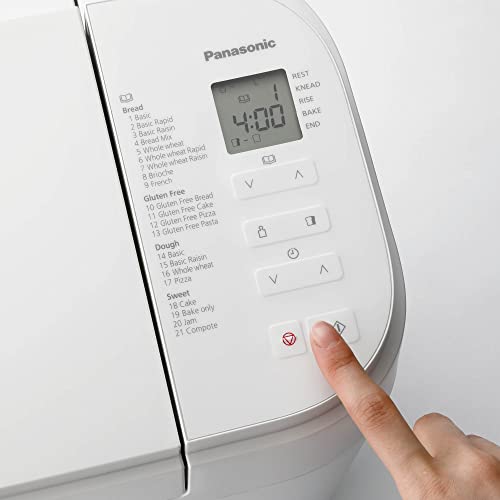
Avg. price:~£160Power:550 WMaximum capacity:1.1 kgNumber of programs:21Automatic ingredient dispenser:no

Panasonic SD-B2510 Review: Compare 47 technical specifications, 3 expert reviews and 5 best-of lists to see how this product ranks in the Bread Makers category and whether it is worth buying.
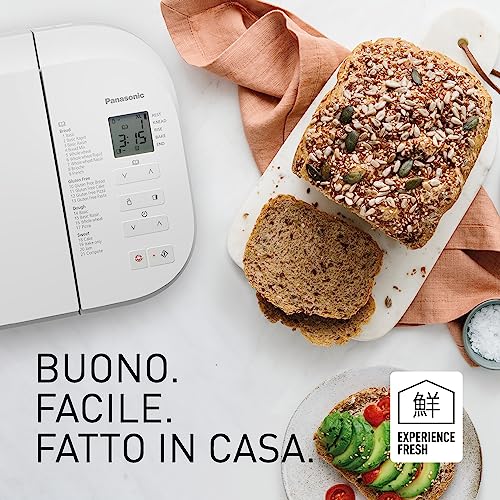
Panasonic SD-B2510
8.1/10

Overall score

Score
8.1/ 10
✕
What it is
Our main score for this model, 1–10. It combines specs, best-of lists, expert reviews and ratings from across the web.
How we count it
Parts: Technical score 30%, List score 30%, Reviews score 20%, User score 20%
Marks: Each part gets a mark out of 10. For reviews, lists and owners, a typical model in this category gets about 8 and the best one gets 10.
No data yet: A part with no data shows "?". It counts as the mark of a weaker model in this category (4 in 5 models with data score higher). This way, models with reviews, lists and owners usually come out ahead.
Score distribution
▼
<55-66-77-88-99-10
Score components

30%

6.7

Technical score

30%

8.6

List score

20%

8.6

Reviews score

20%

9.1

User score

★Better than 94% of bread makers
7.7

Value for money

Value for money
7.7/ 10
✕
What it is
An indicator that combines the bread maker's overall rating with its price.
When it matters
When you are looking for a bread maker with a good balance between quality and price.
Score distribution
▼
<55-66-77-88-99-10
Score components

70%

8.1

Overall score

30%

6.6

Price

▼Worse than 56%
6.7

Technical score

Technical score
6.7/ 10
✕
What it is
How good the specs are compared with the other models in this category, 1–10.
How we count it
Areas: We rate the specs in each area against the other models in this category.
Weighting: The areas that matter most to buyers count more. The shares are shown under Score components.
Share: The technical score is 30% of the overall score.
Score distribution
▼
<55-66-77-88-99-10
Score components

45%

5.9

Performance

25%

8.9

Programs

15%

5.3

Convenience

5%

4.4

Design

5%

10

Safety

5%

6.0

Accessories

▼Worse than 63%
8.6

Reviews score

Reviews score
8.6/ 10
✕
What it is
Average grade from independent test sites, magazines and video reviewers, 1–10.
How we count it
Grades: Each review's own score is converted to 1–10; without one, we grade the review ourselves. Big test sites count more, short reviews half as much as full tests. A video review counts half.
Score: The average grade is 80% of the review mark; the number of reviews is the other 20% (1 review = 5, the typical number in this category = 8, the most-reviewed model = 10).
Enough data: With few reviews, the average grade is pulled toward the typical grade of this category. No reviews yet: 7.8 for now.
Share: Reviews count 20% of the overall score.
Score distribution
▼
<55-66-77-88-99-10

80%

8.7

Average grade

20%

8.0

Popularity

Grades by review (3)
3 reviews: 2 with a printed score, 1 estimated from the review. Reviews count 20% of the overall score.
Ratings from across the web count in the User score, not in this score.
▲Better than 71%
9.1

User score

User score
9.1/ 10
✕
What it is
How happy buyers are with this model, based on ratings from across the web.
How we count it
Enough data: A model needs at least 1 rating from across the web. Without one, it counts as 7.8, the mark of a weaker rated model in this category.
Share: User score counts 20% of the overall score.
Score distribution
▼
<55-66-77-88-99-10

70%

9.0

Rating

30%

9.3

Popularity

▲Better than 84%
8.6

List score

List score
8.6/ 10
✕
What it is
How often independent test sites, magazines and video reviewers put this model in their best-of lists for this category.
How we count it
Points: The model in the most lists of this category gets 10; the others get 8 to 10 in proportion. In no list yet: 7.5. Lists count 30% of the overall score.
Enough data: Every list counts, even a single one. With fewer than 5 best-of lists in the category, this part is left out.
Lists with this model (5)
List score: in 5 of 27 lists (19%)
★Better than 94%
  • panasonic-sd-b2510
  • panasonic-sd-b2510
  • panasonic-sd-b2510
  • panasonic-sd-b2510
  • panasonic-sd-b2510
  • panasonic-sd-b2510
  • panasonic-sd-b2510
  • panasonic-sd-b2510
  • panasonic-sd-b2510
  • panasonic-sd-b2510
  • panasonic-sd-b2510
  • panasonic-sd-b2510
panasonic-sd-b2510
panasonic-sd-b2510
panasonic-sd-b2510
panasonic-sd-b2510
panasonic-sd-b2510
panasonic-sd-b2510
panasonic-sd-b2510
panasonic-sd-b2510
panasonic-sd-b2510
panasonic-sd-b2510
panasonic-sd-b2510
panasonic-sd-b2510
Where to buy
*As an Amazon Associate, we earn from qualifying purchases.
Best rankings
Available: ranking among products currently available (including other versions of this product).All: ranking among all products in the database.
Loading...
Loading category ranking...

Bread Makers model ranking

Ranked #9 of 125 models in Bread Makers (Overall score)

Technical Specifications of bread maker Panasonic SD-B2510

Technical score
Technical score
6.7/ 10
✕
What it is
How good the specs are compared with the other models in this category, 1–10.
How we count it
Areas: We rate the specs in each area against the other models in this category.
Weighting: The areas that matter most to buyers count more. The shares are shown under Score components.
Share: The technical score is 30% of the overall score.
Score distribution
▼
<55-66-77-88-99-10
Score components:

45%

5.9

Performance

25%

8.9

Programs

15%

5.3

Convenience

5%

4.4

Design

5%

10

Safety

5%

6.0

Accessories

6.7
Reviews score
8.6
User score
9.1
List score
8.6
Value for money
Value for money
7.7/ 10
✕
What it is
An indicator that combines the bread maker's overall rating with its price.
When it matters
When you are looking for a bread maker with a good balance between quality and price.
Score distribution
▼
<55-66-77-88-99-10
Score components:

70%

8.1

Overall score

30%

6.6

Price

7.7
Power
550 W
This bread maker is rated at 550 W, which is lower than 58.3% of bread makers and equal to 34.1% of bread makers.
Maximum capacity
1.1 kg
This bread maker handles up to 1.1 kg of flour, which is higher than 69.9% of bread makers and equal to 3% of bread makers.
Number of loaf sizes
3
This bread maker has a loaf size count of 3, which is more than 35.9% of bread makers and equal to 63.4% of bread makers.
Number of kneading blades
1
This bread maker has a kneading blade count of 1, which is fewer than 21.1% of bread makers and equal to 79% of bread makers.
Number of browning levels
3
This bread maker has 3 browning levels, which is more than 1.5% of bread makers and equal to 96.2% of bread makers.
Show more
Number of programs
21
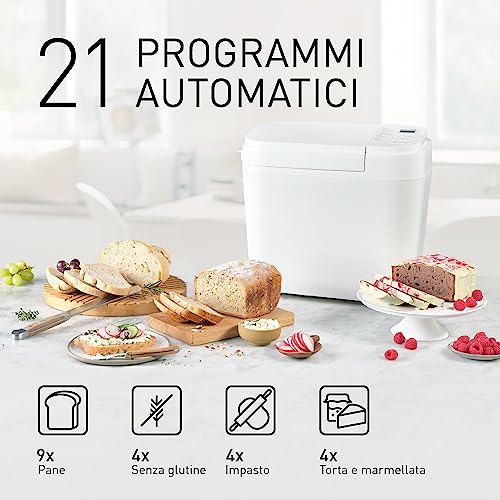
This bread maker has 21 programs, which is more than 83.5% of bread makers and equal to 4.5% of bread makers.
Custom program
yes
This bread maker supports custom programs. 26.7% of bread makers offer this.
Gluten-free bread
yes
This bread maker supports gluten-free bread. 6% of bread makers offer this.
Sourdough support
no
This bread maker does not support sourdough. 13.1% of bread makers offer this.
Pizza dough
yes
This bread maker supports pizza dough. 29.6% of bread makers offer this.
Show more
Delayed start
yes
This bread maker has a delayed start. 0% of bread makers offer this.
Maximum delayed start timer
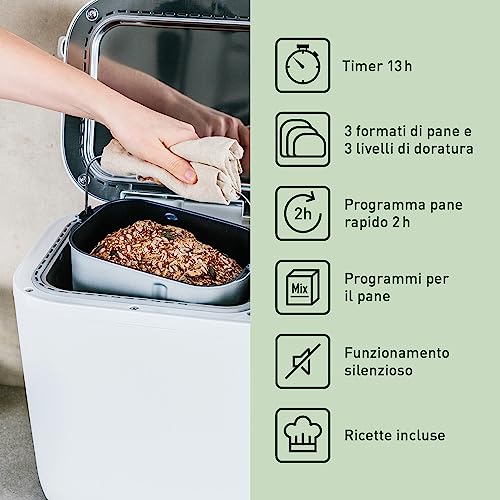
13 hours
This bread maker can delay its start by 13 hours, which is shorter than 56.4% of bread makers and equal to 42.1% of bread makers.
Automatic ingredient dispenser
no
This bread maker does not have an automatic ingredient dispenser. 30.1% of bread makers offer this.
Ingredient add signal
yes
This bread maker has an ingredient add signal. 5.3% of bread makers offer this.
Pause function
no
This bread maker does not have a pause function. 80.6% of bread makers offer this.
Show more
Overheat protection
yes
This bread maker has overheat protection. 0% of bread makers offer this.
BPA-free
yes
This bread maker has BPA-free food-contact parts. 2.3% of bread makers offer this.
PFOA-free
yes
This bread maker has a PFOA-free non-stick pan. 1.6% of bread makers offer this.
Dough hook extractor
no
This bread maker does not include a dough hook extractor. 88.7% of bread makers offer this.
Measuring cup
yes
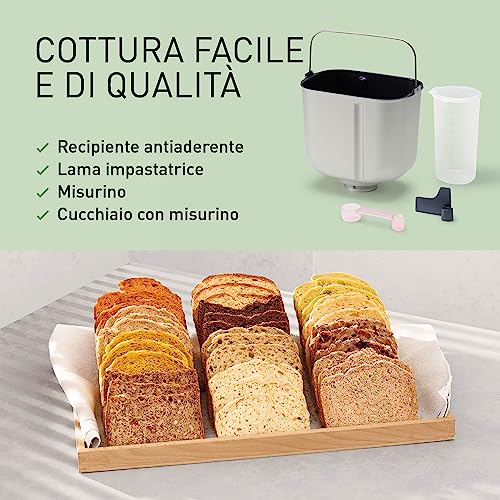
This bread maker includes a measuring cup. 0% of bread makers offer this.
Measuring spoon
yes
This bread maker includes a measuring spoon. 1.5% of bread makers offer this.
Recipe book
no
This bread maker does not include a recipe book. 48.5% of bread makers offer this.
Additional moulds
none
Show more
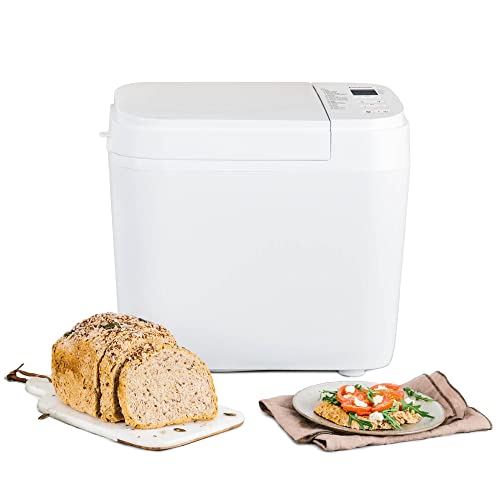
Color
white
Body material
plastic
Bowl shape
square
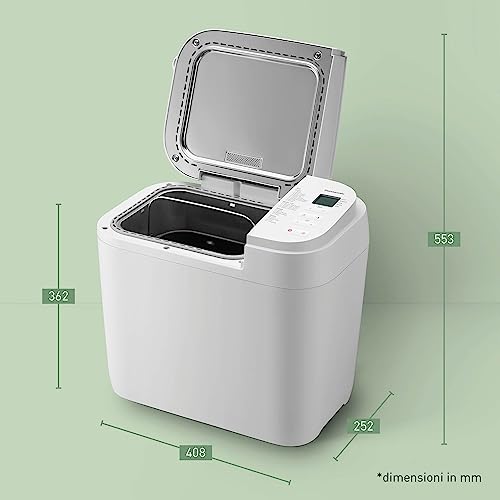
Height
36.2 cm
This bread maker stands 36.2 cm tall, which is taller than 93.9% of bread makers and equal to 3.8% of bread makers.
Width
40.8 cm
This bread maker is 40.8 cm wide, which is wider than 92.4% of bread makers and equal to 3.8% of bread makers.
Show more

Panasonic SD-B2510 vs the average bread maker

246810TotalPerformanceProgramsDesignConvenienceSafetyAccessories
  • 5 more programs
    This bread maker has more programs than the average bread maker (21 vs 16). The average bread maker has 16 programs.
    21 vs 16
  • 10% more flour capacity
    This bread maker handles more flour than the average bread maker (1.1 kg vs 1 kg). The average bread maker handles up to 1 kg.
    1.1 kg vs 1 kg
  • 6.21 cm shallower
    This bread maker is shallower than the average bread maker (25.2 cm vs 31.4 cm). The average bread maker is 31.4075 cm.
    25.2 cm vs 31.4075 cm
  • 9.6% higher user score
    User score
    9.1/ 10
    ✕
    What it is
    How happy buyers are with this model, based on ratings from across the web.
    How we count it
    Enough data: A model needs at least 1 rating from across the web. Without one, it counts as 7.8, the mark of a weaker rated model in this category.
    Share: User score counts 20% of the overall score.
    Score distribution
    ▼
    <55-66-77-88-99-10

    70%

    9.0

    Rating

    30%

    9.3

    Popularity

    9.1 vs 8.3
  • 6.2% higher list score
    List score
    8.6/ 10
    ✕
    What it is
    How often independent test sites, magazines and video reviewers put this model in their best-of lists for this category.
    How we count it
    Points: The model in the most lists of this category gets 10; the others get 8 to 10 in proportion. In no list yet: 7.5. Lists count 30% of the overall score.
    Enough data: Every list counts, even a single one. With fewer than 5 best-of lists in the category, this part is left out.
    Lists with this model (5)
    List score: in 5 of 27 lists (19%)
    8.6 vs 8.1
  • 4.9% higher review score
    Reviews score
    8.6/ 10
    ✕
    What it is
    Average grade from independent test sites, magazines and video reviewers, 1–10.
    How we count it
    Grades: Each review's own score is converted to 1–10; without one, we grade the review ourselves. Big test sites count more, short reviews half as much as full tests. A video review counts half.
    Score: The average grade is 80% of the review mark; the number of reviews is the other 20% (1 review = 5, the typical number in this category = 8, the most-reviewed model = 10).
    Enough data: With few reviews, the average grade is pulled toward the typical grade of this category. No reviews yet: 7.8 for now.
    Share: Reviews count 20% of the overall score.
    Score distribution
    ▼
    <55-66-77-88-99-10

    80%

    8.7

    Average grade

    20%

    8.0

    Popularity

    Grades by review (3)
    3 reviews: 2 with a printed score, 1 estimated from the review. Reviews count 20% of the overall score.
    Ratings from across the web count in the User score, not in this score.
    8.6 vs 8.2
  • 10% more flour capacity
    This bread maker handles more flour than the average bread maker (1.1 kg vs 1 kg). The average bread maker handles up to 1 kg.
    1.1 kg vs 1 kg
  • 5 more programs
    This bread maker has more programs than the average bread maker (21 vs 16). The average bread maker has 16 programs.
    21 vs 16
  • 6.21 cm shallower
    This bread maker is shallower than the average bread maker (25.2 cm vs 31.4 cm). The average bread maker is 31.4075 cm.
    25.2 cm vs 31.4075 cm
  • 2 hours shorter delay timer
    This bread maker can delay its start for shorter than the average bread maker (13 hours vs 15 hours). The average bread maker delays its start for 15 hours.
    13 hours vs 15 hours
  • 50 W less power
    This bread maker has less power than the average bread maker (550 W vs 600 W). The average bread maker is rated at 600 W.
    550 W vs 600 W
  • No yoghurt making
    This bread maker does not support yoghurt making, while the average bread maker does. 53.8% of bread makers support yoghurt making.
  • 6.2 cm taller
    This bread maker is taller than the average bread maker (36.2 cm vs 30 cm). The average bread maker is 30 cm.
    36.2 cm vs 30 cm
  • 12.55 cm wider
    This bread maker is wider than the average bread maker (40.8 cm vs 28.25 cm). The average bread maker is 28.25 cm.
    40.8 cm vs 28.25 cm
  • No memory function
    This bread maker does not support a memory function, while the average bread maker does. 94.8% of bread makers support one.
  • No keep-warm function
    This bread maker does not support a keep-warm function, while the average bread maker does. 94% of bread makers support a keep-warm function.
  • No viewing window
    This bread maker does not have a viewing window, while the average bread maker does. 86.6% of bread makers have one.
  • 68.4% more expensive
    Panasonic SD-B2510 is more expensive than the average bread maker (£160 vs £95).
    £160 vs £95
  • 0.5% worse value for money
    Panasonic SD-B2510 has worse value for money than the average bread maker (7.66 vs 7.7).
    7.66 vs 7.7
  • 50 W less power
    This bread maker has less power than the average bread maker (550 W vs 600 W). The average bread maker is rated at 600 W.
    550 W vs 600 W
  • No yoghurt making
    This bread maker does not support yoghurt making, while the average bread maker does. 53.8% of bread makers support yoghurt making.
  • No keep-warm function
    This bread maker does not support a keep-warm function, while the average bread maker does. 94% of bread makers support a keep-warm function.
  • 6.2 cm taller
    This bread maker is taller than the average bread maker (36.2 cm vs 30 cm). The average bread maker is 30 cm.
    36.2 cm vs 30 cm
  • 12.55 cm wider
    This bread maker is wider than the average bread maker (40.8 cm vs 28.25 cm). The average bread maker is 28.25 cm.
    40.8 cm vs 28.25 cm
  • 18.2% heavier
    This bread maker is heavier than the average bread maker (6.5 kg vs 5.5 kg). The average bread maker weighs 5.5 kg.
    6.5 kg vs 5.5 kg
  • 2 hours shorter delay timer
    This bread maker can delay its start for shorter than the average bread maker (13 hours vs 15 hours). The average bread maker delays its start for 15 hours.
    13 hours vs 15 hours
  • No memory function
    This bread maker does not support a memory function, while the average bread maker does. 94.8% of bread makers support one.
  • No viewing window
    This bread maker does not have a viewing window, while the average bread maker does. 86.6% of bread makers have one.
  • No pause function
    This bread maker does not support pausing mid-cycle, while the average bread maker does. 79.5% of bread makers offer this.
  • No dough hook extractor
    This bread maker does not include a dough hook extractor, while the average bread maker does. 88.1% of bread makers offer this.

Video reviews

Hands-on testing, unboxing, and real-world video evaluations

Shop video

Expert reviews

In-depth analysis and verdict from leading tech publications

10
bbcgoodfood.com
✓ explicit
30/09/2021
Kitchen test · Basic white loaf
Verdict
The Panasonic SD-B2510 is a quiet, landscape-shaped bread maker that turns out evenly browned loaves, though it has no window and a slow resting phase.
8.6
mumsnet.com
✓ explicit
07/05/2026
Long-term test · Family baking
Verdict
The Panasonic SD-B2510 is a sturdy, easy-to-use bread maker with 21 programs that suits families who bake often, though it takes up worktop space.
9.0
nookandcook.com
≈ estimated
20/09/2026
Multi-week trial · Daily baking
Verdict
The Panasonic SD-B2510 is a quiet, sturdy bread maker with a 13-hour delay timer that bakes evenly, though its resting phase cannot be skipped.

Third-party reviews

What customers like about Panasonic SD-B2510

  • Consistently delivers well-risen bread with an open, airy texture and an even, crisp crust.
  • Features 21 automatic programs including a wide range of breads, cakes, jams, and dedicated gluten-free options.
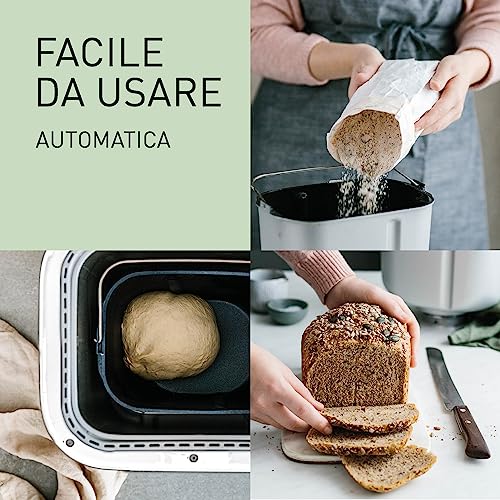
  • Very easy to use, intuitive, and highly approachable for absolute beginners.
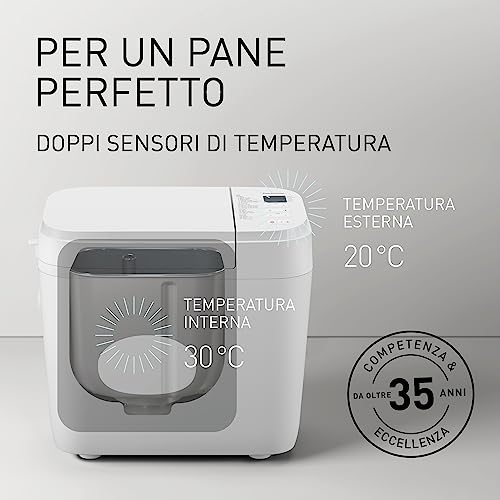
  • Equipped with dual temperature sensors that optimize programs according to the environment.
  • Operates quietly during both the mixing and kneading cycles.
  • The 13-hour delay timer allows users to easily wake up to fresh bread in the morning.
  • Sturdy build quality with an updated, durable metal mounting fixing for the mixing bin.
  • Landscape layout provides convenient prep workspace right in front of the machine.

What customers don't like about Panasonic SD-B2510

  • Lacks an automatic fruit, nut, or seed dispenser, meaning extra ingredients must be added manually.
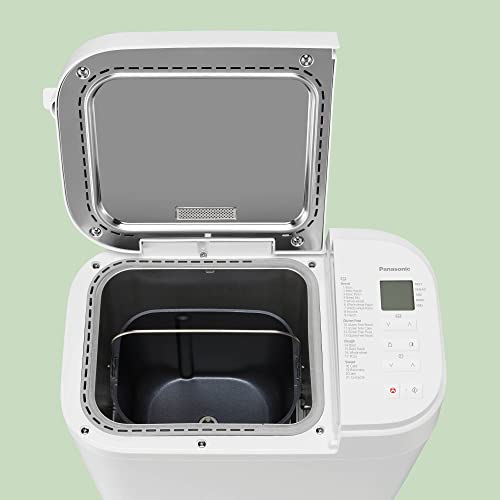
  • Does not include a viewing window to check on the baking process without opening the lid.
  • Standard bake cycles take a long time, requiring around four hours for a basic loaf.
  • The control panel and digital display screen are small, faint, and can be difficult to see or read clearly.
  • The physical design is notably tall, which can make it hard to view or program when placed on standard-height kitchen countertops.
  • Lacks a dedicated automatic yeast dispenser and specific advanced programs (like sourdough) found on pricier Panasonic models.

Verdict

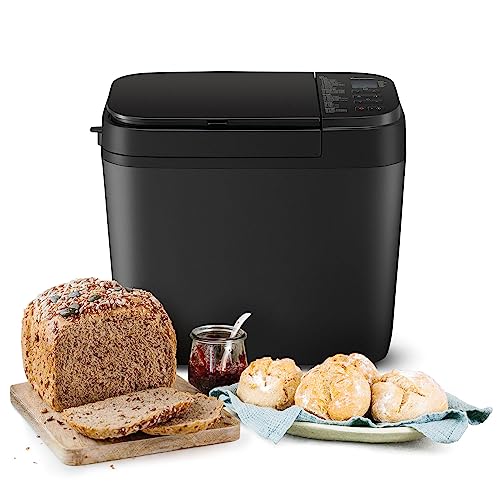
The Panasonic SD-B2510 is a 550W automatic bread maker featuring a space-saving landscape design, a non-stick aluminium inner pan, and a smart dual temperature sensor system that continuously monitors internal and external ambient conditions. It offers 21 automated presets, including 4 dedicated gluten-free programs, 3 loaf sizes (M, L, and XL up to 1.1kg), 3 crust browning options, and a convenient 13-hour digital delay timer. Main advantages include its reliable artisan-style kneading action, excellent results with pre-packaged bread mixes, and a user-friendly, highly intuitive interface. However, notable drawbacks include the complete absence of an automatic fruit, nut, or yeast dispenser, a screen that lacks a backlight, and the omission of a traditional viewing window to monitor the baking process.

Compare Panasonic SD-B2510 with other bread makers

1Product to compare no. 1
VS
2Product to compare no. 2
VS
3Product to compare no. 3 (optional)

Graphic comparison of Panasonic SD-B2510 and other bread makers

No results found