Scored using Washing machines Methodology v3.0
Washing machines Methodology v3.0
Mathematical & Unbiased Scoring
Products in this category are scored under Frontum Washing machines Methodology v3.0: the technical score from the specifications is the base, and independent expert and video reviews (up to ±0.5 points), owner opinions (up to ±0.3) and best-of lists (up to +0.3) move it up or down.
Explore Washing machines Methodology v3.0

Smeg LBW50CIT review: 101 specs compared

Avg. price:~£260Capacity:5 kgMaximum spin speed:1000 RPMEnergy efficiency class:DType:self-standingLoading type:front-loading

Smeg LBW50CIT Review: Compare 101 technical specifications to see how this product ranks in the Washing machines category and whether it is worth buying.
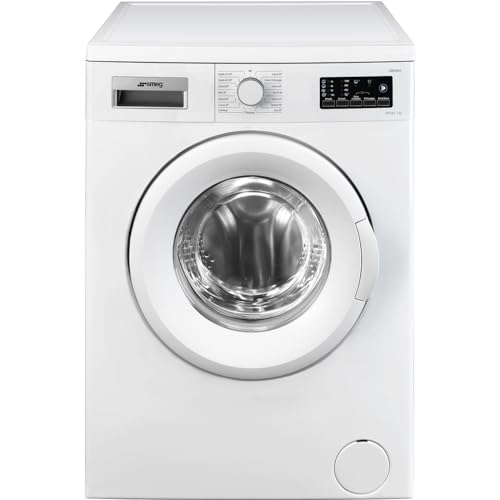
Smeg LBW50CIT
5.8/10

Overall score

Score
5.8/ 10
✕
What it is
Our main score for this model, 1–10. It combines specs, ratings from across the web and best-of lists.
How we count it
Parts: Technical score 70%, User score 25%, List score 5%
Marks: Each part gets a mark out of 10. For reviews, lists and owners, a typical model in this category gets about 8 and the best one gets 10.
No data yet: A part with no data shows "?". It counts as the mark of a weaker model in this category (4 in 5 models with data score higher). This way, models with reviews, lists and owners usually come out ahead.
Score distribution
â–¼
<55-66-77-88-99-10
Score components

70%

5.7

Technical score

25%

5.7

User score

5%

?

List scoreNot enough data yet, so we use 7.5, the mark of a weaker model in this category

â–¼Worse than 99% of washing machines
6.8

Value for money

Value for money
6.8/ 10
✕
What it is
An indicator that combines the washing machine's overall rating with its cost.
When it matters
When you are looking for a washing machine with a good balance between quality and price.
Score distribution
â–¼
<55-66-77-88-99-10
Score components

70%

5.8

Overall score

30%

9.1

Price

â–¼Worse than 90%
5.7

Technical score

Technical score
5.7/ 10
✕
What it is
How good the specs are compared with the other models in this category, 1–10.
How we count it
Areas: We rate the specs in each area against the other models in this category.
Weighting: The areas that matter most to buyers count more. The shares are shown under Score components.
Share: The technical score is 70% of the overall score.
Score distribution
â–¼
<55-66-77-88-99-10
Score components

25%

4.0

Performance

25%

7.2

Energy efficiency

20%

6.1

Washing programs

20%

5.2

Features

10%

6.6

Design

â–¼Worse than 94%
5.7

User score

User score
5.7/ 10
✕
What it is
How happy buyers are with this model, based on ratings from across the web.
How we count it
Enough data: A model needs at least 1 rating from across the web. Without one, it counts as 7.9, the mark of a weaker rated model in this category.
Share: User score counts 25% of the overall score.
Score distribution
â–¼
<55-66-77-88-99-10

5.7

Mark 8.1 is below the typical mark 8.3 of this category, so it cannot lift the score above the technical score

70%

8.4

Rating

30%

7.3

Popularity

â–¼Worse than 98%
?

List score

List score
7.5/ 10
✕
What it is
How often independent test sites, magazines and video reviewers put this model in their best-of lists for this category.
How we count it
Points: The model in the most lists of this category gets 10; the others get 8 to 10 in proportion. In no list yet: 7.5. Lists count 5% of the overall score.
Enough data: Every list counts, even a single one. With fewer than 5 best-of lists in the category, this part is left out.
Lists with this model (0)
Not in any best-of list yet, so this part counts as 7.5. Models in a list get 8 to 10.
Not in any best-of list yet
  • smeg-lbw50cit
  • smeg-lbw50cit
  • smeg-lbw50cit
smeg-lbw50cit
smeg-lbw50cit
smeg-lbw50cit
Where to buy
*As an Amazon Associate, we earn from qualifying purchases.
Best rankings
Available: ranking among products currently available (including other versions of this product).All: ranking among all products in the database.
Loading...
Loading category ranking...

Technical Specifications of washing machine Smeg LBW50CIT

Technical score
Technical score
5.7/ 10
✕
What it is
How good the specs are compared with the other models in this category, 1–10.
How we count it
Areas: We rate the specs in each area against the other models in this category.
Weighting: The areas that matter most to buyers count more. The shares are shown under Score components.
Share: The technical score is 70% of the overall score.
Score distribution
â–¼
<55-66-77-88-99-10
Score components:

25%

4.0

Performance

25%

7.2

Energy efficiency

20%

6.1

Washing programs

20%

5.2

Features

10%

6.6

Design

5.7
Value for money
Value for money
6.8/ 10
✕
What it is
An indicator that combines the washing machine's overall rating with its cost.
When it matters
When you are looking for a washing machine with a good balance between quality and price.
Score distribution
â–¼
<55-66-77-88-99-10
Score components:

70%

5.8

Overall score

30%

9.1

Price

6.8
Capacity
5 kg
This washing machine holds 5 kg, which is less than 98.2% of washing machines and equal to 1.4% of washing machines.
Drum volume
40 L
This washing machine has a 40 L drum, which is smaller than 98.1% of washing machines and equal to 0.7% of washing machines.
Spin-drying efficiency class
C
This washing machine has spin-drying class C, which is less efficient than in 90.6% of washing machines and the same as in 8.8% of washing machines.
Maximum spin speed
1,000 RPM
This washing machine spins at 1,000 RPM, which is slower than 94.4% of washing machines and equal to 5.5% of washing machines.
Minimum spin speed
600 RPM
This washing machine has a minimum spin of 600 RPM, which is higher than 74.6% of washing machines and equal to 14.1% of washing machines.
Show more
Energy efficiency class
D
This washing machine has energy class D, which is worse than 82.6% of washing machines and the same as 11.1% of washing machines.
Energy consumption per 100 cycles
60 kWh/100 cycles
This washing machine uses 60 kWh/100 cycles, which is higher than 74% of washing machines and equal to 0.6% of washing machines.
Annual energy consumption
132 kWh/year
This washing machine uses 132 kWh/year, which is higher than 73.9% of washing machines and equal to 0.6% of washing machines.
Annual energy cost
33 £
This washing machine has a yearly running cost of £33, which is higher than 73.3% of washing machines and equal to 0.7% of washing machines.
Water consumption per cycle
41 L
This washing machine uses 41 L of water per cycle, which is lower than 87.8% of washing machines and equal to 4.6% of washing machines.
Show more
N. of washing programs
15
This washing machine offers 15 wash programmes, which is more than 39.5% of washing machines and equal to 37% of washing machines.
Cotton 90°, Cotton Prewash, Cotton 60°, Eco 40-60, Cotton 20°, Synthetics 40°, Wool 30°, Rinse, Spin, Hand Wash 30°, Colours 40°, Mix 30°, Shirts 60°, Quick 60' 60°, Quick 15' 30°.
N. of downloadable programs
0
This washing machine offers 0 downloadable programmes, which is fewer than 9.1% of washing machines and equal to 90.9% of washing machines.
N. of washing programs under 1 hour
2
This washing machine has 2 programmes under an hour, which is more than 42.3% of washing machines and equal to 37% of washing machines.
Quick 60' 60°, Quick 15' 30°
Fastest cycle duration
15 min
This washing machine has a fastest cycle of 15 min, which is shorter than 24.5% of washing machines and equal to 45.3% of washing machines.
ECO cycle duration
180 min
This washing machine has an ECO cycle of 180 min, which is shorter than 98.4% of washing machines and equal to 0.5% of washing machines.
Show more
N. of advanced features
6
This washing machine has 6 advanced features, which is fewer than 91.6% of washing machines and equal to 3.4% of washing machines.
Overflow protection, Foam control system, Unbalanced load detection, Load balancing system, Laundry detection system, Extra rinse function.
Foam control system
yes
This washing machine features a foam control system. 79.8% of washing machines have a foam control system.
Laundry detection system
yes
This washing machine has a laundry detection system. 93% of washing machines have this feature.
System with variable load detection that automatically adjusts wash cycles based on laundry amount and type.
Unbalanced load detection
yes
This washing machine has unbalanced load detection. 92.5% of washing machines have unbalanced load detection.
Load balancing system
yes
This washing machine features a load balancing system. 46.2% of washing machines have a load balancing system.
The auto-balancing system distributes laundry evenly and adjusts spin speed to redistribute unbalanced loads and reduce vibrations in the drum.
Show more
Color
white
This washing machine comes in white, which is more conventional than the colour in 14.2% of washing machines and the same as the colour in 85.8% of washing machines.
Type
self-standing
This washing machine is self-standing, which is more flexible to place than the type in 3.2% of washing machines and the same as the type in 96.8% of washing machines.
Loading type
front-loading
This washing machine is front-loading, which is more practical than the design in 8.9% of washing machines and the same as the design in 91.1% of washing machines.
Display
no
This washing machine does not have a display. 96.2% of washing machines have a display.
Child lock
yes
This washing machine has a child lock. 99.7% of washing machines have a child lock.
Show more

Smeg LBW50CIT vs the average washing machine

246810TotalPerformanceEnergy efficiencyWashing programsFeaturesDesign
  • 6 L less water per cycle
    This washing machine uses less water per cycle than the average washing machine (41 L vs 47 L). The average washing machine uses 47 L of water per cycle.
    41 L vs 47 L
  • Has a load balancing system
    This washing machine features a load balancing system, the average washing machine does not. 46.2% of washing machines have this feature.
    The auto-balancing system distributes laundry evenly and adjusts spin speed to redistribute unbalanced loads and reduce vibrations in the drum.
  • 28.1% smaller volume
    This washing machine has a smaller volume than the average washing machine (201,786 cm³ vs 280,500 cm³). The average washing machine has a volume of 280,500 cm³.
    201,786 cm³ vs 280,500 cm³
  • 38 min shorter eco cycle
    This washing machine has a shorter ECO cycle than the average washing machine (180 min vs 218 min). The average washing machine's ECO cycle takes 218 min.
    180 min vs 218 min
  • Colors cycle
    This washing machine has a Colors cycle, which the average washing machine does not offer. 36% of washing machines include a Colors cycle.
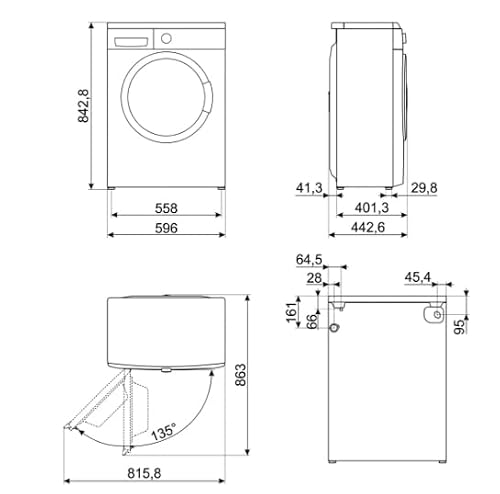
  • 16.5 cm shallower
    This washing machine is shallower than the average washing machine (40 cm vs 56.5 cm). The average washing machine is 56.5 cm deep.
    40 cm vs 56.5 cm
  • Shirt cycle
    This washing machine has a cycle for shirts, the average washing machine does not have. 46.6% of washing machines have a shirt cycle.
  • 9.7% lighter
    This washing machine is lighter than the average washing machine (60.5 kg vs 67 kg). The average washing machine weighs 67 kg.
    60.5 kg vs 67 kg
  • 57.7% cheaper
    Smeg LBW50CIT is cheaper than the average washing machine (£260 vs £410).
    £260 vs £410
  • 6 L less water per cycle
    This washing machine uses less water per cycle than the average washing machine (41 L vs 47 L). The average washing machine uses 47 L of water per cycle.
    41 L vs 47 L
  • 12.8% lower yearly water use
    This washing machine uses less water per year than the average washing machine (9,020 L/year vs 10,340 L/year). The average washing machine uses 10,340 L/year of water a year.
    9,020 L/year vs 10,340 L/year
  • 2.51 £ lower yearly water cost
    This washing machine costs less for water than the average washing machine (17.1 £ vs 19.6 £). The average washing machine has a yearly water cost of 19.646 £.
    17.138 £ vs 19.646 £
  • 38 min shorter eco cycle
    This washing machine has a shorter ECO cycle than the average washing machine (180 min vs 218 min). The average washing machine's ECO cycle takes 218 min.
    180 min vs 218 min
  • Colors cycle
    This washing machine has a Colors cycle, which the average washing machine does not offer. 36% of washing machines include a Colors cycle.
  • Shirt cycle
    This washing machine has a cycle for shirts, the average washing machine does not have. 46.6% of washing machines have a shirt cycle.
  • Has a load balancing system
    This washing machine features a load balancing system, the average washing machine does not. 46.2% of washing machines have this feature.
    The auto-balancing system distributes laundry evenly and adjusts spin speed to redistribute unbalanced loads and reduce vibrations in the drum.
  • 28.1% smaller volume
    This washing machine has a smaller volume than the average washing machine (201,786 cm³ vs 280,500 cm³). The average washing machine has a volume of 280,500 cm³.
    201,786 cm³ vs 280,500 cm³
  • 16.5 cm shallower
    This washing machine is shallower than the average washing machine (40 cm vs 56.5 cm). The average washing machine is 56.5 cm deep.
    40 cm vs 56.5 cm
  • 9.7% lighter
    This washing machine is lighter than the average washing machine (60.5 kg vs 67 kg). The average washing machine weighs 67 kg.
    60.5 kg vs 67 kg
  • 0.5 cm lower height
    This washing machine is shorter than the average washing machine (84.5 cm vs 85 cm). The average washing machine is 85 cm tall.
    84.5 cm vs 85 cm
  • 400 RPM lower spin speed
    This washing machine spins slower than the average washing machine (1,000 RPM vs 1,400 RPM). The average washing machine spins at 1,400 RPM.
    1,000 RPM vs 1,400 RPM
  • Worse energy grade
    This washing machine has a worse energy class than the average washing machine (D vs A).
    D vs A
  • No inverter motor
    This washing machine does not have an inverter motor, while the average washing machine does. 82.4% of washing machines offer this.
  • Does not have a steam technology
    This washing machine does not feature a steam technology, the average washing machine does. 67.6% of washing machines feature a steam technology.
  • 29.6% lower user score
    User score
    5.7/ 10
    ✕
    What it is
    How happy buyers are with this model, based on ratings from across the web.
    How we count it
    Enough data: A model needs at least 1 rating from across the web. Without one, it counts as 7.9, the mark of a weaker rated model in this category.
    Share: User score counts 25% of the overall score.
    Score distribution
    â–¼
    <55-66-77-88-99-10

    5.7

    Mark 8.1 is below the typical mark 8.3 of this category, so it cannot lift the score above the technical score

    70%

    8.4

    Rating

    30%

    7.3

    Popularity

    5.7 vs 8.1
  • 10 kWh/100 cycles more energy use
    This washing machine uses more electricity than the average washing machine (60 kWh/100 cycles vs 50 kWh/100 cycles). The average washing machine uses 50 kWh/100 cycles.
    60 kWh/100 cycles vs 50 kWh/100 cycles
  • 6 fewer advanced features
    This washing machine has fewer advanced features than the average washing machine (6 vs 12). The average washing machine has 12 advanced features.
    Overflow protection, Foam control system, Unbalanced load detection, Load balancing system, Laundry detection system, Extra rinse function.
    6 vs 12
  • Does not have a special drum design
    This washing machine does not have a special drum design, the average washing machine does. 60.8% of washing machines have a special drum design.
  • 29.6% lower user score
    User score
    5.7/ 10
    ✕
    What it is
    How happy buyers are with this model, based on ratings from across the web.
    How we count it
    Enough data: A model needs at least 1 rating from across the web. Without one, it counts as 7.9, the mark of a weaker rated model in this category.
    Share: User score counts 25% of the overall score.
    Score distribution
    â–¼
    <55-66-77-88-99-10

    5.7

    Mark 8.1 is below the typical mark 8.3 of this category, so it cannot lift the score above the technical score

    70%

    8.4

    Rating

    30%

    7.3

    Popularity

    5.7 vs 8.1
  • 11.7% worse value for money
    Smeg LBW50CIT has worse value for money than the average washing machine (6.79 vs 7.6).
    6.79 vs 7.59
  • 400 RPM lower spin speed
    This washing machine spins slower than the average washing machine (1,000 RPM vs 1,400 RPM). The average washing machine spins at 1,400 RPM.
    1,000 RPM vs 1,400 RPM
  • No inverter motor
    This washing machine does not have an inverter motor, while the average washing machine does. 82.4% of washing machines offer this.
  • 200 RPM higher minimum spin
    This washing machine has a higher minimum spin than the average washing machine (600 RPM vs 400 RPM). The average washing machine has a minimum spin of 400 RPM.
    600 RPM vs 400 RPM
  • 18 L less drum space
    This washing machine has a smaller drum than the average washing machine (40 L vs 58 L). The average washing machine has a drum of 58 L.
    40 L vs 58 L
  • 3 kg less capacity
    This washing machine holds less laundry than the average washing machine (5 kg vs 8 kg). The average washing machine holds 8 kg.
    5 kg vs 8 kg
  • 2 dB louder spinning
    This washing machine is louder on spin than the average washing machine (76 dB vs 74 dB). The average washing machine spins at 74 dB.
    76 dB vs 74 dB
  • Less efficient spin drying
    This washing machine dries less efficiently than the average washing machine (C vs B).
    C vs B
  • 5 dB louder washing
    This washing machine is louder than the average washing machine when washing (58 dB vs 53 dB). The average washing machine washes at 53 dB.
    58 dB vs 53 dB
  • 1 fewer spin speeds
    This washing machine has fewer spin speeds than the average washing machine (3 vs 4). The average washing machine has 4 spin speeds.
    600, 800, 1,000 RPM
    3 vs 4
  • Worse energy grade
    This washing machine has a worse energy class than the average washing machine (D vs A).
    D vs A
  • 10 kWh/100 cycles more energy use
    This washing machine uses more electricity than the average washing machine (60 kWh/100 cycles vs 50 kWh/100 cycles). The average washing machine uses 50 kWh/100 cycles.
    60 kWh/100 cycles vs 50 kWh/100 cycles
  • 18.8% higher energy use
    This washing machine uses more energy than the average washing machine (132 kWh/year vs 111.1 kWh/year). The average washing machine uses 111.1 kWh/year.
    132 kWh/year vs 111.1 kWh/year
  • Does not have a steam technology
    This washing machine does not feature a steam technology, the average washing machine does. 67.6% of washing machines feature a steam technology.
  • Does not have a fast function
    This washing machine does not have a fast function, the average washing machine does. 60% of washing machines have a fast function.
  • Does not have an anti-crease feature
    This washing machine does not have an anti-crease function, the average washing machine has. 68.1% of washing machines include an anti-crease function.
  • Does not have an anti-stain cycle
    This washing machine does not have an anti-stain cycle, the average washing machine does. 69.7% of washing machines have an anti-stain cycle.
  • 1 fewer temperature settings
    This washing machine offers fewer temperature settings than the average washing machine (5 vs 6). The average washing machine offers 6 temperature settings.
    20°, 30°,40°, 60°, 90°
    5 vs 6
  • Does not have a duvet cycle
    This washing machine does not have a duvet cycle, the average washing machine does. 54.7% of washing machines have a duvet cycle.
  • Does not have an allergen cycle
    This washing machine does not have an allergen cycle, the average washing machine does not have. 65.1% of washing machines have an allergen cycle.
  • Does not have a hygiene cycle
    This washing machine does not have a hygiene cycle, the average washing machine does. 66.4% of washing machines have a hygiene cycle.
  • Does not have an outdoor/sport cycle
    This washing machine does not have a special cycle for outdoor/sport clothes, while the average washing machine does. 72.3% of washing machines have such a cycle.
  • Does not have a cold wash setting
    This washing machine does not provide a cold wash option, which the average washing machine has. 94.9% of washing machines include a cold wash option.
  • 6 fewer advanced features
    This washing machine has fewer advanced features than the average washing machine (6 vs 12). The average washing machine has 12 advanced features.
    Overflow protection, Foam control system, Unbalanced load detection, Load balancing system, Laundry detection system, Extra rinse function.
    6 vs 12
  • No self-cleaning cycle
    This washing machine is not self-cleaning, the average washing machine is. 73.4% of washing machines are self-cleaning.
  • 12 h shorter maximum delay
    This washing machine can delay its start for less time than the average washing machine (12 h vs 24 h). The average washing machine can delay its start by up to 24 h.
    12 h vs 24 h
  • Does not have a pause-and-add feature
    This washing machine does not have a Pause & Add feature, the average washing machine does. 89.6% of washing machines have a Pause & Add feature.
  • Does not have a time remaining indicator
    This washing machine does not have a time remaining indicator, the average washing machine does. 94.8% of washing machines have a time remaining indicator.
  • More basic extra feature
    This washing machine offers a less advanced extra feature than the average washing machine (Easy-to-clean filters vs EEBUS-based energy management system).
    Easy-to-clean filters alert users when cleaning is needed.
    Easy-to-clean filters vs EEBUS-based energy management system
  • Does not have a special drum design
    This washing machine does not have a special drum design, the average washing machine does. 60.8% of washing machines have a special drum design.
  • Does not have a display
    This washing machine does not have a display, the average washing machine does. 96.2% of washing machines have a display.

Third-party reviews

What customers like about Smeg LBW50CIT

  • At 40 cm deep, it fits narrow spaces.
  • Water use is 41 L per cycle and 9020 L a year.
  • Load balancing keeps the drum steady during the spin.
  • Extra rinse and pre-wash cycles help with heavily soiled clothes.
  • A wool program suits delicate knitwear.
  • The removable top panel makes cleaning easier.

What customers don't like about Smeg LBW50CIT

  • The 5 kg capacity is too small for large families.
  • The spin reaches only 1000 RPM and is loud at 76 dB.
  • There is no fast function for a quick load.
  • There is no cold wash and no outdoor or sport cycle.
  • The delay start runs only up to 12 h.

Verdict

The Smeg LBW50CIT is a compact washing machine with a 5 kg capacity and a depth of 40 cm. It features very efficient water consumption of 41 litres per cycle and offers 15 washing programs, including two quick cycles lasting 15 and 60 minutes. The automatic load balancing system maintains even distribution of laundry in the drum. It includes specific programs for coloured clothes and a relatively short ECO cycle of 180 minutes. Key limitations include a low maximum spin speed of 1000 rpm with only three selectable speeds, the absence of an inverter motor and display, and a reduced number of advanced functions. The Smeg LBW50CIT is an appealing choice for those seeking a compact washing machine with a good variety of programs, albeit with some technical limitations.

Compare Smeg LBW50CIT with other washing machines

1Product to compare no. 1
VS
2Product to compare no. 2
VS
3Product to compare no. 3 (optional)

Graphic comparison of Smeg LBW50CIT and other washing machines

No results found