Scored using Washing machines Methodology v2.0
Washing machines Methodology v2.0
Mathematical & Unbiased Scoring
Products in this category are scored under Frontumo Washing machines Methodology v2.0: technical specifications plus grades from 80 independent expert reviews and 72 video reviews, with 0% commercial bias.
Explore Washing machines Methodology v2.0

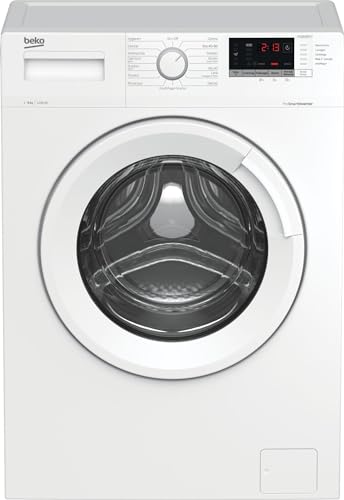
Beko WTL82051W b100 Review | 101 Data compared

Avg. price:~£230Capacity:8 kgMaximum spin speed:1200 RPMEnergy efficiency class:CType:self-standingLoading type:front-loading

Beko WTL82051W b100 Review: Compare 101 technical specifications and 1 expert and video reviews to see how this product ranks in the Washing machines category and whether it is worth buying.

6.7

Overall score

Score
6.7/ 10
✕
What it is
An overall evaluation of the washing machine's quality, based on technical analyses and user reviews.
When it matters
When you need a quick reference to identify the best washing machines on the market.
Score distribution
▼
<55-66-77-88-99-10
Score components

100%

6.7

Technical score

▼Worse than 75% of washing-machines
6.7

Technical score

Technical score
6.7/ 10
✕
What it is
An assessment of the washing machine's technical performance, covering five key areas: performance, energy efficiency, washing programs, features, and design.
When it matters
When you want to compare washing machines based on technical performance and available features.
Score distribution
▼
<55-66-77-88-99-10
Score components

25%

7.3

Performance

25%

7.2

Energy efficiency

20%

5.5

Washing programs

20%

5.8

Features

10%

8.1

Design

▼Worse than 75% of washing-machines
7.0

Review score

Review score
7.0/ 10
✕
What it is
Average grade from independent test sites, magazines and video reviewers, 1–10.
How we count it
Grades: Each review's own score is converted to 1–10; without one, we grade the review ourselves.
Weighting: Big test sites count more, short reviews half as much as full tests. A video review counts half.
Share: Too few models in this category have enough reviews yet, so reviews are shown but do not count in the overall score.
Score distribution
▼
<55-66-77-88-99-10
Grades by review (1)
1 video review, counting half as much as a written test. Share in the overall score: 0%, the same for every model in this category.
Video reviews 1
estimated from the review
Shop star ratings are not part of this score.
▼Worse than 69% of washing-machines
  • No image
No image

Best prices

    N/A~ £230

Best rankings

Available: ranking among products currently available (including other versions of this product).All: ranking among all products in the database.
Loading...
Loading category ranking...

Technical Specifications of washing machine Beko WTL82051W b100

Technical score
Technical score
6.7/ 10
✕
What it is
An assessment of the washing machine's technical performance, covering five key areas: performance, energy efficiency, washing programs, features, and design.
When it matters
When you want to compare washing machines based on technical performance and available features.
Score distribution
▼
<55-66-77-88-99-10
Score components:

25%

7.3

Performance

25%

7.2

Energy efficiency

20%

5.5

Washing programs

20%

5.8

Features

10%

8.1

Design

6.7
Review score
Review score
7.0/ 10
✕
What it is
Average grade from independent test sites, magazines and video reviewers, 1–10.
How we count it
Grades: Each review's own score is converted to 1–10; without one, we grade the review ourselves.
Weighting: Big test sites count more, short reviews half as much as full tests. A video review counts half.
Share: Too few models in this category have enough reviews yet, so reviews are shown but do not count in the overall score.
Score distribution
▼
<55-66-77-88-99-10
Grades by review (1)
1 video review, counting half as much as a written test. Share in the overall score: 0%, the same for every model in this category.
Video reviews 1
estimated from the review
Shop star ratings are not part of this score.
7.0
Popularity
Popularity
1.0/ 10
✕
What it is
An indicator based on the number of reviews received by the washing machine.
When it matters
When you prefer to purchase a product chosen and reviewed by many other consumers.
Score distribution
▼
<55-66-77-88-99-10
Popularity:
Beko WTL82051W b100 has a popularity of 1 point, which is higher than 0% of washing machines.
1.0
Value for money
Value for money
7.5/ 10
✕
What it is
An indicator that combines the washing machine's overall rating with its cost.
When it matters
When you are looking for a washing machine with a good balance between quality and price.
Score distribution
▼
<55-66-77-88-99-10
Score components:

60%

6.7

Overall score

40%

9.3

Price

7.5
Capacity
8 kg
Capacity
8 kg
This washing machine holds 8 kg, which is more than 26.6% of washing machines and equal to 27% of washing machines.
Drum volume
?
Spin-drying efficiency class
B
Spin-drying efficiency class
B
This washing machine has spin-drying class B, which is more efficient than in 10.5% of washing machines and the same as in 83.8% of washing machines.
Maximum spin speed
1,200 RPM
Maximum spin speed
1,200 RPM
This washing machine spins at 1,200 RPM, which is slower than 70.6% of washing machines and equal to 22% of washing machines.
Minimum spin speed
600 RPM
Minimum spin speed
600 RPM
This washing machine has a minimum spin of 600 RPM, which is higher than 73.8% of washing machines and equal to 15.5% of washing machines.
Show more
Energy efficiency class
C
Energy efficiency class
C
This washing machine has energy class C, which is worse than 68.1% of washing machines and the same as 10.3% of washing machines.
Energy consumption per 100 cycles
62 kWh/100 cycles
Energy consumption per 100 cycles
62 kWh/100 cycles
This washing machine uses 62 kWh/100 cycles, which is higher than 72% of washing machines and equal to 3% of washing machines.
Annual energy consumption
136.4 kWh/year
Annual energy consumption
136.4 kWh/year
This washing machine uses 136.4 kWh/year, which is higher than 68.2% of washing machines and equal to 3.4% of washing machines.
Annual energy cost
34.1 £
Annual energy cost
34.1 £
This washing machine has a yearly running cost of £34.1, which is higher than 68.1% of washing machines and equal to 3.4% of washing machines.
Water consumption per cycle
41 L
Water consumption per cycle
41 L
This washing machine uses 41 L of water per cycle, which is lower than 87.7% of washing machines and equal to 4.9% of washing machines.
Show more
N. of washing programs
15
N. of washing programs
15
This washing machine offers 15 wash programmes, which is more than 40.3% of washing machines and equal to 39.5% of washing machines.
Cotton 20 °C, Cotton 40 °C, Eco 40-60, Cotton 60 °C, Cotton 60 °C with Prewash, Cotton 90 °C, Rinse, Spin & Drain, Drum Clean, Duvet 40 °C, Synthetics 20 °C, Synthetics 40 °C, Wool / Hand Wash 40 °C, Shirts 40 °C, Xpress Daily.
N. of downloadable programs
0
N. of downloadable programs
0
This washing machine offers 0 downloadable programmes, which is fewer than 9.4% of washing machines and equal to 90.6% of washing machines.
N. of washing programs under 1 hour
1
N. of washing programs under 1 hour
1
This washing machine has 1 programmes under an hour, which is fewer than 57.7% of washing machines and equal to 42% of washing machines.
Daily Xpress
Fastest cycle duration
28 min
Fastest cycle duration
28 min
This washing machine has a fastest cycle of 28 min, which is longer than 84.9% of washing machines and equal to 0.9% of washing machines.
Daily Xpress (cleans a full load of laundry at 30°C in 28 minutes)
ECO cycle duration
218 min
ECO cycle duration
218 min
This washing machine has an ECO cycle of 218 min, which is shorter than 46% of washing machines and equal to 14.3% of washing machines.
Show more
N. of advanced features
8
N. of advanced features
8
This washing machine has 8 advanced features, which is fewer than 74.5% of washing machines and equal to 9.3% of washing machines.
AquaStop system, Overflow protection, Foam control system, Unbalanced load detection, Laundry detection system, Self-cleaning function, Pause & Add, Anti-crease function.
Foam control system
yes
Foam control system
yes
This washing machine features a foam control system. 78.9% of washing machines have a foam control system.
Laundry detection system
yes
Laundry detection system
yes
This washing machine has a laundry detection system. 91.6% of washing machines have this feature.
OptiSense (optimizes water, detergent, energy, and time consumption using four smart sensors that monitor laundry and the washing machine)
Unbalanced load detection
yes
Unbalanced load detection
yes
This washing machine has unbalanced load detection. 90.7% of washing machines have unbalanced load detection.
Load balancing system
no
Load balancing system
no
This washing machine does not feature a load balancing system. 46.1% of washing machines have a load balancing system.
Show more
Color
white
Color
white
This washing machine comes in white, which is more conventional than the colour in 12.8% of washing machines and the same as the colour in 87.2% of washing machines.
Type
self-standing
Type
self-standing
This washing machine is self-standing, which is more flexible to place than the type in 3.2% of washing machines and the same as the type in 96.8% of washing machines.
Loading type
front-loading
Loading type
front-loading
This washing machine is front-loading, which is more practical than the design in 9.3% of washing machines and the same as the design in 90.8% of washing machines.
Display
yes
Display
yes
This washing machine has a display. 95.5% of washing machines have a display.
Child lock
yes
Child lock
yes
This washing machine has a child lock. 99.6% of washing machines have a child lock.
Show more

Beko WTL82051W b100 vs the average washing machine

246810TotalPerformanceEnergy efficiencyWashing programsFeaturesDesign
  • 6 L less water per cycle
    Water consumption per cycle
    41 L
    This washing machine uses less water per cycle than the average washing machine (41 L vs 47 L). The average washing machine uses 47 L of water per cycle.
    41 L vs 47 L
  • Has an anti-vibration design
    Anti-vibration design
    yes
    This washing machine has an anti-vibration design, the average washing machine does not have. 33.1% of washing machines have an anti-vibration design.
    Anti-vibration walls
  • Has the AquaStop feature
    AquaStop system
    yes
    This washing machine has the AquaStop feature, the average washing machine does not. 30.8% of washing machines have an AquaStop feature.
  • Shirt cycle
    Shirt cycle
    yes
    This washing machine has a cycle for shirts, the average washing machine does not have. 45.6% of washing machines have a shirt cycle.
  • 1 cm lower height
    Height
    84 cm
    This washing machine is shorter than the average washing machine (84 cm vs 85 cm). The average washing machine is 85 cm tall.
    84 cm vs 85 cm
  • 82.6% cheaper
    Beko WTL82051W b100 is cheaper than the average washing machine (£230 vs £420).
    £230 vs £420
  • 12.8% lower yearly water use
    Annual water consumption
    9,020 L/year
    This washing machine uses less water per year than the average washing machine (9020 L/year vs 10340 L/year). The average washing machine uses 10340 L/year of water a year.
    9,020 L/year vs 10,340 L/year
  • 1 dB quieter spinning
    Spin noise level
    74 dB
    This washing machine is quieter on spin than the average washing machine (74 dB vs 75 dB). The average washing machine spins at 75 dB.
    74 dB vs 75 dB
  • 82.6% cheaper
    Beko WTL82051W b100 is cheaper than the average washing machine (£230 vs £420).
    £230 vs £420
  • 1 dB quieter spinning
    Spin noise level
    74 dB
    This washing machine is quieter on spin than the average washing machine (74 dB vs 75 dB). The average washing machine spins at 75 dB.
    74 dB vs 75 dB
  • 6 L less water per cycle
    Water consumption per cycle
    41 L
    This washing machine uses less water per cycle than the average washing machine (41 L vs 47 L). The average washing machine uses 47 L of water per cycle.
    41 L vs 47 L
  • 12.8% lower yearly water use
    Annual water consumption
    9,020 L/year
    This washing machine uses less water per year than the average washing machine (9020 L/year vs 10340 L/year). The average washing machine uses 10340 L/year of water a year.
    9,020 L/year vs 10,340 L/year
  • 2.51 £ lower yearly water cost
    Annual water cost
    17.138 £
    This washing machine costs less for water than the average washing machine (17.1 £ vs 19.6 £). The average washing machine has a yearly water cost of 19.646 £.
    17.138 £ vs 19.646 £
  • Shirt cycle
    Shirt cycle
    yes
    This washing machine has a cycle for shirts, the average washing machine does not have. 45.6% of washing machines have a shirt cycle.
  • Has the AquaStop feature
    AquaStop system
    yes
    This washing machine has the AquaStop feature, the average washing machine does not. 30.8% of washing machines have an AquaStop feature.
  • Has an anti-vibration design
    Anti-vibration design
    yes
    This washing machine has an anti-vibration design, the average washing machine does not have. 33.1% of washing machines have an anti-vibration design.
    Anti-vibration walls
  • 1 cm lower height
    Height
    84 cm
    This washing machine is shorter than the average washing machine (84 cm vs 85 cm). The average washing machine is 85 cm tall.
    84 cm vs 85 cm
  • 200 RPM lower spin speed
    Maximum spin speed
    1,200 RPM
    This washing machine spins slower than the average washing machine (1200 RPM vs 1400 RPM). The average washing machine spins at 1400 RPM.
    1,200 RPM vs 1,400 RPM
  • Worse energy grade
    Energy efficiency class
    C
    This washing machine has a worse energy class than the average washing machine (C vs A).
    C vs A
  • Does not have a steam technology
    Steam technology
    no
    This washing machine does not feature a steam technology, the average washing machine does. 65.7% of washing machines feature a steam technology.
  • 11 kWh/100 cycles more energy use
    Energy consumption per 100 cycles
    62 kWh/100 cycles
    This washing machine uses more electricity than the average washing machine (62 kWh/100 cycles vs 51 kWh/100 cycles). The average washing machine uses 51 kWh/100 cycles.
    62 kWh/100 cycles vs 51 kWh/100 cycles
  • Does not have a fast function
    Fast function
    no
    This washing machine does not have a fast function, the average washing machine does. 50.5% of washing machines have a fast function.
  • Does not have an anti-stain cycle
    Anti-stain function
    no
    This washing machine does not have an anti-stain cycle, the average washing machine does. 68.4% of washing machines have an anti-stain cycle.
  • 200 RPM higher minimum spin
    Minimum spin speed
    600 RPM
    This washing machine has a higher minimum spin than the average washing machine (600 RPM vs 400 RPM). The average washing machine has a minimum spin of 400 RPM.
    600 RPM vs 400 RPM
  • 15 h shorter maximum delay
    Maximum delay start
    9 h
    This washing machine can delay its start for less time than the average washing machine (9 h vs 24 h). The average washing machine can delay its start by up to 24 h.
    9 h vs 24 h
  • 200 RPM lower spin speed
    Maximum spin speed
    1,200 RPM
    This washing machine spins slower than the average washing machine (1200 RPM vs 1400 RPM). The average washing machine spins at 1400 RPM.
    1,200 RPM vs 1,400 RPM
  • 200 RPM higher minimum spin
    Minimum spin speed
    600 RPM
    This washing machine has a higher minimum spin than the average washing machine (600 RPM vs 400 RPM). The average washing machine has a minimum spin of 400 RPM.
    600 RPM vs 400 RPM
  • 2 dB louder washing
    Washing noise level
    55 dB
    This washing machine is louder than the average washing machine when washing (55 dB vs 53 dB). The average washing machine washes at 53 dB.
    55 dB vs 53 dB
  • Worse energy grade
    Energy efficiency class
    C
    This washing machine has a worse energy class than the average washing machine (C vs A).
    C vs A
  • 11 kWh/100 cycles more energy use
    Energy consumption per 100 cycles
    62 kWh/100 cycles
    This washing machine uses more electricity than the average washing machine (62 kWh/100 cycles vs 51 kWh/100 cycles). The average washing machine uses 51 kWh/100 cycles.
    62 kWh/100 cycles vs 51 kWh/100 cycles
  • 17% higher energy use
    Annual energy consumption
    136.4 kWh/year
    This washing machine uses more energy than the average washing machine (136.4 kWh/year vs 116.6 kWh/year). The average washing machine uses 116.6 kWh/year.
    136.4 kWh/year vs 116.6 kWh/year
  • 4.9 £ higher yearly running cost
    Annual energy cost
    34.1 £
    This washing machine costs more to run than the average washing machine (34.1 £ vs 29.2 £). The average washing machine has a yearly running cost of 29.2 £.
    34.1 £ vs 29.2 £
  • Does not have a steam technology
    Steam technology
    no
    This washing machine does not feature a steam technology, the average washing machine does. 65.7% of washing machines feature a steam technology.
  • Does not have a fast function
    Fast function
    no
    This washing machine does not have a fast function, the average washing machine does. 50.5% of washing machines have a fast function.
  • Does not have an anti-stain cycle
    Anti-stain function
    no
    This washing machine does not have an anti-stain cycle, the average washing machine does. 68.4% of washing machines have an anti-stain cycle.
  • Does not have an extra-rinse function
    Extra rinse function
    no
    This washing machine does not have a special extra-rinse function, the average washing machine does. 83% of washing machines feature such function.
  • 1 fewer temperature settings
    N. of temperature settings
    5
    This washing machine offers fewer temperature settings than the average washing machine (5 vs 6). The average washing machine offers 6 temperature settings.
    20°, 30°,40°, 60°, 90°
    5 vs 6
  • Does not have a duvet cycle
    Duvet cycle
    no
    This washing machine does not have a duvet cycle, the average washing machine does. 50.3% of washing machines have a duvet cycle.
  • Does not have a hygiene cycle
    Hygiene cycle
    no
    This washing machine does not have a hygiene cycle, the average washing machine does. 60.6% of washing machines have a hygiene cycle.
  • Does not have an allergen cycle
    Anti-Allergy cycle
    no
    This washing machine does not have an allergen cycle, the average washing machine does not have. 60.7% of washing machines have an allergen cycle.
  • 1 fewer quick programmes
    N. of washing programs under 1 hour
    1
    This washing machine offers fewer quick programmes than the average washing machine (1 vs 2). The average washing machine has 2 programmes under an hour.
    Daily Xpress
    1 vs 2
  • Does not have an outdoor/sport cycle
    Outdoor/Sport cycle
    no
    This washing machine does not have a special cycle for outdoor/sport clothes, while the average washing machine does. 70.9% of washing machines have such a cycle.
  • Does not have a gentle cycle
    Gentle cycle
    no
    This washing machine does not have a Gentle cycle, while the average washing machine has it. 85.8% of washing machines have a Gentle cycle.
  • 13 min longer quickest cycle
    Fastest cycle duration
    28 min
    This washing machine has a longer fastest cycle than the average washing machine (28 min vs 15 min). The average washing machine's quickest cycle takes 15 min.
    Daily Xpress (cleans a full load of laundry at 30°C in 28 minutes)
    28 min vs 15 min
  • Does not have a cold wash setting
    Cold wash
    no
    This washing machine does not provide a cold wash option, which the average washing machine has. 93.4% of washing machines include a cold wash option.
  • 15 h shorter maximum delay
    Maximum delay start
    9 h
    This washing machine can delay its start for less time than the average washing machine (9 h vs 24 h). The average washing machine can delay its start by up to 24 h.
    9 h vs 24 h
  • 3 fewer advanced features
    N. of advanced features
    8
    This washing machine has fewer advanced features than the average washing machine (8 vs 11). The average washing machine has 11 advanced features.
    AquaStop system, Overflow protection, Foam control system, Unbalanced load detection, Laundry detection system, Self-cleaning function, Pause & Add, Anti-crease function.
    8 vs 11
  • Does not have a time remaining indicator
    Time remaining indicator
    no
    This washing machine does not have a time remaining indicator, the average washing machine does. 93.3% of washing machines have a time remaining indicator.
  • 0.2 cm wider
    Width
    60 cm
    This washing machine is wider than the average washing machine (60 cm vs 59.8 cm). The average washing machine is 59.8 cm wide.
    60 cm vs 59.8 cm
  • 6% larger volume
    Volume
    297,360 cm³
    This washing machine has a larger volume than the average washing machine (297360 cm³ vs 280500 cm³). The average washing machine has a volume of 280500 cm³.
    297,360 cm³ vs 280,500 cm³
  • 2.5 cm deeper
    Depth
    59 cm
    This washing machine is deeper than the average washing machine (59 cm vs 56.5 cm). The average washing machine is 56.5 cm deep.
    59 cm vs 56.5 cm

Video reviews

Hands-on testing, unboxing, and real-world video evaluations
7.0
thelaundrycookie1200
≈ estimated
15/01/2025
Feature walkthrough · all programmes and options explained
Verdict
Beko WTL82051W b100 is a very basic machine, but it covers the features most people need.

Third-party reviews

What we like about Beko WTL82051W b100

  • 41 L of water per cycle keeps water use low.
  • The inverter motor comes with a 10-year warranty.
  • Washing at 55 dB is quiet, so it is easy to live with.
  • AquaStop and an anti-vibration design guard against leaks and wobble.
  • Pre-wash, self-cleaning and laundry detection add useful help.
  • Boil wash, hand wash and a good range of 40° programmes suit everyday loads.

What we don't like about Beko WTL82051W b100

  • Only five temperature settings, on a simple dial.
  • Most programmes take around three hours.
  • There is no gentle or cold wash cycle.
  • The spin is loud at 74 dB.
  • The delay start tops out at 9 h, so you cannot plan a wash far ahead.

Verdict

The Beko WTL82051W b100 is an accessible and practical front-loading washing machine engineered to streamline everyday family laundry with quiet efficiency. Designed with an eight-kilogram capacity drum and a gentle 1200 RPM spin speed, it easily accommodates daily clothing loads and household linens while keeping acoustic emissions comfortably subdued at 74 decibels. A notable practical asset is its Daily Quick program, which cleans a full eight-kilogram load in just 28 minutes, offering significant time savings for busy schedules. Built with an energy-efficient ProSmart Inverter motor backed by a ten-year warranty, the machine guarantees dependable longevity with minimal mechanical friction. Further reinforced by an AquaStop anti-flood mechanism, anti-crease functionality, sturdy anti-vibration side panels, and Pause and Add convenience, this model delivers reliable, uncomplicated domestic performance and peace of mind.

Compare Beko WTL82051W b100 with other washing machines

1Product to compare no. 1
VS
2Product to compare no. 2
VS
3Product to compare no. 3 (optional)

Graphic comparison of Beko WTL82051W b100 and other washing machines

No results found