Scored using Washer-dryers Methodology v1.0
Washer-dryers Methodology v1.0
Mathematical & Unbiased Scoring
Products in this category are evaluated mathematically under Frontumo Washer-dryers Methodology v1.0 using verified laboratory benchmarks, technical specifications, and authentic consumer ratings with 0% commercial bias.
Explore Washer-dryers Methodology v1.0

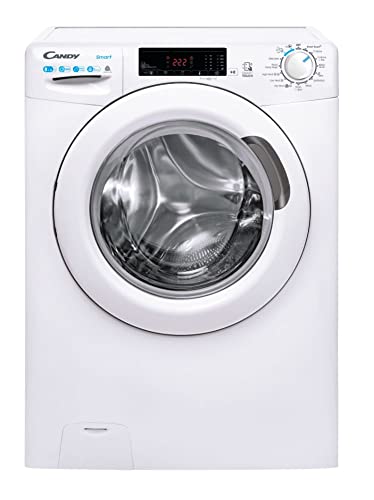
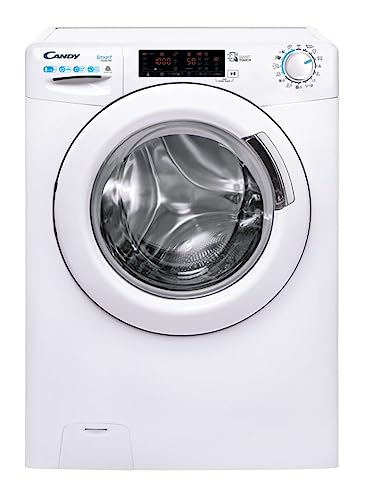
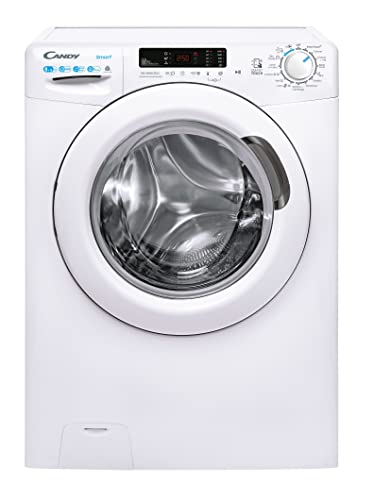
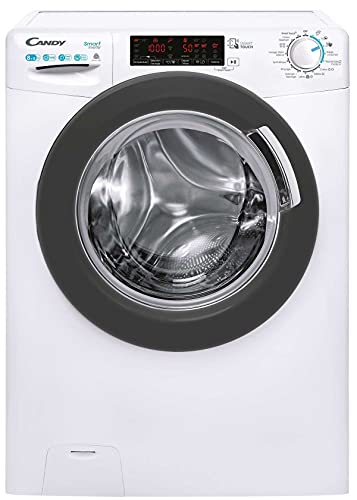
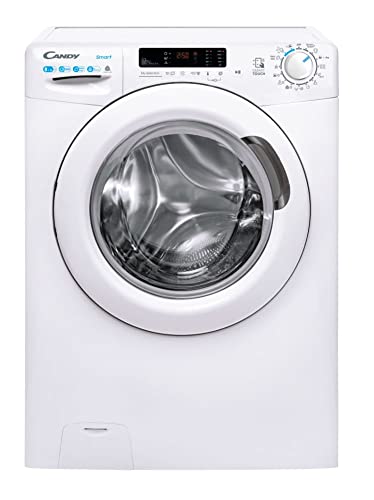
Candy Smart CSW 485TE180 Review | 104 Data compared

Avg. price:~£420Washing capacity:8 kgDrying capacity:5 kgDrying technology:condenserWashing energy efficiency class:DCombined energy efficiency class:E

Candy Smart CSW 485TE180 Review: Compare 104 technical specifications and user reviews to see how this product ranks in the Washer-dryers category and whether it is worth buying.

6.9

Overall score

Score
6.9/ 10
✕
What it is
An overall evaluation of the washer-dryer's quality, based on technical analyses and user reviews.
When it matters
When you need a quick reference to identify the best washer-dryers on the market.
Score distribution
â–¼
<55-66-77-88-99-10
Score components

70%

6.2

Technical score

30%

8.7

User score

â–¼Worse than 63% of washer-dryers
6.2

Technical score

Technical score
6.2/ 10
✕
What it is
An assessment of the washer-dryer's technical performance, covering five key areas: performance, energy efficiency, washing and drying programs, features, and design.
When it matters
When you want to compare washer-dryers based on technical performance and available features.
Score distribution
â–¼
<55-66-77-88-99-10
Score components

25%

4.6

Performance

25%

5.7

Energy efficiency

25%

6.9

Washing & Drying

20%

7.6

Features

5%

7.0

Design

â–¼Worse than 83% of washer-dryers
8.7

User score

User score
8.7/ 10
✕
What it is
A rating that combines user reviews and the total number of reviews received by the washer-dryer.
When it matters
When you want to know how a washer-dryer performs in everyday use and how reliable it is according to user reviews.
Score distribution
â–¼
<55-66-77-88-99-10
Score components

70%

8.8

User ratings

30%

8.5

Number of reviews

Based on 147 buyer reviews from online shops.
How we calculate this
User ratings – average star rating across all shop listings, weighted by how many reviews each has, on a 1–10 scale.
Number of reviews – how many buyer reviews the product has, on a logarithmic scale; the 8% most-reviewed models in the category get 10.
★Better than 91% of washer-dryers
  • candy-smart-csw-485te180
  • candy-smart-csw-485te180
  • candy-smart-csw-485te180
  • candy-smart-csw-485te180
  • candy-smart-csw-485te180
  • candy-smart-csw-485te180
  • candy-smart-csw-485te180
  • candy-smart-csw-485te180
  • candy-smart-csw-485te180
  • candy-smart-csw-485te180
  • candy-smart-csw-485te180
candy-smart-csw-485te180

Best prices

*As an Amazon Associate, we earn from qualifying purchases.

Best rankings

Available: ranking among products currently available (including other versions of this product).All: ranking among all products in the database.
Loading...
Loading category ranking...

Technical Specifications of washer-dryer Candy Smart CSW 485TE180

Technical score
Technical score
6.2/ 10
✕
What it is
An assessment of the washer-dryer's technical performance, covering five key areas: performance, energy efficiency, washing and drying programs, features, and design.
When it matters
When you want to compare washer-dryers based on technical performance and available features.
Score distribution
â–¼
<55-66-77-88-99-10
Score components:

25%

4.6

Performance

25%

5.7

Energy efficiency

25%

6.9

Washing & Drying

20%

7.6

Features

5%

7.0

Design

6.2
User score
User score
8.7/ 10
✕
What it is
A rating that combines user reviews and the total number of reviews received by the washer-dryer.
When it matters
When you want to know how a washer-dryer performs in everyday use and how reliable it is according to user reviews.
Score distribution
â–¼
<55-66-77-88-99-10
Score components

70%

8.8

User ratings

30%

8.5

Number of reviews

Based on 147 buyer reviews from online shops.
How we calculate this
User ratings – average star rating across all shop listings, weighted by how many reviews each has, on a 1–10 scale.
Number of reviews – how many buyer reviews the product has, on a logarithmic scale; the 8% most-reviewed models in the category get 10.
8.7
Popularity
Popularity
8.5/ 10
✕
What it is
An indicator based on the number of reviews received by the washer-dryer.
When it matters
When you prefer to purchase a product chosen and reviewed by many other consumers.
Score distribution
â–¼
<55-66-77-88-99-10
Popularity:
Candy Smart CSW 485TE180 has a user popularity of 8.5 points, which is lower than 70.9% of washer-dryers.
8.5
Value for money
Value for money
7.4/ 10
✕
What it is
An indicator that combines the washer-dryer's overall rating with its cost.
When it matters
When you are looking for a washer-dryer with a good balance between quality and price.
Score distribution
â–¼
<55-66-77-88-99-10
Score components:

60%

6.9

Overall score

40%

8.7

Price

7.4
Washing capacity
8 kg
Washing capacity
8 kg
This washer-dryer has a washing capacity of 8 kg which is smaller than the capacity of 56.6% of washer-dryers and equal to the capacity of 34.4% of washer-dryers.
Drying capacity
5 kg
Drying capacity
5 kg
This washer-dryer has a drying capacity of 5 kg which is smaller than the capacity of 63% of washer-dryers and equal to the capacity of 29.6% of washer-dryers.
Drum volume
?
Spin efficiency class
B
Spin efficiency class
B
This washer-dryer has B spin efficiency class which is better than the spin efficiency class of 1.1% of washer-dryers and equal to that of 84.7% of washer-dryers.
Maximum spin speed
1,400 RPM
Maximum spin speed
1,400 RPM
The maximum spin speed of this washer-dryer is 1,400 RPM which is higher than the maximum spin speed of 6.4% of washer-dryers and equal to the maximum spin speed of 71.4% of washer-dryers.
Show more
Washing energy efficiency class
D
Washing energy efficiency class
D
This washer-dryer has D washing energy efficiency class which is worse than the washing energy efficiency of 85.2% of washer-dryers and equal to that of 11.6% of washer-dryers.
Combined energy efficiency class
E
Combined energy efficiency class
E
This washer-dryer has E combined energy efficiency class which is better than the combined energy efficiency of 3.8% of washer-dryers and equal to that of 50.8% of washer-dryers.
Energy consumption per 100 washing cycles
73 kWh/100 cycles
Energy consumption per 100 washing cycles
73 kWh/100 cycles
This washer-dryer has an energy consumption per 100 washing cycles of 73 kWh/100 cycles which is higher than the energy consumption of 88.9% of washer-dryers and equal to that of 2.1% of washer-dryers.
Energy consumption per 100 combined cycles
326 kWh/100 cycles
Energy consumption per 100 combined cycles
326 kWh/100 cycles
This washer-dryer has an energy consumption per 100 combined cycles of 326 kWh/100 cycles which is higher than the energy consumption of 50.3% of washer-dryers and equal to that of 11.6% of washer-dryers.
Water consumption per washing cycle
44 L
Water consumption per washing cycle
44 L
This washer-dryer has a water consumption per washing cycle of 44 L which is lower than the water consumption of 73% of washer-dryers and equal to that of 9.5% of washer-dryers.
Show more
Number of washing programs
13
Number of washing programs
13
This washer-dryer has 13 different washing programs which is more than the n. of programs of 26.5% of washer-dryers and equal to that of 37%.
Cotton, Cotton + Prewash, Eco 40-60, Wash & Dry, 20°C, Synthetics, Rinse, Drain + Spin, Wool/Hand Wash, Delicates, Rapid 14', 30', 44', Perfect Cotton 59', Smart Touch
Number of drying programs
4
Number of drying programs
4
This washer-dryer has 4 different drying programs which is more than the n. of programs of 48.2% of washer-dryers and equal to that of 41.3% of washer-dryers.
Wool, Mixed, Cotton, Wash and Dry
Fast washing cycle duration
14 min
Fast washing cycle duration
14 min
The fast washing cycle duration of this washer-dryer is 14 min which is less than the fast cycle duration of 63.4% of washer-dryers and equal to that of 36.6% of washer-dryers.
Maximum washing cycle duration
218 min
Maximum washing cycle duration
218 min
The maximum washing cycle duration of this washer-dryer is 218 min which is more than the maximum cycle duration of 55.2% of washer-dryers and equal to that of 18.6% of washer-dryers.
Maximum combined cycle duration
440 min
Maximum combined cycle duration
440 min
The maximum combined cycle duration of this washer-dryer is 440 min which is more than the maximum combined duration of 82.1% of washer-dryers and equal to that of 4.4% of washer-dryers.
Show more
N. of features
20
N. of features
20
This washer-dryer has 20 advanced features, which is more than the number of features in 64.6% of washer-dryers and equal to the number in 3.7% of washer-dryers.
Foam control system, Unbalanced load detection, Automatic load balancing during spin, Laundry detection system, Automatic drying, Pre-mix technology, Water jets system, Favorite function, NFC, Voice control, Wash assist, Consumption statistics, Smart diagnosis, Time remaining indicator, Time remaining indicator, Steam function, Anti-stain function, Pause & Add Feature, Delay start option, Drying level selection
N. of downloadable programs
36
N. of downloadable programs
36
This washer-dryer has 36 downloadable programs which is more than the n. of programs of 57.9% of washer-dryers and equal to that of 14.7% of washer-dryers.
Foam control system
yes
Foam control system
yes
This washer-dryer features a foam control system. 59.5% of washer-dryers have a foam control system.
Unbalanced load detection
yes
Unbalanced load detection
yes
This washer-dryer has unbalanced load detection. 94.7% of washer-dryers have this feature.
Automatic load balancing during spin
yes
Automatic load balancing during spin
yes
This washer-dryer features automatic load balancing. 38.9% of washer-dryers have automatic load balancing.
Show more
Installation type
free-standing
Installation type
free-standing
This washer-dryer is free-standing type. 9.5% of washer-dryers a different type.
Color
white, white door
Color
white, white door
This washer-dryer is white, white door in color. 0%.
Display
yes
Display
yes
This washer-dryer has a display. 100% of washer-dryers have a display.
2 digit display with timer
Noise-reducing design
no
Noise-reducing design
no
This washer-dryer does not have a noise-reducing design. 7.4% of washer-dryers have a noise-reducing design.
Special drum design
no
Special drum design
no
This washer-dryer does not have a special drum design. 47.9% of washer-dryers have a special drum design.
Show more

Candy Smart CSW 485TE180 vs the average washer-dryer

246810TotalPerformanceEnergy efficiencyWashing & DryingFeaturesDesign
  • 6 more advanced feature/s
    N. of features
    20
    This washer-dryer has a higher number of advanced features than the average washer-dryer (20 vs 14). The average washer-dryer has 14 advanced features.
    Foam control system, Unbalanced load detection, Automatic load balancing during spin, Laundry detection system, Automatic drying, Pre-mix technology, Water jets system, Favorite function, NFC, Voice control, Wash assist, Consumption statistics, Smart diagnosis, Time remaining indicator, Time remaining indicator, Steam function, Anti-stain function, Pause & Add Feature, Delay start option, Drying level selection
    20 vs 14
  • 8 dB more silent during drying
    Drying noise level
    51 dB
    This washer-dryer is more silent during drying than the average washer-dryer (51 dB vs 59 dB). The average washer-dryer has a drying noise level of 59 dB.
    51 dB vs 59 dB
  • Has automatic load balancing
    Automatic load balancing during spin
    yes
    This washer-dryer features automatic load balancing, the average washer-dryer does not. 38.9% of washer-dryers have automatic load balancing.
  • Features pre-mix technology
    Pre-mix technology
    yes
    This washer-dryer features pre-mix technology, the average washer-dryer does not. 38.4% of washer-dryers have pre-mix technology.
    Mix Power System (sprays pre-mixed water and detergent deep into fibers for faster, more effective washing)
  • Has NFC
    NFC
    yes
    This washer-dryer features NFC technology, the average washer-dryer does not. 8.9% of washer-dryers have NFC technology.
    Smart Touch connectivity lets you access extra features and support from your smartphone using NFC.
  • 4 L lower water consumption for washing
    Water consumption per washing cycle
    44 L
    This washer-dryer has a lower water consumption for washing than the average washer-dryer (44 L vs 48 L). The average washer-dryer consumes 48 L per washing cycle.
    44 L vs 48 L
  • Includes a water jets system
    Water jets system
    yes
    This washer-dryer has a water jets system, the average washer-dryer does not. 27.4% of washer-dryers feature a water jets system.
  • 5 cm smaller depth
    Depth
    53 cm
    This washer-dryer has a smaller depth than the average washer-dryer (53 cm vs 58 cm). The average washer-dryer has a depth of 58 cm.
    53 cm vs 58 cm
  • 33.3% cheaper
    Candy Smart CSW 485TE180 is cheaper than the average washer-dryer (£420 vs £560). The average washer-dryer costs 560.000.
    £420 vs £560
  • 11.8% higher user score
    User score
    8.7/ 10
    ✕
    What it is
    A rating that combines user reviews and the total number of reviews received by the washer-dryer.
    When it matters
    When you want to know how a washer-dryer performs in everyday use and how reliable it is according to user reviews.
    Score distribution
    â–¼
    â–¼
    <55-66-77-88-99-10
    Candy Smart CSW 485TE180
    the average washer-dryer
    Candy Smart CSW 485TE180 has a higher user score than the average washer-dryer (8.71 vs 7.795).
    8.71 vs 7.8
  • 8 dB more silent during drying
    Drying noise level
    51 dB
    This washer-dryer is more silent during drying than the average washer-dryer (51 dB vs 59 dB). The average washer-dryer has a drying noise level of 59 dB.
    51 dB vs 59 dB
  • 4 L lower water consumption for washing
    Water consumption per washing cycle
    44 L
    This washer-dryer has a lower water consumption for washing than the average washer-dryer (44 L vs 48 L). The average washer-dryer consumes 48 L per washing cycle.
    44 L vs 48 L
  • 1 min shorter fast washing cycle
    Fast washing cycle duration
    14 min
    The fast washing cycle duration of this washer-dryer is shorter than the fast cycle duration of the average washer-dryer (14 min vs 15 min). The fast cycle duration of an average washer-dryer takes 15 min.
    14 min vs 15 min
  • 45 min longer maximum combined cycle
    Maximum combined cycle duration
    440 min
    The maximum combined cycle duration of this washer-dryer is longer than the maximum combined duration of the average washer-dryer (440 min vs 485 min). The maximum combined cycle duration of an average washer-dryer takes 485 min.
    440 min vs 485 min
  • 6 more advanced feature/s
    N. of features
    20
    This washer-dryer has a higher number of advanced features than the average washer-dryer (20 vs 14). The average washer-dryer has 14 advanced features.
    Foam control system, Unbalanced load detection, Automatic load balancing during spin, Laundry detection system, Automatic drying, Pre-mix technology, Water jets system, Favorite function, NFC, Voice control, Wash assist, Consumption statistics, Smart diagnosis, Time remaining indicator, Time remaining indicator, Steam function, Anti-stain function, Pause & Add Feature, Delay start option, Drying level selection
    20 vs 14
  • Has automatic load balancing
    Automatic load balancing during spin
    yes
    This washer-dryer features automatic load balancing, the average washer-dryer does not. 38.9% of washer-dryers have automatic load balancing.
  • Features pre-mix technology
    Pre-mix technology
    yes
    This washer-dryer features pre-mix technology, the average washer-dryer does not. 38.4% of washer-dryers have pre-mix technology.
    Mix Power System (sprays pre-mixed water and detergent deep into fibers for faster, more effective washing)
  • Has NFC
    NFC
    yes
    This washer-dryer features NFC technology, the average washer-dryer does not. 8.9% of washer-dryers have NFC technology.
    Smart Touch connectivity lets you access extra features and support from your smartphone using NFC.
  • Includes a water jets system
    Water jets system
    yes
    This washer-dryer has a water jets system, the average washer-dryer does not. 27.4% of washer-dryers feature a water jets system.
  • Can save favorite settings
    Favorite function
    yes
    This washer-dryer can save selected settings to favorites, the average washer-dryer cannot. 45.8% of washer-dryers have this feature.
    In-app function
  • Can be controlled by voice
    Voice control
    yes
    This washer-dryer can be controlled by voice, the average washer-dryer cannot. 42.1% of washer-dryers can be controlled by voice.
  • 5 cm smaller depth
    Depth
    53 cm
    This washer-dryer has a smaller depth than the average washer-dryer (53 cm vs 58 cm). The average washer-dryer has a depth of 58 cm.
    53 cm vs 58 cm
  • 8.6% smaller volume
    Volume
    270,300 cm³
    This washer-dryer has a smaller volume than the average washer-dryer (270300 cm³ vs 295800 cm³). The average washer-dryer has a volume of 295800 cm³.
    270,300 cm³ vs 295,800 cm³
  • 4 kg lighter
    Weight
    64 kg
    This washer-dryer is lighter than the average washer-dryer (64 kg vs 68 kg). The average washer-dryer weighs 68 kg.
    64 kg vs 68 kg
  • Does not have an inverter motor
    Inverter motor
    no
    This washer-dryer does not have an inverter motor, the average washer-dryer does. 89.5% of washer-dryers have an inverter motor.
  • 18 kWh/100 cycles higher energy consumption for washing
    Energy consumption per 100 washing cycles
    73 kWh/100 cycles
    This washer-dryer has a higher energy consumption for washing than the average washer-dryer (73 kWh/100 cycles vs 55 kWh/100 cycles). The average washer-dryer consumes 55 kWh/100 cycles per 100 washing cycles.
    73 kWh/100 cycles vs 55 kWh/100 cycles
  • 8 year/s shorter motor warranty
    Motor warranty
    2 year/s
    This washer-dryer has a shorter motor warranty than the average washer-dryer (2 year/s vs 10 year/s). The average washer-dryer includes a 10 year/s warranty for the motor.
    2 year/s vs 10 year/s
  • 1 kg smaller drying capacity
    Drying capacity
    5 kg
    This washer-dryer has a smaller drying capacity than the average washer-dryer (5 kg vs 6 kg). The average washer-dryer has a drying capacity of 6 kg.
    5 kg vs 6 kg
  • 1 kg smaller washing capacity
    Washing capacity
    8 kg
    This washer-dryer has a smaller washing capacity than the average washer-dryer (8 kg vs 9 kg). The average washer-dryer has a washing capacity of 9 kg.
    8 kg vs 9 kg
  • 4 dB louder during spinning
    Spin noise level
    79 dB
    This washer-dryer is louder during spinning than the average washer-dryer (79 dB vs 75 dB). The average washer-dryer has a spinning noise level of 75 dB.
    79 dB vs 75 dB
  • Worse washing energy efficiency class
    Washing energy efficiency class
    D
    This washer-dryer has a worse washing energy efficiency class than the average washer-dryer (D vs B). The average washer-dryer is classified in the B washing energy efficiency rating class.
    D vs B
  • 8 dB louder during washing
    Washing noise level
    62 dB
    This washer-dryer is louder during washing than the average washer-dryer (62 dB vs 54 dB). The average washer-dryer has a washing noise level of 54 dB.
    62 dB vs 54 dB
  • Does not have an inverter motor
    Inverter motor
    no
    This washer-dryer does not have an inverter motor, the average washer-dryer does. 89.5% of washer-dryers have an inverter motor.
  • 8 year/s shorter motor warranty
    Motor warranty
    2 year/s
    This washer-dryer has a shorter motor warranty than the average washer-dryer (2 year/s vs 10 year/s). The average washer-dryer includes a 10 year/s warranty for the motor.
    2 year/s vs 10 year/s
  • 1 kg smaller drying capacity
    Drying capacity
    5 kg
    This washer-dryer has a smaller drying capacity than the average washer-dryer (5 kg vs 6 kg). The average washer-dryer has a drying capacity of 6 kg.
    5 kg vs 6 kg
  • 1 kg smaller washing capacity
    Washing capacity
    8 kg
    This washer-dryer has a smaller washing capacity than the average washer-dryer (8 kg vs 9 kg). The average washer-dryer has a washing capacity of 9 kg.
    8 kg vs 9 kg
  • 4 dB louder during spinning
    Spin noise level
    79 dB
    This washer-dryer is louder during spinning than the average washer-dryer (79 dB vs 75 dB). The average washer-dryer has a spinning noise level of 75 dB.
    79 dB vs 75 dB
  • 8 dB louder during washing
    Washing noise level
    62 dB
    This washer-dryer is louder during washing than the average washer-dryer (62 dB vs 54 dB). The average washer-dryer has a washing noise level of 54 dB.
    62 dB vs 54 dB
  • 1 fewer spin speed options
    N. of spin speeds
    4
    This washer-dryer has fewer spin speeds than the average washer-dryer (4 vs 5). The average washer-dryer has 5 spin speeds.
    400, 800, 1,000, 1,400 RPM
    4 vs 5
  • Worse noise emission class
    Noise emission class
    C
    This washer-dryer has a worse noise emission class than the average washer-dryer (C vs B). The average washer-dryer has the B noise emission class.
    C vs B
  • 18 kWh/100 cycles higher energy consumption for washing
    Energy consumption per 100 washing cycles
    73 kWh/100 cycles
    This washer-dryer has a higher energy consumption for washing than the average washer-dryer (73 kWh/100 cycles vs 55 kWh/100 cycles). The average washer-dryer consumes 55 kWh/100 cycles per 100 washing cycles.
    73 kWh/100 cycles vs 55 kWh/100 cycles
  • Worse washing energy efficiency class
    Washing energy efficiency class
    D
    This washer-dryer has a worse washing energy efficiency class than the average washer-dryer (D vs B). The average washer-dryer is classified in the B washing energy efficiency rating class.
    D vs B
  • 0.5 kWh/100 cycles higher energy consumption for combined cycles
    Energy consumption per 100 combined cycles
    326 kWh/100 cycles
    This washer-dryer has a higher energy consumption for combined cycles than the average washer-dryer (326 kWh/100 cycles vs 325.5 kWh/100 cycles). The average washer-dryer consumes 325.5 kWh/100 cycles per 100 combined cycles.
    326 kWh/100 cycles vs 325.5 kWh/100 cycles
  • 36 kWh/year higher annual energy consumption (wash)
    Annual energy consumption (Wash)
    146 kWh/year
    This washer-dryer has a higher annual energy consumption (wash) than the average washer-dryer (146 kWh/year vs 110 kWh/year). The average washer-dryer consumes 110 kWh/year per year for washing.
    146 kWh/year vs 110 kWh/year
  • No selectable drying times
    Selectable drying times
    no
    This washer-dryer does not have selectable drying times, the average washer-dryer does. 84.7% of washer-dryers have selectable drying times.
  • Does not have an anti-crease function
    Anti-crease function
    no
    This washer-dryer does not have an anti-crease function, the average washer-dryer has. 54.7% of washer-dryers include an anti-crease function.
  • Does not have an extra rinse function
    Extra rinse function
    no
    This washer-dryer does not have a special extra rinse function, the average washer-dryer does. 66.8% of washer-dryers feature such function.
  • X
    Color
    white, white door
    This washer-dryer is white, white door in color, the average washer-dryer is white. 0.00% of washer-dryers are this color.
    white, white door vs white

Third-party reviews

Based on 147 buyer reviews from online shops.
Reviews last updated: March 2026 · How we calculate this

Verdict

The Candy Smart CSW 485TE180 freestanding washer-dryer delivers dependable everyday laundering in a space-saving cabinet measuring 53 centimeters deep. It provides an eight-kilogram washing capacity and five kilograms of condensation drying without demanding external venting conduits. The appliance features an extraction spin speed reaching 1400 RPM with an operational noise level of 79 decibels during high-speed spinning. On energy efficiency, the machine achieves class D for wash-only operation at 73 kilowatt-hours per hundred cycles and class E for combined cycles drawing 326 kilowatt-hours. A built-in steam treatment loosens creases within fabrics to minimize ironing chores. Users can pick from four rapid wash options with a fast 14-minute setting for lightly soiled clothes. Equipped with a 24-hour delay timer, Pause and Add door functionality, and child safety lock, it suits compact household environments.

Compare Candy Smart CSW 485TE180 with other washer-dryers

1Product to compare no. 1
VS
2Product to compare no. 2
VS
3Product to compare no. 3 (optional)

Graphic comparison of Candy Smart CSW 485TE180 and other washer-dryers

No results found