Scored using Washer-dryers Methodology v1.0
Washer-dryers Methodology v1.0
Mathematical & Unbiased Scoring
Products in this category are evaluated mathematically under Frontumo Washer-dryers Methodology v1.0 using verified laboratory benchmarks, technical specifications, and authentic consumer ratings with 0% commercial bias.
Explore Washer-dryers Methodology v1.0

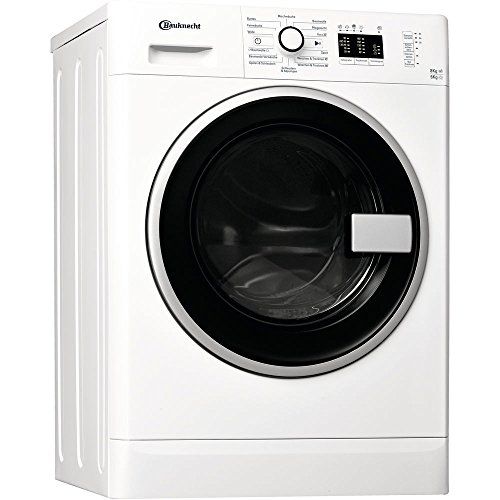
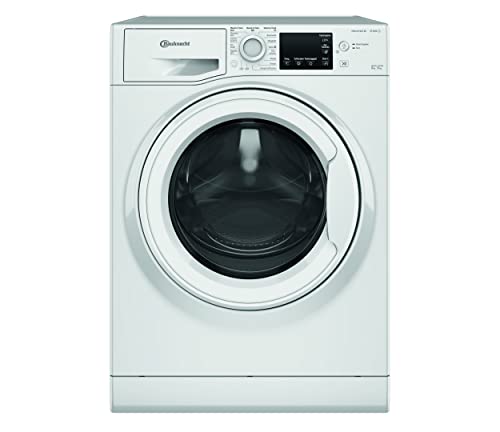
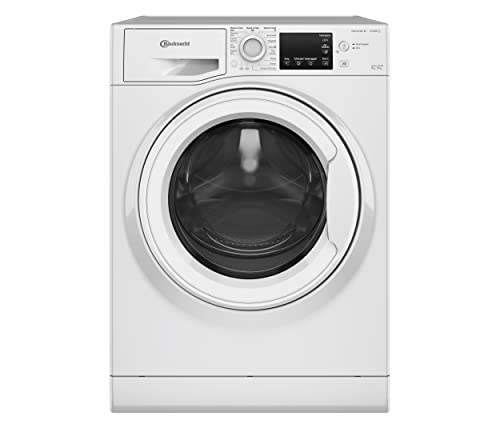
Bauknecht WATK Prime 8614 Review | 104 Data compared

Avg. price:~£580Washing capacity:8 kgDrying capacity:6 kgDrying technology:condenserWashing energy efficiency class:ACombined energy efficiency class:?

Bauknecht WATK Prime 8614 Review: Compare 104 technical specifications and user reviews to see how this product ranks in the Washer-dryers category and whether it is worth buying.

5.1

Overall score

Score
5.1/ 10
✕
What it is
An overall evaluation of the washer-dryer's quality, based on technical analyses and user reviews.
When it matters
When you need a quick reference to identify the best washer-dryers on the market.
Score distribution
â–¼
<55-66-77-88-99-10
Score components

70%

4.4

Technical score

30%

6.5

User score

â–¼Worse than 99% of washer-dryers
4.4

Technical score

Technical score
4.4/ 10
✕
What it is
An assessment of the washer-dryer's technical performance, covering five key areas: performance, energy efficiency, washing and drying programs, features, and design.
When it matters
When you want to compare washer-dryers based on technical performance and available features.
Score distribution
â–¼
<55-66-77-88-99-10
Score components

25%

4.5

Performance

25%

2.6

Energy efficiency

25%

6.7

Washing & Drying

20%

3.0

Features

5%

7.2

Design

â–¼Worse than 99% of washer-dryers
6.5

User score

User score
6.5/ 10
✕
What it is
A rating that combines user reviews and the total number of reviews received by the washer-dryer.
When it matters
When you want to know how a washer-dryer performs in everyday use and how reliable it is according to user reviews.
Score distribution
â–¼
<55-66-77-88-99-10
Score components

70%

7.0

User ratings

30%

5.4

Number of reviews

Based on 18 buyer reviews from online shops.
How we calculate this
User ratings – average star rating across all shop listings, weighted by how many reviews each has, on a 1–10 scale.
Number of reviews – how many buyer reviews the product has, on a logarithmic scale; the 8% most-reviewed models in the category get 10.
â–¼Worse than 90% of washer-dryers
  • bauknecht-watk-prime-8614
bauknecht-watk-prime-8614

Best prices

*As an Amazon Associate, we earn from qualifying purchases.

Best rankings

Available: ranking among products currently available (including other versions of this product).All: ranking among all products in the database.
Loading...
Loading category ranking...

Technical Specifications of washer-dryer Bauknecht WATK Prime 8614

Technical score
Technical score
4.4/ 10
✕
What it is
An assessment of the washer-dryer's technical performance, covering five key areas: performance, energy efficiency, washing and drying programs, features, and design.
When it matters
When you want to compare washer-dryers based on technical performance and available features.
Score distribution
â–¼
<55-66-77-88-99-10
Score components:

25%

4.5

Performance

25%

2.6

Energy efficiency

25%

6.7

Washing & Drying

20%

3.0

Features

5%

7.2

Design

4.4
User score
User score
6.5/ 10
✕
What it is
A rating that combines user reviews and the total number of reviews received by the washer-dryer.
When it matters
When you want to know how a washer-dryer performs in everyday use and how reliable it is according to user reviews.
Score distribution
â–¼
<55-66-77-88-99-10
Score components

70%

7.0

User ratings

30%

5.4

Number of reviews

Based on 18 buyer reviews from online shops.
How we calculate this
User ratings – average star rating across all shop listings, weighted by how many reviews each has, on a 1–10 scale.
Number of reviews – how many buyer reviews the product has, on a logarithmic scale; the 8% most-reviewed models in the category get 10.
6.5
Popularity
Popularity
5.4/ 10
✕
What it is
An indicator based on the number of reviews received by the washer-dryer.
When it matters
When you prefer to purchase a product chosen and reviewed by many other consumers.
Score distribution
â–¼
<55-66-77-88-99-10
Popularity:
Bauknecht WATK Prime 8614 has a popularity of 5.4 points, which is higher than 81.5% of washer-dryers.
5.4
Value for money
Value for money
5.8/ 10
✕
What it is
An indicator that combines the washer-dryer's overall rating with its cost.
When it matters
When you are looking for a washer-dryer with a good balance between quality and price.
Score distribution
â–¼
<55-66-77-88-99-10
Score components:

60%

5.1

Overall score

40%

7.4

Price

5.8
Washing capacity
8 kg
Washing capacity
8 kg
This washer-dryer has a washing capacity of 8 kg which is smaller than the capacity of 56.6% of washer-dryers and equal to the capacity of 34.4% of washer-dryers.
Drying capacity
6 kg
Drying capacity
6 kg
This washer-dryer has a drying capacity of 6 kg which is bigger than the capacity of 37.6% of washer-dryers and equal to the capacity of 51.3% of washer-dryers.
Drum volume
?
Spin efficiency class
B
Spin efficiency class
B
This washer-dryer has B spin efficiency class which is better than the spin efficiency class of 1.1% of washer-dryers and equal to that of 84.7% of washer-dryers.
Maximum spin speed
1,400 RPM
Maximum spin speed
1,400 RPM
The maximum spin speed of this washer-dryer is 1,400 RPM which is higher than the maximum spin speed of 6.4% of washer-dryers and equal to the maximum spin speed of 71.4% of washer-dryers.
Show more
Washing energy efficiency class
A
Washing energy efficiency class
A
This washer-dryer has A washing energy efficiency class which is better than the washing energy efficiency of 52.4% of washer-dryers and equal to that of 47.6% of washer-dryers.
Combined energy efficiency class
?
Energy consumption per 100 washing cycles
104 kWh/100 cycles
Energy consumption per 100 washing cycles
104 kWh/100 cycles
This washer-dryer has an energy consumption per 100 washing cycles of 104 kWh/100 cycles which is higher than the energy consumption of 96.8% of washer-dryers.
Energy consumption per 100 combined cycles
544 kWh/100 cycles
Energy consumption per 100 combined cycles
544 kWh/100 cycles
This washer-dryer has an energy consumption per 100 combined cycles of 544 kWh/100 cycles which is higher than the energy consumption of 96.8% of washer-dryers and equal to that of 0.5% of washer-dryers.
Water consumption per washing cycle
55 L
Water consumption per washing cycle
55 L
This washer-dryer has a water consumption per washing cycle of 55 L which is higher than the water consumption of 94.2% of washer-dryers and equal to that of 1.1% of washer-dryers.
Show more
Number of washing programs
14
Number of washing programs
14
This washer-dryer has 14 different washing programs which is more than the n. of programs of 64% of washer-dryers and equal to that of 15.3%.
Cotton, Easy Care, Quick 30’, Sports, Wash & Dry 45’, Wash & Dry 90’, Spin & Drain, Rinse & Spin, Cotton Prewash, Cotton Eco, Wool, Delicates, Colors, Mixed
Number of drying programs
3
Number of drying programs
3
This washer-dryer has 3 different drying programs which is less than the n. of programs of 52.4% of washer-dryers and equal to that of 15.3% of washer-dryers.
Cottons, Easy Care, Wool
Fast washing cycle duration
30 min
Fast washing cycle duration
30 min
The fast washing cycle duration of this washer-dryer is 30 min which is more than the fast cycle duration of 86.3% of washer-dryers and equal to that of 13.1% of washer-dryers.
Maximum washing cycle duration
?
Maximum combined cycle duration
?
Show more
N. of features
7
N. of features
7
This washer-dryer has 7 advanced features, which is less than the number of features in 97.9% of washer-dryers and equal to the number in 2.1% of washer-dryers.
Unbalanced load detection, Automatic drying, Aqua Stop, Extra rinse function, Pause & Add Feature, Delay start option, Drying level selection
N. of downloadable programs
-
Foam control system
no
Foam control system
no
This washer-dryer does not feature a foam control system. 59.5% of washer-dryers have a foam control system.
Unbalanced load detection
yes
Unbalanced load detection
yes
This washer-dryer has unbalanced load detection. 94.7% of washer-dryers have this feature.
Automatic load balancing during spin
no
Automatic load balancing during spin
no
This washer-dryer does not feature automatic load balancing. 38.9% of washer-dryers have automatic load balancing.
Show more
Installation type
free-standing
Installation type
free-standing
This washer-dryer is free-standing type. 9.5% of washer-dryers a different type.
Color
white
Color
white
This washer-dryer is white in color. 76.8%.
Display
yes
Display
yes
This washer-dryer has a display. 100% of washer-dryers have a display.
Noise-reducing design
no
Noise-reducing design
no
This washer-dryer does not have a noise-reducing design. 7.4% of washer-dryers have a noise-reducing design.
Special drum design
no
Special drum design
no
This washer-dryer does not have a special drum design. 47.9% of washer-dryers have a special drum design.
Show more

Bauknecht WATK Prime 8614 vs the average washer-dryer

246810TotalPerformanceEnergy efficiencyWashing & DryingFeaturesDesign
  • 1 more washing program/s
    Number of washing programs
    14
    This washer-dryer has more washing programs than the average washer-dryer (14 vs 13). The average washer-dryer has 13 washing programs.
    Cotton, Easy Care, Quick 30’, Sports, Wash & Dry 45’, Wash & Dry 90’, Spin & Drain, Rinse & Spin, Cotton Prewash, Cotton Eco, Wool, Delicates, Colors, Mixed
    14 vs 13
  • 15 min shorter minimum combined cycle
    Minimum combined cycle duration
    45 min
    The minimum combined cycle duration of this washer-dryer is shorter than the minimum combined duration of the average washer-dryer (45 min vs 60 min). The minimum combined cycle duration of an average washer-dryer takes 60 min.
    45 min vs 60 min
  • Has the AquaStop feature
    Acqua Stop
    yes
    This washer-dryer has the AquaStop feature, the average washer-dryer does not. 38.9% of washer-dryers have an AquaStop feature.
    Bauknecht’s Multiple Water Protection+ includes a special hose and safety valve to reliably prevent water damage.
  • Has quick washing & drying
    Quick washing & drying
    yes
    This washer-dryer has a quick washing & drying option, the average washer-dryer does not. 40.5% of washer-dryers have a quick washing & drying option.
  • Better washing energy efficiency class
    Washing energy efficiency class
    A
    This washer-dryer has a better washing energy efficiency class than the average washer-dryer (A vs B). The average washer-dryer is classified in the B washing energy efficiency rating class.
    A vs B
  • Has a colors cycle
    Colors cycle
    yes
    This washer-dryer has a colors cycle, the average washer-dryer does not. 32.6% of washer-dryers have a colors cycle.
  • Has an outdoor/sport cycle
    Outdoor/Sport cycle
    yes
    This washer-dryer has a special cycle for outdoor/sport clothes, while the average washer-dryer does not. 34.2% of washer-dryers have such a cycle.
  • 0.5 cm narrower
    Width
    59.5 cm
    This washer-dryer is narrower than the average washer-dryer (59.5 cm vs 60 cm). The average washer-dryer has a width of 60 cm.
    59.5 cm vs 60 cm
  • Better washing energy efficiency class
    Washing energy efficiency class
    A
    This washer-dryer has a better washing energy efficiency class than the average washer-dryer (A vs B). The average washer-dryer is classified in the B washing energy efficiency rating class.
    A vs B
  • 1 more washing program/s
    Number of washing programs
    14
    This washer-dryer has more washing programs than the average washer-dryer (14 vs 13). The average washer-dryer has 13 washing programs.
    Cotton, Easy Care, Quick 30’, Sports, Wash & Dry 45’, Wash & Dry 90’, Spin & Drain, Rinse & Spin, Cotton Prewash, Cotton Eco, Wool, Delicates, Colors, Mixed
    14 vs 13
  • 15 min shorter minimum combined cycle
    Minimum combined cycle duration
    45 min
    The minimum combined cycle duration of this washer-dryer is shorter than the minimum combined duration of the average washer-dryer (45 min vs 60 min). The minimum combined cycle duration of an average washer-dryer takes 60 min.
    45 min vs 60 min
  • Has quick washing & drying
    Quick washing & drying
    yes
    This washer-dryer has a quick washing & drying option, the average washer-dryer does not. 40.5% of washer-dryers have a quick washing & drying option.
  • Has a colors cycle
    Colors cycle
    yes
    This washer-dryer has a colors cycle, the average washer-dryer does not. 32.6% of washer-dryers have a colors cycle.
  • Has an outdoor/sport cycle
    Outdoor/Sport cycle
    yes
    This washer-dryer has a special cycle for outdoor/sport clothes, while the average washer-dryer does not. 34.2% of washer-dryers have such a cycle.
  • Has the AquaStop feature
    Acqua Stop
    yes
    This washer-dryer has the AquaStop feature, the average washer-dryer does not. 38.9% of washer-dryers have an AquaStop feature.
    Bauknecht’s Multiple Water Protection+ includes a special hose and safety valve to reliably prevent water damage.
  • 0.5 cm narrower
    Width
    59.5 cm
    This washer-dryer is narrower than the average washer-dryer (59.5 cm vs 60 cm). The average washer-dryer has a width of 60 cm.
    59.5 cm vs 60 cm
  • 4 cm smaller depth
    Depth
    54 cm
    This washer-dryer has a smaller depth than the average washer-dryer (54 cm vs 58 cm). The average washer-dryer has a depth of 58 cm.
    54 cm vs 58 cm
  • 7.7% smaller volume
    Volume
    273,105 cm³
    This washer-dryer has a smaller volume than the average washer-dryer (273105 cm³ vs 295800 cm³). The average washer-dryer has a volume of 295800 cm³.
    273,105 cm³ vs 295,800 cm³
  • 7 fewer advanced feature/s
    N. of features
    7
    This washer-dryer has fewer advanced features than the average washer-dryer (7 vs 14). The average washer-dryer has 14 advanced features.
    Unbalanced load detection, Automatic drying, Aqua Stop, Extra rinse function, Pause & Add Feature, Delay start option, Drying level selection
    7 vs 14
  • 49 kWh/100 cycles higher energy consumption for washing
    Energy consumption per 100 washing cycles
    104 kWh/100 cycles
    This washer-dryer has a higher energy consumption for washing than the average washer-dryer (104 kWh/100 cycles vs 55 kWh/100 cycles). The average washer-dryer consumes 55 kWh/100 cycles per 100 washing cycles.
    104 kWh/100 cycles vs 55 kWh/100 cycles
  • 218.5 kWh/100 cycles higher energy consumption for combined cycles
    Energy consumption per 100 combined cycles
    544 kWh/100 cycles
    This washer-dryer has a higher energy consumption for combined cycles than the average washer-dryer (544 kWh/100 cycles vs 325.5 kWh/100 cycles). The average washer-dryer consumes 325.5 kWh/100 cycles per 100 combined cycles.
    544 kWh/100 cycles vs 325.5 kWh/100 cycles
  • Does not have an inverter motor
    Inverter motor
    no
    This washer-dryer does not have an inverter motor, the average washer-dryer does. 89.5% of washer-dryers have an inverter motor.
  • 1 fewer drying program/s
    Number of drying programs
    3
    This washer-dryer has fewer drying programs than the average washer-dryer (3 vs 4). The average washer-dryer has 4 drying programs.
    Cottons, Easy Care, Wool
    3 vs 4
  • 8 year/s shorter motor warranty
    Motor warranty
    2 year/s
    This washer-dryer has a shorter motor warranty than the average washer-dryer (2 year/s vs 10 year/s). The average washer-dryer includes a 10 year/s warranty for the motor.
    2 year/s vs 10 year/s
  • 7 dB louder during spinning
    Spin noise level
    82 dB
    This washer-dryer is louder during spinning than the average washer-dryer (82 dB vs 75 dB). The average washer-dryer has a spinning noise level of 75 dB.
    82 dB vs 75 dB
  • 21 L higher water consumption for combined cycles
    Water consumption per combined cycle
    100 L
    This washer-dryer has a higher water consumption for combined cycles than the average washer-dryer (100 L vs 79 L). The average washer-dryer consumes 79 L per combined cycle.
    100 L vs 79 L
  • 24.2% worse value for money
    Bauknecht WATK Prime 8614 has worse value for money than the average washer-dryer (5.76 vs 7.2).
    5.76 vs 7.16
  • 19.4% lower user score
    User score
    6.5/ 10
    ✕
    What it is
    A rating that combines user reviews and the total number of reviews received by the washer-dryer.
    When it matters
    When you want to know how a washer-dryer performs in everyday use and how reliable it is according to user reviews.
    Score distribution
    â–¼
    â–¼
    <55-66-77-88-99-10
    Bauknecht WATK Prime 8614
    the average washer-dryer
    Bauknecht WATK Prime 8614 has a lower user score than the average washer-dryer (6.53 vs 7.795).
    6.53 vs 7.8
  • 30.4% less popular
    Bauknecht WATK Prime 8614 is less popular than the average washer-dryer (5.42 vs 7.1). The average washer-dryer has a popularity score of 7.073 points.
    5.42 vs 7.07
  • Does not have an inverter motor
    Inverter motor
    no
    This washer-dryer does not have an inverter motor, the average washer-dryer does. 89.5% of washer-dryers have an inverter motor.
  • 8 year/s shorter motor warranty
    Motor warranty
    2 year/s
    This washer-dryer has a shorter motor warranty than the average washer-dryer (2 year/s vs 10 year/s). The average washer-dryer includes a 10 year/s warranty for the motor.
    2 year/s vs 10 year/s
  • 7 dB louder during spinning
    Spin noise level
    82 dB
    This washer-dryer is louder during spinning than the average washer-dryer (82 dB vs 75 dB). The average washer-dryer has a spinning noise level of 75 dB.
    82 dB vs 75 dB
  • 1 kg smaller washing capacity
    Washing capacity
    8 kg
    This washer-dryer has a smaller washing capacity than the average washer-dryer (8 kg vs 9 kg). The average washer-dryer has a washing capacity of 9 kg.
    8 kg vs 9 kg
  • 200 RPM higher minimum spin speed
    Minimum spin speed
    600 RPM
    This washer-dryer has a higher minimum spin speed than the average washer-dryer (600 RPM vs 400 RPM). The average washer-dryer has a minimum spin speed of 400 RPM.
    600 RPM vs 400 RPM
  • Does not have spin speed selection
    Spin speed selection
    no
    This washer-dryer does not offer spin speed selection, the average washer-dryer does. 99.5% of washer-dryers have this feature.
  • 2 dB louder during drying
    Drying noise level
    61 dB
    This washer-dryer is louder during drying than the average washer-dryer (61 dB vs 59 dB). The average washer-dryer has a drying noise level of 59 dB.
    61 dB vs 59 dB
  • 2 dB louder during washing
    Washing noise level
    56 dB
    This washer-dryer is louder during washing than the average washer-dryer (56 dB vs 54 dB). The average washer-dryer has a washing noise level of 54 dB.
    56 dB vs 54 dB
  • Worse noise emission class
    Noise emission class
    D
    This washer-dryer has a worse noise emission class than the average washer-dryer (D vs B). The average washer-dryer has the B noise emission class.
    D vs B
  • 49 kWh/100 cycles higher energy consumption for washing
    Energy consumption per 100 washing cycles
    104 kWh/100 cycles
    This washer-dryer has a higher energy consumption for washing than the average washer-dryer (104 kWh/100 cycles vs 55 kWh/100 cycles). The average washer-dryer consumes 55 kWh/100 cycles per 100 washing cycles.
    104 kWh/100 cycles vs 55 kWh/100 cycles
  • 218.5 kWh/100 cycles higher energy consumption for combined cycles
    Energy consumption per 100 combined cycles
    544 kWh/100 cycles
    This washer-dryer has a higher energy consumption for combined cycles than the average washer-dryer (544 kWh/100 cycles vs 325.5 kWh/100 cycles). The average washer-dryer consumes 325.5 kWh/100 cycles per 100 combined cycles.
    544 kWh/100 cycles vs 325.5 kWh/100 cycles
  • 21 L higher water consumption for combined cycles
    Water consumption per combined cycle
    100 L
    This washer-dryer has a higher water consumption for combined cycles than the average washer-dryer (100 L vs 79 L). The average washer-dryer consumes 79 L per combined cycle.
    100 L vs 79 L
  • 7 L higher water consumption for washing
    Water consumption per washing cycle
    55 L
    This washer-dryer has a higher water consumption for washing than the average washer-dryer (55 L vs 48 L). The average washer-dryer consumes 48 L per washing cycle.
    55 L vs 48 L
  • 98 kWh/year higher annual energy consumption (wash)
    Annual energy consumption (Wash)
    208 kWh/year
    This washer-dryer has a higher annual energy consumption (wash) than the average washer-dryer (208 kWh/year vs 110 kWh/year). The average washer-dryer consumes 110 kWh/year per year for washing.
    208 kWh/year vs 110 kWh/year
  • 437 kWh/year higher annual energy consumption (combined)
    Annual energy consumption (Wash & Dry)
    1,088 kWh/year
    This washer-dryer has a higher annual energy consumption (wash & dry) than the average washer-dryer (1088 kWh/year vs 651 kWh/year). The average washer-dryer consumes 651 kWh/year per year for combined cycles.
    1,088 kWh/year vs 651 kWh/year
  • 4,200 L/year higher annual water consumption (combined)
    Annual water consumption (Wash & Dry)
    20,000 L/year
    This washer-dryer has a higher annual water consumption (wash & dry) than the average washer-dryer (20000 L/year vs 15800 L/year). The average washer-dryer consumes 15800 L/year per year for combined cycles.
    20,000 L/year vs 15,800 L/year
  • 1,400 L/year higher annual water consumption (wash)
    Annual water consumption (Wash)
    11,000 L/year
    This washer-dryer has a higher annual water consumption (wash) than the average washer-dryer (11000 L/year vs 9600 L/year). The average washer-dryer consumes 9600 L/year per year for washing.
    11,000 L/year vs 9,600 L/year
  • 1 fewer drying program/s
    Number of drying programs
    3
    This washer-dryer has fewer drying programs than the average washer-dryer (3 vs 4). The average washer-dryer has 4 drying programs.
    Cottons, Easy Care, Wool
    3 vs 4
  • 15 h shorter maximum delay start
    Maximum delay start
    9 h
    This washer-dryer has a shorter maximum delay start than the average washer-dryer (9 h vs 24 h). The maximum delay start of an average washer-dryer is 24 h.
    9 h vs 24 h
  • Does not have steam function
    Steam function
    no
    This washer-dryer does not feature steam technology, the average washer-dryer does. 85.8% of washer-dryers feature steam technology.
  • Does not have an anti-crease function
    Anti-crease function
    no
    This washer-dryer does not have an anti-crease function, the average washer-dryer has. 54.7% of washer-dryers include an anti-crease function.
  • Does not have an anti-stain function
    Anti-stain function
    no
    This washer-dryer does not have an anti-stain function, the average washer-dryer does. 69.5% of washer-dryers have an anti-stain function.
  • Does not have a time remaining indicator
    Time remaining indicator
    no
    This washer-dryer does not have a time remaining indicator, the average washer-dryer does. 99.5% of washer-dryers have a time remaining indicator.
  • No refresh cycle
    Refresh cycle/function
    no
    This washer-dryer does not have a refresh cycle, the average washer-dryer does. 75.3% of washer-dryers have a refresh cycle.
  • 15 min longer fast washing cycle
    Fast washing cycle duration
    30 min
    The fast washing cycle duration of this washer-dryer is longer than the fast cycle duration of the average washer-dryer (30 min vs 15 min). The fast cycle duration of an average washer-dryer takes 15 min.
    30 min vs 15 min
  • 7 fewer advanced feature/s
    N. of features
    7
    This washer-dryer has fewer advanced features than the average washer-dryer (7 vs 14). The average washer-dryer has 14 advanced features.
    Unbalanced load detection, Automatic drying, Aqua Stop, Extra rinse function, Pause & Add Feature, Delay start option, Drying level selection
    7 vs 14
  • Does not feature a foam control system
    Foam control system
    no
    This washer-dryer does not feature a foam control system, the average washer-dryer does. 59.5% of washer-dryers have this feature.
  • Does not have a laundry detection system
    Laundry detection system
    no
    This washer-dryer does not have a laundry detection system, the average washer-dryer does. 91.1% of washer-dryers have a laundry detection system.

Third-party reviews

Based on 18 buyer reviews from online shops.
Reviews last updated: March 2026 · How we calculate this

Verdict

The Bauknecht WATK Prime 8614 freestanding washer-dryer delivers robust cleaning and drying performance with an eight-kilogram washing capacity and a six-kilogram drying capacity. Engineered for busy family homes, it features a rapid 30-minute quick wash program that handles lightly soiled daily garments swiftly. Its extraction cycle reaches a top spin speed of 1400 RPM and produces 82 decibels during high-speed spinning. The machine achieves energy class A in washing performance alone and draws 104 kilowatt-hours per hundred wash cycles. Condensation drying eliminates the need for wall ventilation ducting. Advanced sensor technology monitors humidity levels to prevent over-drying and protect fabric textures. Practical functions include a 24-hour delay start timer, Pause and Add door functionality, Woolmark fabric care, and a child safety lock. These features ensure dependable and accessible laundry assistance for busy households.

Compare Bauknecht WATK Prime 8614 with other washer-dryers

1Product to compare no. 1
VS
2Product to compare no. 2
VS
3Product to compare no. 3 (optional)

Graphic comparison of Bauknecht WATK Prime 8614 and other washer-dryers

No results found