Scored using Tumble dryers Methodology v3.0
Tumble dryers Methodology v3.0
Mathematical & Unbiased Scoring
Products in this category are scored under Frontum Tumble dryers Methodology v3.0: the technical score from the specifications is the base, and independent expert and video reviews (up to ±0.5 points), owner opinions (up to ±0.3) and best-of lists (up to +0.3) move it up or down.
Explore Tumble dryers Methodology v3.0

Beko DTLCE80051B review: 80 specs compared

Avg. price:~£310Drying technology:condenserCapacity:8 kgEnergy efficiency class (old label):BInstallation type:self-standing

Beko DTLCE80051B Review: Compare 168 technical specifications to see how this product ranks in the Tumble dryers category and whether it is worth buying.
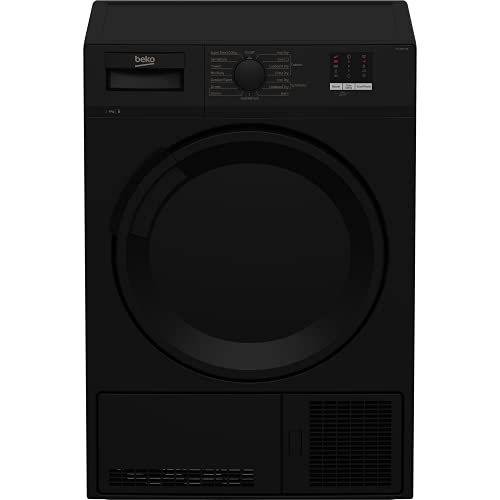
Beko DTLCE80051B
6.7/10

Overall score

Score
6.7/ 10
✕
What it is
Our main score for this model, 1–10. It combines specs and ratings from across the web.
How we count it
Parts: Technical score 75%, User score 25%
Marks: Each part gets a mark out of 10. For reviews, lists and owners, a typical model in this category gets about 8 and the best one gets 10.
No data yet: A part with no data shows "?". It counts as the mark of a weaker model in this category (4 in 5 models with data score higher). This way, models with reviews, lists and owners usually come out ahead.
Score distribution
â–¼
<55-66-77-88-99-10
Score components

75%

5.9

Technical score

25%

8.9

User score

â–¼Worse than 81% of tumble dryers
7.5

Value for money

Value for money
7.5/ 10
✕
What it is
An indicator that combines the dryer's overall rating with its cost.
When it matters
When you are looking for a dryer with a good balance between quality and price.
Score distribution
â–¼
<55-66-77-88-99-10
Score components

70%

6.7

Overall score

30%

9.5

Price

â–¼Worse than 57%
5.9

Technical score

Technical score
5.9/ 10
✕
What it is
How good the specs are compared with the other models in this category, 1–10.
How we count it
Areas: We rate the specs in each area against the other models in this category.
Weighting: The areas that matter most to buyers count more. The shares are shown under Score components.
Share: The technical score is 75% of the overall score.
Score distribution
â–¼
<55-66-77-88-99-10
Score components

35%

4.5

Performance

30%

5.0

Features

25%

8.8

Drying programs

10%

6.4

Design

â–¼Worse than 86%
8.9

User score

User score
8.9/ 10
✕
What it is
How happy buyers are with this model, based on ratings from across the web.
How we count it
Enough data: A model needs at least 1 rating from across the web. Without one, it counts as 8.1, the mark of a weaker rated model in this category.
Share: User score counts 25% of the overall score.
Score distribution
â–¼
<55-66-77-88-99-10

70%

9.1

Rating

30%

8.4

Popularity

â–²Better than 68%
  • beko-dtlce80051b
  • beko-dtlce80051b
  • beko-dtlce80051b
  • beko-dtlce80051b
  • beko-dtlce80051b
beko-dtlce80051b
beko-dtlce80051b
beko-dtlce80051b
beko-dtlce80051b
beko-dtlce80051b
Best prices
*As an Amazon Associate, we earn from qualifying purchases.
Best rankings
Available: ranking among products currently available (including other versions of this product).All: ranking among all products in the database.
Loading...
Loading category ranking...

Technical Specifications of tumble dryer Beko DTLCE80051B

Technical score
Technical score
5.9/ 10
✕
What it is
How good the specs are compared with the other models in this category, 1–10.
How we count it
Areas: We rate the specs in each area against the other models in this category.
Weighting: The areas that matter most to buyers count more. The shares are shown under Score components.
Share: The technical score is 75% of the overall score.
Score distribution
â–¼
<55-66-77-88-99-10
Score components:

35%

4.5

Performance

30%

5.0

Features

25%

8.8

Drying programs

10%

6.4

Design

5.9
Value for money
Value for money
7.5/ 10
✕
What it is
An indicator that combines the dryer's overall rating with its cost.
When it matters
When you are looking for a dryer with a good balance between quality and price.
Score distribution
â–¼
<55-66-77-88-99-10
Score components:

70%

6.7

Overall score

30%

9.5

Price

7.5
Drying technology
condenser
This tumble dryer uses a condenser drying system, which is less efficient than 74.6% of tumble dryers and equal to 15.3% of tumble dryers.
Capacity
8 kg
This tumble dryer holds 8 kg of laundry, which is more than 18.6% of tumble dryers and equal to 40% of tumble dryers.
Drum volume
?
Inverter motor
no
This tumble dryer does not have an inverter motor. 42.6% of tumble dryers have an inverter motor.
Energy efficiency class (old label)
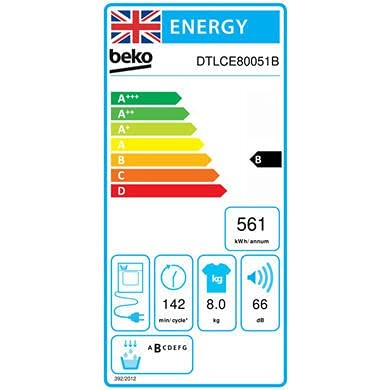
B
This tumble dryer has an energy efficiency class that is worse than that of 74.3% of tumble dryers and equal to that of 16.5% of tumble dryers.
Show more
N. of drying programs
15
This tumble dryer has 15 different drying programs which is more than the n. of programs of 57% of tumble dryers and equal to that of 34.7% of tumble dryers.
N. of downloadable programs
0
This tumble dryer has 0 downloadable programs which is fewer than the n. of downloadable programs of 24.6% of tumble dryers and equal to that of 75.4% of tumble dryers.
Temperature selection
yes
This tumble dryer offers temperature selection. 43.1% of tumble dryers offer temperature selection.
Selectable drying times
yes
This tumble dryer has adjustable drying times. 97.4% of tumble dryers have adjustable drying times.
Selectable drying level
yes
This tumble dryer allows drying level customization. 95.4%.
Show more
N. of advanced features
8
This tumble dryer has 8 features which is fewer than the n. of features of 64.1% of tumble dryers and equal to that of 13% of tumble dryers.
Laundry detection system
no
This tumble dryer lacks a laundry detection system. 43.8% of tumble dryers include this feature.
Humidity sensors
yes
This tumble dryer is equipped with humidity sensors. 90.8% of tumble dryers have humidity sensors.
Delayed start option
yes
This tumble dryer has a delayed start option. 92.8% of tumble dryers have this feature.
Maximum delayed start
9 h
The maximum delayed start of this tumble dryer is 9 h which is shorter than the maximum delayed start of 93.9% of tumble dryers and equal to that of 6.1% of tumble dryers.
Show more
Installation type
self-standing
This tumble dryer is self-standing, which is less suited to fitted kitchens than 0.7% of tumble dryers and equal to 99.3% of tumble dryers.
Loading type
front-loading
This tumble dryer is front-loading, which is equal to 100% of tumble dryers.
Display
no
This tumble dryer lacks a display. 94.4% of tumble dryers have a display.
Child lock
yes
This tumble dryer includes a child lock. 94% of tumble dryers have a child lock.
Antivibration design
yes
This tumble dryer has an antivibration design. 0.3% of tumble dryers offer this.
Show more

Beko DTLCE80051B vs the average tumble dryer

246810TotalPerformanceDrying programsFeaturesDesign
  • 1 more drying programs
    This tumble dryer offers more drying programs than the average tumble dryer (15 vs 14). The average dryer has 14 drying programs.
    15 vs 14
  • Includes a fast drying function
    This tumble dryer includes a rapid drying function, while the average tumble dryer does not. 22.8% of dryers have a rapid drying function.
  • Adjustable temperature
    This tumble dryer offers temperature selection, while the average tumble dryer does not. 43.1% of dryers provide temperature selection.
  • Hygiene program
    This tumble dryer has a Hygiene program, while the average tumble dryer does not. 39% of dryers have a Hygiene program.
  • Baby program
    This tumble dryer has a Baby program, which the average tumble dryer does not. 22.1% of dryers feature a Baby program.
  • 6.7% smaller volume
    This tumble dryer has a smaller volume than the average tumble dryer (286875.2 cm³ vs 307582.8 cm³). The average dryer has a volume of 307582.758 cm³.
    286,875.216 cm³ vs 307,582.758 cm³
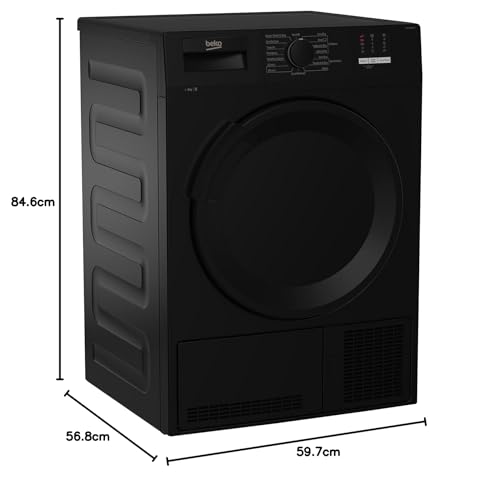
  • 6.7% smaller depth
    This tumble dryer has a smaller depth than the average tumble dryer (56.8 cm vs 60.9 cm). The average dryer has a depth of 60.9 cm.
    56.8 cm vs 60.9 cm
  • Jeans program
    This tumble dryer has a Jeans program, the average tumble dryer does not. 48.9% of dryers have this program.
  • 9.9% higher user score
    User score
    8.9/ 10
    ✕
    What it is
    How happy buyers are with this model, based on ratings from across the web.
    How we count it
    Enough data: A model needs at least 1 rating from across the web. Without one, it counts as 8.1, the mark of a weaker rated model in this category.
    Share: User score counts 25% of the overall score.
    Score distribution
    â–¼
    <55-66-77-88-99-10

    70%

    9.1

    Rating

    30%

    8.4

    Popularity

    8.9 vs 8.1
  • 54.8% cheaper
    Beko DTLCE80051B is cheaper than the average tumble dryer (£310 vs £480).
    £310 vs £480
  • 1 more drying programs
    This tumble dryer offers more drying programs than the average tumble dryer (15 vs 14). The average dryer has 14 drying programs.
    15 vs 14
  • Adjustable temperature
    This tumble dryer offers temperature selection, while the average tumble dryer does not. 43.1% of dryers provide temperature selection.
  • Includes a fast drying function
    This tumble dryer includes a rapid drying function, while the average tumble dryer does not. 22.8% of dryers have a rapid drying function.
  • Hygiene program
    This tumble dryer has a Hygiene program, while the average tumble dryer does not. 39% of dryers have a Hygiene program.
  • Baby program
    This tumble dryer has a Baby program, which the average tumble dryer does not. 22.1% of dryers feature a Baby program.
  • Jeans program
    This tumble dryer has a Jeans program, the average tumble dryer does not. 48.9% of dryers have this program.
  • 20 min shorter fast cycle duration
    This tumble dryer has a shorter fast cycle duration than the average tumble dryer (10 min vs 30 min). The average dryer’s fast cycle takes 30 min.
    10 min vs 30 min
  • 6.7% smaller volume
    This tumble dryer has a smaller volume than the average tumble dryer (286875.2 cm³ vs 307582.8 cm³). The average dryer has a volume of 307582.758 cm³.
    286,875.216 cm³ vs 307,582.758 cm³
  • 6.7% smaller depth
    This tumble dryer has a smaller depth than the average tumble dryer (56.8 cm vs 60.9 cm). The average dryer has a depth of 60.9 cm.
    56.8 cm vs 60.9 cm
  • 25.6% lighter
    This tumble dryer is lighter than the average tumble dryer (33.5 kg vs 45 kg). The average dryer weighs 45 kg.
    33.5 kg vs 45 kg
  • More convenient drainage
    This tumble dryer collects water more conveniently than the average tumble dryer (direct drain, water tank (top) vs water tank (door)).
    direct drain, water tank (top) vs water tank (door)
  • 0.4% lower height
    This tumble dryer has a lower height than the average tumble dryer (84.6 cm vs 84.9 cm). The average dryer has a height of 84.9 cm.
    84.6 cm vs 84.9 cm
  • 2.49x higher full-load energy use
    This tumble dryer uses more energy per full-load cycle than the average tumble dryer (4.8 kWh vs 1.91 kWh). The average tumble dryer uses 1.91 kWh.
    4.75 kWh vs 1.91 kWh
  • 2.34x higher part-load energy use
    This tumble dryer uses more energy per partial-load cycle than the average tumble dryer (2.5 kWh vs 1.08 kWh). The average tumble dryer uses 1.08 kWh at partial load.
    2.53 kWh vs 1.08 kWh
  • Less efficient drying system
    This tumble dryer uses a condenser drying system, which is less efficient than the average tumble dryer (condenser vs heat pump).
    condenser vs heat pump
  • Lacks bidirectional motion for even drying
    This tumble dryer does not ensure even drying with bidirectional drum motion, while the average tumble dryer does. 66.5% of dryers use this technology.
  • Does not have a special drum design
    This tumble dryer does not have a special drum design, while the average tumble dryer does. 59.2% of dryers feature a special drum design.
  • 1 fewer advanced features
    This tumble dryer has fewer features than the average tumble dryer (8 vs 9). The average dryer has 9 features.
    8 vs 9
  • Does not have an interior light
    This tumble dryer does not have an interior light, the average tumble dryer does. 50.6% of dryers have this feature.
  • Does not have a duvet program
    This tumble dryer does not have a Duvet program, the average tumble dryer does. 52.8% of dryers have this program.
  • 2.49x higher full-load energy use
    This tumble dryer uses more energy per full-load cycle than the average tumble dryer (4.8 kWh vs 1.91 kWh). The average tumble dryer uses 1.91 kWh.
    4.75 kWh vs 1.91 kWh
  • 2.34x higher part-load energy use
    This tumble dryer uses more energy per partial-load cycle than the average tumble dryer (2.5 kWh vs 1.08 kWh). The average tumble dryer uses 1.08 kWh at partial load.
    2.53 kWh vs 1.08 kWh
  • Less efficient drying system
    This tumble dryer uses a condenser drying system, which is less efficient than the average tumble dryer (condenser vs heat pump).
    condenser vs heat pump
  • Worse energy efficiency class
    This tumble dryer has a worse energy efficiency class than the average tumble dryer (B vs A+++). The average dryer has an energy efficiency class of A+++.
    B vs A+++
  • 1 dB louder
    This tumble dryer is louder than the average tumble dryer (66 dB vs 65 dB). The average tumble dryer runs at 65 dB.
    66 dB vs 65 dB
  • 2.39x higher yearly energy use
    This tumble dryer uses more energy a year than the average tumble dryer (561.1 kWh/year vs 235 kWh/year). The average tumble dryer uses 235 kWh/year.
    561.1 kWh/year vs 235 kWh/year
  • 2.39x higher annual energy cost
    This tumble dryer has a higher annual energy cost than the average tumble dryer (168.3 £/year vs 70.5 £/year). The average annual energy cost for dryers is 70.5 £/year.
    168.3 £/year vs 70.5 £/year
  • Lacks bidirectional motion for even drying
    This tumble dryer does not ensure even drying with bidirectional drum motion, while the average tumble dryer does. 66.5% of dryers use this technology.
  • Does not have a duvet program
    This tumble dryer does not have a Duvet program, the average tumble dryer does. 52.8% of dryers have this program.
  • 1 fewer advanced features
    This tumble dryer has fewer features than the average tumble dryer (8 vs 9). The average dryer has 9 features.
    8 vs 9
  • 15 h shorter maximum delayed start
    This tumble dryer allows for a shorter maximum delayed start than the average tumble dryer (9 h vs 24 h). The average dryer allows for 24 h hours of delayed start.
    9 h vs 24 h
  • Does not have a special drum design
    This tumble dryer does not have a special drum design, while the average tumble dryer does. 59.2% of dryers feature a special drum design.
  • Does not have an interior light
    This tumble dryer does not have an interior light, the average tumble dryer does. 50.6% of dryers have this feature.
  • Does not have a display
    This tumble dryer does not have a display, while the average tumble dryer does. 94.4% of dryers have a display.
  • No transparent door
    This tumble dryer does not have a transparent door, the average tumble dryer does. 88.3% of dryers have this feature.
  • 0.2% wider
    This tumble dryer is wider than the average tumble dryer (59.7 cm vs 59.6 cm). The average dryer has a width of 59.6 cm.
    59.7 cm vs 59.6 cm
  • Less flexible door hinge
    This tumble dryer has a less flexible hinge than the average tumble dryer (right vs reversible).
    right vs reversible

Third-party reviews

What we like about Beko DTLCE80051B

  • 15 drying programs cover wool, shirts, jeans and baby clothes.
  • The 8 kg drum takes a family load.
  • Humidity sensors stop drying when the load is ready.
  • A delayed start runs up to 9 h ahead.
  • At 33.5 kg and 56.8 cm deep, it fits a tight space more easily.
  • A child lock keeps small hands away from the controls.

What we don't like about Beko DTLCE80051B

  • It uses 4.75 kWh per full load and 561.1 kWh/year overall.
  • At 66 dB it is noticeable in a quiet room.
  • There is no transparent door, so you cannot watch the drum.
  • There is no interior light, so finding small items is harder.
  • The door cannot be reversed, which limits where it fits.

Verdict

The Beko DTLCE80051B suits a family that wants plenty of choice without fuss. Its 8 kg drum takes a full family load, and 15 programs cover wool, shirts, jeans and baby clothes. Humidity sensors stop the cycle once the load is dry, so clothes are not left over-dried. A fast function and a delayed start of up to 9 h add flexibility. The trade-off is running cost and noise. Each full load uses 4.75 kWh, and the yearly figure is 561.1 kWh. At 66 dB it is noticeable in a quiet room, so a utility room suits it best. The door cannot be reversed, and there is no interior light or transparent door. It fits a household that dries often and can live with more power use and some noise.

Compare Beko DTLCE80051B with other dryers

1Product to compare no. 1
VS
2Product to compare no. 2
VS
3Product to compare no. 3 (optional)

Graphic comparison of Beko DTLCE80051B and other dryers

No results found