Scored using Smartwatches Methodology v3.0
Smartwatches Methodology v3.0
Mathematical & Unbiased Scoring
Products in this category are scored under Frontum Smartwatches Methodology v3.0: the technical score from the specifications is the base, and independent expert and video reviews (up to ±0.5 points), owner opinions (up to ±0.3) and best-of lists (up to +0.3) move it up or down.
Explore Smartwatches Methodology v3.0

Metawatch M1 Core review: 127 specs compared

Avg. price:~£190Screen size:1.32 inchBattery life:7 daysDisplay type:LCD

Metawatch M1 Core Review: Compare 127 technical specifications and 2 expert reviews to see how this product ranks in the Smartwatches category and whether it is worth buying.
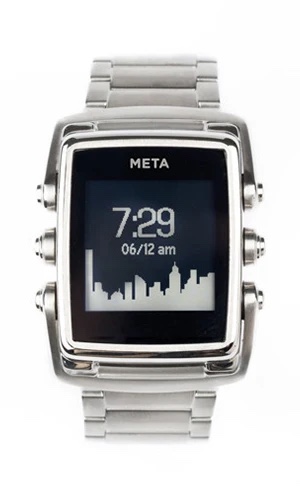
Metawatch M1 Core
4.9/10

Overall score

Score
4.9/ 10
✕
What it is
Our main score for this model, 1–10. It combines specs, best-of lists, expert reviews and owners.
How we count it
Parts: Technical score 35%, List score 30%, Reviews score 25%, Sentiment score 10%
Marks: Each part gets a mark out of 10. For reviews, lists and owners, a typical model in this category gets about 8 and the best one gets 10.
No data yet: A part with no data shows "?". It counts as the mark of a weaker model in this category (4 in 5 models with data score higher). This way, models with reviews, lists and owners usually come out ahead.
Score distribution
▼
<55-66-77-88-99-10
Score components

35%

3.3

Technical score

30%

?

List scoreNot enough data yet, so we use 7.5, the mark of a weaker model in this category

25%

3.3

Reviews score

10%

?

Sentiment scoreNot enough data yet, so we use 6.8, the mark of a weaker model in this category

▼Worse than 99% of smartwatches
6.3

Value for money

Value for money
6.3/ 10
✕
What it is
An indicator that combines the smartwatch's overall rating with its cost.
When it matters
When you are looking for a smartwatch with a good balance between quality and price.
Score distribution
▼
<55-66-77-88-99-10
Score components

70%

4.9

Overall score

30%

9.5

Price

▼Worse than 99%
3.3

Technical score

Technical score
3.3/ 10
✕
What it is
How good the specs are compared with the other models in this category, 1–10.
How we count it
Areas: We rate the specs in each area against the other models in this category.
Weighting: The areas that matter most to buyers count more. The shares are shown under Score components.
Share: The technical score is 35% of the overall score.
Score distribution
▼
<55-66-77-88-99-10
Score components

24%

1.8

Health

21%

3.2

Fitness

16%

5.2

Battery

14%

3.6

Smart features

12%

2.4

Connectivity

9%

5.8

Display & Design

4%

1.0

Hardware

▼Worse than 99%
3.3

Reviews score

Reviews score
3.3/ 10
✕
What it is
Average grade from independent test sites, magazines and video reviewers, 1–10.
How we count it
Grades: Each review's own score is converted to 1–10; without one, we grade the review ourselves. Every review counts the same: written or video, short or full test.
Score: The average grade is 80% of the review mark; the number of reviews is the other 20% (1 review = 5, the typical number in this category = 8, the most-reviewed model = 10).
Enough data: With few reviews, the average grade is pulled toward the typical grade of this category. No reviews yet: 7.4 for now.
Share: Reviews count 25% of the overall score.
Score distribution
▼
<55-66-77-88-99-10

3.3

Mark 7.1 is below the typical mark 7.9 of this category, so it cannot lift the score above the technical score

80%

7.5

Average grade

20%

5.7

Popularity

Grades by review (2)
2 reviews, average 6.0/10. We use 5 reviews; the 3 missing count as the category's typical 8.0: (6.0 × 2 + 8.0 × 3) ÷ 5 = 7.2. Reviews count 25% of the overall score.
User ratings collected online are not part of this score.
▼Worse than 99%
?

List score

List score
7.5/ 10
✕
What it is
How often independent test sites, magazines and video reviewers put this model in their best-of lists for this category.
How we count it
Points: The model in the most lists of this category gets 10; the others get 8 to 10 in proportion. In no list yet: 7.5. Lists count 30% of the overall score.
Enough data: Every list counts, even a single one. With fewer than 5 best-of lists in the category, this part is left out.
Lists with this model (0)
Not in any best-of list yet, so this part counts as 7.5. Models in a list get 8 to 10.
Not in any best-of list yet
  • metawatch-m1-core
metawatch-m1-core
Where to buy
    N/A~ £190
Best rankings
Available: ranking among products currently available (including other versions of this product).All: ranking among all products in the database.
Loading...
Loading category ranking...

Technical Specifications of smartwatch Metawatch M1 Core

Technical score
Technical score
3.3/ 10
✕
What it is
How good the specs are compared with the other models in this category, 1–10.
How we count it
Areas: We rate the specs in each area against the other models in this category.
Weighting: The areas that matter most to buyers count more. The shares are shown under Score components.
Share: The technical score is 35% of the overall score.
Score distribution
▼
<55-66-77-88-99-10
Score components:

24%

1.8

Health

21%

3.2

Fitness

16%

5.2

Battery

14%

3.6

Smart features

12%

2.4

Connectivity

9%

5.8

Display & Design

4%

1.0

Hardware

3.3
Reviews score
3.3
List score
?
Value for money
Value for money
6.3/ 10
✕
What it is
An indicator that combines the smartwatch's overall rating with its cost.
When it matters
When you are looking for a smartwatch with a good balance between quality and price.
Score distribution
▼
<55-66-77-88-99-10
Score components:

70%

4.9

Overall score

30%

9.5

Price

6.3
Heart rate monitor
no
This smartwatch does not include a heart rate monitor. 90.7% of smartwatches include a heart rate monitor.
Blood oxygen monitoring
no
This smartwatch does not support blood oxygen monitoring. 69.7% of smartwatches support blood oxygen monitoring.
ECG
no
This smartwatch does not support ECG. 18.2% of smartwatches support ECG.
Irregular heart rate warnings
no
This smartwatch does not support irregular heart rate warnings. 50.6% of smartwatches support irregular heart rate warnings.
HRV tracking
no
This smartwatch does not support HRV tracking. 45.2% of smartwatches support HRV tracking.
Show more
Accelerometer
yes
This smartwatch includes an accelerometer. 0.5% of smartwatches include an accelerometer.
Barometer
no
This smartwatch does not include a barometer. 53.6% of smartwatches include a barometer.
Gyroscope
no
This smartwatch does not include a gyroscope. 71.3% of smartwatches include a gyroscope.
Cadence sensor
no
This smartwatch does not include a cadence sensor. 32.9% of smartwatches include a cadence sensor.
Distance tracking
no
This smartwatch does not support distance tracking. 96.4% of smartwatches support distance tracking.
Show more
Battery life
7 days
This smartwatch lasts 7 days on a charge, which is longer than 36.1% of Smartwatches and the same as 15.9% of Smartwatches.
Battery life in training mode
?
Battery life with GPS on
N/A
Battery power
210 mAh
This smartwatch has a 210 mAh battery, which is smaller than 84.4% of Smartwatches and the same as 2.5% of Smartwatches.
Charge time
?
Show more
Operating system
Proprietary OS
This smartwatch runs Proprietary OS, which is less advanced than the system in 54.2% of Smartwatches and equal to 42% of Smartwatches.
Software update frequency
ended
This smartwatch has ended software update support which is less active than that of 46.1% of smartwatches and equal to that of 53.9% of smartwatches.
Third-party app support
no
This smartwatch does not support third-party apps. 51.6% of smartwatches support third-party apps.
Notifications
yes
This smartwatch supports notifications. 0.3% of smartwatches support notifications.
Voice assistant support
no
This smartwatch does not support voice assistants. 69.3% of smartwatches support voice assistants.
Show more
Cellular module
no
This smartwatch does not include a cellular module. 16.7% of smartwatches include a cellular module.
SIM cards
0
GPS
no
This smartwatch does not support GPS. 59.8% of smartwatches support GPS.
Galileo support
no
This smartwatch does not support Galileo navigation. 43.6% of smartwatches support Galileo navigation.
Dual-frequency GPS
no
This smartwatch does not support dual-frequency GPS. 15.1% of Smartwatches offer this.
Show more
Screen size
1.32 inch
This smartwatch has a 1.32 inch screen, which is smaller than 63.2% of Smartwatches and the same as 3.7% of Smartwatches.
Some sources mention multiple/uncertain size variants.
Display type
LCD
This smartwatch uses LCD, which is less advanced than the screen in 91.1% of Smartwatches and equal to 6.7% of Smartwatches.
Resolution
128x 128
This smartwatch has a display resolution of 128x128 which is lower than that of 96.4% of smartwatches and equal to that of 0.5% of smartwatches.
Pixel density
92 ppi
This smartwatch has a pixel density of 92 ppi, which is lower than 99.6% of Smartwatches.
Display brightness
?
Show more
CPU speed
?
Processor model
?
RAM
?
Internal storage
0 GB
This smartwatch has 0 GB of internal storage, which is less than 76.5% of Smartwatches and equal to 23.5% of Smartwatches.
No local user storage for apps/media
External memory slot
no
This smartwatch does not include an external memory slot. 0.3% of smartwatches include an external memory slot.
Show more

Metawatch M1 Core vs the average smartwatch

246810TotalHealthFitnessBatteryConnectivityDisplay & DesignSmart featuresHardware
  • 6.6 mm slimmer
    This smartwatch is slimmer than the average smartwatch (5.1 mm vs 11.7 mm). The average smartwatch is 11.7 mm thick.
    5.1 mm vs 11.7 mm
  • Better band material
    This smartwatch uses rubber, leather, stainless steel for the band material, while the average smartwatch uses silicone.
    Band material varies by version.
    rubber, leather, stainless steel vs silicone
  • Better case material
    This smartwatch uses stainless steel for the case material, while the average smartwatch uses polycarbonate.
    stainless steel vs polycarbonate
  • 6.9 mm shorter case
    This smartwatch has a shorter case than the average smartwatch (38.1 mm vs 45 mm). The average smartwatch is 45 mm tall.
    38.1 mm vs 45 mm
  • 52.9% lower review score
    Reviews score
    3.3/ 10
    ✕
    What it is
    Average grade from independent test sites, magazines and video reviewers, 1–10.
    How we count it
    Grades: Each review's own score is converted to 1–10; without one, we grade the review ourselves. Every review counts the same: written or video, short or full test.
    Score: The average grade is 80% of the review mark; the number of reviews is the other 20% (1 review = 5, the typical number in this category = 8, the most-reviewed model = 10).
    Enough data: With few reviews, the average grade is pulled toward the typical grade of this category. No reviews yet: 7.4 for now.
    Share: Reviews count 25% of the overall score.
    Score distribution
    ▼
    <55-66-77-88-99-10

    3.3

    Mark 7.1 is below the typical mark 7.9 of this category, so it cannot lift the score above the technical score

    80%

    7.5

    Average grade

    20%

    5.7

    Popularity

    Grades by review (2)
    2 reviews, average 6.0/10. We use 5 reviews; the 3 missing count as the category's typical 8.0: (6.0 × 2 + 8.0 × 3) ÷ 5 = 7.2. Reviews count 25% of the overall score.
    User ratings collected online are not part of this score.
    3.3 vs 7.0
  • No VO2 max measurement
    This smartwatch does not measure VO2 max, the average smartwatch does. 51.3% of smartwatches measure VO2 max.
  • No blood oxygen monitoring
    This smartwatch does not support blood oxygen monitoring, the average smartwatch does. 69.6% of smartwatches support blood oxygen monitoring.
  • No GPS support
    This smartwatch does not support GPS, the average smartwatch does. 59.7% of smartwatches support GPS.
  • No third-party apps
    This smartwatch does not support third-party apps, the average smartwatch does. 51.6% of smartwatches support third-party apps.
  • More basic display
    This smartwatch uses a more basic screen than the average smartwatch (LCD vs AMOLED).
    LCD vs AMOLED
  • No irregular heart rate alerts
    This smartwatch does not support irregular heart rate warnings, the average smartwatch does. 50.6% of smartwatches support irregular heart rate warnings.
  • No stress monitoring
    This smartwatch does not support stress monitoring, the average smartwatch does. 68.7% of smartwatches support stress monitoring.
  • 52.9% lower review score
    Reviews score
    3.3/ 10
    ✕
    What it is
    Average grade from independent test sites, magazines and video reviewers, 1–10.
    How we count it
    Grades: Each review's own score is converted to 1–10; without one, we grade the review ourselves. Every review counts the same: written or video, short or full test.
    Score: The average grade is 80% of the review mark; the number of reviews is the other 20% (1 review = 5, the typical number in this category = 8, the most-reviewed model = 10).
    Enough data: With few reviews, the average grade is pulled toward the typical grade of this category. No reviews yet: 7.4 for now.
    Share: Reviews count 25% of the overall score.
    Score distribution
    ▼
    <55-66-77-88-99-10

    3.3

    Mark 7.1 is below the typical mark 7.9 of this category, so it cannot lift the score above the technical score

    80%

    7.5

    Average grade

    20%

    5.7

    Popularity

    Grades by review (2)
    2 reviews, average 6.0/10. We use 5 reviews; the 3 missing count as the category's typical 8.0: (6.0 × 2 + 8.0 × 3) ÷ 5 = 7.2. Reviews count 25% of the overall score.
    User ratings collected online are not part of this score.
    3.3 vs 7.0
  • 23.2% worse value for money
    Metawatch M1 Core has a lower value-for-money score than the average smartwatch (6.3 vs 7.8).
    6.3 vs 7.76
  • 72.7% more expensive
    Metawatch M1 Core is more expensive than the average smartwatch (£190 vs £110).
    £190 vs £110
  • No VO2 max measurement
    This smartwatch does not measure VO2 max, the average smartwatch does. 51.3% of smartwatches measure VO2 max.
  • No blood oxygen monitoring
    This smartwatch does not support blood oxygen monitoring, the average smartwatch does. 69.6% of smartwatches support blood oxygen monitoring.
  • No irregular heart rate alerts
    This smartwatch does not support irregular heart rate warnings, the average smartwatch does. 50.6% of smartwatches support irregular heart rate warnings.
  • No stress monitoring
    This smartwatch does not support stress monitoring, the average smartwatch does. 68.7% of smartwatches support stress monitoring.
  • No heart rate monitor
    This smartwatch does not include a heart rate monitor, the average smartwatch does. 90.5% of smartwatches include a heart rate monitor.
  • No cycle tracking
    This smartwatch does not support menstrual cycle tracking, the average smartwatch does. 66.8% of smartwatches support menstrual cycle tracking.
  • No smart scale support
    This smartwatch does not support smart scale compatibility, the average smartwatch does. 57.1% of smartwatches support smart scale compatibility.
  • 7 years older
    This smartwatch was released earlier than the average smartwatch (2014 vs 2021). The average smartwatch was released in 2021.
    September 2014
    2014 vs 2021
  • No inactivity alerts
    This smartwatch does not support inactivity alerts, the average smartwatch does. 92.6% of smartwatches support inactivity alerts.
  • No multi-sport mode
    This smartwatch does not include a multi-sport mode, the average smartwatch does. 71.7% of smartwatches include a multi-sport mode.
  • No automatic activity detection
    This smartwatch does not support automatic activity detection, the average smartwatch does. 81.8% of smartwatches support automatic activity detection.
  • No barometer
    This smartwatch does not include a barometer, the average smartwatch does. 53.6% of smartwatches include a barometer.
  • No pace tracking
    This smartwatch does not support pace tracking, the average smartwatch does. 80.6% of smartwatches support pace tracking.
  • No distance tracking
    This smartwatch does not support distance tracking, the average smartwatch does. 96.3% of smartwatches support distance tracking.
  • No route tracking
    This smartwatch does not support route tracking, the average smartwatch does. 77% of smartwatches support route tracking.
  • No coaching features
    This smartwatch does not support coaching, the average smartwatch does. 58.8% of smartwatches support coaching.
  • No gyroscope
    This smartwatch does not include a gyroscope, the average smartwatch does. 71.2% of smartwatches include a gyroscope.
  • No auto-pause
    This smartwatch does not support auto pause, the average smartwatch does. 62.6% of smartwatches support auto pause.
  • No swim mode
    This smartwatch does not include a swim sport mode, the average smartwatch does. 76.9% of smartwatches include a swim sport mode.
  • No route support
    This smartwatch does not support route support, the average smartwatch does. 54.4% of smartwatches support route support.
  • No goal setting
    This smartwatch does not support goal setting, the average smartwatch does. 98.1% of smartwatches support goal setting.
  • No achievement tracking
    This smartwatch does not support achievements, the average smartwatch does. 87% of smartwatches support achievements.
  • No voice feedback
    This smartwatch does not support voice feedback, the average smartwatch does. 63.5% of smartwatches support voice feedback.
  • No exercise tagging
    This smartwatch does not support exercise tagging, the average smartwatch does. 94.2% of smartwatches support exercise tagging.
  • No low-power mode
    This smartwatch does not include a low power mode, the average smartwatch does. 93.1% of smartwatches include a low power mode.
  • Basic battery type
    This smartwatch uses a Li-ion battery, while the average smartwatch uses Li-Po.
    Li-ion vs Li-Po
  • 95 mAh smaller battery capacity
    This smartwatch has a smaller battery than the average smartwatch (210 mAh vs 305 mAh). The average smartwatch has a 305 mAh battery.
    210 mAh vs 305 mAh
  • No GPS support
    This smartwatch does not support GPS, the average smartwatch does. 59.7% of smartwatches support GPS.
  • No compass
    This smartwatch does not include a compass, the average smartwatch does. 56.7% of smartwatches include a compass.
  • Less current Bluetooth version
    This smartwatch uses a less current Bluetooth version than the average smartwatch (4 vs 5).
    4 vs 5
  • More basic display
    This smartwatch uses a more basic screen than the average smartwatch (LCD vs AMOLED).
    LCD vs AMOLED
  • 40 g heavier
    This smartwatch is heavier than the average smartwatch (85 g vs 45 g). The average smartwatch weighs 45 g.
    85 g vs 45 g
  • No ambient light sensor
    This smartwatch does not include an ambient light sensor, the average smartwatch does. 63.5% of smartwatches include an ambient light sensor.
  • 20 m shallower water rating
    This smartwatch is rated for shallower water than the average smartwatch (30 m vs 50 m). The average smartwatch is rated to 50 m.
    3 ATM class (ISO 22,810 shallow-water rating, not diving certification).
    30 m vs 50 m
  • Lower resolution
    This smartwatch has a display resolution of 128x128, while the average smartwatch reaches 360x360.
    128x128 vs 360x360
  • 234 ppi less sharp screen
    This smartwatch has a less sharp screen than the average smartwatch (92 ppi vs 326 ppi). The average smartwatch has a pixel density of 326 ppi.
    92 ppi vs 326 ppi
  • Less practical form
    This smartwatch uses a rectangular form, while the average smartwatch uses round.
    rectangular vs round
  • 0.08 inch smaller display
    This smartwatch has a smaller screen than the average smartwatch (1.3 inch vs 1.4 inch). The average smartwatch has a 1.4 inch screen.
    Some sources mention multiple/uncertain size variants.
    1.32 inch vs 1.4 inch
  • No touchscreen
    This smartwatch does not have a touch screen, the average smartwatch does. 91.5% of smartwatches have a touch screen.
  • 4 mm wider strap
    This smartwatch has a wider strap than the average smartwatch (26 mm vs 22 mm). The average smartwatch has a 22 mm strap.
    26 mm vs 22 mm
  • No third-party apps
    This smartwatch does not support third-party apps, the average smartwatch does. 51.6% of smartwatches support third-party apps.
  • No music playback
    This smartwatch does not support music playback, the average smartwatch does. 57.1% of smartwatches support music playback.
  • No voice assistant
    This smartwatch does not support voice assistants, the average smartwatch does. 69.2% of smartwatches support voice assistants.
  • No call answering
    This smartwatch does not support call answering, the average smartwatch does. 60% of smartwatches support call answering.
  • No voice command support
    This smartwatch does not support voice commands, the average smartwatch does. 68.1% of smartwatches support voice commands.
  • No passcode
    This smartwatch does not include passcode protection, the average smartwatch does. 70.4% of smartwatches include passcode protection.
  • No smart alarm
    This smartwatch does not support a smart alarm, the average smartwatch does. 50.6% of smartwatches support smart alarms.
  • No gesture control
    This smartwatch does not support gesture control, the average smartwatch does. 79.6% of smartwatches support gesture control.
  • No speaker
    This smartwatch does not include a built-in speaker, the average smartwatch does. 56.7% of smartwatches include a built-in speaker.
  • 1 fewer microphones
    This smartwatch has fewer microphones than the average smartwatch (0 vs 1). The average smartwatch has 1 microphones.
    0 vs 1

Expert reviews

In-depth analysis and verdict from leading tech publications
5.0
digitaltrends.com
✓ explicit
23/08/2019
Hands-on test · Steel watch
Verdict
The Metawatch M1 Core suits anyone who mainly wants notifications on a steel-cased watch that lasts about five days, but its blocky screen and few features hold it back.
6.9
cnet.com
✓ explicit
03/09/2014
Week-long test · Design-first smartwatch
Verdict
The Metawatch M1 Core is a stylish watch for anyone who wants to filter alerts and go days between charges, but fiddly buttons and no apps hold it back.

Third-party reviews

What customers like about Metawatch M1 Core

  • Premium, 'watch-like' aesthetic with high-quality metal and leather materials
  • Excellent outdoor visibility due to its highly reflective LCD screen
  • Advanced notification filtering that allows users to precisely control which alerts reach the wrist
  • Long battery life (typically 5–7 days) compared to modern color-screen smartwatches
  • Water-resistant build with a 3 ATM rating

What customers don't like about Metawatch M1 Core

  • No touchscreen; relies entirely on a six-button interface that many find confusing and non-intuitive
  • Very limited functionality with no third-party app support beyond pre-installed features
  • Weak backlighting that can make the screen difficult to read in dark environments
  • Bluetooth connectivity can be temperamental during initial pairing or with certain smartphone updates
  • Design of built-in watch faces is often described as 'crude' or unattractive compared to the physical hardware

Verdict

The Metawatch M1 Core is a luxury-designed smartwatch featuring a brushed stainless steel case, flexible metal armatures for a contoured wrist fit, and a 1.3-inch (128x128) always-on, high-contrast monochrome LCD. It offers 3 ATM water resistance and pairs with Android and iOS via Bluetooth 4.0 to provide filtered notifications, weather updates, and music controls, all managed through six physical side buttons. Main pros include its premium watch-like aesthetic, 5–7 day battery life, and excellent outdoor visibility due to its reflective screen. However, it lacks a touchscreen, has no third-party app ecosystem, and features a weak backlight that requires manual activation.

Compare Metawatch M1 Core with other Smartwatches

1Product to compare no. 1
VS
2Product to compare no. 2
VS
3Product to compare no. 3 (optional)

Graphic comparison of Metawatch M1 Core and other Smartwatches

No results found