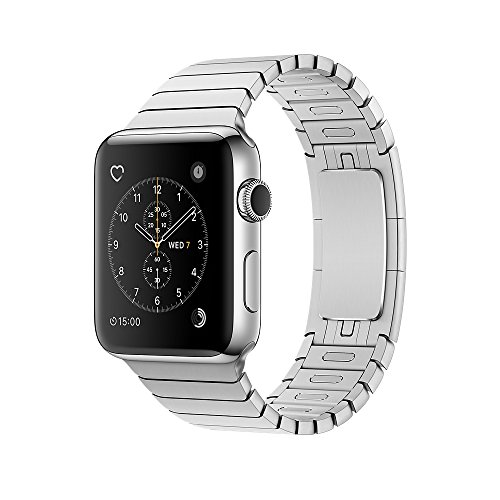
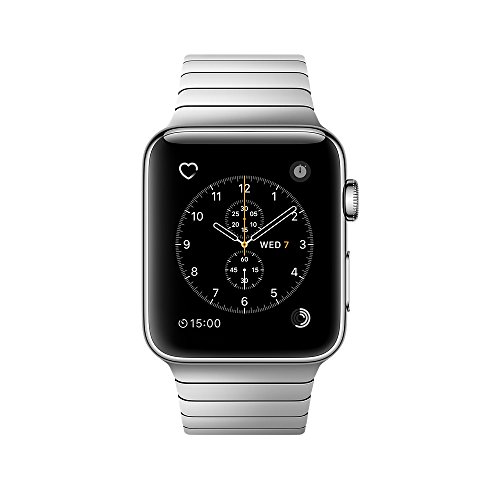
Apple Watch Series 2 review. Compare 126 technical specifications and user reviews to see how it ranks among smartwatches and if it is worth buying.
Overall score
What it is: An overall evaluation of the smartwatch's quality, based on technical analyses and user reviews.
When it matters: When you need a quick reference to identify the best Smartwatches on the market.
Score components:
90.0%
Technical Score
10.0%
User score
Technical Score
What it is: An assessment of the smartwatch's technical performance, covering eight key areas: performance & hardware, software, camera, connectivity, display, battery, audio, and design.
When it matters: When you want to compare Smartwatches based on technical performance and available features.
Score components:
24.0%
Health
21.0%
Fitness
16.0%
Battery
14.0%
Smart features
12.0%
Connectivity
9.0%
Display & Design
4.0%
Hardware
User score
What it is: A rating that combines user reviews and the total number of reviews received by the smartwatch
When it matters: When you want to know how a smartwatch handles daily tasks and how reliable it remains over time according to user feedback.
Score components:
70.0%
User reviews
30.0%
Popularity
Available: ranking among products currently available (including other versions of this product).
All: ranking among all products in the database.
#28 in Best Apple Smartwatches
#213 in Best Smartwatches With NFC
#215 in Best Swimming Smartwatches
#276 in Best GPS Smartwatches
#302 in Best Smartwatches For iPhone
#332 in Best Smartwatches
What it is: An assessment of the smartwatch's technical performance, covering eight key areas: performance & hardware, software, camera, connectivity, display, battery, audio, and design.
When it matters: When you want to compare Smartwatches based on technical performance and available features.
Score components:
24.0%
Health
21.0%
Fitness
16.0%
Battery
14.0%
Smart features
12.0%
Connectivity
9.0%
Display & Design
4.0%
Hardware
What it is: A rating that combines user reviews and the total number of reviews received by the smartwatch
When it matters: When you want to know how a smartwatch handles daily tasks and how reliable it remains over time according to user feedback.
Score components:
70.0%
User reviews
30.0%
Popularity
What it is: An indicator that combines the smartwatch's overall rating with its cost.
When it matters: When you are looking for a smartwatch with a good balance between quality and price.
Score components:
60.0%
Overall score
40.0%
Price
Importance: MEDIUM
Importance: HIGH
Importance: HIGH
Importance: HIGH
Importance: MEDIUM
Importance: MEDIUM
Importance: HIGH
Importance: MEDIUM
Importance: MEDIUM
Good value: yes
Importance: HIGH
Importance: HIGH
Importance: LOW
Importance: MEDIUM
Importance: MEDIUM
Importance: MEDIUM
Importance: LOW
Importance: LOW
Importance: LOW
Importance: LOW
Importance: LOW
Importance: MEDIUM
Importance: MEDIUM
Importance: MEDIUM
Importance: MEDIUM
Importance: MEDIUM
Importance: MEDIUM
Importance: MEDIUM
Importance: MEDIUM
Importance: MEDIUM
Importance: LOW
Importance: MEDIUM
Good value: >=8900 m
Importance: MEDIUM
Importance: MEDIUM
Importance: MEDIUM
Importance: LOW
Good value: >=100
Importance: MEDIUM
Importance: LOW
Importance: LOW
Importance: LOW
Importance: LOW
Importance: LOW
Importance: LOW
Importance: LOW
Importance: HIGH
Good value: >=7 days
Importance: HIGH
Good value: >=36.8 h
Importance: HIGH
Good value: >=35 h
Importance: HIGH
Good value: >=397 mAh
Importance: HIGH
Good value: <=102 min
Importance: MEDIUM
Importance: MEDIUM
Importance: LOW
Importance: LOW
Importance: LOW
Importance: HIGH
Importance: MEDIUM
Importance: MEDIUM
Importance: MEDIUM
Importance: MEDIUM
Importance: MEDIUM
Importance: LOW
Importance: LOW
Importance: MEDIUM
Importance: LOW
Importance: LOW
Importance: LOW
Importance: LOW
Importance: LOW
Importance: LOW
Importance: LOW
Importance: LOW
Importance: LOW
Importance: LOW
Importance: LOW
Importance: HIGH
Importance: HIGH
Importance: HIGH
Importance: HIGH
Importance: LOW
Good value: eSIM support
Importance: HIGH
Importance: MEDIUM
Importance: MEDIUM
Importance: MEDIUM
Importance: HIGH
Importance: LOW
Good value: yes
Importance: MEDIUM
Good value: >=5.1
Importance: MEDIUM
Importance: MEDIUM
Importance: MEDIUM
Importance: MEDIUM
Importance: MEDIUM
Importance: HIGH
Good value: >=1.5 inch
Importance: HIGH
Importance: MEDIUM
Good value: >=416 x 416
Importance: MEDIUM
Good value: >=326 ppi
Importance: HIGH
Good value: >=1000 nits
Importance: HIGH
Importance: LOW
Importance: LOW
Importance: MEDIUM
Good value: Sapphire or Gorilla Glass
Importance: HIGH
Good value: IP68 or better
Importance: HIGH
Good value: >=50 m
Importance: MEDIUM
Importance: HIGH
Good value: <=37 g
Importance: HIGH
Good value: <=10.9 mm
Importance: MEDIUM
Good value: <=12.6 mm
Importance: MEDIUM
Good value: <=39 mm
Importance: MEDIUM
Good value: 18-22 mm
Importance: MEDIUM
Good value: Aluminium, stainless steel, or titanium
Importance: MEDIUM
Importance: LOW
Importance: LOW
Importance: LOW
Importance: LOW
Importance: MEDIUM
Good value: >=45 °C
Importance: MEDIUM
Good value: <=-20 °C
Importance: MEDIUM
Good value: Modern standard
Importance: LOW
Good value: modern smartwatch chipset
Importance: MEDIUM
Good value: >=1 GB
Importance: MEDIUM
Good value: >=8 GB
Importance: LOW
Importance: LOW
Importance: LOW
Good value: >=5 MP
Importance: LOW
Importance: LOW
Good value: >=2
Importance: LOW
Importance: MEDIUM
Good value: 2023 or newer
Importance: HIGH
Importance: MEDIUM
Importance: HIGH
Importance: MEDIUM
Importance: HIGH
Importance: MEDIUM
Importance: MEDIUM
Importance: MEDIUM
Importance: HIGH
Importance: HIGH
Good value: IP68 or better
Importance: HIGH
Importance: HIGH
Importance: HIGH
Importance: HIGH
Good value: >=7 days
Importance: MEDIUM
Importance: HIGH
Good value: >=35 h
(Reviews last updated: April 2026)
The Apple Watch Series 2 maintains the same design as its predecessor, positioning it as an ideal entry-level device with improved performance driven by a faster S2 dual-core processor and a significantly brighter display. Key pros highlighted in The Irish Times review include built-in GPS for independent tracking and a new 50-meter waterproof rating that enables comprehensive swimming analysis. Key drawbacks identified include a battery life that still requires daily charging and a high, 'hefty' price point that reinforces its position as a premium, Apple-exclusive device. Ultimately, the review characterizes the Series 2 as an evolutionary upgrade, offering better performance and functionality, particularly in sports, rather than a radical redesign.
The Apple Watch Series 2 is a "watershed wearable" that serves as a high-end smartwatch and fitness tracker, featuring built-in GPS for phone-free tracking and a 50-meter waterproof design. It boasts a dual-core processor and a 1,000-nit display, which is twice as bright as the original model. While improving with a two-day battery life, the watch is slightly thicker and lacks an always-on display. Despite highly capable tracking, the device's high price point for premium versions is a drawback.
Hodinkee's review of the Apple Watch Series 2 highlights it as a functional,, and more capable successor to the original, featuring a faster S2 processor and a screen that is twice as bright at 1,000 nits. Key enhancements include built-in GPS and 50-meter water resistance, transforming the device into a robust, phone-free fitness tool. Despite these upgrades, the review notes the Series 2 is slightly thicker and heavier to accommodate a larger battery and new hardware. While battery capacity increased by 35%, the actual battery life remains around 18 hours due to the power demands of the brighter screen and GPS, and the lack of an always-on display is noted as a drawback. The review positions the Series 2 as a 'natural partner' in daily life, with the, watchOS 3, software, refinements addressing, earlier, performance, issues. It concludes that the device, particularly the, new ceramic 'Edition' model, offers a refined, 'approachably premium' experience that bridges the gap between, technology, and, luxury.
T3 characterizes the Apple Watch Series 2 as a robust, "made-for-sports" upgrade that addresses original model deficiencies by introducing built-in GPS and 50-meter water resistance. Key performance upgrades include a significantly faster "S2" dual-core processor and a 1,000-nit display that offers superior, twice-as-bright outdoor visibility. The, design allows for precise phone-free workout tracking, though it is slightly thicker and heavier to accommodate the new components. Despite these improvements, the device still faces battery limitations, providing 1.5 to 2 days of real-world usage and roughly 5 hours of intensive GPS operation. While the water-ejection feature via the Digital Crown is a highlight, the on-wrist heart rate monitor remains less reliable than dedicated, non-Apple alternatives. For those who do not require intensive swim or run tracking, the more affordable Series 1 might still be a better investment. Ultimately, T3 declares the Series 2 to be the capable, health-focused device the initial model should have been. It is recommended for active users, yet casual users might find the features unnecessary.
The Apple Watch Series 2 is defined by a shift toward fitness, featuring built-in GPS, 50-meter water resistance, and a 1,000-nit display for improved outdoor visibility. The upgraded S2 dual-core processor delivers a faster, more responsive user experience compared to the original model. While the physical design remains similar, the device is now a more capable multi-sport tracker. Expert ReviewsKey drawbacks include, at best, a two-day battery life that is significantly impacted by GPS usage, alongside a higher starting price in the UK. Additionally, the device lacks an altimeter for elevation tracking and native sleep tracking functionality. The review concludes that while it is a stronger fitness tool, these compromises prevent it from being a perfect device.
The Apple Watch Series 2 is a significant refinement over the original, featuring built-in GPS for accurate tracking, 50-meter water resistance, and a 1,000-nit display for improved visibility. Notable cons include limited battery life, which often necessitates daily charging, and potential inaccuracies in the heart rate monitor during intense workouts. Despite these drawbacks, features like watchOS 3’s "dock" for apps and the "wet mode" for swimming make it a strong, albeit luxury, choice for fitness enthusiasts.
The PCMag review characterizes the Apple Watch Series 2 as a top-tier hybrid of a smartwatch and fitness tracker, highlighted by the addition of built-in GPS for accurate, phone-free tracking and a waterproof design suitable for swimming up to 164 feet. Performance is driven by a faster dual-core S2 processor and a high-brightness 1,000-nit display, running on the improved watchOS 3. While praised for these features, the device is criticized for its 18-hour battery life—which drops significantly during GPS use—the lack of native sleep tracking, and a high price point.
The Apple Watch Series 2 review by Mashable highlights a major strategic shift toward utility and fitness, introducing a powerful S2 dual-core processor that significantly reduces lag and a 1,000-nit display that is nearly twice as bright as the original. The device features a unique speaker system designed to eject water, supporting its new 50-metre water-resistance rating for swimmers. On the fitness front, the inclusion of built-in GPS makes it a legitimate tool for runners, while watchOS 3 provides a more streamlined experience with a practical app dock and easier watch face swiping. Despite improvements, the review notes drawbacks, including a nearly identical design to the original and a battery life that still only lasts about a day. While lacking a 'wow' factor, the Series 2 is described as the most capable and usable smartwatch available at the time.
The CNET review describes the Apple Watch Series 2 as a "made-for-sports" upgrade featuring a faster S2 processor, built-in GPS for phone-free tracking, 50-meter water resistance for swimming, and a display twice as bright as the original. Despite these performance improvements, the design remains nearly identical to the first model, though slightly thicker and heavier, with battery life still facing limitations during intensive GPS use. Ultimately, while recommended for athletes and users in the Apple ecosystem, the review suggests casual users might prefer the more affordable Series 1 for similar performance without the enhanced fitness features.
The Verge review characterizes the Apple Watch Series 2 as a refined, fitness-focused successor to the original, featuring built-in GPS and 50-meter water resistance. Upgrades like a 1,000-nit display and a faster S2 processor address previous hardware gaps, making it a more capable, independent sports watch. While the design remains similar to the first generation, it is slightly thicker and still requires daily charging, limiting its, and the lack of a "killer app" keeps it as a niche accessory rather than essential tech. The Verge
The Apple Watch Series 2 is described as a significant refinement over its predecessor, focusing heavily on fitness and performance, with a dual-core S2 processor and a display that is twice as bright at 1,000 nits. Major new features include built-in GPS and a 50-metre water-resistance rating, transforming the device into a standalone fitness tracker with a 'water eject' feature for swimmers, all while extending battery life to roughly two days. Pros include the beautiful screen and fast performance, though the review notes cons such as slow third-party apps, lack of native sleep tracking, and a high price point.
The Apple Watch Series 2 is characterized as a significant, sport-focused upgrade featuring built-in GPS for phone-free tracking and 5ATM water resistance for swimming, all powered by a faster dual-core processor and a 1,000-nit display. Pros include accurate, fast GPS performance, dedicated swim tracking with a water-ejection feature, and a much more polished user experience driven by watchOS 3. Cons, however, include a two-day battery limit, an unchanged design, and the lack of an always-on display or altimeter.
The Wired review declares the Apple Watch Series 2 a "legitimate fitness tracker" overhaul, marked by the addition of built-in GPS and 50-meter water resistance. Pros highlighted include a dual-core processor, a screen twice as bright (1,000 nits) as the original, and a speaker that ejects water after swimming. WIREDHowever, the device is thicker and heavier, and it still requires daily charging, with GPS usage causing significant battery drain. Other cons include unreliable "raise to wake" functionality, a lack of an altimeter for elevation tracking, and persistent limitations in third-party app support. WIREDUltimately, the Series 2 is described as a formidable, yet not perfect, wearable that justifies the upgrade for fitness-focused users over the original model. WIRED
The Apple Watch Series 2 is positioned as a "complete package," significantly improved by a faster dual-core processor, watchOS 3, built-in GPS, and 50-meter water resistance. Key pros include the brighter display, fitness tracking independence from the iPhone, and a durable, comfortable design, though the high entry price and limited battery life under heavy use remain notable cons. The review highlights the device as a major evolution for Apple, turning the wearable into a serious, independent fitness tool.
The Apple Watch Series 2 is described by PCMag as a successful hybrid of a smartwatch and fitness tracker, significantly improving upon its predecessor with built-in GPS and a waterproof design rated for depths up to 164 feet. These upgrades, along with a faster dual-core S2 processor and a much brighter 1,000-nit display, allow for improved performance and readability in direct sunlight. Pros include highly accurate fitness tracking, a vast app ecosystem, and the intuitive watchOS 3, featuring a quick-access 'Dock'. The design remains stylish, offering aluminum, stainless steel, and ceramic options, while a unique speaker mechanism uses sound to eject water after swims. Cons focus on a high starting price of $369 and limited 18-hour battery life, which drops to five hours with active GPS, making it less suitable for long-distance athletes than dedicated trackers. Furthermore, the device lacks built-in sleep tracking and continuous heart rate monitoring outside of workouts, rendering it an expensive luxury for iOS users.
In his September 2016 review for 9to5Mac, Zac Hall describes the Apple Watch Series 2 as a significant improvement over the original, primarily driven by the addition of built-in GPS for independent tracking, 50-meter water resistance, and a 1,000-nit display that is twice as bright. The device features a faster dual-core S2 chip that, combined with watchOS 3, dramatically improves responsiveness compared to the underpowered first-generation model. Despite these upgrades, the review notes that the device is slightly thicker to accommodate a larger battery and that, while improved, app loading times still do not feel instantaneous. A notable limitation is that battery life during active GPS tracking lasts only about 5 hours, and some UI elements still feel unpolished. Ultimately, the review recommends the Series 2 for users seeking a refined fitness tracker, particularly for swimming and running, while noting the Series 1 remains a value option for those not requiring GPS or waterproofing. The enhanced display and performance make it a worthy upgrade for those disappointed by the original watch's speed.
A key pro of this model is its robust fitness tracking capabilities, enhanced by the new hardware that caters to a wider range of athletes. The review highlights that the device maintains Apple's high standards for build quality and software integration, avoiding any major technical flaws during testing. Its independence from the iPhone for location tracking and its ability to withstand significant water depth are noted as the most substantial upgrades over the original model, providing more versatility for active users. On the downside, the Series 2 is described more as an 'evolution rather than a revolution,' suggesting that the core user experience remains very similar to the predecessor for those who do not require GPS or waterproofing. While it performs well, the review implies that it doesn't represent a radical departure in smartwatch technology. Furthermore, price remains a factor, as historical data within the report mentions high retail costs, though promotions have occasionally made it more accessible.
The review from Games.ch highlights the Apple Watch as a high-quality, versatile wearable that excels in its seamless integration within the Apple ecosystem and its premium build. Pros mentioned include its sleek and durable design, particularly the scratch-resistant Ion-X glass and aluminium frame, and a vibrant display that remains readable even at sharp angles. The software, watchOS, is praised for its fluid performance and the 'Liquid Glass' aesthetic that makes interactions feel more natural and responsive. The review identifies battery life as a critical area of improvement, noting that while the latest models finally promise a full 24 hours of power and feature significantly faster charging, it remains a daily requirement for most. Other cons include the high purchase price compared to competitors like the Watch SE and the lack of support for third-party watch faces, which restricts customisation. Ultimately, the review concludes that while it is an incremental upgrade over previous generations, it remains the top smartwatch choice for iPhone users.
The Apple Watch Series 2 (42mm) features a dual-core S2 processor and integrated GPS, enhancing responsiveness and enabling precise tracking without a paired phone, while a 50-meter water-resistant design with a 'wet mode' adds swimming functionality. The 1,000-nit OLED display is twice as bright as the original model, significantly improving outdoor visibility. Hardware updates, including the brighter display and GPS, require a slightly thicker chassis, but the 42mm size includes a larger battery to support these features. Despite efficiency improvements, the device still requires daily charging, particularly when using the battery-intensive GPS, limiting its endurance. Pros include faster, more fluid performance, a brighter screen, and robust, specialized fitness features for swimmers and runners. Cons focus on the lack of an always-on display, a daily charging requirement, and a high price point compared to competitors.
The Apple Watch Series 2 review on ComputerBase highlights a significant shift toward fitness and durability, featuring a standalone GPS module, improved 5 ATM water resistance with a speaker-based water ejection system, and a faster S2 dual-core processor. Focusing on the stainless steel variant, the review emphasizes its premium, durable build with a scratch-resistant sapphire crystal display, though it notes increased weight and a substantially higher price compared to the aluminum model. Key pros include a bright 1,000-nit display and reliable swim tracking, while cons focus on lackluster battery life requiring daily charging, a thicker chassis, and the absence of an always-on display.
Computer Bild's review highlights the Apple Watch Series 2 as a significant upgrade with a faster dual-core S2 processor, a much brighter 1,000-nit display, and built-in GPS for phone-free tracking. The device is now truly swim-proof with 50-meter water resistance and features a specialized speaker to eject water. On the fitness front, the Series 2 functions as a serious companion with precise GPS and detailed swimming metrics. A notable con is that the battery life remains at only 18 hours, requiring daily charging, which is accelerated by heavy GPS use. While the casing is slightly thicker, the review notes the Series 2 is ideal for Apple users, though the high price and lack of an 'always-on' display are drawbacks. For those not requiring swimming or GPS features, the more affordable Series 1 is suggested as a viable alternative.
The Stern review highlights the Apple Watch Series 2 as a significant hardware leap, transforming the device into a serious sports tool with integrated GPS, a display that is twice as bright (1000 nits), and 50-metre water resistance that enables reliable swim tracking. The new dual-core S2 processor and watchOS 3 drastically improve performance, while a 'clever trick' with the speaker physically ejects water, a feature praised in the analysis. However, the review notes several cons, specifically that the device remains expensive and slightly thicker to accommodate the larger battery and GPS. While battery life is generally stable, it still requires daily charging and drains quickly during GPS-heavy activities, with warnings against using it for high-speed water sports or in saunas. Overall, the Apple Watch Series 2 is presented as a mature product that successfully addresses the fitness shortcomings of the original, offering a refined, faster experience, though it requires a significant financial investment.
The Spiegel Online review characterizes the Apple Watch Series 2 as an incremental upgrade focusing on hardware improvements like integrated GPS and a brighter 1,000-nit display for better sunlight legibility. It is now officially waterproof up to 50 meters, featuring a speaker that vibrates to eject water. Performance is enhanced by a new dual-core processor and watchOS 3, making the interface faster, while the 'Dock' feature improves app navigation. However, a significant drawback is that many performance improvements are available to older models via software updates, lessening the need for a hardware upgrade. While ideal for active users, the Series 2 is considered a luxury item, and its higher price point (starting at €419) makes it less appealing compared to the updated Series 1, which shares the same fast processor. The review notes that the limited, daily battery life persists as a drawback.
In his review of the Apple Watch Series 2, Lars Bobach highlights significant performance improvements over the original model, noting that while it isn't perfectly fluid, it responds at an acceptable speed thanks to watchOS 3. A standout feature for him is the integrated GPS sensor, which transformed the device into a genuine sports watch and allowed him to ditch his cumbersome Garmin devices for activities like cycling and walking. Additionally, he praises the deep integration with the iPhone and the surprising battery life, which reliably lasts two full days with normal use. Bobach also finds value in specific software features, such as the activity rings that serve as a constant motivator to stay active and the Evernote app, which he describes as excellent on the watch. He appreciates the functionality of Siri for voice input and even finds niche tools like the built-in tea timer highly practical for his daily routine. These elements, combined with the haptic feedback and a screen that remains clear and fingerprint-free, contribute to a refined user experience that feels classy regardless of the user's...
The Mac4Ever review highlights the Apple Watch Series 2 as a significant evolution, focusing on its newfound independence through built-in GPS, 50-meter water resistance, and a much brighter 1,000-nit display. Key pros include a faster S2 dual-core chip and a more durable ceramic back, although the device still faces battery life limitations. The Series 1 is presented as a 'boosted' version of the original, featuring the same fast processor as the Series 2 but lacking its advanced GPS, high-brightness screen, and robust water resistance. It is identified as a budget-friendly option focused on daily performance without the premium hardware additions. The Edition model shifts to a durable, white ceramic finish, while all models benefit from watchOS 3 speed improvements. Mac4Ever recommends the Series 2 for active users needing swim-proofing, while the Series 1 is positioned as the better value for basic, everyday functionality.
The Apple Watch Series 2 is presented as a mature, fitness-oriented upgrade featuring a built-in GPS for accurate activity tracking without an iPhone and a 1,000-nit display for superior outdoor visibility. Key performance improvements include a faster S2 dual-core processor that makes the interface significantly more fluid. The device is praised for its 50-meter water resistance, including a clever speaker system to eject water and specialized swimming workout modes. Conversely, the design remains identical to the original model, and despite a larger battery, daily battery life remains limited to roughly a day and a half. While positioning the Series 2 as an ideal choice for athletes, the review notes that third-party apps often fall short of native performance. It concludes that the device succeeds by narrowing its focus to health, making it a better choice than the lower-priced Series 1 for active users.
The Apple Watch Series 2 is described by Numerama as a 'reconciliation' with smartwatches, primarily due to a significant leap in fluidity and responsiveness, attributed to the S2 dual-core processor and watchOS 3. Pros include a significantly more intuitive interface that mirrors the iPhone experience with menus and multitasking, while the new 1,000-nit display provides excellent visibility even in direct sunlight. Despite these advancements, the review points out several cons, such as the device being slightly thicker and heavier than its predecessor to accommodate the larger battery and GPS hardware. The high entry price remains a barrier, and while performance is 'zippy,' some third-party apps still suffer from slower loading times compared to native ones. Ultimately, the Series 2 is framed as the device the original Apple Watch should have been, though it remains a luxury companion rather than an essential tool for non-athletes.
Les Numériques identifies the Apple Watch Series 2 as a significant evolution, highlighting its transition into a capable sports tracker with built-in GPS and 5ATM water resistance. The review praises the device's enhanced performance via the dual-core S2 processor, along with an innovative water-ejection system for the speaker. The display is lauded for reaching a peak brightness of 1,000 nits, which ensures excellent legibility in direct sunlight. Performance and usability are further boosted by the watchOS 3 interface, while a second microphone improves call quality and Siri responsiveness. Despite these improvements, the review notes drawbacks, including a limited 18-24 hour battery life and a slightly thicker design. Furthermore, the lack of native sleep tracking and a high price point, combined with the absence of an always-on display, are highlighted as significant cons.
The Apple Watch Series 2 is highlighted as a significant upgrade for runners due to its built-in GPS and 50-metre water resistance, allowing athletes to leave their iPhones behind while capturing accurate pace and data, alongside a brighter display. Despite improved hardware, the review identifies limitations, specifically the 'closed' nature of the Activity app, which lacks the advanced, in-depth analysis found in dedicated, professional, sport-specific watches. The watch is praised for its lightweight, comfortable design, though the absence of an 'Always-On' display is noted as a drawback, positioning the Series 2 as an excellent device for recreational, rather than elite, runners.
Radio-Canada’s review highlights that the Apple Watch Series 2 significantly caters to athletes, particularly runners and swimmers, by introducing essential hardware upgrades, including a built-in GPS for tracking without an iPhone and 50-metre water resistance. Performance receives a notable boost through the new S2 dual-core processor, which makes the interface more fluid, complemented by a second-generation display that is twice as bright at 1,000 nits for excellent visibility in direct sunlight.
The Apple Watch Series 2 is presented as a significant evolution, transitioning from a notification hub to a powerful sports companion with built-in GPS and 50-meter water resistance. It features a faster dual-core processor and a significantly brighter, 1,000-nit OLED display for improved outdoor visibility. Pros include faster app performance with the S2 chip, useful haptic feedback, and a dedicated swim mode, while notable cons are the daily, 18-24 hour battery life and a slightly thicker, heavier design. The watch effectively bridges the gap between a high-end wearable and a dedicated fitness tracker. Recommended for active users, the Series 2 addresses initial, first-generation, shortfalls, though its high price point and continued dependence on an iPhone for connectivity are considered drawbacks. It is lauded for its improved durability and specialized functionality, such as enhanced,,, swimming, tracking.
The Applesfera analysis describes the Apple Watch Series 2 as a specialized health and fitness device, representing a significant internal upgrade despite an almost identical design to the original. Key pros include built-in GPS for phone-free tracking, a 50-meter water resistance rating, and a brighter 1,000-nit display. Furthermore, the S2 dual-core processor paired with watchOS 3 provides a fast, responsive user experience. However, the analysis notes several cons, primarily that the device is slightly thicker and heavier to accommodate the new hardware components. While daily performance is improved, the battery life remains limited, particularly when using GPS for extended periods. The reviewer also suggests that for users not requiring GPS or waterproofing, the Series 1 offers better value due to its similar processing speed.
The Apple Watch Series 2 is presented as a significant evolution, shifting toward a specialized fitness device by incorporating built-in GPS for accurate route tracking and waterproofing up to 50 meters for swimmers. The S2 dual-core processor delivers improved performance, while a brighter, 1,000-nit display ensures better visibility in sunlight, addressing key, earlier complaints. Running on watchOS 3, the device offers a more intuitive interface, including a Dock for faster app access and a 'Scribble' feature for texting. While the functionality is bolstered, the design remains nearly identical to the original, allowing for continuity in accessories. Key drawbacks identified include a 18-hour battery life, necessitating daily charging and limiting sleep tracking capabilities, alongside a lack of an always-on display. Despite being deemed the best choice for iPhone users, the high price point means those not requiring specific fitness tracking might find better value in the Apple Watch Series 1.
The Applesfera review highlights the transition to the Apple Watch Series 2 as a refinement, focusing on significant internal upgrades like a faster processor and built-in GPS that allow for phone-free workouts. Key advantages include the 50-meter water resistance, a functional water-ejecting speaker, and a display that is twice as bright for better outdoor visibility. Despite these improvements, the review notes the device remains thicker, heavier, and shares the same limited battery life as the original, making it a better value for active users rather than casual ones. For more details, visit Applesfera.
The Apple Watch Series 2 is presented as a significant, sport-oriented upgrade featuring a dual-core S2 chip for faster performance and a 1,000-nit, highly readable display. Key enhancements include integrated GPS for mapping runs without a phone and 50-meter water resistance, allowing for dedicated, accurate swimming tracking. Major pros include the bright screen, reliable swim tracking with specialized algorithms, and improved, faster performance. Cons highlighted in the analysis include the continued absence of an altimeter, a relatively high price point, and limited battery life when using GPS, which cuts active tracking to around 5.5 hours. The review concludes that the Series 2 is a worthwhile investment for fitness-focused users who want independent, accurate tracking and a mature app ecosystem. While the design remains largely unchanged, the internal upgrades, particularly GPS and water resistance, mark a clear evolution from the first-generation model.
The Tom's Hardware review of the Apple Watch Series 2 highlights its evolution into a dedicated sports tool, particularly for swimmers, with 50-metre water resistance and a 'Pool Swim' mode that accurately tracks laps, strokes, and pace. Key pros include the 1,000-nit display for outdoor readability, the faster S2 chip, and built-in GPS for independent route tracking. The review notes significant performance improvements, with the dual-core chip and brighter screen addressing key limitations of the original model. Battery charging is faster, reaching 80% in about 90 minutes, which helps mitigate the need for daily charging. Cons identified include the unchanged, roughly one-day battery life, which drains rapidly with GPS use, and a slightly thicker, heavier design. Additionally, the lack of an 'always-on' display and a focus on fitness features make it less appealing to non-active users compared to the Series 1.
The Apple Watch Series 2 is presented as a dedicated sports tool, featuring a faster dual-core S2 processor, an ultra-bright 1,000-nit display, and integrated GPS for phone-free activity tracking. Improvements over the original model include enhanced performance and better outdoor visibility. Cons identified in the review include limited battery life, which necessitates daily charging, a lack of an always-on display, and a slightly heavier chassis, leading the review to suggest the Series 1 for users not focused on specialized fitness tracking.
The iPhoneItalia review highlights the Apple Watch Series 2 as a focused fitness tool featuring a 1,000-nit display and a faster S2 dual-core processor. Paired with watchOS 3, the device offers a significantly more responsive user experience compared to the original, according to the review. Key pros include built-in GPS for independent tracking, 50-meter water resistance with a speaker-based 'Water Lock' feature, and improved performance that makes app usage smoother. The design is enhanced by a standard ceramic back, contributing to a more premium, durable build. On the downside, the watch is slightly thicker and heavier to accommodate a larger battery, which still necessitates daily or near-daily charging. Despite the improvements, it remains a costly, iPhone-dependent accessory with limited, specialized appeal for non-athletes, the review notes.
The Apple Watch Series 2 is presented as a significant evolution, focusing on fitness with a built-in GPS for tracking without an iPhone and water resistance up to 50 meters for swimmers. The S2 dual-core processor delivers a noticeably snappier interface, complemented by a new display boasting 1,000 nits of brightness for improved visibility. Key pros highlighted in the review include the 'swim-proof' design featuring an innovative speaker system to eject water, and the combination of faster hardware with watchOS 3 for a smoother user experience. Additionally, the device retains a premium, versatile aesthetic with new material options. Primary cons involve limited battery life, which often requires daily charging, particularly when using GPS, alongside the lack of an always-on display. The device remains deeply integrated into the Apple ecosystem, and the review suggests the Series 1 as a more budget-friendly alternative for users not requiring GPS or advanced waterproofing.
The Apple Watch Series 2 is presented as a fitness-focused evolution of the original, featuring a brighter 1,000-nit display, built-in GPS for independent activity tracking, and 50-meter water resistance. The S2 dual-core processor significantly improves performance, while watchOS 3 introduces a more responsive interface and a dedicated 'Dock' for apps. Key advantages include enhanced outdoor capabilities, such as accurate tracking for running and swimming, along with a premium build and a speaker system designed to eject water. The design remains largely similar to the first generation, although the chassis is slightly thicker to accommodate the new components. Cons primarily revolve around the continuing one-day battery life and the high price point for higher-end models. While a notable upgrade, the reviewer concludes that the Series 2 is best suited for active users and runners rather than casual users.
Andrea Galeazzi's review of the Apple Watch Series 2 highlights its premium design, featuring various finishes and a highly bright OLED display, though it lacks an Always-On feature. Key upgrades include built-in GPS and 50-meter water resistance, making it ideal for fitness, alongside a slightly faster dual-core processor. While praised for its, performance, battery life remains limited, often requiring daily charging, and the device is positioned as a sophisticated, yet secondary, accessory.
The Apple Watch Series 2 is characterized as a significant improvement over its predecessor, functioning as a capable standalone fitness tool due to its dual-core S2 processor, brighter display (1,000 nits), and added GPS [1.1]. Key features enabling this transition include a 50-meter water resistance rating and a 'water lock' mechanism that ejects water via the speaker [1.1]. Positive aspects highlighted include the refined watchOS 3 interface, featuring a more intuitive Dock and enhanced haptic feedback, along with premium casing options like stainless steel and ceramic [1.1]. The built-in GPS allows for precise outdoor activity tracking without needing an iPhone [1.1]. Cons identified in the review focus on the battery life, which, despite the upgrades, remains between 18 and 48 hours, with GPS use causing significant drain [1.1]. Additionally, the device lacks an always-on display, is slightly thicker and heavier, and still requires an iPhone for full functionality [1.1].
The Apple Watch Series 2 is presented as a substantial internal overhaul, featuring a faster dual-core S2 processor and a display that is twice as bright (1,000 nits) for better outdoor visibility, transforming it into a more capable fitness device. The transition to watchOS 3 significantly improves app responsiveness, addressing performance bottlenecks found in the original model. Key pros include the addition of a built-in GPS for independent workout tracking, full water resistance up to 50 meters with a clever speaker-ejection system, and a more efficient design that maintains 1.5 to 2 days of battery life despite new, power-intensive features. Cons noted in the review include the high price point, increased thickness and weight, and the lack of an always-on display compared to competitors. The device still requires an iPhone for functionality and does not offer true multi-day battery life.
The Apple Watch Series 2 marked a strategic pivot toward health and fitness by introducing onboard GPS and 50-meter water resistance. Featuring a faster S2 dual-core processor, the device successfully transitioned into a legitimate hybrid of a premium smartwatch and high-end fitness tracker. Key improvements included an exceptionally bright 1,000-nit display for superior outdoor visibility, enhanced by watchOS 3’s faster performance and a unique, water-ejecting speaker system. Despite these advancements, the Series 2 still faced limitations, specifically with its 18-hour battery life, which significantly decreased when using GPS. The design was slightly thicker and heavier to accommodate the new sensors, and it still lacked an always-on display, remaining entirely dependent on an iPhone for full functionality. While offering a superior experience for active users, the higher price tag posed a challenge for those not focused on fitness tracking.
The Apple Watch Series 2 pivots from a general gadget to a focused health tracker, featuring a faster S2 processor and a brighter 1,000-nit display within an almost identical design. Key upgrades include built-in GPS, 50-meter water resistance, and the performance-boosting watchOS 3, which together address major fitness-focused use cases. However, the device is held back by a 18-hour battery life that prevents effective sleep tracking and a high price point, prompting recommendations for the cheaper Series 1 for casual users.
The Apple Watch Series 2 is presented as a major leap forward from the original model, primarily due to the addition of built-in GPS and a water-resistant design up to 50 metres, which allow for independent activity tracking. The device features a faster S2 dual-core processor and a significantly brighter 1,000-nit display, addressing key performance limitations of the first generation. Key pros include the responsive watchOS 3 interface, the innovative water-ejection speaker feature, and a wider variety of materials, including new white ceramic options. The enhanced accuracy in fitness tracking and consistent taptic feedback are highlighted as major strengths for users looking to leave their iPhones behind during workouts. Cons noted in the review center on the unchanged daily charging requirement, as battery life did not improve despite a larger internal battery. The watch is also slightly heavier and thicker than its predecessor, and its high price point makes it more suitable for serious athletes than casual users.
The iCulture review highlights the Apple Watch Series 2 as a 'faster and sportier' upgrade, addressing original model shortcomings with built-in GPS, a brighter 1,000-nit display, and a faster dual-core S2 processor. Key improvements include full 50-meter water resistance, making it an ideal device for swimmers. Cons mentioned include a nearly identical design to the first generation, with a slightly thicker and heavier casing. Furthermore, despite a larger battery, the device only offers about 1.5 to 2 days of real-world use, and the higher price point for stainless steel or ceramic models is noted as a barrier. Ultimately deemed a 'great upgrade' for fitness enthusiasts, the review suggests that the original, or updated Series 1, may still suffice for users not requiring GPS or specialized swimming features, especially considering the performance boosts from watchOS 3.
Compare