Scored using Processors Methodology v1.0
Processors Methodology v1.0
Mathematical & Unbiased Scoring
Products in this category are evaluated mathematically under Frontumo Processors Methodology v1.0 using verified laboratory benchmarks, technical specifications, and authentic consumer ratings with 0% commercial bias.
Explore Processors Methodology v1.0

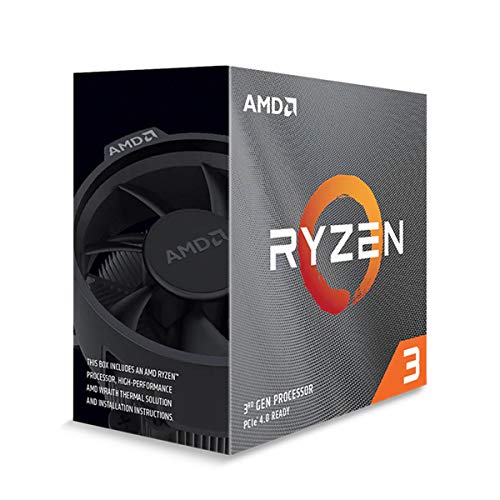
AMD Ryzen 3 3100 Review | 78 Data compared

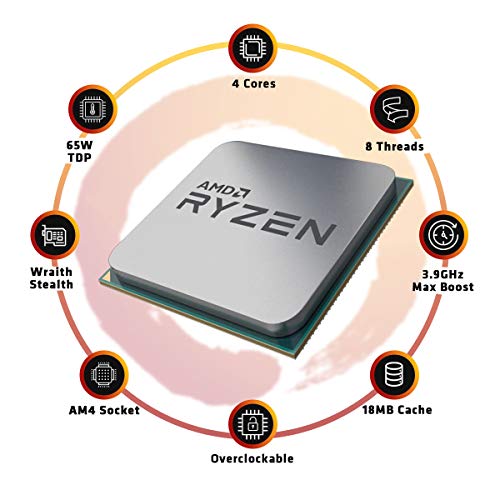
Avg. price:~£110PassMark benchmark result:11552N. of physical cores:4CPU boost clock speed:3.9 GHzCPU socket:AM4TDP (Thermal design power):65 W

AMD Ryzen 3 3100 Review: Compare 78 technical specifications and user reviews to see how this product ranks in the Processors category and whether it is worth buying.

5.7

Overall score

Score
5.7/ 10
✕
What it is
An overall evaluation of the processor's quality, based on technical analyses and user reviews.
When it matters
When you need a quick reference to identify the best processors on the market.
Score distribution
â–¼
<55-66-77-88-99-10
Score components

90%

5.2

Technical score

10%

9.6

User score

â–²Better than 50% of processors
5.2

Technical score

Technical score
5.2/ 10
✕
What it is
An assessment of the processor's technical performance, covering key areas such as processing performance, core configuration, efficiency, platform support, integrated features, and thermal behavior.
When it matters
When you want to compare processors based on technical performance and available features.
Score distribution
â–¼
<55-66-77-88-99-10
Score components

60%

4.3

Performance

18%

5.8

Cache & Architecture

10%

7.3

Memory & PCIe

7%

7.1

Power & Thermal

4%

8.5

Platform

1%

4.0

Integrated Graphics

â–¼Worse than 55% of processors
9.6

User score

User score
9.6/ 10
✕
What it is
A rating that combines user reviews and the total number of reviews received by the processor.
When it matters
When you want to know how a processor performs in real workloads and how reliable it is for gaming, productivity, and efficiency according to user feedback.
Score distribution
â–¼
<55-66-77-88-99-10
Score components

70%

9.4

User ratings

30%

10

Number of reviews

Based on 6,623 buyer reviews from online shops.
How we calculate this
User ratings – average star rating across all shop listings, weighted by how many reviews each has, on a 1–10 scale.
Number of reviews – how many buyer reviews the product has, on a logarithmic scale; the 8% most-reviewed models in the category get 10.
★Better than 98% of processors
  • amd-ryzen-3-3100
  • amd-ryzen-3-3100
  • amd-ryzen-3-3100
  • amd-ryzen-3-3100
  • amd-ryzen-3-3100
amd-ryzen-3-3100
amd-ryzen-3-3100
amd-ryzen-3-3100
amd-ryzen-3-3100
amd-ryzen-3-3100

Best prices

*As an Amazon Associate, we earn from qualifying purchases.

Best rankings

Available: ranking among products currently available (including other versions of this product).All: ranking among all products in the database.
Loading...
Loading category ranking...

Technical Specifications of processor AMD Ryzen 3 3100

Technical score
Technical score
5.2/ 10
✕
What it is
An assessment of the processor's technical performance, covering key areas such as processing performance, core configuration, efficiency, platform support, integrated features, and thermal behavior.
When it matters
When you want to compare processors based on technical performance and available features.
Score distribution
â–¼
<55-66-77-88-99-10
Score components:

60%

4.3

Performance

18%

5.8

Cache & Architecture

10%

7.3

Memory & PCIe

7%

7.1

Power & Thermal

4%

8.5

Platform

1%

4.0

Integrated Graphics

5.2
User score
User score
9.6/ 10
✕
What it is
A rating that combines user reviews and the total number of reviews received by the processor.
When it matters
When you want to know how a processor performs in real workloads and how reliable it is for gaming, productivity, and efficiency according to user feedback.
Score distribution
â–¼
<55-66-77-88-99-10
Score components

70%

9.4

User ratings

30%

10

Number of reviews

Based on 6,623 buyer reviews from online shops.
How we calculate this
User ratings – average star rating across all shop listings, weighted by how many reviews each has, on a 1–10 scale.
Number of reviews – how many buyer reviews the product has, on a logarithmic scale; the 8% most-reviewed models in the category get 10.
9.6
Popularity
Popularity
10.0/ 10
✕
What it is
An indicator based on the number of reviews received by the processor.
When it matters
When you prefer to choose a processor reviewed and selected by many other buyers.
Score distribution
â–¼
<55-66-77-88-99-10
Popularity:
AMD Ryzen 3 3100 has a popularity score of 10 points, which is higher than that of 91.9% of products in this category.
10
Value for money
Value for money
6.9/ 10
✕
What it is
An indicator that combines the processor's overall rating with its cost.
When it matters
When you are looking for a processor with a good balance between performance, efficiency, and price.
Score distribution
â–¼
<55-66-77-88-99-10
Score components:

60%

5.7

Overall score

40%

9.9

Price

6.9
Brand name
AMD
Processor type
desktop
Processor type
desktop
This processor belongs to the desktop processor class, which is more advanced than that of 56% of processors and equal to that of 37.9% of processors.
CPU socket
AM4
CPU socket
AM4
This processor uses the AM4 CPU socket, which is newer than that of 76.5% of processors and equal to that of 9.6% of processors.
Chipset
X570, B550, A520, X470, B450, X370, B350, A320
Chipset
X570, B550, A520, X470, B450, X370, B350, A320
This processor supports X570, B550, A520, X470, B450, X370, B350, A320 chipsets, which is broader compatibility than 73.8% of processors and equal to that of 4.5% of processors.
CPU architecture
x86-64
CPU architecture
x86-64
This processor uses the x86-64 architecture, which is more advanced than that of 1.7% of processors and equal to that of 98.3% of processors.
Show more
N. of physical cores
4
N. of physical cores
4
This processor has 4 CPU cores, which is fewer than 50.7% of processors and equal to 28.5% of processors.
CPU threads
8
CPU threads
8
This processor offers 8 CPU threads, which is more than 35.2% of processors and equal to 19.1% of processors.
Threads per core
2
Threads per core
2
This processor offers 2 threads per core, which is more than 30.3% of processors and equal to 69.7% of processors.
CPU boost clock speed
3.9 GHz
CPU boost clock speed
3.9 GHz
This processor reaches a boost clock of 3.9 GHz which is lower than that of 64.9% of processors and equal to that of 3.5% of processors.
CPU base clock speed
4x 3.6 GHz
CPU base clock speed
4x 3.6 GHz
This processor has a base clock of 4x3.6 GHz which is higher than that of 52.1% of processors and equal to that of 1.6% of processors.
Show more
Semiconductor size
7 nm
Semiconductor size
7 nm
This processor uses a 7 nm process node, which is more advanced than that of 71.5% of processors and equal to that of 10.9% of processors.
Foundry
TSMC 7 nm
Foundry
TSMC 7 nm
This processor is built on the TSMC 7 nm foundry process, which is more advanced than that of 56.7% of processors and equal to that of 9.4% of processors.
L3 cache
16 MB
L3 cache
16 MB
This processor has an L3 cache of 16 MB which is larger than that of 64.2% of processors and equal to that of 12.7% of processors.
L2 cache
2 MB
L2 cache
2 MB
This processor has an L2 cache of 2 MB which is smaller than that of 51% of processors and equal to that of 11.2% of processors.
L1 cache
256 KB
L1 cache
256 KB
This processor has an L1 cache of 256 KB which is smaller than that of 59.4% of processors and equal to that of 18.6% of processors.
Show more
DDR memory version
DDR4
DDR memory version
DDR4
This processor supports DDR DDR4, which is newer than that of 26.3% of processors and equal to that of 31.7% of processors.
Maximum memory speed
3,200 MHz
Maximum memory speed
3,200 MHz
This processor supports memory speeds up to 3,200 MHz, which is higher than that of 51.8% of processors and equal to 8.4% of processors.
Max memory speed (JEDEC)
DDR4-3200 MHz
Max memory speed (JEDEC)
DDR4-3200 MHz
This processor supports JEDEC memory speeds up to DDR4-3200 MHz, which is higher than that of 47.6% of processors and equal to 9.2% of processors.
Max memory speed (XMP / EXPO)
?
Maximum memory capacity
128 GB
Maximum memory capacity
128 GB
This processor supports up to 128 GB of memory, which is more than 61.9% of processors and equal to 21.4% of processors.
Show more
Integrated graphics
no
Integrated graphics
no
This processor does not include integrated graphics. 87.6% of processors include integrated graphics.
Integrated GPU model
N/A
Integrated GPU execution units
N/A
Integrated GPU base frequency
N/A
Integrated media encoders/decoders
N/A
Show more
TDP (Thermal design power)
65 W
TDP (Thermal design power)
65 W
This processor has a TDP of 65 W which is higher than that of 69.9% of processors and equal to that of 16.3% of processors.
Base power (PL1)
65 W
Base power (PL1)
65 W
This processor has a base power of 65 W which is higher than that of 70.1% of processors and equal to that of 16.7% of processors.
Boost power (PL2)
?
Tau (power duration limit)
N/A
Configurable TDP
no
Configurable TDP
no
This processor does not support configurable TDP. 52.8% of processors support configurable TDP.
Show more

AMD Ryzen 3 3100 vs the average processor

246810TotalPlatformPerformanceCache & ArchitectureMemory & PCIeIntegrated GraphicsPower & Thermal
  • 8 more PCIe lanes
    PCIe lane count
    24
    This processor has more PCIe lanes than the average processor (24 vs 16). The average processor offers 16 PCIe lanes.
    24 vs 16
  • Unlocked for overclocking
    Unlocked multiplier
    yes
    This processor has an unlocked multiplier, the average processor does not. 21.7% of processors have an unlocked multiplier.
  • Includes stock cooler
    Cooler included
    yes
    This processor includes a stock cooler, the average processor does not. 25.9% of processors include a stock cooler.
  • Newer PCIe version
    PCIe version
    4.0
    This processor supports a newer PCIe version than the average processor (4 vs 3).
    4.0 vs 3.0
  • 58.2% smaller die size
    Die size
    74 mm²
    This processor has a lower die size than the average processor (74 mm² vs 177 mm²). The average processor has a die size of 177 mm².
    74 mm² vs 177 mm²
  • Supports memory overclocking
    Memory overclocking
    yes
    This processor supports memory overclocking, the average processor does not. 43.6% of processors support memory overclocking.
  • 41.7% smaller process node
    Semiconductor size
    7 nm
    This processor has a lower process node than the average processor (7 nm vs 12 nm). The average processor uses a process node of 12 nm.
    7 nm vs 12 nm
  • 5 °C lower CPU temperature
    CPU temperature
    95 °C
    This processor has a lower CPU temperature than the average processor (95 °C vs 100 °C). The average processor runs at a CPU temperature of 100 °C.
    95 °C vs 100 °C
  • 10x more popular
    AMD Ryzen 3 3100 is more popular than the average processor (10 vs 1).
    10 vs 1
  • 19.8% higher user score
    User score
    9.6/ 10
    ✕
    What it is
    A rating that combines user reviews and the total number of reviews received by the processor.
    When it matters
    When you want to know how a processor performs in real workloads and how reliable it is for gaming, productivity, and efficiency according to user feedback.
    Score distribution
    â–¼
    â–¼
    <55-66-77-88-99-10
    AMD Ryzen 3 3100
    the average processor
    AMD Ryzen 3 3100 has a higher user score than the average processor (9.58 vs 8.000).
    9.58 vs 8
  • Broader instruction support
    Instruction sets
    MMX, SSE, SSE2, SSE3, SSSE3, SSE4A, SSE4.1, SSE4.2, AVX, AVX2, F16C, FMA3, AES, SHA, BMI1, BMI2, ADX
    This processor supports a broader instruction set than the average processor (MMX, SSE, SSE2, SSE3, SSSE3, SSE4A, SSE4.1, SSE4.2, AVX, AVX2, F16C, FMA3, AES, SHA, BMI1, BMI2, ADX vs MMX, SSE, SSE2, SSE3, SSSE3, SSE4A, SSE4.1, SSE4.2, AVX, AVX2, F16C, FMA3, AES, SHA).
    MMX, SSE, SSE2, SSE3, SSSE3, SSE4A, SSE4.1, SSE4.2, AVX, AVX2, F16C, FMA3, AES, SHA, BMI1, BMI2, ADX vs MMX, SSE, SSE2, SSE3, SSSE3, SSE4A, SSE4.1, SSE4.2, AVX, AVX2, F16C, FMA3, AES, SHA
  • Modern CPU socket
    CPU socket
    AM4
    This processor uses a more modern CPU socket than the average processor (AM4 vs FP4).
    AM4 vs FP4
  • Unlocked for overclocking
    Unlocked multiplier
    yes
    This processor has an unlocked multiplier, the average processor does not. 21.7% of processors have an unlocked multiplier.
  • 58.2% smaller die size
    Die size
    74 mm²
    This processor has a lower die size than the average processor (74 mm² vs 177 mm²). The average processor has a die size of 177 mm².
    74 mm² vs 177 mm²
  • 41.7% smaller process node
    Semiconductor size
    7 nm
    This processor has a lower process node than the average processor (7 nm vs 12 nm). The average processor uses a process node of 12 nm.
    7 nm vs 12 nm
  • More advanced microarchitecture
    Microarchitecture codename
    Matisse
    This processor uses a more advanced microarchitecture than the average processor (Matisse vs Kaby Lake).
    Matisse vs Kaby Lake
  • More advanced foundry
    Foundry
    TSMC 7 nm
    This processor uses a more advanced foundry process than the average processor (TSMC 7 nm vs Intel 14 nm).
    TSMC 7 nm vs Intel 14 nm
  • 2x larger L3 cache
    L3 cache
    16 MB
    This processor has a higher L3 cache than the average processor (16 MB vs 8 MB). The average processor has L3 cache of 8 MB.
    16 MB vs 8 MB
  • 8 more PCIe lanes
    PCIe lane count
    24
    This processor has more PCIe lanes than the average processor (24 vs 16). The average processor offers 16 PCIe lanes.
    24 vs 16
  • Newer PCIe version
    PCIe version
    4.0
    This processor supports a newer PCIe version than the average processor (4 vs 3).
    4.0 vs 3.0
  • Supports memory overclocking
    Memory overclocking
    yes
    This processor supports memory overclocking, the average processor does not. 43.6% of processors support memory overclocking.
  • 2x more memory capacity
    Maximum memory capacity
    128 GB
    This processor has more maximum memory capacity than the average processor (128 GB vs 64 GB). The average processor supports 64 GB of memory.
    128 GB vs 64 GB
  • Supports ECC memory
    ECC memory support
    yes
    This processor supports ECC memory, the average processor does not. 32.5% of processors support ECC memory.
  • Includes stock cooler
    Cooler included
    yes
    This processor includes a stock cooler, the average processor does not. 25.9% of processors include a stock cooler.
  • 5 °C lower CPU temperature
    CPU temperature
    95 °C
    This processor has a lower CPU temperature than the average processor (95 °C vs 100 °C). The average processor runs at a CPU temperature of 100 °C.
    95 °C vs 100 °C
  • 2 fewer CPU cores
    N. of physical cores
    4
    This processor has fewer CPU cores than the average processor (4 vs 6). The average processor has 6 CPU cores.
    4 vs 6
  • No configurable TDP
    Configurable TDP
    no
    This processor does not support configurable TDP, the average processor does. 52.8% of processors support configurable TDP.
  • 9.3% lower boost clock
    CPU boost clock speed
    3.9 GHz
    This processor has a lower boost clock speed than the average processor (3.9 GHz vs 4.3 GHz). The average processor reaches boost clock speed of 4.3 GHz.
    3.9 GHz vs 4.3 GHz
  • 44.4% higher base power
    Base power (PL1)
    65 W
    This processor has a higher base power draw than the average processor (65 W vs 45 W). The average processor has a base power draw of 45 W.
    65 W vs 45 W
  • 5 °C lower TJ Max
    Maximum operating temperature (TJ Max)
    95 °C
    This processor has a lower TJ Max than the average processor (95 °C vs 100 °C). The average processor has a TJ Max of 100 °C.
    95 °C vs 100 °C
  • 22.3% weaker multi-core performance
    Cinebench R20 multi-core benchmark score
    2,169
    This processor has a lower multi-core performance than the average processor (2,169 vs 2,791). The average processor scores 2,791 in Cinebench R20 multi-core.
    2,169 vs 2,791
  • 9.2% lower Cinebench R20 single-core score
    Cinebench R20 single-core benchmark score
    444
    This processor has a lower Cinebench R20 single-core score than the average processor (444 vs 489). The average processor scores 489 in Cinebench R20 single-core.
    444 vs 489
  • No integrated graphics
    Integrated graphics
    no
    This processor does not include integrated graphics, the average processor does. 87.6% of processors include integrated graphics.
  • Older TPM support
    TPM type
    fTPM 2.0
    This processor supports an older TPM version than the average processor (fTPM 2 vs PTT 2).
    fTPM 2.0 vs PTT 2.0
  • 2 fewer CPU cores
    N. of physical cores
    4
    This processor has fewer CPU cores than the average processor (4 vs 6). The average processor has 6 CPU cores.
    4 vs 6
  • 9.3% lower boost clock
    CPU boost clock speed
    3.9 GHz
    This processor has a lower boost clock speed than the average processor (3.9 GHz vs 4.3 GHz). The average processor reaches boost clock speed of 4.3 GHz.
    3.9 GHz vs 4.3 GHz
  • 22.3% weaker multi-core performance
    Cinebench R20 multi-core benchmark score
    2,169
    This processor has a lower multi-core performance than the average processor (2,169 vs 2,791). The average processor scores 2,791 in Cinebench R20 multi-core.
    2,169 vs 2,791
  • 9.2% lower Cinebench R20 single-core score
    Cinebench R20 single-core benchmark score
    444
    This processor has a lower Cinebench R20 single-core score than the average processor (444 vs 489). The average processor scores 489 in Cinebench R20 single-core.
    444 vs 489
  • 3.6% weaker single-core performance
    PassMark single-core benchmark score
    2,411
    This processor has a lower PassMark single-core score than the average processor (2,411 vs 2,500). The average processor scores 2,500 in PassMark single-core.
    2,411 vs 2,500
  • 7.1% lower multi-core score
    Geekbench 6 multi-core benchmark score
    4,484
    This processor has a lower Geekbench 6 multi-core score than the average processor (4,484 vs 4,829). The average processor scores 4,829 in Geekbench 6 multi-core.
    4,484 vs 4,829
  • 33.3% smaller L1 cache
    L1 cache
    256 KB
    This processor has a lower L1 cache than the average processor (256 KB vs 384 KB). The average processor has L1 cache of 384 KB.
    256 KB vs 384 KB
  • 20% smaller L2 cache
    L2 cache
    2 MB
    This processor has a lower L2 cache than the average processor (2 MB vs 2.5 MB). The average processor has L2 cache of 2.5 MB.
    2 MB vs 2.5 MB
  • No integrated graphics
    Integrated graphics
    no
    This processor does not include integrated graphics, the average processor does. 87.6% of processors include integrated graphics.
  • No configurable TDP
    Configurable TDP
    no
    This processor does not support configurable TDP, the average processor does. 52.8% of processors support configurable TDP.
  • 44.4% higher base power
    Base power (PL1)
    65 W
    This processor has a higher base power draw than the average processor (65 W vs 45 W). The average processor has a base power draw of 45 W.
    65 W vs 45 W
  • 5 °C lower TJ Max
    Maximum operating temperature (TJ Max)
    95 °C
    This processor has a lower TJ Max than the average processor (95 °C vs 100 °C). The average processor has a TJ Max of 100 °C.
    95 °C vs 100 °C
  • 44.4% higher TDP
    TDP (Thermal design power)
    65 W
    This processor has a higher TDP than the average processor (65 W vs 45 W). The average processor has a TDP of 45 W.
    65 W vs 45 W

Video reviews

Hands-on testing, unboxing, and real-world video evaluations

9.0
eTeknix
≈ estimated
07/05/2020
Hands-on review · benchmarks, overclocking and value
Verdict
AMD Ryzen 3 3100 is strong value against older Intel chips, but the 3300X is the better buy.
8.0
Gamers Nexus
≈ estimated
07/05/2020
Full review · gaming, overclocking and production benchmarks
Verdict
AMD Ryzen 3 3100 is less exciting than the 1600 AF, but it is a good budget CPU best matched with a cheap GPU.
7.0
BlueprintPC
≈ estimated
25/02/2021
Unboxing and price check · 2021 buying advice
Verdict
AMD Ryzen 3 3100 is still a decent budget option, but it is overpriced at current prices; the 3600 or Intel 10100 is the better buy.
7.0
ScatterVolt
≈ estimated
07/05/2020
Comparison review · gaming, streaming and editing benchmarks
Verdict
AMD Ryzen 3 3100 is only a fallback for the 1600 AF if that chip is out of stock, and not a standout.
Not graded yet
Not graded yet
Not graded yet
Not graded yet
Not graded yet
Not graded yet

Expert reviews

In-depth analysis and verdict from leading tech publications

P
pcmag.com
07/05/2020
Summary of the review
techspot.com
08/05/2020
Benchmark test · Gaming CPU
Verdict
The AMD Ryzen 3 3100 is a capable quad-core that matches the Ryzen 5 1600 in games, though it trails its sibling, the Ryzen 3 3300X.
O
overclockers.com
07/05/2020
Summary of the review
techradar.com
01/06/2020
Lab test · Gaming and productivity
Verdict
The AMD Ryzen 3 3100 is a solid entry-level chip with PCIe 4.0 and SMT, but it trails the Ryzen 3 3300X and may hold back high-end graphics cards.
H
hexus.net
07/05/2020
Summary of the review
D
digitalfoundry.net
13/05/2020
Summary of the review
G
gamersnexus.net
07/05/2020
Summary of the review
pcgamer.com
13/05/2020
Gaming test · Quad-core CPU
Verdict
The AMD Ryzen 3 3100 is a solid quad-core that overclocks well, but the Ryzen 3 3300X is clearly faster and the better buy.
T
thefpsreview.com
08/05/2020
Summary of the review
O
overclock3d.net
07/05/2020
Summary of the review
E
electroniclinic.com
24/05/2022
Summary of the review
notebookcheck.net
19/05/2020
Benchmark review · Budget quad-core CPU
Verdict
The AMD Ryzen 3 3100 is a capable four-core chip for simple gaming that overclocks easily to 4.4 GHz, but it draws more power at idle than rivals.
I
igorslab.de
07/05/2020
Summary of the review
chip.de
14/07/2021
Test verdict · Everyday office CPU
Verdict
The AMD Ryzen 3 3100 suits everyday office and home PCs and draws little power, but it has no built-in graphics.
pcwelt.de
02/06/2020
Benchmark test · Budget gaming CPU
Verdict
The AMD Ryzen 3 3100 is a sensible choice for budget gamers that draws less power than the 3300X, though four cores may feel tight in demanding games.
C
comptoir-hardware.com
07/05/2020
Summary of the review
lesnumeriques.com
08/05/2020
Expert review · Entry-level processor
Verdict
The AMD Ryzen 3 3100 suits PC builders who want good processing power, but it has no integrated graphics and is not the fastest for games.
notebookcheck.biz
22/06/2020
Lab test · Quad-core budget CPU
Verdict
The AMD Ryzen 3 3100 is a solid quad-core for budget gaming PCs that can match the 3300X with overclocking, but it uses more power at idle.
miroir-mag.fr
08/12/2021
Full review · Quad-core budget chip
Verdict
The AMD Ryzen 3 3100 is a strong budget chip for gaming and video encoding, paired with a dedicated graphics card, though the Ryzen 3 3300X is the stronger pick.
P
profesionalreview.com
07/05/2020
Summary of the review
H
hd-tecnologia.com
07/05/2020
Summary of the review
T
tomshw.it
07/05/2020
Summary of the review
T
tvtech.it
07/05/2020
Summary of the review
pc-gaming.it
29/10/2020
Lab test · Entry-level CPU
Verdict
The AMD Ryzen 3 3100 is an entry-level CPU that handles most games well and overclocks easily, though it is not built for competitive players chasing maximum frame rates.
T
tweakers.net
07/05/2020
Summary of the review
T
tweakers.net
27/09/2020
Summary of the review
T
tweakers.net
12/10/2020
Summary of the review

Third-party reviews

Based on 6,623 buyer reviews from online shops.
Reviews last updated: October 2026 · How we calculate this

What we like about AMD Ryzen 3 3100

  • Exceptional value for budget-conscious builders, originally launching at under $100.
  • Features 4 cores and 8 threads, offering strong multi-threaded performance for its price class.
  • Efficient power consumption (65W TDP) and low operating temperatures.
  • Support for modern technologies including PCIe 4.0 and high-speed DDR4 memory.
  • Unlocked multiplier allows for significant overclocking headroom to boost performance.
  • Competent 1080p gaming performance and suitable for light content creation tasks.

What we don't like about AMD Ryzen 3 3100

  • Lack of integrated graphics (iGPU) requires the purchase of a dedicated video card.
  • The 2+2 core configuration (split across two CCXs) leads to higher internal latency compared to the Ryzen 3 3300X.
  • Frequently overshadowed by the Ryzen 3 3300X, which often offers better gaming performance for a small price increase.
  • May experience stuttering or bottlenecks in modern AAA games or highly demanding open-world titles.
  • Included Wraith Stealth cooler may be insufficient for aggressive overclocking.

Verdict

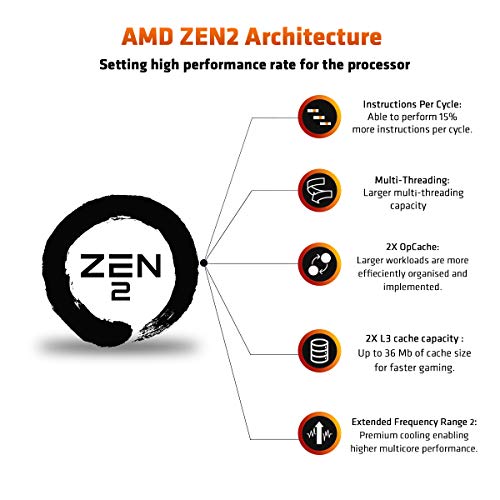
The AMD Ryzen 3 3100 is an entry-level quad-core desktop processor based on the 7nm Zen 2 'Matisse' architecture, featuring 8 threads, a 3.6 GHz base clock, and a 3.9 GHz maximum boost frequency. Operating with a 65W TDP, it includes 18MB of total cache (16MB L3) and supports PCIe 4.0 and DDR4-3200 memory on the AM4 socket. Main pros include its exceptional price-to-performance ratio for budget gaming, high energy efficiency, and an unlocked multiplier for overclocking. However, it lacks integrated graphics, requiring a dedicated GPU, and its 2+2 core configuration can lead to higher inter-core latency compared to models with a unified core complex.

Compare AMD Ryzen 3 3100 with other processors

1Product to compare no. 1
VS
2Product to compare no. 2
VS
3Product to compare no. 3 (optional)

Graphic comparison of AMD Ryzen 3 3100 and other processors

No results found