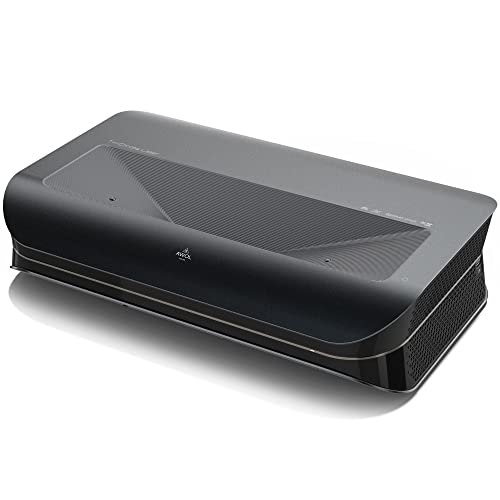
Hisense L9Q Trichroma Review | 85 Data compared

double-arrow
  • Avg. price in UK: ~£4,730
  • Avg. price in US: ~$6,000
  • ANSI lumens: 5000
  • Native panel resolution: 1920x1080
  • Throw ratio: 0.18:1

Hisense L9Q Trichroma review. Compare 85 technical specifications and user reviews to see how it ranks among projectors and if it is worth buying.

8.2

Overall score

What it is: An overall evaluation of the projector's quality, based on technical analyses and user reviews.

When it matters: When you need a quick reference to identify the best projectors on the market.

Score components:

90.0%

8.2

Technical Score

10.0%

?

User score

Excellent
8.2

Technical Score

What it is: An assessment of the projector's technical performance, covering eight key areas: image quality, brightness, contrast, connectivity, gaming features, smart features, audio, and design.

When it matters: When you want to compare projectors based on technical performance and available features.

Score components:

42.0%

9.0

Image Quality

22.0%

5.5

Projection & Lens

12.0%

8.4

HDMI & Gaming

10.0%

9.5

Audio & Features

8.0%

9.7

Connectivity

6.0%

8.5

Design & Power

Excellent
?

User score

What it is: A rating that combines user reviews and the total number of reviews received by the projector.

When it matters: When you want to know how a projector performs in real use and how reliable it remains over time according to user feedback.

Score components:

70.0%

?

User reviews

30.0%

?

Popularity

  • 9.8
    Gaming

    Score components:

    35.0%

    9.8

    Input lag

    25.0%

    10

    Refresh rate

    20.0%

    9.3

    Output Resolution

    10.0%

    10

    HDR10 support

    10.0%

    10

    Audio output power

  • 7.0
    Portable

    Score components:

    35.0%

    2.5

    Weight

    20.0%

    ?

    Has A Built-In Speaker

    15.0%

    10

    Bluetooth connectivity

    15.0%

    10

    Wi-Fi connectivity

    15.0%

    10

    Smart TV features

  • 9.8
    Home theatre

    Score components:

    30.0%

    9.3

    Output Resolution

    25.0%

    10

    HDR10 support

    20.0%

    10

    Dolby Vision support

    15.0%

    10

    ANSI lumens

    10.0%

    10

    Audible noise

  • No image
No image

Best prices in UK

    N/A~ £4,730

Best rankings

?

Available: ranking among products currently available (including other versions of this product).
All: ranking among all products in the database.

Verdict

The Hisense L9Q TriChroma is a premium 4K Ultra Short Throw (UST) laser projector featuring a triple-laser light engine that achieves a remarkable 110% of the BT.2020 color gamut and a peak brightness of 5,000 ANSI lumens. Designed as a high-performance 'Laser TV,' it utilizes a 0.18:1 throw ratio to project images up to 200 inches from just inches away, supporting HDR10+, Dolby Vision, and IMAX Enhanced formats with a 5,000:1 static contrast ratio. Notable pros include its exceptional brightness suitable for daytime viewing, Pantone-validated color accuracy, and an integrated 6.2.2-channel Devialet sound system with Dolby Atmos. However, cons include a high retail price near $6,000, potential for rainbow artifacts common to DLP chips, and limited gaming support for 4K at only 60Hz despite having HDMI 2.1 ports.

Technical Specifications of Hisense L9Q Trichroma

Technical Score

What it is: An assessment of the projector's technical performance, covering eight key areas: image quality, brightness, contrast, connectivity, gaming features, smart features, audio, and design.

When it matters: When you want to compare projectors based on technical performance and available features.

Score components:

42.0%

?

Image Quality

22.0%

?

Projection & Lens

12.0%

?

HDMI & Gaming

10.0%

?

Audio & Features

8.0%

?

Connectivity

6.0%

?

Design & Power

8.2
Hisense L9Q Trichroma has a technical score of 8.25 points, which is higher than 97.6% of projectors.
User score

What it is: A rating that combines user reviews and the total number of reviews received by the projector.

When it matters: When you want to know how a projector performs in real use and how reliable it remains over time according to user feedback.

Score components:

70.0%

0.0

User reviews

30.0%

1.0

Popularity

?
Popularity
What it is: An indicator based on the number of reviews received by the projector.
When it matters: When you prefer to buy a product chosen and reviewed by many other consumers.
1.0
Hisense L9Q Trichroma has a popularity of 1 points, which is lower than 55.3% of products in this category.
Ratio quality/price

What it is: An indicator that combines the projector's overall rating with its cost.

When it matters: When you are looking for a projector with a good balance between quality and price.

Score components:

60.0%

8.2

Overall score

40.0%

1.0

Price

6.1
Hisense L9Q Trichroma has a quality-to-price ratio of 6.1 points, which is higher than 48.6% of products in this category.
ANSI lumens
What it is: Brightness output measured in ANSI lumens.
When it matters: When you watch with ambient light or on a large screen, higher brightness matters.

Importance: HIGH

5,000
Hisense L9Q Trichroma reaches 5000 ANSI lumens, brighter than 92.8% of projectors and equal to 2.5% of projectors.
Contrast ratio
What it is: Ratio of brightest white to darkest black displayed by the projector.
When it matters: When you watch movies in a dark room, stronger contrast matters.

Importance: HIGH

5,000:1
Hisense L9Q Trichroma has a contrast ratio of 5000:1, lower than 57.8% of projectors and equal to 1.9% of projectors.
Native contrast ratio.
Native panel resolution
What it is: Native resolution of the display panel or imaging device.
When it matters: When picture sharpness matters enough that you want to know the projector's true native imaging resolution, not just supported input formats.

Importance: HIGH

1920x1080
Hisense L9Q Trichroma uses a native resolution of 1920x1080, higher than 26.2% of projectors and equal to 60.1% of projectors.
Uses XPR pixel-shifting for 4K output.
Output Resolution
What it is: The resolution the projector can actually display through its imaging system.
When it matters: When you want to know the actual image detail the projector can put on screen rather than just the source format it accepts.

Importance: HIGH

3840x2160
Hisense L9Q Trichroma supports output resolution up to 3840x2160, higher than 69.1% of projectors and equal to 26.1% of projectors.
Via XPR pixel shifting.
Projection technology
What it is: Projection imaging technology used by the projector.
When it matters: When color character, contrast behavior, and overall image personality matter before you compare brightness alone.

Importance: MEDIUM

DLP
Show more
Throw ratio
What it is: Ratio between projection distance and image width.
When it matters: When room size and screen size have to match properly instead of guessing whether the projector will fit the space.

Importance: MEDIUM

0.18:1
Min throw distance
What it is: Minimum distance required between projector and screen.
When it matters: When room depth is limited and you still need a large image from a short placement distance.

Importance: MEDIUM

?
Max projection size
What it is: Maximum supported image size for projection, measured diagonally.
When it matters: When you want a cinema-size picture, maximum projection size matters.

Importance: MEDIUM

200 inch
Hisense L9Q Trichroma supports projection sizes up to 200 inch, smaller than 51.3% of projectors and equal to 12.7% of projectors.
Zoom ratio
What it is: Optical zoom capability expressed as a ratio.
When it matters: When projector placement is not ideal and you need optical zoom to frame the image correctly.

Importance: MEDIUM

N/A
Motorized zoom
What it is: Motorized control of the optical zoom function.
When it matters: When the projector position is fixed but screen size or framing still needs to be adjusted from a distance.

Importance: LOW

no
Hisense L9Q Trichroma does not have motorized zoom. 16.3% of projectors have motorized zoom.
Show more
Input lag
What it is: Time delay between input signal and displayed image, measured in milliseconds.
When it matters: When gaming responsiveness matters and you want controls to feel more immediate on fast titles.

Importance: MEDIUM

12 ms
Hisense L9Q Trichroma has input lag of 12 ms, lower than 80.5% of projectors and equal to 2.4% of projectors.
At 4K/60Hz.
Auto low latency mode (ALLM)
What it is: Automatically reduces input lag when gaming.
When it matters: When you play fast games, lower latency matters.

Importance: LOW

yes
Hisense L9Q Trichroma supports ALLM. 79.9% of projectors support ALLM.
Variable refresh rate (VRR)
What it is: Support for variable refresh rate to reduce screen tearing.
When it matters: When gaming matters and you want the projector to handle variable frame rates with less tearing or stutter.

Importance: LOW

no
Hisense L9Q Trichroma does not support VRR. 1.9% of projectors support VRR.
HDMI version
What it is: Version of the HDMI standard supported.
When it matters: When source devices push newer HDMI features, refresh rates, or bandwidth levels that older ports may limit.

Importance: LOW

2.1
Hisense L9Q Trichroma supports HDMI 2.1, more modern than 82.3% of projectors and equal to 17.7% of projectors.
Different HDMI ports use 2.1 and 2.0.
Max HDMI bandwidth
What it is: Maximum bandwidth supported by HDMI inputs, measured in Gbps.
When it matters: When newer consoles, gaming PCs, or media boxes need more HDMI throughput than older projectors can handle.

Importance: LOW

48 Gbps
Hisense L9Q Trichroma supports HDMI bandwidth up to 48 Gbps, higher than 90.2% of projectors and equal to 9.8% of projectors.
Show more
N. of HDMI ports
What it is: Number of available HDMI input ports.
When it matters: When you need a console, streamer, set-top box, and another source connected at the same time without swapping cables.

Importance: LOW

4
Hisense L9Q Trichroma has 4 HDMI port/s, more than 99.8% of projectors and equal to 0.2% of projectors.
Wi-Fi connectivity
What it is: Support for Wi-Fi network connectivity.
When it matters: When the projector should handle network features, updates, or streaming functions without needing wired Ethernet only.

Importance: LOW

yes
Hisense L9Q Trichroma supports Wi-Fi. 47.4% of projectors support Wi-Fi.
Wi-Fi version
What it is: Supported Wi-Fi standard version.
When it matters: When wireless stability and throughput matter for streaming, updates, or projector ecosystem features.

Importance: LOW

?
Bluetooth connectivity
What it is: Support for Bluetooth wireless connectivity.
When it matters: When you plan to pair wireless speakers, headphones, remotes, or other accessories directly with the projector.

Importance: LOW

yes
Hisense L9Q Trichroma supports Bluetooth. 50.1% of projectors support Bluetooth.
Bluetooth version
What it is: Supported Bluetooth version.
When it matters: When wireless accessory compatibility and connection quality matter beyond Bluetooth being a simple checkbox.

Importance: LOW

5.3
Hisense L9Q Trichroma supports Bluetooth 5.3, more modern than 96.2% of projectors and equal to 1.9% of projectors.
Show more
Smart TV features
What it is: Includes built-in Smart TV functions or operating system.
When it matters: When you prefer built-in apps and streaming convenience instead of adding an external media stick or box.

Importance: LOW

yes
Hisense L9Q Trichroma has smart TV features. 56.3% of projectors have smart TV features.
Google TV built in.
Operating system
What it is: The built-in software platform that runs the projector interface, streaming apps, and smart features.
When it matters: When you care about which apps are available, how modern the smart interface feels, and whether the projector includes a built-in streaming platform.

Importance: LOW

Google TV
Android OS

Importance: MEDIUM

no
Dedicated smartphone app
What it is: Availability of a dedicated smartphone control app.
When it matters: When you want setup, input switching, or basic control handled from your phone without always reaching for a remote.

Importance: LOW

yes
Hisense L9Q Trichroma comes with a dedicated smartphone app. 64.5% of projectors come with a dedicated smartphone app.
ConnectLife app.
Remote control
What it is: Comes with a dedicated remote control for operation.
When it matters: When you want easier everyday control without extra gear, built-in convenience features matter.

Importance: LOW

yes
Hisense L9Q Trichroma includes a remote control. 1.6% of projectors include a remote control.
Show more
Light source type
What it is: Type of light source used by the projector.
When it matters: When maintenance expectations, startup behavior, brightness stability, and long-term running costs all matter in the buying decision.

Importance: LOW

laser
Hisense L9Q Trichroma uses laser light source technology, more advanced than 74% of projectors and equal to 26% of projectors.
Laser Light Source
What it is: Whether the projector uses a laser light source instead of a traditional lamp.
When it matters: When lower maintenance, faster startup, and a lamp-free light engine matter over the long term.

Importance: LOW

yes
Hisense L9Q Trichroma uses a laser light source. 72% of projectors use a laser light source.
TriChroma Triple Laser.
Lamp life
What it is: Expected operational lifespan of the lamp in standard mode, measured in hours.
When it matters: When you care about running costs and maintenance intervals, light-source lifespan matters.

Importance: LOW

25,000 hours
Hisense L9Q Trichroma offers lamp life of 25000 hours, shorter than 62% of projectors and equal to 6.8% of projectors.
Lamp life (eco mode)
What it is: Expected operational lifespan of the lamp in eco mode, measured in hours.
When it matters: When you care about running costs and maintenance intervals, light-source lifespan matters.

Importance: LOW

25,000 hours
Hisense L9Q Trichroma offers eco-mode lamp life of 25000 hours, shorter than 52.4% of projectors and equal to 7% of projectors.
Eco mode rating.
Operating power consumption
What it is: Average power consumption during normal operation.
When it matters: When electricity use and heat output matter because the projector runs for long sessions or frequent daily use.

Importance: LOW

350 W
Hisense L9Q Trichroma uses 350 W of power, more than 82.2% of projectors and equal to 2.2% of projectors.
Show more

Hisense L9Q Trichroma vs the average projector

  • 2.27x brighter image
    Hisense L9Q Trichroma has higher ANSI lumens than the average projector (5,000 vs 2,200). The average projector has 2,200 ANSI lumens.
    What it is: Brightness output measured in ANSI lumens.
    When it matters: When you watch with ambient light or on a large screen, higher brightness matters.

    Importance: HIGH

    Hisense L9Q Trichroma has higher ANSI lumens than the average projector (5,000 vs 2,200). The average projector has 2,200 ANSI lumens.5,000 vs 2,200
  • Wider color gamut
    Hisense L9Q Trichroma has a higher color gamut coverage than the average projector (110% BT.2020 % vs 99% Rec.709 %). The average projector has 99% Rec.709 % of color gamut coverage.
    What it is: Percentage of the target color gamut covered by the projector.
    When it matters: When you care about accurate tones and refined image quality, color precision matters.

    Importance: HIGH

    Hisense L9Q Trichroma has a higher color gamut coverage than the average projector (110% BT.2020 % vs 99% Rec.709 %). The average projector has 99% Rec.709 % of color gamut coverage.110% BT.2020 % vs 99% Rec.709 %
  • Supports Dolby Vision
    Hisense L9Q Trichroma supports Dolby Vision, while the average projector does not. 7.2% of projectors support Dolby Vision.
    What it is: Support for Dolby Vision high dynamic range format.
    When it matters: When you watch HDR movies and streaming releases, broad HDR support matters.

    Importance: MEDIUM

    Hisense L9Q Trichroma supports Dolby Vision, while the average projector does not. 7.2% of projectors support Dolby Vision.
  • Higher output resolution
    Hisense L9Q Trichroma supports a higher output resolution than the average projector (3840x2160 vs 1920x1080). The average projector outputs at 1920x1080 resolution.
    Via XPR pixel shifting.
    What it is: The resolution the projector can actually display through its imaging system.
    When it matters: When you want to know the actual image detail the projector can put on screen rather than just the source format it accepts.

    Importance: HIGH

    Hisense L9Q Trichroma supports a higher output resolution than the average projector (3840x2160 vs 1920x1080). The average projector outputs at 1920x1080 resolution.3840x2160 vs 1920x1080
  • Supports HDR10+
    Hisense L9Q Trichroma supports HDR10+, while the average projector does not. 15.6% of projectors support HDR10+.
    What it is: Support for HDR10+ dynamic high dynamic range format.
    When it matters: When you care whether the projector supports dynamic HDR metadata rather than static HDR formats alone.

    Importance: LOW

    Hisense L9Q Trichroma supports HDR10+, while the average projector does not. 15.6% of projectors support HDR10+.
  • 2.82x higher refresh rate
    Hisense L9Q Trichroma has a higher refresh rate than the average projector (240 Hz vs 85 Hz). The average projector has 85 Hz of refresh rate.
    What it is: Number of screen refreshes per second, measured in hertz.
    When it matters: When motion clarity matters for gaming, sports, or fast-moving video instead of slower cinematic content only.

    Importance: MEDIUM

    Hisense L9Q Trichroma has a higher refresh rate than the average projector (240 Hz vs 85 Hz). The average projector has 85 Hz of refresh rate.240 Hz vs 85 Hz
  • Supports ALLM
    Hisense L9Q Trichroma supports ALLM, while the average projector does not. 20.3% of projectors support ALLM.
    What it is: Automatically reduces input lag when gaming.
    When it matters: When you play fast games, lower latency matters.

    Importance: LOW

    Hisense L9Q Trichroma supports ALLM, while the average projector does not. 20.3% of projectors support ALLM.
  • Supports pixel shifting
    Hisense L9Q Trichroma supports pixel shifting, while the average projector does not. 28.4% of projectors support pixel shifting.
    Via XPR technology.
    What it is: Uses pixel shifting to increase perceived image resolution.
    When it matters: When you want more perceived detail than the native panel alone would provide, especially on bigger screens.

    Importance: LOW

    Hisense L9Q Trichroma supports pixel shifting, while the average projector does not. 28.4% of projectors support pixel shifting.
  • 2.27x brighter image
    Hisense L9Q Trichroma has higher ANSI lumens than the average projector (5,000 vs 2,200). The average projector has 2,200 ANSI lumens.
  • Wider color gamut
    Hisense L9Q Trichroma has a higher color gamut coverage than the average projector (110% BT.2020 % vs 99% Rec.709 %). The average projector has 99% Rec.709 % of color gamut coverage.
  • Supports Dolby Vision
    Hisense L9Q Trichroma supports Dolby Vision, while the average projector does not. 7.2% of projectors support Dolby Vision.
  • Higher output resolution
    Hisense L9Q Trichroma supports a higher output resolution than the average projector (3840x2160 vs 1920x1080). The average projector outputs at 1920x1080 resolution.
  • Supports HDR10+
    Hisense L9Q Trichroma supports HDR10+, while the average projector does not. 15.6% of projectors support HDR10+.
  • 2.82x higher refresh rate
    Hisense L9Q Trichroma has a higher refresh rate than the average projector (240 Hz vs 85 Hz). The average projector has 85 Hz of refresh rate.
  • Supports pixel shifting
    Hisense L9Q Trichroma supports pixel shifting, while the average projector does not. 28.4% of projectors support pixel shifting.
  • Supports HLG
    Hisense L9Q Trichroma supports HLG, while the average projector does not. 42.7% of projectors support HLG.
  • Motorized focus
    Hisense L9Q Trichroma supports motorized focus, while the average projector does not. 47.2% of projectors support motorized focus.
  • Supports ALLM
    Hisense L9Q Trichroma supports ALLM, while the average projector does not. 20.3% of projectors support ALLM.
  • Supports frame interpolation
    Hisense L9Q Trichroma supports frame interpolation, while the average projector does not. 39.9% of projectors support frame interpolation.
  • 15 ms lower input lag
    Hisense L9Q Trichroma has a lower input lag than the average projector (12 ms vs 27 ms). The average projector has 27 ms of input lag.
  • Modern HDMI standard
    Hisense L9Q Trichroma offers Modern HDMI standard than the average projector (2.1 vs 2.0). The average projector supports HDMI 2.0.
  • 2.67x higher HDMI bandwidth
    Hisense L9Q Trichroma has a higher HDMI bandwidth than the average projector (48 Gbps vs 18 Gbps). The average projector has 18 Gbps of HDMI bandwidth.
  • Modern HDCP version
    Hisense L9Q Trichroma offers Modern HDCP version than the average projector (2.3 vs 2.2). The average projector supports HDCP 2.2.
  • Supports HDMI ARC
    Hisense L9Q Trichroma supports HDMI ARC, while the average projector does not. 36.1% of projectors support HDMI ARC.
  • Built-in Chromecast
    Hisense L9Q Trichroma supports built-in Chromecast, while the average projector does not. 27.3% of projectors support built-in Chromecast.
  • Includes S/PDIF output
    Hisense L9Q Trichroma has an S/PDIF output, while the average projector does not. 17.2% of projectors have an S/PDIF output.
  • Supports AirPlay
    Hisense L9Q Trichroma supports AirPlay, while the average projector does not. 41.6% of projectors support AirPlay.
  • Supports Bluetooth
    Hisense L9Q Trichroma supports Bluetooth, while the average projector does not. 49.9% of projectors support Bluetooth.
  • 2 more HDMI ports
    Hisense L9Q Trichroma has more HDMI ports than the average projector (4 vs 2). The average projector has 2 HDMI ports.
  • 1 more RJ45 ports
    Hisense L9Q Trichroma has more RJ45 ports than the average projector (1 vs 0). The average projector has 0 RJ45 ports.
  • Modern USB standard
    Hisense L9Q Trichroma supports a newer USB standard than the average projector (USB 3.2 Gen 1 vs USB 2.0). The average projector supports USB USB 2.0.
  • Supports Miracast
    Hisense L9Q Trichroma supports Miracast, while the average projector does not. 45.1% of projectors support Miracast.
  • 11.6x stronger audio output
    Hisense L9Q Trichroma has a higher audio output power than the average projector (116 W vs 10 W). The average projector has 10 W of audio output power.
  • Supports Dolby Atmos
    Hisense L9Q Trichroma supports Dolby Atmos, while the average projector does not. 14.9% of projectors support Dolby Atmos.
  • Built-in smart TV features
    Hisense L9Q Trichroma has built-in smart TV features, while the average projector does not. 43.7% of projectors have built-in smart TV features.
  • Smartphone app support
    Hisense L9Q Trichroma supports smartphone app control, while the average projector does not. 35.6% of projectors support smartphone app control.
  • Built-in stereo speakers
    Hisense L9Q Trichroma has stereo speakers, while the average projector does not. 48.9% of projectors have stereo speakers.
  • Supports voice commands
    Hisense L9Q Trichroma supports voice commands, while the average projector does not. 37.1% of projectors support voice commands.
  • Uses laser light source
    Hisense L9Q Trichroma uses a laser light source, while the average projector does not. 28.1% of projectors use a laser light source.
  • 4 dB quieter operation
    Hisense L9Q Trichroma has a lower audible noise than the average projector (26 dB vs 30 dB). The average projector has 30 dB of audible noise.
  • 5,000 hours longer lamp life
    Hisense L9Q Trichroma has a higher lamp life than the average projector (25,000 hours vs 20,000 hours). The average projector has 20,000 hours of lamp life.
  • No 3D support
    Hisense L9Q Trichroma does not support 3D playback, while the average projector does. 55.1% of projectors support 3D playback.
    No supported 3D playback format is stated.
  • Lower contrast ratio
    Hisense L9Q Trichroma has a lower contrast ratio than the average projector (5000:1 vs 10000:1). The average projector has 10000:1 of contrast ratio.
    Native contrast ratio.
  • 50 inch smaller image size
    Hisense L9Q Trichroma has a lower projection size than the average projector (200 inch vs 250 inch). The average projector has 250 inch of projection size.
  • 4.16x heavier weight
    Hisense L9Q Trichroma is heavier than the average projector (12.9 kg vs 3.1 kg). The average projector weighs 3.1 kg.
  • 116.1 W higher power use
    Hisense L9Q Trichroma uses more power than the average projector (350 W vs 233.9 W). The average projector uses 233.9 W of power.
  • 325.34 mm wider body
    Hisense L9Q Trichroma is wider than the average projector (624.8 mm vs 299.5 mm). The average projector has a width of 299.5 mm.
  • 172 mm thicker body
    Hisense L9Q Trichroma is thicker than the average projector (317 mm vs 145 mm). The average projector has a thickness of 145 mm.
  • No 3D support
    Hisense L9Q Trichroma does not support 3D playback, while the average projector does. 55.1% of projectors support 3D playback.
    No supported 3D playback format is stated.
    What it is: Whether the projector supports 3D playback in any format.
    When it matters: When you want real 3D playback rather than support for only one niche 3D format.

    Importance: LOW

    Hisense L9Q Trichroma does not support 3D playback, while the average projector does. 55.1% of projectors support 3D playback.
  • 4.16x heavier weight
    Hisense L9Q Trichroma is heavier than the average projector (12.9 kg vs 3.1 kg). The average projector weighs 3.1 kg.
    What it is: Total weight of the projector including lamp and lens.
    When it matters: When you move the projector between rooms or setups, lower weight matters.

    Importance: LOW

    Hisense L9Q Trichroma is heavier than the average projector (12.9 kg vs 3.1 kg). The average projector weighs 3.1 kg.12.9 kg vs 3.1 kg
  • 50 inch smaller image size
    Hisense L9Q Trichroma has a lower projection size than the average projector (200 inch vs 250 inch). The average projector has 250 inch of projection size.
    What it is: Maximum supported image size for projection, measured diagonally.
    When it matters: When you want a cinema-size picture, maximum projection size matters.

    Importance: MEDIUM

    Hisense L9Q Trichroma has a lower projection size than the average projector (200 inch vs 250 inch). The average projector has 250 inch of projection size.200 inch vs 250 inch
  • 6.14x more expensive
    Hisense L9Q Trichroma is more expensive than the average projector (£4,730 vs £770).
    Hisense L9Q Trichroma is more expensive than the average projector (£4,730 vs £770).£4,730 vs £770
  • 116.1 W higher power use
    Hisense L9Q Trichroma uses more power than the average projector (350 W vs 233.9 W). The average projector uses 233.9 W of power.
    What it is: Average power consumption during normal operation.
    When it matters: When electricity use and heat output matter because the projector runs for long sessions or frequent daily use.

    Importance: LOW

    Hisense L9Q Trichroma uses more power than the average projector (350 W vs 233.9 W). The average projector uses 233.9 W of power.350 W vs 233.9 W
  • 325.34 mm wider body
    Hisense L9Q Trichroma is wider than the average projector (624.8 mm vs 299.5 mm). The average projector has a width of 299.5 mm.
    What it is: Overall width of the projector body.
    When it matters: When shelf width, cabinet space, or a mounting location limits how wide the projector body can be.

    Importance: LOW

    Hisense L9Q Trichroma is wider than the average projector (624.8 mm vs 299.5 mm). The average projector has a width of 299.5 mm.624.84 mm vs 299.5 mm
  • 93.2% less popular
    Hisense L9Q Trichroma has a lower popularity than the average projector (1.00 vs 1.932).
    What it is: An indicator based on the number of reviews received by the projector.
    When it matters: When you prefer to buy a product chosen and reviewed by many other consumers.
    Hisense L9Q Trichroma has a lower popularity than the average projector (1.00 vs 1.932).1 vs 1.93
  • Lower contrast ratio
    Hisense L9Q Trichroma has a lower contrast ratio than the average projector (5000:1 vs 10000:1). The average projector has 10000:1 of contrast ratio.
    Native contrast ratio.
    What it is: Ratio of brightest white to darkest black displayed by the projector.
    When it matters: When you watch movies in a dark room, stronger contrast matters.

    Importance: HIGH

    Hisense L9Q Trichroma has a lower contrast ratio than the average projector (5000:1 vs 10000:1). The average projector has 10000:1 of contrast ratio.5,000:1 vs 10,000:1

Graphic comparison of Hisense L9Q Trichroma and

Attribute category
Attribute
No results found

Third-party reviews

What customers like about Hisense L9Q Trichroma?

  • Exceptional 5,000 ANSI lumens brightness, making it highly effective even in rooms with uncontrolled ambient light
  • Stunning color accuracy and volume, covering 110% of the BT.2020 color gamut thanks to TriChroma laser technology
  • Best-in-class built-in audio system featuring a 6.2.2 channel configuration designed by Devialet
  • Smooth and responsive gaming performance with low input lag (as low as 12ms at 1080p/120Hz) and HDMI 2.1 support
  • Impressive upscaling capabilities that elevate lower-resolution content using AI-driven algorithms
  • Intuitive and smooth user experience via the integrated Google TV operating system

What customers dislike about Hisense L9Q Trichroma?

  • High retail price (approximately $5,999 / £3,999), making it a significant investment
  • Occasional visibility of 'rainbow artifacts' (RBE), which can be distracting for sensitive viewers
  • Noticeable laser speckle effect, particularly in bright white or uniform color scenes
  • No projector screen included in standard bundles for markets like the US and UK, requiring an additional purchase
  • Black levels are more akin to dark grey than true deep blacks, which may limit performance in dedicated dark home theaters
  • Calibration controls can be coarse and lack the granularity required for professional-grade precision

Expert reviews

P
projectorreviews.com
04/01/2026

The Hisense L9Q is the company's 2025 flagship 4K ultra-short throw (UST) triple laser projector, retailing at an MSRP of $5,999. Powered by its advanced LPU Digital Laser Engine and TriChroma RGB laser light source, this model delivers a massive 5,000 lumens of brightness and an upgraded 5,000:1 native contrast ratio, representing a 66% performance leap over its predecessor. It...Read more

T
techradar.com
31/12/2025

The Hisense L9Q is a premium 4K ultra short throw (UST) triple-laser projector that represents the pinnacle of Hisense's home theater line-up, priced at $5,999 / £3,999. Running on a smooth Google TV interface, it stands out for its incredible 5,000-lumen specified brightness and Pantone-validated color accuracy. It is a highly capable hub for entertainment, packed with four HDMI...Read more

U
uk.pcmag.com
23/11/2025

The Hisense L9Q is an outstanding, premium 4K ultra-short-throw (UST) triple-laser projector designed as a high-end television replacement. Priced at $5,997.97, it justifies its high cost by delivering an exceptional 5,000 ANSI lumens of brightness, making it the brightest 4K UST home theater projector tested by PCMag. Powered by a TriChroma triple-laser engine, it achieves a...Read more

P
projectorcentral.com
24/11/2021

The Hisense L9G TriChroma is a bright, high-performance 4K Ultra Short Throw (UST) triple-laser DLP projector engineered to replace a traditional living room television. Packaged with a dedicated 100-inch or 120-inch Ambient Light Rejecting (ALR) Cinema Screen, the system outputs up to 2,850 measured ANSI lumens, allowing it to deliver a vibrant and sharp picture even in rooms with...Read more

T
techradar.com
13/02/2024

The Hisense L9G TriChroma Laser 4K TV is a premium ultra-short-throw projector that acts as an all-in-one "laser TV" for a dedicated home theatre. Priced at a target of around $2,799 (down from its original $5,499 launch price), it delivers an incredibly bright and vivid 4K picture utilizing independent red, green, and blue lasers to achieve a massive 107% of the Rec.2020 color...Read more

P
projectorreviews.com
02/11/2021

The Hisense L9G TriChroma Laser TV 4K delivers exceptional color performance and brightness, outperforming its 3,000 ANSI lumens rating by measuring at 3,225 lumens in Vivid mode. Thanks to its RGB laser light source, it reproduces the wide DCI-P3 color gamut used in HDR content without needing a brightness-reducing color filter, resulting in highly saturated images. Out-of-the-box...Read more

T
techaeris.com
08/10/2022

The Techaeris review highlights the Hisense L9G Laser TV as an outstanding ultra-short throw projector offering vibrant, 3,000-lumen 4K HDR picture quality, and easy, app-based, automated geometry alignment. Key advantages include its ability to produce bright, color-rich images in lit rooms with the included ALR screen and superior 40-watt Dolby Atmos audio. Conversely, the review...Read more

P
projectorreviews.com
02/11/2021

The ⁠Hisense L9G TriChroma Laser TV 4K is a premium ultra-short-throw DLP projector that serves as a highly compelling alternative to a large flat-panel television. Priced at $5,499, this smart projector utilizes an advanced Android TV OS to tightly integrate streaming platforms like Netflix, Hulu, and Disney+, and it uniquely includes a built-in digital tuner for local broadcast...Read more

T
teamretro.com.au
10/07/2022

The Hisense 100-inch L9G Ultra Short Throw Projector is a highly capable laser TV that leverages Hisense TriChroma triple-laser technology to deliver a premium home cinema experience. A major pro of this system is its exceptional colour accuracy and vibrancy, achieving up to 107% of the ultra-wide BT.2020 colour space to output bright, highly saturated 4K visuals even when playing...Read more

P
projectorcentral.com
27/10/2025

The ProjectorCentral hands-on evaluation of the Hisense PT1 4K Triple Laser UST Projector rates it as an excellent value, awarding it the 2026 Highly Recommended badge. The review highlights several notable pros, including its crisp 4K detail achieved through pixel shifting, extensive Rec.2020 color gamut coverage, and robust HDR support including Dolby Vision and HDR10+....Read more

T
tomsguide.com
27/09/2025

The Hisense L9Q is a premium ultra-short-throw (UST) triple-laser projector priced at $5,999 that can deliver a massive screen size of up to 200 inches, comfortably outsizing traditional OLED TVs. Powered by a TriChroma triple-laser engine, its standout feature is an exceptional 5,000 ANSI lumens of brightness—the highest the reviewer has seen on a UST projector—which allows it to...Read more

C
chrismajestic.com
14/08/2025

The Hisense L9Q ultra-short-throw laser TV is a high-end flagship projector featuring a triple-laser engine that achieves 110% of the Rec.2020 color space. It delivers an incredibly bright picture, measuring a massive 5,117 color-weighted ANSI lumens that easily cuts through ambient living room light for SDR content, and boasts a short 0.18:1 throw ratio capable of projecting up to...Read more

H
heimkinoraum.de
23/09/2025

The Hisense L9Q TriChroma 4K Ultra HD Laser TV establishes a massive benchmark for home cinema entertainment, setting itself apart with an extraordinary brightness level of 5,000 lumens that makes it entirely functional even in daylight-flooded living spaces. This ultra-short-throw projector achieves an impressive 110% coverage of the BT2020 color space via its triple laser engine,...Read more

H
heimkinowelten.de
19/11/2025

The Hisense L9Q 4K Triple Laser TV is highlighted as a top-tier flagship model for 2025, offering exceptional brightness of up to 5,000 ANSI Lumens and an ultra-short throw ratio of 0,18:1. Powered by the LPU 2.0 Digital Laser Engine, it delivers an impressive color gamut covering 110% of the BT.2020 standard, resulting in rich, lifelike images that excel even in bright living...Read more

M
mondoprojos.fr
12/10/2022

The Philips Screeneo U5 is a 4K ultra-short-throw (UST) laser projector developed to bring high-end home cinema performance, including Dolby Vision, to the European market. Built with a 0.47" DMD chip utilizing Texas Instruments' XPR processing, it projects a sharp, native 1080p-based image that successfully simulates a 4K UHD experience. It boasts an impressive 0.21:1 throw...Read more

A
avmagazine.it
17/05/2022

The Hisense 120L9G Trichroma Laser TV is a highly bright 4K ultra-short-throw projector kit that comes equipped with a triple RGB laser light source and an included 120-inch ambient light rejecting (ALR) soft screen. It is recognized as the brightest calibrated D65 DLP projector tested by the reviewer, outputting an impressive 2,297 lumens at its peak. The main advantages...Read more

S
sartoriacustica.it
23/11/2025

The Hisense L9Q Laser TV is a premium ultra-short throw (UST) 4K UHD projector designed as a high-end alternative to traditional large-screen televisions. Utilizing an advanced RGB Tri-Chroma laser engine, it achieves exceptional visual performance, delivering an expansive image from 80 up to 200 inches. Its standout features include a powerful brightness of approximately 5,000 ANSI...Read more

I
it.heimkinowelten.de
29/09/2025

The Hisense L9Q is reviewed as a highly impressive flagship laser TV for 2025, praised for its exceptional 4K picture quality, vibrant color palette, and high performance even in bright living rooms. Powered by the advanced TriChroma LPU™ 2.0 digital laser engine, it achieves a peak brightness of up to 5,000 ANSI lumens and covers over 95% of the ultra-wide BT.2020 color space,...Read more

Video reviews

Compare Hisense L9Q Trichroma with

VS
VS

Compare