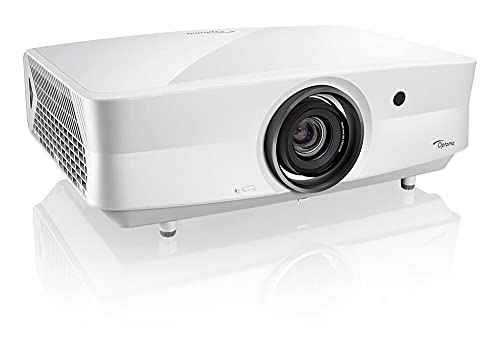
Optoma UHZ5000 Review | 85 Data compared

double-arrow
  • Avg. price: ~£3,780
  • ANSI lumens: 5000
  • Native panel resolution: 1920x1080
  • Throw ratio: 1.2-1.92:1

Optoma UHZ5000 review. Compare 85 technical specifications and user reviews to see how it ranks among projectors and if it is worth buying.

8.0

Overall score

What it is: An overall evaluation of the projector's quality, based on technical analyses and user reviews.

When it matters: When you need a quick reference to identify the best projectors on the market.

Score components:

90.0%

8.0

Technical Score

10.0%

?

User score

Excellent
8.0

Technical Score

What it is: An assessment of the projector's technical performance, covering eight key areas: image quality, brightness, contrast, connectivity, gaming features, smart features, audio, and design.

When it matters: When you want to compare projectors based on technical performance and available features.

Score components:

42.0%

9.1

Image Quality

22.0%

5.1

Projection & Lens

12.0%

9.4

HDMI & Gaming

10.0%

8.0

Audio & Features

8.0%

7.6

Connectivity

6.0%

8.4

Design & Power

Excellent
?

User score

What it is: A rating that combines user reviews and the total number of reviews received by the projector.

When it matters: When you want to know how a projector performs in real use and how reliable it remains over time according to user feedback.

Score components:

70.0%

?

User reviews

30.0%

?

Popularity

  • 7.1
    Gaming

    Score components:

    35.0%

    10

    Input lag

    25.0%

    1.0

    Refresh rate

    20.0%

    9.3

    Output Resolution

    10.0%

    10

    HDR10 support

    10.0%

    5.0

    Audio output power

  • 5.9
    Portable

    Score components:

    35.0%

    4.0

    Weight

    20.0%

    ?

    Has A Built-In Speaker

    15.0%

    1.0

    Bluetooth connectivity

    15.0%

    ?

    Wi-Fi connectivity

    15.0%

    10

    Smart TV features

  • 9.4
    Home theatre

    Score components:

    30.0%

    9.3

    Output Resolution

    25.0%

    10

    HDR10 support

    20.0%

    10

    Dolby Vision support

    15.0%

    10

    ANSI lumens

    10.0%

    6.5

    Audible noise

  • No image
No image

Best prices in UK

Best rankings

?

Available: ranking among products currently available (including other versions of this product).
All: ranking among all products in the database.

Verdict

The Optoma UHZ5000 is a high-performance 4K UHD laser projector featuring 5,000 ANSI lumens and a massive 3,500,000:1 dynamic contrast ratio, making it ideal for well-lit professional or home cinema environments. It supports advanced formats like Dolby Vision, HDR10+, and HLG, while its DuraCore laser light source provides a maintenance-free lifespan of up to 30,000 hours. Key pros include exceptional brightness, a 1.6x manual zoom, vertical and horizontal lens shift for flexible installation, and an ultra-low input lag of 8.5ms at 4K/60Hz for gaming. However, its manual focus and lack of motorized zoom may be seen as drawbacks for high-end setups, and it lacks built-in smart TV features, often requiring an external streaming device.

Technical Specifications of Optoma UHZ5000

Technical Score

What it is: An assessment of the projector's technical performance, covering eight key areas: image quality, brightness, contrast, connectivity, gaming features, smart features, audio, and design.

When it matters: When you want to compare projectors based on technical performance and available features.

Score components:

42.0%

?

Image Quality

22.0%

?

Projection & Lens

12.0%

?

HDMI & Gaming

10.0%

?

Audio & Features

8.0%

?

Connectivity

6.0%

?

Design & Power

8.0
Optoma UHZ5000 has a technical score of 7.99 points, which is higher than 96.1% of projectors.
User score

What it is: A rating that combines user reviews and the total number of reviews received by the projector.

When it matters: When you want to know how a projector performs in real use and how reliable it remains over time according to user feedback.

Score components:

70.0%

0.0

User reviews

30.0%

1.0

Popularity

?
Popularity
What it is: An indicator based on the number of reviews received by the projector.
When it matters: When you prefer to buy a product chosen and reviewed by many other consumers.
1.0
Optoma UHZ5000 has a popularity of 1 points, which is lower than 55.3% of products in this category.
Ratio quality/price

What it is: An indicator that combines the projector's overall rating with its cost.

When it matters: When you are looking for a projector with a good balance between quality and price.

Score components:

60.0%

8.0

Overall score

40.0%

1.0

Price

5.9
Optoma UHZ5000 has a quality-to-price ratio of 5.9 points, which is lower than 56.1% of products in this category.
ANSI lumens
What it is: Brightness output measured in ANSI lumens.
When it matters: When you watch with ambient light or on a large screen, higher brightness matters.

Importance: HIGH

5,000
Optoma UHZ5000 reaches 5000 ANSI lumens, brighter than 92.8% of projectors and equal to 2.5% of projectors.
Contrast ratio
What it is: Ratio of brightest white to darkest black displayed by the projector.
When it matters: When you watch movies in a dark room, stronger contrast matters.

Importance: HIGH

3,500,000:1
Optoma UHZ5000 has a contrast ratio of 3500000:1, higher than 97.7% of projectors and equal to 0.1% of projectors.
Dynamic contrast ratio.
Native panel resolution
What it is: Native resolution of the display panel or imaging device.
When it matters: When picture sharpness matters enough that you want to know the projector's true native imaging resolution, not just supported input formats.

Importance: HIGH

1920x1080
Optoma UHZ5000 uses a native resolution of 1920x1080, higher than 26.2% of projectors and equal to 60.1% of projectors.
Uses XPR pixel-shifting for 4K output.
Output Resolution
What it is: The resolution the projector can actually display through its imaging system.
When it matters: When you want to know the actual image detail the projector can put on screen rather than just the source format it accepts.

Importance: HIGH

3840x2160
Optoma UHZ5000 supports output resolution up to 3840x2160, higher than 69.1% of projectors and equal to 26.1% of projectors.
Projection technology
What it is: Projection imaging technology used by the projector.
When it matters: When color character, contrast behavior, and overall image personality matter before you compare brightness alone.

Importance: MEDIUM

DLP
Show more
Throw ratio
What it is: Ratio between projection distance and image width.
When it matters: When room size and screen size have to match properly instead of guessing whether the projector will fit the space.

Importance: MEDIUM

1.2-1.92:1
Min throw distance
What it is: Minimum distance required between projector and screen.
When it matters: When room depth is limited and you still need a large image from a short placement distance.

Importance: MEDIUM

1.3 m
Optoma UHZ5000 needs a minimum throw distance of 1.3 m, longer than 71.2% of projectors and equal to 4% of projectors.
Max projection size
What it is: Maximum supported image size for projection, measured diagonally.
When it matters: When you want a cinema-size picture, maximum projection size matters.

Importance: MEDIUM

302 inch
Optoma UHZ5000 supports projection sizes up to 302 inch, larger than 91.4% of projectors and equal to 1.9% of projectors.
Zoom ratio
What it is: Optical zoom capability expressed as a ratio.
When it matters: When projector placement is not ideal and you need optical zoom to frame the image correctly.

Importance: MEDIUM

1.6
Optoma UHZ5000 offers a zoom ratio of 1.6, wider than 58.4% of projectors and equal to 18.6% of projectors.
Motorized zoom
What it is: Motorized control of the optical zoom function.
When it matters: When the projector position is fixed but screen size or framing still needs to be adjusted from a distance.

Importance: LOW

no
Optoma UHZ5000 does not have motorized zoom. 16.3% of projectors have motorized zoom.
Show more
Input lag
What it is: Time delay between input signal and displayed image, measured in milliseconds.
When it matters: When gaming responsiveness matters and you want controls to feel more immediate on fast titles.

Importance: MEDIUM

8.5 ms
Optoma UHZ5000 has input lag of 8.5 ms, lower than 86% of projectors and equal to 0.2% of projectors.
In 1080P.
Auto low latency mode (ALLM)
What it is: Automatically reduces input lag when gaming.
When it matters: When you play fast games, lower latency matters.

Importance: LOW

?
Variable refresh rate (VRR)
What it is: Support for variable refresh rate to reduce screen tearing.
When it matters: When gaming matters and you want the projector to handle variable frame rates with less tearing or stutter.

Importance: LOW

?
HDMI version
What it is: Version of the HDMI standard supported.
When it matters: When source devices push newer HDMI features, refresh rates, or bandwidth levels that older ports may limit.

Importance: LOW

2.1
Optoma UHZ5000 supports HDMI 2.1, more modern than 82.3% of projectors and equal to 17.7% of projectors.
Different HDMI ports use 2.1 and 2.0.
Max HDMI bandwidth
What it is: Maximum bandwidth supported by HDMI inputs, measured in Gbps.
When it matters: When newer consoles, gaming PCs, or media boxes need more HDMI throughput than older projectors can handle.

Importance: LOW

48 Gbps
Optoma UHZ5000 supports HDMI bandwidth up to 48 Gbps, higher than 90.2% of projectors and equal to 9.8% of projectors.
Different HDMI ports reach 48 and 18 Gbps.
Show more
N. of HDMI ports
What it is: Number of available HDMI input ports.
When it matters: When you need a console, streamer, set-top box, and another source connected at the same time without swapping cables.

Importance: LOW

3
Optoma UHZ5000 has 3 HDMI port/s, more than 92.7% of projectors and equal to 7% of projectors.
Wi-Fi connectivity
What it is: Support for Wi-Fi network connectivity.
When it matters: When the projector should handle network features, updates, or streaming functions without needing wired Ethernet only.

Importance: LOW

?
Wi-Fi version
What it is: Supported Wi-Fi standard version.
When it matters: When wireless stability and throughput matter for streaming, updates, or projector ecosystem features.

Importance: LOW

N/A
Bluetooth connectivity
What it is: Support for Bluetooth wireless connectivity.
When it matters: When you plan to pair wireless speakers, headphones, remotes, or other accessories directly with the projector.

Importance: LOW

no
Optoma UHZ5000 does not support Bluetooth. 50% of projectors support Bluetooth.
Bluetooth version
What it is: Supported Bluetooth version.
When it matters: When wireless accessory compatibility and connection quality matter beyond Bluetooth being a simple checkbox.

Importance: LOW

N/A
Show more
Smart TV features
What it is: Includes built-in Smart TV functions or operating system.
When it matters: When you prefer built-in apps and streaming convenience instead of adding an external media stick or box.

Importance: LOW

yes
Optoma UHZ5000 has smart TV features. 56.3% of projectors have smart TV features.
Operating system
What it is: The built-in software platform that runs the projector interface, streaming apps, and smart features.
When it matters: When you care about which apps are available, how modern the smart interface feels, and whether the projector includes a built-in streaming platform.

Importance: LOW

Android
Android OS

Importance: MEDIUM

yes
Dedicated smartphone app
What it is: Availability of a dedicated smartphone control app.
When it matters: When you want setup, input switching, or basic control handled from your phone without always reaching for a remote.

Importance: LOW

?
Remote control
What it is: Comes with a dedicated remote control for operation.
When it matters: When you want easier everyday control without extra gear, built-in convenience features matter.

Importance: LOW

yes
Optoma UHZ5000 includes a remote control. 1.6% of projectors include a remote control.
Show more
Light source type
What it is: Type of light source used by the projector.
When it matters: When maintenance expectations, startup behavior, brightness stability, and long-term running costs all matter in the buying decision.

Importance: LOW

laser
Optoma UHZ5000 uses laser light source technology, more advanced than 74% of projectors and equal to 26% of projectors.
Laser Phosphor.
Laser Light Source
What it is: Whether the projector uses a laser light source instead of a traditional lamp.
When it matters: When lower maintenance, faster startup, and a lamp-free light engine matter over the long term.

Importance: LOW

yes
Optoma UHZ5000 uses a laser light source. 72% of projectors use a laser light source.
Lamp life
What it is: Expected operational lifespan of the lamp in standard mode, measured in hours.
When it matters: When you care about running costs and maintenance intervals, light-source lifespan matters.

Importance: LOW

30,000 hours
Optoma UHZ5000 offers lamp life of 30000 hours, shorter than 68.9% of projectors and equal to 25.4% of projectors.
Laser light source life.
Lamp life (eco mode)
What it is: Expected operational lifespan of the lamp in eco mode, measured in hours.
When it matters: When you care about running costs and maintenance intervals, light-source lifespan matters.

Importance: LOW

30,000 hours
Optoma UHZ5000 offers eco-mode lamp life of 30000 hours, shorter than 59.6% of projectors and equal to 35.6% of projectors.
Operating power consumption
What it is: Average power consumption during normal operation.
When it matters: When electricity use and heat output matter because the projector runs for long sessions or frequent daily use.

Importance: LOW

345 W
Optoma UHZ5000 uses 345 W of power, more than 81.5% of projectors and equal to 0.2% of projectors.
Show more

Optoma UHZ5000 vs the average projector

  • 2.27x higher brightness
    Optoma UHZ5000 has higher ANSI lumens than the average projector (5,000 vs 2,200). The average projector has 2,200 ANSI lumens.
    What it is: Brightness output measured in ANSI lumens.
    When it matters: When you watch with ambient light or on a large screen, higher brightness matters.

    Importance: HIGH

    Optoma UHZ5000 has higher ANSI lumens than the average projector (5,000 vs 2,200). The average projector has 2,200 ANSI lumens.5,000 vs 2,200
  • Higher contrast ratio
    Optoma UHZ5000 has a higher contrast ratio than the average projector (3500000:1 vs 10000:1). The average projector has 10000:1 of contrast ratio.
    Dynamic contrast ratio.
    What it is: Ratio of brightest white to darkest black displayed by the projector.
    When it matters: When you watch movies in a dark room, stronger contrast matters.

    Importance: HIGH

    Optoma UHZ5000 has a higher contrast ratio than the average projector (3500000:1 vs 10000:1). The average projector has 10000:1 of contrast ratio.3,500,000:1 vs 10,000:1
  • Supports Dolby Vision
    Optoma UHZ5000 supports Dolby Vision, while the average projector does not. 7.2% of projectors support Dolby Vision.
    What it is: Support for Dolby Vision high dynamic range format.
    When it matters: When you watch HDR movies and streaming releases, broad HDR support matters.

    Importance: MEDIUM

    Optoma UHZ5000 supports Dolby Vision, while the average projector does not. 7.2% of projectors support Dolby Vision.
  • Higher output resolution
    Optoma UHZ5000 supports a higher output resolution than the average projector (3840x2160 vs 1920x1080). The average projector outputs at 1920x1080 resolution.
    What it is: The resolution the projector can actually display through its imaging system.
    When it matters: When you want to know the actual image detail the projector can put on screen rather than just the source format it accepts.

    Importance: HIGH

    Optoma UHZ5000 supports a higher output resolution than the average projector (3840x2160 vs 1920x1080). The average projector outputs at 1920x1080 resolution.3840x2160 vs 1920x1080
  • Supports HDR10+
    Optoma UHZ5000 supports HDR10+, while the average projector does not. 15.6% of projectors support HDR10+.
    What it is: Support for HDR10+ dynamic high dynamic range format.
    When it matters: When you care whether the projector supports dynamic HDR metadata rather than static HDR formats alone.

    Importance: LOW

    Optoma UHZ5000 supports HDR10+, while the average projector does not. 15.6% of projectors support HDR10+.
  • Supports pixel shifting
    Optoma UHZ5000 supports pixel shifting, while the average projector does not. 28.4% of projectors support pixel shifting.
    Via XPR technology.
    What it is: Uses pixel shifting to increase perceived image resolution.
    When it matters: When you want more perceived detail than the native panel alone would provide, especially on bigger screens.

    Importance: LOW

    Optoma UHZ5000 supports pixel shifting, while the average projector does not. 28.4% of projectors support pixel shifting.
  • 52 inch larger projection size
    Optoma UHZ5000 has a higher projection size than the average projector (302 inch vs 250 inch). The average projector has 250 inch of projection size.
    What it is: Maximum supported image size for projection, measured diagonally.
    When it matters: When you want a cinema-size picture, maximum projection size matters.

    Importance: MEDIUM

    Optoma UHZ5000 has a higher projection size than the average projector (302 inch vs 250 inch). The average projector has 250 inch of projection size.302 inch vs 250 inch
  • Supports HDMI ARC
    Optoma UHZ5000 supports HDMI ARC, while the average projector does not. 36.1% of projectors support HDMI ARC.
    Via eARC.
    What it is: Support for HDMI ARC to send audio to external devices.
    When it matters: When you use a soundbar, receiver, or speakers, audio output options matter.

    Importance: LOW

    Optoma UHZ5000 supports HDMI ARC, while the average projector does not. 36.1% of projectors support HDMI ARC.
  • 2.27x higher brightness
    Optoma UHZ5000 has higher ANSI lumens than the average projector (5,000 vs 2,200). The average projector has 2,200 ANSI lumens.
  • Higher contrast ratio
    Optoma UHZ5000 has a higher contrast ratio than the average projector (3500000:1 vs 10000:1). The average projector has 10000:1 of contrast ratio.
  • Supports Dolby Vision
    Optoma UHZ5000 supports Dolby Vision, while the average projector does not. 7.2% of projectors support Dolby Vision.
  • Higher output resolution
    Optoma UHZ5000 supports a higher output resolution than the average projector (3840x2160 vs 1920x1080). The average projector outputs at 1920x1080 resolution.
  • Supports HDR10+
    Optoma UHZ5000 supports HDR10+, while the average projector does not. 15.6% of projectors support HDR10+.
  • Supports pixel shifting
    Optoma UHZ5000 supports pixel shifting, while the average projector does not. 28.4% of projectors support pixel shifting.
  • 2 bit deeper color depth
    Optoma UHZ5000 has a higher color depth than the average projector (12 bit vs 10 bit). The average projector has 10 bit of color depth.
  • Supports HLG
    Optoma UHZ5000 supports HLG, while the average projector does not. 42.7% of projectors support HLG.
  • 52 inch larger projection size
    Optoma UHZ5000 has a higher projection size than the average projector (302 inch vs 250 inch). The average projector has 250 inch of projection size.
  • 0.3 wider zoom range
    Optoma UHZ5000 has a higher zoom ratio than the average projector (1.6 vs 1.3). The average projector has 1.3 of zoom ratio.
  • Supports frame interpolation
    Optoma UHZ5000 supports frame interpolation, while the average projector does not. 39.9% of projectors support frame interpolation.
  • 18.5 ms Low input lag
    Optoma UHZ5000 has a lower input lag than the average projector (8.5 ms vs 27 ms). The average projector has 27 ms of input lag.
  • Modern HDMI standard
    Optoma UHZ5000 offers Modern HDMI standard than the average projector (2.1 vs 2.0). The average projector supports HDMI 2.0.
  • 2.67x higher HDMI bandwidth
    Optoma UHZ5000 has a higher HDMI bandwidth than the average projector (48 Gbps vs 18 Gbps). The average projector has 18 Gbps of HDMI bandwidth.
  • Supports HDMI ARC
    Optoma UHZ5000 supports HDMI ARC, while the average projector does not. 36.1% of projectors support HDMI ARC.
  • Includes S/PDIF output
    Optoma UHZ5000 has an S/PDIF output, while the average projector does not. 17.2% of projectors have an S/PDIF output.
  • 2 more USB ports
    Optoma UHZ5000 has more USB ports than the average projector (3 vs 1). The average projector has 1 USB ports.
  • 1 more RJ45 ports
    Optoma UHZ5000 has more RJ45 ports than the average projector (1 vs 0). The average projector has 0 RJ45 ports.
  • 1 more HDMI ports
    Optoma UHZ5000 has more HDMI ports than the average projector (3 vs 2). The average projector has 2 HDMI ports.
  • Supports Miracast
    Optoma UHZ5000 supports Miracast, while the average projector does not. 45.1% of projectors support Miracast.
  • Includes memory card slot
    Optoma UHZ5000 includes an external memory slot, while the average projector does not. 34.9% of projectors include an external memory slot.
  • Built-in smart TV features
    Optoma UHZ5000 has built-in smart TV features, while the average projector does not. 43.7% of projectors have built-in smart TV features.
  • Built-in stereo speakers
    Optoma UHZ5000 has stereo speakers, while the average projector does not. 48.9% of projectors have stereo speakers.
  • Supports voice commands
    Optoma UHZ5000 supports voice commands, while the average projector does not. 37.1% of projectors support voice commands.
  • Uses laser light source
    Optoma UHZ5000 uses a laser light source, while the average projector does not. 28.1% of projectors use a laser light source.
  • 10,000 hours longer lamp life
    Optoma UHZ5000 has a higher lamp life than the average projector (30,000 hours vs 20,000 hours). The average projector has 20,000 hours of lamp life.
  • 3 dB quieter eco mode
    Optoma UHZ5000 has a lower audible noise in eco mode than the average projector (25 dB vs 28 dB). The average projector has 28 dB of audible noise in eco mode.
  • 10,000 hours longer eco lamp life
    Optoma UHZ5000 has a higher lamp life in eco mode than the average projector (30,000 hours vs 20,000 hours). The average projector has 20,000 hours of lamp life in eco mode.
  • 29.4% lower refresh rate
    Optoma UHZ5000 has a lower refresh rate than the average projector (60 Hz vs 85 Hz). The average projector has 85 Hz of refresh rate.
    At 4K.
  • 20 % less horizontal lens shift
    Optoma UHZ5000 has fewer horizontal lens shift than the average projector (10 % vs 30 %). The average projector has 30 % horizontal lens shift.
  • 0.24 m longer throw distance
    Optoma UHZ5000 has a higher throw distance than the average projector (1.3 m vs 1.06 m). The average projector has 1.06 m of throw distance.
  • 34 % less vertical lens shift
    Optoma UHZ5000 has fewer vertical lens shift than the average projector (26 % vs 60 %). The average projector has 60 % vertical lens shift.
    Asymmetrical range: +6% / -26%.
  • 3.4x heavier
    Optoma UHZ5000 is heavier than the average projector (10.5 kg vs 3.1 kg). The average projector weighs 3.1 kg.
  • 111.1 W higher power consumption
    Optoma UHZ5000 uses more power than the average projector (345 W vs 233.9 W). The average projector uses 233.9 W of power.
  • 198.5 mm wider body
    Optoma UHZ5000 is wider than the average projector (498 mm vs 299.5 mm). The average projector has a width of 299.5 mm.
  • 1 dB louder operation
    Optoma UHZ5000 has a higher audible noise than the average projector (31 dB vs 30 dB). The average projector has 30 dB of audible noise.
  • 20 % less horizontal lens shift
    Optoma UHZ5000 has fewer horizontal lens shift than the average projector (10 % vs 30 %). The average projector has 30 % horizontal lens shift.
    What it is: Horizontal lens shift adjustment range for image positioning.
    When it matters: When you want cleaner off-center placement without relying as heavily on digital keystone correction.

    Importance: MEDIUM

    Optoma UHZ5000 has fewer horizontal lens shift than the average projector (10 % vs 30 %). The average projector has 30 % horizontal lens shift.10 % vs 30 %
  • 29.4% lower refresh rate
    Optoma UHZ5000 has a lower refresh rate than the average projector (60 Hz vs 85 Hz). The average projector has 85 Hz of refresh rate.
    At 4K.
    What it is: Number of screen refreshes per second, measured in hertz.
    When it matters: When motion clarity matters for gaming, sports, or fast-moving video instead of slower cinematic content only.

    Importance: MEDIUM

    Optoma UHZ5000 has a lower refresh rate than the average projector (60 Hz vs 85 Hz). The average projector has 85 Hz of refresh rate.60 Hz vs 85 Hz
  • 34 % less vertical lens shift
    Optoma UHZ5000 has fewer vertical lens shift than the average projector (26 % vs 60 %). The average projector has 60 % vertical lens shift.
    Asymmetrical range: +6% / -26%.
    What it is: Vertical lens shift adjustment range for image positioning.
    When it matters: When you want installation flexibility without depending only on digital keystone correction.

    Importance: MEDIUM

    Optoma UHZ5000 has fewer vertical lens shift than the average projector (26 % vs 60 %). The average projector has 60 % vertical lens shift.26 % vs 60 %
  • 0.24 m longer throw distance
    Optoma UHZ5000 has a higher throw distance than the average projector (1.3 m vs 1.06 m). The average projector has 1.06 m of throw distance.
    What it is: Minimum distance required between projector and screen.
    When it matters: When room depth is limited and you still need a large image from a short placement distance.

    Importance: MEDIUM

    Optoma UHZ5000 has a higher throw distance than the average projector (1.3 m vs 1.06 m). The average projector has 1.06 m of throw distance.1.3 m vs 1.06 m
  • 3.4x heavier
    Optoma UHZ5000 is heavier than the average projector (10.5 kg vs 3.1 kg). The average projector weighs 3.1 kg.
    What it is: Total weight of the projector including lamp and lens.
    When it matters: When you move the projector between rooms or setups, lower weight matters.

    Importance: LOW

    Optoma UHZ5000 is heavier than the average projector (10.5 kg vs 3.1 kg). The average projector weighs 3.1 kg.10.54 kg vs 3.1 kg
  • 4.91x more expensive
    Optoma UHZ5000 is more expensive than the average projector (£3,780 vs £770).
    Optoma UHZ5000 is more expensive than the average projector (£3,780 vs £770).£3,780 vs £770
  • 111.1 W higher power consumption
    Optoma UHZ5000 uses more power than the average projector (345 W vs 233.9 W). The average projector uses 233.9 W of power.
    What it is: Average power consumption during normal operation.
    When it matters: When electricity use and heat output matter because the projector runs for long sessions or frequent daily use.

    Importance: LOW

    Optoma UHZ5000 uses more power than the average projector (345 W vs 233.9 W). The average projector uses 233.9 W of power.345 W vs 233.9 W
  • 93.2% less popular
    Optoma UHZ5000 has a lower popularity than the average projector (1.00 vs 1.932).
    What it is: An indicator based on the number of reviews received by the projector.
    When it matters: When you prefer to buy a product chosen and reviewed by many other consumers.
    Optoma UHZ5000 has a lower popularity than the average projector (1.00 vs 1.932).1 vs 1.93

Graphic comparison of Optoma UHZ5000 and

Attribute category
Attribute
No results found

Third-party reviews

What customers like about Optoma UHZ5000?

  • High brightness (5,000 ANSI lumens) suitable for rooms with ambient light
  • Long-lasting laser light source with up to 30,000 hours in eco mode
  • Excellent for gaming with low input lag (16.7ms at 4K/60Hz, 4ms at 1080p/240Hz)
  • Sharp 4K UHD resolution using pixel-shifting technology
  • Quiet operation, especially in eco mode (25 dB)
  • Support for HDR10+, Dolby Vision, and 3D content
  • Versatile installation with vertical and horizontal lens shift and 360-degree orientation

What customers dislike about Optoma UHZ5000?

  • High initial purchase price compared to lamp-based alternatives
  • Lack of motorized focus and motorized zoom features
  • Onboard smart TV features/apps are often limited and may not support 4K playback
  • Internal speakers are functional but lack depth and volume for a home cinema experience
  • Some users report focus uniformity issues across the screen
  • Visible banding in color gradations reported during HDR content playback
  • Dynamic black settings can cause noticeable image flicker

Expert reviews

H
heimkinoraum.de
16/03/2025

The Optoma UHZ5000 is a highly capable 4K UHD laser projector tailored specifically for living room setups with high ambient light. Boasting an impressive 5000 ANSI lumens from a dual-laser engine, it delivers bright, deep, and vividly accurate colours without the oversaturated "laser speckle" common in triple-laser models. Prominent strengths include its rare support for both Dolby...Read more

M
mondoprojos.fr
04/02/2025

for the Optoma UHZ68LV projector: Overview and Features The Optoma UHZ68LV is a 4K DLP XPR dual-laser home cinema projector that serves as the European counterpart to the UHZ916 model. It marks a significant milestone for Optoma by being their first projector to integrate Dolby Vision compatibility, alongside supporting broad HDR formats like HDR10, HLG, and HDR10+. Equipped with a...Read more

H
heimkinoraum.de
16/03/2025

The Optoma UHZ5000 is a highly versatile 4K UHD dual-laser projector designed specifically to act as a high-performance "picture engine" for living room home theatres. It excels in daylight environments due to its exceptional 5000 ANSI-lumen brightness and a dual-laser engine that provides deep, authentic colours without the distracting "laser speckle" or over-saturation common in...Read more

Video reviews

Compare Optoma UHZ5000 with

VS
VS

Compare