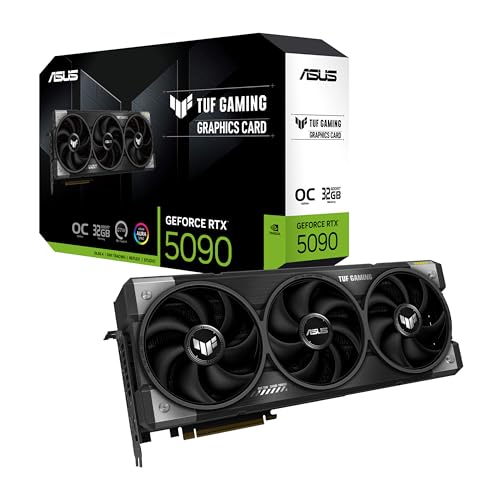
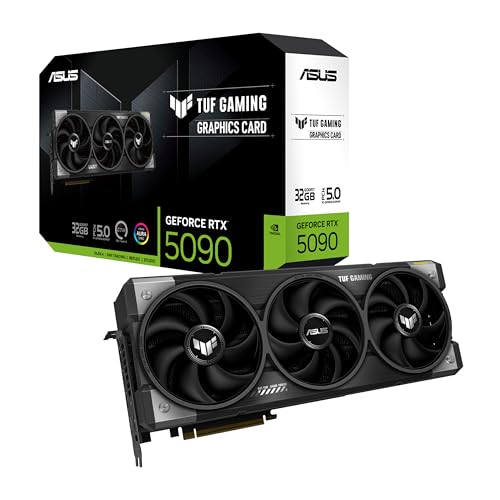
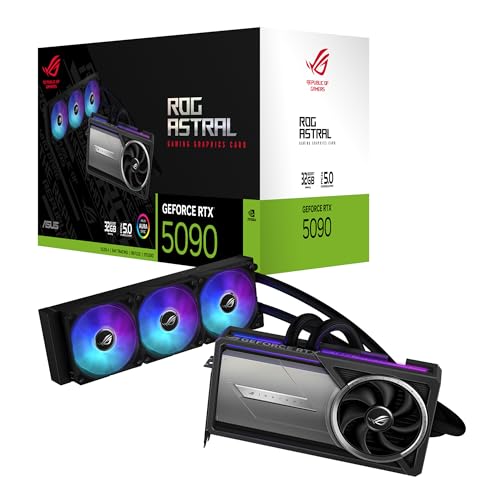
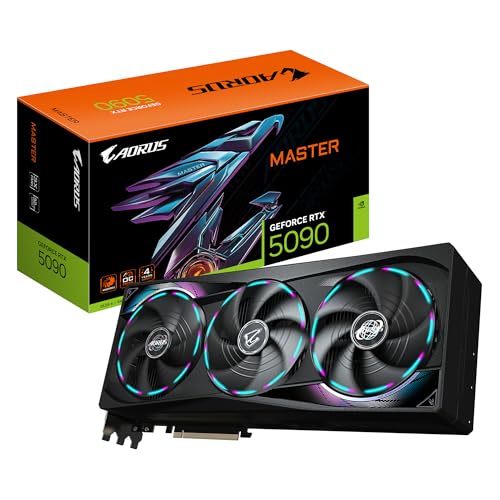
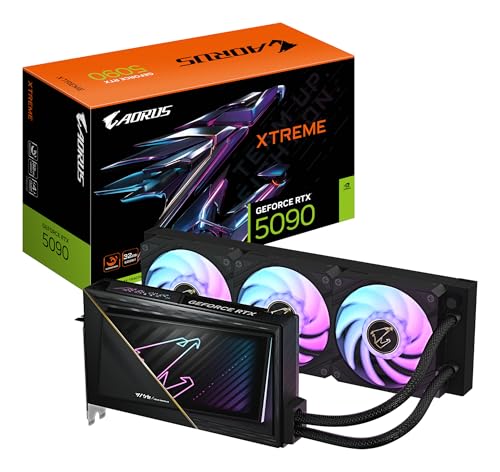
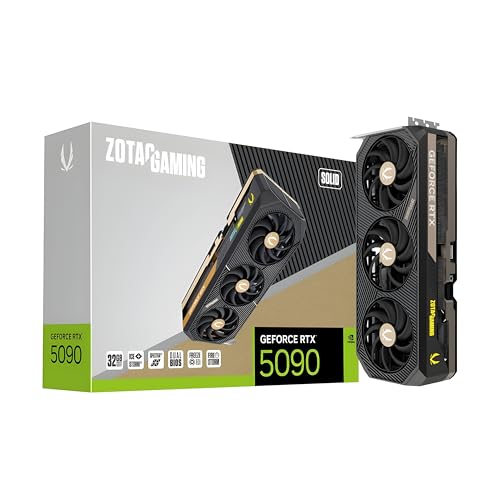
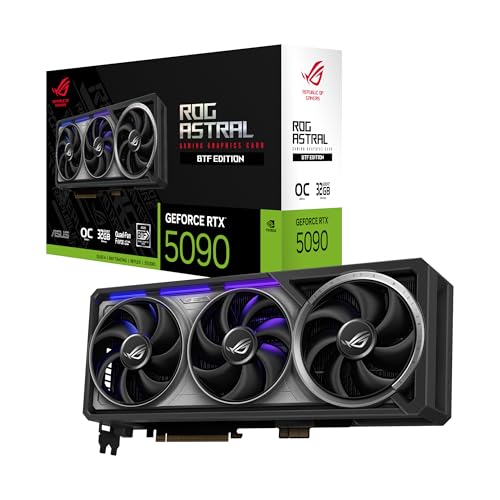
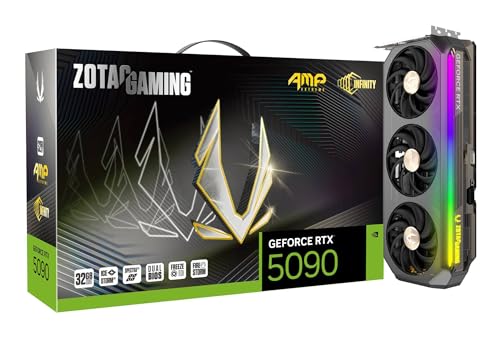
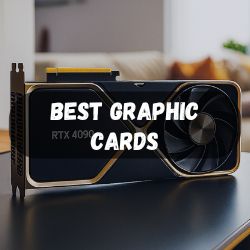
What is the RTX 5090?
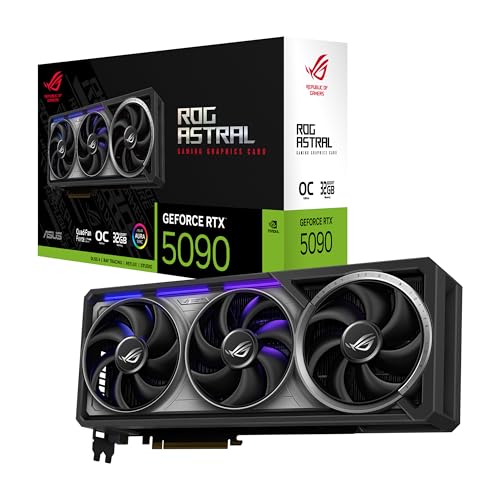
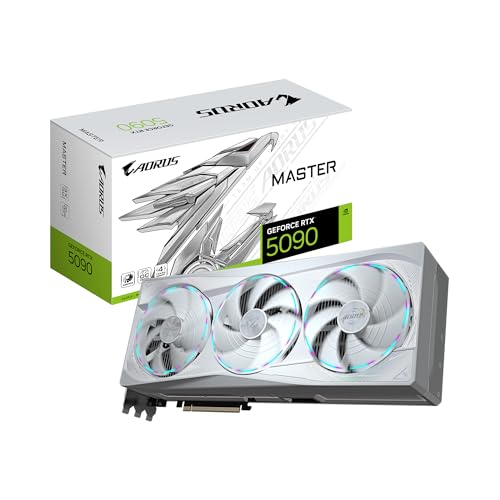
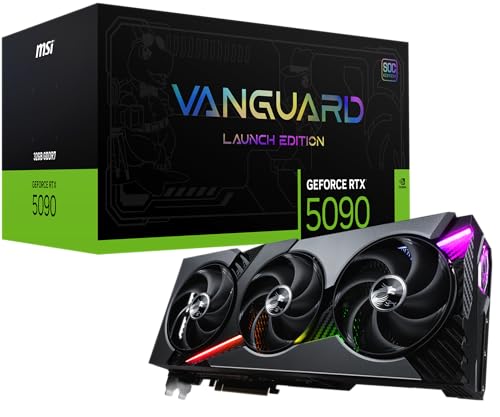
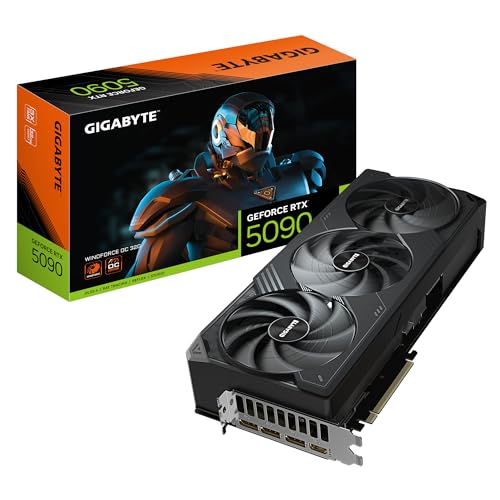
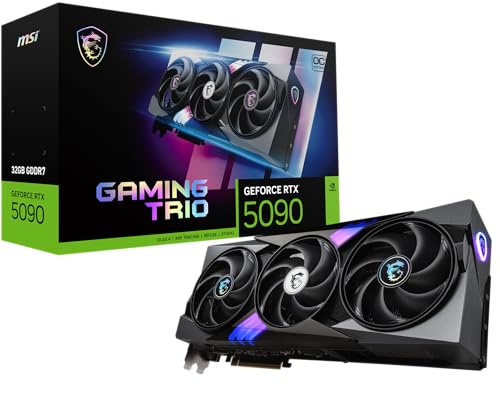
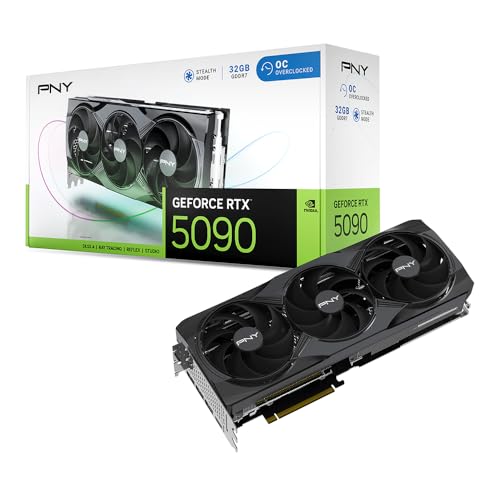
The RTX 5090 is an ultra-enthusiast Nvidia GeForce graphics card family built mainly on the Blackwell architecture for buyers who want the highest consumer-tier GPU class. In practical terms, it combines flagship positioning with a very large memory subsystem, because the current lineup is almost entirely made up of 32 GB GDDR7 cards on a 512-bit bus.
That makes the RTX 5090 less of a normal upgrade step and more of a top-tier platform choice. It is the kind of GPU buyers choose when they want maximum headroom for 4K gaming, advanced ray tracing, or heavy GPU workloads and are willing to accept the matching cost, size, and power requirements.
Who should buy the RTX 5090?
The RTX 5090 is best for buyers who want the strongest current GeForce tier for uncompromised 4K gaming, heavy ray tracing, large rendering workloads, or local AI use and who are comfortable paying for a true halo GPU. It is especially suitable when 32 GB of VRAM, a 512-bit bus, and maximum headroom matter more than size, efficiency, or value.
It is a weaker fit for buyers who mainly play at 1440p, want a simpler high-end gaming build, or do not want to size the whole system around a very large roughly 575 W-class graphics card. In those cases, an RTX 5080 or RTX 4090-level card is usually easier to justify.
Is the RTX 5090 a good graphics card?
RTX 5090 graphics cards are good only in the very narrow sense that they are extreme halo GPUs for buyers who want the strongest current GeForce tier and are willing to build around it.
The main reason to buy an RTX 5090 is simple: it gives you one of the most extreme consumer GPU profiles available, with 32 GB of GDDR7 memory, a 512-bit bus, very strong ray tracing, DLSS support, and the kind of headroom that suits uncompromised 4K gaming, large rendering workloads, and heavier AI tasks.
The main caution is that this class is enormous in every sense. RTX 5090 cards are exceptionally expensive, physically large, and usually around the 575 W power class, so they only make sense when your workload or build priorities genuinely justify a true halo GPU.
The chart below compares RTX 5090 brands by average overall score.
[horizontal-chart-11327655575883929682043690676578461101992936676978]
What are the main advantages of the RTX 5090?
The main advantages of the RTX 5090 are as follows:
- Extreme flagship specification: The RTX 5090 sits at the top of the GeForce stack with a 32 GB GDDR7 memory pool and a 512-bit bus. That is an unusually heavy specification for 4K, creator work, and local AI use.
- Best fit for no-compromise workloads: This is the kind of card aimed at ultra-high-refresh 4K gaming, serious rendering, and the most demanding desktop GPU tasks. It is built for buyers who want the top consumer tier, not just a premium card.
- Newest Nvidia feature stack: The RTX 5090 pairs its raw speed with Nvidia's latest ray tracing, DLSS, and media pipeline. That makes it attractive for buyers who want the newest ecosystem as well as the fastest hardware.
- Large long-term VRAM margin: Thirty-two gigabytes gives the RTX 5090 much more runway for future high-resolution games, heavier AI models, and large creative projects than the 16 GB and 24 GB classes below it.
- Partner cards are built to a very high standard: Most RTX 5090 variants use premium power delivery, oversized coolers, and flagship-grade board design. Buyers usually get very serious hardware execution at this level.
What are the main disadvantages of the RTX 5090?
The RTX 5090 has the following disadvantages:
- Extreme price tier: The RTX 5090 belongs in the kind of price class that only makes sense for a very small group of buyers. It is not just expensive; it is one of the least value-oriented ways to buy gaming performance.
- Very heavy power and thermal demands: A 5090-based system typically needs a strong PSU, excellent airflow, and more attention to cable and connector handling than normal gaming builds.
- Very large partner designs: Many RTX 5090 cards are physically huge, often with oversized triple-fan or four-slot layouts. Small cases and modest airflow layouts are usually a bad fit.
- Overkill for most people: If your real target is ordinary 1440p gaming or mixed-use desktop work, the RTX 5090 delivers much more GPU than you will actually use.
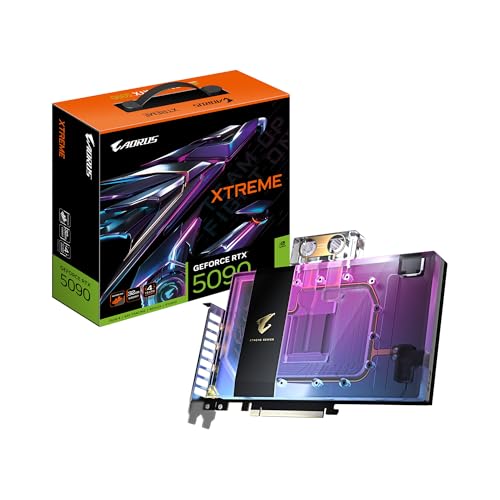
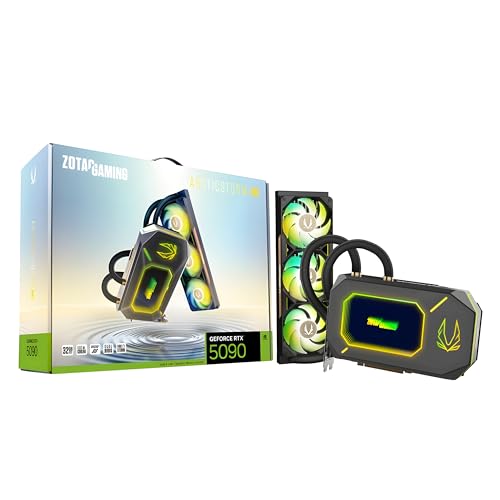
- Premium markups get even worse at the top: Once buyers move from a standard high-end version into showcase coolers, liquid-cooled editions, and extreme factory overclocks, the price increase can become far larger than the practical gain.
How much does the RTX 5090 cost?
RTX 5090 graphics cards usually cost about £1,800 to £4,860, with many mainstream custom cards sitting closer to roughly £2,600-£3,600.
At the lower end of the range, you are mostly looking at the simpler air-cooled cards that already deliver the real point of this tier. Once you move higher, the extra money usually goes into larger coolers, quieter operation, heavier factory tuning, or prestige liquid-cooled designs rather than into a different class of GPU silicon. The very expensive editions make sense only if you specifically want that hardware style.
This chart visualizes RTX 5090 graphics card prices.
[vertical-chart-16714221025636768947167947905700651516372122779276]
How does the RTX 5090 compare with the RTX 4090?
The RTX 5090 sits above the RTX 4090 as the newer and heavier halo option. A typical RTX 5090 gives you 32 GB of GDDR7 on a 512-bit bus, while most RTX 4090 cards use 24 GB of GDDR6X on a 384-bit bus.
That step up also affects the rest of the system. The RTX 5090 is usually around the 575 W class with even larger coolers and much higher pricing, while the RTX 4090 is easier to power, easier to cool, and often easier to justify if you still want a flagship GPU.
The RTX 5090 is the better fit when you want the biggest VRAM pool, the strongest current-generation GeForce tier, or more room for heavy creator and AI workloads. The RTX 4090 is usually the smarter buy if you want elite performance without moving all the way into 5090-scale cost and power.
What should you consider while choosing the RTX 5090?
You should consider the following factors when choosing the RTX 5090:
- Workload realism: The RTX 5090 makes sense for maximum 4K gaming, heavy ray tracing, rendering, AI workloads, or other jobs that can actually use this class of GPU. It is much harder to justify if your real use is lighter gaming or a general-purpose premium PC.
- VRAM and memory system: A typical RTX 5090 gives you 32 GB of GDDR7 on a 512-bit bus. That is one of the main reasons to buy this tier, so decide whether you truly need that much memory headroom or whether a cheaper flagship already covers your workload.
- PSU and connector planning: Most RTX 5090 cards sit around the 575 W class, so PSU quality, wattage headroom, and the exact 12V-2x6 cable setup matter immediately. This is not a card to treat like a routine drop-in upgrade.
- Card size and case fit: Many RTX 5090 models are extremely large, heavy boards with very thick coolers. Check case length, slot clearance, radiator conflicts, airflow path, and whether the build may need a support bracket.
- Cooler and acoustics: Two RTX 5090 cards can use the same GPU but behave very differently in noise and thermals. Heatsink size, fan tuning, and board-partner cooler quality matter more here than small factory-clock differences.
- Price logic against nearby tiers: RTX 5090 cards live in a true halo band, and very expensive custom versions can drift far above a still-elite RTX 4090 or RTX 5080 build. If that happens, compare carefully against those nearby options instead of assuming the most expensive 5090 is automatically the best buy.